Zepbound Injection, Solution
Product Images NDC 0002-2457

View Photos of Packaging, Regulatory Labels, and Product Appearance

Product Visual Gallery

This gallery contains 25 technical images submitted to the FDA as part of the official labeling for Zepbound (NDC 0002-2457). Unlike standard consumer photos, these assets often include clinical data figures, molecular chemical structures, and official manufacturer packaging layouts.

As provided by Eli Lilly And Company, these visuals offer a comprehensive scientific overview of the product's physical and chemical identity, aiding pharmacists and researchers in product verification and study.
FDA Label Image
FDA Label Image

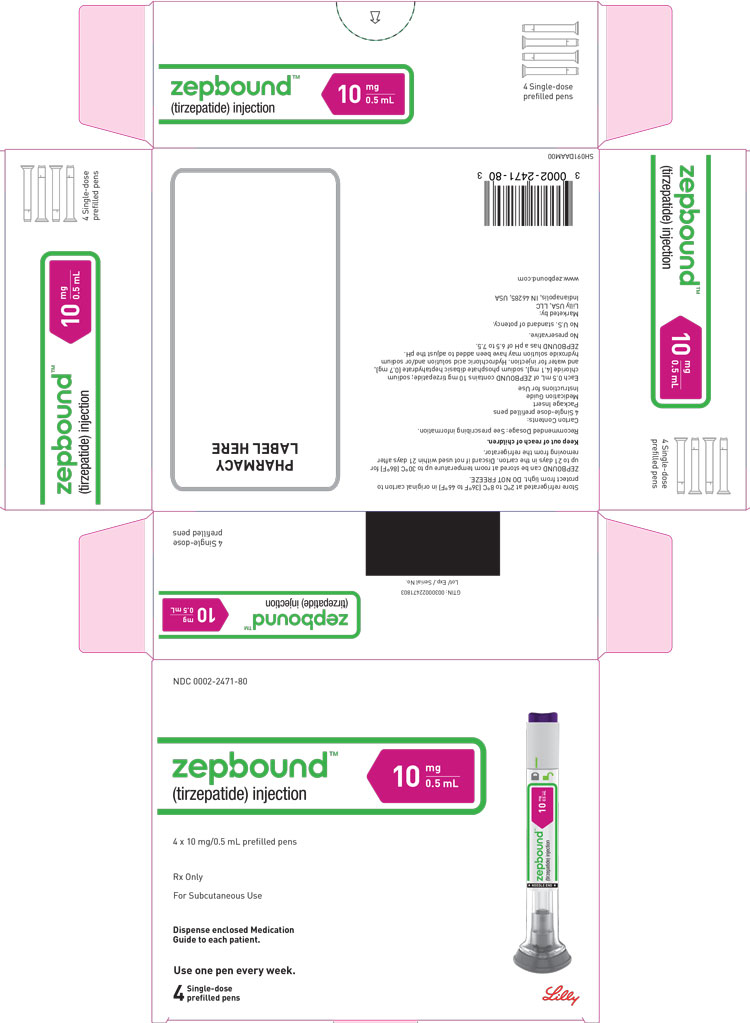
Package Label (Zepbound™, 10 mg/0.5 mL, Carton, 4 Single-Dose Pens)

Package Label (Zepbound™, 10 mg/0.5 mL, Carton, 4 Single-Dose Pens)
Packaging label for Zepbound (tirzepatide) injection, 10 mg per 0.5 mL, by Eli Lilly and Company. The label displays the product name, strength, dosage form as injection, subcutaneous use, and includes an image of the prefilled pen. It indicates a carton containing 4 single-dose prefilled pens with instructions to use one pen weekly.*
FDA Label Image

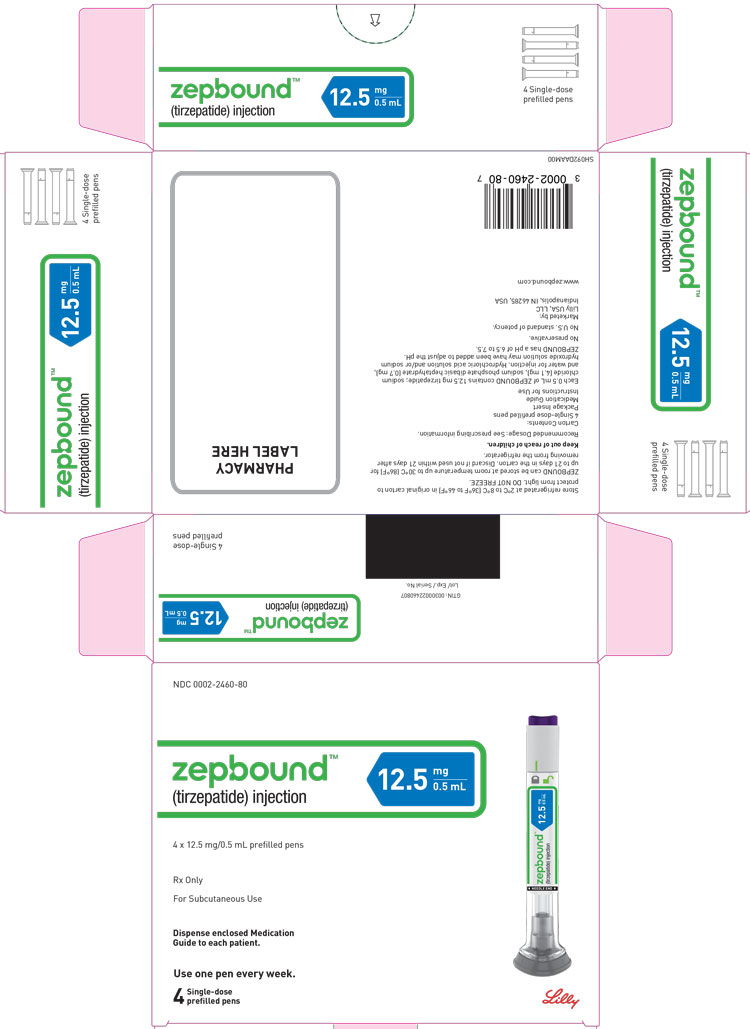
Package Label (Zepbound™, 12.5 mg/0.5 mL, Carton, 4 Single-Dose Pens)

Package Label (Zepbound™, 12.5 mg/0.5 mL, Carton, 4 Single-Dose Pens)
Zepbound 12.5 mg/0.5 mL (tirzepatide) injection packaging label for subcutaneous use by Eli Lilly and Company. The carton holds 4 single-dose prefilled pens. The front shows dosing instructions to use one pen weekly, with a pen image and labeler logo.*
FDA Label Image

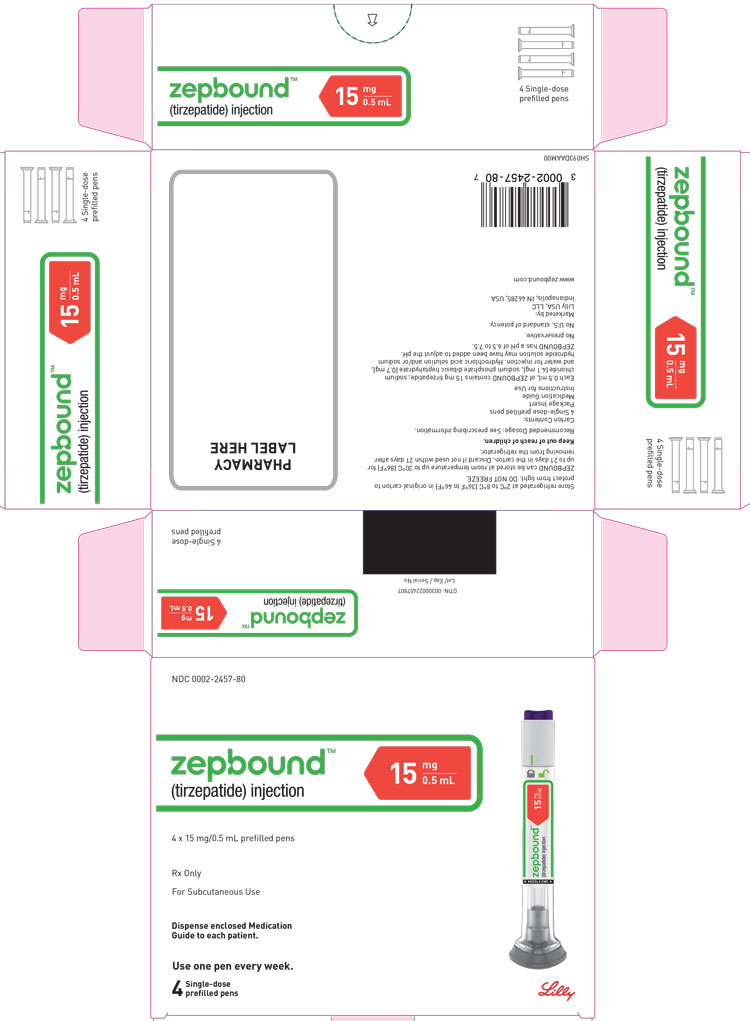
Package Label (Zepbound™, 15 mg/0.5 mL, Carton, 4 Single-Dose Pens)

Package Label (Zepbound™, 15 mg/0.5 mL, Carton, 4 Single-Dose Pens)
Packaging label for Zepbound (tirzepatide) injection, 15 mg/0.5 mL, a subcutaneous injection by Eli Lilly and Company. The label states a package containing four single-dose prefilled pens, used once weekly. The box features the Zepbound logo, dosage strength, and an image of a prefilled pen. Instructions note dispensing a Medication Guide to each patient.*
FDA Label Image

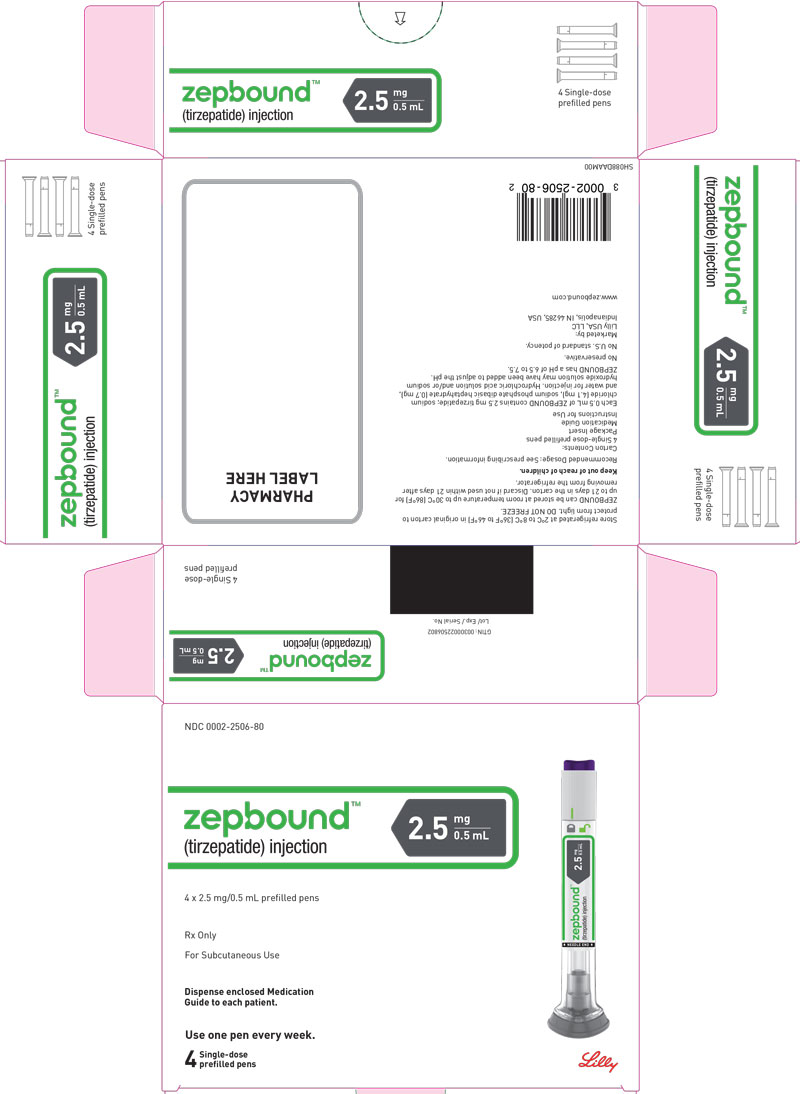
Package Label (Zepbound™, 2.5 mg/0.5 mL, Carton, 4 Single-Dose Pens)

Package Label (Zepbound™, 2.5 mg/0.5 mL, Carton, 4 Single-Dose Pens)
Packaging label for Zepbound 2.5 mg/0.5 mL injection (tirzepatide), a subcutaneous injectable solution by Eli Lilly and Company. The label displays 4 single-dose prefilled pens in the package. The front panel includes usage instructions indicating one pen per week and a photograph of the prefilled pen device.*
FDA Label Image

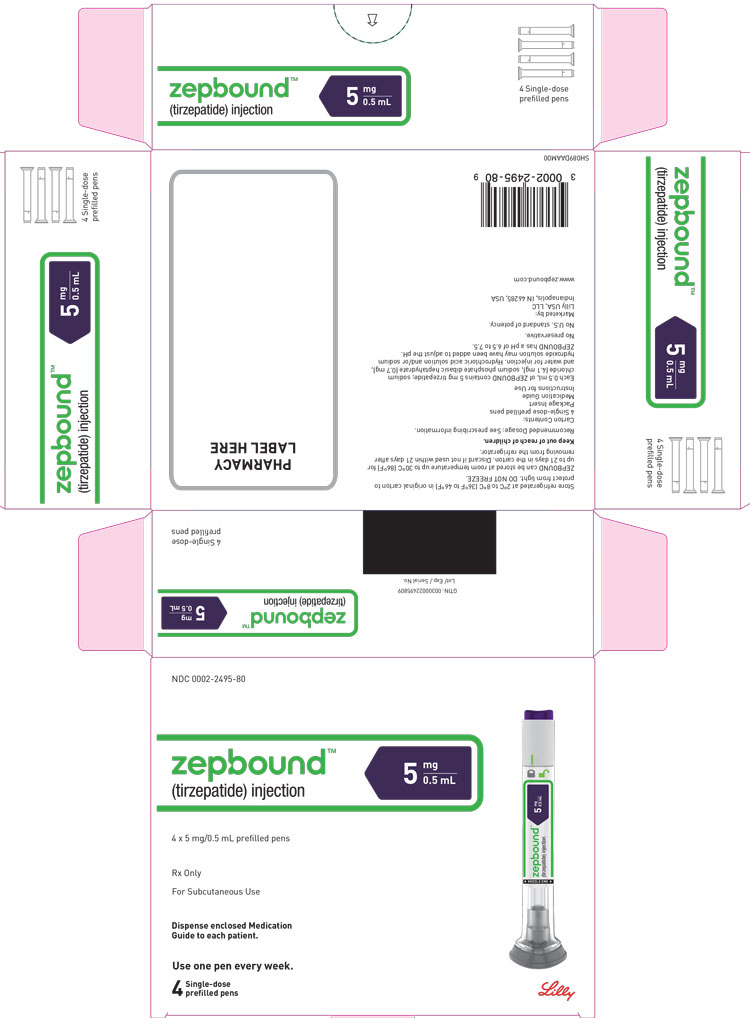
Package Label (Zepbound™, 5 mg/0.5 mL, Carton, 4 Single-Dose Pens)

Package Label (Zepbound™, 5 mg/0.5 mL, Carton, 4 Single-Dose Pens)
Packaging label for Zepbound (tirzepatide) injection, 5 mg/0.5 mL, a subcutaneous injectable solution. The label shows a box containing 4 single-dose prefilled pens, with instructions emphasizing using one pen weekly. The labeler is Eli Lilly and Company. The label includes a product image and dosage information.*
FDA Label Image

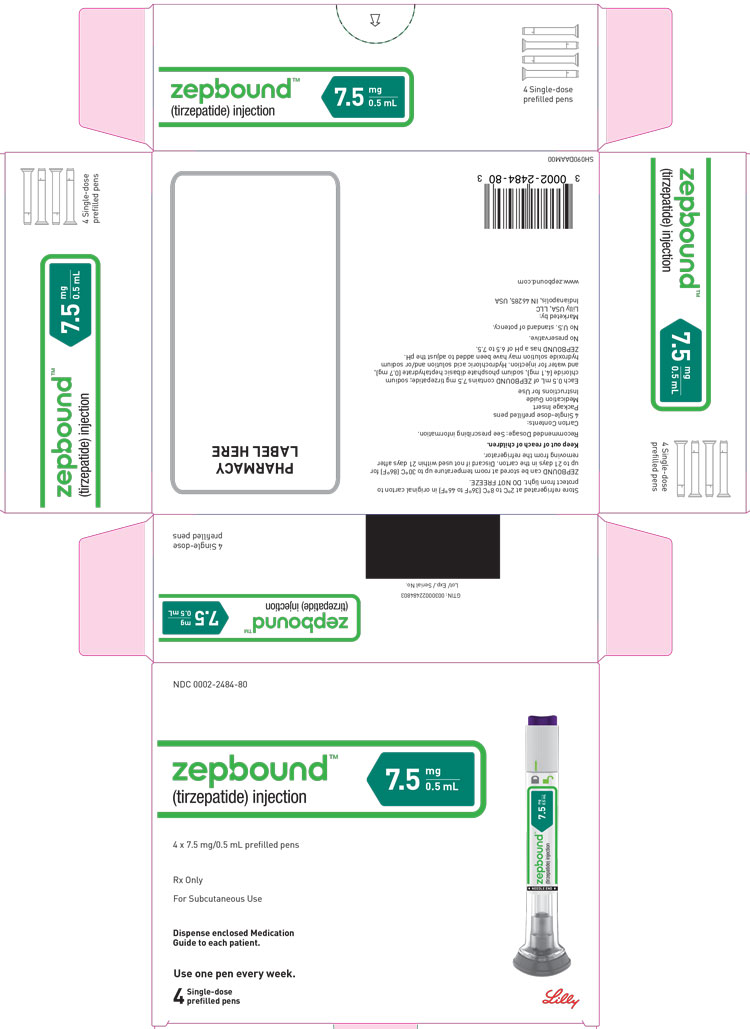
Package Label (Zepbound™, 7.5 mg/0.5 mL, Carton, 4 Single-Dose Pens)

Package Label (Zepbound™, 7.5 mg/0.5 mL, Carton, 4 Single-Dose Pens)
Box packaging label for Zepbound (tirzepatide) injection, 7.5 mg/0.5 mL strength. The label indicates four single-dose prefilled pens for subcutaneous use. The labeler is Eli Lilly and Company. The front panel includes the proprietary name, generic name, strength, and an image of the prefilled injection pen.*
FDA Label Image

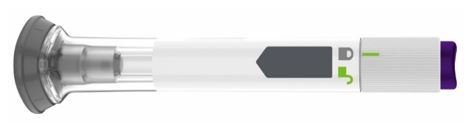
Figure (Zep Pen Ifu 1 V2)

Figure (Zep Pen Ifu 1 V2)
Zepbound injection pen device shown for subcutaneous administration of tirzepatide. The pen includes a transparent barrel revealing internal components, a gray injection needle cover, a white midsection with a rectangular label area, and a white cap with green and purple markers on the right end. Manufactured by Eli Lilly and Company.*
FDA Label Image

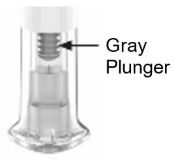
Figure (Zep Pen Ifu 10 V1)

Figure (Zep Pen Ifu 10 V1)
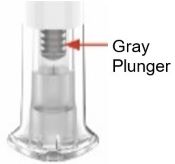
An illustration diagram showing a close-up of an injection device component labeled with an arrow pointing to the gray plunger. The image highlights the gray plunger within the injection syringe mechanism.*
FDA Label Image

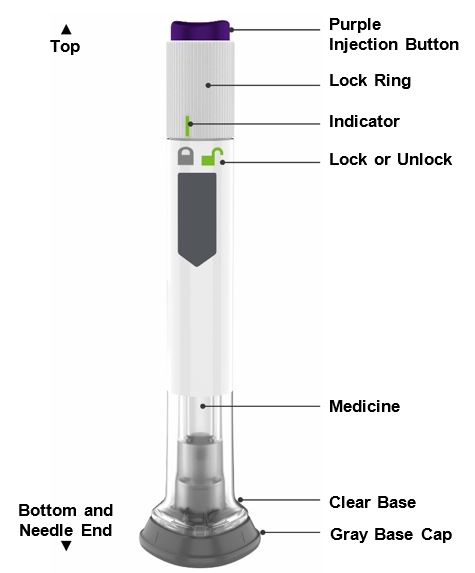
Figure (Zep Pen Ifu 2 V1)

Figure (Zep Pen Ifu 2 V1)
An instructional diagram of the Zepbound tirzepatide subcutaneous injection pen. The diagram labels the pen's components including the purple injection button at the top, lock ring, indicator, lock or unlock icon, medicine reservoir, clear base, gray base cap, and the bottom with needle end. The pen is oriented vertically with directional arrows for top and bottom.*
FDA Label Image

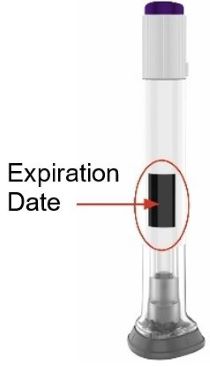
Figure (Zep Pen Ifu 3 V1)

Figure (Zep Pen Ifu 3 V1)
An instructional illustration of a Zepbound injection pen highlighting the location of the expiration date on the device, indicated by a marked area on the pen's barrel near the bottom.*
FDA Label Image

Figure (Zep Pen Ifu 4a V1)

Figure (Zep Pen Ifu 4a V1)
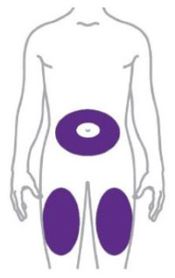
An instructional illustration showing recommended subcutaneous injection sites on the human body for Zepbound (tirzepatide) injection. The highlighted areas include the abdomen around the navel and the front thigh regions.*
FDA Label Image

Figure (Zep Pen Ifu 4b V1)

Figure (Zep Pen Ifu 4b V1)
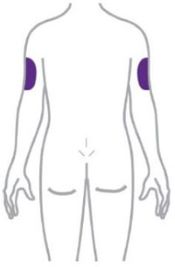
Illustration showing the recommended injection sites for Zepbound (tirzepatide) solution for subcutaneous injection. The image depicts a human figure highlighting the outer upper arm areas in purple as appropriate locations for injection.*
FDA Label Image

Figure (Zep Pen Ifu 5 V1)

Figure (Zep Pen Ifu 5 V1)
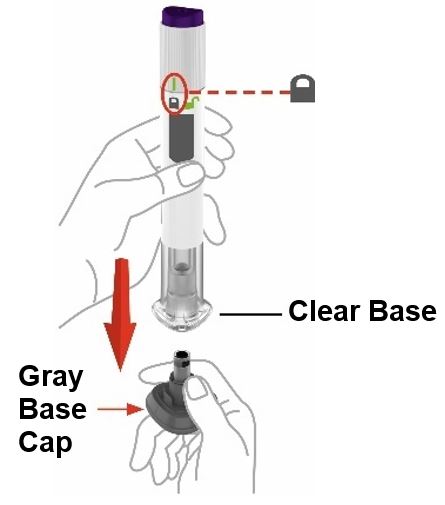
An instructional illustration showing how to remove the gray base cap from the clear base of a Zepbound (tirzepatide) injection pen. It depicts a hand holding the pen and another hand pulling down the gray base cap away from the clear base, with a red arrow indicating the removal direction.*
FDA Label Image

Figure (Zep Pen Ifu 6 V1)

Figure (Zep Pen Ifu 6 V1)
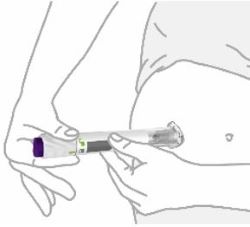
An instructional illustration showing a person administering a subcutaneous injection with a prefilled pen device into the abdomen. The image emphasizes the injection technique used for administering Zepbound (tirzepatide) injection solution.*
FDA Label Image

Figure (Zep Pen Ifu 7 V1)

Figure (Zep Pen Ifu 7 V1)
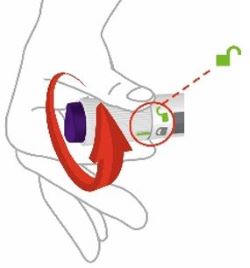
An instructional illustration depicting a hand holding a Zepbound injection pen. It shows a red arrow indicating a twisting motion to unlock the pen before use, highlighting the unlocking mechanism with green unlock symbols.*
FDA Label Image

Figure (Zep Pen Ifu 8 V1)

Figure (Zep Pen Ifu 8 V1)
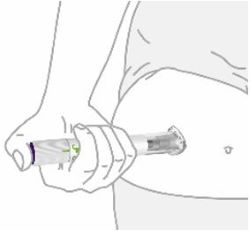
An instructional illustration showing a person administering Zepbound injection solution subcutaneously into the abdomen using a prefilled injector device. The image depicts the hand holding the injector angled against the skin near the abdominal area.*
FDA Label Image

Figure (Zep Pen Ifu 9 V1)

Figure (Zep Pen Ifu 9 V1)
An instructional diagram showing a close-up view of an injection pen with a labeled gray plunger component. The image highlights the gray plunger part of the device used for subcutaneous administration.*
FDA Label Image

Figure (Zep Qr)

FDA Label Image

Structural Formula (Zep Uspi Chem V1)

Structural Formula (Zep Uspi Chem V1)
Chemical structure diagram of tirzepatide, the active ingredient in Zepbound, showing its peptide sequence and molecular connections.*
FDA Label Image

Figure 1 (Zep Uspi Fig1 V1)

Figure 1 (Zep Uspi Fig1 V1)
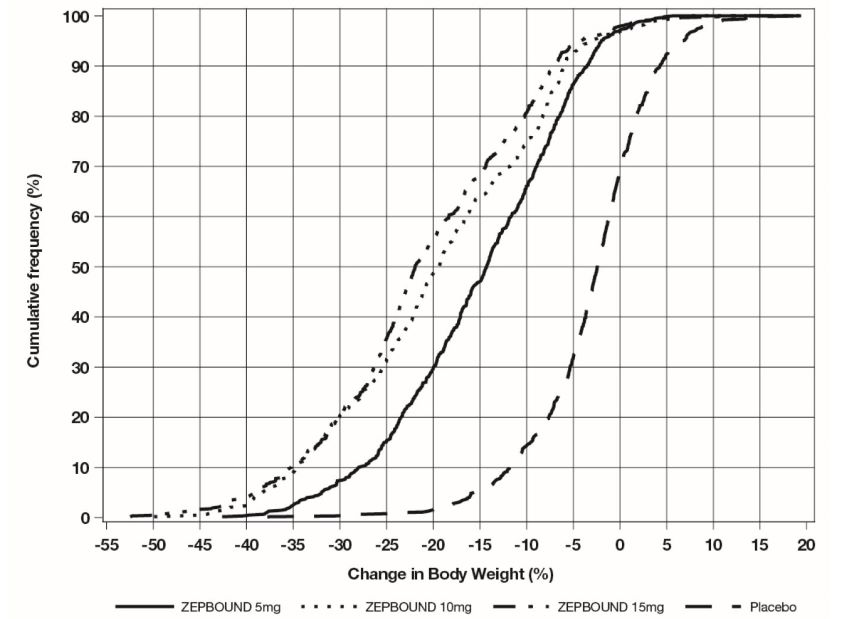
A cumulative frequency plot depicting the percentage change in body weight on the x-axis versus cumulative frequency (%) on the y-axis. The graph includes curves for Zepbound injection solution at doses of 5 mg, 10 mg, and 15 mg, as well as a placebo group, illustrating the distribution of body weight change among subjects.*
FDA Label Image

Figure 2 (Zep Uspi Fig2 V1)

Figure 2 (Zep Uspi Fig2 V1)
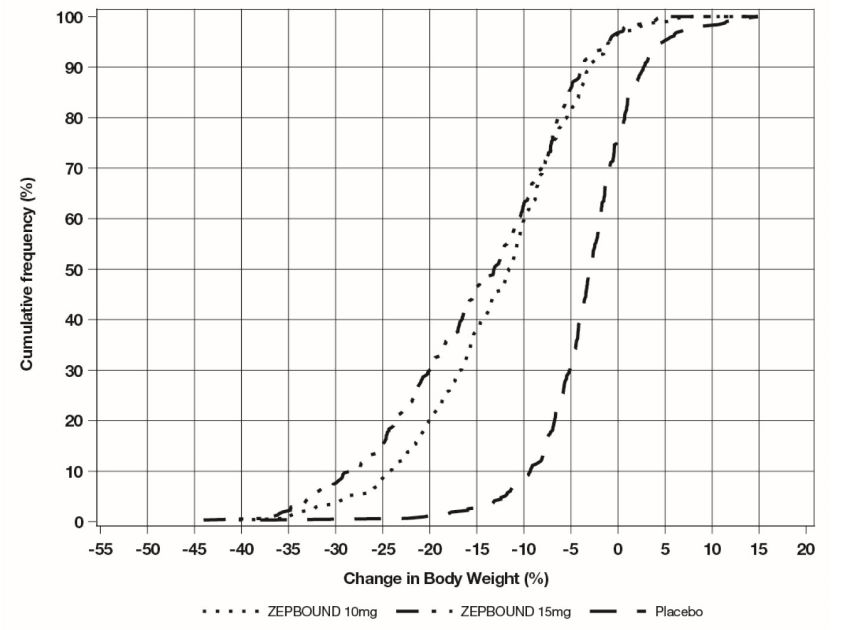
A cumulative frequency graph showing the percentage of subjects versus change in body weight (%). The plot compares three groups: Zepbound 10 mg, Zepbound 15 mg, and Placebo, illustrating body weight change distribution across these treatments.*
FDA Label Image

Figure 3 (Zep Uspi Fig3 V1)

Figure 3 (Zep Uspi Fig3 V1)
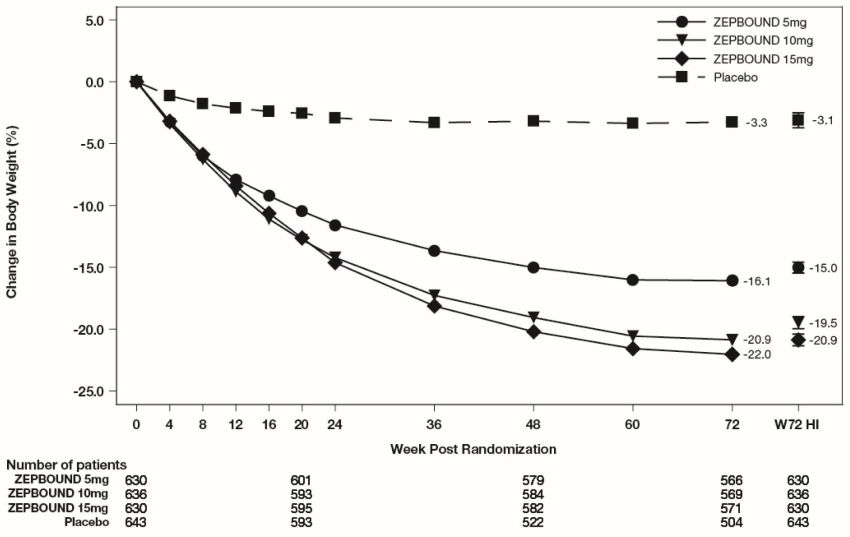
A line graph depicting the percent change in body weight over 72 weeks post randomization for Zepbound injection at 5 mg, 10 mg, and 15 mg doses compared to placebo. The graph shows weight reduction trends, with the 10 mg and 15 mg doses showing the greatest decreases. Patient counts at various weeks for each group are listed below the graph.*
FDA Label Image

Figure 4 (Zep Uspi Fig4 V1)

Figure 4 (Zep Uspi Fig4 V1)
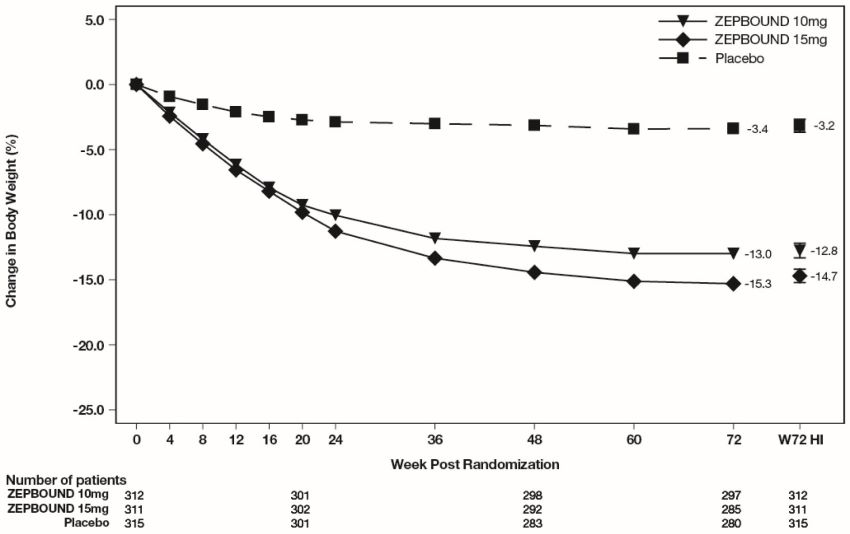
A line graph depicting the percentage change in body weight over 72 weeks post-randomization for Zepbound 10 mg, Zepbound 15 mg, and placebo groups. The graph shows a greater decrease in body weight for both Zepbound doses compared to placebo, with numerical data on participant counts at various time points included below the graph.*
FDA Label Image

Table 1 (Zep Uspi T1 V1)

Table 1 (Zep Uspi T1 V1)
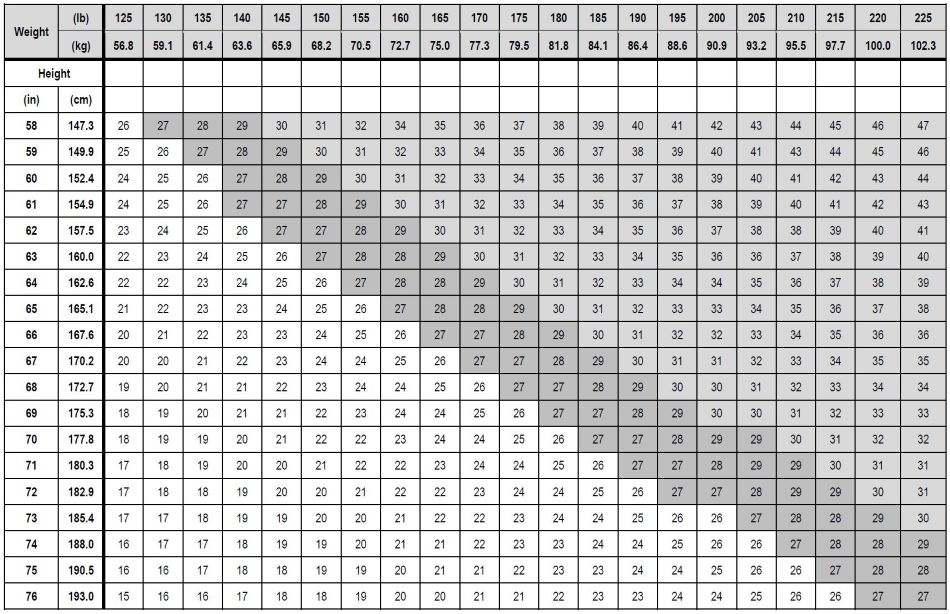
A data table presenting weight in pounds and kilograms across the top row and height in inches and centimeters along the left column. The intersecting cells contain numerical values that likely correspond to measurements or doses based on height and weight, although the exact parameter is not labeled in the image.*

* About these descriptions: Image descriptions on this page are generated by automated AI analysis of the product label images from the manufacturer's FDA label submission (SPL). They are provided for reference only and may contain errors or omissions. Always rely on the printed label itself and the official FDA labeling, and consult a pharmacist or healthcare professional with any questions about this product.