Cialis Tablet, Film Coated
Product Images NDC 0002-4463

View Photos of Packaging, Regulatory Labels, and Product Appearance

Product Visual Gallery

This gallery contains 13 technical images submitted to the FDA as part of the official labeling for Cialis (NDC 0002-4463). Unlike standard consumer photos, these assets often include clinical data figures, molecular chemical structures, and official manufacturer packaging layouts.

As provided by Eli Lilly And Company, these visuals offer a comprehensive scientific overview of the product's physical and chemical identity, aiding pharmacists and researchers in product verification and study.

FDA Label Image

Cialis 10mg 30ct 032 01
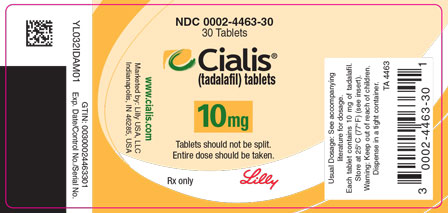
Cialis 10mg 30ct 032 01
Cialis (tadalafil) tablets 10 mg in a package of 30 tablets by Eli Lilly and Company. The label advises that tablets should not be split and the entire dose should be taken. The packaging includes the NDC 0002-4463-30 and website www.cialis.com.*
FDA Label Image

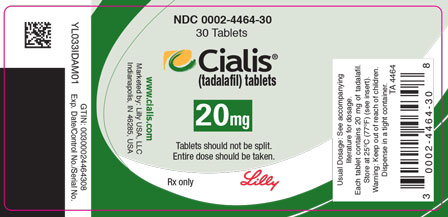
Cialis 20mg 30ct 033 01

Cialis 20mg 30ct 033 01
Cialis 20 mg tablets packaging label displaying the brand name Cialis with the active ingredient tadalafil. The label indicates a bottle containing 30 tablets with a specified dose strength of 20 mg. It includes manufacturer information, Eli Lilly and Company, alongside directions stating tablets should not be split and the entire dose should be taken.*
FDA Label Image

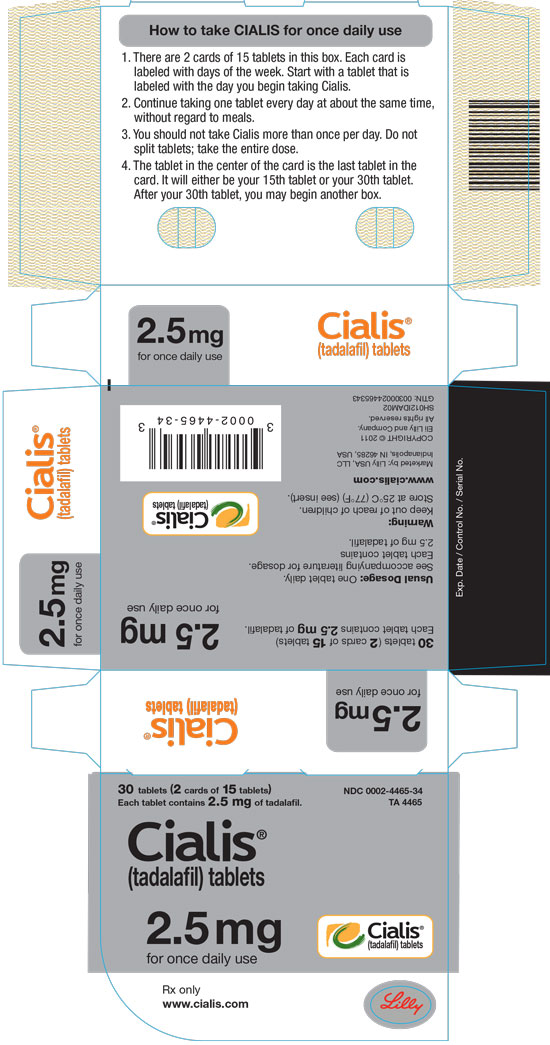
Cialis 2point5mg Cart 012 02

Cialis 2point5mg Cart 012 02
Cialis (tadalafil) tablets 2.5 mg for once daily use packaging label. The flat label shows dosage strength clearly, the quantity of 30 tablets (2 cards of 15 tablets), and the product name with active ingredient tadalafil. It includes instructions on daily intake, warning, barcode, and the labeler Eli Lilly and Company logo. The label states the Rx only designation and website www.cialis.com.*
FDA Label Image

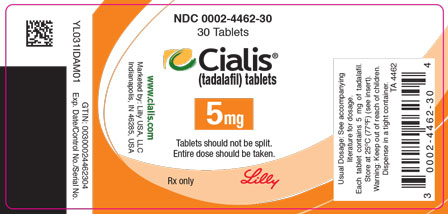
Cialis 5mg 30ct 031 01

Cialis 5mg 30ct 031 01
Cialis 5 mg tablets carton label by Eli Lilly and Company, containing 30 tablets. The label includes warnings that tablets should not be split and should be taken whole. The active ingredient is tadalafil. The packaging has branding in orange and white with the Cialis logo prominently displayed.*
FDA Label Image

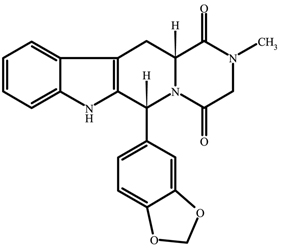
Chemical Structure (Cialis Uspi F001 Structure V1)

Chemical Structure (Cialis Uspi F001 Structure V1)
Chemical structure diagram of the active ingredient in Cialis, illustrating the molecular arrangement including rings and functional groups visible in the structure.*
FDA Label Image

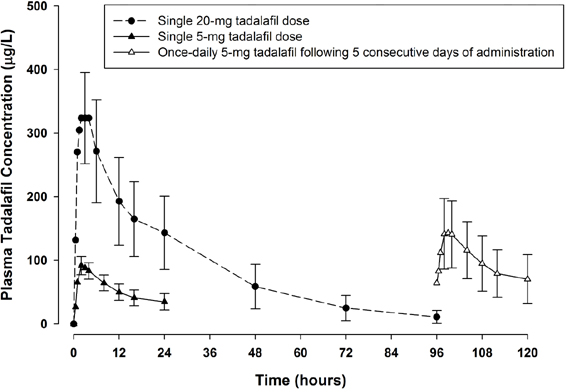
Figure (Cialis Uspi F001 V2)

Figure (Cialis Uspi F001 V2)
A pharmacokinetic curve depicting plasma tadalafil concentration (µg/L) over time (hours) for different dosing regimens of Cialis. The graph compares a single 20-mg dose, a single 5-mg dose, and once-daily 5-mg dosing following 5 consecutive days, showing concentration changes with error bars over 120 hours.*
FDA Label Image

Figure (Cialis Uspi F002 V1)

Figure (Cialis Uspi F002 V1)
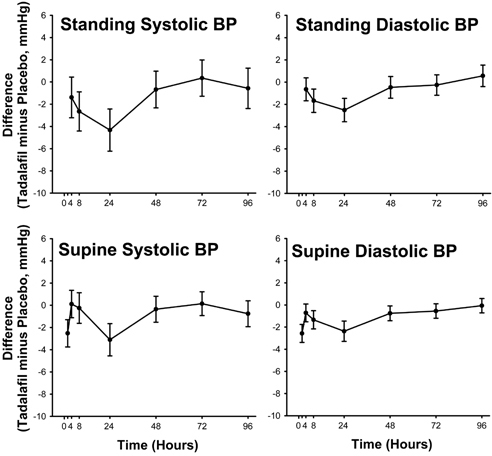
A set of four line graphs showing the difference in blood pressure measurements (Tadalafil minus placebo) over time in hours. The graphs display standing systolic BP, standing diastolic BP, supine systolic BP, and supine diastolic BP, with time on the x-axis and difference in mmHg on the y-axis. Error bars indicate variability at each time point.*
FDA Label Image

Figure (Cialis Uspi F003 V1)

Figure (Cialis Uspi F003 V1)
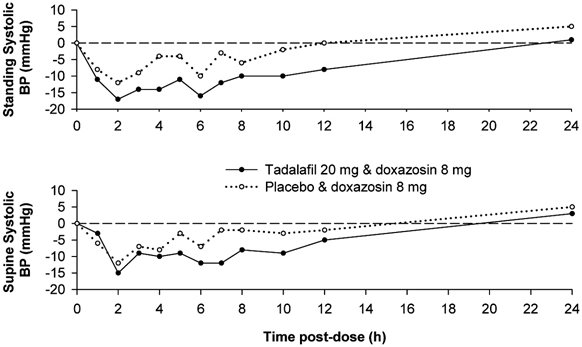
This image contains two line graphs showing the effects of Tadalafil 20 mg with doxazosin 8 mg versus placebo with doxazosin 8 mg on systolic blood pressure over 24 hours post-dose. The top graph measures standing systolic blood pressure in mmHg, and the bottom graph measures supine systolic blood pressure in mmHg, both plotted against time in hours post-dose.*
FDA Label Image

Figure (Cialis Uspi F004 V1)

Figure (Cialis Uspi F004 V1)
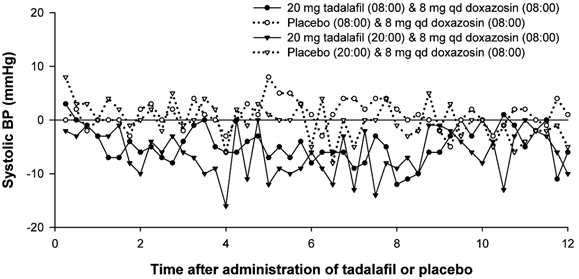
Line graph depicting changes in systolic blood pressure (mmHg) over 12 hours after administration of tadalafil 20 mg or placebo, both combined with 8 mg doxazosin given at 08:00. The graph compares blood pressure readings for doses given at 08:00 and 20:00, showing four distinct lines representing each treatment and time point.*
FDA Label Image

Figure 5 (Cialis Uspi F005 V1)

Figure 5 (Cialis Uspi F005 V1)
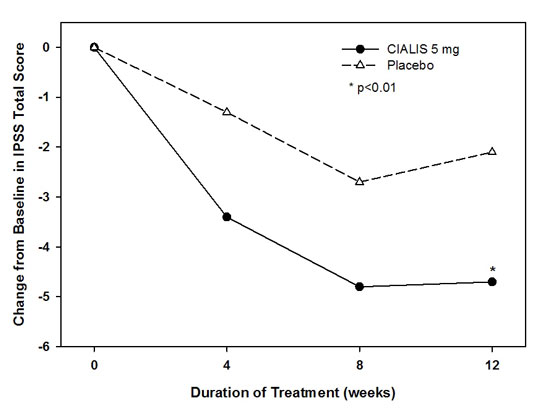
This line graph depicts the change from baseline in IPSS Total Score over 12 weeks comparing Cialis 5 mg and placebo groups. The x-axis shows treatment duration in weeks (0, 4, 8, 12), and the y-axis shows the change in score, with Cialis 5 mg showing a greater decline than placebo over time, with statistical significance noted at 12 weeks (p<0.01).*
FDA Label Image

Figure 6 (Cialis Uspi F006 V1)

Figure 6 (Cialis Uspi F006 V1)
A line graph comparing the change from baseline in IPSS Total Score over 12 weeks of treatment for Cialis 5 mg versus placebo. The x-axis shows treatment duration in weeks (0, 1, 4, 8, 12), and the y-axis indicates the change in score, with Cialis showing a greater decrease than placebo. Statistically significant differences (p<0.01) are marked with asterisks at weeks 4 and 12.*
FDA Label Image

Figure 7 (Cialis Uspi F007 V2)

Figure 7 (Cialis Uspi F007 V2)
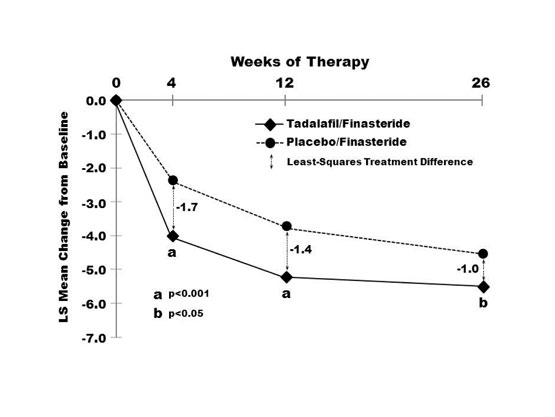
A line graph showing least squares mean change from baseline over 26 weeks of therapy. It compares changes for Tadalafil/Finasteride versus Placebo/Finasteride groups, with data points at 0, 4, 12, and 26 weeks. The graph includes statistical annotations for significance levels (p<0.001 and p<0.05).*
FDA Label Image

Figure 8 (Cialis Uspi F008 V1)

Figure 8 (Cialis Uspi F008 V1)
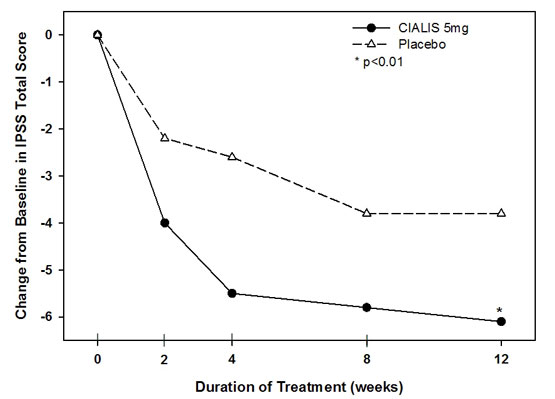
A line graph showing the change from baseline in IPSS total score over 12 weeks of treatment. Two lines represent Cialis 5 mg and placebo, with Cialis showing a greater decrease in score over time. The x-axis depicts duration of treatment in weeks, and the y-axis shows change from baseline in IPSS total score. A statistically significant difference (p<0.01) is noted at week 12.*

* About these descriptions: Image descriptions on this page are generated by automated AI analysis of the product label images from the manufacturer's FDA label submission (SPL). They are provided for reference only and may contain errors or omissions. Always rely on the printed label itself and the official FDA labeling, and consult a pharmacist or healthcare professional with any questions about this product.