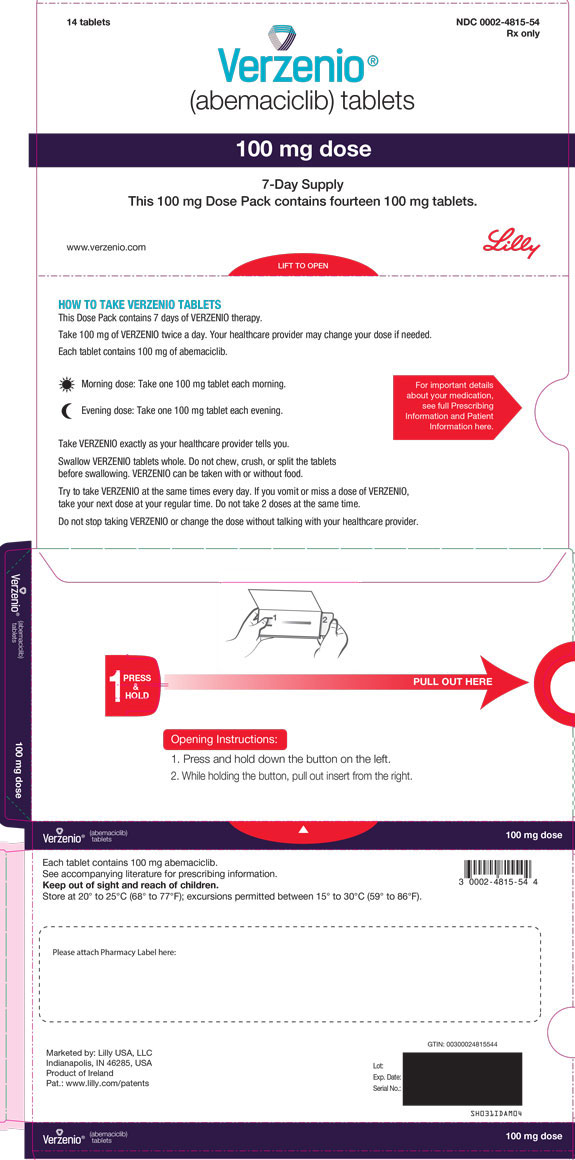
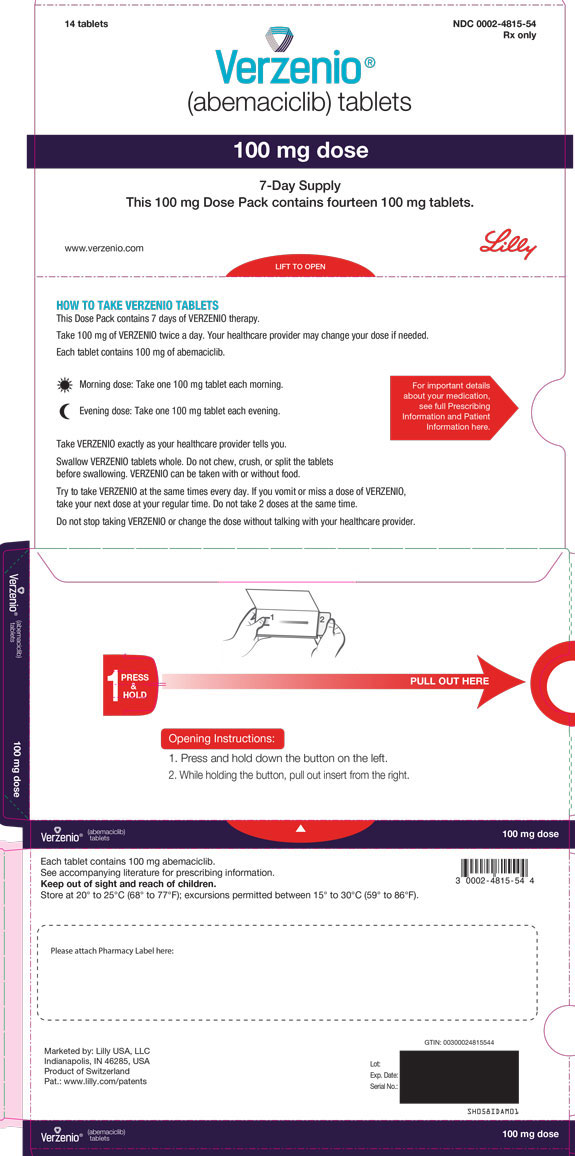
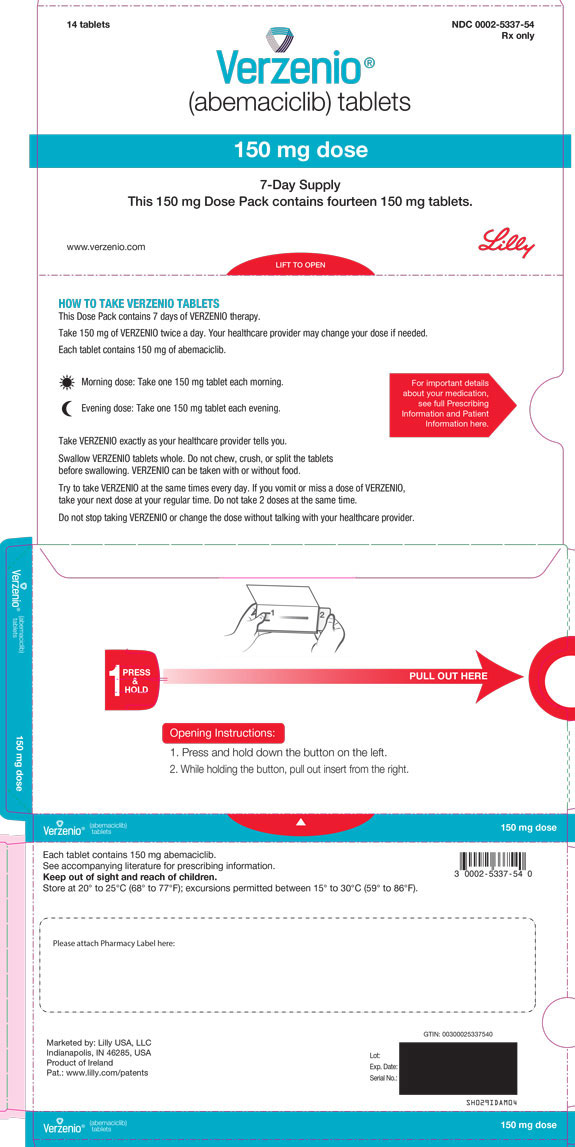
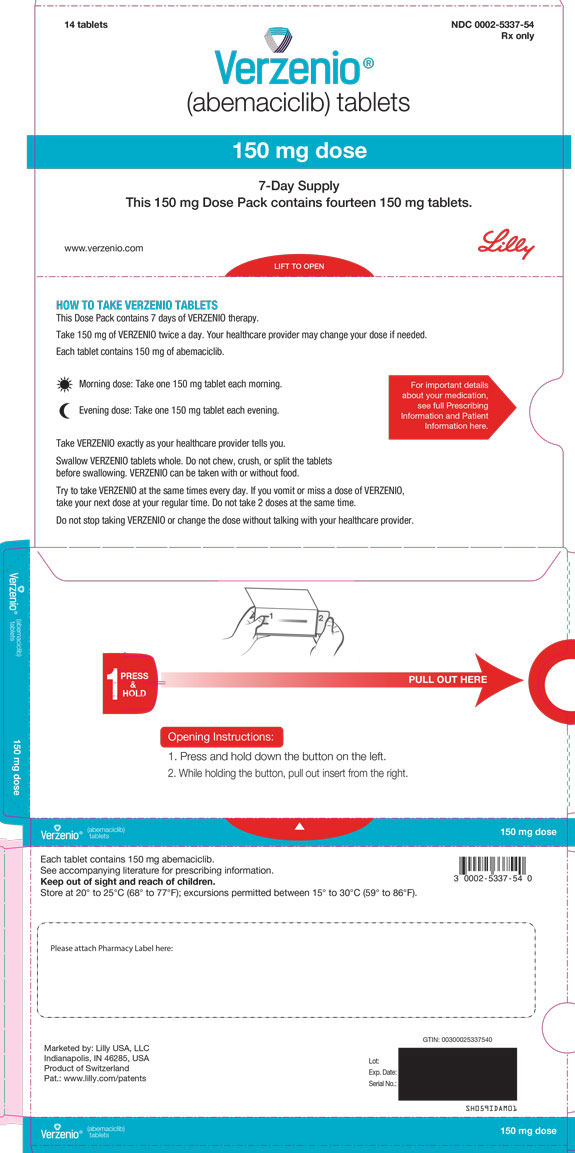
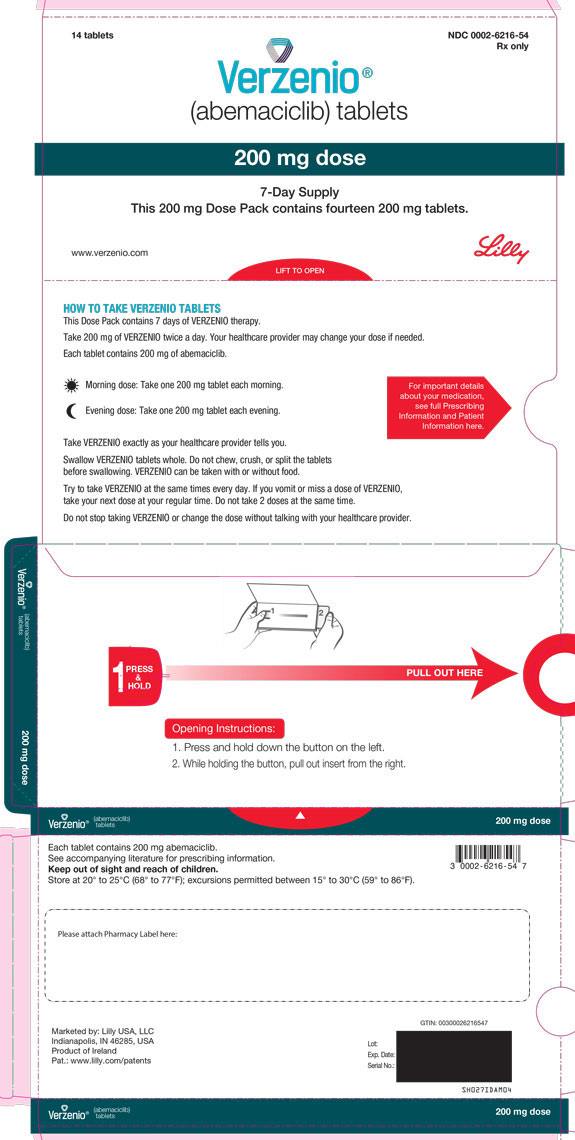
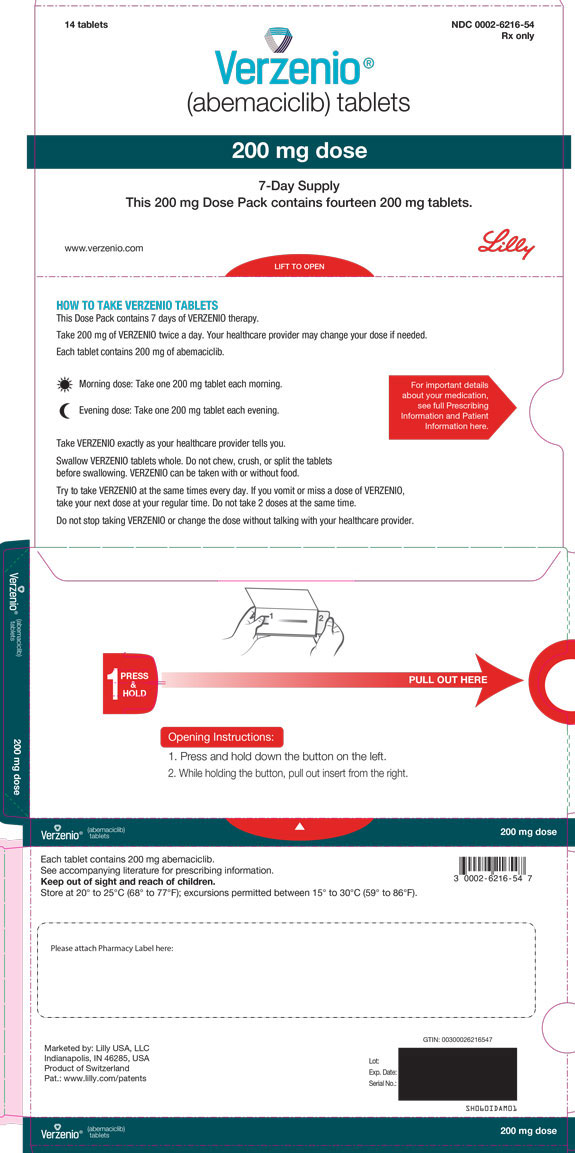
The recommended dosage of VERZENIO is 150 mg orally twice daily.
- For early breast cancer, continue VERZENIO until completion of 2 years of treatment or until disease recurrence, or unacceptable toxicity.
- For advanced or metastatic breast cancer, continue treatment until disease progression or unacceptable toxicity.
For premenopausal and perimenopausal women and men treated with VERZENIO in combination with an aromatase inhibitor, imlunestrant, or fulvestrant should be treated with a gonadotropin-releasing hormone agonist (GnRH) according to current clinical practice standards.
Refer to the Prescribing Information for the recommended dose of the fulvestrant, tamoxifen, imlunestrant or aromatase inhibitor being used.
VERZENIO Monotherapy
The recommended dosage of VERZENIO as monotherapy is 200 mg orally twice daily.
Administration
Take VERZENIO orally, with or without food, at approximately the same times every day [see Clinical Pharmacology (12.3)].
Swallow VERZENIO tablets whole. Do not chew, crush, or split tablets. Do not ingest VERZENIO tablets if broken, cracked, or otherwise not intact.
Missed Dose
If a dose of VERZENIO is missed, skip the missed dose and take the next dose at the next scheduled time.
Vomited Dose
If vomiting occurs after taking a dose of VERZENIO, do not take an additional dose. Take the next dose at the next scheduled time.
Early Breast Cancer
monarchE: VERZENIO in Combination with Tamoxifen or an Aromatase Inhibitor as Adjuvant Treatment
Adult patients with HR-positive, HER2-negative, node-positive early breast cancer at a high risk of recurrence
The safety of VERZENIO was evaluated in monarchE, a study of 5591 adult patients receiving VERZENIO in combination with endocrine therapy (tamoxifen or an aromatase inhibitor) or endocrine therapy (tamoxifen or an aromatase inhibitor) alone [see Clinical Studies (14.1)]. Patients were randomly assigned to receive 150 mg of VERZENIO orally, twice daily, in combination with tamoxifen or an aromatase inhibitor, or tamoxifen or an aromatase inhibitor, for two years or until discontinuation criteria were met. The median duration of VERZENIO treatment was 24 months (range: 1-28 months).
Serious adverse reactions occurred in 15% of patients who received VERZENIO in combination with endocrine therapy (tamoxifen or an aromatase inhibitor). Serious adverse reactions in ≥1% of patients included venous thromboembolism (VTE) (1.2%) and pneumonia (1%). Fatal adverse reactions occurred in 0.8% of patients who received VERZENIO plus endocrine therapy (tamoxifen or an aromatase inhibitor), including: cardiac failure (0.1%), cardiac arrest, myocardial infarction, ventricular fibrillation, cerebral hemorrhage, cerebrovascular accident, pneumonitis, hypoxia, diarrhea, and mesenteric artery thrombosis (0.03% each).
Permanent discontinuation of VERZENIO due to an adverse reaction occurred in 19% of patients. Adverse reactions which resulted in permanent discontinuation in >1% of patients were diarrhea (5%), and fatigue (2%).
Dosage interruptions of VERZENIO due to an adverse reaction occurred in 62% of patients. Adverse reactions which required dosage interruptions in ≥5% of patients were diarrhea (20%), neutropenia (16%), leukopenia (7%), and fatigue (5%).
Dose reductions of VERZENIO due to an adverse reaction occurred in 44% of patients. Adverse reactions which required dose reductions in ≥5% of patients were diarrhea (17%), neutropenia (8%), and fatigue (5%).
The most common (>20%) adverse reactions, including laboratory abnormalities in the VERZENIO plus tamoxifen or an aromatase inhibitor arm and ≥2% higher than the tamoxifen or an aromatase inhibitor arm were: increased creatinine, decreased neutrophils, diarrhea, decreased hemoglobin, decreased lymphocytes, infections, fatigue, increased alanine aminotransferase (ALT), decreased platelets, increased aspartate aminotransferase (AST), nausea, and headache.
Adverse reactions are shown in Table 8 and laboratory abnormalities are shown in Table 9.
Table 8: Adverse Reactions (≥10%) of Patients Receiving VERZENIO Plus Tamoxifen or an Aromatase Inhibitor [with a Difference between Arms of ≥2%] in monarchE
|
|
Adverse Reactiona | VERZENIO Plus
Tamoxifen or an Aromatase Inhibitor
N=2791 | Tamoxifen or an Aromatase Inhibitor
N=2800 |
All Grades
% | Grade 3
% | Grade 4
% | All Grades
% | Grade 3
% | Grade 4
% |
| Gastrointestinal Disorders |
| Diarrhea
| 84
| 8
| 0
| 9
| 0.2
| 0
|
| Nausea
| 30
| 0.5
| 0
| 9
| <0.1
| 0
|
| Vomiting
| 18
| 0.5
| 0
| 4.6
| 0.1
| 0
|
| Stomatitisb | 14
| 0.1
| 0
| 5
| 0
| 0
|
| Infections and Infestations |
| Infectionsb | 51
| 4.9
| 0.6
| 39
| 2.7
| 0.1
|
| General Disorders and Administration Site Conditions |
| Fatigueb | 41
| 2.9
| 0
| 18
| 0.1
| 0
|
| Nervous System Disorders |
| Headache
| 20
| 0.3
| 0
| 15
| 0.2
| 0
|
| Dizziness
| 11
| 0.1
| 0
| 7
| <0.1
| 0
|
| Metabolism and Nutrition Disorders |
| Decreased appetite
| 12
| 0.6
| 0
| 2.4
| <0.1
| 0
|
| Skin and Subcutaneous Tissue Disorders |
| Rashb | 11
| 0.4
| 0
| 4.5
| 0
| 0
|
| Alopecia
| 11
| 0
| 0
| 2.7
| 0
| 0
|
Clinically relevant adverse reactions in <10% of patients who received VERZENIO in combination with tamoxifen or an aromatase inhibitor in monarchE include: pruritus (9%), dyspepsia (8%), nail disorder (6%), increased lacrimation (6%), dysgeusia (5%), ILD/pneumonitis (3%), and VTE (3%).
Table 9: Laboratory Abnormalities (≥10%) in Patients Receiving VERZENIO Plus Tamoxifen or an Aromatase Inhibitor [with a Difference between Arms of ≥2%] in monarchE
| VERZENIO
Plus Tamoxifen or an Aromatase Inhibitor
N=2791 | Tamoxifen or an Aromatase Inhibitor
N=2800 |
All Grades
% | Grade 3
% | Grade 4
% | All Grades
% | Grade 3
% | Grade 4
% |
| Chemistry |
| Creatinine increased
| 99
| 0.5
| 0
| 91
| <0.1
| 0
|
| ALT increased
| 37
| 2.5
| <0.1
| 24
| 1.2
| 0
|
| AST increased
| 31
| 1.5
| <0.1
| 18
| 0.9
| 0
|
| Potassium decreased
| 11
| 1.2
| 0.1
| 3.8
| 0.1
| 0.1
|
| Hematology |
| Neutrophils decreased
| 84
| 18
| 0.7
| 23
| 1.6
| 0.3
|
| Hemoglobin decreased
| 68
| 1
| 0
| 17
| 0.1
| 0
|
| Lymphocytes decreased
| 59
| 13
| 0.2
| 24
| 2.4
| 0.1
|
| Platelets decreased
| 37
| 0.7
| 0.2
| 10
| 0.1
| 0.1
|
Advanced or Metastatic Breast Cancer
MONARCH 3: VERZENIO in Combination with an Aromatase Inhibitor (Anastrozole or Letrozole) as Initial Endocrine-Based Therapy
Postmenopausal Women with HR-positive, HER2-negative locoregionally recurrent or metastatic breast cancer with no prior systemic therapy in this disease setting
The safety of VERZENIO was evaluated in MONARCH 3, a study of 488 women receiving VERZENIO in combination with an aromatase inhibitor or placebo in combination with an aromatase inhibitor [see Clinical Studies (14.2)]. Patients were randomly assigned to receive 150 mg of VERZENIO or placebo orally twice daily, in combination with investigator's choice of anastrozole or letrozole once daily until discontinuation criteria were met. The median duration of VERZENIO treatment was 15.1 months (range: 5 days – 27.4 months).
Serious adverse reactions occurred in 28% of patients who received VERZENIO plus an aromatase inhibitor. Serious adverse reactions in ≥1.5% of patients included infections (6%), VTE (2.5%) and diarrhea and anemia (1.5%, each). Fatal adverse reactions occurred in 3% of patients who received VERZENIO including underlying disease (0.9%), lung infection (0.9%), VTE (0.9%), pneumonitis (0.3%), and cerebral infarction (0.3%).
Permanent discontinuation of VERZENIO due to an adverse reaction occurred in 13% of patients. Adverse reactions which resulted in permanent discontinuation in >1% of patients were diarrhea (2%), ALT increased (2%), infection (1%), and VTE (1%).
Dosage interruptions of VERZENIO due to an adverse reaction occurred in 56% of patients. Adverse reactions which required dosage interruptions in ≥5% of patients were neutropenia (16%) and diarrhea (15%).
Dose reductions of VERZENIO due to an adverse reaction occurred in 43% of patients. Adverse reactions which required dose reductions in ≥5% of patients were diarrhea (13%) and neutropenia (11%).
The most common (≥20%) adverse reactions including laboratory abnormalities in the VERZENIO plus aromatase inhibitor arm and ≥2% higher than the placebo arm were: increased creatinine, decreased hemoglobin, diarrhea, decreased neutrophils, decreased lymphocytes, increased ALT, fatigue, infections, nausea, increased AST, decreased platelets, abdominal pain, anemia, vomiting, alopecia, and decreased appetite.
Adverse reactions are shown in Table 10 and laboratory abnormalities in Table 11.
Table 10: Adverse Reactions (≥10%) in Patients Receiving VERZENIO Plus Anastrozole or Letrozole [with a Difference between Arms of ≥2%] in MONARCH 3
|
|
| Adverse Reactiona | VERZENIO plus
Anastrozole or Letrozole
N=327 | Placebo plus
Anastrozole or Letrozole
N=161 |
All Grades
% | Grade 3
% | Grade 4
% | All Grades
% | Grade 3
% | Grade 4
% |
| Gastrointestinal Disorders |
| Diarrhea
| 81
| 9
| 0
| 30
| 1.2
| 0
|
| Nausea
| 39
| 0.9
| 0
| 20
| 1.2
| 0
|
| Abdominal pain
| 29
| 1.2
| 0
| 12
| 1.2
| 0
|
| Vomiting
| 28
| 1.2
| 0
| 12
| 1.9
| 0
|
| Constipation
| 16
| 0.6
| 0
| 12
| 0
| 0
|
| Infections and Infestations |
| Infectionsb | 39
| 4
| 0.9
| 29
| 2.5
| 0.6
|
| General Disorders and Administration Site Conditions |
| Fatigue
| 40
| 1.8
| 0
| 32
| 0
| 0
|
| Influenza like illness
| 10
| 0
| 0
| 8
| 0
| 0
|
| Skin and Subcutaneous Tissue Disorders |
| Alopecia
| 27
| 0
| 0
| 11
| 0
| 0
|
| Rash
| 14
| 0.9
| 0
| 5
| 0
| 0
|
| Pruritus
| 13
| 0
| 0
| 9
| 0
| 0
|
| Metabolism and Nutrition Disorders |
| Decreased appetite
| 24
| 1.2
| 0
| 9
| 0.6
| 0
|
| Respiratory, Thoracic, and Mediastinal Disorders |
| Cough
| 13
| 0
| 0
| 9
| 0
| 0
|
| Dyspnea
| 12
| 0.6
| 0.3
| 6
| 0.6
| 0
|
| Nervous System Disorders |
| Dizziness
| 11
| 0.3
| 0
| 9
| 0
| 0
|
| Investigations |
| Decreased weight
| 10
| 0.6
| 0
| 3.1
| 0.6
| 0
|
Clinically relevant adverse reactions (<10%) in patients who received VERZENIO in combination with an aromatase inhibitor included: VTE (5%).
Table 11: Laboratory Abnormalities (≥10%) in Patients Receiving VERZENIO Plus Anastrozole or Letrozole [with a Difference Between Arms of ≥2%] in MONARCH 3
| VERZENIO plus
Anastrozole or Letrozole
N=327 | Placebo plus
Anastrozole or Letrozole
N=161 |
| Laboratory Abnormality | All Grades
% | Grade 3
% | Grade 4
% | All Grades
% | Grade 3
% | Grade 4
% |
| Chemistry |
| Creatinine increased
| 98
| 2.2
| 0
| 84
| 0
| 0
|
| ALT increased
| 48
| 6
| 0.6
| 25
| 1.9
| 0
|
| AST increased
| 37
| 3.8
| 0
| 23
| 0.6
| 0
|
| Hematology |
| Hemoglobin decreased
| 82
| 1.6
| 0
| 28
| 0
| 0
|
| Neutrophils decreased
| 80
| 19
| 2.9
| 21
| 2.6
| 0
|
| Lymphocytes decreased
| 53
| 7
| 0.6
| 26
| 1.9
| 0
|
| Platelets decreased
| 36
| 1.3
| 0.6
| 12
| 0.6
| 0
|
MONARCH 2: VERZENIO in Combination with Fulvestrant
Women with HR-positive, HER2-negative advanced or metastatic breast cancer with disease progression on or after prior adjuvant or metastatic endocrine therapy
The safety of VERZENIO in combination with fulvestrant versus placebo was evaluated in 664 patients with HR-positive, HER2-negative advanced breast cancer in MONARCH 2 [see Clinical Studies (14.2)]. Patients were randomized (2:1) to receive VERZENIO 150 mg orally twice daily in combination with fulvestrant (N=441) or placebo in combination with fulvestrant (N=223). Among patients treated with VERZENIO plus fulvestrant, the median duration of exposure was 12 months (range: 1 day – 27.8 months).
Serious adverse reactions occurred in 22% of patients who received VERZENIO in combination with fulvestrant. Serious adverse reactions in >1% of patients included VTE and pneumonia (1.8%, each), diarrhea (1.6%), cough (1.4%), sepsis (1.4%) and nausea and acute kidney injury (1.1% each). Fatal adverse reactions occurred in 4% of patients who received VERZENIO plus fulvestrant including underlying disease (2%), sepsis (0.9%), pneumonitis and hepatotoxicity (0.5% each), and cerebral infarction (0.2%).
Permanent discontinuation of VERZENIO due to an adverse reaction occurred in 9% of patients. Adverse reactions which resulted in permanent discontinuation in >1% of patients were infection (2%), and diarrhea and hepatotoxicity (1%, each).
Dosage interruptions of VERZENIO due to an adverse reaction occurred in 52% of patients. Adverse reactions which required dosage interruptions in ≥5% of patients were diarrhea (19%) and neutropenia (16%).
Dose reductions of VERZENIO due to an adverse reaction occurred in 43% of patients. Adverse reactions which required dose reductions in ≥5% of patients were diarrhea (19%) and neutropenia (10%).
The most common (≥20%) adverse reactions, including laboratory abnormalities, in the VERZENIO plus fulvestrant arm and with a ≥ 2% higher than the placebo plus fulvestrant arm were: increased creatinine, decreased neutrophils, diarrhea, decreased hemoglobin, decreased platelets, fatigue, nausea, infections, increased ALT, increased AST, abdominal pain, decreased appetite, vomiting, and headache.
Adverse reactions are shown in Table 12 and laboratory abnormalities in Table 13.
Table 12: Adverse Reactions (≥10%) in Patients Receiving VERZENIO Plus Fulvestrant [with a Difference Between Arms of ≥2%] in MONARCH 2
|
|
Adverse Reactiona | VERZENIO plus Fulvestrant
N=441 | Placebo plus Fulvestrant
N=223 |
All Grades
% | Grade 3
% | Grade 4
% | All Grades
% | Grade 3
% | Grade 4
% |
| Gastrointestinal Disorders |
| Diarrhea
| 86
| 13
| 0
| 25
| 0.4
| 0
|
| Nausea
| 45
| 2.7
| 0
| 23
| 0.9
| 0
|
| Abdominal painb | 35
| 2.5
| 0
| 16
| 0.9
| 0
|
| Vomiting
| 26
| 0.9
| 0
| 10
| 1.8
| 0
|
| Stomatitis
| 15
| 0.5
| 0
| 10
| 0
| 0
|
| General Disorders and Administration Site Conditions |
| Fatigueb | 46
| 2.7
| 0
| 32
| 0.4
| 0
|
| Edema peripheral
| 12
| 0
| 0
| 7
| 0
| 0
|
| Pyrexia
| 11
| 0.5
| 0.2
| 6
| 0.4
| 0
|
| Infections and Infestations |
| Infectionsb | 43
| 5
| 0.7
| 25
| 3.1
| 0.4
|
| Metabolism and Nutrition Disorders |
| Decreased appetite
| 27
| 1.1
| 0
| 12
| 0.4
| 0
|
| Nervous System Disorders
|
| Headache
| 20
| 0.7
| 0
| 15
| 0.4
| 0
|
| Dysgeusia
| 18
| 0
| 0
| 2.7
| 0
| 0
|
| Dizziness
| 12
| 0.7
| 0
| 6
| 0
| 0
|
| Skin and Subcutaneous Tissue Disorders |
| Alopecia
| 16
| 0
| 0
| 1.8
| 0
| 0
|
| Pruritus
| 13
| 0
| 0
| 6
| 0
| 0
|
| Rash
| 11
| 1.1
| 0
| 4.5
| 0
| 0
|
| Respiratory, Thoracic and Mediastinal Disorders |
| Cough
| 13
| 0
| 0
| 11
| 0
| 0
|
| Investigations |
| Weight decreased
| 10
| 0.2
| 0
| 2.2
| 0.4
| 0
|
Clinically relevant adverse reactions (<10%) in patients who received VERZENIO in combination with fulvestrant included:
VTE (5%)
Table 13: Laboratory Abnormalities (≥10%) in Patients Receiving VERZENIO Plus Fulvestrant [with a Difference Between Arms of ≥2%]in MONARCH 2
| VERZENIO plus Fulvestrant
N=441 | Placebo plus Fulvestrant
N=223 |
All Grades
% | Grade 3
% | Grade 4
% | All Grades
% | Grade 3
% | Grade 4
% |
| Chemistry |
| Creatinine increased
| 98
| 1.2
| 0
| 74
| 0
| 0
|
| ALT increased
| 41
| 3.9
| 0.7
| 32
| 1.4
| 0
|
| AST increased
| 37
| 3.9
| 0
| 25
| 3.7
| 0.5
|
| Hematology |
| Neutrophils decreased
| 87
| 29
| 3.5
| 30
| 3.7
| 0.5
|
| Hemoglobin decreased
| 84
| 2.6
| 0
| 34
| 0.5
| 0
|
| Lymphocytes decreased
| 63
| 12
| 0.2
| 32
| 1.8
| 0
|
| Platelets decreased
| 53
| 0.9
| 1.2
| 15
| 0
| 0
|
EMBER-3: VERZENIO in Combination with Imlunestrant in Advanced or Metastatic Breast Cancer
The safety of VERZENIO in combination with imlunestrant was evaluated in 535 patients with ER+, HER2- locally advanced or metastatic breast cancer previously treated with endocrine therapy with or without a prior CDK4/6 inhibitor in EMBER-3 [see Clinical Studies (14.2)]. Patients received VERZENIO 150 mg orally twice daily in combination with imlunestrant 400 mg orally once daily (N=208), or imlunestrant monotherapy 400 mg, once daily (n=327). Among patients who were treated with VERZENIO in combination with imlunestrant, the median duration of exposure was 7.7 months (range 1 day to 25.3 months).
Serious adverse reactions occurred in 21% of patients who received VERZENIO in combination with imlunestrant. Serious adverse reactions in >1% of patients included pneumonia (2.4%), abdominal pain, and renal failure (each 1.4%). Fatal adverse reactions occurred in 3.8% of patients who received VERZENIO in combination with imlunestrant, including pneumonia (1.4%), myocardial infarction, interstitial lung disease and sepsis (0.5%, each).
Permanent discontinuation of VERZENIO due to an adverse reaction occurred in 3.4% of patients. Adverse reactions which resulted in permanent discontinuation of VERZENIO included: increased ALT (1.4%), bile duct stone, diarrhea, drug-induced liver injury, prolonged QT interval, fatigue, maculo-papular rash, renal failure, and vomiting (0.5% each).
Dosage interruptions of VERZENIO due to an adverse reaction occurred in 59% of patients. Adverse reactions which required dosage interruptions of VERZENIO in ≥2% of patients included diarrhea (20%), neutropenia (10%), decreased neutrophils (8%), anemia (6%), nausea (6%), increased AST (2.4%), fatigue (2.4%), and vomiting (2.4%).
Dose reductions of VERZENIO due to an adverse reaction occurred in 42% of patients. Adverse reactions which required dose reductions of VERZENIO in ≥1% of patients included: diarrhea (20%), neutropenia (5%), nausea (3.4%), decreased neutrophils (3.4%), fatigue (2.4%), anemia (1.9%), increased AST (1.9%), increased ALT (1.4%).
The most common (≥10%) adverse reactions, including laboratory abnormalities were: decreased neutrophils, diarrhea, decreased hemoglobin, decreased lymphocytes, nausea, decreased platelets, fatigue, increased triglycerides, infections, increased AST, increased creatinine, increased ALT, vomiting, musculoskeletal pain, abdominal pain, decreased appetite, increased cholesterol, rash, cough, headache and decreased weight.
Table 14 and 15 summarizes the adverse reactions and laboratory abnormalities, respectively, in EMBER-3.
Table 14: Adverse Reactions (≥10%) in Patients Treated with VERZENIO in combination with Imlunestrant in EMBER-3
|
|
| Adverse Reactiona | VERZENIO plus Imlunestrant
N=208 | Imlunestrant
N=327 |
All Grades
%
| Grades 3 or 4
%
| All Grades
%
| Grades 3 or 4
%
|
| Gastrointestinal Disorders |
| Diarrhea
| 86
| 9
| 23
| 0.3
|
| Nausea
| 51
| 1.9
| 18
| 0.3
|
| Vomiting
| 32
| 0.5
| 10
| 0.6
|
| Abdominal painb | 24
| 1.9
| 11
| 0.3
|
| General Disorders and Administration Site Conditions |
| Fatigueb | 41
| 5
| 24
| 0.3
|
| Infections and Infestations |
| Infectionsb | 36
| 7
| 25
| 3.4
|
| Musculoskeletal Disorders |
| Musculoskeletal painb | 25
| 1.4
| 31
| 2.8
|
| Metabolism and Nutrition Disorders |
| Decreased appetiteb | 22
| 1
| 9
| 0.3
|
| Skin and Subcutaneous Tissue Disorders |
| Rashb | 14
| 1.4
| 4.9
| 0
|
| Respiratory, Thoracic and Mediastinal Disorders |
| Coughb | 13
| 0
| 9
| 0
|
| Nervous System Disorders |
| Headacheb | 10
| 0.5
| 9
| 0
|
| Investigations |
| Decreased weight
| 10
| 0
| 4.6
| 0
|
Clinically relevant adverse reactions (<10%) in patients who received VERZENIO in combination with imlunestrant included: constipation (9%), stomatitis (9%), fever (9%), urinary tract infection (8%), dizziness (8%), hot flush (6%), insomnia (6%), arrhythmia (6%), alopecia (5%), back pain (4.8%), venous thromboembolic event (4.8%) and interstitial lung disease or pneumonitis (2.9%).
Table 15: Lab Abnormalities (≥10%) in Patients Treated with VERZENIO in Combination with Imlunestrant in EMBER-3
|
|
| Lab Abnormalitya | VERZENIO plus Imlunestrant
b | Imlunestrantb |
All Grades
%
| Grades 3 or 4
%
| All Grades
%
| Grades 3 or 4
%
|
| Hematology |
| Neutrophils decreased
| 86
| 21
| 28
| 4.3
|
| Hemoglobin decreased
| 81
| 9
| 34
| 2.2
|
| Lymphocytes decreased
| 58
| 9
| 29
| 2.2
|
| Platelets count decreased
| 48
| 2.4
| 18
| 2.8
|
| Chemistry |
| Triglycerides increased
| 40
| 2.3
| 22
| 0
|
| AST increased
| 36
| 2.5
| 27
| 1.9
|
| Creatinine increased
| 36
| 1.1
| 6
| 0.3
|
| ALT increased
| 33
| 5
| 22
| 1.3
|
| Cholesterol increased
| 18
| 0
| 12
| 0.4
|
MONARCH 1: VERZENIO Administered as a Monotherapy in Metastatic Breast Cancer
Patients with HR-positive, HER2-negative breast cancer who received prior endocrine therapy and 1-2 chemotherapy regimens in the metastatic setting
The safety of VERZENIO was evaluated in 132 women with HR-positive, HER2-negative metastatic breast cancer whose disease progressed during or after endocrine therapy, had received a taxane in any setting, and who had received 1 or 2 prior chemotherapy regimens in the metastatic setting [see Clinical Studies (14.2)]. Patients received VERZENIO 200 mg orally twice daily. The median duration of exposure to VERZENIO was 4.5 months (range: 8 days – 20.4 months).
Serious adverse reactions occurred in 24% of patients who received VERZENIO. Serious adverse reactions in >2% of patients included infections (4.5%), increased creatinine (3%), dehydration, nausea, and abdominal pain (2.3%, each). Fatal adverse reactions occurred in 2.3% of patients who received VERZENIO including infection (1.5%) and pneumonitis (0.8%).
Permanent discontinuation of VERZENIO due to adverse reactions occurred in 8% of patients. Adverse reactions which resulted in permanent discontinuation of VERZENIO included abdominal pain, arterial thrombosis, increased AST, increased creatinine, chronic kidney disease, diarrhea, prolonged QT interval, fatigue, hip fracture, and lymphopenia (0.8% each).
Dosage interruptions of VERZENIO due to an adverse reaction occurred in 58% of patients. Adverse reactions which required dosage interruptions in ≥5% of patients were diarrhea (24%), neutropenia (16%), fatigue (10%), vomiting (6%), and nausea (5%).
Dose reductions of VERZENIO due to an adverse reaction occurred in 49% of patients. Adverse reactions which resulted in dose reductions in ≥5% of patients were diarrhea (20%), neutropenia (11%), and fatigue (9%).
The most common (≥20%) adverse reactions, including laboratory abnormalities, in patients treated with VERZENIO were: increased creatinine, diarrhea, decreased hemoglobin, fatigue, nausea, decreased appetite, decreased lymphocytes, decreased platelets, abdominal pain, vomiting, infections, increased ALT, increased AST and headache.
Adverse reactions are shown in Table 16 and laboratory abnormalities in Table 17.
Table 16: Adverse Reactions (≥10%) of Patients in MONARCH 1
|
|
Adverse Reactiona | VERZENIO
N=132 |
All Grades
% | Grade 3
% | Grade 4
% |
| Gastrointestinal Disorders |
| Diarrhea
| 90
| 20
| 0
|
| Nausea
| 64
| 4.5
| 0
|
| Abdominal pain
| 39
| 2.3
| 0
|
| Vomiting
| 35
| 1.5
| 0
|
| Constipation
| 17
| 0.8
| 0
|
| Dry mouth
| 14
| 0
| 0
|
| Stomatitis
| 14
| 0
| 0
|
| General Disorders and Administration Site Conditions |
| Fatigueb | 65
| 13
| 0
|
| Pyrexia
| 11
| 0
| 0
|
| Metabolism and Nutrition Disorders |
| Decreased appetite
| 45
| 3.0
| 0
|
| Dehydration
| 10
| 2.3
| 0
|
| Infections and Infestations |
| Infections
| 31
| 4.5
| 0
|
| Nervous System Disorders |
| Headache
| 20
| 0
| 0
|
| Dysgeusia
| 12
| 0
| 0
|
| Dizziness
| 11
| 0
| 0
|
| Respiratory, Thoracic and Mediastinal Disorders |
| Cough
| 19
| 0
| 0
|
| Musculoskeletal and Connective Tissue Disorders |
| Arthralgia
| 15
| 0
| 0
|
| Investigations |
| Weight decreased
| 14
| 0
| 0
|
| Skin and Subcutaneous Tissue Disorders |
| Alopecia
| 12
| 0
| 0
|
Table 17: Laboratory Abnormalities for Patients Receiving VERZENIO in MONARCH 1
| VERZENIO
N=132 |
All Grades
% | Grade 3
% | Grade 4
% |
| Chemistry |
| Creatinine increased
| 99
| 0.8
| 0
|
| ALT increased
| 31
| 3.1
| 0
|
| AST increased
| 30
| 3.8
| 0
|
| Hematology |
| Neutrophils decreased
| 88
| 22
| 4.6
|
| Hemoglobin decreased
| 69
| 0
| 0
|
| Lymphocytes decreased
| 42
| 13
| 0.8
|
| Platelets decreased
| 41
| 2.3
| 0
|
CYP3A Inhibitors
Strong and moderate CYP3A4 inhibitors increased the exposure of abemaciclib plus its active metabolites to a clinically meaningful extent and may lead to increased toxicity.
Ketoconazole
Avoid concomitant use of ketoconazole. Ketoconazole is predicted to increase the AUC of abemaciclib by up to 16-fold [see Clinical Pharmacology (12.3)].
Other Strong CYP3A Inhibitors
In patients with recommended starting doses of 200 mg twice daily or 150 mg twice daily, reduce the VERZENIO dose to 100 mg twice daily with concomitant use of strong CYP3A inhibitors other than ketoconazole. In patients who have had a dose reduction to 100 mg twice daily due to adverse reactions, further reduce the VERZENIO dose to 50 mg twice daily with concomitant use of strong CYP3A inhibitors. If a patient taking VERZENIO discontinues a strong CYP3A inhibitor, increase the VERZENIO dose (after 3-5 half-lives of the inhibitor) to the dose that was used before starting the inhibitor. Patients should avoid grapefruit products [see
Dosage and Administration (2.2) and Clinical Pharmacology (12.3)].
Moderate CYP3A Inhibitors
With concomitant use of moderate CYP3A inhibitors, monitor for adverse reactions and consider reducing the VERZENIO dose in 50 mg decrements as demonstrated in Table 1, if necessary.
Strong and Moderate CYP3A Inducers
Coadministration of strong or moderate CYP3A inducers decreased the plasma concentrations of abemaciclib plus its active metabolites and may lead to reduced activity. Avoid concomitant use of strong or moderate CYP3A inducers and consider alternative agents [see Clinical Pharmacology (12.3)].
Risk Summary
Based on findings in animals and its mechanism of action, VERZENIO can cause fetal harm when administered to a pregnant woman [see Clinical Pharmacology (12.1)]. There are no available human data informing the drug-associated risk. Advise pregnant women of the potential risk to a fetus. In animal reproduction studies, administration of abemaciclib during organogenesis was teratogenic and caused decreased fetal weight at maternal exposures that were similar to human clinical exposure based on AUC at the maximum recommended human dose (see Data). Advise pregnant women of the potential risk to a fetus.
The background risk of major birth defects and miscarriage for the indicated population is unknown. However, the background risk in the U.S. general population of major birth defects is 2 to 4% and of miscarriage is 15 to 20% of clinically recognized pregnancies.
Data
Animal Data
In an embryo-fetal development study, pregnant rats received oral doses of abemaciclib up to 15 mg/kg/day during the period of organogenesis. Doses ≥4 mg/kg/day caused decreased fetal body weights and increased incidence of cardiovascular and skeletal malformations and variations. These findings included absent innominate artery and aortic arch, malpositioned subclavian artery, unossified sternebra, bipartite ossification of thoracic centrum, and rudimentary or nodulated ribs. At 4 mg/kg/day in rats, the maternal systemic exposures were approximately equal to the human exposure (AUC) at the recommended dose.
Risk Summary
There are no data on the presence of abemaciclib in human milk, or its effects on the breastfed child or on milk production. Because of the potential for serious adverse reactions in breastfed infants from VERZENIO, advise lactating women not to breastfeed during VERZENIO treatment and for 3 weeks after the last dose.
Pregnancy Testing
Verify pregnancy status in females of reproductive potential prior to initiating treatment with VERZENIO.
Contraception
Females
Advise females of reproductive potential to use effective contraception during VERZENIO treatment and for 3 weeks after the last dose.
Infertility
Males
Based on findings in animals, VERZENIO may impair fertility in males of reproductive potential [see Nonclinical Toxicology (13.1)].
Cardiac Electrophysiology
Based on evaluation of the QTc interval in patients and in a healthy volunteer study, abemaciclib did not cause large mean increases (i.e., 20 ms) in the QTc interval.
Absorption
The absolute bioavailability of abemaciclib after a single oral dose of 200 mg is 45% (19% CV). The median Tmax of abemaciclib is 8.0 hours (range: 4.1-24.0 hours).
Effect of Food
A high-fat, high-calorie meal (approximately 800 to 1000 calories with 150 calories from protein, 250 calories from carbohydrate, and 500 to 600 calories from fat) administered to healthy subjects increased the AUC of abemaciclib plus its active metabolites by 9% and increased Cmax by 26%.
Distribution
In vitro, abemaciclib was bound to human plasma proteins, serum albumin, and alpha-1-acid glycoprotein in a concentration independent manner from 152 ng/mL to 5066 ng/mL. In a clinical study, the mean (standard deviation, SD) bound fraction was 96.3% (1.1) for abemaciclib, 93.4% (1.3) for M2, 96.8% (0.8) for M18, and 97.8% (0.6) for M20. The geometric mean systemic volume of distribution is approximately 690.3 L (49% CV).
In patients with advanced cancer, including breast cancer, concentrations of abemaciclib and its active metabolites M2 and M20 in cerebrospinal fluid are comparable to unbound plasma concentrations.
Elimination
The geometric mean hepatic clearance (CL) of abemaciclib in patients was 26.0 L/h (51% CV), and the mean plasma elimination half-life for abemaciclib in patients was 18.3 hours (72% CV).
Metabolism
Hepatic metabolism is the main route of clearance for abemaciclib. Abemaciclib is metabolized to several metabolites primarily by cytochrome P450 (CYP) 3A4, with formation of N-desethylabemaciclib (M2) representing the major metabolism pathway. Additional metabolites include hydroxyabemaciclib (M20), hydroxy-N-desethylabemaciclib (M18), and an oxidative metabolite (M1). M2, M18, and M20 are equipotent to abemaciclib and their AUCs accounted for 25%, 13%, and 26% of the total circulating analytes in plasma, respectively.
Excretion
After a single 150 mg oral dose of radiolabeled abemaciclib, approximately 81% of the dose was recovered in feces and approximately 3% recovered in urine. The majority of the dose eliminated in feces was metabolites.
Specific Populations
Age, Gender, and Body Weight
Based on a population pharmacokinetic analysis in patients with cancer, age (range 24-91 years), gender (134 males and 856 females), and body weight (range 36-175 kg) had no effect on the exposure of abemaciclib.
Patients with Renal Impairment
In a population pharmacokinetic analysis of 990 individuals, in which 381 individuals had mild renal impairment (60 mL/min ≤ CLcr <90 mL/min) and 126 individuals had moderate renal impairment (30 mL/min ≤ CLcr <60 mL/min), mild and moderate renal impairment had no effect on the exposure of abemaciclib [see Use in Specific Populations (8.6)]. The effect of severe renal impairment (CLcr <30 mL/min) on pharmacokinetics of abemaciclib is unknown.
Patients with Hepatic Impairment
Following a single 200 mg oral dose of abemaciclib, the relative potency adjusted unbound AUC0-INF of abemaciclib plus its active metabolites (M2, M18, M20) in plasma increased 1.2-fold in subjects with mild hepatic impairment (Child-Pugh A, n=9), 1.1-fold in subjects with moderate hepatic impairment (Child-Pugh B, n=10), and 2.4-fold in subjects with severe hepatic impairment (Child-Pugh C, n=6) relative to subjects with normal hepatic function (n=10) [see Use in Specific Populations (8.7)]. In subjects with severe hepatic impairment, the mean plasma elimination half-life of abemaciclib increased to 55 hours compared to 24 hours in subjects with normal hepatic function.
Drug Interaction Studies
Effects of Other Drugs on Abemaciclib
Strong CYP3A Inhibitors: Ketoconazole (a strong CYP3A inhibitor) is predicted to increase the AUC of abemaciclib by up to 16-fold.
Coadministration of 500 mg twice daily doses of clarithromycin (a strong CYP3A inhibitor) with a single 50 mg dose of VERZENIO (0.3 times the approved recommended 150 mg dosage) increased the relative potency adjusted unbound AUC0-INF of abemaciclib plus its active metabolites (M2, M18, and M20) by 2.5-fold relative to abemaciclib alone in cancer patients.
Moderate CYP3A Inhibitors: Verapamil and diltiazem (moderate CYP3A inhibitors) are predicted to increase the relative potency adjusted unbound AUC of abemaciclib plus its active metabolites (M2, M18, and M20) by approximately 1.6-fold and 2.4-fold, respectively.
Strong CYP3A Inducers: Coadministration of 600 mg daily doses of rifampin (a strong CYP3A inducer) with a single 200 mg dose of VERZENIO decreased the relative potency adjusted unbound AUC0-INF of abemaciclib plus its active metabolites (M2, M18, and M20) by approximately 70% in healthy subjects.
Moderate CYP3A Inducers: Efavirenz, bosentan, and modafinil (moderate CYP3A inducers) are predicted to decrease the relative potency adjusted unbound AUC of abemaciclib plus its active metabolites (M2, M18, and M20) by 53%, 41%, and 29%, respectively.
Loperamide: Co-administration of a single 8 mg dose of loperamide with a single 400 mg dose of abemaciclib in healthy subjects increased the relative potency adjusted unbound AUC0-INF of abemaciclib plus its active metabolites (M2 and M20) by 12%, which is not considered clinically relevant.
Endocrine Therapies: In clinical studies in patients with breast cancer, there was no clinically relevant effect of fulvestrant, imlunestrant, anastrozole, letrozole, exemestane, or tamoxifen on abemaciclib pharmacokinetics.
Effects of Abemaciclib on Other Drugs
Loperamide: In a clinical drug interaction study in healthy subjects, coadministration of a single 8 mg dose of loperamide with a single 400 mg abemaciclib (2.7 times the approved recommended 150 mg dosage) increased loperamide AUC0-INF by 9% and Cmax by 35% relative to loperamide alone. These increases in loperamide exposure are not considered clinically relevant.
Metformin: In a clinical drug interaction study in healthy subjects, coadministration of a single 1000 mg dose of metformin, a clinically relevant substrate of renal OCT2, MATE1, and MATE2-K transporters, with a single 400 mg dose of abemaciclib (2.7 times the approved recommended 150 mg dosage) increased metformin AUC0-INF by 37% and Cmax by 22% relative to metformin alone. Abemaciclib reduced the renal clearance and renal secretion of metformin by 45% and 62%, respectively, relative to metformin alone, without any effect on glomerular filtration rate (GFR) as measured by iohexol clearance and serum cystatin C.
Endocrine Therapies: In clinical studies in patients with breast cancer, there was no clinically relevant effect of abemaciclib on the pharmacokinetics of fulvestrant, imlunestrant, anastrozole, letrozole, exemestane, or tamoxifen.
CYP Metabolic Pathways: In a clinical drug interaction study in patients with cancer, multiple doses of abemaciclib (200 mg twice daily for 7 days) did not result in clinically meaningful changes in the pharmacokinetics of CYP1A2, CYP2C9, CYP2D6 and CYP3A4 substrates. Abemaciclib is a substrate of CYP3A4, and time-dependent changes in pharmacokinetics of abemaciclib as a result of autoinhibition of its metabolism were not observed.
In Vitro Studies
Transporter Systems: Abemaciclib and its major active metabolites inhibit the renal transporters OCT2, MATE1, and MATE2-K at concentrations achievable at the approved recommended dosage. The observed serum creatinine increase in clinical studies with abemaciclib is likely due to inhibition of tubular secretion of creatinine via OCT2, MATE1, and MATE2-K [see Adverse Effects (6.1)]. Abemaciclib and its major metabolites at clinically relevant concentrations do not inhibit the hepatic uptake transporters OCT1, OATP1B1, and OATP1B3 or the renal uptake transporters OAT1 and OAT3.
Abemaciclib is a substrate of P-gp and BCRP. Abemaciclib and its major active metabolites, M2 and M20, are not substrates of hepatic uptake transporters OCT1, organic anion transporting polypeptide 1B1 (OATP1B1), or OATP1B3.
Abemaciclib inhibits P-gp and BCRP. The clinical consequences of this finding on sensitive P-gp and BCRP substrates are unknown.
P-gp and BCRP Inhibitors: In vitro, abemaciclib is a substrate of P-gp and BCRP. The effect of P-gp or BCRP inhibitors on the pharmacokinetics of abemaciclib has not been studied.
VERZENIO in Combination with Endocrine Therapy (monarchE)
Patients with HR-positive, HER2-negative, node-positive early breast cancer at high risk of recurrence
The efficacy of VERZENIO in combination with endocrine therapy (tamoxifen or an aromatase inhibitor) was evaluated in monarchE (NCT03155997), a randomized, open-label, two cohort, multicenter study in 5637 adults with HR-positive, HER2-negative, node-positive, resected, early breast cancer with clinical and pathological features consistent with a high risk of disease recurrence of which 5120 (91%) were randomized in cohort 1. To be enrolled, patients had to have HR-positive HER2-negative early breast cancer with tumor involvement in at least 1 axillary lymph node (pALN) and to be enrolled in cohort 1 had to have either:
- ≥4 pALN or
- 1-3 pALN and at least one of:
- tumor grade 3 or
- tumor size ≥50 mm
Patients enrolled in cohort 2 could not have met the eligibility criteria for cohort 1. To be enrolled in cohort 2, patients had to have 1-3 pALN and Ki-67 score ≥20%. Breast tumor samples were tested at central sites using the Ki-67 IHC MIB-1 pharmDx (Dako Omnis) assay to establish if the Ki-67 score was ≥20%.
Patients were randomized 1:1 to receive VERZENIO 150 mg orally once daily for 2 years in combination with endocrine therapy (tamoxifen or an aromatase inhibitor); or endocrine therapy alone. Randomization was stratified by prior treatment (neoadjuvant chemotherapy versus adjuvant chemotherapy versus no chemotherapy); menopausal status (premenopausal versus postmenopausal); and region (North America/Europe versus Asia versus other). Men were stratified as postmenopausal. After the end of the study treatment period, standard adjuvant endocrine therapy was continued for a duration of at least 5 years if deemed medically appropriate.
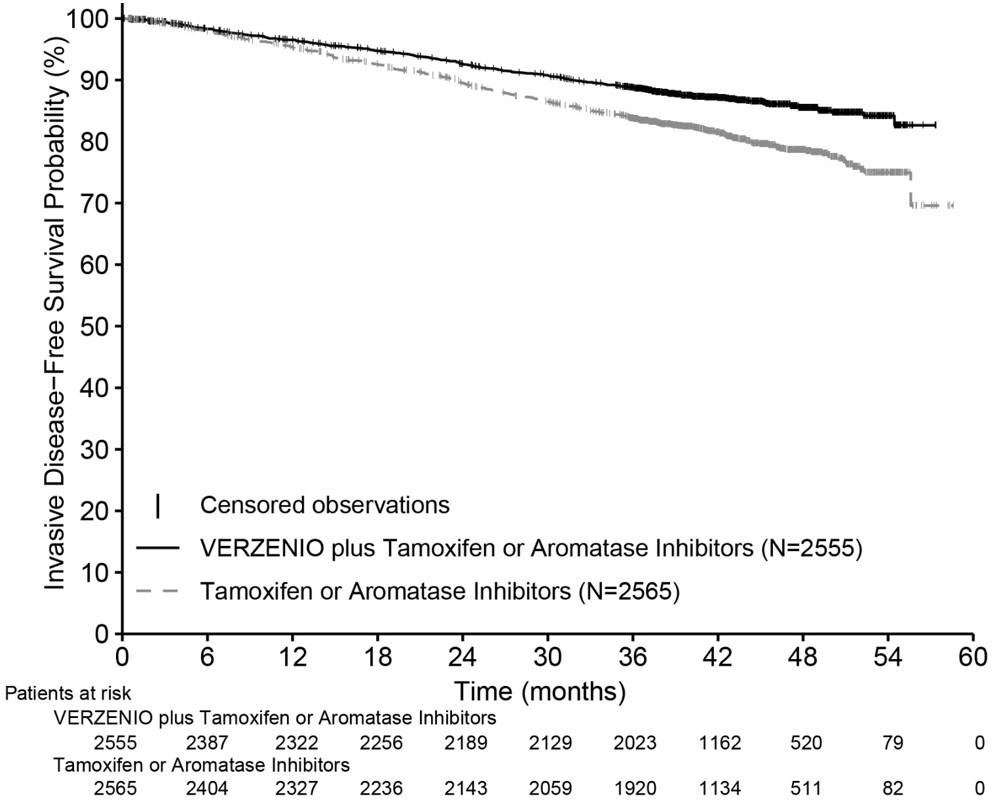
The major efficacy outcome for VERZENIO in combination with endocrine therapy (tamoxifen or an aromatase inhibitor) was invasive disease–free survival (IDFS). IDFS was defined as the time from randomization to the first occurrence of: ipsilateral invasive breast tumor recurrence, regional invasive breast cancer recurrence, distant recurrence, contralateral invasive breast cancer, second primary non-breast invasive cancer, or death attributable to any cause. Overall survival (OS) was an additional outcome measure.
A statistically significant difference in IDFS was observed in the intent-to-treat (ITT) population which was primarily attributed to the patients treated in cohort 1.
Of the 5120 patients randomized in cohort 1, the median age was 51 years (range, 22-89 years), 99% were women, 70% were White, 24% were Asian, 1.7% were Black or African American, 2.1% were American Indian or Alaska Native, and 0.1% were Native Hawaiian or Other Pacific Islander; 8% were Hispanic/Latino and 92% were not Hispanic/Latino and 0.2% were not reported/missing. Forty-three percent of patients were premenopausal. Most patients received prior chemotherapy (37% neoadjuvant, 59% adjuvant) and prior radiotherapy (96%). Sixty-five percent of the patients had 4 or more positive lymph nodes with 22% having ≥10 positive lymph nodes, 41% had Grade 3 tumor, and 24% had pathological tumor size ≥50 mm. The majority of patients (99%) had estrogen receptor positive disease and 87% had progesterone receptor positive disease. Initial endocrine therapy received by patients included letrozole (39%), tamoxifen (31%), anastrozole (22%), or exemestane (8%).
Efficacy results for cohort 1 are summarized in Table 18 and Figure 1.
Table 18: Efficacy Results in monarchE in Cohort 1
|
| VERZENIO Plus
Tamoxifen or an Aromatase Inhibitor
N=2555 | Tamoxifen or an Aromatase Inhibitor
N=2565 |
| Invasive Disease–Free Survival (IDFS) |
| Number of patients with an event, n (%)
| 317 (12)
| 474 (18)
|
| Hazard ratio (95% CI)
| 0.65 (0.57, 0.75)
|
| IDFS at 48 months, % (95% CI) | 85.5 (83.8, 87.0)
| 78.6 (76.7, 80.4)
|
Figure 1: Kaplan-Meier Curves of Invasive Disease–Free Survival VERZENIO plus Tamoxifen or an Aromatase Inhibitor versus Tamoxifen or an Aromatase Inhibitor in Cohort 1 (monarchE)
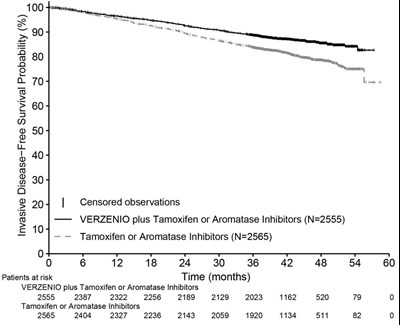
Figure 1 (Verzenio Pi F1 V6)
A final OS analysis was conducted after 630 death events were observed in cohort 1. Exploratory OS results showed a HR of 0.84 (95% CI: 0.71, 0.98) for patients treated with VERZENIO plus Tamoxifen or an Aromatase Inhibitor compared with patients treated with Tamoxifen or an Aromatase Inhibitor in cohort 1.
VERZENIO in Combination with an Aromatase Inhibitor (Anastrozole or Letrozole) (MONARCH 3)
Postmenopausal women with HR-positive, HER2-negative advanced or metastatic breast cancer with no prior systemic therapy in this disease setting
The efficacy of VERZENIO in combination with an aromatase inhibitor was evaluated in MONARCH 3 (NCT02246621), a randomized, double-blinded, placebo-controlled, multicenter study in 493 postmenopausal women with HR-positive, HER2-negative advanced or metastatic breast cancer in combination with a nonsteroidal aromatase inhibitor as initial endocrine-based therapy, including patients not previously treated with systemic therapy for breast cancer. Patients were randomized 2:1 to VERZENIO 150 mg orally twice daily in combination with an aromatase inhibitor or placebo in combination with an aromatase inhibitor. Randomization was stratified by disease site (visceral, bone only, or other) and by prior (neo)adjuvant endocrine therapy (aromatase inhibitor versus other versus no prior endocrine therapy). Patients were treated until disease progression or unacceptable toxicity.
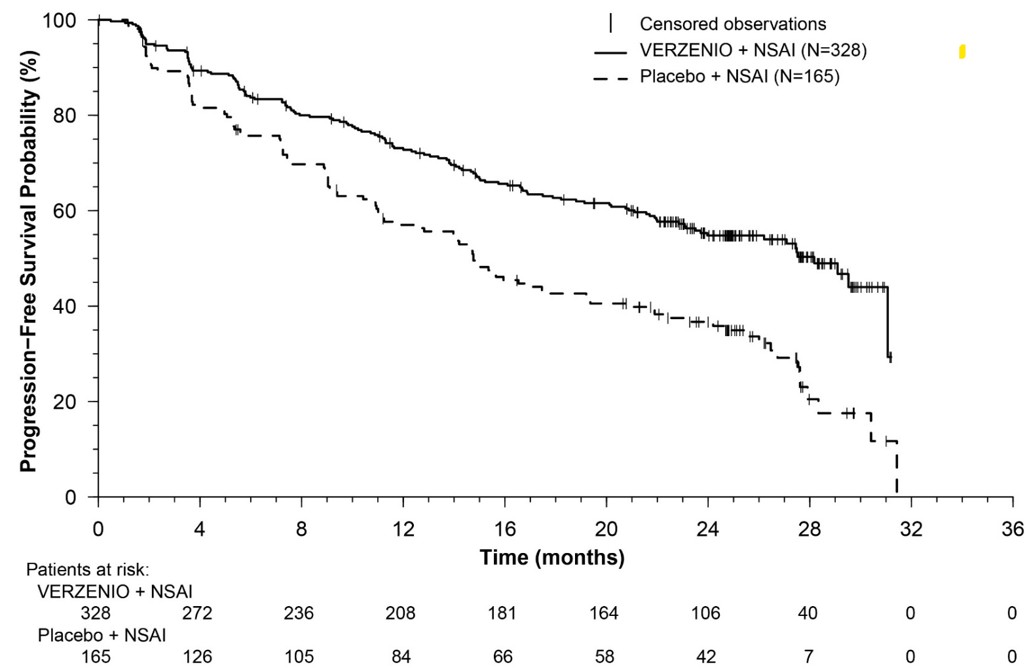
The major efficacy outcome for VERZENIO in combination with an aromatase inhibitor was progression free survival (PFS) by investigator assessment using Response Evaluation Criteria (RECIST) v1.1. Other efficacy measures included OS and objective response rate (ORR).
The median age was 63 years (range, 32-88 years), 45% age 65 or older; 58% White, 30% Asian, 1.6% Black or African American, 1.4% American Indian or Alaska Native, 0.2% Native Hawaiian or Other Pacific Islander, and 0.4% multiple races, and race was not reported for 7.9%; 8.9% were Hispanic/Latino and 72% were not Hispanic/Latino and 19% not reported/missing; and baseline ECOG performance status was 0 (60%), or 1 (40%). Most patients had visceral metastasis (53%) at baseline and 22% had bone-only disease. Of the patients enrolled, 51% had received prior systemic therapy and 39% of patients had received chemotherapy. Overall, 80% of patients received letrozole as investigator's choice aromatase inhibitor and 20% received anastrozole.
Efficacy results are summarized in Table 19 and Figure 2. PFS assessment based on a blinded independent radiologic review was consistent with the investigator assessment. Consistent PFS results were observed across patient stratification subgroups of disease site and prior (neo)adjuvant endocrine therapy.
Table 19: Efficacy Results in MONARCH 3 (Investigator Assessment, Intent-to-Treat Population)
|
|
|
| VERZENIO plus
Anastrozole or Letrozole | Placebo plus
Anastrozole or Letrozole |
| Progression-Free Survival | N=328 | N=165 |
| Number of patients with an event, n (%)
| 138 (42)
| 108 (65)
|
| Median in months (95% CI)
| 28.2 (23.5, NR)
| 14.8 (11.2, 19.2)
|
| Hazard ratio (95% CI)
| 0.54 (0.42, 0.70)
|
| p-value
| <0.0001
|
| Overall Survival | N=328 | N=165 |
| Number of patients with an event, n (%)
| 198 (60)
| 116 (70)
|
| Median in months (95% CI)
| 66.8 (59.2, 74.8)
| 53.7 (44.7, 59.3)
|
| Hazard ratio (95% CI)
| 0.80 (0.64, 1.02)
|
| p-value
| NS
|
| Objective Response for Patients with Measurable Diseasea | N=267 | N=132 |
| Objective response rate, n (%)a,b | 148 (55)
| 53 (40)
|
| 95% CI
| 49, 61
| 32, 49
|
Figure 2: Kaplan-Meier Curves of Progression-Free Survival: VERZENIO plus Anastrozole or Letrozole versus Placebo plus Anastrozole or Letrozole in Intent-to-Treat Population (MONARCH 3)
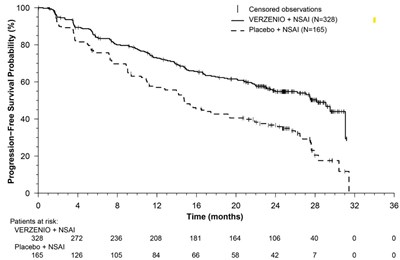
Figure 2 (Verzenio Pi F2 V4)
VERZENIO in Combination with Fulvestrant (MONARCH 2)
Patients with HR-positive, HER2-negative advanced or metastatic breast cancer with disease progression on or after prior adjuvant or metastatic endocrine therapy
The efficacy of VERZENIO in combination with fulvestrant was evaluated in MONARCH 2 (NCT02107703), a randomized, placebo-controlled, multicenter study in 669 women with HR-positive, HER2-negative metastatic breast cancer with disease progression following endocrine therapy who had not received chemotherapy in the metastatic setting. Patients were randomized 2:1 to VERZENIO 150 mg orally twice daily or placebo orally twice daily in combination with fulvestrant 500 mg intramuscularly on days 1 and 15 of cycle 1 and then on day 1 of cycle 2 and beyond (28-day cycles). Randomization was stratified by disease site (visceral, bone only, or other) and by sensitivity to prior endocrine therapy (primary or secondary resistance). Primary endocrine therapy resistance was defined as relapse while on the first 2 years of adjuvant endocrine therapy or progressive disease within the first 6 months of first line endocrine therapy for metastatic breast cancer. Pre/perimenopausal women were enrolled in the study and received the gonadotropin-releasing hormone agonist goserelin for at least 4 weeks prior to and for the duration of MONARCH 2. Patients remained on continuous treatment until development of progressive disease or unmanageable toxicity.
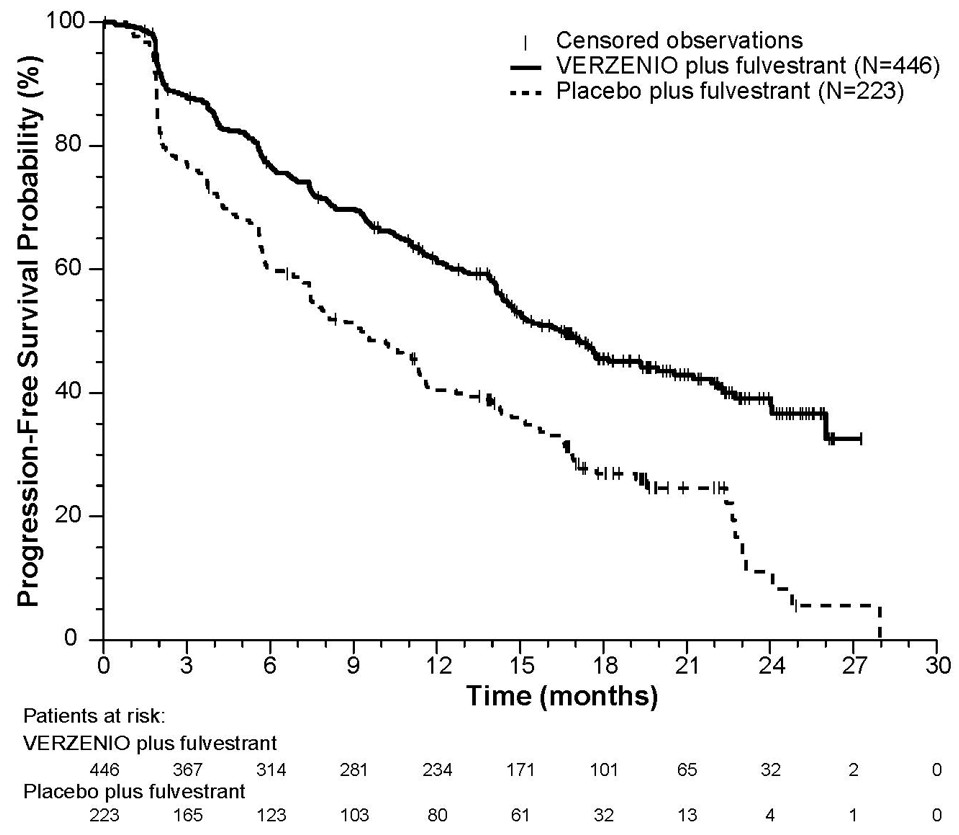
The major efficacy outcome for VERZENIO in combination with fulvestrant was PFS by investigator assessment using RECIST v1.1. Other efficacy measures included OS and ORR.
The median age was 60 years (range, 32-91 years), 37% age 65 or older, 56% White, 32% Asian, 3.9% American Indian or Alaska Native, 2.1% Black or African American, and race was not reported for 6.3%; 12% were Hispanic/Latino and 70% were not Hispanic/Latino, 18% not reported/missing; ECOG performance status was 0 (60%), 1 (39%) or 2 (0.1%). Most patients had visceral disease (56%), 27% had bone-only disease, and 20% had de novo metastatic disease. Twenty-five percent (25%) of patients had primary endocrine therapy resistance. Seventeen percent (17%) of patients were pre- or perimenopausal.
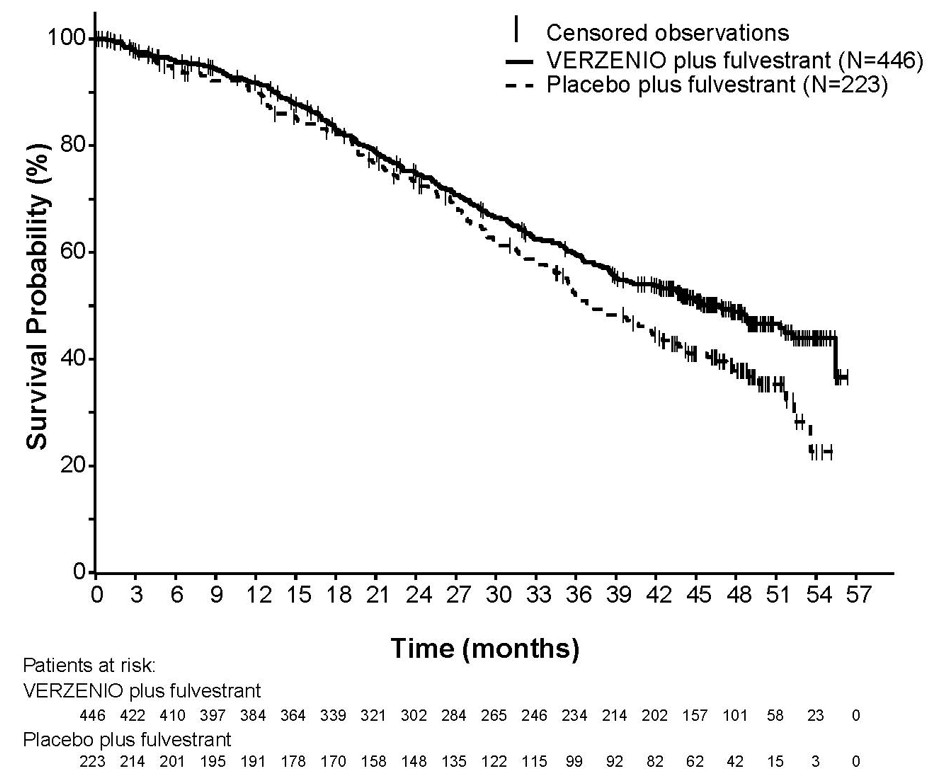
Efficacy results are summarized in Table 20, Figure 3, and Figure 4. PFS assessment based on a blinded independent radiologic review was consistent with the investigator assessment. Consistent results were observed across patient stratification subgroups of disease site and endocrine therapy resistance for PFS and OS.
Table 20: Efficacy Results in MONARCH 2 (Intent-to-Treat Population)
|
|
|
|
| VERZENIO plus Fulvestrant | Placebo plus Fulvestrant |
Progression-Free Survival
(Investigator Assessment) | N=446 | N=223 |
| Number of patients with an event, n (%)
| 222 (50)
| 157 (70)
|
| Median in months (95% CI)
| 16.4 (14.4, 19.3)
| 9.3 (7.4, 12.7)
|
| Hazard ratio (95% CI)a | 0.55 (0.45, 0.68)
|
| p-valuea | p<.0001
|
| Overall Survivalb |
| Number of deaths, n (%)
| 211 (47)
| 127 (57)
|
| Median OS in months (95% CI)
| 46.7 (39.2, 52.2)
| 37.3 (34.4, 43.2)
|
| Hazard ratio (95% CI)a | 0.76 (0.61, 0.95)
|
| p-valuea | p=.0137
|
| Objective Response for Patients with Measurable Disease | N=318 | N=164 |
| Objective response rate, n (%)c | 153 (48)
| 35 (21)
|
| 95% CI
| 43, 54
| 15, 28
|
Figure 3: Kaplan-Meier Curves of Progression-Free Survival: VERZENIO plus Fulvestrant versus Placebo plus Fulvestrant (MONARCH 2)
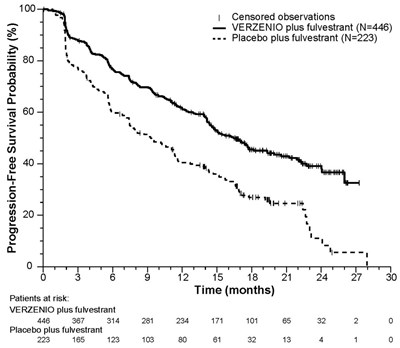
Figure 3 (Verzenio Pi F3 V3)
Figure 4: Kaplan-Meier Curves of Overall Survival: VERZENIO plus Fulvestrant versus Placebo plus Fulvestrant (MONARCH 2)
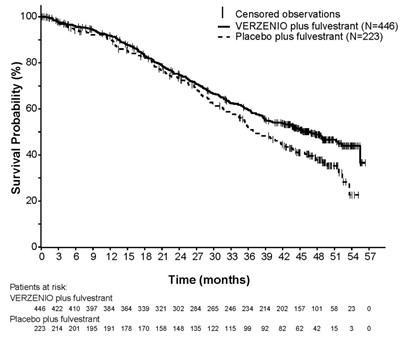
Figure 4 (Verzenio Pi F4 V3)
VERZENIO in Combination with Imlunestrant in Advanced or Metastatic Breast Cancer
(EMBER-3)
The efficacy of VERZENIO in combination with imlunestrant was evaluated in EMBER-3 (NCT04975308), a randomized, open-label, active-controlled, multicenter trial that enrolled 874 adult patients with ER+, HER2- locally advanced or metastatic breast cancer of which 323 patients had ESR1 mutations (ESR1m), who were previously treated with an aromatase inhibitor either alone or in combination with a CDK4/6 inhibitor. Patients were excluded if they were eligible to receive a PARP inhibitor. Patients were required to have progressed:
- Within 12 months of completing neoadjuvant or adjuvant aromatase inhibitor therapy with no systemic treatment for recurrent disease or
- Greater than 12 months after neoadjuvant or adjuvant endocrine therapy or de novo metastatic disease and had progressed on only one line of aromatase inhibitor therapy.
Patients were randomized 1:1:1 to
- imlunestrant 400 mg orally once daily; or
- investigator's choice of endocrine therapy [fulvestrant 500 mg intramuscularly on days 1, 15, 29, and once monthly thereafter or exemestane 25 mg orally once daily]; or
- VERZENIO 150 mg orally twice daily in combination with imlunestrant 400 mg orally once daily
Randomization was stratified by previous treatment with CDK4/6 inhibitor (yes vs no), presence of visceral metastasis (yes vs no), and region (East Asia vs North America/Western Europe vs Others). ESR1m status was determined by blood circulating tumor deoxyribonucleic acid (ctDNA) analysis using the Guardant360 CDx assay and was limited to specific ESR1 mutations in the ligand binding domain. Patients were treated until disease progression or unacceptable toxicity.
The major efficacy outcome for VERZENIO in combination with imlunestrant was investigator-assessed PFS according to RECIST v1.1 in the overall population. Other efficacy measures included OS, BIRC-assessed PFS, and ORR. While the comparison of PFS between VERZENIO in combination with imlunestrant and imlunestrant monotherapy in the overall population was statistically significant, a PFS improvement was not demonstrated for imlunestrant monotherapy compared to investigator's choice of endocrine therapy in either the overall or ESR1m not detected populations, indicating that the benefit for imlunestrant monotherapy was only observed in the ESR1m population. Therefore, exploratory analyses of PFS, OS and ORR in the ESR1m population comparing VERZENIO in combination with imlunestrant and imlunestrant monotherapy were performed.
Among the patients on VERZENIO in combination with imlunestrant or the imlunestrant monotherapy arm who were positive for ESR1m (n= 159), the median age was 62 years (range: 31-85 years), all patients were female, of which 12% were pre/perimenopausal; 60% were White, 27% Asian, 5% Black, 0.6% were American Indian or Alaskan Native, 0.6% multiple races, 7% missing, 12% were Hispanic/Latino, 75% not Hispanic/Latino, 13% not reported/missing; and all patients had a baseline ECOG performance status of 0 (66%) or 1 (34%). Most patients had visceral metastasis (58%) at baseline. Of the patients enrolled, all received a prior line of endocrine therapy and 81% had received one line of endocrine therapy in the advanced or metastatic setting. Overall, 79% of patients were treated with a prior CDK4/6 inhibitor, 4.4% were treated in the adjuvant setting and 74% were treated in the advanced or metastatic setting. Among the patients who had received prior CDK 4/6 inhibitors, the specific CDK 4/6 inhibitor was palbociclib 65%, ribociclib 28%, and abemaciclib 6%.
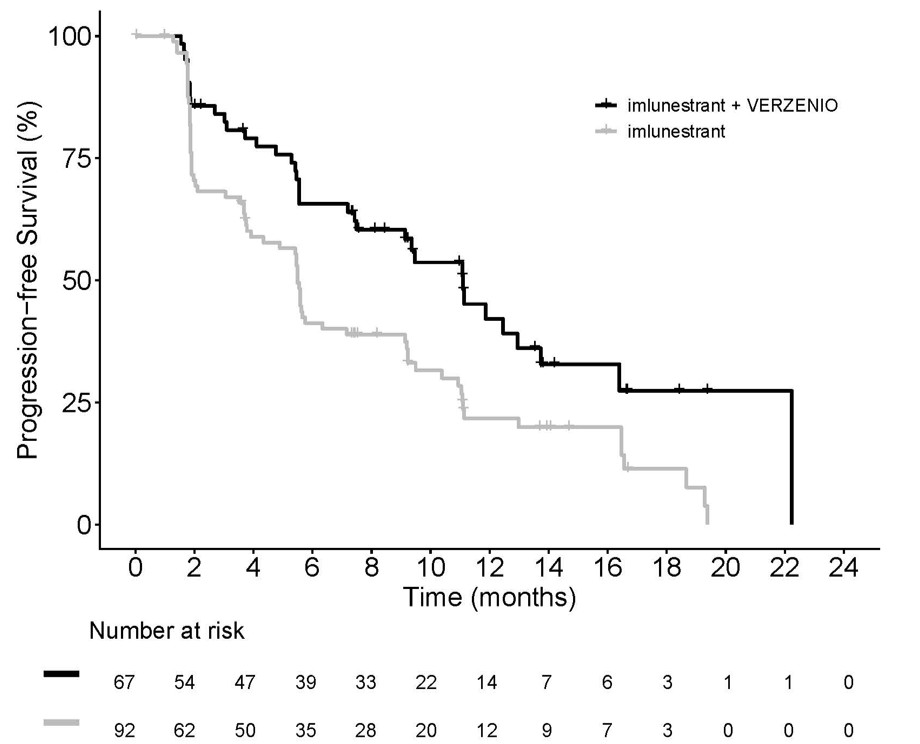
The exploratory analyses results in the ESR1m population are summarized in Table 21 and Figure 5. PFS assessments in ESR1m population based on a BIRC were consistent with the investigator assessment. At the time of interim analysis, overall survival data was immature with 35% of deaths in the ESR1m population.
Table 21: Efficacy Results for VERZENIO in Combination with Imlunestrant Compared with Imlunestrant Monotherapy in Patients with ESR1m in EMBER-3
|
|
|
| VERZENIO plus Imlunestrant
N=67 | Imlunestrant
N=92 |
| Progression-free Survival (PFS)a,b |
| Number of PFS Events, n (%)
| 36 (54)
| 71 (77)
|
| Median in months (95% CI)
| 11.1 (7.4, 13.7)
| 5.5 (3.8, 7.2)
|
| Hazard Ratio (95% CI)c | 0.53 (0.35, 0.80)
|
| Objective Response Rateb |
| Patients with Measurable Disease
| 54
| 74
|
| ORR, % (95% CI)
| 35 (22, 48)
| 15 (7, 23)
|
| Complete response rate, %
| 1.9
| 1.4
|
| Partial response rate, %
| 33
| 14
|
Figure 5: Kaplan-Meier Plot of Investigator-Assessed PFS for Patients with
ESR1m, Treated with VERZENIO in Combination with Imlunestrant or Imlunestrant Monotherapy in EMBER-3
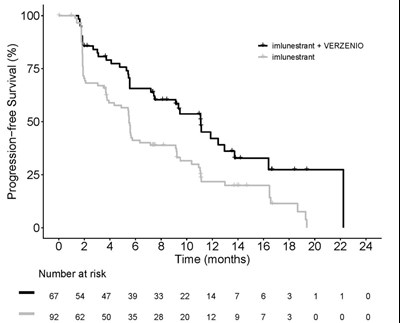
Figure (Verzenio Pi F5 V1)
VERZENIO Administered as a Monotherapy in Metastatic Breast Cancer (MONARCH 1)
Patients with HR-positive, HER2-negative breast cancer who received prior endocrine therapy and 1-2 chemotherapy regimens in the metastatic setting
The efficacy of VERZENIO monotherapy was evaluated in MONARCH 1 (NCT02102490), a single-arm, open-label, multicenter study in 132 women with measurable HR-positive, HER2-negative metastatic breast cancer whose disease progressed during or after endocrine therapy, had received a taxane in any setting, and who received 1 or 2 prior chemotherapy regimens in the metastatic setting. Patients received VERZENIO 200 mg orally twice daily on a continuous schedule until development of progressive disease or unmanageable toxicity.
The major efficacy outcome was ORR. Duration of response (DoR) was another efficacy measure.
The median age was 58 years (range, 36-89 years), 32% age 65 or older; 85% White, 4.5% Black or African American, 1.5% Asian, and race was not reported for 9.1%; 6.1% were Hispanic/Latino and 85% were not Hispanic/Latino, and 9.1% not reported/missing; ECOG performance status was 0 (55%) or 1 (45%). The median duration of metastatic disease was 27.6 months. Ninety percent (90%) of patients had visceral metastases, and 51% of patients had 3 or more sites of metastatic disease. Fifty-one percent (51%) of patients had one line of chemotherapy in the metastatic setting. Sixty-nine percent (69%) of patients had received a taxane-based regimen in the metastatic setting and 55% had received capecitabine in the metastatic setting.
Efficacy results are summarized in Table 22.
Table 22: Efficacy Results in MONARCH 1 (Intent-to-Treat Population)
|
|
|
| VERZENIO 200 mg
N=132 |
| Investigator Assessed | Independent Review |
| Objective Response Ratea,b, n (%) | 26 (20)
| 23 (17)
|
| 95% CI
| 13, 28
| 11, 25
|
| Median Duration of Response in months | 8.6
| 7.2
|
| 95% CI
| 5.8, 10.2
| 5.6, NR
|
Diarrhea
VERZENIO may cause diarrhea, which may be severe in some cases [see Warnings and Precautions (5.1)].
- Early identification and intervention is critical for the optimal management of diarrhea. Instruct patients that at the first sign of loose stools, they should start antidiarrheal therapy (for example, loperamide) and notify their healthcare provider for further instructions and appropriate follow up.
- Encourage patients to increase oral fluids.
- If diarrhea does not resolve with antidiarrheal therapy within 24 hours to ≤Grade 1, suspend VERZENIO dosing [see Dosage and Administration (2.2)].
Neutropenia
Advise patients of the possibility of developing neutropenia and to immediately contact their healthcare provider should they develop a fever, particularly in association with any signs of infection [see Warnings and Precautions (5.2)].
Interstitial Lung Disease/Pneumonitis
Advise patients to immediately report new or worsening respiratory symptoms [see Warnings and Precautions (5.3)].
Hepatotoxicity
Inform patients of the signs and symptoms of hepatotoxicity. Advise patients to contact their healthcare provider immediately for signs or symptoms of hepatotoxicity [see Warnings and Precautions (5.4)].
Venous Thromboembolism
Advise patients to immediately report any signs or symptoms of thromboembolism such as pain or swelling in an extremity, shortness of breath, chest pain, tachypnea, and tachycardia [see Warnings and Precautions (5.5)].
Embryo-Fetal Toxicity