Missed Dose
Do not take a missed dose unless it is more than 6 hours until next scheduled dose.
Vomiting
If vomiting occurs after RETEVMO administration, do not take an additional dose and continue to the next scheduled time for the next dose.
RET
Gene Fusion or Gene Mutation Positive Solid Tumors
LIBRETTO-001
Among the 857 patients who received RETEVMO, 74% were exposed for 12 months or longer and 57% were exposed for 24 months or longer. Among these patients, 97% received at least one dose of RETEVMO at the recommended dosage of 160 mg orally twice daily.
The median age was 59 years (range: 15 to 92 years); 0.2% were pediatric patients 12 to 16 years of age; 51% were male; and 68% were White, 24% were Asian, and 3% were Black or African American; and 5% were Hispanic/Latino. The most common tumors were NSCLC (43%), MTC (39%), and non-medullary thyroid carcinoma (8%).
Serious adverse reactions occurred in 58% of patients who received RETEVMO. The most frequent serious adverse reactions (≥2% of patients) were pneumonia, hemorrhage, abdominal pain, dyspnea, pleural effusion, sepsis, musculoskeletal pain, hyponatremia, vomiting, diarrhea, and increased blood creatinine. Fatal adverse reactions occurred in 3% of patients; fatal adverse reactions included sepsis (n = 6), respiratory failure (n = 5), hemorrhage (n = 4), pneumonia (n = 4), cardiac arrest (n=3), pneumonitis, cardiac failure (n=2 each), sudden death, cerebral infarction and dyspnea (n = 1 each).
Permanent discontinuation due to an adverse reaction occurred in 10% of patients who received RETEVMO. Adverse reactions resulting in permanent discontinuation in ≥0.5% of patients included increased ALT (0.7%), fatigue (0.6%), sepsis (0.5%), pneumonia (0.5%), and increased AST (0.5%).
Dosage interruptions due to an adverse reaction occurred in 72% of patients who received RETEVMO. Adverse reactions requiring dosage interruption in ≥5% of patients included increased ALT, increased AST, diarrhea, hypertension, and QT prolongation.
Dose reductions due to an adverse reaction occurred in 45% of patients who received RETEVMO. Adverse reactions requiring dosage reductions in ≥2% of patients included increased ALT, increased AST, fatigue, QT prolongation, diarrhea, drug hypersensitivity, and ascites.
The most common adverse reactions (≥25%) were musculoskeletal pain, edema, diarrhea, fatigue, dry mouth, hypertension, abdominal pain, rash, nausea, constipation, headache, vomiting, cough, dyspnea, and hemorrhage.
The most common Grade 3 or 4 laboratory abnormalities (≥5%) were decreased lymphocytes, increased alanine aminotransferase (ALT), decreased sodium, increased aspartate aminotransferase (AST), decreased calcium, and decreased phosphate.
Table 6 summarizes the adverse reactions in LIBRETTO-001.
Table 6: Adverse Reactions (≥20%) in Patients Who Received RETEVMO in LIBRETTO-001
| Adverse Reaction | RETEVMO
(n = 857) |
|---|
| Grades 1-4#
(%) | Grades 3-4
(%) |
|---|
|
|
|
|
|
|
|
|
|
|
|
|
|
|
|
|
|
| Musculoskeletal and Connective Tissue Disorders |
| Musculoskeletal pain1 | 59
| 4.1*
|
| General Disorders and Administration Site Conditions |
| Edema2 | 53
| 1.3*
|
| Fatigue3 | 49
| 4.7*
|
| Gastrointestinal Disorders |
| Diarrhea4 | 52
| 6.2*
|
| Dry mouth5 | 44
| 0
|
| Abdominal pain6 | 39
| 3.5*
|
| Nausea
| 36
| 1.9*
|
| Constipation
| 35
| 0.8*
|
| Vomiting7 | 29
| 2.9*
|
| Vascular Disorders |
| Hypertension8 | 43
| 20
|
| Skin and Subcutaneous Tissue Disorders |
| Rash9 | 38
| 0.8*
|
| Respiratory, Thoracic and Mediastinal Disorders |
| Cough10 | 30
| 0
|
| Dyspnea11 | 28
| 4.1
|
| Nervous System Disorders |
| Headache12 | 30
| 1.8*
|
| Dizziness13 | 22
| 0.5*
|
| Blood and Lymphatic System Disorders |
| Hemorrhage14 | 26
| 3.9
|
| Metabolism and Nutrition Disorders |
| Decreased appetite
| 23
| 0.9*
|
| Investigations |
| Prolonged QT interval15 | 21
| 5*
|
| Infections and Infestations |
| Urinary tract infection
| 20
| 2.2* |
Clinically relevant adverse reactions in ≤15% of patients who received RETEVMO include hypothyroidism (15%); pneumonia (14%), hypersensitivity (6%); interstitial lung disease/pneumonitis, chylothorax, chylous ascites or tumor lysis syndrome (all < 3%).
Table 7 summarizes the laboratory abnormalities in LIBRETTO-001.
Table 7: Select Laboratory Abnormalities (≥20%) Worsening from Baseline in Patients Who Received RETEVMO in LIBRETTO-001
|
|
| Laboratory Abnormality | RETEVMO1 |
Grades 1-4#
(%) | Grades 3-4
(%) |
| Chemistry |
| Increased AST
| 62
| 11
|
| Decreased calcium
| 61
| 7
|
| Decreased albumin
| 61
| 3.6
|
| Increased ALT
| 58
| 13
|
| Increased glucose
| 56
| 4.0
|
| Increased creatinine
| 51
| 3.6
|
| Decreased sodium
| 49
| 13
|
| Increased alkaline phosphatase
| 43
| 4.4
|
| Increased potassium
| 39
| 3.5
|
| Decreased glucose
| 39
| 1.5
|
| Increased total cholesterol
| 37
| 1.7
|
| Decreased magnesium
| 37
| 0.7
|
| Increased bilirubin
| 32
| 2.9
|
| Decreased phosphate
| 25
| 5
|
| Hematology |
| Decreased lymphocytes
| 56
| 22
|
| Decreased platelets
| 41
| 4.0
|
| Decreased hemoglobin
| 36
| 4.1
|
| Decreased neutrophils
| 27
| 3.8
|
LIBRETTO-121
The safety population described below reflects exposure to RETEVMO as a single agent at 92 mg/m2 orally twice daily evaluated in 36 patients with advanced solid tumors harboring an activating RET alteration in LIBRETTO-121 [see Clinical Studies (14)]. Among the 36 pediatric and adolescent patients who received RETEVMO, 86% were exposed for 6 months or longer and 72% were exposed for greater than one year.
The median age was 13 years (range: 2 to 20 years); 31% were pediatric patients 2 to 12 years of age; 53% were male; and 47% were White, 28% were Asian, and 8% were Black or African American; and 19% were Hispanic/Latino. The most common cancers were MTC (42%), and papillary thyroid cancer (42%).
Serious adverse reactions occurred in 42% of patients who received RETEVMO. Serious adverse reactions occurring in more than 1 patient were vomiting and fracture (2 patients each).
Dosage interruptions due to an adverse reaction occurred in 42% of patients who received RETEVMO. Adverse reactions requiring dosage interruption in ≥5% of patients included increased ALT, increased AST, ascites, increased bilirubin, decreased neutrophils, and pyrexia.
Dose reductions due to an adverse reaction occurred in 22% of patients who received RETEVMO. Adverse reactions requiring dosage reductions in ≥2% of patients included increased ALT, decreased neutrophils, increased weight, and increased bilirubin.
The most common adverse reactions (≥25%) were musculoskeletal pain, diarrhea, nausea, hemorrhage, pyrexia, abdominal pain, headache, vomiting, fatigue, cough, rash, coronavirus infection, upper respiratory tract infection, and edema.
The most common Grade 3 or 4 laboratory abnormalities (≥5%) were decreased lymphocytes, decreased calcium, decreased hemoglobin, decreased neutrophils, increased ALT, decreased magnesium, and decreased potassium.
Table 8 summarizes the adverse reactions in LIBRETTO-121.
Table 8: Adverse Reactions (≥15%) in Patients Who Received RETEVMO in LIBRETTO-121
| Adverse Reactions | RETEVMO
N= 36 |
|---|
Grades 1-4#
% | Grades 3-4
% |
|---|
|
|
|
|
|
|
|
|
|
|
|
| Musculoskeletal and Connective Tissue Disorders |
| Musculoskeletal pain1 | 58
| 0
|
| Gastrointestinal Disorders |
| Diarrhea2 | 47
| 2.8*
|
| Nausea
| 42
| 2.8*
|
| Abdominal pain3 | 36
| 0
|
| Vomiting
| 31
| 8*
|
| Constipation
| 22
| 6* |
| Blood and Lymphatic System Disorders |
| Hemorrhage4 | 39
| 0
|
| General Disorders and Administration Site Conditions |
| Pyrexia
| 39
| 0
|
| Fatigue5 | 31
| 0
|
| Edema6 | 25
| 0
|
| Nervous System Disorders |
| Headache
| 33
| 0
|
| Respiratory, Thoracic and Mediastinal Disorders |
| Cough
| 31
| 0
|
| Oropharyngeal pain
| 22
| 0
|
| Skin and Subcutaneous Tissue Disorders |
| Rash7 | 28
| 0
|
| Infections and Infestations |
| Coronavirus infection
| 28
| 0
|
| Upper respiratory tract infection
| 28
| 2.8*
|
| Urinary tract infection8 | 19
| 2.8*
|
| Endocrine Disorders |
| Hypothyroidism9 | 22
| 0
|
| Investigations |
| Increased weight
| 19
| 11*
|
Clinically relevant adverse reactions in <15% of patients who received RETEVMO include dizziness (14%), electrocardiogram QT prolonged (14%), hypersensitivity (11%), stomatitis (14%), proteinuria (11%), hypertension (8%), decreased appetite (8%), erectile dysfunction (6%), chylous ascites (2.8%), dry mouth (2.8%), epiphysiolysis (2.8%), and pneumonia (2.8%).
Table 9 summarizes the laboratory abnormalities in LIBRETTO-121.
Table 9: Select Laboratory Abnormalities (≥15%) Worsening from Baseline in Patients Who Received RETEVMO in LIBRETTO-121
|
|
|
| Laboratory Abnormality | RETEVMO1 |
| Grades 1-4#
(%) | Grades 3-4
(%) |
| Chemistry |
| Decreased calcium
| 61
| 11
|
| Increased ALT
| 58
| 8*
|
| Decreased albumin
| 53
| 0
|
| Increased alkaline phosphatase
| 50
| 0
|
| Increased AST
| 50
| 2.8*
|
| Increased bilirubin
| 31
| 2.8*
|
| Increased cholesterol
| 28
| 0
|
| Decreased magnesium
| 28
| 6
|
| Increased potassium
| 28
| 2.8
|
| Increased creatinine
| 19
| 2.8
|
| Decreased potassium
| 19
| 6
|
| Decreased sodium
| 17
| 0
|
| Hematology |
| Decreased neutrophils
| 40
| 8
|
| Decreased hemoglobin
| 36
| 11*
|
| Increased hemoglobin
| 33
| 2.8*
|
| Decreased platelets
| 28
| 2.8*
|
| Decreased lymphocytes
| 28
| 14
|
Treatment-naïve RET Fusion-Positive Non-Small Cell Lung Cancer
LIBRETTO-431
The safety population described below reflects exposure to RETEVMO as a single agent administered at 160 mg orally twice daily evaluated in 158 patients with unresectable locally advanced or metastatic RET fusion-positive NSCLC in LIBRETTO-431 [see Clinical Studies (14)]. Among the 158 patients who received RETEVMO, the median duration of exposure was 16.7 months (range: 5 days to 37.9 months); 87% were exposed for 6 months or longer and 70% were exposed for one year or longer.
The median age was 61 years (range: 31 to 87 years); 46% were male; and 36% were White, 58% were Asian, 1.3% were Black or African American, 1.3% were American Indian or Alaska Native, and 3.2% were missing.
Serious adverse reactions occurred in 35% of patients who received RETEVMO. The most frequent serious adverse reactions (≥2% of patients) were pleural effusion, and abnormal hepatic function. Fatal adverse reactions occurred in 4.4% of patients who received RETEVMO; fatal adverse reactions included myocardial infarction (n = 2), respiratory failure (n = 2), cardiac arrest, malnutrition, and sudden death (n = 1, each).
Permanent discontinuation due to an adverse reaction occurred in 10% of patients who received RETEVMO. Adverse reactions resulting in permanent discontinuation in ≥1% of patients included increased ALT (1.3%), and myocardial infarction (1.3%).
Dosage interruptions due to an adverse reaction occurred in 72% of patients who received RETEVMO. Adverse reactions requiring dosage interruption in ≥5% of patients included increased ALT, hypertension, increased AST, QT prolongation, diarrhea, and COVID-19 infection.
Dose reductions due to an adverse reaction occurred in 51% of patients who received RETEVMO. Adverse reactions requiring dose reductions in ≥5% of patients included increased ALT, increased AST, QT prolongation.
The most common adverse reactions (≥25%) in patients who received RETEVMO were hypertension, diarrhea, edema, dry mouth, rash, fatigue, abdominal pain, and musculoskeletal pain.
The most common Grade 3 or 4 laboratory abnormalities (≥5%) in patients who received RETEVMO were increased ALT, increased AST, and decreased lymphocytes.
Table 10 summarizes the adverse reactions in LIBRETTO-431.
Table 10: Adverse Reactions (≥15%) in Patients on Either Arm in LIBRETTO-431
|
|
|
|
|
|
|
|
|
|
|
| Adverse Reaction | RETEVMO
(n=158) | Chemotherapy
with or without pembrolizumab
(n=98) |
Grades 1-4#
(%) | Grades 3-4
(%) | Grades 1-4#
(%) | Grades 3-4
(%) |
| Vascular disorders |
| Hypertension
| 48
| 20*
| 7
| 3.1*
|
| Gastrointestinal disorders |
| Diarrhea1 | 44
| 1.3*
| 24
| 2.0*
|
| Dry mouth2 | 39
| 0
| 6
| 0
|
| Abdominal pain3 | 25
| 0.6*
| 19
| 2.0*
|
| Constipation
| 22
| 0
| 40
| 1.0*
|
| Stomatitis4 | 18
| 0
| 16
| 0
|
| Nausea
| 13
| 0
| 44
| 1.0*
|
| Vomiting5 | 13
| 0
| 23
| 1.0*
|
| General disorders and administration site conditions |
| Edema6 | 41
| 2.5*
| 28
| 0
|
| Fatigue7 | 32
| 3.2*
| 50
| 5*
|
| Pyrexia
| 13
| 0.6*
| 23
| 0
|
| Skin and subcutaneous tissue disorders |
| Rash8 | 33
| 1.9*
| 30
| 1.0*
|
| Musculoskeletal and Connective Tissue Disorders |
| Musculoskeletal pain9 | 25
| 0
| 28
| 0
|
| Investigations |
| Electrocardiogram QT prolonged
| 20
| 9*
| 1.0
| 0
|
| Infections and infestations |
| COVID-19 infection
| 19
| 0.6*
| 18
| 0
|
| Metabolism and nutrition disorders |
| Decreased appetite
| 17
| 0
| 34
| 2.0*
|
Clinically relevant adverse reactions in <15% of patients who received RETEVMO include headache (14%); hemorrhage (13%); urinary tract infections (12%); hypothyroidism (9%); pneumonia (9%); dizziness (8%); interstitial lung disease/pneumonitis (4.4%); hypersensitivity, chylous ascites, and chylothorax (all < 2%).
Table 11 summarizes the laboratory abnormalities in LIBRETTO-431.
Table 11: Select Laboratory Abnormalities (≥20%) Worsening from Baseline in Patients on Either Arm in LIBRETTO-431
| Laboratory Abnormality1 | RETEVMO | Chemotherapy
with or without pembrolizumab |
|---|
Grades 1-4#
(%) | Grades 3-4
(%) | Grades 1-4#
(%) | Grades 3-4
(%) |
|---|
|
|
| Chemistry |
| ALT increased
| 81
| 21
| 63
| 4.1
|
| AST increased
| 77
| 10
| 46
| 0
|
| Alkaline phosphatase Increased
| 35
| 1.3
| 22
| 0
|
| Total bilirubin Increased
| 52
| 1.3
| 9
| 0
|
| Blood creatinine Increased
| 23
| 0
| 21
| 0
|
| Magnesium decreased
| 16
| 0.6
| 8
| 0
|
| Albumin decreased
| 25
| 0
| 5
| 0
|
| Calcium decreased
| 53
| 1.9
| 24
| 1.0
|
| Sodium decreased
| 31
| 3.2
| 41
| 2.1
|
| Potassium decreased
| 17
| 1.3
| 15
| 1.0
|
| Hematology |
| Platelets decreased
| 53
| 3.2
| 39
| 5
|
| Lymphocyte count decreased
| 53
| 8
| 64
| 15
|
| Hemoglobin decreased
| 21
| 0
| 91
| 5
|
| Neutrophil count decreased
| 53
| 2.0
| 58
| 11
|
Increased Creatinine
In healthy subjects administered RETEVMO 160 mg orally twice daily, serum creatinine increased 18% after 10 days. Consider alternative markers of renal function if persistent elevations in serum creatinine are observed [see Clinical Pharmacology (12.3)].
RET-Mutant Medullary Thyroid Cancer
LIBRETTO-531
The safety population described below reflects exposure to RETEVMO as a single agent administered at 160 mg (adults) or at 92 mg/m2 (adolescent, not to exceed 160 mg) orally twice daily, in patients with progressive, advanced, kinase inhibitor naïve, RET-mutant medullary thyroid cancer in LIBRETTO-531 [see Clinical Studies (14.2)]. Among the 193 patients who received RETEVMO, the observed median duration of exposure was 14.5 months (range: 25 days to 36 months); 80% were exposed for 6 months or longer and 59% were exposed for one year or longer.
The median age was 55 years (range: 12 to 84 years); 63% were male; and 69% were White, 28% were Asian, 2.9% were Black or African American and ethnicity was not routinely collected.
Serious adverse reactions occurred in 22% of patients who received RETEVMO. The most frequent serious adverse reactions were pneumonia and pyrexia (n = 3, each) and hypertension and urinary tract infection (n = 2, each). Fatal adverse reactions occurred in 2.1% of patients; fatal adverse reactions included COVID-19, diabetic ketoacidosis, multiple organ dysfunction syndrome, and sudden death (n=1 each).
Permanent discontinuation due to an adverse reaction occurred in 4.7% of patients who received RETEVMO. Adverse reactions resulting in permanent discontinuation were edema, multiple organ dysfunction syndrome, sudden death, AST increased, diabetic ketoacidosis, chronic kidney disease, retinopathy, COVID-19, and somatic symptom disorder (n = 1, each).
Dosage interruptions due to an adverse reaction occurred in 49% of patients who received RETEVMO. Adverse reactions requiring dosage omission in ≥5% of patients included ALT increased (9%) and hypertension (7%).
Dose reductions due to an adverse reaction occurred in 39% of patients who received RETEVMO. One adverse reaction, increased ALT (7%), required a dose reduction in ≥5% of patients.
The most common adverse reactions (≥25%) in patients who received RETEVMO were hypertension, edema, dry mouth, fatigue, and diarrhea.
The most common Grade 3 or 4 laboratory abnormalities (≥5%) in patients who received RETEVMO were decreased lymphocytes, increased ALT, decreased neutrophils, increased ALP, increased blood creatinine, decreased calcium, and increased AST.
Table 12 summarizes the adverse reactions in LIBRETTO-531.
Table 12: Adverse Reactions (≥10%) in Patients Who Received RETEVMO in LIBRETTO-531
|
|
|
|
|
|
|
|
|
|
|
|
|
| Adverse Reaction | RETEVMO
N = 193 | Cabozantinib or Vandetanib
N = 97 |
Grades 1-4#
(%) | Grades 3-4
(%) | Grades 1-4#
(%) | Grades 3-4
(%) |
| Vascular disorders |
| Hypertension1 | 43
| 19*
| 41
| 18*
|
| General disorders and administration-site conditions |
| Edema2 | 33
| 0
| 5
| 0
|
| Fatigue3 | 28
| 4.1*
| 47
| 9*
|
| Pyrexia
| 12
| 1.0*
| 2.1
| 0
|
| Gastrointestinal disorders |
| Dry mouth4 | 32
| 0.5*
| 10
| 1.0*
|
| Diarrhea5 | 26
| 3.1*
| 61
| 8*
|
| Abdominal pain6 | 18
| 0.5*
| 21
| 2.1*
|
| Constipation
| 16
| 0
| 12
| 0
|
| Stomatitis7 | 14
| 0.5*
| 42
| 13*
|
| Nausea
| 10
| 1.0*
| 32
| 5*
|
| Nervous system disorders |
| Headache8 | 23
| 0.5*
| 21
| 0
|
| Skin and subcutaneous tissue disorders |
| Rash9 | 19
| 1.6*
| 27
| 4.1*
|
| Reproductive system and breast disorders |
| Erectile dysfunction
| 16
| 0
| 0
| 0
|
| Investigations |
| Electrocardiogram QT prolonged10 | 14
| 4.7*
| 13
| 2.1*
|
| Metabolism and nutrition disorders | | | | |
| Decreased appetite
| 12
| 0.5*
| 28
| 5*
|
| Endocrine disorders |
| Hypothyroidism11 | 11
| 0
| 21
| 0
|
Clinically relevant adverse reactions in ≤10% of patients who received RETEVMO include dizziness (8%); urinary tract infections (8%); vomiting (8%); pneumonia, interstitial lung disease/pneumonitis, chylous ascites, and hypersensitivity (all < 2%).
Table 13 summarizes the laboratory abnormalities in LIBRETTO-531.
Table 13: Select Laboratory Abnormalities (≥5%) Worsening from Baseline in Patients Who Received RETEVMO in LIBRETTO-531
| Laboratory Abnormality | RETEVMO1 | Cabozantinib or Vandetanib1 |
|---|
Grades 1-4#
% | Grades 3-4
% | Grades 1-4#
% | Grades 3-4
% |
|---|
|
|
|
| Chemistry |
| Calcium decreased
| 55
| 5
| 62
| 11
|
| ALT increased
| 53
| 16
| 72
| 7*
|
| AST increased
| 47
| 5
| 68
| 3.2*
|
| Alkaline phosphatase increased
| 37
| 6
| 28
| 5
|
| Total bilirubin increased
| 32
| 1.1
| 30
| 3.2*
|
| Blood creatinine increased
| 27
| 6
| 16
| 8
|
| Sodium decreased
| 20
| 3.2*
| 16
| 0
|
| Albumin decreased
| 11
| 1.1
| 7
| 0
|
| Magnesium decreased
| 9
| 3.3
| 26
| 9
|
| Potassium decreased
| 8
| 0
| 22
| 4.4*
|
| Hematology |
| Lymphocyte count decreased
| 41
| 18
| 36
| 13
|
| Neutrophil count decreased
| 33
| 14
| 42
| 19
|
| Platelets decreased
| 28
| 1.1
| 34
| 1.1*
|
| Hemoglobin decreased
| 18
| 2.1*
| 23
| 2.1*
|
Increased Creatinine
In healthy subjects administered RETEVMO 160 mg orally twice daily, serum creatinine increased 18% after 10 days. Consider alternative markers of renal function if persistent elevations in serum creatinine are observed [see Clinical Pharmacology (12.3)].
Acid-Reducing Agents
Concomitant use of RETEVMO with acid-reducing agents decreases selpercatinib plasma concentrations [see Clinical Pharmacology (12.3)], which may reduce RETEVMO anti-tumor activity.
Avoid concomitant use of PPIs, H2 receptor antagonists, and locally-acting antacids with RETEVMO. If coadministration cannot be avoided, take RETEVMO with food (with a PPI) or modify its administration time (with a H2 receptor antagonist or a locally-acting antacid) [see Dosage and Administration (2.4)].
Strong and Moderate CYP3A Inhibitors
Concomitant use of RETEVMO with a strong or moderate CYP3A inhibitor increases selpercatinib plasma concentrations [see Clinical Pharmacology (12.3)], which may increase the risk of RETEVMO adverse reactions, including QTc interval prolongation.
Avoid concomitant use of strong and moderate CYP3A inhibitors with RETEVMO. If concomitant use of strong and moderate CYP3A inhibitors cannot be avoided, reduce the RETEVMO dosage and monitor the QT interval with ECGs more frequently [see Dosage and Administration (2.6), Warnings and Precautions (5.4)].
Strong and Moderate CYP3A Inducers
Concomitant use of RETEVMO with a strong or moderate CYP3A inducer decreases selpercatinib plasma concentrations [see Clinical Pharmacology (12.3)], which may reduce RETEVMO anti-tumor activity.
Avoid coadministration of strong or moderate CYP3A inducers with RETEVMO.
CYP2C8 and CYP3A Substrates
RETEVMO is a moderate CYP2C8 inhibitor and a weak CYP3A inhibitor. Concomitant use of RETEVMO with CYP2C8 and CYP3A substrates increases their plasma concentrations [see Clinical Pharmacology (12.3)], which may increase the risk of adverse reactions related to these substrates. Avoid coadministration of RETEVMO with CYP2C8 and CYP3A substrates where minimal concentration changes may lead to increased adverse reactions. If coadministration cannot be avoided, follow recommendations for CYP2C8 and CYP3A substrates provided in their approved product labeling.
Certain P-gp and BCRP Substrates
RETEVMO is a P-gp and BCRP inhibitor. Concomitant use of RETEVMO with P-gp or BCRP substrates increases their plasma concentrations [see Clinical Pharmacology (12.3)], which may increase the risk of adverse reactions related to these substrates. Avoid coadministration of RETEVMO with P-gp or BCRP substrates where minimal concentration changes may lead to increased adverse reactions. If coadministration cannot be avoided, follow recommendations for P-gp and BCRP substrates provided in their approved product labeling.
Risk Summary
Based on findings from animal studies, and its mechanism of action [see Clinical Pharmacology (12.1)], RETEVMO can cause fetal harm when administered to a pregnant woman. There are no available data on RETEVMO use in pregnant women to inform drug-associated risk. Administration of selpercatinib to pregnant rats during the period of organogenesis resulted in embryolethality and malformations at maternal exposures that were approximately equal to the human exposure at the clinical dose of 160 mg twice daily. Advise pregnant women of the potential risk to a fetus.
In the U.S. general population, the estimated background risk of major birth defects and miscarriage in clinically recognized pregnancies is 2% to 4% and 15% to 20%, respectively.
Data
Animal Data
Selpercatinib administration to pregnant rats during the period of organogenesis at oral doses ≥100 mg/kg [approximately 3.6 times the human exposure based on the area under the curve (AUC) at the clinical dose of 160 mg twice daily] resulted in 100% post-implantation loss. At the dose of 50 mg/kg [approximately equal to the human exposure (AUC) at the clinical dose of 160 mg twice daily], 6 of 8 females had 100% early resorptions; the remaining 2 females had high levels of early resorptions with only 3 viable fetuses across the 2 litters. All viable fetuses had decreased fetal body weight and malformations (2 with short tail and one with small snout and localized edema of the neck and thorax).
Risk Summary
There are no data on the presence of selpercatinib or its metabolites in human milk or on their effects on the breastfed child or on milk production. Because of the potential for serious adverse reactions in breastfed children, advise women not to breastfeed during treatment with RETEVMO and for 1 week after the last dose.
Pregnancy Testing
Verify pregnancy status in females of reproductive potential prior to initiating RETEVMO [see Use in Specific Populations (8.1)].
Contraception
Females
Advise female patients of reproductive potential to use effective contraception during treatment with RETEVMO and for 1 week after the last dose.
Males
Advise males with female partners of reproductive potential to use effective contraception during treatment with RETEVMO and for 1 week after the last dose.
Infertility
RETEVMO may impair fertility in females and males of reproductive potential [see Use in Specific Populations (8.4), Nonclinical Toxicology (13.1)].
Juvenile Animal Toxicity Data
In a juvenile rat toxicity study, animals were dosed daily with selpercatinib from post-natal day 21 to day 70 (approximately equivalent to a human child to late adolescent). Selpercatinib increased physeal thickness of multiple bones, extending into the metaphysis and associated with decreased trabecular bone, which was not reversible at doses approximately equivalent to or greater than the adult human exposure at the clinical dose of 160 mg twice daily. Growth plate changes were associated with impairment of bone modeling, resulting in decreased femur length and with reduction in bone mineral density. Selpercatinib also induced reversible hypocellularity of bone marrow in males at ≥30 mg/kg (approximately equivalent to or greater than the adult human exposure at the clinical dose of 160 mg twice daily), and reversible alterations of dentin composition at ≥50 mg/kg (approximately 3 times the adult human exposure at the clinical dose of 160 mg twice daily). Irreversible, dose-dependent degeneration of testicular germinal epithelium, with vacuolation of Sertoli cells and corresponding depletion of spermatozoa in the epididymides, was also observed at ≥ 30 mg/kg (approximately equivalent to or greater than the adult human exposure at the clinical dose of 160 mg twice daily) and affected male reproductive performance at 50 mg/kg (approximately 3 times the adult human exposure at the clinical dose of 160 mg twice daily). Females exhibited delay in attainment of vaginal patency, a marker of sexual maturity, at 125 mg/kg (approximately 4 times the adult human exposure at the clinical dose of 160 mg twice daily); this effect was associated with lower mean body weight. Similar effects in irregular thickening of growth plates in adult rats and minipigs, and tooth dysplasia and malocclusion, resulting in tooth loss in adult rats were observed in repeat dose studies of up to 13-week duration with selpercatinib.
Monitor growth plates in pediatric patients with open growth plates. Consider interrupting or discontinuing therapy based on the severity of any growth plate abnormalities and based on an individual risk-benefit assessment.
Exposure-Response Relationship
Selpercatinib exposure-response relationships and the time course of pharmacodynamic response have not been fully characterized.
Cardiac Electrophysiology
The effect of RETEVMO on the QTc interval was evaluated in a thorough QT study in healthy subjects. The largest mean increase in QTc is predicted to be 10.6 msec (upper 90% confidence interval: 12.1 msec) at the mean steady-state maximum concentration (Cmax) observed in patients after administration of 160 mg twice daily. The increase in QTc was concentration-dependent.
Absorption
The median tmax of selpercatinib is 2 hours. The mean absolute bioavailability of RETEVMO capsules is 73% (60% to 82%) in healthy subjects.
Effect of Food
For both the capsule and tablet dosage forms no clinically significant differences in selpercatinib AUC or Cmax were observed following administration of a high-fat meal (approximately 900 calories, 58 grams carbohydrate, 56 grams fat and 43 grams protein) in healthy subjects.
Distribution
The apparent volume of distribution (Vss/F) of selpercatinib is 203 L.
Protein binding of selpercatinib is 96% in vitro and is independent of concentration. The blood-to-plasma concentration ratio is 0.7.
Elimination
The apparent clearance (CL/F) of selpercatinib is 6 L/h in patients and the half-life is 32 hours following oral administration of RETEVMO in healthy subjects.
Metabolism
Selpercatinib is metabolized predominantly by CYP3A4. Following oral administration of a single radiolabeled 160 mg dose of selpercatinib to healthy subjects, unchanged selpercatinib constituted 86% of the radioactive drug components in plasma.
Excretion
Following oral administration of a single radiolabeled 160 mg dose of selpercatinib to healthy subjects, 69% of the administered dose was recovered in feces (14% unchanged) and 24% in urine (12% unchanged).
Specific Populations
The apparent volume of distribution and clearance of selpercatinib increase with increasing body weight (9.6 kg to 179 kg).
No clinically significant differences in the pharmacokinetics of selpercatinib were observed based on age (2 years to 92 years), sex, or mild, moderate, or severe renal impairment (eGFR ≥15 to 89 mL/min). The effect of ESRD on selpercatinib pharmacokinetics has not been studied.
Pediatric patients
The exposures of selpercatinib in pediatric patients are comparable to those in adult patients administered at the recommended dosages.
Patients with Hepatic Impairment
The selpercatinib AUC0-INF increased 1.1-fold in subjects with mild (total bilirubin ≤ ULN with AST > ULN or total bilirubin > 1 to 1.5 × ULN with any AST), 1.3-fold in subjects with moderate (total bilirubin > 1.5 to 3 × ULN and any AST), and 1.8-fold in subjects with severe (total bilirubin > 3 to 10 × ULN and any AST) hepatic impairment, compared to subjects with normal hepatic function.
Drug Interaction Studies
Clinical Studies and Model-Informed Approaches
Proton-Pump Inhibitors (PPI): Coadministration with multiple daily doses of omeprazole (PPI) decreased selpercatinib AUC0-INF and Cmax when RETEVMO was administered fasting. Coadministration with multiple daily doses of omeprazole did not significantly change the selpercatinib AUC0-INF and Cmax when RETEVMO was administered with food (Table 14).
Table 14: Change in Selpercatinib Exposure After Coadministration with PPI
|
|
| Selpercatinib
AUC0-INF | Selpercatinib
Cmax |
| RETEVMO fasting
| Reference
| Reference
|
| RETEVMO fasting + PPI
| ↓ 69%
| ↓ 88%
|
| RETEVMO with a high-fat meal1 + PPI
| ↑ 2%
| ↓ 49%
|
| RETEVMO with a low-fat meal2 + PPI
| No change
| ↓ 22%
|
H2 Receptor Antagonists: No clinically significant differences in selpercatinib pharmacokinetics were observed when coadministered with multiple daily doses of ranitidine (H2 receptor antagonist) given 10 hours prior to and 2 hours after the RETEVMO dose (administered fasting).
Strong CYP3A Inhibitors: Coadministration of multiple doses of itraconazole (strong CYP3A inhibitor) increased the selpercatinib AUC0-INF 2.3-fold and Cmax 1.3-fold.
Moderate CYP3A Inhibitors: Coadministration of multiple doses of diltiazem, fluconazole, or verapamil (moderate CYP3A inhibitors) is predicted to increase the selpercatinib AUC 1.6 to 2-fold and Cmax 1.5 to 1.8-fold.
Strong CYP3A Inducers: Coadministration of multiple doses of rifampin (strong CYP3A inducer) decreased the selpercatinib AUC0-INF by 87% and Cmax by 70%.
Moderate CYP3A Inducers: Coadministration of multiple doses of bosentan or efavirenz (moderate CYP3A inducers) is predicted to decrease the selpercatinib AUC by 40-70% and Cmax by 34-57%.
Weak CYP3A Inducers: Coadministration of multiple doses of modafinil (weak CYP3A inducer) is predicted to decrease the selpercatinib AUC by 33% and Cmax by 26%.
CYP2C8 Substrates: Coadministration of RETEVMO with repaglinide (sensitive CYP2C8 substrate) increased the repaglinide AUC0-INF 2.9-fold and Cmax 1.9-fold.
CYP3A Substrates: Coadministration of RETEVMO with midazolam (sensitive CYP3A substrate) increased the midazolam AUC0-INF 1.5-fold and Cmax 1.4-fold.
P-glycoprotein (P-gp) Substrates: Coadministration of RETEVMO with dabigatran (P-gp substrate) increased the dabigatran AUC0-INF 1.4-fold and Cmax 1.4-fold.
BCRP Substrates: Coadministration of RETEVMO with rosuvastatin (BCRP substrate) increased the rosuvastatin AUC0-INF by 1.9-fold and Cmax by 1.7-fold.
P-gp Inhibitors: No clinically significant differences in selpercatinib pharmacokinetics were observed when coadministered with a single dose of rifampin (P-gp inhibitor).
MATE1 Substrates: No clinically significant differences in glucose levels were observed when metformin (MATE1 substrate) was coadministered with selpercatinib.
In Vitro Studies
CYP Enzymes: Selpercatinib does not inhibit or induce CYP1A2, CYP2B6, CYP2C9, CYP2C19, or CYP2D6 at clinically relevant concentrations.
Transporter Systems: Selpercatinib inhibits MATE1. Selpercatinib may increase serum creatinine by decreasing renal tubular secretion of creatinine via inhibition of MATE1 [see Adverse Reactions (6.1)].
Selpercatinib does not inhibit OAT1, OAT3, OCT1, OCT2, OATP1B1, OATP1B3, BSEP, and MATE2-K at clinically relevant concentrations.
Selpercatinib is a substrate for P-gp and BCRP, but not for OAT1, OAT3, OCT1, OCT2, OATP1B1, OATP1B3, MATE1, or MATE2-K.
LIBRETTO-001
The efficacy of RETEVMO was evaluated in patients with advanced RET fusion-positive NSCLC enrolled in a multicenter, open-label, multi-cohort clinical trial (LIBRETTO-001, NCT03157128). The study enrolled patients with advanced or metastatic RET fusion-positive NSCLC who had progressed on platinum-based chemotherapy and patients with locally advanced (stage III who were not candidates for surgical resection or definitive chemoradiation) or metastatic NSCLC without prior systemic therapy in separate cohorts. Identification of a RET gene alteration was prospectively determined in local laboratories using next generation sequencing (NGS), polymerase chain reaction (PCR), fluorescence in situ hybridization (FISH) or other local testing methods. Adult patients received RETEVMO 160 mg orally twice daily until unacceptable toxicity or disease progression; patients enrolled in the dose escalation phase were permitted to adjust their dose to 160 mg twice daily. The major efficacy outcome measures were confirmed overall response rate (ORR) and duration of response (DOR), as determined by a blinded independent review committee (BIRC) according to RECIST v1.1.
RET
Fusion-Positive NSCLC Previously Treated with Platinum Chemotherapy
Efficacy was evaluated in 247 patients with RET fusion-positive NSCLC previously treated with platinum chemotherapy enrolled into a cohort of LIBRETTO-001.
The median age was 61 years (range: 23 to 81); 57% were female; 44% were White, 48% were Asian, 4.9% were Black or African American; and 2.8% were Hispanic/Latino. ECOG performance status was 0-1 (97%) or 2 (3%) and 97% of patients had metastatic disease. Patients received a median of 2 prior systemic therapies (range 1–15); 58% had prior anti-PD1/PD-L1 therapy. RET fusions were detected in 94% of patients using NGS (84.6% tumor samples; 9.3% blood or plasma samples), 4.0% using FISH, 1.6% using PCR and 0.4% by other local testing methods.
Efficacy results for previously treated RET fusion-positive NSCLC are summarized in Table 15.
Table 15: Efficacy Results in LIBRETTO-001 (RET Fusion-Positive NSCLC Previously Treated with Platinum Chemotherapy)
|
|
|
| RETEVMO
(n = 247) |
| Overall Response Rate1
(95% CI) | 61% (55%, 67%)
|
| Complete response
| 7.3%
|
| Partial response
| 54%
|
| Duration of Response |
| Median in months (95% CI)
| 28.6 (20, NE)
|
| % with ≥ 12 months2 | 63%
|
For the 144 patients who received an anti-PD-1 or anti-PD-L1 therapy, either sequentially or concurrently with platinum-based chemotherapy, an exploratory subgroup analysis of ORR was 63% (95% CI: 54%, 70%) and the median DOR was 28.6 months (95% CI: 14.8, NE).
Among the 247 patients with previously treated RET fusion-positive NSCLC, 16 had measurable CNS metastases at baseline as assessed by BIRC. One patient received radiation therapy (RT) to the brain within 2 months prior to study entry. Responses in intracranial lesions were observed in 14 of these 16 patients; 39% of responders had an intracranial DOR of ≥ 12 months.
Treatment-naïve
RET
Fusion-Positive NSCLC
Efficacy was evaluated in 69 patients with treatment-naïve RET fusion-positive NSCLC enrolled into a cohort of LIBRETTO-001.
The median age was 63 years (range 23 to 92); 62% were female; 70% were White, 19% were Asian, and 6% were Black or African American. ECOG performance status was 0-1 (94%) or 2 (6%) and 99% of patients had metastatic disease. RET fusions were detected in 91% of patients using NGS (60.9% tumor samples; 30.4% in blood), 7.2% using FISH and 1.4% using PCR.
Efficacy results for treatment naïve RET fusion-positive NSCLC are summarized in Table 16.
Table 16: Efficacy Results in LIBRETTO-001 (Treatment-Naïve RET Fusion-Positive NSCLC)
|
|
|
| RETEVMO
(n =69) |
| Overall Response Rate1
(95% CI) | 84% (73%, 92%)
|
| Complete response
| 5.8%
|
| Partial response
| 78%
|
| Duration of Response |
| Median in months (95% CI)
| 20.2 (13, NE)
|
| % with ≥ 12 months2 | 50%
|
Among the 69 patients with treatment-naïve RET fusion-positive NSCLC, 5 had measurable CNS metastases at baseline as assessed by BIRC. Two patients received RT to the brain within 2 months prior to study entry. Responses in intracranial lesions were observed in 4 of these 5 patients; 38% of responders had an intracranial DOR of ≥ 12 months.
LIBRETTO-431
The efficacy of RETEVMO was evaluated in patients with unresectable, locally advanced or metastatic, RET fusion-positive NSCLC enrolled in a multicenter, open-label, active-controlled, randomized trial (LIBRETTO-431, NCT04194944). The trial evaluated RETEVMO compared to platinum-based and pemetrexed chemotherapy with or without pembrolizumab in patients with RET fusion-positive, unresectable locally advanced or metastatic NSCLC with no previous systemic therapy for metastatic disease.
Patients (N=261) were randomized to receive either RETEVMO (160 mg orally twice daily) in continuous 21-day cycles or pemetrexed intravenously (IV) (500 mg per square meter of body-surface area) along with the investigator's choice of platinum therapy (carboplatin IV [AUC 5, maximum dose 750 mg] or cisplatin IV [75 mg per square meter]) with or without pembrolizumab IV (200 mg) every 21 days. Treatment continued until disease progression or unacceptable toxicity. Crossover from the control arm to RETEVMO was permitted following disease progression. Patients were stratified according to geographic region (East Asia vs. elsewhere), brain metastases at baseline (presence vs. absence or unknown), and the investigator's intent (before randomization) to treat the patient with or without pembrolizumab. Tumor assessments were performed every 6 weeks for two assessments, then every 9 weeks for four assessments, and then every 12 weeks thereafter.
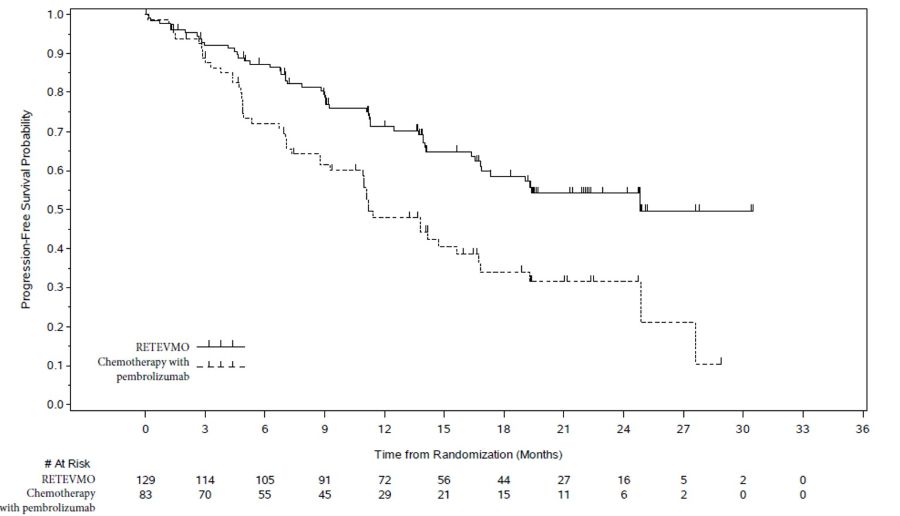
The major efficacy outcome measure was progression-free survival (PFS) in patients intended to be treated with chemotherapy in combination with pembrolizumab and in the overall study population as determined by a blinded independent review committee (BIRC) according to RECIST v1.1. Other efficacy outcome measures included overall survival (OS) and overall response rate (ORR).
A total of 212 patients were enrolled in LIBRETTO-431 with an intent to treat with pembrolizumab if randomized to the control arm (129 into RETEVMO arm and 83 into chemotherapy with pembrolizumab arm). The median age was 61.5 years (range: 31 to 84 years); 47% were male; 41% White, 55% Asian, and 0.9% Black or African American, 1.4% American Indian or Alaska Native, 1.9% were race not reported; ethnicity was not reported in 96% of patients. ECOG performance status was 0-1 (97%) or 2 (3%), 68% were never smokers, 93% of patients had metastatic disease, and 14% had measurable intracranial metastases at baseline, as determined by a neuroradiologic BIRC. RET fusions were detected in 60% of patients using NGS and 40% using PCR (89% tumor samples; 11% in blood).
Efficacy results from the pre-planned interim efficacy analysis are summarized in Table 17.
Table 17: Efficacy Results in LIBRETTO-431: RETEVMO versus Chemotherapy with Pembrolizumab
|
|
|
| RETEVMO
(n = 129) | Chemotherapy
with pembrolizumab
(n = 83) |
| Progression-Free Survival |
| Number (%) of patients with an event
| 49 (38%)
| 49 (59%)
|
| Medians in months (95% CI)
| 24.8 (16.9, NE)
| 11.2 (8.8, 16.8)
|
| Hazard ratio1 (95% CI)
| 0.46 (0.31, 0.70)
|
| p-value2 | 0.0002
|
| Overall Response Rate (95% CI) | 84% (76, 90)
| 65% (54, 75)
|
| Complete response
| 7%
| 6%
|
| Partial response
| 77%
| 59%
|
| Duration of Response |
Median in months (95% CI)
% with ≥ 12 months3 | 24.2 (17.9, NE)
60%
| 11.5 (9.7, 23.3)
30%
|
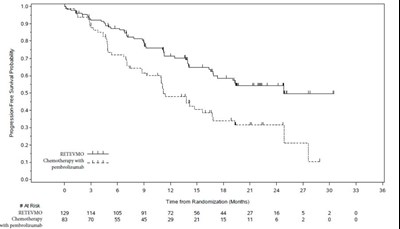
Figure 1 (Retevmo Uspi F1 V1)
Among the 212 randomized patients, 29 had measurable CNS metastases at baseline as assessed by BIRC. Responses in intracranial lesions were observed in 14 of 17 patients treated with RETEVMO and 7 of 12 patients treated with chemotherapy with pembrolizumab.
Overall survival was immature at the time of the PFS interim analysis. At the time of an updated descriptive analysis of OS (43% of prespecified OS events needed for the final analysis), a total of 49 (31%) and 26 (25%) patients died in the RETEVMO and the control arm, respectively. The OS HR was 1.26 (95% CI: 0.78, 2.04). Overall survival may be affected by the imbalance in post-progression therapies. Of 68 control arm patients who had disease progression, 50 patients (74%) received RETEVMO at progression. Of 71 RETEVMO arm patients who had disease progression, 16 (23%) received chemotherapy and/or immune checkpoint inhibitor therapy, and 44 (62%) continued receiving RETEVMO.
LIBRETTO-001
The efficacy of RETEVMO was evaluated in patients with RET-mutant MTC enrolled in a multicenter, open-label, multi-cohort clinical trial (NCT03157128). The study enrolled patients with advanced or metastatic RET-mutant MTC who had been previously treated with cabozantinib or vandetanib (or both) and patients with advanced or metastatic RET-mutant MTC who were naïve to cabozantinib and vandetanib in separate cohorts.
RET-Mutant MTC Previously Treated with Cabozantinib or Vandetanib
Efficacy was evaluated in 55 patients with RET-mutant advanced MTC who had previously treated with cabozantinib or vandetanib enrolled into a cohort of LIBRETTO-001.
The median age was 57 years (range: 17 to 84); 66% were male; 89% were White, 7% were Hispanic/Latino, and 1.8% were Black. ECOG performance status was 0-1 (95%) or 2 (5%) and 98% of patients had metastatic disease. Patients received a median of 2 prior systemic therapies (range 1 – 8). RET mutation status was detected in 82% of patients using NGS (78% tumor samples; 4% blood or plasma), 16% using PCR, and 2% using an unknown test. The protocol excluded patients with synonymous, frameshift or nonsense RET mutations; the specific mutations used to identify and enroll patients are described in Table 18.
Table 18: Mutations used to Identify and Enroll Patients with RET-Mutant MTC in LIBRETTO-001
|
|
|
|
| RET Mutation Type1 | Previously
Treated
(n = 55) | Cabozantinib/
Vandetanib
Naïve
(n = 88) | Total
(n = 143) |
| M918T
| 33
| 49
| 82
|
| Extracellular cysteine mutation2 | 7
| 20
| 27
|
| V804M or V804L
| 54 | 6
| 11
|
| Other3 | 10
| 13
| 23
|
Efficacy results for RET-mutant MTC are summarized in Table 19.
Table 19: Efficacy Results in LIBRETTO-001 (RET-Mutant MTC Previously Treated with Cabozantinib or Vandetanib)
|
|
|
| RETEVMO
(n = 55) |
| Overall Response Rate1
(95% CI) | 76% (63%, 87%)
|
| Complete response
| 18%
|
| Partial response
| 58%
|
| Duration of Response |
| Median in months (95% CI)
| 45.3 (29.9, NE)
|
| % with ≥ 12 months2 | 76%
|
Cabozantinib and Vandetanib-naïve
RET-Mutant MTC
Efficacy was evaluated in 88 patients with RET-mutant MTC who were cabozantinib and vandetanib treatment-naïve enrolled into a cohort of LIBRETTO-001.
The median age was 58 years (range: 15 to 82) with two patients (2.3%) aged 12 to 16 years; 66% were male; and 86% were White, 4.5% were Asian, and 2.3% were Hispanic/Latino. ECOG performance status was 0-1 (97%) or 2 (3.4%). All patients (100%) had metastatic disease and 18% had received 1 or 2 prior systemic therapies (including 8% kinase inhibitors, 4.5% chemotherapy, 2.3% anti-PD1/PD-L1 therapy, and 1.1% radioactive iodine). RET mutation status was detected in 77.3% of patients using NGS (75.0% tumor samples; 2.3% blood samples), 18.2% using PCR, and 4.5% using an unknown test. The mutations used to identify and enroll patients are described in Table 18.
Efficacy results for cabozantinib and vandetanib-naïve RET-mutant MTC are summarized in Table 20.
Table 20: Efficacy Results in LIBRETTO-001 (Cabozantinib and Vandetanib-naïve RET-Mutant MTC)
|
|
|
| RETEVMO
(n = 88) |
| Overall Response Rate1
(95% CI) | 81% (71%, 88%)
|
| Complete response
| 28%
|
| Partial response
| 52%
|
| Duration of Response |
| Median in months (95% CI)
| NR (51.3, NE)
|
| % with ≥ 12 months2 | 90%
|
LIBRETTO-531
LIBRETTO-531 was a randomized (2:1), multicenter, open-label study (NCT04211337) in adults and adolescents with advanced or metastatic RET-mutant MTC. The study evaluated the efficacy of RETEVMO versus physicians' choice of cabozantinib or vandetanib in patients with progressive, advanced, kinase inhibitor naïve, RET-mutant medullary thyroid cancer.
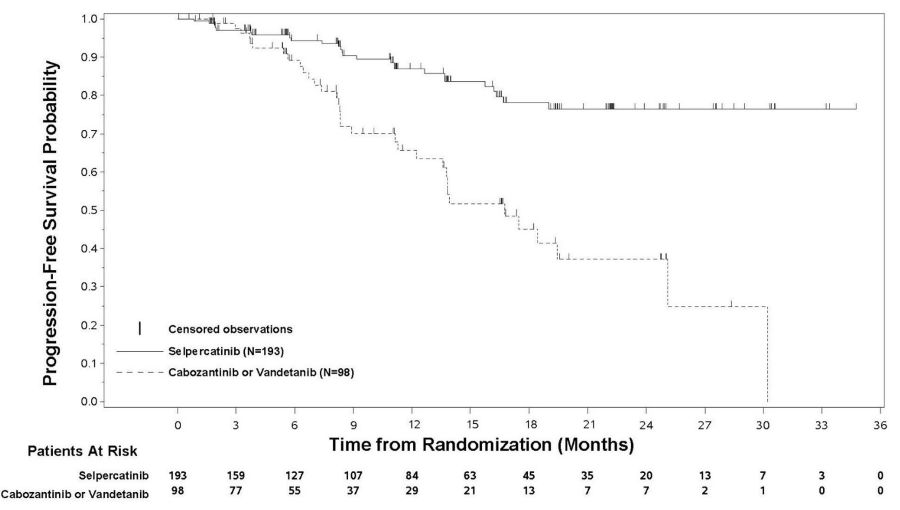
Patients were randomized to receive either RETEVMO (160 mg twice daily) or physicians' choice of cabozantinib (140 mg once daily) or vandetanib (300 mg once daily). Patients were stratified based on RET mutation (M918T vs. other) and intended treatment if randomized to the control arm (cabozantinib vs. vandetanib). The primary outcome was progression-free survival (PFS), as determined by a blinded independent review committee (BIRC) according to RECIST v1.1.
The median age was 55 years (range: 12 to 84), 63% were male, 58% were White, 23% were Asian, 2.4% were Black or African American, and 17% had unknown race. ECOG performance status was 0-1 (98%) or 2 (1.0%) with 0.7% unknown status. 77% of patients had metastatic disease and 6 patients (2.1%) had received 1 prior systemic therapy. RET mutation status was detected in 90% of patients using NGS (89% tumor samples; 8% blood or plasma), and 10% using PCR. Of patients enrolled in LIBRETTO-531, 63% had M918T RET mutations and 37% had other RET mutations.
Efficacy results for LIBRETTO-531 based on the preplanned interim efficacy analysis are provided in Table 21 and Figure 2. At the time of this analysis, overall survival data were immature with 18 deaths observed (14% of pre-specified events).
Table 21: Efficacy Results in LIBRETTO-531: RETEVMO versus Cabozantinib or Vandetanib
|
|
|
|
| RETEVMO
N = 193 | Cabozantinib or Vandetanib
N = 98 |
| PFS |
| Number (%) of patients with an event
| 26 (14%)
| 33 (34%)
|
| Median in months (95% CI)
| NR (NE, NE)
| 16.8 (12.2, 25.1)
|
| Hazard ratio (95% CI)1
| 0.280 (95% CI: 0.165, 0.475)
|
| p-value2
| <0.0001
|
| Overall Response Rate |
| ORR (95% CI)
| 69% (62%, 76%)
| 39% (29%, 49%)
|
| Complete response
| 12%
| 4%
|
| Partial response
| 58%
| 35%
|
| Duration of Response |
| Median in months (95% CI)
| NR (NE, NE)
| 16.6 (10.4, NE)
|
| Median follow-up time (months)
| 11.1
| 12.8
|
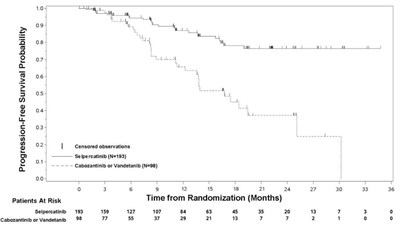
Figure 2 (Retevmo Uspi F2 V1)
Patient-reported overall side effect impact was evaluated weekly in 222 patients (RETEVMO N = 145; cabozantinib or vandetanib N=77) who received at least one dose of treatment by at least 6 months prior to the data cutoff date and responded to the Functional Assessment of Cancer Therapy item GP5 (FACT GP5). Patient-reported overall side effect impact was derived as a proportion of time on treatment with high side effect bother (defined as response of 3 “Quite a bit” or 4 “Very much”) per FACT GP5.
Patient-reported overall side effect impact results for LIBRETTO-531 are provided in Table 22.
Table 22. Descriptive Summary of Patient-reported Overall Side Effect Impact While on Treatment in LIBRETTO-531
| RETEVMO
(N=145) | Cabozantinib or Vandetanib
(N=77) |
| Mean proportion of time with high side effect bother (95% CI) | 8% (4.8%, 10%)
|
24% (17%, 31%)
|
% Patients with high side effect bother
0% of time
≤25% of time
| 61%
90%
| 30%
66%
|
Patient-reported overall side effect impact results were supported by a lower incidence of treatment discontinuation due to adverse reactions for RETEVMO (4.7%) compared to cabozantinib or vandetanib (27%) in patients who received at least one dose of study treatment. The median time on treatment at the data cutoff was 14.5 months in the RETEVMO arm and 8.3 months in the cabozantinib or vandetanib arm in patients who received at least one dose of study treatment.
LIBRETTO-121
The efficacy of RETEVMO was evaluated in pediatric and young adult patients with advanced RET-activated solid tumors enrolled in a multicenter, open-label, multi-cohort clinical trial (LIBRETTO-121, NCT03899792). Patients received RETEVMO 92 mg/m2 orally twice daily until disease progression, unacceptable toxicity, or other reason for treatment discontinuation. Tumor assessments were performed every 8 weeks for one year, then every 12 weeks; responses were assessed according to RECIST 1.1 per BIRC.
Efficacy was evaluated in 14 patients with RET-mutant MTC who were non-responsive to available therapies or had no standard systemic curative therapy available. The median age was 14 years (range 2 to 20); 64% were male; 71% were White, 14% were Black or African American; and 14% were Hispanic/Latino. Patients had metastatic (71%) or locally advanced (29%) disease; 43% had measurable disease at baseline; 21% had received prior systemic therapy. RET-mutant status was detected in 79% of patients using NGS tumor samples and in 21% using PCR.
Efficacy results for RET-mutant MTC in pediatric and young adult patients are summarized in Table 23.
Table 23: Efficacy Results in LIBRETTO-121 (RET-Mutant MTC)
|
|
|
| RETEVMO
(n = 14) |
| Overall Response Rate1 (95% CI)
| 57% (29, 82)
|
| Complete response
| 36%
|
| Partial response
| 21%
|
| Duration of Response |
| Median in months (range)
| Not reached (8.3+, 49.7+)
|
| % with ≥ 18 months2 | 88%
|
| % with ≥ 24 months2 | 75%
|
LIBRETTO-001
The efficacy of RETEVMO was evaluated in patients with advanced RET fusion-positive thyroid cancer enrolled in a multicenter, open-label, multi-cohort clinical trial (LIBRETTO-001, NCT03157128). Efficacy was evaluated in 65 patients with RET fusion-positive thyroid cancer who were radioactive iodine (RAI)-refractory (if RAI was an appropriate treatment option) and were systemic therapy naïve and patients who were previously treated, in separate cohorts.
The median age was 59 years (range 20 to 88); 49% were male; 65% were White, 20% were Asian, 4.6% were Black or African American; and 11% were Hispanic/Latino. ECOG performance status was 0-1 (94%) or 2 (6%). All (100%) patients had metastatic disease with primary tumor histologies including papillary thyroid cancer (83%), poorly differentiated thyroid cancer (9%), anaplastic thyroid cancer (6%) and Hurthle cell thyroid cancer (1.5%). Previously treated patients had received a median of 1 prior therapy (range 1–4). RET fusion-positive status was detected in 97% of patients using NGS (89% tumor samples; 8% blood or plasma samples), and 3% using other local testing methods.
Efficacy results for RET fusion-positive thyroid cancer are summarized in Table 24.
Table 24: Efficacy Results in LIBRETTO-001 (RET Fusion-Positive Thyroid Cancer)
|
|
|
| RETEVMO
Previously Treated
(n = 41) | RETEVMO
Systemic Therapy Naïve
(n = 24) |
| Overall Response Rate1 (95% CI)
| 85% (71%, 94%)
| 96% (79%, 100%)
|
| Complete response
| 12%
| 21%
|
| Partial response
| 73%
| 75%
|
| Duration of Response |
| Median in months (95% CI)
| 26.7 (12.1, NE)
| NE (42.8, NE)
|
| % with ≥ 12 months2 | 54
| 65
|
Responses were observed in patients with each histology represented, including 3 of 4 patients with anaplastic thyroid cancer (all partial responses) and 6 of 6 patients with poorly differentiated thyroid cancer (1 complete response, 5 partial responses).
LIBRETTO-121
The efficacy of RETEVMO was evaluated in pediatric and young adult patients with advanced RET-activated solid tumors enrolled in a multicenter, open-label, multi-cohort clinical trial (LIBRETTO-121, NCT03899792) [see Clinical Studies (14.2)].
Efficacy was evaluated in 15 patients with RET fusion-positive thyroid cancer who were non-responsive to available therapies or had no standard systemic curative therapy available. The median age was 12 years (range 6 to 20); 53% were male; 40% were White, 47% were Asian, 13% were other races; and 27% were Hispanic/Latino Patients had metastatic (87%) or locally advanced (13%) disease and 100% had papillary thyroid cancer histology; 47% had measurable disease at baseline; 20% had received prior systemic therapy. RET fusion-positive status was detected in 93% of patients using NGS tumor samples and in 7% using FISH. Efficacy results for RET fusion-positive thyroid cancer in pediatric and young adult patients are summarized in Table 25.
Table 25: Efficacy Results in LIBRETTO-121 (RET Fusion-Positive Thyroid Cancer)
|
|
|
| RETEVMO
(n = 15) |
| Overall Response Rate1 (95% CI)
| 53% (27, 79)
|
| Complete response
| 27%
|
| Partial response
| 27%
|
| Duration of Response |
| Median in months (range)
| Not reached (12.9+, 44.2)
|
| % with ≥ 18 months2 | 88%
|
| % with ≥ 24 months2 | 75%
|
LIBRETTO-001
The efficacy of RETEVMO was evaluated in patients with locally advanced or metastatic RET fusion-positive solid tumors enrolled in a multicenter, open-label, multi-cohort clinical trial (LIBRETTO-001, NCT03157128) and supported by results in RET fusion-positive NSCLC and RET fusion-positive thyroid cancer [see Clinical Studies (14.1, 14.3)]. Efficacy was evaluated in 75 patients with RET fusion-positive tumors other than NSCLC and thyroid cancer with disease progression on or following prior systemic treatment or who had no satisfactory alternative treatment options.
The median age was 59 years (range 21 to 92), 51% were female, 60% were White, 35% were Asian, and 4% were Black; and 4% were Hispanic/Latino. ECOG performance status was 0-1 (91%) or 2 (9%) and 96% of patients had metastatic disease. Sixty-nine patients (92%) received prior systemic therapy (median 2 [range 0 – 9]; 36% received 3 or more). The most common cancers were colorectal (29%), pancreatic adenocarcinoma (24%), salivary, cholangiocarcinoma, and sarcoma (7% each). RET fusion-positive status was detected in 92% of patients using NGS and 1.3% using FISH.
Efficacy results for RET fusion-positive solid tumors other than NSCLC and thyroid cancer are summarized in Table 26 and Table 27.
Table 26: Efficacy Results in LIBRETTO-001 (Other RET Fusion-Positive Solid Tumors)
|
|
| RETEVMO
(n = 75) |
| Overall Response Rate1 (95% CI)
| 47% (35, 59)
|
| Complete response
| 5%
|
| Partial response
| 41%
|
| Duration of Response |
| Median in months (95% CI)
| 24.5 (11.2, 49.1)
|
| % with ≥12 months2 | 54%
|
| % with ≥ 24 months2 | 34%
|
Table 27: Efficacy Results by Tumor Type in LIBRETTO-001 (Other RET Fusion-Positive Solid Tumors)
|
|
|
|
| Tumor Type | Patients
(n = 75) | ORR1,2 | DOR
Range (months) |
| | n (%) | 95% CI | |
| Colorectal
| 22
| 10 (45%)
| (24, 68)
| 4.6, 36.1+
|
| Pancreatic adenocarcinoma
| 18
| 9 (50%)
| (26, 74)
| 2.5, 52.1
|
| Salivary
| 5
| 3 (60%)
| (15, 95)
| 5.7, 37.2
|
| Sarcoma (soft tissue)
| 5
| 2 (40%)
| (5, 85)
| 3.7, 56.5+
|
| Cholangiocarcinoma
| 5
| 2 (40%)
| (5, 85)
| 7.4, 14.8
|
| Carcinoma of the skin
| 3
| 1 (33%)
| (0.8, 91)
| 27.1
|
| Unknown primary
| 3
| 1 (33%)
| (0.8, 91)
| 9.2
|
| Breast
| 2
| PR, CR
| NA
| 2.3+, 17.3
|
| Xanthogranuloma
| 2
| NE, NE
| NA
| NA
|
| Carcinoid (bronchial)
| 1
| PR
| NA
| 49.1
|
| Gastroesophageal junction
| 1
| SD
| NA
| NA
|
| Neuroendocrine
| 1
| PR
| NA
| 23.1
|
| Ovarian
| 1
| PR
| NA
| 28.6+
|
| Pancreatic neuroendocrine
| 1
| PR
| NA
| 17.5+
|
| Pulmonary carcinosarcoma
| 1
| NE
| NA
| NA
|
| Rectal neuroendocrine
| 1
| NE
| NA
| NA
|
| Small cell lung cancer
| 1
| SD
| NA
| NA
|
| Small intestine
| 1
| CR
| NA
| 24.5
|
| Stomach
| 1
| SD
| NA
| NA
|
LIBRETTO-121
The efficacy of RETEVMO was evaluated in pediatric and young adult patients with advanced RET-activated solid tumors enrolled in a multicenter, open-label, multi-cohort clinical trial (LIBRETTO-121, NCT03899792) [see Clinical Studies (14.2)].
Efficacy was evaluated in 3 patients with locally advanced refractory RET-fusion positive other solid tumors who were unresponsive to available therapies or had no standard systemic curative therapy available. The median age was 15 years (range 6 to 15). One patient with congenital infantile fibrosarcoma and one patient with a spindle cell sarcoma had a partial response. One patient with malignant peripheral nerve sheath tumor did not respond. Responses were observed in patients with RET fusion-positive thyroid cancer [see Clinical Studies (14.3)].
Hepatotoxicity
Advise patients that hepatotoxicity can occur and to immediately contact their healthcare provider for signs or symptoms of hepatotoxicity [see Warnings and Precautions (5.1)].
Interstitial Lung Disease (ILD)/Pneumonitis
Advise patients that ILD/ pneumonitis can occur and to contact their healthcare provider immediately for signs or symptoms of ILD including new or worsening cough or shortness of breath [see Warnings and Precautions (5.2)].
Hypertension
Advise patients that they will require regular blood pressure monitoring and to contact their healthcare provider if they experience symptoms of increased blood pressure or elevated readings [see Warnings and Precautions (5.3)].
QT Prolongation
Advise patients that RETEVMO can cause QTc interval prolongation and to inform their healthcare provider if they have any QTc interval prolongation symptoms, such as syncope [see Warnings and Precautions (5.4)].
Hemorrhagic Events
Advise patients that RETEVMO may increase the risk for bleeding and to contact their healthcare provider if they experience any signs or symptoms of bleeding [see Warnings and Precautions (5.5)].
Hypersensitivity Reactions
Advise patients to monitor for signs and symptoms of hypersensitivity reactions, particularly during the first month of treatment [see Warnings and Precautions (5.6)].
Tumor Lysis Syndrome
Advise patients to contact their healthcare provider promptly to report any signs and symptoms of TLS [see Warnings and Precautions (5.7)].
Risk of Impaired Wound Healing
Advise patients that RETEVMO may impair wound healing. Advise patients to inform their healthcare provider of any planned surgical procedure [see Warnings and Precautions (5.8)].
Hypothyroidism
Advise patients that RETEVMO can cause hypothyroidism and to immediately contact their healthcare provider for signs or symptoms of hypothyroidism [see Warnings and Precautions (5.9)].
Slipped Capital Femoral Epiphysis/Slipped Upper Femoral Epiphysis
Advise pediatric patients and caregivers to contact their healthcare provider promptly to report any signs and symptoms indicative of slipped capital femoral epiphysis/slipped upper femoral epiphysis [see Warnings and Precautions (5.11)].
Embryo-Fetal Toxicity
Advise pregnant women and females of reproductive potential of the possible risk to a fetus. Advise females of reproductive potential to inform their healthcare provider of a known or suspected pregnancy [see Warnings and Precautions (5.10), Use in Specific Populations (8.1)].
Advise females of reproductive potential to use effective contraception during the treatment with RETEVMO and for 1 week after the last dose [see Use in Specific Populations (8.3)].
Advise males with female partners of reproductive potential to use effective contraception during treatment with RETEVMO and for 1 week after the last dose [see Use in Specific Populations (8.3)].
Lactation
Advise women not to breastfeed during treatment with RETEVMO and for 1 week after the last dose [see Use in Specific Populations (8.2)].
Infertility
Advise males and females of reproductive potential that RETEVMO may impair fertility [see Use in Specific Populations (8.3), Nonclinical Toxicology (13.1)].
Drug Interactions
Advise patients and caregivers to inform their healthcare provider of all concomitant medications, including prescription medicines, over-the-counter drugs, vitamins, and herbal products. Inform patients to avoid St. John's wort, proton pump inhibitors, H2 receptor antagonists, and antacids while taking RETEVMO.
If PPIs are required, instruct patients to take RETEVMO with food. If H2 receptor antagonists are required, instruct patients to take RETEVMO 2 hours before or 10 hours after the H2 receptor antagonist. If locally-acting antacids are required, instruct patients to take RETEVMO 2 hours before or 2 hours after the locally-acting antacid [see Drug Interactions (7.1, 7.2)].
Marketed by: Lilly USA, LLC, Indianapolis, IN 46285, USA
Copyright © 2020, 2026, Eli Lilly and Company. All rights reserved.
Pat.: www.lilly.com/patents
RET-0010-USPI-20260714