Mantle Cell Lymphoma
BRUIN
The safety of JAYPIRCA was evaluated in the BRUIN trial, an open-label, multicohort, single-arm study in patients with previously treated MCL who received a prior BTK inhibitor [see Clinical Studies (14.1)]. The trial required a platelet count ≥ 50 x 109/L, absolute neutrophil count ≥ 0.75 x 10⁹/L, hepatic transaminases ≤ 2.5 times upper limit of normal (ULN), and an ECOG performance status of 0 to 2. The trial excluded patients with active central nervous system (CNS) involvement by lymphoma, significant cardiovascular disease, major bleeding or grade ≥ 3 arrhythmia with a prior BTK inhibitor, prolonged QTc interval, or need for a strong CYP3A inhibitor or inducer or strong P-gp inhibitor.
Patients received JAYPIRCA 200 mg orally once daily until disease progression or unacceptable toxicity (n = 128); 36% were exposed for 6 months or longer and 10% were exposed for at least one year. The median number of prior therapies was 3 (range: 1-9). The median age was 71 years (range: 46 to 88 years) and 80% of patients were male. Race was reported for all patients; 78% were White, 14% were Asian, 2.3% were Black, and 2.3% were Hispanic or Latino.
Serious adverse reactions occurred in 38% of patients who received JAYPIRCA. Serious adverse reactions that occurred in ≥ 2% of patients were pneumonia (14%), COVID-19 (4.7%), musculoskeletal pain (3.9%), hemorrhage (2.3%), pleural effusion (2.3%), and sepsis (2.3%). Fatal adverse reactions within 28 days of the last dose of JAYPIRCA occurred in 7% of patients, most commonly due to infections (4.7%) including COVID-19 (3.1% of all patients).
Adverse reactions led to dose reductions in 4.7%, treatment interruption in 32%, and permanent discontinuation of JAYPIRCA in 9%. Adverse reactions that resulted in dosage modification in > 5% of patients included pneumonia and neutropenia. Adverse reactions which resulted in permanent discontinuation of JAYPIRCA in > 1% of patients included pneumonia.
The most common adverse reactions (≥ 15%), excluding laboratory terms, were fatigue, musculoskeletal pain, diarrhea, edema, dyspnea, pneumonia, and bruising.
Table 2 summarizes select adverse reactions in BRUIN.
Table 2: Adverse Reactions (≥ 10%) in Patients with MCL Who Received JAYPIRCA in BRUIN
| JAYPIRCA
200 mg once daily |
|---|
| N = 128 |
|---|
|
|
|
| Adverse Reactions a | All Grades (%) | Grade 3 or 4 (%) |
| General Disorders |
| Fatigue
| 29
| 1.6
|
| Edema
| 18
| 0.8
|
| Fever
| 13
| -
|
| Musculoskeletal and Connective Tissue Disorders |
| Musculoskeletal pain
| 27
| 3.9
|
| Arthritis or arthralgia
| 12
| 0.8
|
| Gastrointestinal Disorders |
| Diarrhea
| 19
| -
|
| Constipation
| 13
| -
|
| Abdominal pain
| 11
| 0.8
|
| Nausea
| 11
| -
|
| Respiratory, thoracic, and mediastinal disorders |
| Dyspnea
| 17
| 2.3
|
| Cough
| 14
| -
|
| Injury |
| Bruising
| 16
| -
|
| Infections |
| Pneumonia
| 16 b | 14
|
| Upper respiratory tract infections
| 10
| 0.8
|
| Nervous system disorders |
| Peripheral neuropathy
| 14
| 0.8
|
| Dizziness
| 10
| -
|
| Skin and subcutaneous disorders |
| Rash
| 14
| -
|
| Vascular disorders |
| Hemorrhage
| 11 c | 3.1
|
Clinically relevant adverse reactions in < 10% include vision changes, memory changes, headache, urinary tract infection, herpesvirus infection, and tumor lysis syndrome.
Table 3 summarizes laboratory abnormalities in BRUIN.
Table 3: Select Laboratory Abnormalities (≥ 10%) That Worsened from Baseline in Patients with MCL Who Received JAYPIRCA in BRUIN
|
| Laboratory Abnormality | JAYPIRCAa
200 mg once daily |
| All Grades (%) | Grade 3 or 4 (%) |
| Hematology | | |
| Hemoglobin decreased
| 42
| 9
|
| Platelet count decreased
| 39
| 14
|
| Neutrophil count decreased
| 36
| 16
|
| Lymphocyte count decreased
| 32
| 15
|
| Chemistry | | |
| Creatinine increased
| 30
| 1.6
|
| Calcium decreased
| 19
| 1.6
|
| AST increased
| 17
| 1.6
|
| Potassium decreased
| 13
| 1.6
|
| Sodium decreased
| 13
| -
|
| Lipase increased
| 12
| 4.4
|
| Alkaline phosphatase increased
| 11
| -
|
| ALT increased
| 11
| 1.6
|
| Potassium increased
| 11
| 0.8
|
Grade 4 laboratory abnormalities in > 5% of patients included neutrophils decreased (10%), platelets decreased (7%), and lymphocytes decreased (6%).
Lymphocytosis: Upon initiation of JAYPIRCA, a temporary increase in lymphocyte counts (defined as absolute lymphocyte count increased ≥ 50% from baseline and a post-baseline value ≥ 5,000/μL) occurred in 34% of MCL patients in BRUIN. The median time to onset of lymphocytosis was 1.1 weeks, with 75% of cases occurring within 2.1 weeks, and the median duration was 11 weeks.
Chronic Lymphocytic Leukemia/Small Lymphocytic Lymphoma
BRUIN
The safety of JAYPIRCA was evaluated in the BRUIN trial, an open-label, multicohort, single-arm study in 110 patients with relapsed or refractory CLL/SLL, with 98% having received at least two prior lines of systemic therapy including a covalent BTK inhibitor and a BCL-2 inhibitor [see Clinical Studies (14.2)]. The trial required a platelet count ≥ 50 x 109/L, absolute neutrophil count ≥ 0.75 x 10⁹/L, hepatic transaminases ≤ 2.5 times upper limit of normal (ULN), and an ECOG performance status of 0 to 2. The trial excluded patients with active central nervous system (CNS) involvement by lymphoma, significant cardiovascular disease, major bleeding, uncontrolled or symptomatic arrhythmias, prolonged QTc interval, or need for a strong CYP3A inhibitor or inducer or strong P-gp inhibitor.
Patients received JAYPIRCA 200 mg orally once daily until disease progression or unacceptable toxicity (N = 110); 60% were exposed for at least 1 year and 14% were exposed for at least two years. The median age was 68 years (range: 41 to 88 years) and 67% of patients were male. Race was reported in 110 (100%) patients; of these patients, 89% were White, 4.5% were Black, 1.8% were Asian, and 1.8% were Hispanic or Latino. The median number of prior therapies was 5 (range: 1-11).
Serious adverse reactions occurred in 56% of patients who received JAYPIRCA. Serious adverse reactions that occurred in ≥ 5% of patients were pneumonia (18%), COVID-19 (9%), sepsis (7%), and febrile neutropenia (7%). Fatal adverse reactions within 28 days of the last dose of JAYPIRCA occurred in 11% of patients, most commonly due to infections (10%), including sepsis (5%) and COVID-19 (2.7%).
Adverse reactions led to dose reductions in 3.6%, treatment interruption in 42%, and permanent discontinuation of JAYPIRCA in 9%. Adverse reactions which resulted in dose reductions of JAYPIRCA in > 1% of patients included neutropenia. Adverse reactions which resulted in treatment interruptions of JAYPIRCA in > 5% of patients included pneumonia, neutropenia, febrile neutropenia, and COVID-19. Adverse reactions which resulted in permanent discontinuation of JAYPIRCA in > 1% of patients included second primary malignancy, COVID-19, and sepsis.
The most common adverse reactions (≥ 20%), excluding laboratory terms, were fatigue, bruising, cough, musculoskeletal pain, COVID-19, diarrhea, pneumonia, abdominal pain, dyspnea, hemorrhage, edema, nausea, pyrexia, and headache. Table 4 summarizes select adverse reactions for patients treated on BRUIN.
Table 4: Adverse Reactions (≥ 10%) in Patients with CLL/SLL Who Received JAYPIRCA in BRUIN
| JAYPIRCA
200 mg once daily |
|---|
| N = 110 |
|---|
| Adverse Reactions
a | All Grades (%) | Grade 3 or 4 (%) |
|---|
|
|
|
|
|
|
|
|
| General Disorders |
| Fatigue
| 36
| 2.7
|
| Edema
| 21
| 0
|
| Pyrexia
| 20
| 2.7
|
| Injury |
| Bruising
| 36
| 0
|
| Fall
| 14
| 0.9
|
| Respiratory, thoracic, and mediastinal disorders |
| Cough
| 33
| 0
|
| Dyspnea
| 22
| 2.7
|
| Mucositis
| 12
| 0.9
|
| Musculoskeletal and Connective Tissue Disorders |
| Musculoskeletal pain
| 32
| 0.9
|
| Arthritis or arthralgia
| 19
| 1.8
|
| Infections |
| COVID-19
| 28b | 7
|
| Pneumonia
| 27c | 16
|
| Upper respiratory tract infections
| 13
| 2.7
|
| Respiratory tract infection
| 11
| 1.8
|
| Gastrointestinal Disorders |
| Diarrhea
| 26
| 0
|
| Abdominal pain
| 25
| 2.7
|
| Nausea
| 21
| 0
|
| Constipation
| 14
| 0
|
| Vascular disorders |
| Hemorrhage
| 22d | 2.7
|
| Hypertension
| 12
| 5
|
| Nervous system disorders |
| Headache
| 20
| 0.9
|
| Peripheral neuropathy
| 16
| 3.6
|
| Dizziness
| 15
| 0
|
| Neurological changes
| 12e | 2.7
|
| Skin and subcutaneous disorders | | |
| Rash
| 19
| 0.9
|
| Psychiatric disorders |
| Insomnia
| 14
| 0
|
| Neoplasms benign, malignant and unspecified |
| Second primary malignancy
| 13f | 2.7
|
| Renal and urinary disorders |
| Renal insufficiency
| 12g | 6
|
| Metabolism and nutrition disorders |
| Decreased appetite
| 12
| 0
|
| Cardiac disorders |
| Supraventricular tachycardia
| 10h | 5
|
Clinically relevant adverse reactions in < 10% include vision changes, lower respiratory tract infection, urinary tract infection, herpesvirus infection, and tumor lysis syndrome.
Table 5 summarizes laboratory abnormalities in BRUIN.
Table 5: Select Laboratory Abnormalities (≥ 20%) That Worsened from Baseline in Patients with CLL/SLL Who Received JAYPIRCA in BRUIN
| Laboratory Abnormality | JAYPIRCAa
200 mg once daily
|
|---|
| All Grades (%) | Grade 3 or 4 (%) |
|---|
|
| Hematology | | |
| Neutrophil count decreased
| 63
| 45
|
| Hemoglobin decreased
| 48
| 19
|
| Platelet count decreased
| 30
| 15
|
| Lymphocyte count decreased
| 23
| 8
|
| Chemistry | | |
| Calcium decreased
| 40
| 2.8
|
| Sodium decreased
| 30
| 0
|
| ALT increased
| 23
| 2.8
|
| AST increased
| 23
| 1.9
|
| Creatinine increased
| 23
| 0
|
| Lipase increased
| 21
| 7
|
| Alkaline phosphatase increased
| 21
| 0
|
Grade 4 laboratory abnormalities in > 5% of patients included neutrophils decreased (23%).
**Lymphocytosis: Upon initiation of JAYPIRCA, a temporary increase in lymphocyte counts (defined as absolute lymphocyte count increased ≥ 50% from baseline and a post-baseline value ≥ 5,000/μL) occurred in 64% of CLL/SLL patients in BRUIN. The median time to onset of lymphocytosis was 1.1 weeks, with 75% of cases occurring within 1.1 weeks, and the median duration was 19 weeks.
BRUIN CLL-321
The safety of JAYPIRCA was evaluated in BRUIN CLL-321, a randomized, multicenter, open-label active control trial [see Clinical Studies (14.2)]. The trial enrolled patients with relapsed or refractory CLL/SLL who were previously treated with a covalent BTK inhibitor. The trial required a platelet count ≥ 50 x 109/L, absolute neutrophil count ≥ 0.75 x 10⁹/L, and an estimated creatinine clearance ≥ 30 mL/min. The trial excluded patients with significant cardiovascular disease including uncontrolled or symptomatic arrhythmias, or major bleeding on a prior covalent BTK inhibitor.
The trial enrolled 238 patients who were randomized in a 1:1 fashion to receive JAYPIRCA given orally once daily at a dose of 200 mg until disease progression or unacceptable toxicity or investigator's choice of either idelalisib in combination with a rituximab product or bendamustine in combination with a rituximab product [see Clinical Studies (14.2)]. One hundred sixteen patients received JAYPIRCA and 109 patients received investigator's choice of idelalisib and rituximab or bendamustine and rituximab.
The median duration of treatment with JAYPIRCA was 15 months with 78% on treatment for greater than 6 months and 66% for greater than 12 months.
Serious adverse reactions occurred in 47% of patients who received JAYPIRCA. Serious adverse reactions that occurred in ≥ 3% of patients were pneumonia (21%), COVID-19 (5%), and sepsis (3.4%). Fatal adverse reactions within 30 days of the last dose of JAYPIRCA occurred in 8% of patients, most commonly due to infections (7%), COVID-19 (5%) and pneumonia (3.4%).
Adverse reactions led to permanent discontinuation of JAYPIRCA in 17% of patients, dose reductions in 10%, and treatment interruption in 51%. Adverse reactions which resulted in dose reductions of JAYPIRCA in > 1% of patients included neutropenia. Adverse reactions which resulted in treatment interruptions of JAYPIRCA in > 5% of patients included pneumonia, neutropenia, hemorrhage and COVID-19. Adverse reactions which resulted in permanent discontinuation of JAYPIRCA in > 1% of patients included pneumonia, COVID-19, neutropenia, anemia, and cardiac arrhythmias.
The most common adverse reactions (≥ 20%), excluding laboratory terms, were pneumonia and upper respiratory tract infections. Table 6 summarizes select adverse reactions for patients treated on BRUIN CLL-321.
Table 6: Adverse Reactions (≥ 10%) in Patients with CLL/SLL Who Received JAYPIRCA in BRUIN CLL-321
|
|
|
| JAYPIRCA | Investigator's Choice |
| N = 116 | N = 109 |
| Adverse Reactions a | All Grades (%) | Grade 3 or 4 (%) | All Grades (%) | Grade 3 or 4 (%) |
| Pneumonia
| 28b | 16
| 16b | 11
|
Upper respiratory
tract infections
| 21
| 0.9
| 10
| 0
|
| COVID-19
| 17c | 0.9
| 19c | 4.6
|
| General Disorders |
| Fatigue
| 19
| 2.6
| 26
| 1.8
|
| Edema
| 12
| 0
| 8
| 0
|
| Cough
| 19
| 0
| 19
| 0
|
| Fever
| 13
| 0.9
| 27
| 0.9
|
| Nausea
| 11
| 0.9
| 20
| 0
|
| Headache
| 11
| 0.9
| 16
| 0
|
| Hemorrhage
| 16
| 2.6
| 7
| 0
|
| Musculoskeletal and Connective Tissue Disorders |
Musculoskeletal
pain
| 19
| 0.9
| 13
| 0
|
| Gastrointestinal Disorders |
| Diarrhea
| 16
| 0
| 31
| 6
|
| Skin and Subcutaneous Disorders |
| Rash
| 14
| 2.6
| 20
| 4.6
|
Clinically relevant adverse reactions in <10% in patients who received JAYPIRCA include vision changes, urinary tract infection, herpes virus infection, and hypertension.
Table 7 summarizes laboratory abnormalities in BRUIN CLL-321.
Table 7: Select Laboratory Abnormalities (≥ 20%) That Worsened from Baseline in Patients with CLL/SLL Who Received JAYPIRCA in BRUIN CLL-321
|
| Laboratory Abnormality | JAYPIRCA
a | Investigator's Choice
a |
| All Grades (%) | Grade 3 or 4 (%) | All Grades (%) | Grade 3 or 4 (%) |
| Hematology |
Neutrophil count
decreased
| 54
| 26
| 67
| 27
|
Hemoglobin
decreased
| 45
| 10
| 42
| 8
|
Platelet count
decreased
| 37
| 17
| 42
| 9
|
| Chemistry |
| ALT increased
| 25
| 1.8
| 46
| 14
|
Creatinine
increased
| 25
| 0
| 20
| 1
|
Calcium
decreased
| 23
| 0.9
| 31
| 0
|
Sodium
decreased
| 22
| 0.9
| 21
| 1
|
| Bilirubin increased
| 21
| 0.9
| 21
| 1
|
BRUIN CLL-313
The safety of JAYPIRCA was evaluated in the BRUIN CLL-313 trial, a randomized, multicenter, open-label, active control trial [see Clinical Studies (14.2)]. The trial enrolled patients with treatment naïve CLL/SLL without deletion of chromosome 17p13.1 (del 17p). The trial required a platelet count ≥ 75 × 109/L, absolute neutrophil count ≥ 0.75 × 10⁹/L, and creatinine clearance ≥ 40 mL/min). The trial excluded patients with 17p deletion, significant cardiovascular disease including uncontrolled or symptomatic arrhythmias, active uncontrolled autoimmune cytopenias, or an active second malignancy.
The trial enrolled 282 patients who were randomized 1:1 to receive JAYPIRCA given orally once daily at a dose of 200 mg until disease progression or unacceptable toxicity or bendamustine in combination with a rituximab product (BR) for 6 cycles. One hundred forty patients received JAYPIRCA, and 132 patients received BR.
The median duration of treatment with JAYPIRCA was 32 months with 92% of patients on treatment for greater than 24 months.
Serious adverse reactions occurred in 28% of patients who received JAYPIRCA. Serious adverse reactions that occurred in ≥ 3% of patients included pneumonia (5%). Fatal adverse reactions within 30 days of the last dose of JAYPIRCA occurred in 1 (0.7%) patient, due to septic shock.
Adverse reactions led to permanent discontinuation of JAYPIRCA in 4.3% of patients, dose reductions in 3.6%, and treatment interruption in 35%. Adverse reactions which resulted in dose reductions of JAYPIRCA in > 1% of patients included pruritus. Adverse reactions which resulted in treatment interruptions of JAYPIRCA in > 5% of patients included COVID-19.
The most common adverse reactions (≥ 20%), excluding laboratory terms, were upper respiratory tract infections, rash, and COVID-19. Table 8 summarizes select adverse reactions for patients treated on BRUIN CLL-313.
Table 8: Adverse Reactions (≥ 10%) in Patients with Previously Untreated CLL/SLL Without 17p Deletion Who Received JAYPIRCA in BRUIN CLL-313
|
|
|
| JAYPIRCA | Bendamustine + Rituximab Product |
| N = 140 | N = 132 |
| Adverse Reactions a | All Grades (%) | Grade 3 or 4 (%) | All Grades (%) | Grade 3 or 4 (%) |
| Infections |
| Upper respiratory tract infections
| 27
| 2.1
| 8
| 0
|
| COVID-19
| 21b | 0.7
| 10b | 2.3
|
| Respiratory tract infection
| 11c | 1.4
| 6c | 0
|
| Urinary tract infection
| 10
| 1.4
| 1.5
| 0.8
|
| Skin and Subcutaneous Disorders |
| Rash
| 22
| 0.7
| 26
| 2.3
|
| General Disorders |
| Hemorrhage
| 12
| 0.7
| 1.5
| 0
|
| Musculoskeletal and Connective Tissue Disorders |
| Musculoskeletal pain
| 17
| 0.7
| 8
| 0.8
|
| Arthralgia
| 12
| 0.7
| 1.5
| 0
|
| Injury |
| Bruising
| 11
| 0
| 0
| 0
|
| Vascular Disorder |
| Hypertension
| 10
| 4.3
| 4.5
| 3.0
|
Clinically relevant adverse reactions in <10% of patients who received JAYPIRCA include pneumonia and headache.
Table 9 summarizes laboratory abnormalities in BRUIN CLL-313.
Table 9: Select Laboratory Abnormalities (≥ 20%) That Worsened from Baseline in Patients with Previously Untreated CLL/SLL Without 17p Deletion Who Received JAYPIRCA in BRUIN CLL-313
|
| Laboratory Abnormality | JAYPIRCAa | Bendamustine + Rituximab Product
a |
| All Grades (%) | Grade 3 or 4 (%) | All Grades (%) | Grade 3 or 4 (%) |
| Hematology |
| Neutrophil count decreased
| 48
| 14
| 78
| 45
|
| Hemoglobin decreased
| 24
| 6
| 34
| 9
|
| Chemistry |
| Bilirubin increased
| 30
| 5
| 9
| 2.3
|
| ALT increased
| 27
| 2.9
| 23
| 0
|
| Sodium increased
| 20
| 0
| 13
| 0
|
Strong CYP3A Inhibitors
Pirtobrutinib is a CYP3A substrate. Concomitant use of JAYPIRCA with a strong CYP3A inhibitor increased pirtobrutinib systemic exposure [see Clinical Pharmacology (12.3)], which may increase the risk of JAYPIRCA adverse reactions. Avoid concomitant use of strong CYP3A inhibitors during treatment with JAYPIRCA. If concomitant use of strong CYP3A inhibitors is unavoidable, reduce the JAYPIRCA dosage [see Dosage and Administration (2.4)].
Strong or Moderate CYP3A Inducers
Concomitant use of JAYPIRCA with a strong or moderate CYP3A inducer decreased pirtobrutinib systemic exposure [see Clinical Pharmacology (12.3)], which may reduce JAYPIRCA efficacy. Avoid concomitant use of JAYPIRCA with strong or moderate CYP3A inducers. If concomitant use of moderate CYP3A inducers is unavoidable, increase the JAYPIRCA dosage [see Dosage and Administration (2.5)].
Sensitive CYP2C8, CYP2C19, CYP3A, P-gp, or BCRP Substrates
JAYPIRCA is a P-gp inhibitor, a moderate CYP2C8 and BCRP inhibitor, and a weak CYP2C19 and CYP3A inhibitor. Concomitant use of JAYPIRCA with sensitive P-gp, CYP2C8, BCRP, CYP2C19, or CYP3A substrates increased their plasma concentrations [see Clinical Pharmacology (12.3)], which may increase the risk of adverse reactions related to these substrates for drugs which are sensitive to minimal concentration changes. Follow recommendations for sensitive CYP2C8, CYP2C19, CYP3A, P-gp, or BCRP substrates provided in their approved product labeling.
Risk Summary
Based on findings from animal studies, JAYPIRCA can cause fetal harm when administered to a pregnant woman. There are no available data on JAYPIRCA use in pregnant women to evaluate for a drug-associated risk. In an animal reproduction study, administration of pirtobrutinib to pregnant rats during organogenesis resulted in adverse developmental outcomes, including structural abnormalities, altered fetal growth, and embryo-fetal mortality, at maternal exposures approximately 3-times those in patients at the recommended daily dose of 200 mg (see Data). Advise pregnant women of the potential risk to a fetus.
The background risk in the U.S. general population of major birth defects is 2% to 4% and of miscarriage is 15% to 20% of clinically recognized pregnancies.
Data
Animal Data
In an embryo-fetal development study in rats, pregnant animals were administered oral doses of pirtobrutinib at up to 500 mg/kg twice daily during the period of organogenesis. Doses ≥ 375 mg/kg twice daily caused decreased fetal body weights and increased incidence of malformations and variations in the urinary tract (including absent or abnormal ureters and kidneys), reproductive tract (malpositioned ovaries and misshapen uterus), and bone (misshapen sternebrae). At 500 mg/kg twice daily, total resorption was observed. At 375 mg/kg twice daily in rats, the maternal systemic exposures (AUC) were approximately 3 times the human exposure at 200 mg once daily.
Risk Summary
There are no data on the presence of pirtobrutinib in human milk or the effects on the breastfed child or milk production. Because of the potential for serious adverse reactions in the breastfed child, advise women not to breastfeed during treatment with JAYPIRCA and for one week after the last dose.
Pregnancy Testing
Verify pregnancy status in females of reproductive potential prior to initiating JAYPIRCA.
Contraception
Females
Advise females of reproductive potential to use effective contraception during treatment with JAYPIRCA and for one week after the last dose.
Cardiac Electrophysiology
The effect of a single 900 mg dose of pirtobrutinib (equivalent to approximately 2 times higher than the concentrations achieved at steady state at the recommended dosage of 200 mg once daily) on the QTc interval was evaluated in a placebo-controlled and positive-controlled study in 30 healthy subjects. Pirtobrutinib had no clinically meaningful effect on the change in QTcF interval (i.e., > 10 ms) and there was no relationship between pirtobrutinib exposure and change in QTc interval.
Absorption
The absolute bioavailability of pirtobrutinib after a single oral 200 mg dose is 85.5% (range 75.9% to 90.9%). The median time (range) to reach peak plasma concentration (tmax) is approximately 2 hours (0.833 to 4.15 hours).
Effect of Food
No clinically significant differences in the pharmacokinetics of pirtobrutinib were observed following administration of a high-fat, high-calorie meal (approximately 800 to 1000 calories with 150 calories from protein, 250 calories from carbohydrate, and 500 to 600 calories from fat) to healthy subjects. A high-fat meal decreased the Cmax of pirtobrutinib by 23% and delayed tmax by 1 hour. There was no effect on pirtobrutinib AUC.
Distribution
The mean apparent central volume of distribution of pirtobrutinib is 35.4 L. Human protein binding of pirtobrutinib is 96% and is independent of concentration in vitro. Mean blood-to-plasma ratio is 0.79.
Elimination
The effective half-life of pirtobrutinib is approximately 19.9 hours and the mean (CV%) apparent clearance is 1.98 L/h (32.1 %).
Metabolism
Pirtobrutinib is primarily metabolized by CYP3A4 and direct glucuronidation by UGT1A8 and UGT1A9, in vitro.
Excretion
Following a single radiolabeled dose of pirtobrutinib 200 mg to healthy subjects, 37% of the dose was recovered in feces (18% unchanged) and 57% in urine (10% unchanged).
Specific Populations
There were no clinically significant differences in the pharmacokinetics of pirtobrutinib based on age (range 22 to 95 years), sex, race/ethnicity (White 81%, Asian 11%), body weight (range 35.7 to 154 kg), mild (total bilirubin ≤ upper limit of normal (ULN) and aspartate aminotransferase (AST) > ULN or total bilirubin > 1 to 1.5 × ULN and any AST), moderate (total bilirubin > 1.5 to 3 × ULN and any AST), or severe (total bilirubin > 3 × ULN and any AST) hepatic impairment. The effect of other races/ethnicities on the pharmacokinetics of pirtobrutinib is unknown.
Patients with Renal Impairment
Following a single 200 mg oral dose, the AUC of pirtobrutinib in subjects with severe renal impairment (eGFR 15-29 mL/min) increased by 62% and mean unbound AUC increased by 68% compared to healthy subjects with normal renal function. There were no clinically significant differences in the pharmacokinetics of pirtobrutinib in subjects with mild (eGFR 60-89 mL/min) or moderate renal impairment (eGFR 30-59 mL/min). The effect of renal impairment requiring dialysis on the pharmacokinetics of pirtobrutinib is unknown.
Drug Interaction Studies
Clinical Studies and Model-Informed Approaches
Strong CYP3A Inhibitors: Co-administration of a single 200 mg dose of pirtobrutinib with itraconazole (strong CYP3A inhibitor) increased AUC of pirtobrutinib by 49%.
Moderate CYP3A Inhibitors: Verapamil and diltiazem (moderate CYP3A inhibitors) are predicted to increase the AUC of pirtobrutinib by 30% and 20%, respectively.
Strong CYP3A inducers: Coadministration of a single 200 mg dose of pirtobrutinib with rifampin (strong CYP3A inducer) decreased the AUC of pirtobrutinib by 71%.
Moderate CYP3A Inducers: Efavirenz and bosentan (moderate CYP3A inducers) are predicted to decrease the AUC of pirtobrutinib by 49% and 27%, respectively.
Gastric Reducing Agents: No clinically significant differences in pirtobrutinib pharmacokinetics were observed when co-administered with omeprazole (a proton pump inhibitor).
P-glycoprotein (P-gp) inhibitors: No clinically significant differences in pirtobrutinib pharmacokinetics were observed when co-administered with itraconazole (P-gp inhibitor).
CYP3A Substrates: Pirtobrutinib increased the AUC and Cmax of orally administered midazolam (sensitive CYP3A substrate) by 70% and 58%, respectively. Pirtobrutinib did not have a clinically meaningful effect on the exposure of intravenously administered midazolam.
CYP2C8 Substrates: Pirtobrutinib increased the AUC and Cmax of repaglinide (sensitive CYP2C8 substrate) by 130% and 98%, respectively.
CYP2C19 Substrates: Pirtobrutinib increased the AUC and Cmax of omeprazole (sensitive CYP2C19 substrate) by 56% and 49%, respectively.
P-gp Substrates: A single 200 mg dose of pirtobrutinib increased the AUC and Cmax of digoxin (sensitive P-gp substrate) by 17% and 51%, respectively. Multiple doses of pirtobrutinib (200 mg daily) further increased the AUC and Cmax of digoxin (sensitive P-gp substrate) up to 35% and 55%, respectively.
BCRP Substrates: Multiple doses of pirtobrutinib (200 mg daily) increased the AUC and Cmax of rosuvastatin (sensitive BCRP substrate) by 140% and 146%, respectively.
CYP1A2 and CYP2C9 Substrates: Pirtobrutinib did not have a clinically meaningful effect on the exposures of caffeine (sensitive CYP1A2 substrate) or S-warfarin (moderate sensitive CYP2C9 substrate).
In Vitro Studies
Cytochrome P450 (CYP) Enzymes: Pirtobrutinib inhibits CYP2C8, CYP2C9, CYP3A, CYP1A2, CYP2B6, CYP2C19, and CYP2D6. Pirtobrutinib induces CYP3A4, CYP3A5, CYP2B6, and CYP2C19.
Transporter Systems: Pirtobrutinib inhibits P-gp and BCRP, but not OAT1, OAT3, OCT1, OCT2, OATP1B1, OATP1B3, MATE1, or MATE2-K. Pirtobrutinib is not a substrate of the hepatic transporters. Pirtobrutinib is a substrate of P-gp and BCRP, but not OCT1, OATP1B1, OATP1B3, or BSEP.
BRUIN CLL-321
The efficacy of JAYPIRCA in patients with covalent BTK-inhibitor pretreated CLL/SLL was evaluated in a randomized, open-label, active-controlled study (BRUIN CLL-321, NCT04666038).
The trial randomized 238 patients who were previously treated for CLL/SLL, including a covalent BTK inhibitor. Patients previously treated with a non-covalent BTK inhibitor were not permitted. Patients were randomized in a 1:1 ratio to receive either:
- JAYPIRCA given orally once daily at a dose of 200 mg until disease progression or unacceptable toxicity, or
- Investigator's choice:
- Idelalisib plus a rituximab product (IR): Idelalisib 150 mg orally twice daily until disease progression or unacceptable toxicity, in combination with 8 infusions of a rituximab product (375 mg/m2 intravenously on Day 1 of Cycle 1, followed by 500 mg/m2 every 2 weeks for 4 doses and then every 4 weeks for 3 doses), with a 28-day cycle length.
- Bendamustine plus a rituximab product (BR): Bendamustine 70 mg/m2 intravenously (Day 1 and 2 of each 28-day cycle), in combination with a rituximab product (375 mg/m2 intravenously on Day 1 of Cycle 1, then 500 mg/m2 on Day 1 of subsequent cycles), for up to 6 cycles.
Crossover to JAYPIRCA monotherapy was permitted for patients in the investigator's choice arm after confirmed disease progression. Of the 119 patients in the investigator's choice arm, 50 crossed over to receive JAYPIRCA therapy.
Randomization was stratified by 17p deletion status and receipt of prior venetoclax treatment. Of the 238 patients randomized, 119 were assigned to JAYPIRCA monotherapy, 82 to IR, and 37 to BR. The median age was 67 years (range: 42 to 90 years); 70% were male; 81% were White, 12% Asian, 2.5% Black or African American, and 4.2% were Hispanic or Latino. Baseline ECOG performance status was 0 or 1 in 93% of patients and 46% of patients had Rai stage III or IV disease. Forty four percent had 17p deletion and/or TP53 mutation, 69% had unmutated IGHV, and 41% had complex karyotype. Patients received a median number of 3 prior lines of therapy (range: 1 to 13); 51% had received prior BCL2-inhibitor therapy. The most common prior BTK inhibitors received were ibrutinib (87%), acalabrutinib (16%), and zanubrutinib (7%). Seventy-one percent of patients discontinued the most recent BTK inhibitor for refractory or progressive disease, 17% discontinued for toxicity, and 10% discontinued for other reasons.
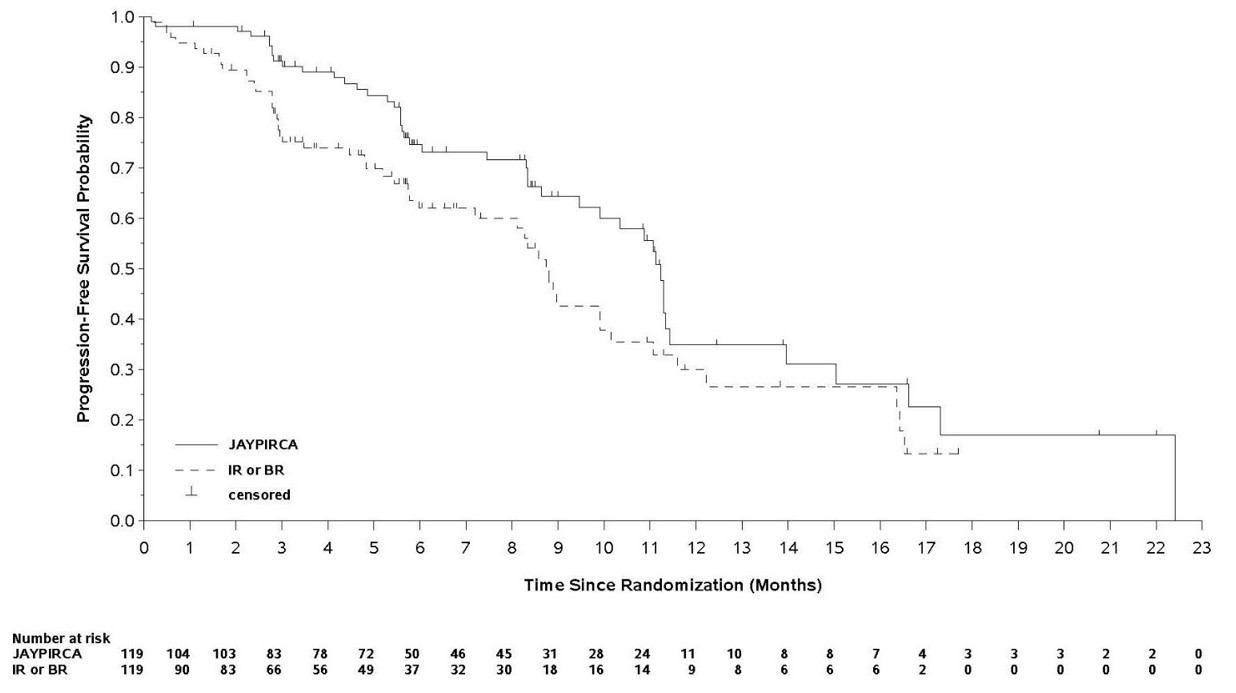
Efficacy was established based on progression-free survival (PFS), as assessed by an Independent Review Committee (IRC) using 2018 iwCLL criteria. The median duration of follow up at the primary analysis was 6.6 months. Efficacy results for the primary analysis are presented in Table 12 and Figure 1.
Table 12: Efficacy Results per IRC in Patients with CLL/SLL Previously Treated with a BTK Inhibitor in BRUIN CLL-321
|
|
|
|
|
| Parameter
a | JAYPIRCA 200 mg once daily
(N = 119) | Investigator's Choice of Idelalisib + Rituximab Product or Bendamustine + Rituximab Product
(N = 119) |
| Progression-free Survival | | |
| Number of Events, n
| 45 (38%)
| 50 (42%)
|
| Disease Progression
| 35 (29%)
| 38 (32%)
|
| Death
| 10 (8%)
| 12 (10%)
|
| Median PFS (95% CI), months b | 11.2 (9.5, 11.4)
| 8.7 (7.2, 10.2)
|
| HR (95% CI) c | 0.58 (0.38, 0.89)
|
| P-value d | 0.0105
|
Figure 1 Kaplan-Meier Curve of IRC-Assessed PFS in Patients with CLL/SLL Previously Treated with a BTK Inhibitor in BRUIN CLL-321
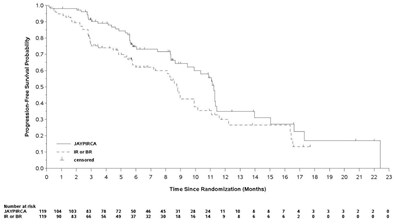
Figure 1 (Jaypirca Uspi F1 V1)
At the primary analysis for PFS the objective response rate (ORR) as assessed by IRC using 2018 iwCLL criteria, was 31.1% (95% CI 23.0, 40.2) in the JAYPIRCA arm and 29.4% (95% CI 21.4, 38.5) in the investigator choice arm.
At an updated analysis with a median follow-up time of 19.8 months, 38 patients (32%) in the JAYPIRCA arm and 32 patients (27%) in the investigator's choice arm died. The unadjusted HR for overall survival (OS) was 1.09 (95% CI: 0.68, 1.75). The ORR was 48.7% (95% CI 39.5, 58.1) in the JAYPIRCA arm and 38.7% (95% CI 29.9, 48.0) in the investigator choice arm.
BRUIN CLL-313
The efficacy of JAYPIRCA was evaluated in a randomized, open-label, active-controlled study in 282 patients with treatment naïve CLL/SLL without 17p deletion (del17p) (BRUIN CLL-313, NCT05023980). The trial required patients to have a platelet count ≥ 75 x 109/L, absolute neutrophil count ≥ 0.75 x 10⁹/L, and an estimated creatinine clearance ≥ 40 mL/min. The trial excluded patients with significant cardiovascular disease including uncontrolled or symptomatic arrhythmias, active uncontrolled auto-immune cytopenia, or an active second malignancy.
Patients were randomized 1:1 ratio to receive:
- JAYPIRCA 200 mg orally once daily until disease progression or unacceptable toxicity, or
- Bendamustine plus a rituximab product (BR): Bendamustine 90 mg/m2 intravenously (Day 1 and 2 of each 28-day cycle), in combination with a rituximab product (375 mg/m2 intravenously on Day 1 of Cycle 1, then 500 mg/m2 on Day 1 of subsequent cycles), for up to 6 cycles.
Crossover to JAYPIRCA monotherapy was permitted for patients in the BR arm after confirmed disease progression. Eighteen out of the 141 patients in the BR arm crossed over and received JAYPIRCA therapy.
Randomization was stratified by immunoglobulin variable region heavy chain (IGHV) mutational status and by Rai stage status.
Of the 282 patients randomized, 141 were assigned to JAYPIRCA monotherapy and 141 to BR. The median age was 66 years (range: 29 to 88); 61% were male; 73% were White, 23% Asian, 0.4% Black or African American; 9% were Hispanic or Latino, 88% not Hispanic or Latino, 2.8% not reported or unknown. Baseline ECOG performance status was 0 or 1 in 94% of patients and 34% of patients had Rai stage III or IV disease. Among randomized patients, 57% had unmutated IGHV, and 10% had complex karyotype.
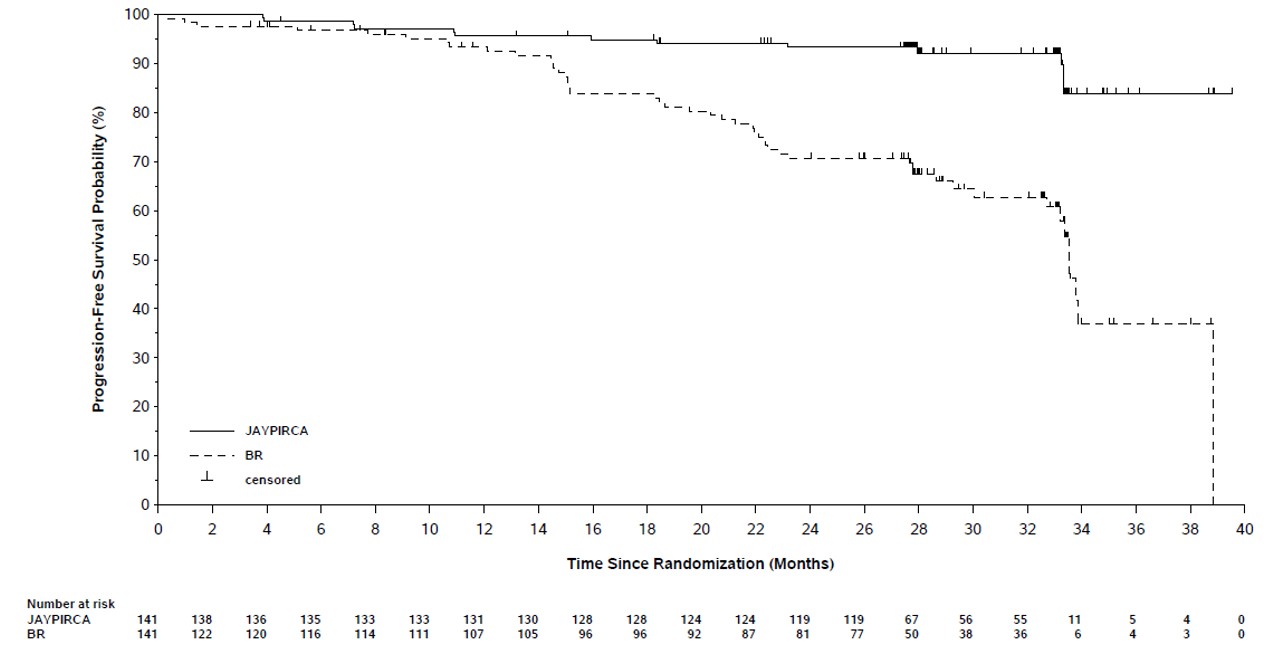
Efficacy was established based on progression-free survival (PFS), as assessed by an Independent Review Committee (IRC). The estimated median time of follow-up was 28 months. Efficacy results for the primary analysis are presented in Table 13 and Figure 2.
Table 13: Efficacy Results per IRC in Patients with Previously Untreated CLL/SLL Without 17p Deletion in BRUIN CLL-313
| Parameter
a | JAYPIRCA 200 mg once daily
(N = 141) | Bendamustine + Rituximab Product
(N = 141) |
|---|
|
|
|
|
|
|
| Progression-free Survival | | |
| Number of Events, n (%)
| 13 (9)
| 48 (34)
|
| Disease Progression
| 13 (9)
| 40 (28)
|
| Death
| 0
| 8 (6)
|
| Median PFS (95% CI), months b | NE (NE, NE)
| 33.5 (32.7, NE)
|
| HR (95% CI) c | 0.20 (0.11, 0.37)
|
| P-value d | <0.0001
|
| Overall Response Ratee | | |
| ORR, n (%)
| 133 (94)
| 114 (81)
|
| (95% CI, %)
| (89, 98)
| (73, 87)
|
| CR, n
| 19 (13)
| 29 (21)
|
| PR, n
| 114 (81)
| 85 (60)
|
Figure 2 Kaplan-Meier Curve of IRC-Assessed PFS in Patients with Previously Untreated CLL/SLL Without 17p Deletion in BRUIN CLL-313
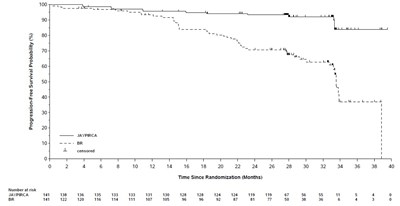
Figure 2 (Jaypirca Uspi F2 V1)
At the time of the primary PFS analysis, with an estimated median follow-up for overall survival (OS) of 32 months, the median OS was not reached in either arm with a total of 13 deaths: 3 deaths (2.1%) in the JAYPIRCA arm and 10 deaths (7.1%) in the BR arm.