Atopic Dermatitis
The safety of EBGLYSS was evaluated across 4 randomized, double-blind, placebo-controlled, multicenter trials in subjects with moderate-to-severe atopic dermatitis including 3 phase 3 trials (ADvocate 1, ADvocate 2, ADhere) and 1 phase 2 dose ranging trial (KGAF). In these 4 trials, mean age was 37 years; 50% of subjects were male; 62% were White, 13% were Black, and 20% were Asian. In terms of co-morbid conditions, in the phase 3 trials, 30% of the subjects had asthma, 50% had allergic rhinitis, 31% had food allergy, and 14% had allergic conjunctivitis at baseline.
A total of 891 subjects were treated with EBGLYSS for at least 1 year in the atopic dermatitis development program.
ADvocate 1, ADvocate 2, and KGAF compared the safety of EBGLYSS monotherapy to placebo. ADhere compared the safety of EBGLYSS + TCS to placebo + TCS through 16 weeks. All subjects from the phase 3 trials were allowed to enroll in the long-term extension study.
Weeks 0 to 16
Table 1 summarizes the adverse reactions that occurred at a rate of at least 1% in the EBGLYSS 250 mg every 2 weeks monotherapy group, or in the EBGLYSS 250 mg every 2 weeks + TCS group, all at a higher rate than placebo during the first 16 weeks of treatment.
Table 1: Adverse Reactions Occurring in ≥1% of the EBGLYSS Monotherapy Group or the EBGLYSS + TCS Group in the Atopic Dermatitis Trials through Week 16
|
|
|
|
|
| Adverse Reactions | EBGLYSS Monotherapya | EBGLYSS + TCSb |
EBGLYSS
250 mg Q2Wc
N = 638
n (%) | Placebo
N = 338
n (%) | EBGLYSS
250 mg Q2Wc
+ TCS
N = 145
n (%) | Placebo + TCS
N = 66
n (%) |
| Conjunctivitisd | 61 (10)
| 10 (3)
| 7 (5)
| 0
|
| Injection Site Reactionse | 16 (3)
| 4 (1)
| 4 (3)
| 1 (2)
|
| Herpes Zoster
| 3 (<1)
| 0
| 2 (1)
| 0
|
In the monotherapy trials (ADvocate 1, ADvocate 2, and KGAF) through Week 16, the proportion of subjects who discontinued treatment due to adverse events was 2.4% in the EBGLYSS 250 mg every 2 weeks group and 1.8% in the placebo group. In the TCS trial (ADhere) through Week 16, the proportion of subjects who discontinued treatment due to adverse events was 2.1% in the EBGLYSS 250 mg every 2 weeks + TCS group and 0% in the placebo + TCS group. The most common adverse reactions leading to discontinuation of EBGLYSS compared to the placebo group were conjunctivitis and keratitis (0.6% vs. 0.3%), and injection site reactions (0.2% vs. 0) in the monotherapy trials; and conjunctivitis (0.7% vs. 0), and injection site reactions (0.7% vs. 0) in the TCS trial.
Eosinophilia
Increased post-baseline blood eosinophils were observed at a higher frequency in EBGLYSS-treated subjects compared to placebo. During the first 16 weeks, eosinophilia (>5000 cells/mcL) was observed in 0.4% in the EBGLYSS-treated subjects and 0% in subjects receiving placebo. Blood eosinophil elevations were generally transient and did not result in discontinuation.
Safety Weeks 16 to 52
Among those EBGLYSS-treated subjects who responded at Week 16 and who were re-randomized in the maintenance period of the monotherapy trials ADvocate 1 and ADvocate 2, a total of 113 and 118 subjects received EBGLYSS 250 mg every 2 weeks or every 4 weeks, respectively. The safety profile of EBGLYSS 250 mg every 4 weeks was generally consistent with EBGLYSS every 2 weeks during Weeks 16 to 52. The safety profile of EBGLYSS during maintenance treatment was generally consistent with the safety profile observed through Week 16.
Specific Adverse Drug Reactions
Conjunctivitis and Keratitis
Conjunctivitis was the most frequently reported eye disorder. Most cases of conjunctivitis and keratitis were mild or moderate in severity and recovered or resolved without treatment interruption or discontinuation.
During the initial 16-week treatment period of the monotherapy trials, conjunctivitis, including allergic conjunctivitis, was reported by 61 subjects (10%) in the EBGLYSS 250 mg every 2 weeks group and 10 subjects (3%) in the placebo group. In the TCS concomitant therapy trial, conjunctivitis was reported by 7 subjects (5%) in the EBGLYSS 250 mg every 2 weeks + TCS group compared to 0% in the placebo + TCS group. During the 16-week placebo-controlled induction period, 68 subjects reported 73 events of conjunctivitis. All events were nonserious and mild or moderate in severity. Conjunctivitis led to treatment discontinuation in 3 subjects. The exposure adjusted incidence rate of conjunctivitis for subjects treated with EBGLYSS 250 mg every 2 weeks was 30.6 events per 100 patient years through Week 16 (KGAF, ADvocate 1, ADvocate 2, ADhere).
During the maintenance treatment period of the monotherapy trials (ADvocate 1 and ADvocate 2) from 16 to 52 weeks, conjunctivitis, including allergic conjunctivitis, was reported by 2 subjects (1.8%) in the EBGLYSS 250 mg every 2 weeks group and 12 subjects (10.1%) in the EBGLYSS 250 mg every 4 weeks group, compared to 5 subjects (8.3%) in the placebo group. During the maintenance treatment period, 14 subjects treated with EBGLYSS reported 18 events of conjunctivitis. All events were mild or moderate in severity. Conjunctivitis led to treatment discontinuation in 2 subjects in the EBGLYSS 250 mg every 4 weeks group. The exposure adjusted incidence rate of conjunctivitis for subjects treated with EBGLYSS 250 mg every 2 weeks was 18.3 events per 100 patient years and for those treated with EBGLYSS 250 mg every 4 weeks was 20.6 events per 100 patient years through Week 52 (ADvocate 1, ADvocate 2, ADhere + the long-term extension study).
During the initial 16-week treatment period of the monotherapy trials, keratitis, including atopic and vernal keratoconjunctivitis, was reported by 4 subjects (0.6%) in the EBGLYSS 250 mg every 2 weeks group and 1 subject (0.3%) in the placebo group. In the TCS concomitant therapy trial, vernal keratoconjunctivitis was reported by 1 subject (0.7%) in the EBGLYSS 250 mg every 2 weeks + TCS group, compared to 0% in the placebo + TCS group. During the 16-week placebo-controlled induction period, 5 subjects reported 7 events of keratitis. All events were nonserious and mild or moderate in severity. Keratitis led to treatment discontinuation in 2 subjects. The exposure adjusted incidence rate of keratitis for subjects treated with EBGLYSS 250 mg every 2 weeks was 2.2 events per 100 patient years through Week 16 (KGAF, ADvocate 1, ADvocate 2, ADhere).
During the maintenance treatment period of the monotherapy trials (ADvocate 1 and ADvocate 2) from 16 to 52 weeks, atopic keratoconjunctivitis was reported by 1 subject (0.8%) in the EBGLYSS 250 mg every 4 weeks group, and vernal keratoconjunctivitis was reported by 1 subject (0.9%) in the EBGLYSS 250 mg every 2 weeks group, compared to 0% in the placebo group. One (0.9%) event of severe vernal keratoconjunctivitis in an EBGLYSS 250 mg every 2 weeks subject led to treatment discontinuation. The exposure adjusted incidence rate of keratitis for subjects treated with EBGLYSS 250 mg every 2 weeks was 1.0 event per 100 patient years and for those treated with EBGLYSS 250 mg every 4 weeks was 0.7 events per 100 patient years through Week 52 (ADvocate 1, ADvocate 2, ADhere + the long-term extension study).
Injection Site Reactions
Injection site reactions were reported by 3% of the EBGLYSS group and 1% of the placebo group in the first 16 weeks of the monotherapy trials. Incidence of injection site reactions declined with continued treatment. Most events were mild or moderate and recovered without treatment discontinuation.
Risk Summary
Available data on lebrikizumab-lbkz use in pregnant women are insufficient to evaluate for a drug-associated risk of major birth defects, miscarriage, or other adverse maternal or fetal outcomes. Transport of human IgG antibody across the placenta increases as pregnancy progresses and peaks during the third trimester; therefore, lebrikizumab-lbkz may be transmitted from the mother to the developing fetus. In animal reproduction studies, no effects on embryo-fetal development were observed after subcutaneous administration of lebrikizumab-lbkz to cynomolgus monkeys during organogenesis at doses up to 18 times the human exposure at the maximum recommended human dose (MRHD) (see Data).
All pregnancies have a background risk of birth defect, loss, or other adverse outcomes. The background risk of major birth defects and miscarriage for the indicated population is unknown. In the U.S. general population, the estimated background risk of major birth defects and miscarriage in clinically recognized pregnancies is 2 to 4% and 15 to 20%, respectively.
Report pregnancies to Eli Lilly and Company at 1-800-LillyRx (1-800-545-5979).
Data
Animal Data
In an embryofetal development study, no malformations or embryofetal toxicity were observed in fetuses from pregnant cynomolgus monkeys administered lebrikizumab-lbkz during organogenesis at doses up to 150 mg/kg initial dose followed by 50 mg/kg per week by subcutaneous injection, which was associated with plasma exposure (Cavg,ss) approximately 18 times the human exposure at the MRHD. Lebrikizumab-lbkz crossed the placenta in monkeys.
In a prenatal and postnatal development study, pregnant cynomolgus monkeys were administered lebrikizumab-lbkz during organogenesis to parturition at doses up to 150 mg/kg initial dose followed by 50 mg/kg per week by subcutaneous injection, which was associated with plasma exposure (Cavg,ss) approximately 18 times the human exposure at the MRHD. No embryofetal toxicity or malformations, or effects on morphological, functional, or immunological development were observed in the infants from birth through 6 months of age.
Risk Summary
There are no data on the presence of lebrikizumab-lbkz in human milk, the effects on the breastfed infant, or the effects on milk production. Endogenous IgG and monoclonal antibodies are transferred in human milk. The effects of local gastrointestinal exposure and limited systemic exposure in the breastfed infant to lebrikizumab-lbkz are unknown. The developmental and health benefits of breastfeeding should be considered along with the mother's clinical need for EBGLYSS and any potential adverse effects on the breastfed infant from EBGLYSS or from the underlying maternal condition.
Absorption
Following a single subcutaneous 250 mg dose of lebrikizumab-lbkz, peak serum concentrations were achieved approximately 7 to 8 days post dose. The absolute bioavailability for a subcutaneous dose was approximately 86%.
Injection site locations did not influence the absorption of lebrikizumab-lbkz.
Distribution
The lebrikizumab-lbkz steady-state volume of distribution is 5.14 L.
Metabolism/Elimination
Lebrikizumab-lbkz is expected to be degraded into small peptides and amino acids via catabolic pathways in the same manner as endogenous IgG.
The lebrikizumab-lbkz half-life is 24.5 days and clearance is 0.154 L/day. Lebrikizumab-lbkz exhibits linear elimination that is independent of dose.
Specific Populations
Age, Sex, Race
Age, sex, or race did not have a significant effect on the pharmacokinetics of lebrikizumab-lbkz.
Weight
Lebrikizumab-lbkz trough concentrations were lower in subjects with higher body weight.
Patients with Renal or Hepatic Impairment
Specific clinical pharmacology studies to evaluate the effects of renal impairment and hepatic impairment on the pharmacokinetics of lebrikizumab-lbkz have not been conducted. Lebrikizumab-lbkz, as a monoclonal antibody, is not expected to undergo significant hepatic or renal elimination. No clinically significant differences in the pharmacokinetics of lebrikizumab-lbkz were observed in patients with mild or moderate renal impairment.
Drug Interaction Studies
The effect of lebrikizumab-lbkz on the PK of co-administered medications has not been studied.
Maintenance and Durability of Response (Week 16 to Week 52)
EBGLYSS-treated subjects achieving IGA 0 or 1 or EASI-75, and who did not receive rescue therapy at Week 16 were re-randomized to 36 weeks of maintenance treatment with EBGLYSS 250 mg Q2W, EBGLYSS 250 mg Q4W, or placebo in ADvocate 1 and ADvocate 2. The results are presented in Table 4.
Table 4: Efficacy Results of EBGLYSS at Week 52 in ADvocate 1 and ADvocate 2a in Subjects with Moderate-to-Severe Atopic Dermatitis
|
|
| ADvocate 1 | ADvocate 2 |
EBGLYSS 250 mg
Q2W | EBGLYSS 250 mg Q4W | Placebo | EBGLYSS 250 mg
Q2W | EBGLYSS 250 mg
Q4W | Placebo |
| Number of subjects who were IGA of 0 or 1 Responders at Week 16b |
45
|
45
|
22
|
32
|
32
|
16
|
| IGA of 0 or 1b at Week 52
| 76%
| 74%
| 47%
| 65%
| 81%
| 50%
|
| Number of subjects who were EASI-75 Responders at Week 16 | 61
| 62
| 30
| 51
| 53
| 27
|
| EASI-75 at Week 52
| 79%
| 79%
| 61%
| 77%
| 85%
| 72%
|
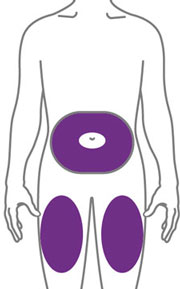
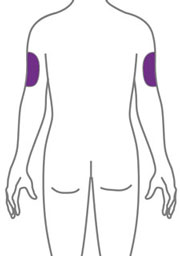
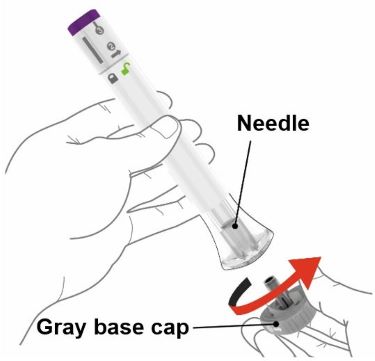
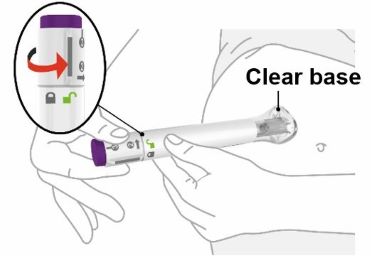
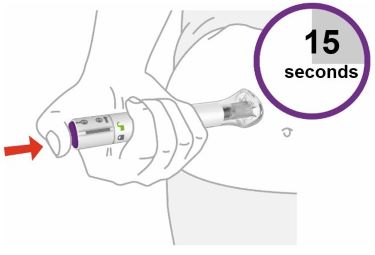
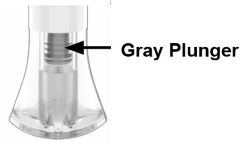
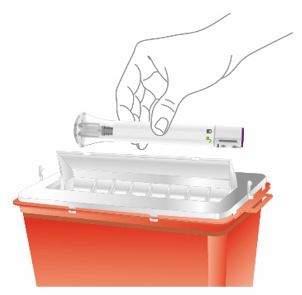
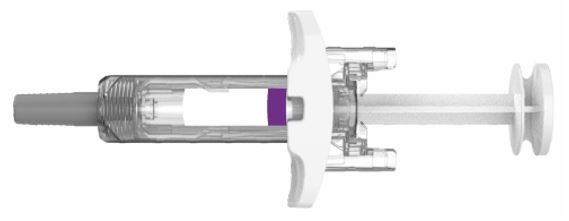
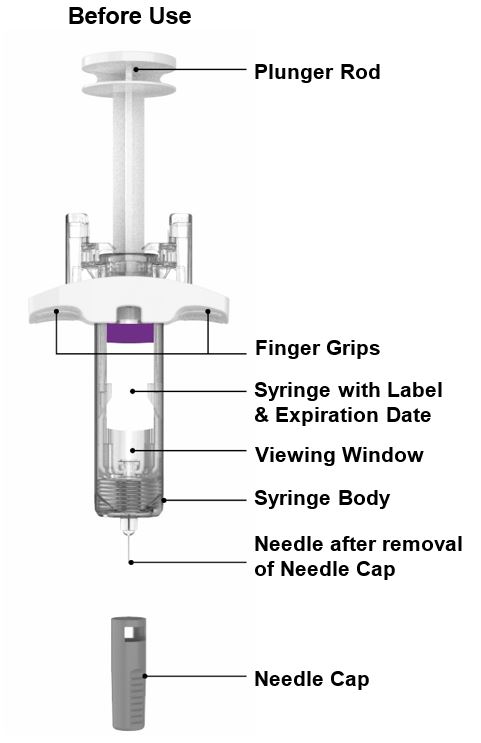
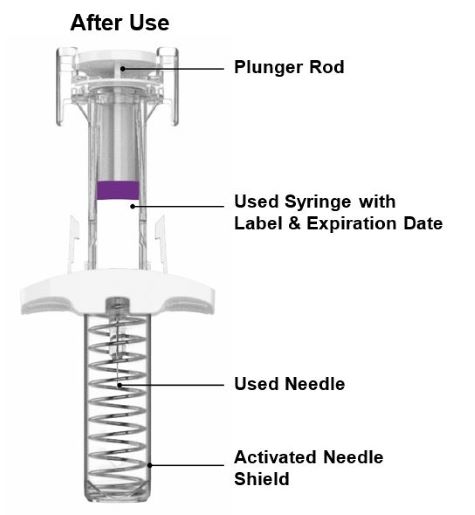
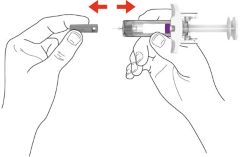
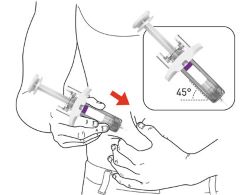
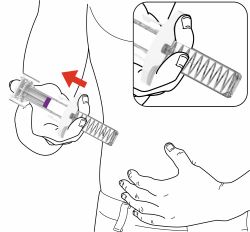
Administration Instructions: Provide guidance to patients and caregivers on proper subcutaneous injection technique, including aseptic technique, and how to use the prefilled pen and prefilled syringe correctly. Advise patients to follow sharps disposal recommendations [see Dosage and Administration (2.4), Instructions for Use].
Hypersensitivity: Advise patients to discontinue EBGLYSS and to seek immediate medical attention if they experience any symptoms of systemic hypersensitivity reactions [see Warnings and Precautions (5.1)].
Conjunctivitis and Keratitis: Advise patients to consult their healthcare provider if new onset or worsening eye symptoms develop [see Warnings and Precautions (5.2)].
Parasitic (Helminth) Infections: Advise patients to notify their healthcare provider if they present with clinical features consistent with helminthic infection [see Warnings and Precautions (5.3)].
Vaccinations: Advise patients that EBGLYSS may increase the risk of infection following administration of live vaccines and that vaccination with live vaccines is not recommended during EBGLYSS treatment. Instruct patients to inform the healthcare provider that they are taking EBGLYSS prior to a potential vaccination [see Warnings and Precautions (5.4)].
Pregnancy: Inform patients to report their pregnancy to Eli Lilly and Company at 1-800-LillyRx (1-800-545-5979) [see Use in Specific Populations (8.1)].
Eli Lilly and Company, Indianapolis, IN 46285, USA
US License No. 1891
Copyright © 2024, Eli Lilly and Company. All rights reserved.
EBG-0002-USPI-20240919