Other
OMVOH is indicated for the treatment of moderately to severely active ulcerative colitis in adults.
Induction Dosage
The recommended induction dosage of OMVOH is 300 mg administered by intravenous infusion over at least 30 minutes at Week 0, Week 4, and Week 8 [see Dosage and Administration (2.3)].
Maintenance Dosage
The recommended maintenance dosage of OMVOH is 200 mg administered by subcutaneous injection (given as two consecutive injections of 100 mg each) at Week 12, and every 4 weeks thereafter [see Dosage and Administration (2.4)].
Hepatic Enzyme Elevations
In UC-1 through Week 12, alanine aminotransferase (ALT) ≥5X ULN was reported by 1 (0.1%) subject treated with OMVOH 300 mg and 1 (0.3%) subject treated with placebo. Aspartate aminotransferase (AST) ≥5X ULN was reported by 2 (0.2%) subjects treated with OMVOH 300 mg and no subject treated with placebo. These elevations have been noted with and without concomitant elevations in total bilirubin.
In UC-2 through Week 40 (a total of 52 weeks of treatment), 3 (0.8%) subjects treated with OMVOH 200 mg reported ALT ≥5X ULN and 3 (0.8%) subjects reported AST ≥5X ULN; with or without concomitant elevations in total bilirubin. No subjects treated with placebo experienced similar elevations [see Warnings and Precautions (5.4)].
Pregnancy Exposure Registry
There will be a pregnancy exposure registry that monitors pregnancy outcomes in women exposed to OMVOH during pregnancy. Pregnant women exposed to OMVOH and healthcare providers are encouraged to call Eli Lilly and Company at 1-800-Lilly-Rx (1-800-545-5979).
Risk Summary
Available data from case reports of mirikizumab-mrkz use in pregnant women are insufficient to evaluate for a drug-associated risk of major birth defects, miscarriage, or other adverse maternal or fetal outcomes. Although there are no data on mirikizumab-mrkz, monoclonal antibodies can be actively transported across the placenta, and mirikizumab-mrkz may cause immunosuppression in the in utero-exposed infant. An enhanced pre- and post-natal development study conducted in pregnant monkeys at a dose 69 times the maximum recommended human dose (MRHD) revealed no adverse developmental effects to the developing fetus, or harm to infant monkeys from birth through 6 months of age. There are risks of adverse pregnancy outcomes associated with increased disease activity in women with inflammatory bowel disease (see Clinical Considerations).
The background risk of major birth defects and miscarriage for the indicated population is unknown. All pregnancies have a background risk of birth defects, loss, or other adverse outcomes. In the U.S. general population, the estimated background risk of major birth defects and miscarriage in clinically recognized pregnancies is 2% to 4% and 15% to 20%, respectively.
Clinical Considerations
Disease-Associated Maternal and Embryo/Fetal Risk
Published data suggest that the risk of adverse pregnancy outcomes in women with inflammatory bowel disease (IBD) is associated with increased disease activity. Adverse pregnancy outcomes include preterm delivery (before 37 weeks gestation), low birth weight (less than 2500 g) infants, and small for gestational age at birth.
Fetal/Neonatal Adverse Reactions
Transport of endogenous IgG antibodies across the placenta increases as pregnancy progresses, and peaks during the third trimester. Because mirikizumab-mrkz may interfere with immune response to infections, risks and benefits should be considered prior to administering live vaccines to infants exposed to OMVOH in utero. There are no data regarding infant serum levels of mirikizumab-mrkz at birth and the duration of persistence of mirikizumab-mrkz in infant serum after birth. Although a specific timeframe to delay live virus immunizations in infants exposed in utero is unknown, a minimum of 2 months after birth should be considered because of the half-life of the product.
Data
Animal Data
An enhanced pre- and postnatal development study was conducted in cynomolgus monkeys administered mirikizumab-mrkz by intravenous injection during organogenesis to parturition at a dose of 300 mg/kg twice weekly (69 times the MRHD based on exposure comparisons). Mirikizumab-mrkz crossed the placenta in monkeys. No maternal toxicity was noted in this study. No mirikizumab-mrkz-related effects on morphological, functional or immunological development were observed in infant monkeys from birth through 6 months of age. However, incidences of embryo/fetal loss were higher in the treated groups compared to control (6.7% [1 of 15] in controls vs 26.7% [4 of 15] at 300 mg/kg (69 times the MRHD, based on exposure comparisons) but were within the range of historical control data. Following delivery, most adult female cynomolgus monkeys and all infants from the mirikizumab-mrkz-treated group had measurable serum concentrations up to 28 days postpartum. In the infant monkeys, mean serum concentrations were approximately 4.8 times the respective mean maternal concentrations.
Risk Summary
There are no data on the presence of mirikizumab-mrkz in human milk, the effects on the breastfed infant, or the effects on milk production. Endogenous maternal IgG and monoclonal antibodies are transferred in human milk. The effects of local gastrointestinal exposure and limited systemic exposure in the breastfed infant to mirikizumab-mrkz are unknown. The developmental and health benefits of breastfeeding should be considered along with the mother’s clinical need for OMVOH and any potential adverse effects on the breastfed infant from OMVOH or from the underlying maternal condition.
OMVOH for Intravenous Infusion
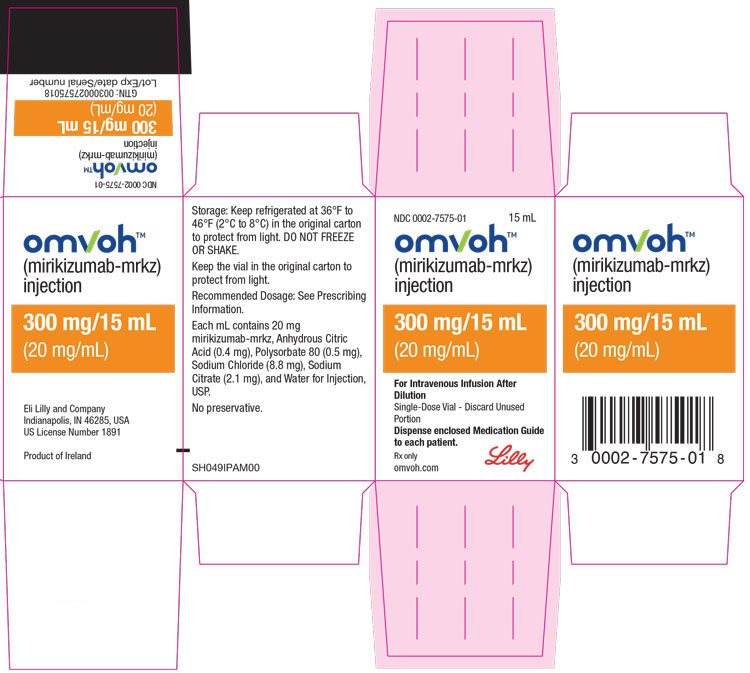
OMVOH (mirikizumab-mrkz) injection is a sterile, preservative-free, clear to opalescent, colorless to slightly yellow to slightly brown solution in a single-dose vial for intravenous infusion after dilution. Each mL contains 20 mg of mirikizumab-mrkz, anhydrous citric acid (0.4 mg), polysorbate 80 (0.5 mg), sodium chloride (8.8 mg), sodium citrate (2.1 mg), and Water for Injection. The OMVOH solution has a pH range of 5.0 - 6.0.
OMVOH for Subcutaneous Injection
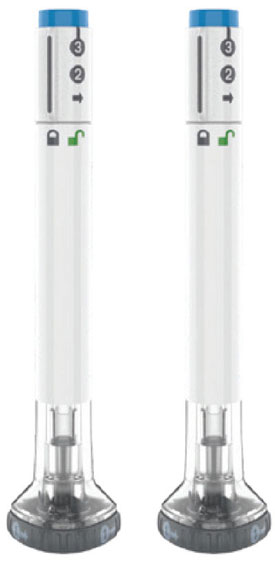
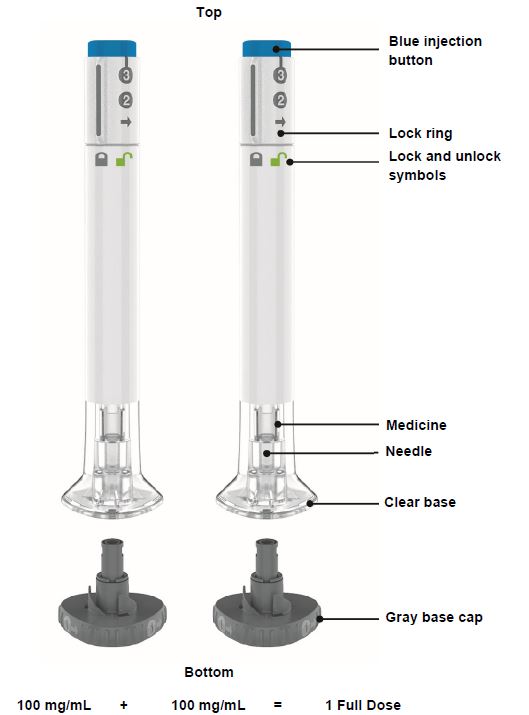
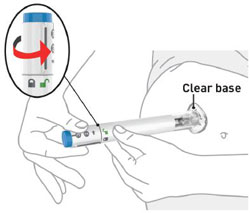
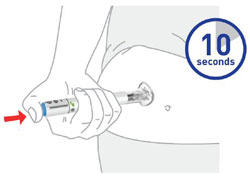
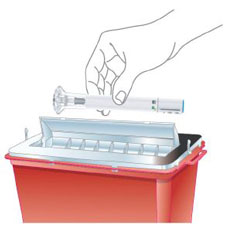
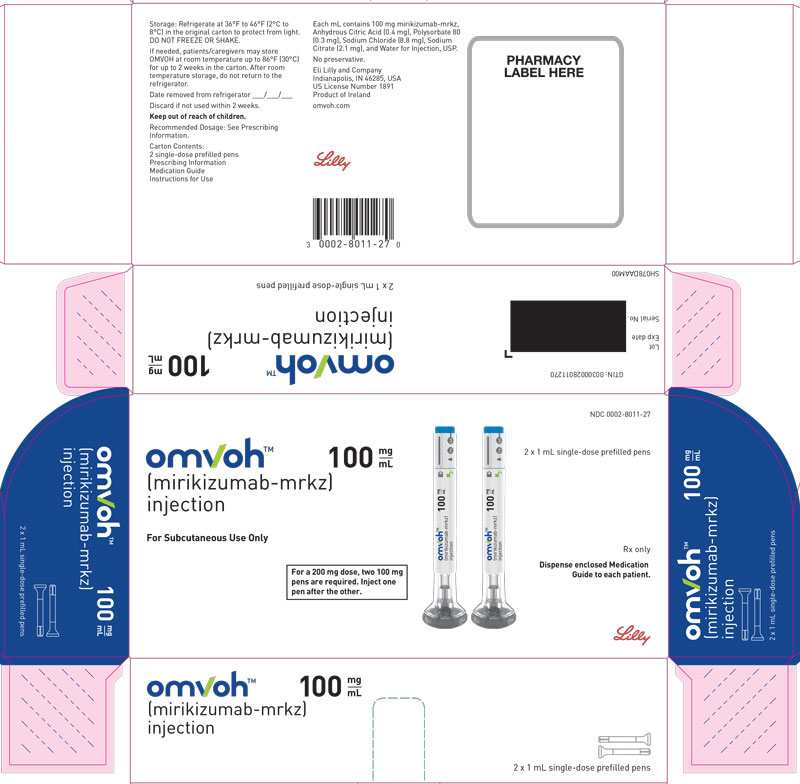
OMVOH (mirikizumab-mrkz) injection is a sterile, preservative free, clear to opalescent, colorless to slightly yellow to slightly brown solution for subcutaneous use available as 100 mg of mirikizumab-mrkz in a 1 mL single-dose prefilled pen. The prefilled pen contains a 1 mL glass syringe with a fixed 27-gauge ½ inch needle. The OMVOH 100 mg prefilled pen is manufactured to deliver 100 mg of mirikizumab-mrkz. Each mL is composed of mirikizumab-mrkz (100 mg), anhydrous citric acid (0.4 mg), polysorbate 80 (0.3 mg), sodium chloride (8.8 mg), sodium citrate (2.1 mg), and Water for Injection. The OMVOH solution has a pH range of 5.0 to 6.0.
Absorption
Following subcutaneous dosing of OMVOH, median (range) Tmax was 5 (3.08 to 6.75) days post dose and geometric mean (CV%) absolute bioavailability was 44% (34%).
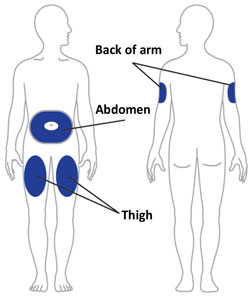
Injection site location (abdomen, upper arm, or thigh) did not significantly influence bioavailability of mirikizumab-mrkz following subcutaneous injection.
Distribution
The geometric mean (CV%) total volume of distribution in subjects with ulcerative colitis was 4.83 L (21%).
Metabolism/Elimination
Mirikizumab-mrkz is a humanized IgG4 monoclonal antibody and is expected to be degraded into small peptides and amino acids via catabolic pathways in the same manner as endogenous IgG.
Geometric mean (CV%) clearance was 0.0229 L/hours (34%) and the geometric mean (CV%) elimination half-life was 9.3 days (40%) in subjects with ulcerative colitis. Clearance is independent of dose.
Specific Populations
There were no clinically significant differences in the pharmacokinetics of mirikizumab-mrkz based on age (18 to 79 years), sex, race (White or Asian), or mild and moderate renal impairment (i.e., estimated creatinine clearance by Cockcroft-Gault equation: 30 to 89 mL/min).
Body Weight
Following intravenous administration of 300 mg, the recommended induction dose, in subjects with ulcerative colitis weighing 90 kg or greater, the estimated geometric mean mirikizumab-mrkz average concentration (Cavg) was 20% lower compared with subjects weighing less than 90 kg. Following subcutaneous administration of 200 mg, the recommended maintenance dose, in subjects with ulcerative colitis weighing 90 kg or greater, the estimated geometric mean Cavg was 38% lower compared with subjects weighing less than 90 kg. In Study UC-2 (maintenance), the rate of clinical remission and clinical response did not differ significantly between subjects weighing 90 kg or greater and subjects weighing less than 90 kg.
Drug Interaction Studies
Population pharmacokinetic analyses indicated that the clearance of OMVOH was not impacted by concomitant administration of aminosalicylates, corticosteroids, or oral immunomodulators (6-MP, AZA, MTX, tioguanine) in subjects with ulcerative colitis.
No drug-drug interaction studies were conducted in subjects with ulcerative colitis at the recommended dosage. Based on a clinical drug-drug interaction study conducted in subjects with another condition, multiple subcutaneous doses of 250 mg every 4 weeks of mirikizumab-mrkz (a dosage 1.25-times higher than the recommended maintenance dosage) did not result in changes in the exposure of midazolam (CYP3A substrate), warfarin (CYP2C9 substrate), dextromethorphan (CYP2D6 substrate), omeprazole (CYP2C19 substrate), or caffeine (CYP1A2 substrate).