Zenbexus Capsule
FDA Label NDC 0003-5710

Full FDA labeling including Indications, Dosage, Usage, and Precautions

Structured Product Label

The following Structured Product Label (SPL) was submitted to the FDA by E.r. Squibb & Sons, L.l.c. for the product Zenbexus (NDC 0003-5710). This document serves as the official prescribing information, containing essential scientific data and clinical materials required for healthcare providers and patients.

This specific version of the label includes detailed information regarding warning: embryo-fetal toxicity and serious venous and arterial thromboembolism, 1 indications and usage, 2 dosage and administration, 2.1 pregnancy testing prior to administration, 2.2 recommended dosage, 2.3 dosage modifications, 2.4 dosage modifications for cyp3a inhibitors, 2.5 recommended dosage in patients with renal impairment, and other regulatory disclosures. Use the navigation below to review specific sections of the FDA submission.

Label Section Quick Index

Warning: Embryo-Fetal Toxicity And Serious Venous And Arterial Thromboembolism

EMBRYO-FETAL TOXICITY

ZENBEXUS is contraindicated in pregnancy. ZENBEXUS is embryo-fetal toxic in animals and can cause birth defects or embryo-fetal death in humans. In females of reproductive potential, obtain 2 negative pregnancy tests before starting ZENBEXUS treatment [Contraindications (4), see Warnings and Precautions (5.1) and Use in Specific Populations (8.1, 8.3)].

Females of reproductive potential must use 2 effective forms of contraception or continuously abstain from heterosexual sex during and for 4 weeks after last dose of ZENBEXUS treatment [see Contraindications (4), Warnings and Precautions (5.1), and Use in Specific Populations (8.1, 8.3)].

Because of the risk of embryo-fetal toxicity, ZENBEXUS is only available through a restricted distribution program called ZENBEXUS REMS [see Warnings and Precautions (5.2)].

Information about ZENBEXUS REMS is available at www.ZENBEXUSREMS.com or by calling the REMS Call Center at 1-888-423-5436.

SERIOUS VENOUS AND ARTERIAL THROMBOEMBOLISM

Increased risk of deep venous thrombosis (DVT), pulmonary embolism (PE), myocardial infarction, and stroke in patients with multiple myeloma receiving ZENBEXUS with daratumumab and hyaluronidase-fihj and dexamethasone. Anti-thrombotic prophylaxis is recommended [see Warnings and Precautions (5.3)].

1 Indications And Usage

ZENBEXUS is indicated, in combination with daratumumab and hyaluronidase-fihj and dexamethasone, for the treatment of adult patients with multiple myeloma who have received at least 1 prior line of therapy including a proteasome inhibitor and an immunomodulatory agent.

This indication is approved under accelerated approval based on minimal residual disease (MRD)-negative complete response (CR) at any time [see Clinical Studies (14)]. Continued approval for this indication may be contingent upon verification and description of clinical benefit in a confirmatory trial(s).

2 Dosage And Administration


The recommended dosage of ZENBEXUS is 1 mg orally once daily with or without food [see Clinical Pharmacology (12.3)] on Days 1 to 21 of a 28-day cycle, until disease progression or unacceptable toxicity, in combination with daratumumab and hyaluronidase-fihj and dexamethasone.

2.3 Dosage Modifications

The recommended dosage modifications for adverse reactions are provided in Table 1.

Table 1: Recommended Dosage Modifications for Adverse Reactions

Adverse Reaction

Severity

Based on National Cancer Institute Common Terminology Criteria for Adverse Events (NCI CTCAE), Version 5.0.

Dosage Modification

Refer to daratumumab and hyaluronidase-fihj and dexamethasone Prescribing Information for information about dosage modifications for daratumumab and hyaluronidase-fihj and dexamethasone.

Neutropenia (Absolute neutrophil count [ANC] <500 cells/mcL) [see Warnings and Precautions (5.4)]

Grade 4

  • Interrupt ZENBEXUS.
  • Consider initiating granulocyte colony-stimulating factor (GCSF), as appropriate.
  • Follow complete blood count (CBC) at least weekly.
  • ANC must return to ≥1,000 cells/mcL before restarting.
  • The dose of ZENBEXUS may be maintained if neutropenia was the only ZENBEXUS-related toxicity requiring a dose modification and GCSF treatments are continued.
  • If a dose reduction is clinically appropriate, decrease ZENBEXUS to 0.75 mg once daily when restarting treatment.

Febrile Neutropenia (ANC <1,000 cells/mcL with a single temperature of >38.3°C [101°F] or with a sustained temperature of ≥38°C [100.4°F] for more than 1 hour)

Grade 3

Thrombocytopenia (platelet count <25,000/mcL)

Grade 4

  • Withhold ZENBEXUS for the remainder of the cycle.
  • Platelet count must return to ≥50,000/mcL before restarting.
  • Decrease ZENBEXUS to 0.75 mg once daily when restarting treatment.

Thrombocytopenia with bleeding or any requirement for a platelet transfusion

Grade 3

Thromboembolism [see Warnings and Precautions (5.3)]

≥ Grade 3

  • Interrupt ZENBEXUS.
  • Initiate anticoagulant therapy.
  • Restart treatment at a decreased ZENBEXUS dose to 0.75 mg once daily when acute symptoms of thrombosis/embolism have been resolved, at the discretion of the treating physician.

Other ZENBEXUS related adverse reactions [see Adverse Reactions (6.1)]

≥ Grade 3

  • Interrupt ZENBEXUS.
  • Restart ZENBEXUS when adverse event has resolved or improved to ≤ Grade 2.
  • If a dose reduction is clinically appropriate, decrease ZENBEXUS to 0.75 mg once daily when restarting treatment.

2.4 Dosage Modifications For Cyp3a Inhibitors

Avoid concomitant use of ZENBEXUS with strong or moderate CYP3A inhibitors.

If concomitant use with strong CYP3A inhibitors is unavoidable, reduce ZENBEXUS dose to 1 mg every other day on Days 1 to 21 of a 28-day cycle [see Drug Interactions (7.1) and Clinical Pharmacology (12.3)].

If concomitant use with moderate CYP3A inhibitors is unavoidable, reduce ZENBEXUS dose to 0.75 mg once daily on Days 1 to 21 of a 28-day cycle [see Drug Interactions (7.1) and Clinical Pharmacology (12.3)]. If dose modification is needed due to adverse events, reduce ZENBEXUS dose to 1 mg every other day on Days 1 to 21 of a 28-day cycle.

In patients with eGFR less than 30 mL/min/1.73 m2 not receiving dialysis, reduce ZENBEXUS dose to 0.75 mg once daily on Days 1 to 21 of a 28-day cycle. If dose modification is needed due to adverse events, reduce ZENBEXUS dose to 1 mg every other day on Days 1 to 21 of a 28-day cycle.

In patients with eGFR greater than 30 mL/min/1.73 m2 or eGFR less than 30 mL/min/1.73 m2 receiving intermittent hemodialysis, no dose adjustment is recommended [see Use in Specific Populations (8.6) and Clinical Pharmacology (12.3)].

2.6 Administration

ZENBEXUS is a hazardous drug. Follow applicable special handling and disposal procedures.1

Take ZENBEXUS at approximately the same time each day with or without food [see Clinical Pharmacology (12.3)].

Swallow ZENBEXUS capsules whole with water. Do not open, break, or chew the capsules. Direct contact with the capsule contents should be avoided. In case of capsule breakage, avoid raising dust during clean-up. If contact occurs, wash thoroughly with soap and water.

Delayed Or Missed Doses

If a dose is missed and it has been less than 12 hours since the missed dose, take the missed dose as soon as possible. If it has been more than 12 hours since the missed dose, skip the missed dose. Do not double the next dose.

3 Dosage Forms And Strengths

ZENBEXUS capsules are available as follows:

  • 0.75 mg of iberdomide: light gray opaque cap imprinted with “BMS” in white ink and dark brown opaque body imprinted with “0.75 mg” in white ink.
  • 1 mg of iberdomide: light gray opaque cap imprinted with “BMS” in white ink and ivory opaque body imprinted with “1 mg” in black ink.

4 Contraindications

Based on the mechanism of action [see Clinical Pharmacology (12.1)] and findings in animal studies, ZENBEXUS can cause birth defects or embryo-fetal death in humans [see Boxed Warning, Warnings and Precautions (5.1), and Use in Specific Populations (8.1)]. ZENBEXUS is contraindicated in females who are pregnant. Iberdomide causes adverse developmental outcomes in both rats and rabbits when administered during the period of organogenesis. If this drug is used during pregnancy or if the patient becomes pregnant while taking this drug, the patient should be informed of the potential hazard to a fetus.

5 Warnings And Precautions


5.1 Embryo-Fetal Toxicity

Based on the mechanism of action [see Clinical Pharmacology (12.1)] and findings in animal studies, ZENBEXUS can cause birth defects or embryo-fetal death in humans and is contraindicated for use during pregnancy. Oral administration of iberdomide in pregnant rats and rabbits during the period of organogenesis resulted in adverse developmental outcomes including embryo-fetal mortality, alterations to growth, and structural abnormalities [see Use in Specific Populations (8.1)]. ZENBEXUS is only available through ZENBEXUS REMS [see Warnings and Precautions (5.2)].

Females Of Reproductive Potential

Females of reproductive potential must avoid pregnancy while taking ZENBEXUS and for at least 4 weeks after completing therapy.

Advise females of reproductive potential of the potential risk to a fetus and to use 2 methods of effective contraception for at least 4 weeks before beginning ZENBEXUS therapy, during therapy, during dose interruptions and for at least 4 weeks after last dose of ZENBEXUS therapy [see Contraindications (4) and Use in Specific Populations (8.1)].

Two negative pregnancy tests with a sensitivity of at least 25 mIU/mL must be obtained prior to initiating therapy. Pregnancy testing should be performed weekly during the first 4 weeks of treatment. Thereafter, testing should occur every 4 weeks in patients with regular menstrual cycles, or every 2 weeks in patients with irregular menstrual cycles [see Use in Specific Populations (8.3)].

Females of reproductive potential taking ZENBEXUS must not donate eggs during treatment and for 4 weeks after completion [see Use in Specific Populations (8.3)].

Males

ZENBEXUS may pass into human semen. Advise patients who can impregnate partners to use effective contraception during treatment and for 4 weeks following the discontinuation of ZENBEXUS therapy [see Use in Specific Populations (8.1, 8.3)].

Male patients taking ZENBEXUS must not donate sperm during treatment and for 4 weeks after completion [see Use in Specific Populations (8.3)].

Males must always use a latex or synthetic condom during any sexual contact with females of reproductive potential while taking ZENBEXUS and for at least 4 weeks after discontinuing ZENBEXUS, even if they have undergone a successful vasectomy.

Male patients taking ZENBEXUS must not donate sperm during treatment and for 4 weeks after discontinuing ZENBEXUS [see Warnings and Precautions (5.1)].

Blood Donation

Patients must not donate blood during treatment with ZENBEXUS and for 4 weeks following discontinuation of ZENBEXUS therapy.

5.2 Zenbexus Rems

ZENBEXUS is available only through a restricted program called ZENBEXUS REMS, because of the risk of embryo-fetal toxicity [see Warnings and Precautions (5.1)].

Notable requirements of the ZENBEXUS REMS Program include the following:

  • Prescribers must be certified by enrolling in the ZENBEXUS REMS Program.
  • Patients must enroll in the ZENBEXUS REMS Program and comply with ongoing monitoring and contraception requirements [see Boxed Warning, Warnings and Precautions (5.1), and Use in Specific Populations (8.3)].
  • Pharmacies must be certified by enrolling in the ZENBEXUS REMS Program and must only dispense to patients who are authorized to receive ZENBEXUS.
  • Wholesalers and distributors must only distribute to certified pharmacies.
  • Further information about ZENBEXUS REMS is available at www.ZENBEXUSREMS.com or by telephone at 1-888-423-5436.

5.3 Serious Venous And Arterial Thromboembolism

ZENBEXUS can cause serious and life-threatening venous thromboembolic events (deep venous thrombosis and pulmonary embolism) and arterial thromboembolic events (myocardial infarction and stroke). In the EXCALIBER-RRMM study evaluating ZENBEXUS in combination with daratumumab and hyaluronidase-fihj and dexamethasone (IberDd), venous thromboembolic events occurred in 6.4% of patients despite mandatory thromboembolism prophylaxis in the IberDd arm (N=204). The incidence of deep venous thrombosis was 3.4% and the incidence of pulmonary embolism was 1.5%.

Arterial thromboembolic events occurred in 3.4% of patients. The incidence of myocardial infarction was 2.0%, and the incidence of stroke (CVA) was 1.5%.

Monitor patients for signs and symptoms of thromboembolic events during treatment with ZENBEXUS. Patients with known risk factors, including prior thrombosis, may be at greater risk, and actions should be taken to try to minimize all modifiable factors (e.g., hyperlipidemia, hypertension, smoking). Thromboprophylaxis is recommended, and the choice of regimen should be based on assessment of the patient's underlying risk factors. In patients who develop a thromboembolism, interrupt ZENBEXUS and initiate anticoagulant therapy according to guidelines [see Dosage and Administration (2.3)].

5.4 Neutropenia

ZENBEXUS can cause severe neutropenia [see Adverse Reactions (6.1)].

In the EXCALIBER-RRMM study, neutropenia All Grades was reported in 90.2% and Grade 3 in 30.9% and Grade 4 in 53.4% of patients in the IberDd arm (N=204).

Febrile neutropenia occurred in 5.4% of patients.

The median time to Grade 3 or 4 neutropenia was 21 days. The median duration of Grade 3 or 4 neutropenia was 8 days. Treatment interruption due to neutropenia occurred in 51.5% of patients in the IberDd arm, and discontinuation due to neutropenia was required in 1% of patients in the IberDd arm.

Monitor complete blood count throughout treatment with ZENBEXUS. Interrupt, reduce dosage, or discontinue ZENBEXUS, as necessary [see Dosage and Administration (2.3)]. Initiate GCSF as appropriate per guidelines.

5.5 Infections

ZENBEXUS can cause serious infections, including life-threatening or fatal infections [see Adverse Reactions (6.1)]. Patients with active or uncontrolled infection should not start ZENBEXUS treatment until the infection is controlled.

In the EXCALIBER-RRMM study, infections, including opportunistic infections, were reported in 78.9%, Grade 3 in 35.8%, Grade 4 in 3.4%, and fatal infections occurred in 2% of patients in the IberDd arm (N=204). Serious infections occurred in 40% of patients. Discontinuations due to infections occurred in 1.5% of patients.

Monitor patients for signs and symptoms of infection prior to and during treatment with ZENBEXUS and treat appropriately. Withhold or reduce the dose based on severity [see Dosage and Administration (2.3)].

Consider prophylactic anti-infective medications according to current practice guidelines.

5.6 Second Primary Malignancies

In the EXCALIBER-RRMM study, at a median follow-up time of 16 months, second primary malignancies (SPM) occurred in 6.9% of patients in the IberDd arm and in 4.9% of patients in the daratumumab and hyaluronidase-fihj, bortezomib and dexamethasone (DVd) arm [see Adverse Reactions (6.1)].

Monitor patients for the development of second primary malignancies.

6.1 Clinical Trials Experience

Because clinical trials are conducted under widely varying conditions, adverse reaction rates observed in the clinical trials of a drug cannot be directly compared to rates in the clinical trials of another drug and may not reflect the rates observed in clinical practice.

The safety of ZENBEXUS in combination with daratumumab and hyaluronidase-fihj and dexamethasone was evaluated in EXCALIBER-RRMM, a two-stage, phase 3, randomized, multicenter open-label study in patients with relapsed or refractory multiple myeloma (RRMM) after 1 or 2 prior lines of therapy [see Clinical Studies (14)]. Patients were randomized to receive ZENBEXUS (at 1 of 3 dose levels) in combination with daratumumab and hyaluronidase-fihj and dexamethasone or daratumumab and hyaluronidase-fihj, bortezomib and dexamethasone (DVd) in stage 1, and ZENBEXUS 1 mg in combination with daratumumab and hyaluronidase-fihj and dexamethasone (IberDd) or DVd in stage 2. The MRD Primary Analysis Group included the first 420 patients randomized to ZENBEXUS 1 mg in combination with Dd (N=207) or DVd (N=213) in stage 1 and stage 2. Safety was assessed in patients in the MRD Primary Analysis Group who received at least one dose of the study drug (IberDd: N=204; DVd: N=204). Among patients who received ZENBEXUS, 86% were exposed for 6 months or longer and 73% were exposed for greater than one year.

Serious adverse reactions occurred in 58.3% of patients who received ZENBEXUS. Serious adverse reactions in ≥2% of patients included pneumonia (26%), upper respiratory tract infection (6.4%), second primary malignancy (5.9%), neutropenia (4.9%), febrile neutropenia (3.9%), COVID-19 (4.4%), and sepsis (2.9%). Fatal adverse reactions occurred in 10 patients (4.9%) who received ZENBEXUS. Sepsis (1.5%) was the only fatal drug reaction that occurred in more than 1 patient. The following fatal adverse reactions occurred in one patient each: listeria encephalitis, influenza, lung adenocarcinoma, cardiac arrest, large intestine perforation, metabolic acidosis, and respiratory failure.

Permanent discontinuation of ZENBEXUS due to an adverse reaction occurred in 7.8% of patients. The most frequent adverse reaction which resulted in permanent ZENBEXUS discontinuation was neutropenia (1%).

Dosage interruption of ZENBEXUS due to an adverse reaction occurred in 84% of patients. Adverse reactions which required dosage interruption in >10% of patients included neutropenia, upper respiratory tract infection, pneumonia and COVID-19.

Dosage reductions of ZENBEXUS due to an adverse reaction occurred in 29% of patients. Adverse reactions which required dose reductions in >2% of patients included neutropenia, fatigue, pneumonia, and sensory neuropathy.

The most common adverse reactions (≥20%) were upper respiratory tract infection, fatigue, musculoskeletal pain, pneumonia, diarrhea, motor dysfunction, rash, sleep disorder, hypogammaglobulinemia, COVID-19, and constipation.

The most common Grade 3 to 4 laboratory abnormalities (≥30%) were decreased neutrophils, decreased white blood cells, and decreased lymphocytes.

Tables 2 and 3 summarize adverse reactions and laboratory abnormalities, respectively, in the EXCALIBER-RRMM study.

Table 2: Adverse Reactions (≥10%) in Patients Who Received ZENBEXUS in Combination with Daratumumab and Hyaluronidase-fihj and Dexamethasone in EXCALIBER-RRMM
Adverse reactions were graded according to NCI CTCAE Version 5.0.

Adverse Reaction

ZENBEXUS + Daratumumab and Hyaluronidase-fihj + Dexamethasone (IberDd)
(n=204)

Daratumumab and Hyaluronidase-fihj + Bortezomib + Dexamethasone (DVd)
(n=204)

All Grades
(%)

Grade 3 or 4
(%)

All Grades
(%)

Grade 3 or 4
(%)

Infections and infestations

   Upper respiratory tract infection

Upper respiratory tract infection includes nasopharyngitis, pharyngitis, respiratory tract infection, sinusitis, and other related terms.

54

Includes fatal adverse reaction: IberDd (n=1).

6

52

6

   Pneumonia

Pneumonia includes atypical pneumonia, bacterial pneumonia, lower respiratory tract infection, lung consolidation, viral pneumonia and other related terms.

34

25

17

10

   COVID-19

Includes other related terms.

23

3.9

16

2.9

General disorders and administration site conditions

   Fatigue

36

3.4

33

2.5

   Edema

17

0.5

24

1

   Pyrexia

14

1

15

1

Musculoskeletal and connective tissue disorders

   Musculoskeletal pain

35

1.5

33

2.9

   Bone pain

11

1

13

0.5

Gastrointestinal disorders

   Diarrhea

33

4.9

36

6

   Constipation

20

0

22

1

   Nausea

14

0.5

6

0

Nervous system disorders

   Motor dysfunction

Motor dysfunction includes ataxia, balance disorder, gait disturbance, muscle contracture, muscle spasms, muscular weakness, myopathy, paralysis, peripheral motor neuropathy and other related terms.

26

1.5

17

2.5

   Sensory neuropathy

Sensory neuropathy includes anosmia, hypoesthesia, mononeuropathy, neuralgia, paresthesia, peripheral neuropathy, peripheral sensory neuropathy, polyneuropathy, radiculopathy and other related terms.

19

4.4

53

6

   Dizziness

11

0

9

0.5

Skin and subcutaneous tissue disorders

   Rash

26

1

15

0.5

Psychiatric disorders

   Sleep disorder

Sleep disorder includes insomnia, restless legs syndrome, sleep disorder and other related terms.

25

2.9

28

1.5

Immune system disorders

   Hypogammaglobulinemia

Hypogammaglobulinemia includes hypogammaglobulinemia, hypoglobulinemia, and other related terms.

24

1

12

0.5

Respiratory, thoracic and mediastinal disorders

   Cough

18

0.5

14

0.5

   Dyspnea

10

0

9

1

Renal and urinary disorders

   Renal impairment

11

3.4

8

3.9

Vascular disorders

   Hemorrhage

Hemorrhage includes epistaxis, gastrointestinal hemorrhage, hematuria, injection site hemorrhage, rectal hemorrhage, subarachnoid hemorrhage, subdural hematoma and other related terms.

10

1.5

9

2

Clinically relevant adverse reactions in <10% of patients who received ZENBEXUS (in combination with daratumumab and hyaluronidase-fihj and dexamethasone) included:

  • Venous thromboembolic event (includes retinal vein occlusion, pulmonary embolism, deep vein thrombosis, embolism venous, post thrombotic syndrome, superficial vein thrombosis, and thrombophlebitis).
  • Arterial thromboembolic event (includes myocardial infarction, stress cardiomyopathy, ischemic stroke, lacunar infarction, peripheral arterial occlusive disease).
  • Second primary malignancy
  • Febrile neutropenia
  • Sepsis
  • Hepatotoxicity
  • Table 3: Select Laboratory Abnormalities (≥30%) That Worsened from Baseline

    The denominator used to calculate the rate varied from 201 to 204 for both IberDd and DVd arms based on the number of patients with a baseline value and at least one post-treatment value.

    in Patients Who Received ZENBEXUS in EXCALIBER-RRMM

    Laboratory Abnormality

    ZENBEXUS + Daratumumab and hyaluronidase-fihj + Dexamethasone (IberDd)

    Daratumumab and hyaluronidase-fihj + Bortezomib + Dexamethasone (DVd)

    All Grades
    (%)

    Grade 3 or 4
    (%)

    All Grades
    (%)

    Grade 3 or 4
    (%)

    Hematology

       Neutrophil count decreased

    97

    77

    48

    11

       White blood cell count decreased

    95

    69

    64

    18

       Lymphocytes count decreased

    91

    62

    81

    51

       Platelet count decreased

    62

    9

    92

    46

       Hemoglobin decreased

    58

    6

    63

    6

    Chemistry

       Blood calcium decreased

    44

    2

    28

    1

       Blood alkaline phosphatase increased

    33

    0.5

    26

    0.5

7 Drug Interactions


7.1 Effects Of Other Drugs On Zenbexus


Strong Or Moderate Cyp3a Inhibitors

Avoid concomitant use of strong or moderate CYP3A inhibitors with ZENBEXUS. If concomitant use cannot be avoided, reduce ZENBEXUS dose [see Dosage and Administration (2.4)].

Iberdomide is primarily metabolized by CYP3A. Concomitant use with strong or moderate CYP3A inhibitors increases iberdomide exposure [see Clinical Pharmacology (12.3)], which may increase the risk of adverse reactions.

Strong Or Moderate Cyp3a Inducers

Avoid concomitant use of strong or moderate CYP3A inducers with ZENBEXUS.

Iberdomide is primarily metabolized by CYP3A. Concomitant use with a strong or moderate CYP3A inducer decreases iberdomide exposure [see Clinical Pharmacology (12.3)], which may decrease efficacy.

8 Use In Specific Populations


8.1 Pregnancy


Pregnancy Exposure Registry

There is a pregnancy exposure registry that monitors outcomes in patients exposed to ZENBEXUS during pregnancy. Report any suspected fetal exposure to ZENBEXUS to the FDA via the MedWatch program at 1-800-FDA-1088 and to the REMS Call Center at 1-888-423-5436.

Risk Summary

Based on the mechanism of action [see Clinical Pharmacology (12.1)] and findings from animal studies, ZENBEXUS can cause birth defects or embryo-fetal death in humans when administered to a pregnant female and is contraindicated during pregnancy [see Boxed Warning, Contraindications (4), and Warnings and Precautions (5.1)].

ZENBEXUS has a shared mechanism of action with thalidomide. Thalidomide is a human teratogen, inducing a high frequency of severe and life-threatening birth defects such as amelia (absence of limbs), phocomelia (short limbs), hypoplasticity of the bones, absence of bones, external ear abnormalities (including anotia, micropinna, small or absent external auditory canals), facial palsy, eye abnormalities (anophthalmos, microphthalmos), and congenital heart defects. Alimentary tract, urinary tract, and genital malformations have also been documented, and mortality at or shortly after birth has been reported in about 40% of infants.

There are no available data on the use of ZENBEXUS in pregnant women to evaluate for drug associated risk. Oral administration of iberdomide in pregnant rats and rabbits during the period of organogenesis resulted in adverse developmental outcomes including embryo-fetal mortality, alterations to growth, and structural abnormalities. Iberdomide crossed the placenta after administration to pregnant rats and rabbits (see Data). Advise patients of the potential risk to a fetus.

If pregnancy does occur during treatment, immediately discontinue the drug. Under these conditions, refer patient to an obstetrician/gynecologist experienced in reproductive toxicity for further evaluation and counseling. Report any suspected fetal exposure to ZENBEXUS to the REMS Call Center at 1-888-423-5436.

In the U.S. general population, the estimated background risk of major birth defects and miscarriage in clinically recognized pregnancies is 2% to 4% and 15% to 20%, respectively.

There is no information regarding the presence of iberdomide or its metabolites in human milk, the effects of ZENBEXUS on the breastfed child, or the effects of ZENBEXUS on milk production. Iberdomide was excreted in the milk of lactating rats (see Data). Because many drugs are excreted in human milk and because of the potential for adverse reactions in a breastfed child from ZENBEXUS, advise women not to breastfeed during treatment with ZENBEXUS. Refer to daratumumab and hyaluronidase-fihj or dexamethasone prescribing information for additional information.

Data


Animal Data

Iberdomide caused adverse developmental outcomes in both rats and rabbits in the embryo-fetal developmental studies when administered during the period of organogenesis.

Pregnant rats were administered oral doses of 0.6, 50, or 300 mg/kg/day. At 300 mg/kg/day, adverse effects included increased post-implantation loss, fetal resorptions, reduced numbers of viable fetuses, lower fetal body weights, and the occurrence of external and skeletal malformations in the head (acephaly, dome shaped, meningoencephalocele), eyes (malpositioned, microphthalmia), mouth (cleft lip, small tongue, misshapen palate), ear(s) (misshapen or small), cervical vertebrae (fused or misshapen neural arches), pectoral girdle (bent scapula), skull (fused or misshapen bones), and sternum (sternoschisis).

Pregnant rabbits were administered oral doses of 0.3, 50 or 300 mg/kg/day. At doses of 300 mg/kg/day, increased abortions were observed. At doses of ≥50 mg/kg/day developmental effects included increased post-implantation loss, fetal resorptions, reduced numbers of viable fetuses, decreased fetal body weights, and external, skeletal, and visceral malformations in the entire body and hindlimbs (edema), tail (short), gallbladder and thyroid (absent), aortic arch (small), interventricular septum (discontinuous), cervical vertebrae (fused, misshapen neural arches), skull (fused or misshapen bones), and sternum (fused).

In rats, fetal plasma concentration levels on gestation day (GD) 17 were 17 to 22% of the maternal concentration at 2 hours post-dosing, and in rabbits, fetal plasma concentration levels on GD 17 were 2 to 4% of the maternal concentration at 2 hours post-dosing. This indicates that iberdomide crossed the placenta.

Following a single oral administration of iberdomide to lactating rats, the milk to plasma concentration ratios ranged from 12 to 32 for iberdomide over the 12 hour post-dose period, indicating iberdomide is excreted into rat milk.

8.2 Lactation


Pregnancy Testing

Verify the pregnancy status of females of reproductive potential prior to initiating ZENBEXUS therapy and during therapy. Advise females of reproductive potential that they must avoid pregnancy 4 weeks before therapy, while taking ZENBEXUS, during dose interruptions and for at least 4 weeks after last dose of ZENBEXUS therapy [see Warnings and Precautions (5.1) and Use in Specific Populations (8.1)].

Females of reproductive potential must have 2 negative pregnancy tests before initiating ZENBEXUS. The first test should be performed within 10 to 14 days, and the second test within 24 hours prior to prescribing ZENBEXUS. Pregnancy testing should be performed weekly during the first 4 weeks of treatment. Thereafter, testing should occur every 4 weeks in patients with regular menstrual cycles, or every 2 weeks in patients with irregular menstrual cycles. Pregnancy testing and counseling should be performed if a patient misses her period or if there is any abnormality in her menstrual bleeding. ZENBEXUS treatment must be discontinued during this evaluation.

Contraception


Females

Females of reproductive potential must commit either to abstain continuously from heterosexual sexual intercourse or to use 2 effective forms of contraception simultaneously: one highly effective form of contraception – tubal ligation, IUD, hormonal (birth control pills, injections, hormonal patches, vaginal rings, or implants), or partner's vasectomy, and 1 additional effective contraceptive method – male latex or synthetic condom, diaphragm, or cervical cap. Contraception must begin 4 weeks prior to initiating treatment with ZENBEXUS, during therapy, during dose interruptions, and continuing for 4 weeks following discontinuation of ZENBEXUS therapy. Effective contraception is indicated even where there has been a history of infertility, unless due to hysterectomy. Females of reproductive potential should be referred to a qualified provider of contraceptive methods, if needed.

Infertility

Based on findings in animals, ZENBEXUS may impair male or female fertility. The effects of iberdomide on fertility were reversible in males [see Nonclinical Toxicology (13.1)].

8.4 Pediatric Use

The safety and effectiveness of ZENBEXUS have not been established in pediatric patients.

8.5 Geriatric Use

Of the 207 patients who were randomized to IberDd and included in the minimal residual disease (MRD) analysis group in EXCALIBER-RRMM study, 39% of adult patients were younger than 65 years of age, 43% were 65 years of age to younger than 75 years of age, and 19% were 75 years and over [see Clinical Studies (14)]. No overall differences in effectiveness were observed between elderly patients and younger patients.

In patients treated with IberDd, the incidence of serious adverse reactions was 53%, 56%, and 74% in adult patients younger than 65 years of age, 65 years of age to younger than 75 years of age, and 75 years of age and older, respectively [see Adverse Reactions (6.1)].

8.6 Renal Impairment

Reduce ZENBEXUS dose in patients with eGFR less than 30 mL/min/1.73 m2 not on dialysis [see Dosage and Administration (2.5)].

Iberdomide exposure increased in subjects with eGFR less than 30 mL/min/1.73 m2 not on dialysis [see Clinical Pharmacology (12.3)], which may increase the risk of adverse reactions.

11 Description

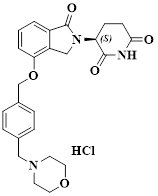
ZENBEXUS capsules contain iberdomide hydrochloride, iberdomide is a cereblon-modulating protein degrader. The chemical name of iberdomide hydrochloride is (3S)-3-[4-({4-[(morpholin-4-yl)methyl]phenyl}methoxy)-1-oxo-2,3-dihydro-1H-isoindol-2-yl]piperidine-2,6-dione hydrochloride and the chemical structure is as follows:

Chemical Structure (Chem Structure)

Chemical Structure (Chem Structure)

The molecular formula for iberdomide hydrochloride is C25H27N3O5HCl and the molecular weight is 485.97.

ZENBEXUS capsules contain 0.75 mg or 1 mg of iberdomide (equivalent to 0.81 mg or 1.08 mg respectively of iberdomide hydrochloride) in HPMC capsules and the following inactive ingredients: anhydrous lactose, pregelatinized starch, and stearic acid.

The HPMC capsule shell contain hypromellose, iron oxide black, iron oxide yellow, and titanium dioxide. The 0.75 mg capsule shell also contains iron oxide red. The 0.75 mg capsule is imprinted with white ink that contains povidone, propylene glycol, shellac, sodium hydroxide, and titanium dioxide. The 1 mg capsule is imprinted with white and black ink that contains iron oxide black, potassium hydroxide, povidone, propylene glycol, shellac, sodium hydroxide, strong ammonia solution, and titanium dioxide.

12 Clinical Pharmacology


12.1 Mechanism Of Action

Iberdomide is a cereblon-modulating protein degrader that binds to cereblon, a substrate recognition component of an E3 ubiquitin ligase complex. Iberdomide engages cereblon and facilitates recruitment, ubiquitination, and proteasomal degradation of the transcription factors, Aiolos and Ikaros, resulting in anti‑tumor and immunomodulatory activity.

In vitro and in vivo, iberdomide treatment showed anti-tumor activity in multiple myeloma (MM) cells and xenografts including in lenalidomide- and pomalidomide-resistant MM cell lines. Immunomodulatory properties of iberdomide include increased secretion of the immune stimulatory cytokines (interleukin-2 and interferon-gamma), inhibition of proinflammatory cytokine release (interleukin-6), enhanced immune mediated killing of MM cells, and prevention of T-cell exhaustion. In vitro, the combination of iberdomide and daratumumab produced an increase in complement-dependent cytotoxicity (CDC) and antibody-dependent cellular cytotoxicity (ADCC) activity of daratumumab against multiple myeloma cells. In vivo, iberdomide showed increased anti-tumor activity in combination with dexamethasone or daratumumab compared to iberdomide, dexamethasone or daratumumab alone.

12.2 Pharmacodynamics

In patients with relapsed or refractory multiple myeloma, at a dose of 1 mg, iberdomide in combination with daratumumab and dexamethasone decreases B cells, natural killer (NK) cells, and naïve CD8⁺ T cells, and increases effector memory CD8⁺ T cells, HLA-DR expression on CD8⁺ T cells, and Ki-67–positive CD4+ and CD8+ T cells and NK cells.

Iberdomide exposure-response analyses demonstrated no clinically relevant relationship between systemic iberdomide exposure level and efficacy following iberdomide dose of 1 to 1.6 mg (1 to 1.6 times the recommended dosage). Increasing iberdomide exposure was associated with higher risk of Grade 3+ neutropenia and at least 1 dose modification due to treatment-emergent adverse events (TEAE).

Cardiac Electrophysiology

At 2.6-times the mean maximum concentration produced by the recommended ZENBEXUS dosage, a clinically relevant QT interval prolongation was not observed.

12.3 Pharmacokinetics

Iberdomide pharmacokinetic parameters for patients with multiple myeloma receiving the recommended approved dosage at steady state are presented as mean (% CV), unless otherwise specified.

Iberdomide maximum plasma concentration (Cmax) is 6.35 ng/mL (30%) and area under the concentration-time curve (AUC) is 82.6 ng*h/mL (32%). Drug accumulation is approximately two-fold. Iberdomide Cmax and AUC are approximately dose-proportional over the dose range of 0.1 mg to 6 mg (0.1 to 6 times the recommended dosage) following a single oral dose in healthy subjects.

Absorption

Iberdomide median (min, max) time to Cmax (Tmax) at steady state is 2 (2, 10) hours.

Effect Of Food

No clinically significant difference in iberdomide PK is expected following administration of ZENBEXUS with food.

Distribution

Iberdomide volume of distribution (Vss/F) is 415 L (40%). In vitro plasma protein binding is 75% and is not concentration-dependent. In vitro blood-to-plasma ratio is 0.78.

Elimination

Iberdomide terminal elimination half-life (t1/2) is 37 hours (51%) and apparent oral clearance (CL/F) is 12.3 L/h (38%).

Metabolism

Iberdomide is metabolized primarily by CYP3A.

Excretion

Following a single oral administration of [14C] iberdomide to healthy subjects, approximately 46% of the dose was eliminated in urine (16% as unchanged drug) and 43% of the dose was eliminated in feces (11% as unchanged drug).

Specific Populations

No clinically significant differences in the pharmacokinetics of iberdomide were observed based on age (36 to 90 years), sex (45% female), race (65% White, 27% Asian, and 4% African American), body weight (37.6 kg to 137 kg), body mass index (16.7 to 49.7 kg/m2), body surface area (1.27 to 2.60 m2), or hepatic impairment (Child-Pugh Class A, B, and C).

Patients With Renal Impairment

Subjects with eGFR less than 30 mL/min/1.73 m2 not on dialysis exhibited 1.8-fold higher AUC and comparable Cmax compared to healthy subjects.

No clinically significant differences in the pharmacokinetics of iberdomide were observed based on eGFR in patients with eGFR greater than 30 mL/min/1.73 m2 or in subjects with eGFR less than 30 mL/min/1.73 m2 requiring intermittent hemodialysis. Dialysis clearance (3.07 L/hr) was 16% of total clearance in subjects with kidney failure requiring intermittent hemodialysis.

Drug Interactions Studies


Clinical Studies And Model-Informed Approaches

Strong CYP3A Inhibitors: Itraconazole (strong CYP3A inhibitor) increased iberdomide AUC to 2.4-fold in healthy subjects.

Moderate CYP3A Inhibitors: Fluconazole or diltiazem (moderate CYP3A inhibitors) is predicted to increase iberdomide Cmax to 1.5-fold and AUC to 1.7-fold in patients with cancer.

Strong CYP3A Inducers: Rifampin (strong CYP3A inducer) decreased iberdomide Cmax to 29% and AUC to 10% in healthy subjects.

Moderate CYP3A Inducers: Efavirenz (moderate CYP3A inducer) is predicted to decrease iberdomide Cmax to approximately 50% and AUC to approximately 30% in patients with cancer.

Other Drugs: Coadministration of iberdomide with daratumumab and dexamethasone, mild CYP3A inhibitors and inducers, or P-gp inhibitors is not predicted to have clinically significant effect on iberdomide PK.

In Vitro Studies

Cytochrome P450 (CYP) Enzymes: Iberdomide does not inhibit CYP1A2, CYP2A6, CYP2B6, CYP2C8, CYP2C9, CYP2C19, CYP2D6, CYP2E1 or CYP3A4. Iberdomide does not induce CYP1A2, CYP2B6, or CYP3A.

Transporter Systems: Iberdomide is a substrate of P-gp and BCRP. Iberdomide is not a substrate of OAT1, OAT3, OATP1B1, OATP1B3, OCT2, or MRP2. Iberdomide does not inhibit P-gp, BCRP, OAT1, OAT3, OATP1B1, OATP1B3, OCT2, MRP2, MATE1, or MATE2-K.

13 Nonclinical Toxicology


13.1 Carcinogenesis, Mutagenesis, Impairment Of Fertility


Carcinogenesis

Carcinogenicity studies have not been conducted for iberdomide.

Mutagenesis

Iberdomide was not mutagenic in vitro in a bacterial reverse mutation (Ames) assay but was clastogenic in the in vitro assay using human peripheral blood lymphocytes. Subsequently, iberdomide was negative in the in vivo micronucleus assay and DNA damage in liver (Comet assay) in rats and, therefore, iberdomide is not genotoxic.

Impairment Of Fertility

In the 9-month monkey study, animals were treated with oral doses of up to 0.4 mg/kg/day. Testicular hypospermatogenesis and intraluminal cell debris in the epididymis occurred at the high dose of 0.40 mg/kg/day (approximately 3-fold greater than the human exposure at the recommended dose based on AUC at steady state).

In a fertility and early embryonic development toxicity study in rabbits, males and females were treated with oral doses of up to 50 mg/kg and 15 mg/kg, respectively, and were mated with untreated rabbits. Treatment in males began 65 days prior to mating, continued during mating and for up to 81 days post-mating. In females, treatment began 14 days prior to mating, continued during mating and until GD 7. Males treated with ≥5 mg/kg/day (approximately 32-fold greater than the human exposure at the recommended dose based on AUC steady state) had epithelial cell degeneration in seminiferous tubules, cellular debris in epididymal lumen, and abnormal sperm morphology. These effects were reversible after stopping dosing. Due to mortality in males at doses ≥5 mg/kg/day, mating and effects on fertility were not evaluated. Female rabbits had reduced fertility and increased pre- and post-implantation loss at ≥5 mg/kg/day (approximately 50-fold greater than the human exposure at the recommended dose based on AUC at steady state).

14 Clinical Studies

The efficacy of ZENBEXUS in combination with daratumumab and hyaluronidase-fihj and dexamethasone (IberDd) compared with daratumumab and hyaluronidase-fihj, bortezomib and dexamethasone (DVd) was evaluated in adult patients with relapsed or refractory multiple myeloma (RRMM) in a phase 3, two-stage, randomized, multicenter open-label study (EXCALIBER-RRMM) (NCT04975997). The study included patients who had previously received one or two prior lines of therapy. Patients who had disease refractory to a prior anti-CD38 monoclonal antibody therapy, or to prior bortezomib were excluded.

Patients received ZENBEXUS in combination with daratumumab and hyaluronidase-fihj and dexamethasone (Dd) as follows:

Dosing in IberDd arm (28-day cycles):

  • Iberdomide (oral): 1 mg, Day 1-21;
  • Daratumumab and hyaluronidase-fihj (subcutaneous): 1800 mg Cycles 1-2 on Days 1, 8, 15 and 22; Cycles 3-6 on Days 1 and 15; Cycles 7+ on Days 1;
  • Dexamethasone (oral): 20 or 40 mg on Days 1, 8, 15 and 22.
  • Treatment in both arms was administered until disease progression or unacceptable toxicity.

    The major efficacy outcome measure was minimal residual disease (MRD) negative complete response (CR) at any time.

    A total of 939 patients were randomized to 1 of 3 dose levels of ZENBEXUS in combination with daratumumab and hyaluronidase-fihj and dexamethasone (IberDd) or to daratumumab and hyaluronidase-fihj, bortezomib and dexamethasone (DVd) across stage 1 (n=279), or to ZENBEXUS 1 mg in combination with Dd or DVd in stage 2 (n=660) in EXCALIBER-RRMM. The primary efficacy population for MRD negativity included the first 420 patients randomized to ZENBEXUS 1 mg in combination with Dd in stage 1 and stage 2 (N=207) or (DVd) in stage 1 and stage 2 (N=213).

    In the primary efficacy population for MRD negativity, the median age was 68 years (range: 35 to 87); 42% were female; 61% were White, 1% were Black, 35% were Asian, and 2% were Hispanic or Latino. Sixty-three percent had International Staging System (ISS) Stage I, 25% had ISS Stage II and 12% had ISS Stage III disease. High-risk cytogenetics presence of del(17p), t(4;14), or t(14; 16) were present in 22% of patients. Extramedullary disease was present in 11% of patients.

    The median number of prior lines of therapy was 1 (range 1 to 2), with 67% who received one prior line of therapy, and 33% who received 2 prior lines of therapy. Ninety percent of patients received prior immunomodulatory agents (70% received prior lenalidomide, 34% received prior thalidomide, and 5% received prior pomalidomide), and 95% received a prior proteasome inhibitor. Four percent of patients received a prior anti-CD38 monoclonal antibody. There is limited data with ZENBEXUS in combination with daratumumab and dexamethasone in patients who have received or are refractory to prior anti-CD38 monoclonal antibody therapy.

    The efficacy results are shown in Table 4.

    Table 4: Efficacy Results in EXCALIBER-RRMM in the Primary Efficacy Population for MRD Negativity
    EndpointZENBEXUS + Daratumumab and Hyaluronidase-fihj + Dexamethasone (IberDd)
    (N=207)
    Daratumumab and hyaluronidase-fihj + Bortezomib + Dexamethasone (DVd)
    (N=213)
    Response was based on Independent Review Committee (IRC) assessment per International Myeloma Working Group (IMWG) 2016 criteria.

    Minimal Residual Disease (MRD) negative complete response (≥ CR) at any time, n(%)

    Based on a threshold of 10-5 using a Hematogenix Next Generation Flow Cytometry assay.

    85 (41)

    44 (21)

         (95% CI)

    (34, 48)

    (15, 27)

         p-value

    The 2-stage combined one-sided p-value based on Miettinen-Nurminen with CMH weights, stratified by number of prior lines (1 vs 2), Age (≤70 vs >70) and ISS staging (I and II vs III).

    <0.0001

    In the iberdomide arm, among patients who achieved a CR, 89% (85/95) were MRD negative; whereas, in the control arm, among patients who achieved a CR, 83% (44/53) were MRD negative.

16 How Supplied/Storage And Handling

ZENBEXUS™ (iberdomide) capsules, 0.75 mg, light gray opaque cap imprinted with “BMS” in white ink and dark brown opaque body imprinted with “0.75 mg” in white ink, are supplied as follows:

  • Bottle of 21 capsules (NDC 0003-5700-21).
  • ZENBEXUS™ (iberdomide) capsules, 1 mg, light gray opaque cap imprinted with “BMS” in white ink and ivory opaque body imprinted with “1 mg” in black ink, are supplied as follows:

    • Bottle of 21 capsules (NDC 0003-5710-21).
    • Store at 20°C to 25°C (68°F to 77°F); excursions permitted between 15°C to 30°C (59°F to 86°F).

      Store and dispense in the original bottle with desiccant. Replace the cap securely each time after opening. Do not discard the desiccant.

      The capsules should not be removed until just prior to dosing.

      ZENBEXUS is a hazardous drug. Follow applicable special handling and disposal procedures.1

17 Patient Counseling Information

Advise the patient to read the FDA-approved patient labeling (Medication Guide).

Embryo-Fetal Toxicity

Advise patients that ZENBEXUS is contraindicated in pregnancy and can cause birth defects or embryo-fetal death in humans [see Boxed Warning and Contraindications (4)].

  • Advise females of reproductive potential that they must avoid pregnancy while taking ZENBEXUS and for at least 4 weeks after completing therapy.
  • Initiate ZENBEXUS treatment in females of reproductive potential only following two negative pregnancy tests.
  • Advise females of reproductive potential of the importance of monthly pregnancy tests and the need to use 2 different forms of contraception, including at least 1 highly effective form, simultaneously during ZENBEXUS therapy, during dose interruption and for 4 weeks after she has completely finished taking ZENBEXUS. Highly effective forms of contraception other than tubal ligation include IUD and hormonal (birth control pills, injections, patch, or implants) and a partner's vasectomy. Additional effective contraceptive methods include latex or synthetic condom, diaphragm, and cervical cap.
  • Instruct patient to immediately stop taking ZENBEXUS and contact her healthcare provider if patient becomes pregnant while taking this drug, if patient misses her menstrual period, or experiences unusual menstrual bleeding, stops taking birth control, or thinks FOR ANY REASON that the patient may be pregnant.
  • Advise patient that if her healthcare provider is not available, she should call the REMS Call Center at 1-888-423-5436 [see Warnings and Precautions (5.1) and Use in Specific Populations (8.3)].
  • ZENBEXUS may pass into human semen. Advise males to always use a latex or synthetic condom during any sexual contact with females of reproductive potential while taking ZENBEXUS and for at least 4 weeks after discontinuing ZENBEXUS, even if they have undergone a successful vasectomy.
  • Advise male patients taking ZENBEXUS that they must not donate sperm while taking ZENBEXUS and for 4 weeks after discontinuing ZENBEXUS [see Warnings and Precautions (5.1) and Use in Specific Populations (8.3)].
  • Advise females of reproductive potential taking ZENBEXUS that they must not donate eggs [see Warnings and Precautions (5.1) and Use in Specific Populations (8.3)].
  • All patients must be instructed to not donate blood while taking ZENBEXUS and for 4 weeks following discontinuation of ZENBEXUS [see Warnings and Precautions (5.1)].
  • ZENBEXUS REMS Program

    Because of the risk of embryo-fetal toxicity, ZENBEXUS is only available through a restricted program called the ZENBEXUS REMS Program [see Warnings and Precautions (5.2)].

    Patients must sign a Patient Enrollment Form and comply with the requirements to receive ZENBEXUS. In particular, females of reproductive potential must comply with the pregnancy testing and contraception requirements [see Warnings and Precautions (5.2) and Use in Specific Populations (8.3)].

    ZENBEXUS is available only from pharmacies that are certified in the ZENBEXUS REMS program.

    Pregnancy Exposure Registry

    Inform females that there is a Pregnancy Exposure Registry that monitors pregnancy outcomes in females exposed to ZENBEXUS during pregnancy and advise them to contact the REMS Call Center by calling 1-888-423-5436 [see Use in Specific Populations (8.1)].

    Serious Thromboembolic Events

    Inform patients of the risk of venous and arterial thromboembolic events including DVT, PE, MI and stroke and to report immediately any signs and symptoms suggestive of these events for evaluation [see Warnings and Precautions (5.3)].

    Neutropenia

    Advise patients to contact their healthcare provider if they have a fever [see Warnings and Precautions (5.4)].

    Infections

    Instruct patients to tell their healthcare provider if they develop any signs or symptoms of an infection [see Warnings and Precautions (5.5)].

    Second Primary Malignancies

    Inform patients of the risk of developing SPM during treatment with ZENBEXUS [see Warnings and Precautions (5.6)].

    Administration

    Advise patients to swallow ZENBEXUS capsules whole and not to open, break, or chew the capsule. Advise patients to wash their hands immediately if they come in contact with the capsule contents.

    Storage Instructions

    Advise patients to keep ZENBEXUS in the original container.

    Manufactured by:

    Bristol-Myers Squibb Company
    Princeton, NJ 08543 USA

    ZENBEXUS is a trademark of Bristol-Myers Squibb Company.

Medication Guide

swelling, pain or tenderness in your legs
  • red or discolored skin on your leg
  • chest pain that may spread to the arms, neck, jaw, back, or stomach area
  • sudden shortness of breath
  • dizziness or lightheadednessvomiting
  • feeling sweaty
  • sudden numbness or weakness in the face, arm, or leg, especially on one side of the body
  • severe headache or confusion
  • problems with vision, speech, or balance

    MEDICATION GUIDE

    ZENBEXUS™ (zen-BEX-us)

    (iberdomide)

    capsules, for oral use

    What is the most important information I should know about ZENBEXUS?

    ZENBEXUS can cause serious side effects, including:

    ZENBEXUS can harm your unborn baby, causing birth defects or death of an unborn baby.

    Females who can become pregnant:

    • Do not become pregnant during treatment with ZENBEXUS and for at least 4 weeks after your last dose of ZENBEXUS.
    • You must agree to stop sexual activity with a male or use two different forms of birth control (contraception) for at least 4 weeks before starting treatment with ZENBEXUS, during treatment, during any breaks (interruptions) in treatment, and for 4 weeks after your last dose of ZENBEXUS. You must use birth control even if you have a history of infertility, unless you have had a hysterectomy.
    • Talk to your healthcare provider about birth control methods that you can use before, during and after treatment with ZENBEXUS.
    • Your healthcare provider will do 2 pregnancy tests before you start treatment with ZENBEXUS. After starting treatment with ZENBEXUS, your healthcare provider will do a pregnancy test every week for the first 4 weeks, then every 4 weeks if your menstrual cycle is regular or every 2 weeks if your menstrual cycle is not regular.
    • If you miss your period or have unusual bleeding, your healthcare provider will do a pregnancy test and you will receive counseling.
    • Do not donate eggs during treatment and for 4 weeks after your last dose of ZENBEXUS.
    • Stop taking ZENBEXUS right away and tell your healthcare provider if you:

      • become pregnant
      • miss your period or have unusual bleeding
      • stop using birth control
      • think for any reason that you may be pregnant
      • If your healthcare provider is not available, you can call the REMS Call Center at 1-888-423-5436.

        Pregnancy Registry. There is a pregnancy exposure registry that monitors the outcomes of females exposed to ZENBEXUS during pregnancy. You should report all cases of pregnancy to FDA MedWatch at 1-800-FDA-1088 and the REMS Call Center at 1-888-423-5436.

        Males with female partners who can become pregnant:

        • ZENBEXUS may pass into human semen: Use a latex or synthetic condom during any sexual contact during your treatment, and for at least 4 weeks after your last dose of ZENBEXUS, even if you had a successful vasectomy.
        • Do not donate sperm during treatment with ZENBEXUS and for 4 weeks after your last dose of ZENBEXUS. Tell your healthcare provider right away if your female partner becomes pregnant.
        • ZENBEXUS REMS Program

          Because of the risk of harm to an unborn baby, ZENBEXUS is available only through a restricted program called the ZENBEXUS Risk Evaluation and Mitigation Strategy (REMS). Before you can take ZENBEXUS, you and your healthcare provider must be enrolled in the ZENBEXUS REMS. Your healthcare provider will explain the ZENBEXUS REMS to you.

          You must:

          • read and agree to all the instructions in the ZENBEXUS REMS.
          • sign the Patient Enrollment Form.
          • ZENBEXUS is only available through pharmacies that participate in the ZENBEXUS REMS. Your healthcare provider will give you information about how to find a participating pharmacy. For more information, go to www.ZENBEXUSREMS.com or call 1-888-423-5436.

            Increased risk of blood clots.

            ZENBEXUS can cause serious and life-threatening blood clots in the veins of your legs (deep vein thrombosis), lungs (pulmonary embolism), and in your heart or brain that can cause heart attack or stroke (arterial thromboembolic events). Your healthcare provider may start you on medicine to help prevent blood clots if you have certain risk factors. Tell your healthcare provider right away if you get any of the following signs and symptoms of blood clots during treatment with ZENBEXUS:


    See "What are the possible side effects of ZENBEXUS?" for more information about side effects.

    What is ZENBEXUS?

    ZENBEXUS is a prescription medicine used in combination with the medicines daratumumab and hyaluronidase-fihj and dexamethasone, to treat adults with multiple myeloma who have received at least 1 prior medicine, including a proteasome inhibitor and an immunomodulatory medicine.

    It is not known if ZENBEXUS is safe and effective in children.

    Who should not take ZENBEXUS?

    Do not take ZENBEXUS if you are pregnant, plan to become pregnant, or become pregnant during treatment with ZENBEXUS. See "What is the most important information I should know about ZENBEXUS?"

    Before taking ZENBEXUS, tell your healthcare provider about all of your medical conditions, including if you:

    • have had a blood clot, heart attack, other heart problems, or stroke
    • have high cholesterol
    • have high blood pressure
    • are a smoker
    • have an infection
    • have kidney problems
    • are pregnant or plan to become pregnant. See "What is the most important information I should know about ZENBEXUS?"
    • are breastfeeding or plan to breastfeed. It is not known if ZENBEXUS passes into your breast milk. Do not breastfeed during treatment with ZENBEXUS.
    • Tell your healthcare provider about all the medicines you take, including prescription and over-the-counter medicines, vitamins, and herbal supplements. Certain medicines may affect how ZENBEXUS works or cause side effects.

      Know the medicines you take. Keep a list of them to show your healthcare provider and pharmacist when you get a new medicine.

    How should I take ZENBEXUS?

    • Take ZENBEXUS exactly as your healthcare provider tells you to take it. Follow all the instructions of the ZENBEXUS REMS program.
    • Do not remove the capsule from the bottle until you are ready to take your dose.
    • Take ZENBEXUS 1 time a day at about the same time each day.
    • Take ZENBEXUS with or without food.
    • Swallow ZENBEXUS capsules whole with water. Do not open, break, or chew the capsules.
    • If you touch a broken ZENBEXUS capsule or the medicine inside the capsule, wash the area of your body right away with soap and water.
    • If you miss a dose of ZENBEXUS and it has been less than 12 hours since your regular time, take it as soon as you remember. If it has been more than 12 hours, skip your missed dose. Do not take 2 doses at the same time.

    What should I avoid while taking ZENBEXUS?

    Do not donate blood during treatment with ZENBEXUS and for 4 weeks after your last dose of ZENBEXUS.

    What are the possible side effects of ZENBEXUS?

    ZENBEXUS can cause serious side effects, including:

    • See "What is the most important information I should know about ZENBEXUS?"
    • Severe low white blood cell counts (neutropenia). Your healthcare provider will do blood tests during treatment with ZENBEXUS. Tell your healthcare provider if you have a fever.
    • Infections. ZENBEXUS can cause serious infections, including life-threatening infections or death. Tell your healthcare provider if you get signs and symptoms of an infection before or during treatment with ZENBEXUS, including fever, chills, or flu-like symptoms.
    • New cancers (secondary cancers). Your healthcare provider will monitor you for new cancers.
    • The most common side effects of ZENBEXUS in combination with the medicines daratumumab and hyaluronidase-fihj, and dexamethasone include:

    • decreased white blood cell count (neutropenia)
    • decreased white blood cells (leukopenia) and lymphocytes (lymphopenia)
    • decreased platelets (thrombocytopenia)
    • decreased hemoglobin (anemia)
    • upper respiratory infections
    • tiredness
    • muscle and joint pain
    • pneumonia
    • diarrhea
    • trouble controlling your body movements (motor dysfunction)
    • rash
    • sleep problems such as insomnia, restless leg syndrome
    • abnormally low levels of antibodies (hypogammaglobulinemia)
    • COVID-19
    • constipation

    Your healthcare provider may change your dose, temporarily stop, or permanently stop treatment with ZENBEXUS if you have certain side effects.

    ZENBEXUS may affect fertility in females and males, which may affect the ability to have children. Talk to your healthcare provider if this is a concern for you.

    These are not all the possible side effects of ZENBEXUS.

    Call your doctor for medical advice about side effects. You may report side effects to FDA at 1-800-FDA-1088.

    How should I store ZENBEXUS?

    • Store ZENBEXUS at room temperature between 68°F to 77°F (20°C to 25°C).
    • Keep ZENBEXUS in the original bottle. The bottle contains a drying agent (desiccant) to keep the medicine dry. Keep the drying agent in the bottle.
    • Put the bottle cap back on tightly after each use.
    • Do not remove capsule from the bottle until you are ready to take ZENBEXUS.
    • Keep ZENBEXUS and all medicines out of the reach of children.

    General information about the safe and effective use of ZENBEXUS.

    Medicines are sometimes prescribed for purposes other than those listed in a Medication Guide. Do not use ZENBEXUS for a condition for which it was not prescribed. Do not give ZENBEXUS to other people, even if they have the same symptoms that you have. It may harm them and may cause birth defects. You can ask your pharmacist or healthcare provider for information about ZENBEXUS that is written for health professionals.

    What are the ingredients in ZENBEXUS?

    Active ingredients: iberdomide

    Inactive ingredients: anhydrous lactose, pregelatinized starch, and stearic acid.

    The capsule shell contains hypromellose, iron oxide black, iron oxide yellow, and titanium dioxide.

    The 0.75 mg capsule shell also contains iron oxide red. The 0.75 mg capsule is imprinted with white ink that contains povidone, propylene glycol, shellac, sodium hydroxide, and titanium dioxide.

    The 1 mg capsule is imprinted with white and black ink that contains iron oxide black, potassium hydroxide, povidone, propylene glycol, shellac, sodium hydroxide, strong ammonia solution, and titanium dioxide.

    Manufactured by: Bristol-Myers Squibb Company, Princeton, NJ 08543 USA

    ZENBEXUS™ is a trademark of Bristol-Myers Squibb Company. Other brands listed are the trademarks of their respective owners.

    For more information, go to www.zenbexus.com or call 1-855-673-4861.

    This Medication Guide has been approved by the U.S. Food and Drug Administration.

    Issued: August 2026

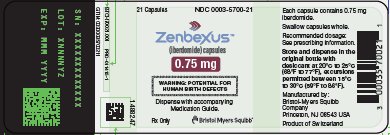
    Zenbexus 0.75 Mg Representative Packaging

    21 Capsules

    NDC 0003-5700-21

    Zenbexus™

    (iberdomide) capsules

    0.75 mg

    WARNING: POTENTIAL FOR HUMAN BIRTH DEFECTS

    Dispense with accompanying Medication Guide.

    Rx Only

    Bristol Myers Squibb®

    Zenbexus 0.75 mg Respresentative Packaging (Zenbexus 0.75mg Label.jpg)

    Zenbexus 0.75 mg Respresentative Packaging (Zenbexus 0.75mg Label.jpg)

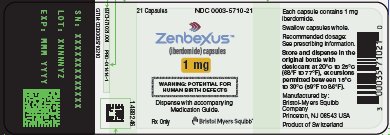
    Zenbexus 1 Mg Representative Packaging

    21 Capsules

    NDC 0003-5710-21

    Zenbexus™

    (iberdomide) capsules

    1 mg

    WARNING: POTENTIAL FOR HUMAN BIRTH DEFECTS

    Dispense with accompanying Medication Guide.

    Rx Only

    Bristol Myers Squibb®

    Zenbexus 1 mg Representative Packaging (Zenbexus 1mg Label)

    Zenbexus 1 mg Representative Packaging (Zenbexus 1mg Label)

    * Please review the disclaimer below.