Other
Adult Patients:
ISENTRESS® and ISENTRESS® HD are indicated in combination with other antiretroviral agents for the treatment of human immunodeficiency virus (HIV-1) infection in adult patients.
Pediatric Patients:
ISENTRESS is indicated in combination with other antiretroviral agents for the treatment of HIV-1 infection in pediatric patients weighing at least 2 kg.
ISENTRESS HD is indicated in combination with other antiretroviral agents for the treatment of HIV-1 infection in pediatric patients weighing at least 40 kg.
Treatment-Naïve Adults
The safety of ISENTRESS was evaluated in HIV-infected treatment-naïve subjects in 2 Phase III studies: STARTMRK evaluated ISENTRESS 400 mg twice daily versus efavirenz, both in combination with emtricitabine (+) tenofovir disoproxil fumarate (TDF), and ONCEMRK evaluated ISENTRESS HD 1200 mg (2 × 600 mg) once daily versus ISENTRESS 400 mg twice daily, both in combination with emtricitabine (+) tenofovir disoproxil fumarate. Safety data from these two studies are presented side-by-side in Tables 5 and 6 to simplify presentation; direct comparisons across trials should not be made due to differing duration of follow-up and study design.
STARTMRK (ISENTRESS 400 mg twice daily)
In STARTMRK, subjects received ISENTRESS 400 mg twice daily (N=281) or efavirenz (EFV) 600 mg at bedtime (N=282) both in combination with emtricitabine (+) tenofovir disoproxil fumarate, (N=282). During double-blind treatment, the total follow-up for subjects receiving ISENTRESS 400 mg twice daily + emtricitabine (+) tenofovir disoproxil fumarate was 1104 patient-years and 1036 patient-years for subjects receiving efavirenz 600 mg at bedtime + emtricitabine (+) tenofovir disoproxil fumarate.
In STARTMRK, the rate of discontinuation of therapy due to adverse events through Week 240 was 5% in subjects receiving ISENTRESS + emtricitabine (+) tenofovir disoproxil fumarate and 10% in subjects receiving efavirenz + emtricitabine (+) tenofovir disoproxil fumarate.
ONCEMRK (ISENTRESS HD 1200 mg [2 × 600 mg] once daily)
In ONCEMRK, subjects received ISENTRESS HD 1200 mg once daily (n=531) or ISENTRESS 400 mg twice daily (n=266) both in combination with emtricitabine (+) tenofovir disoproxil fumarate. During double-blind treatment, the total follow-up for subjects with ISENTRESS HD 1200 mg once daily was 913 patient-years and for ISENTRESS 400 mg twice daily was 450 patient-years.
In ONCEMRK, the rate of discontinuation of therapy due to adverse events through Week 96 was 1% in subjects receiving ISENTRESS HD 1200 mg (2 × 600 mg) once daily and 2% in subjects receiving ISENTRESS 400 mg twice daily.
Clinical adverse reactions of moderate to severe intensity occurring in ≥2% of treatment-naïve subjects treated with ISENTRESS 400 mg twice daily or efavirenz in STARTMRK through Week 240 or ISENTRESS HD 1200 mg once daily or ISENTRESS 400 mg twice daily in ONCEMRK through Week 96 are presented in Table 6.
In STARTMRK, clinical adverse reactions of all intensities (mild, moderate and severe) occurring in ≥2% of subjects on ISENTRESS 400 mg twice daily through Week 240 also include diarrhea, flatulence, asthenia, decreased appetite, abnormal dreams, depression and nightmare. In ONCEMRK, clinical adverse reactions of all intensities (mild, moderate and severe) occurring in ≥2% of subjects on ISENTRESS HD or ISENTRESS 400 mg twice daily through Week 96 also include abdominal pain, diarrhea, vomiting, and decreased appetite.
| System Organ Class, Preferred Term | STARTMRK Week 240 | ONCEMRK Week 96 | ||
|---|---|---|---|---|
| ISENTRESS 400 mg Twice Daily (N= 281) | Efavirenz 600 mg At Bedtime (N= 282) | ISENTRESS HD 1200 mg Once Daily (N=531) | ISENTRESS 400 mg Twice Daily (N=266) | |
| Note: ISENTRESS BID, ISENTRESS HD and efavirenz were administered with emtricitabine (+) tenofovir disoproxil fumarate | ||||
| N= total number of subjects per treatment group | ||||
| Headache | 4% | 5% | 1% | <1% |
| Insomnia | 4% | 4% | <1% | <1% |
| Nausea | 3% | 4% | 1% | 0% |
| Dizziness | 2% | 6% | <1% | 0% |
| Fatigue | 2% | 3% | 0% | 0% |
Laboratory Abnormalities
The percentages of adult subjects with selected Grade 2 to 4 laboratory abnormalities (that represent a worsening Grade from baseline) who were treated with ISENTRESS 400 mg twice daily or efavirenz in STARTMRK or ISENTRESS HD 1200 mg once daily or ISENTRESS 400 mg twice daily in ONCEMRK are presented in Table 7.
| STARTMRK Week 240 | ONCEMRK Week 96 | ||||
|---|---|---|---|---|---|
| Laboratory Parameter Preferred Term (Unit) | Limit | ISENTRESS 400 mg Twice Daily (N = 281) | Efavirenz 600 mg At Bedtime (N = 282) | ISENTRESS HD 1200 mg Once Daily (N=531) | ISENTRESS 400 mg Twice Daily (N=266) |
| ULN = Upper limit of normal range | |||||
| Notes: ISENTRESS BID, ISENTRESS HD and Efavirenz were administered with emtricitabine (+) tenofovir disoproxil fumarate | |||||
| Hematology | |||||
| Absolute neutrophil count (103/µL) | |||||
| Grade 2 | 0.75 - 0.999 | 3% | 5% | 2% | 1% |
| Grade 3 | 0.50 - 0.749 | 3% | 1% | 1% | 1% |
| Grade 4 | <0.50 | 1% | 1% | <1% | 0% |
| Hemoglobin (gm/dL) | |||||
| Grade 2 | 7.5 - 8.4 | 1% | 1% | 0% | 0% |
| Grade 3 | 6.5 - 7.4 | 1% | 1% | 0% | 0% |
| Grade 4 | <6.5 | <1% | 0% | 0% | 0% |
| Platelet count (103/µL) | |||||
| Grade 2 | 50 - 99.999 | 1% | 0% | 1% | <1% |
| Grade 3 | 25 - 49.999 | <1% | <1% | 0% | 0% |
| Grade 4 | <25 | 0% | 0% | 0% | <1% |
| Blood chemistry | |||||
| Fasting (non-random) serum glucose test (mg/dL) Test not done in ONCEMRK | |||||
| Grade 2 | 126 - 250 | 7% | 6% | - | - |
| Grade 3 | 251 - 500 | 2% | 1% | - | - |
| Grade 4 | >500 | 0% | 0% | - | - |
| Total serum bilirubin | |||||
| Grade 2 | 1.6 - 2.5 × ULN | 5% | <1% | 3% | 2% |
| Grade 3 | 2.6 - 5.0 × ULN | 1% | 0% | 1% | <1% |
| Grade 4 | >5.0 × ULN | <1% | 0% | <1% | 0% |
| Creatinine | |||||
| Grade 2 | 1.4-1.8 × ULN | 1% | 1% | 0% | <1% |
| Grade 3 | 1.9-3.4 × ULN | 0% | <1% | 0% | 0% |
| Grade 4 | ≥3.5 × ULN | 0% | 0% | 0% | 0% |
| Serum aspartate aminotransferase | |||||
| Grade 2 | 2.6 - 5.0 × ULN | 8% | 10% | 5% | 3% |
| Grade 3 | 5.1 - 10.0 × ULN | 5% | 3% | 2% | <1% |
| Grade 4 | >10.0 × ULN | 1% | <1% | 1% | <1% |
| Serum alanine aminotransferase | |||||
| Grade 2 | 2.6 - 5.0 × ULN | 11% | 12% | 4% | 2% |
| Grade 3 | 5.1 - 10.0 × ULN | 2% | 2% | 1% | <1% |
| Grade 4 | >10.0 × ULN | 2% | 1% | 1% | <1% |
| Serum alkaline phosphatase | |||||
| Grade 2 | 2.6 - 5.0 × ULN | 1% | 3% | 1% | 0% |
| Grade 3 | 5.1 - 10.0 × ULN | 0% | 1% | <1% | 0% |
| Grade 4 | >10.0 × ULN | <1% | <1% | 0% | 0% |
| Lipase Test not done in STARTMRK | |||||
| Grade 2 | 1.6-3.0 x ULN | - | - | 7% | 5% |
| Grade 3 | 3.1-5.0 × ULN | - | - | 2% | 1% |
| Grade 4 | >5.0 × ULN | - | - | 2% | 1% |
| Creatine kinase | |||||
| Grade 2 | 6.0-9.9 × ULN | - | - | 4% | 5% |
| Grade 3 | 10.0-19.9 × ULN | - | - | 3% | 3% |
| Grade 4 | ≥20.0 × ULN | - | - | 3% | 2% |
Lipids, Change from Baseline
Changes from baseline in fasting lipids are shown in Table 8.
| Laboratory Parameter Preferred Term | ISENTRESS 400 mg Twice Daily + Emtricitabine (+) Tenofovir Disoproxil Fumarate N = 207 | Efavirenz 600 mg At Bedtime + Emtricitabine (+) Tenofovir Disoproxil Fumarate N = 187 | ||||
|---|---|---|---|---|---|---|
| Change from Baseline at Week 240 | Change from Baseline at Week 240 | |||||
| Baseline Mean | Week 240 Mean | Mean Change | Baseline Mean | Week 240 Mean | Mean Change | |
| (mg/dL) | (mg/dL) | (mg/dL) | (mg/dL) | (mg/dL) | (mg/dL) | |
| Notes: N = total number of subjects per treatment group with at least one lipid test result available. The analysis is based on all available data. If subjects initiated or increased serum lipid-reducing agents, the last available lipid values prior to the change in therapy were used in the analysis. If the missing data was due to other reasons, subjects were censored thereafter for the analysis. At baseline, serum lipid-reducing agents were used in 5% of subjects in the group receiving ISENTRESS and 3% in the efavirenz group. Through Week 240, serum lipid-reducing agents were used in 9% of subjects in the group receiving ISENTRESS and 15% in the efavirenz group. | ||||||
| LDL-Cholesterol Fasting (non-random) laboratory tests at Week 240. | 96 | 106 | 10 | 93 | 118 | 25 |
| HDL-Cholesterol | 38 | 44 | 6 | 38 | 51 | 13 |
| Total Cholesterol | 159 | 175 | 16 | 157 | 201 | 44 |
| Triglyceride | 128 | 130 | 2 | 141 | 178 | 37 |
Treatment-Experienced Adults
The safety assessment of ISENTRESS in treatment-experienced subjects is based on the pooled safety data from the randomized, double-blind, placebo-controlled trials, BENCHMRK 1 and BENCHMRK 2 in antiretroviral treatment-experienced HIV-1 infected adult subjects. A total of 462 subjects received the recommended dose of ISENTRESS 400 mg twice daily in combination with optimized background therapy (OBT) compared to 237 subjects taking placebo in combination with OBT. The median duration of therapy in these trials was 96 weeks for subjects receiving ISENTRESS and 38 weeks for subjects receiving placebo. The total exposure to ISENTRESS was 708 patient-years versus 244 patient-years on placebo. The rates of discontinuation due to adverse events were 4% in subjects receiving ISENTRESS and 5% in subjects receiving placebo.
Clinical ADRs were considered by investigators to be causally related to ISENTRESS + OBT or placebo + OBT. Clinical ADRs of moderate to severe intensity occurring in ≥2% of subjects treated with ISENTRESS and occurring at a higher rate compared to placebo are presented in Table 9.
| System Organ Class, Adverse Reactions | Randomized Studies BENCHMRK 1 and BENCHMRK 2 | |
|---|---|---|
| ISENTRESS 400 mg Twice Daily + OBT (n = 462) | Placebo + OBT (n = 237) | |
| Nervous System Disorders | ||
| n=total number of subjects per treatment group. | ||
| Headache | 2% | <1% |
Laboratory Abnormalities
The percentages of adult subjects treated with ISENTRESS 400 mg twice daily or placebo in Studies BENCHMRK 1 and BENCHMRK 2 with selected Grade 2 to 4 laboratory abnormalities representing a worsening Grade from baseline are presented in Table 10.
| Randomized Studies BENCHMRK 1 and BENCHMRK 2 | |||
|---|---|---|---|
| Laboratory Parameter Preferred Term (Unit) | Limit | ISENTRESS 400 mg Twice Daily + OBT (N = 462) | Placebo + OBT (N = 237) |
| ULN = Upper limit of normal range | |||
| Hematology | |||
| Absolute neutrophil count (103/µL) | |||
| Grade 2 | 0.75 - 0.999 | 4% | 5% |
| Grade 3 | 0.50 - 0.749 | 3% | 3% |
| Grade 4 | <0.50 | 1% | <1% |
| Hemoglobin (gm/dL) | |||
| Grade 2 | 7.5 - 8.4 | 1% | 3% |
| Grade 3 | 6.5 - 7.4 | 1% | 1% |
| Grade 4 | <6.5 | <1% | 0% |
| Platelet count (103/µL) | |||
| Grade 2 | 50 - 99.999 | 3% | 5% |
| Grade 3 | 25 - 49.999 | 1% | <1% |
| Grade 4 | <25 | 1% | <1% |
| Blood chemistry | |||
| Fasting (non-random) serum glucose test (mg/dL) | |||
| Grade 2 | 126 - 250 | 10% | 7% |
| Grade 3 | 251 - 500 | 3% | 1% |
| Grade 4 | >500 | 0% | 0% |
| Total serum bilirubin | |||
| Grade 2 | 1.6 - 2.5 × ULN | 6% | 3% |
| Grade 3 | 2.6 - 5.0 × ULN | 3% | 3% |
| Grade 4 | >5.0 × ULN | 1% | 0% |
| Serum aspartate aminotransferase | |||
| Grade 2 | 2.6 - 5.0 × ULN | 9% | 7% |
| Grade 3 | 5.1 - 10.0 × ULN | 4% | 3% |
| Grade 4 | >10.0 × ULN | 1% | 1% |
| Serum alanine aminotransferase | |||
| Grade 2 | 2.6 - 5.0 × ULN | 9% | 9% |
| Grade 3 | 5.1 - 10.0 × ULN | 4% | 2% |
| Grade 4 | >10.0 × ULN | 1% | 2% |
| Serum alkaline phosphatase | |||
| Grade 2 | 2.6 - 5.0 × ULN | 2% | <1% |
| Grade 3 | 5.1 - 10.0 × ULN | <1% | 1% |
| Grade 4 | >10.0 × ULN | 1% | <1% |
| Serum pancreatic amylase test | |||
| Grade 2 | 1.6 - 2.0 × ULN | 2% | 1% |
| Grade 3 | 2.1 - 5.0 × ULN | 4% | 3% |
| Grade 4 | >5.0 × ULN | <1% | <1% |
| Serum lipase test | |||
| Grade 2 | 1.6 - 3.0 × ULN | 5% | 4% |
| Grade 3 | 3.1 - 5.0 × ULN | 2% | 1% |
| Grade 4 | >5.0 × ULN | 0% | 0% |
| Serum creatine kinase | |||
| Grade 2 | 6.0 - 9.9 × ULN | 2% | 2% |
| Grade 3 | 10.0 - 19.9 × ULN | 4% | 3% |
| Grade 4 | ≥20.0 × ULN | 3% | 1% |
Less Common Adverse Reactions Observed in Treatment-Naïve and Treatment-Experienced Studies
The following ADRs occurred in <2% of treatment-naïve or treatment-experienced subjects receiving ISENTRESS or ISENTRESS HD in a combination regimen. These events have been included because of their seriousness, increased frequency compared with efavirenz or placebo, or investigator's assessment of potential causal relationship.
Gastrointestinal Disorders: abdominal pain, gastritis, dyspepsia, vomiting
General Disorders and Administration Site Conditions: asthenia
Hepatobiliary Disorders: hepatitis
Immune System Disorders: hypersensitivity
Infections and Infestations: genital herpes, herpes zoster
Psychiatric Disorders: depression (particularly in subjects with a pre-existing history of psychiatric illness), including suicidal ideation and behaviors
Renal and Urinary Disorders: nephrolithiasis, renal failure
Selected Adverse Events - Adults
In studies of ISENTRESS 400 mg twice daily, cancers were reported in treatment-experienced subjects who initiated ISENTRESS or placebo, both with OBT, and in treatment-naïve subjects who initiated ISENTRESS or efavirenz, both with emtricitabine (+) tenofovir disoproxil fumarate; several were recurrent. The types and rates of specific cancers were those expected in a highly immunodeficient population (many had CD4+ counts below 50 cells/mm3 and most had prior AIDS diagnoses). The risk of developing cancer in these studies was similar in the group receiving ISENTRESS and the group receiving the comparator.
Grade 2-4 creatine kinase laboratory abnormalities were observed in subjects treated with ISENTRESS and ISENTRESS HD (see Tables 6 and 8). Myopathy and rhabdomyolysis have been reported with ISENTRESS. Use with caution in patients at increased risk of myopathy or rhabdomyolysis, such as patients receiving concomitant medications known to cause these conditions and patients with a history of rhabdomyolysis, myopathy or increased serum creatine kinase.
Rash occurred more commonly in treatment-experienced subjects receiving regimens containing ISENTRESS + darunavir/ritonavir compared to subjects receiving ISENTRESS without darunavir/ritonavir or darunavir/ritonavir without ISENTRESS. However, rash that was considered drug related occurred at similar rates for all three groups. These rashes were mild to moderate in severity and did not limit therapy; there were no discontinuations due to rash.
Patients with Co-existing Conditions - Adults
Patients Co-infected with Hepatitis B and/or Hepatitis C Virus
In Phase III studies of ISENTRESS, patients with chronic (but not acute) active hepatitis B and/or hepatitis C virus co-infection were permitted to enroll provided that baseline liver function tests did not exceed 5 times the upper limit of normal (ULN). In the treatment-experienced studies, BENCHMRK 1 and BENCHMRK 2, 16% of all patients (114/699) were co-infected; in the treatment-naïve studies, STARTMRK and ONCEMRK, 6% (34/563) and 3% (23/797), respectively, were co-infected. In general the safety profile of ISENTRESS in subjects with hepatitis B and/or hepatitis C virus co-infection was similar to that in subjects without hepatitis B and/or hepatitis C virus co-infection, although the rates of AST and ALT abnormalities were higher in the subgroup with hepatitis B and/or hepatitis C virus co-infection for all treatment groups.
At 96 weeks, in treatment-experienced subjects receiving ISENTRESS 400 mg twice daily, Grade 2 or higher laboratory abnormalities that represent a worsening Grade from baseline of AST, ALT or total bilirubin occurred in 29%, 34% and 13%, respectively, of co-infected subjects treated with ISENTRESS as compared to 11%, 10% and 9% of all other subjects treated with ISENTRESS. At 240 weeks, in treatment-naïve subjects receiving ISENTRESS 400 mg twice daily, Grade 2 or higher laboratory abnormalities that represent a worsening Grade from baseline of AST, ALT or total bilirubin occurred in 22%, 44% and 17%, respectively, of co-infected subjects treated with ISENTRESS as compared to 13%, 13% and 5% of all other subjects treated with ISENTRESS.
At 96 weeks, in treatment-naïve subjects receiving ISENTRESS HD 1200 mg (2 × 600 mg) once daily, Grade 2 or higher laboratory abnormalities that represent a worsening Grade from baseline of AST, ALT or total bilirubin occurred in 27%, 40% and 13%, respectively, of co-infected subjects treated with ISENTRESS HD 1200 mg once daily as compared to 7%, 5% and 3% of all other subjects treated with ISENTRESS HD 1200 mg once daily.
Pediatrics
2 to 18 Years of Age
ISENTRESS has been studied in 126 antiretroviral treatment-experienced HIV-1 infected children and adolescents 2 to 18 years of age, in combination with other antiretroviral agents in IMPAACT P1066 [see Use in Specific Populations (8.4) and Clinical Studies (14.4)]. Of the 126 patients, 96 received the recommended dose of ISENTRESS.
In these 96 children and adolescents, frequency, type and severity of drug related adverse reactions through Week 24 were comparable to those observed in adults.
One patient experienced drug related clinical adverse reactions of Grade 3 psychomotor hyperactivity, abnormal behavior and insomnia; one patient experienced a Grade 2 serious drug related allergic rash.
One patient experienced drug related laboratory abnormalities, Grade 4 AST and Grade 3 ALT, which were considered serious.
4 Weeks to Less than 2 Years of Age
ISENTRESS has also been studied in 26 HIV-1 infected infants and toddlers 4 weeks to less than 2 years of age, in combination with other antiretroviral agents in IMPAACT P1066 [see Use in Specific Populations (8.4) and Clinical Studies (14.4)].
In these 26 infants and toddlers, the frequency, type and severity of drug-related adverse reactions through Week 48 were comparable to those observed in adults.
One patient experienced a Grade 3 serious drug-related allergic rash that resulted in treatment discontinuation.
HIV-1 Exposed Neonates
Forty-two neonates were treated with ISENTRESS for up to 6 weeks from birth, and followed for a total of 24 weeks in IMPAACT P1110 [see Use in Specific Populations (8.4)]. There were no drug related clinical adverse reactions and three drug-related laboratory adverse reactions (one case of transient Grade 4 neutropenia in a subject receiving zidovudine-containing regimen for prevention of mother to child transmission (PMTCT), and two bilirubin elevations (one each, Grade 1 and Grade 2) considered non-serious and not requiring specific therapy). The safety profile in neonates was generally similar to that observed in older patients treated with ISENTRESS. No clinically meaningful differences in the adverse event profile of neonates were observed when compared to adults.
ISENTRESS
In drug interaction studies performed using ISENTRESS film-coated tablets 400 mg twice daily dose, raltegravir did not have a clinically meaningful effect on the pharmacokinetics of the following: ethinyl estradiol/norgestimate, methadone, midazolam, lamivudine, tenofovir disoproxil fumarate, etravirine, darunavir/ritonavir, or boceprevir. Moreover, atazanavir, atazanavir/ritonavir, boceprevir, calcium carbonate antacids, darunavir/ritonavir, efavirenz, etravirine, omeprazole, or tipranavir/ritonavir did not have a clinically meaningful effect on the pharmacokinetics of 400 mg twice daily raltegravir. No dose adjustment is required when ISENTRESS 400 mg twice daily is coadministered with these drugs.
ISENTRESS HD
In drug interaction studies, efavirenz did not have a clinically meaningful effect on the pharmacokinetics of ISENTRESS HD 1200 mg (2 × 600 mg) once daily. No dose adjustment is recommended when ISENTRESS HD 1200 mg once daily is coadministered with atazanavir, atazanavir/ritonavir, hormonal contraceptives, methadone, lamivudine, tenofovir disoproxil fumarate, darunavir/ritonavir, boceprevir, efavirenz and omeprazole.
Pregnancy Exposure Registry
There is a pregnancy exposure registry that monitors pregnancy outcomes in women. Healthcare providers are encouraged to register patients by calling the Antiretroviral Pregnancy Registry (APR) at 1-800-258-4263.
Risk Summary
Available data from the APR show no difference in the rate of overall birth defects for raltegravir compared to the background rate for major birth defects of 2.7% in the U.S. reference population of the Metropolitan Atlanta Congenital Defects Program (MACDP) (see Data). The rate of miscarriage is not reported in the APR. The estimated background rate of miscarriage in clinically recognized pregnancies in the U.S. general population is 15-20%. The background risk for major birth defects and miscarriage for the indicated population is unknown. Methodological limitations of the APR include the use of MACDP as the external comparator group. The MACDP population is not disease-specific, evaluates women and infants from a limited geographic area, and does not include outcomes for births that occurred at <20 weeks gestation (see Data).
In animal reproduction studies in rats and rabbits, no evidence of adverse developmental outcomes was observed with oral administration of raltegravir during organogenesis at doses that produced exposures up to approximately 4 times the maximal recommended human dose (MRHD) of 1200 mg (see Data).
Data
Human Data
Based on prospective reports from the APR of over 500 exposures to raltegravir during pregnancy resulting in live births (including over 250 exposures in the first trimester), there was no difference between the overall risk of birth defects for raltegravir compared with the background birth defect rate of 2.7% in the U.S. reference population of the MACDP. The prevalence of defects in live births was 2.9% (95% CI: 1.2% to 5.6%) following first trimester exposure to raltegravir-containing regimens and 3.6% (95% CI: 1.6% to 6.6%) following second and third trimester exposure to raltegravir-containing regimens.
Animal Data
In a combined embryo/fetal and pre/postnatal development study, raltegravir was administered orally to rats at doses of 100, 300, 600 mg/kg/day on gestation day 6 to 20 or from gestation day 6 to lactation day 20. No effects on pre/postnatal development were observed up to the highest dose tested. Embryo-fetal findings were limited to an increase in the incidence of supernumerary ribs in the 600 mg/kg/day group. Systemic exposure (AUC) at 600 mg/kg/day was approximately 3 times higher than exposure at the MRHD of 1200 mg.
In pregnant rabbits, raltegravir was administered orally at doses of 100, 500, or 1000 mg/kg/day during the gestation days 7 to 20. No embryo/fetal effects were noted up to the highest dose of 1000 mg/kg/day. Systemic exposure (AUC) at 1000 mg/kg/day was approximately 4 times higher than exposures at the MRHD of 1200 mg. In both species, raltegravir has been shown to cross the placenta, with fetal plasma concentrations observed in rats approximately 1.5 to 2.5 times greater than in maternal plasma and fetal plasma concentrations in rabbits approximately 2% that of maternal concentrations on gestation day 20.
Risk Summary
The Centers for Disease Control and Prevention recommend that HIV-1 infected mothers in the United States not breastfeed their infants to avoid risking postnatal transmission of HIV-1 infection. There are no data on the presence of raltegravir in human milk, the effects on the breastfed infant, or the effects on milk production. When administered to lactating rats, raltegravir was present in milk [see Data]. Because of the potential for: 1) HIV transmission (in HIV-negative infants), 2) developing viral resistance (in HIV-positive infants), and 3) adverse reactions in a breastfed infant, instruct mothers not to breastfeed if they are receiving ISENTRESS/ISENTRESS HD.
Data
Raltegravir was excreted into the milk of lactating rats following oral administration (600 mg/kg/day) from gestation day 6 to lactation day 14, with milk concentrations approximately 3 times that of maternal plasma concentrations observed 2 hours postdose on lactation day 14.
ISENTRESS
HIV-1 Infected Children
The safety, tolerability, pharmacokinetic profile, and efficacy of twice daily ISENTRESS were evaluated in HIV-1 infected infants, children and adolescents 4 weeks to 18 years of age in an open-label, multicenter clinical trial, IMPAACT P1066 [see Dosage and Administration (2.3), Clinical Pharmacology (12.3) and Clinical Studies (14.4)]. The safety profile was comparable to that observed in adults [see Adverse Reactions (6.1)].
HIV-1 Exposed Neonates
The safety and pharmacokinetics of ISENTRESS for oral suspension were evaluated in 42 full-term HIV-1 exposed neonates at high risk of acquiring HIV-1 infection in a Phase 1, open-label, multicenter clinical study, IMPAACT P1110. Cohort 1 neonates received 2 single doses of ISENTRESS for oral suspension: the first within 48 hours of birth and the second at 7 to 10 days of age. Cohort 2 neonates received daily dosing of ISENTRESS for oral suspension for 6 weeks: 1.5 mg/kg once daily starting within 48 hours of birth through Day 7 (week 1); 3 mg/kg twice daily on Days 8 to 28 of age (weeks 2 to 4); and 6 mg/kg twice daily on Days 29 to 42 of age (weeks 5 and 6). Sixteen neonates were enrolled in Cohort 1 (10 were exposed and 6 were unexposed to raltegravir in utero) and 26 in Cohort 2 (all unexposed to raltegravir in utero); all infants received a standard of care antiretroviral drug regimen for prevention of mother to child transmission. All enrolled neonates were followed for safety for a duration of 24 weeks. The 42 infants were 52% male, 69% Black and 12% Caucasian. HIV-1 status was assessed by nucleic acid test at birth, week 6 and week 24; all patients were HIV-1 negative at completion of the study. The safety profile was comparable to that observed in adults [see Adverse Reactions (6.1)].
ISENTRESS is not recommended in pre-term neonates or in pediatric patients weighing less than 2 kg.
ISENTRESS HD
ISENTRESS HD once daily has not been studied in pediatric patients. However population PK modeling and simulation support the use of 1200 mg (2 × 600 mg) once daily in pediatric patients weighing at least 40 kg [see Clinical Pharmacology (12.3)].
Cardiac Electrophysiology
At a dose 1.33 times the maximum approved recommended dose (and peak concentrations 1.25-fold higher than the maximum approved dose), raltegravir does not prolong the QT interval or PR interval to any clinically relevant extent.
Adults
Absorption
Raltegravir, given 400 mg twice daily, is absorbed with a Tmax of approximately 3 hours postdose in the fasted state in healthy subjects. Raltegravir 1200 mg once daily is rapidly absorbed with median Tmax of ~1.5 to 2 hours in the fasted state.
Raltegravir increases dose proportionally (AUC and Cmax) or slightly less than dose proportionally (C12hr) over the dose range 100 mg to 1600 mg.
The absolute bioavailability of raltegravir has not been established. The chewable tablet and oral suspension have higher oral bioavailability compared to the 400 mg film-coated tablet.
Relative to the raltegravir 400 mg formulation, the raltegravir 600 mg formulation has higher relative bioavailability.
Steady-state is generally reached in 2 days, with little to no accumulation with multiple dose administration for the 400 mg twice daily and 1200 once daily formulation.
Effect of Food on Oral Absorption
The food effect of various formulations are presented in Table 12.
| PK parameter ratio (fed/fasted) | ||||
|---|---|---|---|---|
| Formulation | Meal Type | AUC Ratio (90% CI) | Cmax Ratio (90% CI) | Cmin Ratio (90% CI) |
| Low-fat meal: 300 Kcal, 2.5 g fat | ||||
| Moderate-fat meal: 600 Kcal, 21 g fat | ||||
| High-fat meal: 825 Kcal, 52 g fat | ||||
| 400 mg twice daily | Low Fat | 0.54 (0.41-0.71) | 0.48 (0.35-0.67) | 0.86 (0.54-1.36) |
| Moderate Fat | 1.13 (0.85-1.49) | 1.05 (0.75-1.46) | 1.66 (1.04-2.64) | |
| High Fat | 2.11 (1.60-2.80) | 1.96 (1.41-2.73) | 4.13 (2.60-6.57) | |
| 1200 mg once daily | Low Fat | 0.58 (0.46-0.74) | 0.48 (0.37-0.62) | 0.84 (0.63-1.10) |
| High Fat | 1.02 (0.86-1.21) | 0.72 (0.58-0.90) | 0.88 (0.66-1.18) | |
| Chewable tablet | High Fat | 0.94 (0.78-1.14) | 0.38 (0.28-0.52) | 2.88 (2.21-3.75) |
| Oral suspension | The effect of food on oral suspension was not studied. | |||
Distribution
Raltegravir is approximately 83% bound to human plasma protein over the concentration range of 2 to 10 µM.
In one study of HIV-1 infected subjects who received raltegravir 400 mg twice daily, raltegravir was measured in the cerebrospinal fluid. In the study (n=18), the median cerebrospinal fluid concentration was 5.8% (range 1 to 53.5%) of the corresponding plasma concentration. This median proportion was approximately 3-fold lower than the free fraction of raltegravir in plasma. The clinical relevance of this finding is unknown.
Metabolism and Excretion
The apparent terminal half-life of raltegravir is approximately 9 hours, with a shorter α-phase half-life (~1 hour) accounting for much of the AUC. Following administration of an oral dose of radiolabeled raltegravir, approximately 51 and 32% of the dose was excreted in feces and urine, respectively. In feces, only raltegravir was present, most of which is likely derived from hydrolysis of raltegravir-glucuronide secreted in bile as observed in preclinical species. Two components, namely raltegravir and raltegravir-glucuronide, were detected in urine and accounted for approximately 9 and 23% of the dose, respectively. The major circulating entity was raltegravir and represented approximately 70% of the total radioactivity; the remaining radioactivity in plasma was accounted for by raltegravir-glucuronide. The major mechanism of clearance of raltegravir in humans is UGT1A1-mediated glucuronidation.
| Parameter | 400 mg BID Geometric Mean (%CV) N=6 | 1200 mg QD Geometric Mean (%CV) N=524 |
|---|---|---|
| AUC (µM∙hr) | AUC0-12= 14.3 (88.6) | AUC0-24 = 55.3 (41.5) |
| Cmax (µM) | 4.5 (128) | 15.7 (45.8) |
| Cmin (nM) | C12 = 142 (63.8) | C24 = 107 (97.5) |
Special Populations
Pediatric
ISENTRESS
Two pediatric formulations were evaluated in healthy adult volunteers, where the chewable tablet and oral suspension were compared to the 400 mg tablet. The chewable tablet and oral suspension demonstrated higher oral bioavailability, thus higher AUC, compared to the 400 mg tablet. In the same study, the oral suspension resulted in higher oral bioavailability compared to the chewable tablet. These observations resulted in proposed pediatric doses targeting 6 mg/kg/dose for the chewable tablets and oral suspension. As displayed in Table 13, the doses recommended for HIV-infected infants, children and adolescents 4 weeks to 18 years of age [see Dosage and Administration (2.3)] resulted in a pharmacokinetic profile of raltegravir similar to that observed in adults receiving 400 mg twice daily.
Overall, dosing in pediatric patients achieved exposures (Ctrough) above 45 nM in the majority of subjects, but some differences in exposures between formulations were observed. Pediatric patients above 25 kg administered the chewable tablets had lower trough concentrations (113 nM) compared to pediatric patients above 25 kg administered the 400 mg tablet formulation (233 nM) [see Clinical Studies (14.4)]. As a result, the 400 mg film-coated tablet is the recommended dose in patients weighing at least 25 kg; however, the chewable tablet offers an alternative regimen in patients weighing at least 25 kg who are unable to swallow the film-coated tablet [see Dosage and Administration (2.3)]. In addition, pediatric patients weighing 11 to 25 kg who were administered the chewable tablets had the lowest trough concentrations (82 nM) compared to all other pediatric subgroups.
| Body Weight | Formulation | Dose | N Number of patients with intensive pharmacokinetic (PK) results at the final recommended dose. | Geometric Mean (%CV Geometric coefficient of variation. )AUC0-12hr (µM∙hr) | Geometric Mean (%CV C12hr (nM) |
|---|---|---|---|---|---|
| ≥25 kg | Film-coated tablet | 400 mg twice daily | 18 | 14.1 (121%) | 233 (157%) |
| ≥25 kg | Chewable tablet | Weight based dosing, see Table 3 | 9 | 22.1 (36%) | 113 (80%) |
| 11 to less than 25 kg | Chewable tablet | Weight based dosing, see Table 4 | 13 | 18.6 (68%) | 82 (123%) |
| 3 to less than 20 kg | Oral suspension | Weight based dosing, see Table 4 | 19 | 24.5 (43%) | 113 (69%) |
Elimination of raltegravir in vivo in human is primarily through the UGT1A1-mediated glucuronidation pathway. UGT1A1 catalytic activity is negligible at birth and matures after birth. The dose recommended for neonates less than 4 weeks of age takes into consideration the rapidly increasing UGT1A1 activity and drug clearance from birth to 4 weeks of age. Table 15 displays pharmacokinetic parameters for neonates receiving the granules for oral suspension at the recommended dose [see Dosage and Administration (2.3)].
| Age (hours/days) at PK Sampling | Dose (See Table 5) | N Number of patients with intensive pharmacokinetic (PK) results at the final recommended dose. | Geometric Mean (%CV Geometric coefficient of variation. )AUC (μM∙hr ) | Geometric Mean (%CV Ctrough (nM) |
|---|---|---|---|---|
| Birth – 48 hours | 1.5 mg/kg once daily | 25 | 85.9 (38.4%) AUC0-24hr (N = 24) and C24hr | 2132.9 (64.2%) |
| 15 to 18 days | 3.0 mg/kg twice daily | 23 | 32.2 (43.3%) AUC0-12hr and C12hr | 1255.5 (83.7%) |
ISENTRESS HD
ISENTRESS HD 1200 mg (2 × 600 mg) was not evaluated in a pediatric clinical study. Exposures for pediatric subjects weighing at least 40 kg administered ISENTRESS HD are predicted to be comparable to adult exposures observed from Phase III ONCEMRK.
Age/Race/Gender
There is no clinically meaningful effect of age (18 years and older), race, or gender on the pharmacokinetics of raltegravir.
Hepatic Impairment
Raltegravir is eliminated primarily by glucuronidation in the liver. The pharmacokinetics of a single 400-mg dose of raltegravir were not altered in patients with moderate (Child-Pugh Score 7 to 9) hepatic impairment.
No hepatic impairment study has been conducted with ISENTRESS HD 1200 mg (2 × 600 mg) once daily.The effect of severe hepatic impairment on the pharmacokinetics of raltegravir has not been studied.
Renal Impairment
Renal clearance of unchanged drug is a minor pathway of elimination. The pharmacokinetics of a single 400-mg dose of raltegravir were not altered in patients with severe (24-hour creatinine clearance of <30 mL/min/1.73 m2) renal impairment.
No renal impairment study was conducted with ISENTRESS HD 1200 mg (2 × 600 mg) once daily.
The extent to which ISENTRESS may be dialyzable is unknown.
Drug Interactions
In vitro, raltegravir does not inhibit (IC50>100 µM) CYP1A2, CYP2B6, CYP2C8, CYP2C9, CYP2C19, CYP2D6 or CYP3A. In vivo, raltegravir does not inhibit CYP3A4. Moreover, in vitro, raltegravir did not induce CYP1A2, CYP2B6 or CYP3A4. Similarly, raltegravir is not an inhibitor (IC50>50 µM) of UGT1A1 or UGT2B7, and raltegravir does not inhibit P-glycoprotein-mediated transport.
Raltegravir drug interaction study results are shown in Tables 16 and 17. For information regarding clinical recommendations [see Drug Interactions (7)].
| Coadministered Drug | Coadministered Drug Dose/Schedule | Raltegravir Dose/Schedule | Ratio (90% Confidence Interval) of Raltegravir Pharmacokinetic Parameters with/without Coadministered Drug; No Effect = 1.00 | |||
|---|---|---|---|---|---|---|
| n | Cmax | AUC | Cmin | |||
| aluminum and magnesium hydroxide antacid Study conducted in HIV-infected subjects. | 20 mL single dose given with raltegravir | 400 mg twice daily | 25 | 0.56 (0.42, 0.73) | 0.51 (0.40, 0.65) | 0.37 (0.29, 0.48) |
| 20 mL single dose given 2 hours before raltegravir | 23 | 0.49 (0.33, 0.71) | 0.49 (0.35, 0.67) | 0.44 (0.34, 0.55) | ||
| 20 mL single dose given 2 hours after raltegravir | 23 | 0.78 (0.53, 1.13) | 0.70 (0.50, 0.96) | 0.43 (0.34, 0.55) | ||
| 20 mL single dose given 4 hours before raltegravir | 17 | 0.78 (0.55, 1.10) | 0.81 (0.63, 1.05) | 0.40 (0.31, 0.52) | ||
| 20 mL single dose given 4 hours after raltegravir | 18 | 0.70 (0.48, 1.04) | 0.68 (0.50, 0.92) | 0.38 (0.30, 0.49) | ||
| 20 mL single dose given 6 hours before raltegravir | 16 | 0.90 (0.58, 1.40) | 0.87 (0.64, 1.18) | 0.50 (0.39, 0.65) | ||
| 20 mL single dose given 6 hours after raltegravir | 16 | 0.90 (0.58, 1.41) | 0.89 (0.64, 1.22) | 0.51 (0.40, 0.64) | ||
| aluminum and magnesium hydroxide antacid | 20 mL single dose given 12 hours after raltegravir | 1200 mg single dose | 19 | 0.86 (0.65, 1.15) | 0.86 (0.73, 1.03) | 0.42 (0.34, 0.52) |
| atazanavir | 400 mg daily | 100 mg single dose | 10 | 1.53 (1.11, 2.12) | 1.72 (1.47, 2.02) | 1.95 (1.30, 2.92) |
| atazanavir | 400 mg daily | 1200 mg single dose | 14 | 1.16 (1.01, 1.33) | 1.67 (1.34, 2.10) | 1.26 (1.08, 1.46) |
| atazanavir/ritonavir | 300 mg/100 mg daily | 400 mg twice daily | 10 | 1.24 (0.87, 1.77) | 1.41 (1.12, 1.78) | 1.77 (1.39, 2.25) |
| boceprevir | 800 mg three times daily | 400 mg single dose | 22 | 1.11 (0.91-1.36) | 1.04 (0.88-1.22) | 0.75 (0.45-1.23) |
| calcium carbonate antacid | 3000 mg single dose given with raltegravir | 400 mg twice daily | 24 | 0.48 (0.36, 0.63) | 0.45 (0.35, 0.57) | 0.68 (0.53, 0.87) |
| calcium carbonate antacid | 3000 mg single dose given with raltegravir | 1200 mg single dose | 19 | 0.26 (0.21, 0.32) | 0.28 (0.24, 0.32) | 0.52 (0.45, 0.61) |
| 3000 mg single dose given 12 hours after raltegravir | 0.98 (0.81, 1.17) | 0.90 (0.80, 1.03) | 0.43 (0.36, 0.51) | |||
| efavirenz | 600 mg daily | 400 mg single dose | 9 | 0.64 (0.41, 0.98) | 0.64 (0.52, 0.80) | 0.79 (0.49, 1.28) |
| efavirenz | 600 mg daily | 1200 mg single dose | 21 | 0.91 (0.70, 1.17) | 0.86 (0.73, 1.01) | 0.94 (0.76, 1.17) |
| etravirine | 200 mg twice daily | 400 mg twice daily | 19 | 0.89 (0.68, 1.15) | 0.90 (0.68, 1.18) | 0.66 (0.34, 1.26) |
| omeprazole | 20 mg daily | 400 mg twice daily | 18 | 1.51 (0.98, 2.35) | 1.37 (0.99, 1.89) | 1.24 (0.95, 1.62) |
| rifampin | 600 mg daily | 400 mg single dose | 9 | 0.62 (0.37, 1.04) | 0.60 (0.39, 0.91) | 0.39 (0.30, 0.51) |
| rifampin | 600 mg daily | 400 mg twice daily when administered alone; 800 mg twice daily when administered with rifampin | 14 | 1.62 (1.12, 2.33) | 1.27 (0.94, 1.71) | 0.47 (0.36, 0.61) |
| ritonavir | 100 mg twice daily | 400 mg single dose | 10 | 0.76 (0.55, 1.04) | 0.84 (0.70, 1.01) | 0.99 (0.70, 1.40) |
| tenofovir disoproxil fumarate | 300 mg daily | 400 mg twice daily | 9 | 1.64 (1.16, 2.32) | 1.49 (1.15, 1.94) | 1.03 (0.73, 1.45) |
| tipranavir/ritonavir | 500 mg/200 mg twice daily | 400 mg twice daily | 15 (14 for Cmin) | 0.82 (0.46, 1.46) | 0.76 (0.49, 1.19) | 0.45 (0.31, 0.66) |
| Substrate Drug | Raltegravir Dose/Schedule | Ratio (90% Confidence Interval) of Substrate Pharmacokinetic Parameters with/without Coadministered Drug; No Effect = 1.00 | |||
|---|---|---|---|---|---|
| n | Cmax | AUC | Cmin | ||
| Tenofovir disoproxil fumarate 300 mg | 400 mg | 9 | 0.77 (0.69, 0.85) | 0.90 (0.82, 0.99) | C24hr 0.87 (0.74, 1.02) |
| Etravirine 200 mg | 400 mg | 19 | 1.04 (0.97, 1.12) | 1.10 (1.03, 1.16) | 1.17 (1.10, 1.26) |
In drug interaction studies, there was no effect of raltegravir on the PK of ethinyl estradiol, methadone, midazolam or boceprevir.
Mechanism of Action
Raltegravir inhibits the catalytic activity of HIV-1 integrase, an HIV-1 encoded enzyme that is required for viral replication. Inhibition of integrase prevents the covalent insertion, or integration, of unintegrated linear HIV-1 DNA into the host cell genome preventing the formation of the HIV-1 provirus. The provirus is required to direct the production of progeny virus, so inhibiting integration prevents propagation of the viral infection. Raltegravir did not significantly inhibit human phosphoryltransferases including DNA polymerases α, β, and γ.
Antiviral Activity in Cell Culture
Raltegravir at concentrations of 31 ± 20 nM resulted in 95% inhibition (EC95) of viral spread (relative to an untreated virus-infected culture) in human T-lymphoid cell cultures infected with the cell-line adapted HIV-1 variant H9IIIB. In addition, 5 clinical isolates of HIV-1 subtype B had EC95 values ranging from 9 to 19 nM in cultures of mitogen-activated human peripheral blood mononuclear cells. In a single-cycle infection assay, raltegravir inhibited infection of 23 HIV-1 isolates representing 5 non-B subtypes (A, C, D, F, and G) and 5 circulating recombinant forms (AE, AG, BF, BG, and cpx) with EC50 values ranging from 5 to 12 nM. Raltegravir also inhibited replication of an HIV-2 isolate when tested in CEMx174 cells (EC95 value = 6 nM). No antagonism was observed when human T-lymphoid cells infected with the H9IIIB variant of HIV-1 were incubated with raltegravir in combination with non-nucleoside reverse transcriptase inhibitors (delavirdine, efavirenz, or nevirapine); nucleoside analog reverse transcriptase inhibitors (abacavir, didanosine, lamivudine, stavudine, tenofovir, or zidovudine); protease inhibitors (amprenavir, atazanavir, indinavir, lopinavir, nelfinavir, ritonavir, or saquinavir); or the entry inhibitor enfuvirtide.
Resistance
The mutations observed in the HIV-1 integrase coding sequence that contributed to raltegravir resistance (evolved either in cell culture or in subjects treated with raltegravir) generally included an amino acid substitution at either Y143 (changed to C, H, or R) or Q148 (changed to H, K, or R) or N155 (changed to H) plus one or more additional substitutions (i.e., L74M, E92Q, Q95K/R, T97A, E138A/K, G140A/S, V151I, G163R, H183P, Y226C/D/F/H, S230R, and D232N). E92Q, T97A, and F121C are occasionally seen in the absence of substitutions at Y143, Q148, or N155 in raltegravir-treatment failure subjects.
Treatment-Naïve Adult Subjects: By Week 240 in the STARTMRK trial, the primary raltegravir resistance-associated substitutions were observed in 4 (2 with Y143H/R and 2 with Q148H/R) of the 12 virologic failure subjects with evaluable genotypic data from paired baseline and raltegravir treatment-failure isolates. By Week 96 in the ONCEMRK trial, primary raltegravir resistance substitutions were observed in on treatment isolates obtained from 4 (3 with N155H and 1 with E92Q) of 14 virologic failure subjects with evaluable genotypic data in the 1,200 mg QD arm and 2 (1 with N155H and 1 with T97A) of 6 virologic failure subjects in the 400 mg BID arm. Additional integrase substitutions observed included L74M, Q95K, V151I, E170A, I203M and D232N. These resistant isolates exhibited 6.2- to 19-fold reductions in susceptibility to raltegravir. Overall, at Week 96, detection of raltegravir resistance was not different between the QD and BID arms in subjects who were failing treatment and had resistance data evaluable (28.6% versus 33.3%, respectively).
Treatment-Experienced Adult Subjects: By Week 96 in the BENCHMRK trials, at least one of the primary raltegravir resistance-associated substitutions, Y143C/H/R, Q148H/K/R, and N155H, was observed in 76 of the 112 virologic failure subjects with evaluable genotypic data from paired baseline and raltegravir treatment-failure isolates. The emergence of the primary raltegravir resistance-associated substitutions was observed cumulatively in 70 subjects by Week 48 and 78 subjects by Week 96, 15.2% and 17% of the raltegravir recipients, respectively. Some (n=58) of those HIV-1 isolates harboring one or more of the primary raltegravir resistance-associated substitutions were evaluated for raltegravir susceptibility yielding a median decrease of 26.3-fold (mean 48.9 ± 44.8-fold decrease, ranging from 0.8- to 159-fold) compared to the wild-type reference.
Cross Resistance
Cross resistance has been observed among HIV-1 integrase strand transfer inhibitors (INSTIs). Amino acid substitutions in HIV-1 integrase conferring resistance to raltegravir generally also confer resistance to elvitegravir. Substitutions at amino acid Y143 confer greater reductions in susceptibility to raltegravir than to elvitegravir, and the E92Q substitution confers greater reductions in susceptibility to elvitegravir than to raltegravir. Viruses harboring a substitution at amino acid Q148, along with one or more other raltegravir resistance substitutions, may also have clinically significant resistance to dolutegravir.
UGT1A1 Polymorphism
There is no evidence that common UGT1A1 polymorphisms alter raltegravir pharmacokinetics to a clinically meaningful extent. In a comparison of 30 adult subjects with *28/*28 genotype (associated with reduced activity of UGT1A1) to 27 adult subjects with wild-type genotype, the geometric mean ratio (90% CI) of AUC was 1.41 (0.96, 2.09).
In the neonatal study IMPAACT P1110, there was no association between apparent clearance (CL/F) of raltegravir and UGT 1A1 genotype polymorphisms.
STARTMRK (ISENTRESS 400 mg twice daily)
STARTMRK is a Phase 3 randomized, international, double-blind, active-controlled trial to evaluate the safety and efficacy of ISENTRESS 400 mg twice daily versus efavirenz 600 mg at bedtime both with emtricitabine (+) tenofovir disoproxil fumarate in treatment-naïve HIV-1-infected subjects with HIV-1 RNA >5000 copies/mL. Randomization was stratified by screening HIV-1 RNA level (≤50,000 copies/mL; or >50,000 copies/mL) and by hepatitis status. In STARTMRK, 563 subjects were randomized and received at least 1 dose of either raltegravir 400 mg twice daily or efavirenz 600 mg at bedtime, both in combination with emtricitabine (+) tenofovir disoproxil fumarate. There were 563 subjects included in the efficacy and safety analyses. At baseline, the median age of subjects was 37 years (range 19-71), 19% female, 58% non-white, 6% had hepatitis B and/or C virus co-infection, 20% were CDC Class C (AIDS), 53% had HIV-1 RNA greater than 100,000 copies per mL, and 47% had CD4+ cell count less than 200 cells per mm3; the frequencies of these baseline characteristics were similar between treatment groups.
ONCEMRK (ISENTRESS HD 1200 mg [2 × 600 mg] once daily)
ONCEMRK is a Phase 3 randomized, international, double-blind, active-controlled trial to evaluate the safety and efficacy of ISENTRESS HD 1200 mg (2 × 600 mg) once daily versus ISENTRESS 400 mg twice daily, both in combination with emtricitabine (+) tenofovir disoproxil fumarate, in treatment-naïve HIV-1-infected subjects with HIV-1 RNA ≥1000 copies/mL. Randomization was stratified by screening HIV-1 RNA level (≤100,000 or >100,000 copies/mL) and by hepatitis B and C infection status.
In ONCEMRK, 797 subjects were randomized and received at least 1 dose of either raltegravir 1200 mg once daily or raltegravir 400 mg twice daily, both in combination with emtricitabine (+) tenofovir disoproxil fumarate. There were 797 subjects included in the efficacy and safety analyses. At baseline, the median age of subjects was 34 years (range 18-84), 15% female, 41% non-white, 3% had hepatitis B and/or C virus co-infection, 13% were CDC Class C (AIDS), 28% had HIV-1 RNA greater than 100,000 copies per mL, and 13% had CD4+ cell count less than 200 cells per mm3; the frequencies of these baseline characteristics were similar between treatment groups.
Table 19 shows the virologic outcomes in both studies. Side-by-side tabulation is to simplify presentation; direct comparisons across trials should not be made due to differing duration of follow-up.
| STARTMRK Week 240 | ONCEMRK Week 96 | |||
|---|---|---|---|---|
| ISENTRESS 400 mg Twice Daily (N=281) | Efavirenz 600 mg At Bedtime (N=282) | ISENTRESS HD 1200 mg Once Daily (N=531) | ISENTRESS 400 mg Twice Daily (N=266) | |
| Notes: ISENTRESS BID, ISENTRESS HD and Efavirenz were administered with emtricitabine (+) tenofovir disoproxil fumarate | ||||
| HIV RNA < Lower Limit of Quantitation Lower Limit of Quantitation: STARTMRK <50 copies/mL; ONCEMRK < 40 copies/mL. | 66% | 60% | 82% | 80% |
| Treatment Difference | 6.6% (95% CI: -1.4%, 14.5%) | 1.4% (95% CI: -4.4%, 7.3%) | ||
| HIV RNA ≥ Lower Limit of Quantitation | 8% | 15% | 9% | 8% |
| No Virologic Data at Analysis Timepoint | 26% | 26% | 9% | 12% |
| Reasons | ||||
| Discontinued trial due to AE or Death Includes subjects who discontinued because of adverse event (AE) or death at any time point from Day 1 through the time window if this resulted in no virologic data on treatment during the specified window. | 5% | 10% | 1% | 3% |
| Discontinued trial for Other Reasons Other Reasons includes: lost to follow-up, moved, non-compliance with study drug, physician decision, pregnancy, withdrawal by subject. | 15% | 14% | 7% | 8% |
| On trial but missing data at timepoint | 6% | 2% | 1% | 2% |
In the ONCEMRK trial, ISENTRESS HD 1200 mg (2 × 600 mg) once daily demonstrated consistent virologic and immunologic efficacy relative to ISENTRESS 400 mg twice daily, both in combination with emtricitabine (+) tenofovir disoproxil fumarate, across demographic and baseline prognostic factors, including: baseline HIV RNA levels >100,000 copies/mL and demographic groups (including age, gender, race, ethnicity and region), concomitant proton pump inhibitors/H2 blockers use and viral subtypes (comparing non-clade B as a group to clade B).
Consistent efficacy in subjects receiving ISENTRESS HD 1200 mg (2 × 600 mg) once daily was observed across HIV subtypes with 80.6% (270/335) and 83.5% (162/194) of subjects with B and non-B subtypes respectively, achieving HIV RNA <40 copies/mL at week 96 (Snapshot approach).
Switch of Suppressed Subjects from Lopinavir (+) Ritonavir to Raltegravir
The SWITCHMRK 1 & 2 Phase 3 studies evaluated HIV-1 infected subjects receiving suppressive therapy (HIV-1 RNA <50 copies/mL on a stable regimen of lopinavir 200 mg (+) ritonavir 50 mg 2 tablets twice daily plus at least 2 nucleoside reverse transcriptase inhibitors for >3 months) and randomized them 1:1 to either continue lopinavir (+) ritonavir (n=174 and n=178, SWITCHMRK 1 & 2, respectively) or replace lopinavir (+) ritonavir with ISENTRESS 400 mg twice daily (n=174 and n=176, respectively). The primary virology endpoint was the proportion of subjects with HIV-1 RNA less than 50 copies/mL at Week 24 with a prespecified non-inferiority margin of -12% for each study; and the frequency of adverse events up to 24 weeks.
Subjects with a prior history of virological failure were not excluded and the number of previous antiretroviral therapies was not limited.
These studies were terminated after the primary efficacy analysis at Week 24 because they each failed to demonstrate non-inferiority of switching to ISENTRESS versus continuing on lopinavir (+) ritonavir. In the combined analysis of these studies at Week 24, suppression of HIV-1 RNA to less than 50 copies/mL was maintained in 82.3% of the ISENTRESS group versus 90.3% of the lopinavir (+) ritonavir group. Clinical and laboratory adverse events occurred at similar frequencies in the treatment groups.
2 to 18 Years of Age
IMPAACT P1066 is a Phase I/II open label multicenter trial to evaluate the pharmacokinetic profile, safety, tolerability, and efficacy of raltegravir in HIV infected children. This study enrolled 126 treatment experienced children and adolescents 2 to 18 years of age. Subjects were stratified by age, enrolling adolescents first and then successively younger children. Subjects were enrolled into cohorts according to age and received the following formulations: Cohort I (12 to less than 18 years old), 400 mg film-coated tablet; Cohort IIa (6 to less than 12 years old), 400 mg film-coated tablet; Cohort IIb (6 to less than 12 years old), chewable tablet; Cohort III (2 to less than 6 years), chewable tablet. Raltegravir was administered with an optimized background regimen.
The initial dose finding stage included intensive pharmacokinetic evaluation. Dose selection was based upon achieving similar raltegravir plasma exposure and trough concentration as seen in adults, and acceptable short term safety. After dose selection, additional subjects were enrolled for evaluation of long term safety, tolerability and efficacy. Of the 126 subjects, 96 received the recommended dose of ISENTRESS [see Dosage and Administration (2.3)].
These 96 subjects had a median age of 13 (range 2 to 18) years, were 51% Female, 34% Caucasian, and 59% Black. At baseline, mean plasma HIV-1 RNA was 4.3 log10 copies/mL, median CD4 cell count was 481 cells/mm3 (range: 0 – 2361) and median CD4% was 23.3% (range: 0 – 44). Overall, 8% had baseline plasma HIV-1 RNA >100,000 copies/mL and 59% had a CDC HIV clinical classification of category B or C. Most subjects had previously used at least one NNRTI (78%) or one PI (83%).
Ninety-three (97%) subjects 2 to 18 years of age completed 24 weeks of treatment (3 discontinued due to non-compliance). At Week 24, 54% achieved HIV RNA <50 copies/mL; 66% achieved HIV RNA <400 copies/mL. The mean CD4 count (percent) increase from baseline to Week 24 was 119 cells/mm3 (3.8%).
4 Weeks to Less Than 2 Years of Age
IMPAACT P1066 also enrolled HIV-infected, infants and toddlers 4 weeks to less than 2 years of age (Cohorts IV and V) who had received prior antiretroviral therapy either as prophylaxis for prevention of mother-to-child transmission (PMTCT) and/or as combination antiretroviral therapy for treatment of HIV infection. Raltegravir was administered as an oral suspension without regard to food in combination with an optimized background regimen.
The 26 subjects had a median age of 28 weeks (range: 4 -100), were 35% female, 85% Black and 8% Caucasian. At baseline, mean plasma HIV-1 RNA was 5.7 log10 copies/mL (range: 3.1 – 7), median CD4 cell count was 1400 cells/mm3 (range: 131 – 3648) and median CD4% was 18.6% (range: 3.3 – 39.3). Overall, 69% had baseline plasma HIV-1 RNA exceeding 100,000 copies/mL and 23% had a CDC HIV clinical classification of category B or C. None of the 26 subjects were completely treatment naïve. All infants under 6 months of age had received nevirapine or zidovudine for prevention of mother-to-infant transmission, and 43% of subjects greater than 6 months of age had received two or more antiretrovirals.
Of the 26 treated subjects, 23 subjects were included in the Week 24 and 48 efficacy analyses, respectively. All 26 treated subjects were included for safety analyses.
At Week 24, 39% achieved HIV RNA <50 copies/mL and 61% achieved HIV RNA <400 copies/mL. The mean CD4 count (percent) increase from baseline to Week 24 was 500 cells/mm3 (7.5%).
At Week 48, 44% achieved HIV RNA <50 copies/mL and 61% achieved HIV RNA <400 copies/mL. The mean CD4 count (percent) increase from baseline to Week 48 was 492 cells/mm3 (7.8%).
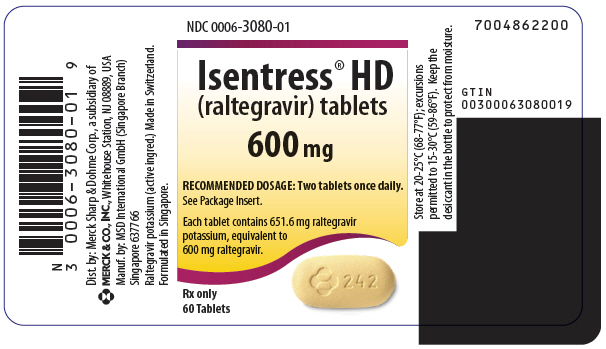
400 mg Film-coated Tablets, 600 mg Film-coated Tablets, Chewable Tablets and For Oral Suspension
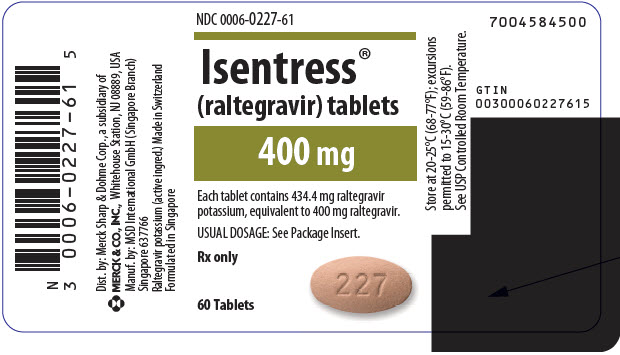
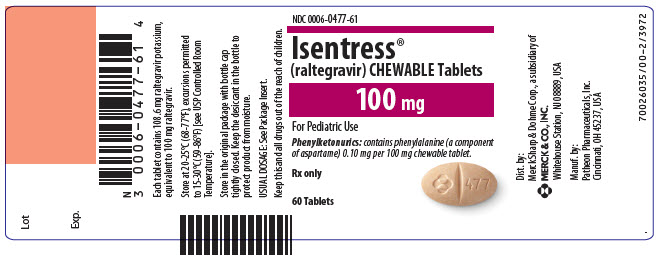
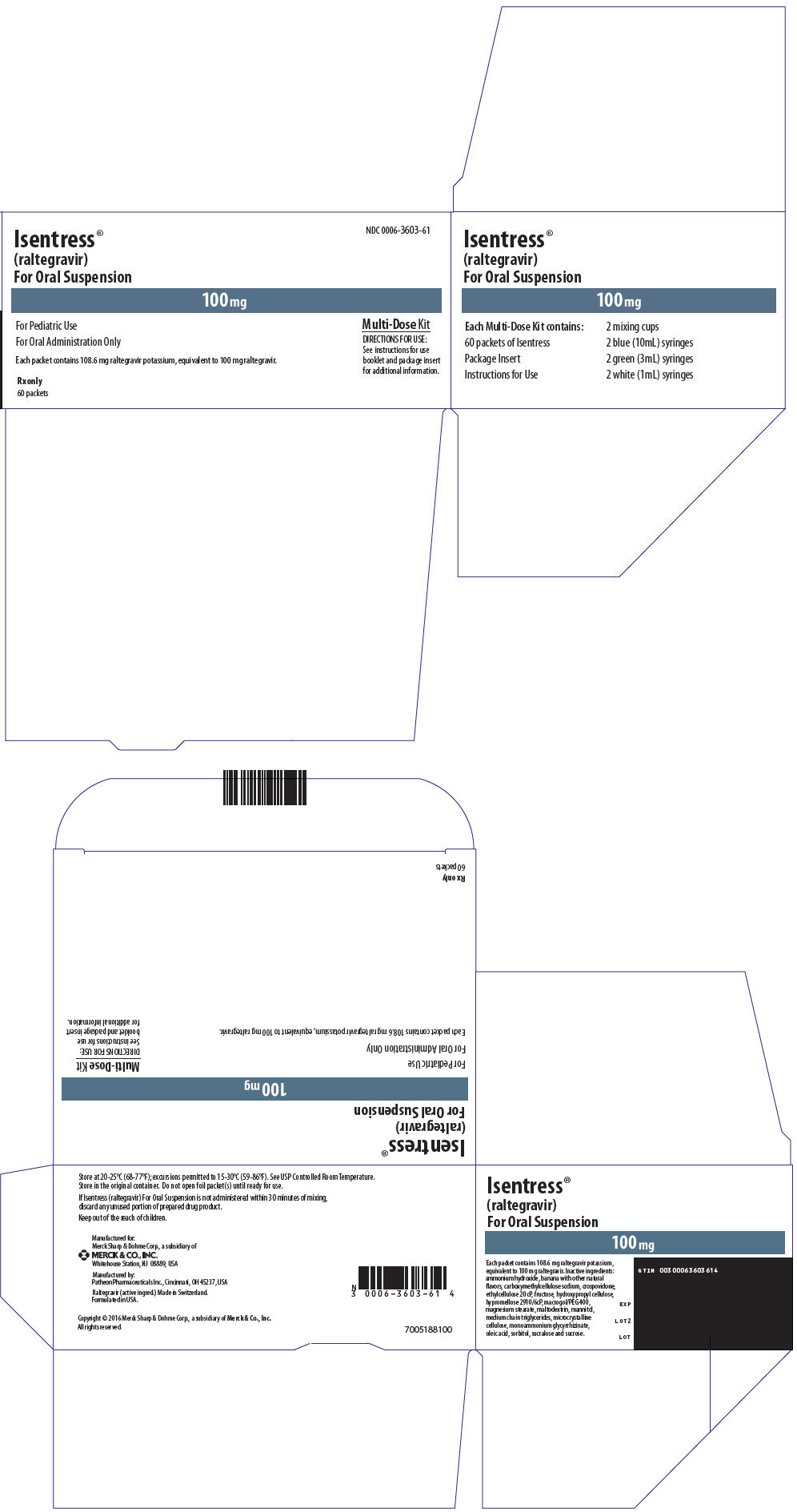
Store at 20-25°C (68-77°F); excursions permitted to 15-30°C (59-86°F). See USP Controlled Room Temperature.
400 mg Film-coated Tablets, 600 mg Film-coated Tablets and Chewable Tablets
Store in the original package with the bottle tightly closed. Keep the desiccant in the bottle to protect from moisture.
For Oral Suspension
Store in the original container. Do not open foil packet until ready for use.
Severe and Potentially Life-threatening Rash
Inform patients that severe and potentially life-threatening rash has been reported. Advise patients to immediately contact their healthcare provider if they develop rash. Instruct patients to immediately stop taking ISENTRESS or ISENTRESS HD and other suspect agents, and seek medical attention if they develop a rash associated with any of the following symptoms as it may be a sign of a more serious reaction such as Stevens-Johnson syndrome, toxic epidermal necrolysis or severe hypersensitivity: fever, generally ill feeling, extreme tiredness, muscle or joint aches, blisters, oral lesions, eye inflammation, facial swelling, swelling of the eyes, lips, mouth, breathing difficulty, and/or signs and symptoms of liver problems (e.g., yellowing of the skin or whites of the eyes, dark or tea colored urine, pale colored stools/bowel movements, nausea, vomiting, loss of appetite, or pain, aching or sensitivity on the right side below the ribs). Inform patients that if severe rash occurs, their physician will closely monitor them, order laboratory tests and initiate appropriate therapy.
Immune Reconstitution Syndrome
Advise patients to inform their healthcare provider immediately of any symptoms of infection, as in some patients with advanced HIV infection (AIDS), signs and symptoms of inflammation from previous infections may occur soon after anti-HIV treatment is started [see Warnings and Precautions (5.2)].
Rhabdomyolysis
Before patients begin ISENTRESS or ISENTRESS HD, ask them if they have a history of rhabdomyolysis, myopathy or increased creatine kinase or if they are taking medications known to cause these conditions such as statins, fenofibrate, gemfibrozil or zidovudine [see Adverse Reactions (6.1)].
Instruct patients to immediately report to their healthcare provider any unexplained muscle pain, tenderness, or weakness while taking ISENTRESS.
Phenylketonuria
Alert patients with phenylketonuria that ISENTRESS Chewable Tablets contain phenylalanine [see Warnings and Precautions (5.3)].
Drug Interactions
Inform patients that ISENTRESS or ISENTRESS HD may interact with some drugs and ask them to identify all their current medications including over-the-counter agents [see Drug Interactions (7.2)].
Missed Dosage
Inform patients that it is important to take ISENTRESS or ISENTRESS HD on a regular dosing schedule as instructed by their healthcare provider and to avoid missing doses as it can result in development of resistance [see Dosage and Administration (2)].
Important Administration Instructions
Film-Coated Tablets and Chewable Tablets
Inform patients that the chewable tablets can be chewed or swallowed whole, but the film-coated tablets must be swallowed whole.
For Oral Suspension
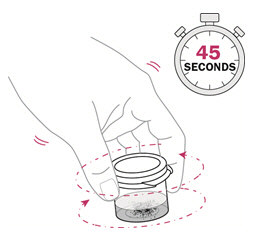
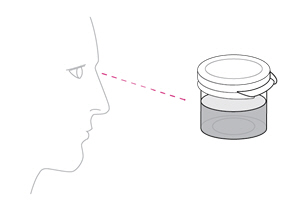
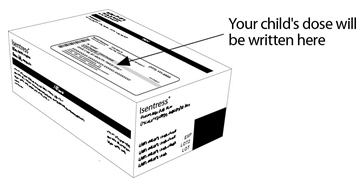
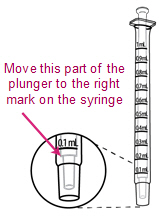
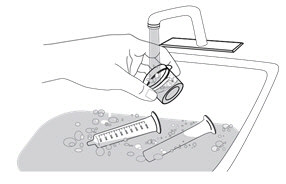
Instruct parents and/or caregivers to read the Instructions for Use before preparing and administering ISENTRESS for oral suspension to pediatric patients. Instruct parents and/or caregivers that ISENTRESS for oral suspension should be administered within 30 minutes of mixing.
Pregnancy Registry
Advise patients that there is a pregnancy exposure registry that monitors pregnancy outcomes in women exposed to ISENTRESS or ISENTRESS HD during pregnancy [see Use in Specific Populations (8.1)].
Lactation
Instruct women with HIV-1 infection not to breastfeed because HIV-1 can be passed to the baby in the breast milk [see Use in Specific Populations (8.2)].
Distributed by:
Merck Sharp & Dohme Corp., a subsidiary of Merck & Co., Inc.
Whitehouse Station, NJ 08889, USA
For patent information: www.merck.com/product/patent/home.html
Copyright © 2014-2018 Merck Sharp & Dohme Corp., a subsidiary of Merck & Co., Inc.
All rights reserved.
uspi-mk0518-mf-1803r033
Distributed by:
Merck Sharp & Dohme Corp., a subsidiary of Merck & Co., Inc.
Whitehouse Station, NJ, USA
For patent information: www.merck.com/product/patent/home.html
Copyright © 2013-2017 Merck Sharp & Dohme Corp., a subsidiary of Merck & Co., Inc.
All rights reserved.
ifu-mk0518-mf-1711r001
Revised November/2017