Testing for HBV Infection
Test all patients for evidence of current or prior HBV infection by measuring hepatitis B surface antigen (HBsAg) and hepatitis B core antibody (anti-HBc) before initiating HCV treatment with ZEPATIER [see Warnings and Precautions (5.1)].
NS5A Resistance Testing in HCV Genotype 1a-Infected Patients
Testing patients with HCV genotype 1a infection for the presence of virus with NS5A resistance-associated polymorphisms is recommended prior to initiation of treatment with ZEPATIER to determine dosage regimen and duration [see Dosage and Administration (2.2)], Table 1. In subjects receiving ZEPATIER for 12 weeks, sustained virologic response (SVR12) rates were lower in genotype 1a-infected patients with one or more baseline NS5A resistance-associated polymorphisms at amino acid positions 28, 30, 31, or 93 [see Microbiology (12.4)], Table 11.
Hepatic Laboratory Testing
Obtain hepatic laboratory testing prior to and during treatment with ZEPATIER [see Warnings and Precautions (5.2, 5.3)].
Treatment Regimen and Duration of Therapy
Relapse rates are affected by baseline host and viral factors and differ between treatment regimens and durations for certain subgroups [see Clinical Studies (14)].
Table 1 below provides the recommended ZEPATIER treatment regimen and duration based on the patient population and genotype in HCV mono-infected and HCV/HIV-1 co-infected patients with or without cirrhosis and with or without renal impairment including patients receiving hemodialysis.
Table 1: Recommended Dosage Regimens and Durations for ZEPATIER for Treatment of HCV Genotype 1 or 4 in Patients with or without Cirrhosis| Patient Population | Treatment | Duration |
|---|
| Genotype 1a: Treatment-naïve or PegIFN/RBV-experienced Patients who have failed treatment with peginterferon alfa (PegIFN) + ribavirin (RBV). without baseline NS5A polymorphismsNS5A resistance-associated polymorphisms at amino acid positions 28, 30, 31, or 93. See section 2.1 Testing prior to the initiation of therapy, subsection NS5A resistance testing in HCV genotype 1a-infected patients. | ZEPATIER | 12 weeks |
| Genotype 1a: Treatment-naïve or PegIFN/RBV-experienced with baseline NS5A polymorphisms | ZEPATIER + RBV For patients with CrCl greater than 50 mL per minute, the recommended dosage of ribavirin is weight-based (less than 66 kg = 800 mg per day, 66 to 80 kg = 1000 mg per day, 81 to 105 kg = 1200 mg per day, greater than 105 kg = 1400 mg per day) administered in two divided doses with food. For patients with CrCl less than or equal to 50 mL per minute, including patients receiving hemodialysis, refer to the ribavirin tablet prescribing information for the correct ribavirin dosage. | 16 weeks |
| Genotype 1b: Treatment-naïve or PegIFN/RBV-experienced | ZEPATIER | 12 weeks |
| Genotype 1a The optimal ZEPATIER-based treatment regimen and duration of therapy for PegIFN/RBV/PI-experienced genotype 1a-infected patients with one or more baseline NS5A resistance-associated polymorphisms at positions 28, 30, 31, and 93 has not been established. or 1b: PegIFN/RBV/PI-experiencedPatients who have failed treatment with PegIFN + RBV + HCV NS3/4A protease inhibitor (PI): boceprevir, simeprevir, or telaprevir. | ZEPATIER + RBV | 12 weeks |
| Genotype 4: Treatment-Naïve | ZEPATIER | 12 weeks |
| Genotype 4: PegIFN/RBV-experienced | ZEPATIER + RBV | 16 weeks |
Adverse Reactions with ZEPATIER in Treatment-Naïve Subjects
C-EDGE TN was a Phase 3 randomized, double-blind, placebo-controlled trial in 421 treatment-naïve (TN) subjects with HCV infection who received ZEPATIER or placebo one tablet once daily for 12 weeks. Adverse reactions (all intensity) occurring in C-EDGE TN in at least 5% of subjects treated with ZEPATIER for 12 weeks are presented in Table 3. In subjects treated with ZEPATIER who reported an adverse reaction, 73% had adverse reactions of mild severity. The type and severity of adverse reactions in subjects with compensated cirrhosis were comparable to those seen in subjects without cirrhosis. No subjects treated with ZEPATIER or placebo had serious adverse reactions. The proportion of subjects treated with ZEPATIER or placebo who permanently discontinued treatment due to adverse reactions was 1% in each group.
Table 3: Adverse Reactions (All Intensity) Reported in ≥5% of Treatment-Naïve Subjects with HCV Treated with ZEPATIER for 12 Weeks in C-EDGE TN | C-EDGE TN |
|---|
| ZEPATIER
N=316
%
12 weeks | Placebo
N=105
%
12 weeks |
|---|
| Fatigue | 11% | 10% |
| Headache | 10% | 9% |
C-EDGE COINFECTION was a Phase 3 open-label trial in 218 treatment-naïve HCV/HIV co-infected subjects who received ZEPATIER one tablet once daily for 12 weeks. Adverse reactions (all intensity) reported in C-EDGE COINFECTION in at least 5% of subjects treated with ZEPATIER for 12 weeks were fatigue (7%), headache (7%), nausea (5%), insomnia (5%), and diarrhea (5%). No subjects reported serious adverse reactions or discontinued treatment due to adverse reactions. No subjects switched their antiretroviral therapy regimen due to loss of plasma HIV-1 RNA suppression. Median increase in CD4+ T-cell counts of 31 cells per mm3 was observed at the end of 12 weeks of treatment.
Adverse Reactions with ZEPATIER with or without Ribavirin in Treatment-Experienced Subjects
C-EDGE TE was a Phase 3 randomized, open-label trial in treatment-experienced (TE) subjects. Adverse reactions of moderate or severe intensity reported in C-EDGE TE in at least 2% of subjects treated with ZEPATIER one tablet once daily for 12 weeks or ZEPATIER one tablet once daily with ribavirin for 16 weeks are presented in Table 4. No subjects treated with ZEPATIER without ribavirin for 12 weeks reported serious adverse reactions or discontinued treatment due to adverse reactions. The proportion of subjects treated with ZEPATIER with ribavirin for 16 weeks with serious adverse reactions was 1%. The proportion of subjects treated with ZEPATIER with ribavirin for 16 weeks who permanently discontinued treatment due to adverse reactions was 3%. The type and severity of adverse reactions in subjects with cirrhosis were comparable to those seen in subjects without cirrhosis.
Table 4: Adverse Reactions (Moderate or Severe Intensity) Reported in ≥2% of PegIFN/RBV-Experienced Subjects with HCV Treated with ZEPATIER for 12 Weeks or ZEPATIER + Ribavirin for 16 Weeks in C-EDGE TE | C-EDGE TE |
|---|
| ZEPATIER
N=105
%
12 weeks | ZEPATIER + Ribavirin
N=106
%
16 weeks |
|---|
| Anemia | 0% | 8% |
| Headache | 0% | 6% |
| Fatigue | 5% | 4% |
| Dyspnea | 0% | 4% |
| Rash or Pruritus | 0% | 4% |
| Irritability | 1% | 3% |
| Abdominal pain | 2% | 2% |
| Depression | 1% | 2% |
| Arthralgia | 0% | 2% |
| Diarrhea | 2% | 0% |
The type and severity of adverse reactions with ZEPATIER with or without ribavirin in 10 treatment-experienced subjects with HCV/HIV co-infection were comparable to those reported in subjects without HIV co-infection. Median increase in CD4+ T-cell counts of 32 cells/mm3 was observed at the end of 12 weeks of treatment with ZEPATIER alone. In subjects treated with ZEPATIER with ribavirin for 16 weeks, CD4+ T-cell counts decreased a median of 135 cells per mm3 at the end of treatment. No subjects switched their antiretroviral therapy regimen due to loss of plasma HIV-1 RNA suppression. No subject experienced an AIDS-related opportunistic infection.
C-SALVAGE was a Phase 2 open-label trial in 79 PegIFN/RBV/PI-experienced subjects. Adverse reactions of moderate or severe intensity reported in C-SALVAGE in at least 2% of subjects treated with ZEPATIER once daily with ribavirin for 12 weeks were fatigue (3%) and insomnia (3%). No subjects reported serious adverse reactions or discontinued treatment due to adverse reactions.
Adverse Reactions with ZEPATIER in Subjects with Severe Renal Impairment including Subjects on Hemodialysis
The safety of elbasvir and grazoprevir in comparison to placebo in subjects with severe renal impairment (Stage 4 or Stage 5 chronic kidney disease, including subjects on hemodialysis) and chronic hepatitis C virus infection with compensated liver disease (with or without cirrhosis) was assessed in 235 subjects (C-SURFER) [see Clinical Studies (14.4)]. The adverse reactions (all intensity) occurring in at least 5% of subjects treated with ZEPATIER for 12 weeks are presented in Table 5. In subjects treated with ZEPATIER who reported an adverse reaction, 76% had adverse reactions of mild severity. The proportion of subjects treated with ZEPATIER or placebo with serious adverse reactions was less than 1% in each treatment arm, and less than 1% and 3% of subjects, respectively, permanently discontinued treatment due to adverse reactions in each treatment arm.
Table 5: Adverse Reactions (All Intensity) Reported in ≥5% of Treatment-Naïve or PegIFN/RBV-Experienced Subjects with Stage 4 or 5 Chronic Kidney Disease and HCV Treated with ZEPATIER for 12 Weeks in C-SURFER | ZEPATIER
N=122
%
12 weeks | Placebo
N=113
%
12 weeks |
|---|
| Nausea | 11% | 8% |
| Headache | 11% | 5% |
| Fatigue | 5% | 8% |
Laboratory Abnormalities in Subjects Receiving ZEPATIER with or without Ribavirin
Serum ALT Elevations
During clinical trials with ZEPATIER with or without ribavirin, regardless of treatment duration, 1% (12/1599) of subjects experienced elevations of ALT from normal levels to greater than 5 times the ULN, generally at or after treatment week 8 (mean onset time 10 weeks, range 6-12 weeks). These late ALT elevations were typically asymptomatic. Most late ALT elevations resolved with ongoing therapy with ZEPATIER or after completion of therapy [see Warnings and Precautions (5.2)]. The frequency of late ALT elevations was higher in subjects with higher grazoprevir plasma concentrations [see Drug Interactions (7.1) and Clinical Pharmacology (12.3)]. The incidence of late ALT elevations was not affected by treatment duration. Cirrhosis was not a risk factor for late ALT elevations.
Serum Bilirubin Elevations
During clinical trials with ZEPATIER with or without ribavirin, regardless of treatment duration, elevations in bilirubin at greater than 2.5 times ULN were observed in 6% of subjects receiving ZEPATIER with ribavirin compared to less than 1% in those receiving ZEPATIER alone. These bilirubin increases were predominately indirect and generally observed in association with ribavirin co-administration. Bilirubin elevations were typically not associated with serum ALT elevations.
Decreased Hemoglobin
During clinical trials with ZEPATIER with or without ribavirin, the mean change from baseline in hemoglobin levels in subjects treated with ZEPATIER for 12 weeks was –0.3 g per dL and with ZEPATIER with ribavirin for 16 weeks was approximately –2.2 g per dL. Hemoglobin declined during the first 8 weeks of treatment, remained low during the remainder of treatment, and normalized to baseline levels during follow-up. Less than 1% of subjects treated with ZEPATIER with ribavirin had hemoglobin levels decrease to less than 8.5 g per dL during treatment. No subjects treated with ZEPATIER alone had a hemoglobin level less than 8.5 g per dL.
Skin and Subcutaneous Tissue Disorders
Angioedema
Hepatobiliary Disorders
Hepatic decompensation, hepatic failure [see Warnings and Precautions (5.3)]
Risk Summary
No adequate human data are available to establish whether or not ZEPATIER poses a risk to pregnancy outcomes. In animal reproduction studies, no evidence of adverse developmental outcomes was observed with the components of ZEPATIER (elbasvir or grazoprevir) at exposures greater than those in humans at the recommended human dose (RHD) (see Data). During organogenesis in the rat and rabbit, systemic exposures (AUC) were approximately 10 and 18 times (for elbasvir) and 117 and 41 times (for grazoprevir), respectively, the exposure in humans at the RHD. In rat pre/postnatal developmental studies, maternal systemic exposures (AUC) to elbasvir and grazoprevir were approximately 10 and 78 times, respectively, the exposure in humans at the RHD.
The background risk of major birth defects and miscarriage for the indicated population is unknown. In the U.S. general population, the estimated background risk of major birth defects and miscarriage in clinically recognized pregnancies is 2-4% and 15-20%, respectively.
If ZEPATIER is administered with ribavirin, the combination regimen is contraindicated in pregnant women and in men whose female partners are pregnant. Refer to the ribavirin prescribing information for more information on use in pregnancy.
Data
Animal Data
Elbasvir: Elbasvir was administered orally at up to 1000 mg/kg/day to pregnant rats and rabbits on gestation days 6 to 20 and 7 to 20, respectively, and also to rats on gestation day 6 to lactation/post-partum day 20. No effects on embryo-fetal (rats and rabbits) or pre/postnatal (rats) development were observed at up to the highest dose tested. Systemic exposures (AUC) to elbasvir were approximately 10 (rats) and 18 (rabbits) times the exposure in humans at the RHD. In both species, elbasvir has been shown to cross the placenta, with fetal plasma concentrations of up to 0.8% (rabbits) and 2.2% (rats) that of maternal concentrations observed on gestation day 20.
Grazoprevir: Grazoprevir was administered to pregnant rats (oral doses up to 400 mg/kg/day) and rabbits (intravenous doses up to 100 mg/kg/day) on gestation days 6 to 20 and 7 to 20, respectively, and also to rats (oral doses up to 400 mg/kg/day) on gestation day 6 to lactation/post-partum day 20. No effects on embryo-fetal (rats and rabbits) or pre/postnatal (rats) development were observed at up to the highest dose tested. Systemic exposures (AUC) to grazoprevir were ≥78 (rats) and 41 (rabbits) times the exposure in humans at the RHD. In both species, grazoprevir has been shown to cross the placenta, with fetal plasma concentrations of up to 7% (rabbits) and 89% (rats) that of maternal concentrations observed on gestation day 20.
Risk Summary
It is not known whether ZEPATIER is present in human breast milk, affects human milk production, or has effects on the breastfed infant. When administered to lactating rats, the components of ZEPATIER (elbasvir and grazoprevir) were present in milk, without effects on growth and development observed in nursing pups (see Data).
The developmental and health benefits of breastfeeding should be considered along with the mother's clinical need for ZEPATIER and any potential adverse effects on the breastfed child from ZEPATIER or from the underlying maternal condition.
If ZEPATIER is administered with ribavirin, the information for ribavirin with regard to nursing mothers also applies to this combination regimen. Refer to the ribavirin prescribing information for information on use during lactation.
Data
Elbasvir: No effects of elbasvir on growth and postnatal development were observed in nursing pups at up to the highest dose tested. Maternal systemic exposure (AUC) to elbasvir was approximately 10 times the exposure in humans at the RHD. Elbasvir was excreted into the milk of lactating rats following oral administration (1000 mg/kg/day) from gestation day 6 to lactation day 14, with milk concentrations approximately 4 times that of maternal plasma concentrations observed 2 hours post-dose on lactation day 14.
Grazoprevir: No effects of grazoprevir on growth and postnatal development were observed in nursing pups at up to the highest dose tested. Maternal systemic exposure (AUC) to grazoprevir was approximately 78 times the exposure in humans at the RHD. Grazoprevir was excreted into the milk of lactating rats following oral administration (up to 400 mg/kg/day) from gestation day 6 to lactation day 14, with milk concentrations of 54 and 87% that of maternal plasma concentrations observed 2 and 8 hours post-dose, respectively, on lactation day 14.
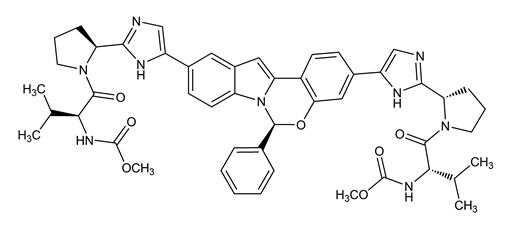
Elbasvir:
The IUPAC name for elbasvir is Dimethyl N,N'-([(6S)-6-phenylindolo[1,2-c][1,3]benzoxazine-3,10-diyl]bis{1H-imidazole-5,2-diyl-(2S)-pyrrolidine-2,1-diyl[(2S)-3-methyl-1-oxobutane-1,2-diyl]})dicarbamate.
It has a molecular formula of C49H55N9O7 and a molecular weight of 882.02. It has the following structural formula:
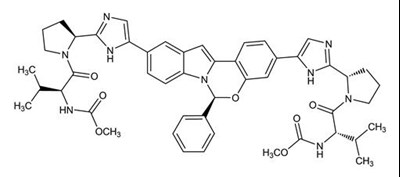
Chemical Structure (Zepatier 01)
Elbasvir is practically insoluble in water (less than 0.1 mg per mL) and very slightly soluble in ethanol (0.2 mg per mL), but is very soluble in ethyl acetate and acetone.
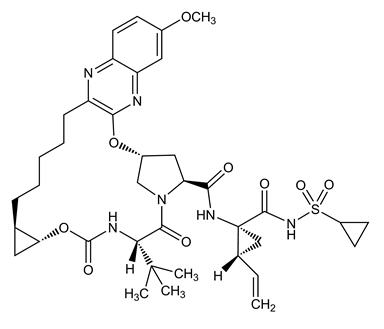
Grazoprevir:
The IUPAC name for grazoprevir is (1aR,5S,8S,10R,22aR)-N-[(1R,2S)-1-[(Cyclopropylsulfonamido)carbonyl]-2-ethenylcyclopropyl]-14-methoxy-5-(2-methylpropan-2-yl)-3,6-dioxo-1,1a,3,4,5,6,9,10,18,19,20,21,22,22a-tetradecahydro-8H-7,10-methanocyclopropa[18,19][1,10,3,6]dioxadiazacyclononadecino[11,12-b]quinoxaline-8-carboxamide.
It has a molecular formula of C38H50N6O9S and a molecular weight of 766.90. It has the following structural formula:
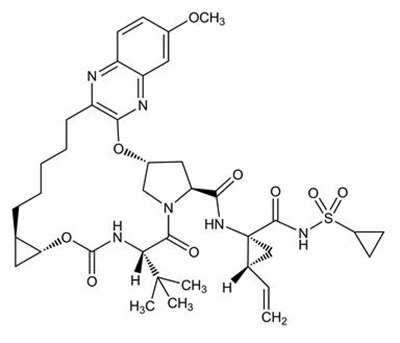
Chemical Structure (Zepatier 02)
Grazoprevir is practically insoluble in water (less than 0.1 mg per mL) but is freely soluble in ethanol and some organic solvents (e.g., acetone, tetrahydrofuran and N,N-dimethylformamide).
Cardiac Electrophysiology
Thorough QT studies have been conducted for elbasvir and grazoprevir.
The effect of elbasvir 700 mg on QTc interval was evaluated in a randomized, single-dose, placebo- and active-controlled (moxifloxacin 400 mg) 3-period crossover thorough QT trial in 42 healthy subjects. At a concentration 3 to 4 times the therapeutic concentration, elbasvir does not prolong QTc to any clinically relevant extent.
The effect of grazoprevir 1600 mg (16 times the approved dose) on QTc interval was evaluated in a randomized, single-dose, placebo- and active-controlled (moxifloxacin 400 mg) 3-period crossover thorough QT trial in 41 healthy subjects. At a concentration 40 times the therapeutic concentration, grazoprevir does not prolong QTc to any clinically relevant extent.
Absorption
Following administration of ZEPATIER to HCV-infected subjects, elbasvir peak concentrations occur at a median Tmax of 3 hours (range of 3 to 6 hours); grazoprevir peak concentrations occur at a median Tmax of 2 hours (range of 30 minutes to 3 hours). The absolute bioavailability of elbasvir is estimated to be 32%, and grazoprevir is estimated to be 27%.
Effect of Food
Relative to fasting conditions, the administration of a single dose of ZEPATIER with a high-fat (900 kcal, 500 kcal from fat) meal to healthy subjects resulted in decreases in elbasvir AUC0-inf and Cmax of approximately 11% and 15%, respectively, and increases in grazoprevir AUC0-inf and Cmax of approximately 1.5-fold and 2.8-fold, respectively. These differences in elbasvir and grazoprevir exposure are not clinically relevant; therefore, ZEPATIER may be taken without regard to food [see Dosage and Administration (2.2)].
Distribution
Elbasvir and grazoprevir are extensively bound (greater than 99.9% and 98.8%, respectively) to human plasma proteins. Both elbasvir and grazoprevir bind to human serum albumin and α1-acid glycoprotein. Estimated apparent volume of distribution values of elbasvir and grazoprevir are approximately 680 L and 1250 L, respectively, based on population pharmacokinetic modeling.
In preclinical distribution studies, elbasvir distributes into most tissues including the liver; whereas grazoprevir distributes predominantly to the liver likely facilitated by the active transport through the OATP1B1/3 liver uptake transporter.
Elimination
The geometric mean apparent terminal half-life for elbasvir (50 mg) and grazoprevir (100 mg) is approximately 24 and 31 hours, respectively, in HCV-infected subjects.
Metabolism
Elbasvir and grazoprevir are partially eliminated by oxidative metabolism, primarily by CYP3A. No circulating metabolites of either elbasvir or grazoprevir were detected in human plasma.
Excretion
The primary route of elimination of elbasvir and grazoprevir is through feces with almost all (greater than 90%) of radiolabeled dose recovered in feces compared to less than 1% in urine.
Specific Populations
Pediatric Population
The pharmacokinetics of ZEPATIER in pediatric patients less than 18 years of age have not been established.
Geriatric Population
In population pharmacokinetic analyses, elbasvir and grazoprevir AUCs are estimated to be 16% and 45% higher, respectively, in subjects at least 65 years of age compared to subjects less than 65 years of age.
Gender
In population pharmacokinetic analyses, elbasvir and grazoprevir AUCs are estimated to be 50% and 30% higher, respectively, in females compared to males.
Weight/BMI
In population pharmacokinetic analyses, there was no effect of weight on elbasvir pharmacokinetics. Grazoprevir AUC is estimated to be 15% higher in a 53-kg subject compared to a 77-kg subject. This change is not clinically relevant for grazoprevir.
Race/Ethnicity
In population pharmacokinetic analyses, elbasvir and grazoprevir AUCs are estimated to be 15% and 50% higher, respectively, for Asians compared to Caucasians. Population pharmacokinetics estimates of exposure of elbasvir and grazoprevir were comparable between Caucasians and Black/African Americans.
Renal Impairment
In population pharmacokinetic analyses, elbasvir AUC was 25% higher in hemodialysis-dependent subjects and 46% higher in non-dialysis-dependent subjects with severe renal impairment compared to elbasvir AUC in subjects without severe renal impairment. In population pharmacokinetic analysis in HCV-infected subjects, grazoprevir AUC was 10% higher in hemodialysis-dependent subjects and 40% higher in non-dialysis-dependent subjects with severe renal impairment compared to grazoprevir AUC in subjects without severe renal impairment. Elbasvir and grazoprevir are not removed by hemodialysis. Elbasvir and grazoprevir are unlikely to be removed by peritoneal dialysis as both are highly protein bound.
Overall, changes in exposure of elbasvir and grazoprevir in HCV-infected subjects with renal impairment with or without hemodialysis are not clinically relevant [see Use in Specific Populations (8.8)].
Hepatic Impairment
The pharmacokinetics of elbasvir and grazoprevir were evaluated in non-HCV-infected subjects with mild hepatic impairment (Child-Pugh Category A [CP-A], score of 5-6), moderate hepatic impairment (Child-Pugh Category B [CP-B], score of 7-9) and severe hepatic impairment (Child-Pugh Category C [CP-C], score of 10-15). In addition, the pharmacokinetics of elbasvir and grazoprevir were also evaluated in HCV-infected subjects including CP-A subjects with compensated cirrhosis.
Relative to non-HCV-infected subjects with normal hepatic function, no clinically relevant differences in elbasvir AUC values were observed in non-HCV-infected subjects with mild, moderate, or severe hepatic impairment. In population pharmacokinetic analyses, elbasvir steady-state AUC was similar in HCV-infected subjects with compensated cirrhosis compared to HCV-infected, non-cirrhotic subjects.
Relative to non-HCV-infected subjects with normal hepatic function, grazoprevir AUC values were higher by 1.7-fold, 5-fold, and 12-fold in non-HCV-infected subjects with mild, moderate, and severe hepatic impairment, respectively. In population pharmacokinetic analyses, grazoprevir steady-state AUC values were higher by 1.65-fold in HCV-infected subjects with compensated cirrhosis compared to HCV-infected, non-cirrhotic subjects.
Drug Interaction Studies
Drug interaction studies were performed in healthy adults with elbasvir, grazoprevir, or co-administered elbasvir and grazoprevir and drugs likely to be co-administered or drugs commonly used as probes for pharmacokinetic interactions. Table 8 summarizes the effects of co-administered drugs on the exposures of the individual components of ZEPATIER (elbasvir and grazoprevir). Table 9 summarizes the effects of the individual components of ZEPATIER on the exposures of the co-administered drugs. For information regarding clinical recommendations, [see Contraindications (4), Warnings and Precautions (5), and Drug Interactions (7)].
Elbasvir and grazoprevir are substrates of CYP3A and P-gp, but the role of intestinal P-gp in the absorption of elbasvir and grazoprevir appears to be minimal. Co-administration of moderate and strong CYP3A inducers with ZEPATIER may decrease elbasvir and grazoprevir plasma concentrations, leading to reduced therapeutic effect of ZEPATIER. Co-administration of strong CYP3A4 inhibitors with ZEPATIER may increase elbasvir and grazoprevir plasma concentrations.
Grazoprevir is a substrate of OATP1B1/3. Co-administration of ZEPATIER with drugs that inhibit OATP1B1/3 transporters may result in a clinically relevant increase in grazoprevir plasma concentrations.
Elbasvir is not a CYP3A inhibitor in vitro and grazoprevir is a weak CYP3A inhibitor in humans. Co-administration with grazoprevir resulted in a 34% increase in plasma exposure of midazolam and a 43% increase in plasma exposure of tacrolimus (see Tables 6 and 9). Elbasvir inhibited P-gp in vitro, but no clinically relevant increases in concentrations of digoxin (a P-gp substrate; see Table 9) were observed by co-administration of elbasvir. Grazoprevir is not a P-gp inhibitor in vitro. Elbasvir and grazoprevir are inhibitors of the drug transporter breast cancer resistance protein (BCRP) at the intestinal level in humans and may increase plasma concentrations of co-administered BCRP substrates.
Clinically significant drug interactions with ZEPATIER as an inhibitor of other CYP enzymes (CYP1A2, CYP2B6, CYP2C8, CYP2C9, CYP2C19, and CYP2D6), UGT1A1, esterases (CES1, CES2, and CatA), organic anion transporters (OAT)1 and OAT3, and organic cation transporter (OCT)2, are not expected, and multiple-dose administration of elbasvir or grazoprevir is unlikely to induce the metabolism of drugs metabolized by CYP1A2, CYP2B6, or CYP3A based on in vitro data.
Table 8: Drug Interactions: Changes in Pharmacokinetics of Elbasvir or Grazoprevir in the Presence of Co-Administered Drug| Co-Administered Drug | Regimen of Co-Administered Drug | Regimen of EBR or/and GZR | N | Geometric Mean Ratio [90% CI] of EBR and GZR PK with/without Co-Administered Drug (No Effect=1.00) |
|---|
| AUC AUC0-inf for single-dose, AUC0-24 for once daily. | Cmax | C24 |
|---|
| Abbreviations: EBR, elbasvir; GZR, grazoprevir; IV, intravenous; PO, oral; EBR + GZR, administration of EBR and GZR as separate pills; EBR/GZR, administration of EBR and GZR as a single fixed-dose combination tablet. |
| Antifungal |
| Ketoconazole | 400 mg once daily | EBR 50 mg single-dose | 7 | EBR | 1.80 (1.41, 2.29) | 1.29 (1.00, 1.66) | 1.89 (1.37, 2.60) |
| 400 mg once daily | GZR 100 mg single-dose | 8 | GZR | 3.02 (2.42, 3.76) | 1.13 (0.77, 1.67) | 2.01 (1.49, 2.71) |
| Antimycobacterial |
| Rifampin | 600 mg single-dose IV | EBR 50 mg single-dose | 14 | EBR | 1.22 (1.06, 1.40) | 1.41 (1.18, 1.68) | 1.31 (1.12, 1.53) |
| 600 mg single-dose PO | EBR 50 mg single-dose | 14 | EBR | 1.17 (0.98, 1.39) | 1.29 (1.06, 1.58) | 1.21 (1.03, 1.43) |
| 600 mg PO once daily | GZR 200 mg once daily | 12 | GZR | 0.93 (0.75, 1.17) | 1.16 (0.82, 1.65) | 0.10 (0.07, 0.13) |
| 600 mg IV single-dose | GZR 200 mg single-dose | 12 | GZR | 10.21 (8.68, 12.00) | 10.94 (8.92, 13.43) | 1.77 (1.40, 2.24) |
| 600 mg PO single-dose | GZR 200 mg once daily | 12 | GZR | 8.35 (7.38, 9.45) AUC0-24 | 6.52 (5.16, 8.24) | 1.62 (1.32, 1.98) |
| HCV Antiviral |
| EBR | 20 mg once daily | GZR 200 mg once daily | 10 | GZR | 0.90 (0.63, 1.28) | 0.87 (0.50, 1.52) | 0.94 (0.77, 1.15) |
| GZR | 200 mg once daily | EBR 20 mg once daily | 10 | EBR | 1.01 (0.83, 1.24) | 0.93 (0.76, 1.13) | 1.02 (0.83, 1.24) |
| HIV Protease Inhibitor |
| Atazanavir/ ritonavir | 300 mg/100 mg once daily | EBR 50 mg once daily | 10 | EBR | 4.76 (4.07, 5.56) | 4.15 (3.46, 4.97) | 6.45 (5.51, 7.54) |
| 300 mg/100 mg once daily | GZR 200 mg once daily | 12 | GZR | 10.58 (7.78, 14.39) | 6.24 (4.42, 8.81) | 11.64 (7.96, 17.02) |
| Darunavir/ ritonavir | 600 mg/100 mg twice daily | EBR 50 mg once daily | 10 | EBR | 1.66 (1.35, 2.05) | 1.67 (1.36, 2.05) | 1.82 (1.39, 2.39) |
| 600 mg/100 mg twice daily | GZR 200 mg once daily | 13 | GZR | 7.50 (5.92, 9.51) | 5.27 (4.04, 6.86) | 8.05 (6.33, 10.24) |
| Lopinavir/ ritonavir | 400 mg/100 mg twice daily | EBR 50 mg once daily | 10 | EBR | 3.71 (3.05, 4.53) | 2.87 (2.29, 3.58) | 4.58 (3.72, 5.64) |
| 400 mg/100 mg twice daily | GZR 200 mg once daily | 13 | GZR | 12.86 (10.25, 16.13) | 7.31 (5.65, 9.45) | 21.70 (12.99, 36.25) |
| Ritonavir Higher doses of ritonavir have not been tested in a drug interaction study with GZR. | 100 mg twice daily | GZR 200 mg single-dose | 10 | GZR | 2.03 (1.60, 2.56) | 1.15 (0.60, 2.18) | 1.88 (1.65, 2.14) |
| HIV Integrase Strand Transfer Inhibitor |
| Dolutegravir | 50 mg single-dose | EBR 50 mg + GZR 200 mg once daily | 12 | EBR | 0.98 (0.93, 1.04) | 0.97 (0.89, 1.05) | 0.98 (0.93, 1.03) |
| 50 mg single-dose | EBR 50 mg + GZR 200 mg once daily | 12 | GZR | 0.81 (0.67, 0.97) | 0.64 (0.44, 0.93) | 0.86 (0.79, 0.93) |
| Raltegravir | 400 mg single-dose | EBR 50 mg single-dose | 10 | EBR | 0.81 (0.57, 1.17) | 0.89 (0.61, 1.29) | 0.80 (0.55, 1.16) |
| 400 mg twice daily | GZR 200 mg once daily | 11 | GZR | 0.89 (0.72, 1.09) | 0.85 (0.62, 1.16) | 0.90 (0.82, 0.99) |
| HIV Non-Nucleoside Reverse Transcriptase Inhibitor |
| Efavirenz | 600 mg once daily | EBR 50 mg once daily | 10 | EBR | 0.46 (0.36, 0.59) | 0.55 (0.41, 0.73) | 0.41 (0.28, 0.59) |
| 600 mg once daily | GZR 200 mg once daily | 12 | GZR | 0.17 (0.13, 0.24) | 0.13 (0.09, 0.19) | 0.31 (0.25, 0.38) |
| Rilpivirine | 25 mg once daily | EBR 50 mg + GZR 200 mg once daily | 19 | EBR | 1.07 (1.00, 1.15) | 1.07 (0.99, 1.16) | 1.04 (0.98, 1.11) |
| 25 mg once daily | EBR 50 mg + GZR 200 mg once daily | 19 | GZR | 0.98 (0.89, 1.07) | 0.97 (0.83, 1.14) | 1.00 (0.93, 1.07) |
| HIV Nucleotide Reverse Transcriptase Inhibitor |
| Tenofovir disoproxil fumarate | 300 mg once daily | EBR 50 mg once daily | 10 | EBR | 0.93 (0.82, 1.05) | 0.88 (0.77, 1.00) | 0.92 (0.81, 1.05) |
| 300 mg once daily | GZR 200 mg once daily | 12 | GZR | 0.86 (0.65, 1.12) | 0.78 (0.51, 1.18) | 0.89 (0.78, 1.01) |
| HIV Fixed-Dose Combination Regimen |
| Elvitegravir/ cobicistat/ emtricitabine/ tenofovir disoproxil fumarate | 150 mg/ 150 mg/ 200 mg/ 300 mg once daily | EBR 50 mg/ GZR 100 mg once daily | 21 | EBR | 2.18 (2.02, 2.35) | 1.91 (1.77, 2.05) | 2.38 (2.19, 2.60) |
| EBR 50 mg/ GZR 100 mg once daily | 21 | GZR | 5.36 (4.48, 6.43) | 4.59 (3.70, 5.69) | 2.78 (2.48, 3.11) |
| Immunosuppressant |
| Cyclosporine | 400 mg single-dose | EBR 50 mg + GZR 200 mg once daily | 14 | EBR | 1.98 (1.84, 2.13) | 1.95 (1.84, 2.07) | 2.21 (1.98, 2.47) |
| 400 mg single-dose | EBR 50 mg + GZR 200 mg once daily | 14 | GZR | 15.21 (12.83, 18.04) | 17.00 (12.94, 22.34) | 3.39 (2.82, 4.09) |
| Mycophenolate mofetil | 1000 mg single-dose | EBR 50 mg + GZR 200 mg once daily | 14 | EBR | 1.07 (1.00, 1.14) | 1.07 (0.98, 1.16) | 1.05 (0.97, 1.14) |
| 1000 mg single-dose | EBR 50 mg + GZR 200 mg once daily | 14 | GZR | 0.74 (0.60, 0.92) | 0.58 (0.42, 0.82) | 0.97 (0.89, 1.06) |
| Prednisone | 40 mg single-dose | EBR 50 mg + GZR 200 mg once daily | 14 | EBR | 1.17 (1.11, 1.24) | 1.25 (1.16, 1.35) | 1.04 (0.97, 1.12) |
| 40 mg single-dose | EBR 50 mg + GZR 200 mg once daily | 14 | GZR | 1.09 (0.95, 1.25) | 1.34 (1.10, 1.62) | 0.93 (0.87, 1.00) |
| Tacrolimus | 2 mg single-dose | EBR 50 mg + GZR 200 mg once daily | 16 | EBR | 0.97 (0.90, 1.06) | 0.99 (0.88, 1.10) | 0.92 (0.83, 1.02) |
| 2 mg single-dose | EBR 50 mg + GZR 200 mg once daily | 16 | GZR | 1.12 (0.97, 1.30) | 1.07 (0.83, 1.37) | 0.94 (0.87, 1.02) |
| Opioid-Substitution Therapy |
| Buprenorphine/naloxone | 8 mg/2 mg single-dose | EBR 50 mg single-dose | 15 | EBR | 1.22 (0.98, 1.52) | 1.13 (0.87, 1.46) | 1.22 (0.99, 1.51) |
| 8-24 mg/ 2-6 mg once daily | GZR 200 mg once daily | 12 | GZR | 0.86 (0.63, 1.18) | 0.80 (0.54, 1.20) | 0.97 (0.77, 1.22) |
| Methadone | 20-120 mg once daily | EBR 50 mg once daily | 10 | EBR | 1.20 (0.94, 1.53) | 1.23 (0.94, 1.62) | 1.32 (1.03, 1.68) |
| 20-150 mg once daily | GZR 200 mg once daily | 12 | GZR | 1.03 (0.76, 1.41) | 0.89 (0.60, 1.32) | 0.98 (0.79, 1.23) |
| Acid-Reducing Agent |
| Famotidine | 20 mg single-dose | EBR 50 mg/ GZR 100 mg single-dose | 16 | EBR | 1.05 (0.92, 1.18) | 1.11 (0.98, 1.26) | 1.03 (0.91, 1.17) |
| 20 mg single-dose | EBR 50 mg/ GZR 100 mg single-dose | 16 | GZR | 1.10 (0.95, 1.28) | 0.89 (0.71, 1.11) | 1.12 (0.97, 1.30) |
| Pantoprazole | 40 mg once daily | EBR 50 mg/ GZR 100 mg single-dose | 16 | EBR | 1.05 (0.93, 1.18) | 1.02 (0.92, 1.14) | 1.03 (0.92, 1.17) |
| 40 mg once daily | EBR 50 mg/ GZR 100 mg single-dose | 16 | GZR | 1.12 (0.96, 1.30) | 1.10 (0.89, 1.37) | 1.17 (1.02, 1.34) |
| Phosphate Binder |
| Calcium acetate | 2668 mg single-dose | EBR 50 mg + GZR 100 mg single-dose | 12 | EBR | 0.92 (0.75, 1.14) | 0.86 (0.71, 1.04) | 0.87 (0.70, 1.09) |
| 2668 mg single-dose | EBR 50 mg + GZR 100 mg single-dose | 12 | GZR | 0.79 (0.68, 0.91) | 0.57 (0.40, 0.83) | 0.77 (0.61, 0.99) |
| Sevelamer carbonate | 2400 mg single-dose | EBR 50 mg + GZR 100 mg single-dose | 12 | EBR | 1.13 (0.94, 1.37) | 1.07 (0.88, 1.29) | 1.22 (1.02, 1.45) |
| 2400 mg single-dose | EBR 50 mg + GZR 100 mg single-dose | 12 | GZR | 0.82 (0.68, 0.99) | 0.53 (0.37, 0.76) | 0.84 (0.71, 0.99) |
| Statin |
| Atorvastatin | 20 mg single-dose | GZR 200 mg once daily | 9 | GZR | 1.26 (0.97, 1.64) | 1.26 (0.83, 1.90) | 1.11 (1.00, 1.23) |
| Pitavastatin | 1 mg single-dose | GZR 200 mg once daily | 9 | GZR | 0.81 (0.70, 0.95) | 0.72 (0.57, 0.92) | 0.91 (0.82, 1.01) |
| Pravastatin | 40 mg single-dose | EBR 50 mg + GZR 200 mg once daily | 12 | EBR | 0.98 (0.93, 1.02) | 0.97 (0.89, 1.05) | 0.97 (0.92, 1.02) |
| 40 mg single-dose | EBR 50 mg + GZR 200 mg once daily | 12 | GZR | 1.24 (1.00, 1.53) | 1.42 (1.00, 2.03) | 1.07 (0.99, 1.16) |
| Rosuvastatin | 10 mg single-dose | EBR 50 mg + GZR 200 mg single-dose | 11 | EBR | 1.09 (0.98, 1.21) | 1.11 (0.99, 1.26) | 0.96 (0.86, 1.08) |
| 10 mg single-dose | GZR 200 mg once daily | 11 | GZR | 1.16 (0.94, 1.44) | 1.13 (0.77, 1.65) | 0.93 (0.84, 1.03) |
| 10 mg single-dose | EBR 50 mg + GZR 200 mg once daily | 11 | GZR | 1.01 (0.79, 1.28) | 0.97 (0.63, 1.50) | 0.95 (0.87, 1.04) |
Table 9: Drug Interactions: Changes in Pharmacokinetics for Co-Administered Drug in the Presence of Elbasvir, Grazoprevir, or Co-Administered Elbasvir and Grazoprevir| Co-Administered Drug | Regimen of Co-Administered Drug | EBR or/and GZR Administration | EBR or/and GZR Regimen | N | Geometric Mean Ratio [90% CI] of Co-Administered Drug PK with/without EBR or/and GZR (No Effect=1.00) |
|---|
| AUC AUC0-inf for single-dose administration; AUC0-24 for once daily administration; AUC0-12 for twice daily administration | Cmax | Ctrough C24 for once daily administration; C12 for twice daily administration. |
|---|
| Abbreviations: EBR, elbasvir; GZR, grazoprevir; EBR + GZR, administration of EBR and GZR as separate tablets; EBR/GZR, administration of EBR and GZR as a single fixed-dose combination tablet |
| P-gp Substrate |
| Digoxin | Digoxin 0.25 mg single-dose | EBR | 50 mg once daily | 18 | 1.11 (1.02, 1.22) | 1.47 (1.25, 1.73) | -- |
| CYP3A Substrate |
| Midazolam | Midazolam 2 mg single-dose | GZR | 200 mg once daily | 11 | 1.34 (1.29, 1.39) | 1.15 (1.01, 1.31) | -- |
| CYP2C8 Substrate |
| Montelukast | Montelukast 10 mg single-dose | GZR | 200 mg once daily | 23 | 1.11 (1.01, 1.20) | 0.92 (0.81, 1.06) | 1.39 (1.25, 1.56) |
| HCV Antiviral |
| GS-331007 | Sofosbuvir 400 mg single-dose | EBR + GZR | 50 mg + 200 mg once daily | 16 | 1.13 (1.05, 1.21) | 0.87 (0.78, 0.96) | 1.53 (1.43, 1.63) |
| Sofosbuvir | Sofosbuvir 400 mg single-dose | EBR + GZR | 50 mg + 200 mg once daily | 16 | 2.43 (2.12, 2.79) N=14 | 2.27 (1.72, 2.99) | -- |
| HIV Protease Inhibitor |
| Atazanavir/ ritonavir | Atazanavir 300 mg/ ritonavir 100 mg once daily | EBR | 50 mg once daily | 8 | 1.07 (0.98, 1.17) | 1.02 (0.96, 1.08) | 1.15 (1.02, 1.29) |
| Atazanavir 300 mg/ ritonavir 100 mg once daily | GZR | 200 mg once daily | 11 | 1.43 (1.30, 1.57) | 1.12 (1.01, 1.24) | 1.23 (1.13, 1.34) |
| Darunavir/ ritonavir | Darunavir 600 mg/ ritonavir 100 mg twice daily | EBR | 50 mg once daily | 8 | 0.95 (0.86, 1.06) | 0.95 (0.85, 1.05) | 0.94 (0.85, 1.05) |
| Darunavir 600 mg/ ritonavir 100 mg twice daily | GZR | 200 mg once daily | 13 | 1.11 (0.99, 1.24) | 1.10 (0.96, 1.25) | 1.00 (0.85, 1.18) |
| Lopinavir/ ritonavir | Lopinavir 400 mg/ ritonavir 100 mg twice daily | EBR | 50 mg once daily | 9 | 1.02 (0.93, 1.13) | 1.02 (0.92, 1.13) | 1.07 (0.97, 1.18) |
| Lopinavir 400 mg/ ritonavir 100 mg twice daily | GZR | 200 mg once daily | 13 | 1.03 (0.96, 1.16) | 0.97 (0.88, 1.08) | 0.97 (0.81, 1.15) |
| HIV Integrase Strand Transfer Inhibitor |
| Dolutegravir | Dolutegravir 50 mg single-dose | EBR + GZR | 50 mg + 200 mg once daily | 12 | 1.16 (1.00, 1.34) | 1.22 (1.05, 1.40) | 1.14 (0.95, 1.36) |
| Raltegravir | Raltegravir 400 mg single-dose | EBR | 50 mg single-dose | 10 | 1.02 (0.81, 1.27) | 1.09 (0.83, 1.44) | 0.99 (0.80, 1.22) C12 |
| Raltegravir 400 mg twice daily | GZR | 200 mg once daily | 11 | 1.43 (0.89, 2.30) | 1.46 (0.78, 2.73) | 1.47 (1.09, 2.00) |
| HIV Non-Nucleoside Reverse Transcriptase Inhibitor |
| Efavirenz | Efavirenz 600 mg once daily | EBR | 50 mg once daily | 7 | 0.82 (0.78, 0.86) | 0.74 (0.67, 0.82) | 0.91 (0.87, 0.96) |
| Efavirenz 600 mg once daily | GZR | 200 mg once daily | 11 | 1.00 (0.96, 1.05) | 1.03 (0.99, 1.08) | 0.93 (0.88, 0.98) |
| Rilpivirine | Rilpivirine 25 mg once daily | EBR + GZR | 50 mg + 200 mg once daily | 19 | 1.13 (1.07, 1.20) | 1.07 (0.97, 1.17) | 1.16 (1.09, 1.23) |
| HIV Nucleotide Reverse Transcriptase Inhibitor |
| Tenofovir disoproxil fumarate | Tenofovir disoproxil fumarate 300 mg once daily | EBR | 50 mg once daily | 10 | 1.34 (1.23, 1.47) | 1.47 (1.32, 1.63) | 1.29 (1.18, 1.41) |
| Tenofovir disoproxil fumarate 300 mg once daily | GZR | 200 mg once daily | 12 | 1.18 (1.09, 1.28) | 1.14 (1.04, 1.25) | 1.24 (1.10, 1.39) |
| Tenofovir disoproxil fumarate 300 mg once daily | EBR/GZR | 50 mg + 100 mg once daily | 13 | 1.27 (1.20, 1.35) | 1.14 (0.95, 1.36) | 1.23 (1.09, 1.40) |
| HIV Fixed-Dose Combination Regimen |
| Elvitegravir/ cobicistat/ emtricitabine/ tenofovir disoproxil fumarate | Elvitegravir 150 mg once daily | EBR/GZR | 50 mg / 100 mg once daily | 22 | 1.10 (1.00, 1.21) | 1.02 (0.93, 1.11) | 1.31 (1.11, 1.55) |
| Cobicistat 150 mg once daily | EBR/GZR | 50 mg / 100 mg once daily | 22 | 1.49 (1.42, 1.57) | 1.39 (1.29, 1.50) | -- |
| Emtricitabine 200 mg once daily | EBR/GZR | 50 mg / 100 mg once daily | 22 | 1.07 (1.03, 1.10) | 0.96 (0.90, 1.02) | 1.19 (1.13, 1.25) |
| Tenofovir disoproxil fumarate 300 mg once daily | EBR/GZR | 50 mg / 100 mg once daily | 22 | 1.18 (1.13, 1.24) | 1.25 (1.14, 1.37) | 1.20 (1.15, 1.26) |
| Immunosuppressant |
| Cyclosporine | Cyclosporine 400 mg single-dose | EBR + GZR | 50 mg + 200 mg once daily | 14 | 0.96 (0.90, 1.02) | 0.90 (0.85, 0.97) | 1.00 (0.92, 1.08) |
| Mycophenolic acid | Mycophenolate mofetil 1000 mg single-dose | EBR + GZR | 50 mg + 200 mg once daily | 14 | 0.95 (0.87, 1.03) | 0.85 (0.67, 1.07) | -- |
| Prednisolone | Prednisone 40 mg single-dose | EBR + GZR | 50 mg + 200 mg once daily | 14 | 1.08 (1.01, 1.16) | 1.04 (0.99, 1.09) | -- |
| Prednisone | Prednisone 40 mg single-dose | EBR + GZR | 50 mg + 200 mg once daily | 14 | 1.08 (1.00, 1.17) | 1.05 (1.00, 1.10) | -- |
| Tacrolimus | Tacrolimus
2 mg single-dose | EBR + GZR | 50 mg + 200 mg once daily | 16 | 1.43 (1.24, 1.64) | 0.60 (0.52, 0.69) | 1.70 (1.49, 1.94) |
| Oral Contraceptive |
| Ethinyl estradiol (EE) | 0.03 mg EE/ 0.15 mg LNG single-dose | EBR | 50 mg once daily | 20 | 1.01 (0.97, 1.05) | 1.10 (1.05, 1.16) | -- |
| GZR | 200 mg once daily | 20 | 1.10 (1.05, 1.14) | 1.05 (0.98, 1.12) | -- |
| Levonorgestrel (LNG) | EBR | 50 mg once daily | 20 | 1.14 (1.04, 1.24) | 1.02 (0.95, 1.08) | -- |
| GZR | 200 mg once daily | 20 | 1.23 (1.15, 1.32) | 0.93 (0.84, 1.03) | -- |
| Opioid Substitution Therapy |
| Buprenorphine | Buprenorphine 8 mg/Naloxone 2 mg single-dose | EBR | 50 mg once daily | 15 | 0.98 (0.89, 1.08) | 0.94 (0.82, 1.08) | 0.98 (0.88, 1.09) |
| Buprenorphine 8-24 mg/ Naloxone 2-6 mg once daily | GZR | 200 mg once daily | 12 | 0.98 (0.81, 1.19) | 0.90 (0.76, 1.07) | -- |
| R-Methadone | Methadone 20-120 mg once daily | EBR | 50 mg once daily | 10 | 1.03 (0.92, 1.15) | 1.07 (0.95, 1.20) | 1.10 (0.96, 1.26) |
| Methadone 20-150 mg once daily | GZR | 200 mg once daily | 12 | 1.09 (1.02, 1.17) | 1.03 (0.96, 1.11) | -- |
| S-Methadone | Methadone 20-120 mg once daily | EBR | 50 mg once daily | 10 | 1.09 (0.94, 1.26) | 1.09 (0.95, 1.25) | 1.20 (0.98, 1.47) |
| Methadone 20-150 mg once daily | GZR | 200 mg once daily | 12 | 1.23 (1.12, 1.35) | 1.15 (1.07, 1.25) | -- |
| Statin |
| Atorvastatin | Atorvastatin 10 mg single-dose | EBR + GZR | 50 mg + 200 mg once daily | 16 | 1.94 (1.63, 2.33) | 4.34 (3.10, 6.07) | 0.21 (0.17, 0.26) |
| Pitavastatin | Pitavastatin 1 mg single-dose | GZR | 200 mg once daily | 9 | 1.11 (0.91, 1.34) | 1.27 (1.07, 1.52) | -- |
| Pravastatin | Pravastatin 40 mg single-dose | EBR + GZR | 50 mg + 200 mg once daily | 12 | 1.33 (1.09, 1.64) N=10 | 1.28 (1.05, 1.55) | -- |
| Rosuvastatin | Rosuvastatin 10 mg single-dose | EBR + GZR | 50 mg + 200 mg once daily | 12 | 2.26 (1.89, 2.69) N=8 | 5.49 (4.29, 7.04) | 0.98 (0.84, 1.13) |
Mechanism of Action
ZEPATIER combines two direct-acting antiviral agents with distinct mechanisms of action and non-overlapping resistance profiles to target HCV at multiple steps in the viral lifecycle.
Elbasvir is an inhibitor of HCV NS5A, which is essential for viral RNA replication and virion assembly. The mechanism of action of elbasvir has been characterized based on cell culture antiviral activity and drug resistance mapping studies.
Grazoprevir is an inhibitor of the HCV NS3/4A protease which is necessary for the proteolytic cleavage of the HCV encoded polyprotein (into mature forms of the NS3, NS4A, NS4B, NS5A, and NS5B proteins) and is essential for viral replication. In a biochemical assay, grazoprevir inhibited the proteolytic activity of the recombinant HCV genotype 1a, 1b, and 4a NS3/4A protease enzymes with IC50 values of 7 pM, 4 pM, and 62 pM, respectively.
Antiviral Activity
In HCV replicon assays, the EC50 values of elbasvir against full-length replicons from genotypes 1a, 1b, and 4, were 4 pM, 3 pM, and 0.3 pM, respectively. The median EC50 values of elbasvir against chimeric replicons encoding NS5A sequences from clinical isolates were 5 pM for genotype 1a (range 3-9 pM; N=5), 9 pM for genotype 1b (range 5-10 pM; N=4), 0.2 pM for genotype 4a (range 0.2-0.2 pM; N=2), 3,600 pM for genotype 4b (range 17 pM-34,000 pM; N=3), 0.45 pM for genotype 4d (range 0.4-0.5 pM; N=2), 1.9 pM for genotype 4f (N=1), 36.3 pM for genotype 4g (range 0.6-72 pM; N=2), 0.6 pM for genotype 4m (range 0.4-0.7 pM; N=2), 2.2 pM for genotype 4o (N=1), and 0.5 pM for genotype 4q (N=1).
In HCV replicon assays, the EC50 values of grazoprevir against full-length replicons from genotypes 1a, 1b, and 4, were 0.4 nM, 0.5 nM, and 0.3 nM, respectively. The median EC50 values of grazoprevir against chimeric replicons encoding NS3/4A sequences from clinical isolates were 0.8 nM for genotype 1a (range 0.4-5.1 nM; N=10), 0.3 nM for genotype 1b (range 0.2-5.9 nM; N=9), 0.3 nM for genotype 4a (N=1), 0.16 nM for genotype 4b (range 0.11-0.2 nM; N=2), and 0.24 nM for genotype 4g (range 0.15-0.33 nM; N=2).
Combination Antiviral Activity
Evaluation of elbasvir in combination with grazoprevir or ribavirin showed no antagonistic effect in reducing HCV RNA levels in replicon cells. Evaluation of grazoprevir in combination with ribavirin showed no antagonistic effect in reducing HCV RNA levels in replicon cells.
Resistance
In Cell Culture
HCV replicons with reduced susceptibility to elbasvir and grazoprevir have been selected in cell culture for genotypes 1a, 1b, and 4 which resulted in the emergence of resistance-associated amino acid substitutions in NS5A or NS3, respectively. The majority of amino acid substitutions in NS5A or NS3 selected in cell culture or identified in Phase 2b and 3 clinical trials were phenotypically characterized in genotype 1a, 1b, or 4 replicons.
For elbasvir, in HCV genotype 1a replicons, single NS5A substitutions M28A/G/T, Q30D/E/H/K/R, L31M/V, H58D, and Y93C/H/N reduced elbasvir antiviral activity by 1.5- to 2,000-fold. In genotype 1b replicons, single NS5A substitutions L28M, L31F, and Y93H reduced elbasvir antiviral activity by 2- to 17-fold. In genotype 4 replicons, single NS5A substitutions L30S, M31V, and Y93H reduced elbasvir antiviral activity by 3- to 23-fold. In general, in HCV genotype 1a, 1b, or 4 replicons, combinations of elbasvir resistance-associated substitutions further reduced elbasvir antiviral activity.
For grazoprevir, in HCV genotype 1a replicons, single NS3 substitutions Y56H, R155K, A156G/T/V, and D168A/E/G/N/S/V/Y reduced grazoprevir antiviral activity by 2- to 81-fold; V36L/M, Q80K/R, or V107I single substitutions had no impact on grazoprevir antiviral activity in cell culture. In genotype 1b replicons, single NS3 substitutions F43S, Y56F, V107I, A156S/T/V, and D168A/G/V reduced grazoprevir antiviral activity by 1.5- to 375-fold. In genotype 4 replicons, single NS3 substitutions D168A/V reduced grazoprevir antiviral activity by 110- to 320-fold. In general, in HCV genotype 1a, 1b, or 4 replicons, combinations of grazoprevir resistance-associated substitutions further reduced grazoprevir antiviral activity.
In Clinical Studies
In a pooled analysis of subjects treated with regimens containing ZEPATIER or elbasvir + grazoprevir with or without ribavirin in Phase 2 and 3 clinical trials, resistance analyses of both drug targets were conducted for 50 subjects who experienced virologic failure and had sequence data available (6 with on-treatment virologic failure, 44 with post-treatment relapse). Treatment-emergent substitutions observed in the viral populations of these subjects based on HCV genotypes and subtypes are shown in Table 10. Treatment-emergent NS5A substitutions were detected in 30/37 (81%) genotype 1a-, 7/8 (88%) genotype 1b-, and 5/5 (100%) genotype 4-infected subjects. The most common treatment-emergent NS5A substitutions in genotype 1a were at position Q30 (n=22). Treatment-emergent NS3 substitutions were detected in 29/37 (78%) genotype 1a-, 2/8 (25%) genotype 1b-, and 2/5 (40%) genotype 4-infected subjects. The most common treatment-emergent NS3 substitutions in genotype 1a were at position D168 (n=18). Treatment-emergent substitutions were detected in both HCV drug targets in 23/37 (62%) genotype 1a-, 1/8 (13%) genotype 1b-, and 2/5 (40%) genotype 4-infected subjects.
Table 10: Treatment-Emergent Amino Acid Substitutions Among Virologic Failures in the Pooled Analysis of ZEPATIER with and without Ribavirin Regimens in Phase 2 and Phase 3 Clinical Trials| Target | Genotype 1a
N = 37 | Genotype 1b
N = 8 | Genotype 4
N = 5 |
|---|
| NS5A | M28A/G/T, Q30H/K/R/Y, L31F/M/V, H58D, Y93H/N/S | L28M, L31F/V, Y93H | L28S/T, M31I/V, P58D, Y93H |
| NS3 | V36L/M, Y56H, V107I, R155I/K, A156G/T/V, V158A, D168A/G/N/V/Y | Y56F, V107I, A156T | A156M/T/V, D168A/G, V170I |
Persistence of Resistance-Associated Substitutions
The persistence of elbasvir and grazoprevir treatment-emergent amino acid substitutions in NS5A, and NS3, respectively, was assessed in HCV genotype 1-infected subjects in Phase 2 and 3 trials whose virus had treatment-emergent resistance-associated substitutions in the drug target, and with available data through at least 24 weeks post-treatment using population nucleotide sequence analysis.
Viral populations with treatment-emergent NS5A resistance-associated substitutions were generally more persistent than those with NS3 resistance-associated substitutions. Among genotype 1a-infected subjects, NS5A resistance-associated substitutions persisted at detectable levels at follow-up week 12 in 95% (35/37) of subjects and in 100% (9/9) of subjects with follow-up week 24 data. Among genotype 1b-infected subjects, NS5A resistance-associated substitutions persisted at detectable levels in 100% (7/7) of subjects at follow-up week 12 and in 100% (3/3) of subjects with follow-up week 24 data.
Among genotype 1a-infected subjects, NS3 resistance-associated substitutions persisted at detectable levels at follow-up week 24 in 31% (4/13) of subjects. Among genotype 1b-infected subjects, NS3 resistance-associated substitutions persisted at detectable levels at follow-up week 24 in 50% (1/2) of subjects.
Due to the limited number of genotype 4-infected subjects with treatment-emergent NS5A and NS3 resistance-associated substitutions, trends in persistence of treatment-emergent substitutions in this genotype could not be established.
The lack of detection of a virus containing a resistance-associated substitution does not necessarily indicate that viral populations carrying that substitution have declined to a background level that may have existed prior to treatment. The long-term clinical impact of the emergence or persistence of virus containing ZEPATIER-resistance-associated substitutions is unknown.
Effect of Baseline HCV Amino Acid Polymorphisms on Treatment Response in Genotype 1-Infected Subjects
Analyses using population nucleotide sequencing were conducted to explore the association between NS5A or NS3 amino acid polymorphisms and treatment response among treatment-naïve and treatment-experienced genotype 1-infected subjects. Baseline NS5A polymorphisms at resistance-associated positions (focusing on any change from subtype reference at NS5A amino acid positions 28, 30, 31, or 93) were evaluated. Baseline NS3 polymorphisms at positions 36, 54, 55, 56, 80, 107, 122, 132, 155, 156, 158, 168, 170, or 175 were evaluated. Analyses of SVR12 rates pooled data from subjects naïve to direct-acting antivirals and who received ZEPATIER with or without ribavirin in Phase 3 clinical trials, and censored subjects who did not achieve SVR12 for reasons unrelated to virologic failure.
Genotype 1a
In Clinical Studies
In genotype 1a-infected subjects, the presence of one or more HCV NS5A amino acid polymorphisms at position M28, Q30, L31, or Y93 was associated with reduced efficacy of ZEPATIER for 12 weeks (Table 11), regardless of prior treatment history or cirrhosis status. The prevalence of polymorphisms at any of these positions in genotype 1a-infected subjects was 11% (62/561) overall, and 12% (37/309) specifically for subjects in the U.S. across Phase 2 and Phase 3 clinical trials evaluating ZEPATIER for 12 weeks or ZEPATIER plus ribavirin for 16 weeks. The prevalence of polymorphisms at these positions in genotype 1a-infected subjects was 6% (35/561) at position M28, 2% (11/561) at position Q30, 3% (15/561) at position L31, and 2% (10/561) at position Y93. Polymorphisms at NS5A position H58 were common (10%) and were not associated with reduced ZEPATIER efficacy, except for a single virologic failure subject whose virus had baseline M28V and H58D polymorphisms.
The SVR12 rates for subjects treated with ZEPATIER for 12 weeks were 88% (29/33) for subjects with M28V/T/L polymorphisms (n=29, 3, and 1, respectively), 40% (4/10) for subjects with Q30H/R/L polymorphisms (n=5, 3, and 2, respectively), 38% (5/13) for subjects with an L31M polymorphism, and 63% (5/8) for subjects with Y93C/H/N/S polymorphisms (n=3, 3, 1, and 1, respectively). Although clinical trial data are limited, among genotype 1a-infected subjects with these NS5A polymorphisms who received ZEPATIER plus ribavirin for 16 weeks, six out of six subjects achieved SVR12. The specific NS5A polymorphisms observed in subjects treated with ZEPATIER plus ribavirin for 16 weeks included M28V (n=2), Q30H (n=1), L31M (n=2), or Y93C/H (n=1 each).
Table 11: Clinical Trial Data: SVR12 in HCV Genotype 1a-Infected Subjects without or with Baseline NS5A Polymorphisms| NS5A Polymorphism Status | ZEPATIER 12 Weeks
SVR12 % (n/N) | ZEPATIER + RBV 16 Weeks
SVR12 % (n/N) |
|---|
Without baseline NS5A polymorphism
(M28, Q30, L31, or Y93) | 98% (441/450) | 100% (49/49) |
With baseline NS5A polymorphism
(M28Any change from GT1a reference. , Q30, L31, or Y93) | 70% (39/56) | 100% (6/6) |
There are insufficient clinical trial data to determine the impact of HCV NS5A amino acid polymorphisms in treatment-experienced subjects who failed prior PegIFN + RBV + HCV protease inhibitor therapy and received ZEPATIER with ribavirin.
In genotype 1a-infected subjects, the NS3 Q80K polymorphism did not impact treatment response. Polymorphisms at other NS3 resistance-associated positions were uncommon and were not associated with reduced treatment efficacy.
In Postmarketing Observational Studies
Effectiveness (SVR12 rates) in observational studies can be subject to certain biases and confounding factors that cannot be accounted for in the analyses, in part due to the nature of the study designs and populations under study.
Protocol 095
In Protocol 095, a sub-study of a prospective, observational comparative study, effectiveness of treatment with ZEPATIER plus ribavirin for 16 weeks was assessed in 29 HCV genotype 1a-infected patients with 1 or more baseline NS5A polymorphisms at amino acid positions M28, Q30, L31, and/or Y93. Overall, the SVR12 rate for patients with 1 or more baseline NS5A polymorphisms at any of the 4 amino acid positions was 93% (27/29). 23 patients had a NS5A polymorphism at a single amino acid position at baseline. The SVR12 rates for patients with a single polymorphism at amino acid position M28, Q30, L31, or Y93 were 100% (14/14), 100% (1/1), 33% (1/3), and 100% (5/5), respectively. Six patients had NS5A polymorphisms at more than 1 amino acid position (M28, Q30, L31, and/or Y93) at baseline. The SVR12 rate for these patients was 100% (6/6).
VA NS5A Cohort Study
In a retrospective Veterans Administration (VA) NS5A cohort study, effectiveness of treatment with ZEPATIER plus ribavirin for 16 weeks was assessed in 93 HCV genotype 1a-infected patients with 1 or more baseline NS5A polymorphisms at amino acid positions M28, Q30, L31, and/or Y93. Overall, the SVR12 rate for patients with 1 or more baseline NS5A polymorphisms at any of the 4 amino acid positions was 81% (75/93). 65 patients had a NS5A polymorphism at a single amino acid position at baseline. The SVR12 rates for patients with a single polymorphism at amino acid position M28, Q30, L31, or Y93 were 94% (16/17), 100% (8/8), 84% (16/19), and 81% (17/21), respectively. 28 patients had NS5A polymorphisms at more than 1 amino acid position (M28, Q30, L31, and/or Y93) at baseline. The SVR12 rate for these patients was 64% (18/28).
Genotype 1b
In Clinical Studies
In genotype 1b-infected subjects treated with ZEPATIER for 12 weeks, SVR12 rates (non-virologic failure-censored) were 94% (48/51) and 99% (247/248) for those with and without one or more NS5A polymorphisms at position 28, 30, 31, or 93.
In genotype 1b-infected subjects, baseline NS3 polymorphisms did not impact treatment response.
Effect of Baseline HCV Polymorphisms on Treatment Response in Genotype 4-Infected Subjects
Phylogenetic analysis of HCV sequences from genotype 4-infected subjects (n=71) in the pooled analyses of subjects (non-virologic failure-censored) treated with regimens containing ZEPATIER or elbasvir + grazoprevir with or without ribavirin in Phase 2 and 3 clinical trials identified 4 HCV genotype 4 subtypes (4a, 4d, 4k, 4o). Most subjects were infected with either subtype 4a (42%) or 4d (51%); 1 to 2 subjects were infected with each of the other genotype 4 subtypes. Among subjects enrolled at U.S. study sites, 11/13 (85%) were infected with HCV subtype 4a. There were two subjects infected with HCV subtype 4d who experienced virologic failure with the regimen containing grazoprevir and elbasvir.
In genotype 4-infected subjects, SVR12 rates for subjects with baseline NS5A polymorphisms (any change from reference at NS5A amino acid positions 28, 30, 31, 58, and 93 by population nucleotide sequencing) were 100% (28/28) and for subjects without baseline NS5A polymorphisms were 95% (41/43).
In genotype 4-infected subjects, SVR12 rates for subjects with baseline NS3 polymorphisms (any change from reference at NS3 amino acid positions 36, 54, 55, 56, 80, 107, 122, 132, 155, 156, 158, 168, 170, and 175 by population nucleotide sequencing) were 100% (18/18) and for subjects without baseline NS3 polymorphisms were 96% (51/53).
Cross Resistance
Cross resistance is possible among NS5A inhibitors and NS3/4A protease inhibitors by class. Elbasvir and grazoprevir are fully active against viral populations with substitutions conferring resistance to NS5B inhibitors.
In the C-SALVAGE trial, subjects with genotype 1 infection who had failed prior treatment with boceprevir (n=28), simeprevir (n=8), or telaprevir (n=43) in combination with PegIFN + RBV received EBR 50 mg once daily + GZR 100 mg once daily + RBV for 12 weeks. There are limited data to determine the impact of HCV NS3 resistance-associated substitutions detected at baseline in treatment-experienced subjects who failed prior PegIFN + RBV + HCV protease inhibitor therapy and received ZEPATIER with ribavirin. SVR was achieved in 88% (21/24) of genotype 1a and genotype 1b infected subjects with NS3 resistance-associated substitutions detected at baseline. Specific NS3 substitutions observed at baseline included one or more of the following: V36L/M (n=8), T54S (n=4), S122G/T (n=9), R155K/T (n=9), A156S/T (n=1), and D168E/N (n=3). SVR was 100% (55/55) in subjects without baseline NS3 resistance substitutions. The 3 virologic failure subjects had the following NS3 or NS5A substitutions/polymorphisms at baseline: NS3 R155T/D168N, NS3 R155K plus NS5A H58D, and NS3 T54S plus NS5A L31M.
The efficacy of ZEPATIER has not been established in patients who have previously failed treatment with other regimens that included an NS5A inhibitor.
Treatment-Experienced Subjects who Failed Prior PegIFN with RBV Therapy (C-EDGE TE)
C-EDGE TE was a randomized, open-label comparative trial in subjects with genotype 1 or 4 infection, with or without cirrhosis, with or without HCV/HIV-1 co-infection, who had failed prior therapy with PegIFN + RBV therapy. Subjects were randomized in a 1:1:1:1 ratio to one of the following treatment groups: ZEPATIER for 12 weeks, ZEPATIER + RBV for 12 weeks, ZEPATIER for 16 weeks, or ZEPATIER + RBV for 16 weeks. Among subjects with genotype 1 infection, the median age was 57 years (range: 19 to 77); 64% of the subjects were male; 67% were White; 18% were Black or African American; 9% were Hispanic or Latino; mean body mass index was 28 kg/m2; 78% had baseline HCV RNA levels greater than 800,000 IU/mL; 34% had cirrhosis; 79% had non-C/C IL28B alleles (CT or TT); and 60% had genotype 1a, 39% had genotype 1b, and 1% had genotype 1-Other chronic HCV infection.
Treatment outcomes in genotype 1 subjects treated with ZEPATIER for 12 weeks or ZEPATIER with RBV for 16 weeks are presented in Table 14. Treatment outcomes with ZEPATIER with RBV for 12 weeks or without RBV for 16 weeks are not shown because these regimens are not recommended in PegIFN/RBV-experienced genotype 1 patients. For treatment outcomes for ZEPATIER in genotype 4 infection, [see Clinical Studies (14.5)].
Table 14: C-EDGE TE: SVR12 in Treatment-Experienced Subjects who Failed Prior PegIFN with RBV with or without Cirrhosis, with or without HCV/HIV-1 Co-infection with Genotype 1 HCV Treated with ZEPATIER for 12 Weeks or ZEPATIER with Ribavirin for 16 Weeks| Regimen | ZEPATIER
12 weeks
N=96 | ZEPATIER + RBV
16 weeks
N=96 |
|---|
| SVR in Genotype 1 | 94% (90/96) | 97% (93/96) |
| Outcome for subjects without SVR |
| On-treatment Virologic Failure Includes subjects with virologic breakthrough or rebound. | 0% (0/96) | 0% (0/96) |
| Relapse | 5% (5/96) | 0% (0/96) |
| Other Other includes subjects who discontinued due to adverse event, lost to follow-up, or subject withdrawal. | 1% (1/96) | 3% (3/96) |
| SVR by Genotype 1 Subtypes |
| GT 1a For the impact of baseline NS5A polymorphisms on SVR, [see Microbiology (12.4)], Table 11. | 90% (55/61) | 95% (55/58) |
| GT 1b Includes genotype 1 subtypes other than 1a or 1b. | 100% (35/35) | 100% (38/38) |
| SVR by Cirrhosis status |
| Non-cirrhotic | 94% (61/65) | 95% (61/64) |
| Cirrhotic | 94% (29/31) | 100% (32/32) |
| SVR by Response to Prior HCV Therapy |
| On-treatment Virologic Failure Includes prior null responders and partial responders. | 90% (57/63) | 95% (58/61) |
| Relapser | 100% (33/33) | 100% (35/35) |
Treatment-Experienced Subjects who Failed Prior PegIFN + RBV + HCV Protease Inhibitor Therapy (C-SALVAGE)
C-SALVAGE was an open-label single-arm trial in subjects with genotype 1 infection, with or without cirrhosis, who had failed prior treatment with boceprevir, simeprevir, or telaprevir in combination with PegIFN + RBV. Subjects received EBR 50 mg once daily + GZR 100 mg once daily + RBV for 12 weeks. Subjects had a median age of 55 years (range: 23 to 75); 58% of the subjects were male; 97% were White; 3% were Black or African American; 15% were Hispanic or Latino; mean body mass index was 28 kg/m2; 63% had baseline HCV RNA levels greater than 800,000 IU/mL; 43% had cirrhosis; and 97% had non-C/C IL28B alleles (CT or TT); 46% had baseline NS3 resistance-associated substitutions.
Overall SVR was achieved in 96% (76/79) of subjects receiving EBR + GZR + RBV for 12 weeks. Four percent (3/79) of subjects did not achieve SVR due to relapse. Treatment outcomes were consistent in genotype 1a and genotype 1b subjects, in subjects with different response to previous HCV therapy, and in subjects with or without cirrhosis. Treatment outcomes were generally consistent in subjects with or without NS3 resistance-associated substitutions at baseline, although limited data are available for subjects with specific NS3 resistance-associated substitutions [see Microbiology (12.4)].
Risk of Hepatitis B Virus Reactivation in Patients Coinfected with HCV and HBV
Inform patients that HBV reactivation can occur in patients coinfected with HBV during or after treatment of HCV infection. Advise patients to tell their healthcare provider if they have a history of hepatitis B virus infection [see Warnings and Precautions (5.1)].
Risk of Hepatic Decompensation/Failure in Patients with Evidence of Advanced Liver Disease
Advise patients to seek medical evaluation immediately for symptoms of worsening liver problems such as nausea, tiredness, yellowing of the skin or white part of the eyes, bleeding or bruising more easily than normal, confusion, loss of appetite, diarrhea, dark or brown urine, dark or bloody stool, swelling of the stomach area (abdomen) or pain in the upper right side of the stomach area, sleepiness, or vomiting of blood [see Warnings and Precautions (5.3)].
Risk of ALT Elevations
Inform patients to watch for early warning signs of liver inflammation, such as fatigue, weakness, lack of appetite, nausea and vomiting, as well as later signs such as jaundice and discolored feces, and to consult their healthcare professional without delay if such symptoms occur [see Warnings and Precautions (5.2) and Adverse Reactions (6.1)].
Pregnancy
Advise patients taking ZEPATIER with ribavirin to avoid pregnancy during treatment and within 6 months of stopping ribavirin and to notify their healthcare provider immediately in the event of a pregnancy [see Use in Specific Populations (8.1)].
Drug Interactions
Inform patients that ZEPATIER may interact with some drugs; therefore, advise patients to report the use of any prescription, non-prescription medication, or herbal products to their healthcare provider [see Contraindications (4), Warnings and Precautions (5.5), and Drug Interactions (7)].
Storage
Advise patients to store ZEPATIER in the original package until use to protect from moisture [see How Supplied/Storage and Handling (16)].
Administration
Advise patients to take ZEPATIER every day at the regularly scheduled time with or without food. Inform patients that it is important not to miss or skip doses and to take ZEPATIER for the duration that is recommended by the healthcare provider.
Manufactured for: Merck Sharp & Dohme Corp., a subsidiary of
MERCK & CO., INC., Whitehouse Station, NJ 08889, USA
For patent information: www.merck.com/product/patent/home.html
Copyright © 2016-2019 Merck Sharp & Dohme Corp., a subsidiary of Merck & Co., Inc.
All rights reserved.
uspi-mk5172a-t-1912r006
Manufactured for: Merck Sharp & Dohme Corp., a subsidiary of
MERCK & CO., INC., Whitehouse Station, NJ 08889, USA
For patent information: www.merck.com/product/patent/home.html
The trademarks depicted herein are owned by their respective companies.
Copyright © 2016-2019 Merck Sharp & Dohme Corp., a subsidiary of Merck & Co., Inc.
All rights reserved.
Issued: 12/2019
usppi-mk5172a-t-1912r003