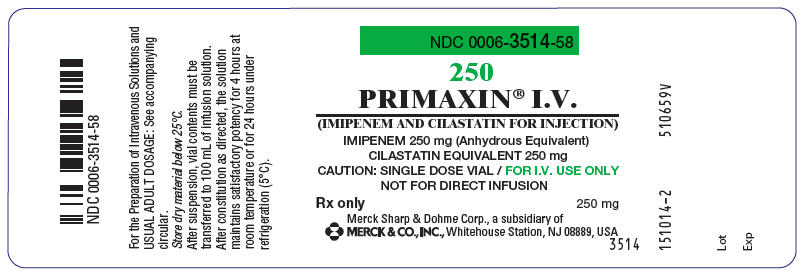
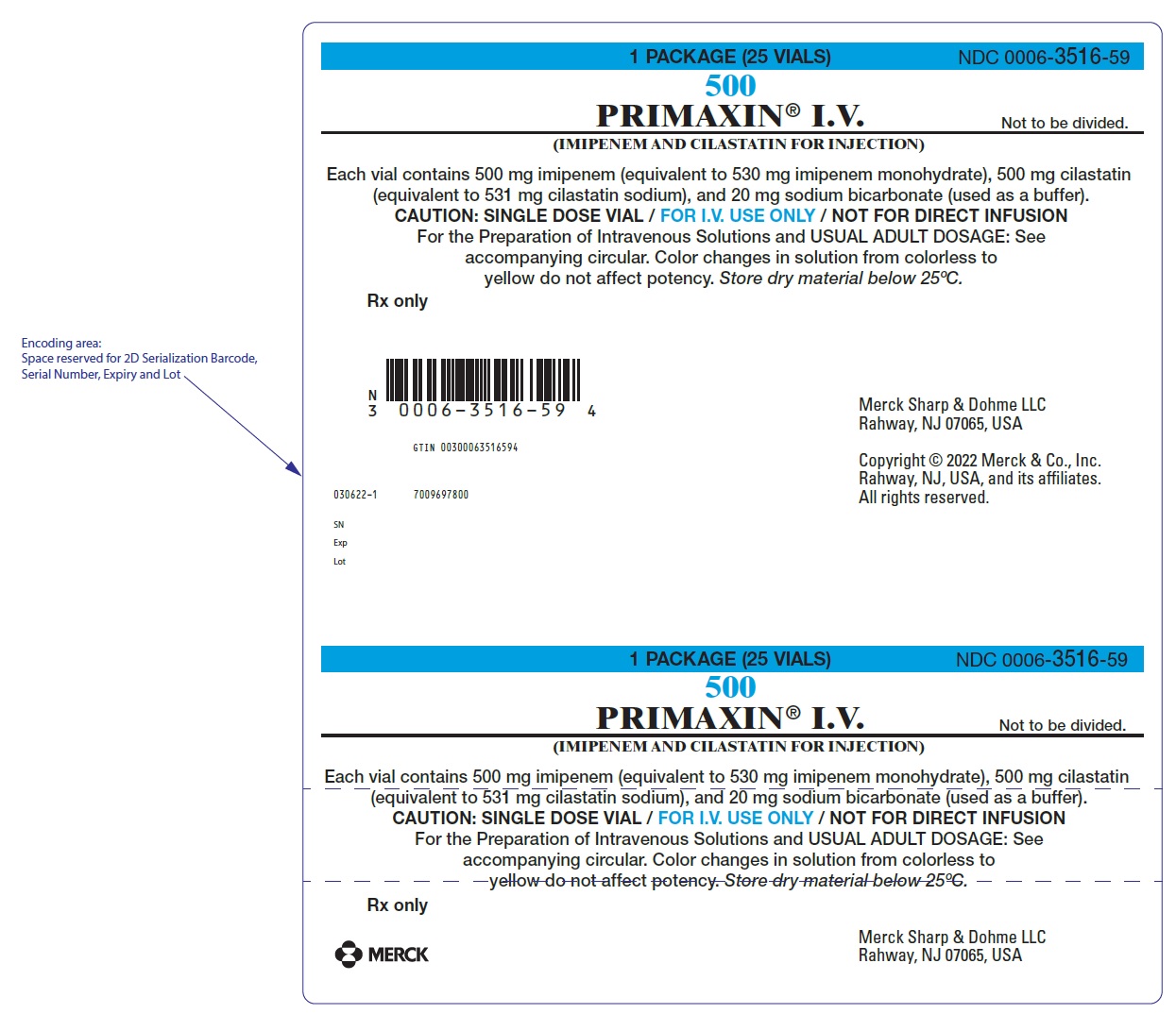
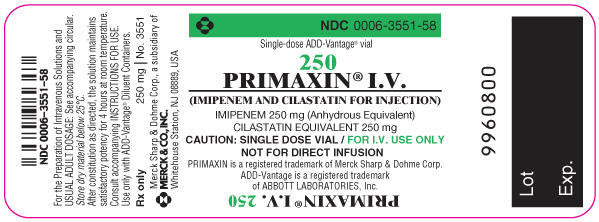
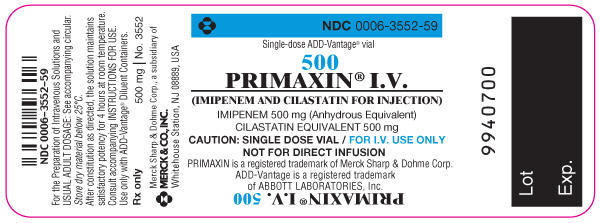
- PRIMAXIN, as supplied in single dose vials and reconstituted with the appropriate diluents [see Dosage and Administration (2.5)], maintains satisfactory potency for 4 hours at room temperature or for 24 hours under refrigeration (5°C). Do not freeze solutions of PRIMAXIN.
Adult Patients
During clinical investigations 1,723 patients were treated with PRIMAXIN. Table 4 shows the incidence of adverse reactions reported during the clinical investigations of adult patients treated with PRIMAXIN.
Table 4: Incidence (%) of Adverse Reactions Reported During Clinical Investigations of Adult Patients Treated with PRIMAXIN| Body System | Adverse Reactions | Frequency (%) |
|---|
| Local Administration site | Phlebitis/thrombophlebitis | 3.1% |
| Pain at the injection site | 0.7% |
| Erythema at the injection site | 0.4% |
| Vein induration | 0.2% |
| Gastrointestinal | Nausea | 2.0% |
| Diarrhea | 1.8% |
| Vomiting | 1.5% |
| Skin | Rash | 0.9% |
| Pruritus | 0.3% |
| Urticaria | 0.2% |
| Vascular | Hypotension | 0.4% |
| Body as a Whole | Fever | 0.5% |
| Nervous system | Seizures | 0.4% |
| Dizziness | 0.3% |
| Somnolence | 0.2% |
Additional adverse reactions reported in less than 0.2% of the patients or reported since the drug was marketed are listed within each body system in order of decreasing severity (see Table 5).
Table 5: Additional Adverse Reactions Occurring in Less than 0.2% of Adult Patients Listed within Each Body System in Order of Decreasing Severity| Body System | Adverse Reactions |
|---|
| Gastrointestinal | Pseudomembranous Colitis (the onset of Pseudomembranous colitis symptoms), Hemorrhagic Colitis |
| |
| Gastroenteritis |
| Abdominal Pain |
| Glossitis |
| Tongue Papillar |
| Hypertrophy |
| Heartburn |
| Pharyngeal Pain |
| Increased Salivation |
| CNS | Encephalopathy |
| Confusion |
| Myoclonus |
| Paresthesia |
| Vertigo |
| Headache |
| Special Senses | Hearing Loss |
| Tinnitus |
| Respiratory | Chest Discomfort |
| Dyspnea |
| Hyperventilation |
| Thoracic Spine Pain |
| Cardiovascular | Palpitations |
| Tachycardia |
| Skin | Erythema Multiforme |
| Angioneurotic Edema |
| Flushing |
| Cyanosis |
| Hyperhidrosis |
| Skin Texture Changes |
| Candidiasis |
| Pruritus Vulvae |
| Local Administration site | Infused vein infection |
| Body as a Whole | Polyarthralgia |
| Asthenia/Weakness |
| Renal | Oliguria/Anuria |
| Polyuria |
Adverse Laboratory Changes
The following adverse laboratory changes were reported during clinical trials:
Hepatic: Increased alanine aminotransferase (ALT or SGPT), aspartate aminotransferase (AST or SGOT), alkaline phosphatase, bilirubin, and lactate dehydrogenase (LDH)
Hemic: Increased eosinophils, positive Coombs test, increased WBC, increased platelets, decreased hemoglobin and hematocrit, increased monocytes, abnormal prothrombin time, increased lymphocytes, increased basophils
Electrolytes: Decreased serum sodium, increased potassium, increased chloride
Renal: Increased BUN, creatinine
Urinalysis: Presence of urine protein, urine red blood cells, urine white blood cells, urine casts, urine bilirubin, and urine urobilinogen.
Pediatric Patients
Table 6: Incidence (%) of Adverse Reactions Reported During Clinical Investigations of Pediatric Patients Greater Than or Equal to 3 Months of Age Treated with PRIMAXIN| Body System | Adverse Reactions | Frequency (%) |
|---|
| Local Administration Site | Phlebitis | 2.2% |
| Intravenous Site Irritation | 1.1% |
| Gastrointestinal | Diarrhea | 3.9% |
| Gastroenteritis | 1.1% |
| Vomiting | 1.1% |
| Skin | Rash | 2.2% |
| Renal | Urine Discoloration | 1.1% |
Table 7: Incidence (%) of Adverse Reactions Reported During Clinical Investigations of Pediatric Patients Neonates to 3 Months of Age Treated with PRIMAXIN| Body System | Adverse Reactions | Frequency (%) |
|---|
| Gastrointestinal | Diarrhea | 3% |
| CNS | Convulsions | 5.9% |
| Cardiovascular | Tachycardia | 1.5% |
| Skin | Rash | 1.5% |
| Body as a Whole | Oral Candidiasis | 1.5% |
| Renal | Oliguria/Anuria | 2.2% |
Adverse Laboratory Changes
The following adverse laboratory changes were reported in studies of 178 pediatric patients 3 months of age: increased AST (SGOT), decreased hemoglobin/hematocrit, increased platelets, increased eosinophils, increased ALT (SGPT), increased urine protein, decreased neutrophils.
The following adverse laboratory changes were reported in studies of 135 patients (neonates to 3 months of age): increased eosinophils, increased AST (SGPT), increased serum creatinine, increased/decreased platelet count, increased/decreased bilirubin, increased ALT (SGPT), increased alkaline phosphatase, increased/decreased hematocrit.
Adverse Laboratory Changes
Adverse laboratory changes reported since the drug was marketed were:
Hematologic: agranulocytosis.
Examination of published literature and spontaneous adverse reactions reports suggested a similar spectrum of adverse reactions in adult and pediatric patients.
Pregnancy Category C:
There are no adequate and well-controlled studies of PRIMAXIN in pregnant women. PRIMAXIN should be used during pregnancy only if the potential benefit justifies the potential risk to the mother and fetus.
Developmental toxicity studies with imipenem and cilastatin sodium (alone or in combination) administered to monkeys, rabbits, rats, and mice revealed no evidence of teratogenicity. Imipenem was administered intravenously to rabbits and rats at doses up to 60 and 900 mg/kg/day, respectively, up to approximately 0.4 and 2.9 time the maximum recommended human daily dose as a component of PRIMAXIN, based on body surface area. Cilastatin sodium was given intravenously to rabbits at doses up to 300 mg/kg/day and to rats subcutaneously at doses up to 1000 mg/kg/day, up to approximately 1.9 and 3.2 times the maximum recommended human daily dose as a component of PRIMAXIN, based on body surface area. Imipenem-cilastatin sodium was given intravenously at doses up to 80 mg/kg/day and subcutaneously at doses up to 320 mg/kg/day to mice and rats (the higher dose is approximately equal to the highest recommended human daily dose based on body surface area). Intravenous doses of imipenem-cilastatin sodium at approximately 100 mg/kg/day (0.6 times the maximum recommended human daily dose, based on body surface area) administered to pregnant cynomolgus monkeys at an infusion rate mimicking human clinical use were not associated with teratogenicity, but there was an increase in embryonic loss relative to controls. However, an imipenem-cilastatin dose of 40 mg/kg given to pregnant cynomolgus monkeys by bolus intravenous injection caused significant maternal toxicity including death and embryofetal loss.
No adverse effects on the fetus or on lactation were observed when imipenem-cilastatin sodium was administered subcutaneously to rats late in gestation at dosages up to 320 mg/kg/day, approximately equal to the highest recommended human dose (based on body surface area). Although a slight decrease in live fetal body weight was observed at the high dose, there were no adverse effects on fetal viability, growth or postnatal development of pups.
Distribution
The binding of imipenem to human serum proteins is approximately 20% and that of cilastatin is approximately 40%.
Imipenem has been shown to penetrate into human tissues, including vitreous humor, aqueous humor, lung, peritoneal fluid, CSF, bone, interstitial fluid, skin, and fascia. As there are no adequate and well-controlled studies of imipenem treatment in these additional body sites, the clinical significance of these tissue concentration data is unknown.
After a 1 gram dose of PRIMAXIN, the following average levels of imipenem were measured (usually at 1 hour post dose except where indicated) in the tissues and fluids listed in Table 9:
Table 9: Average Levels of Imipenem| Tissue or Fluid | N | Imipenem Level mcg/mL or mcg/g | Range |
|---|
| Vitreous Humor | 3 | 3.4 (3.5 hours post dose) | 2.88–3.6 |
| Aqueous Humor | 5 | 2.99 (2 hours post dose) | 2.4–3.9 |
| Lung Tissue | 8 | 5.6 (median) | 3.5–15.5 |
| Sputum | 1 | 2.1 | — |
| Pleural | 1 | 22.0 | — |
| Peritoneal | 12 | 23.9 S.D.±5.3 (2 hours post dose) | — |
| Bile | 2 | 5.3 (2.25 hours post dose) | 4.6–6.0 |
| CSF (uninflamed) | 5 | 1.0 (4 hours post dose) | 0.26–2.0 |
| CSF (inflamed) | 7 | 2.6 (2 hours post dose) | 0.5–5.5 |
| Fallopian Tubes | 1 | 13.6 | — |
| Endometrium | 1 | 11.1 | — |
| Myometrium | 1 | 5.0 | — |
| Bone | 10 | 2.6 | 0.4–5.4 |
| Interstitial Fluid | 12 | 16.4 | 10.0–22.6 |
| Skin | 12 | 4.4 | NA |
| Fascia | 12 | 4.4 | NA |
Metabolism
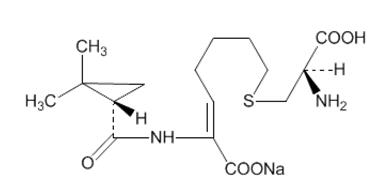
Imipenem, when administered alone, is metabolized in the kidneys by dehydropeptidase I, resulting in relatively low levels in urine. Cilastatin sodium, an inhibitor of this enzyme, effectively prevents renal metabolism of imipenem so that when imipenem and cilastatin sodium are given concomitantly, adequate antibacterial levels of imipenem are achieved in the urine.
Elimination
The plasma half-life of each component is approximately 1 hour. Approximately 70% of the administered imipenem is recovered in the urine within 10 hours after which no further urinary excretion is detectable. Urine concentrations of imipenem in excess of 10 mcg/mL can be maintained for up to 8 hours with PRIMAXIN at the 500-mg dose. Approximately 70% of the cilastatin sodium dose is recovered in the urine within 10 hours of administration of PRIMAXIN. Imipenem-cilastatin sodium is hemodialyzable [see Overdosage (10)].
No accumulation of imipenem/cilastatin in plasma or urine is observed with regimens administered as frequently as every 6 hours in patients with normal renal function.
Specific Populations
Geriatric Patients
In healthy elderly volunteers (65 to 75 years of age with normal renal function for their age), the pharmacokinetics of a single dose of imipenem 500 mg and cilastatin 500 mg administered intravenously over 20 minutes are consistent with those expected in subjects with slight renal impairment for which no dosage alteration is considered necessary. The mean plasma half-lives of imipenem and cilastatin are 91 ± 7 minutes and 69 ± 15 minutes, respectively. Multiple dosing has no effect on the pharmacokinetics of either imipenem or cilastatin, and no accumulation of imipenem/cilastatin is observed.
Pediatric Patients
Doses of 25 mg/kg/dose in patients 3 months to <3 years of age, and 15 mg/kg/dose in patients 3-12 years of age were associated with mean trough plasma concentrations of imipenem of 1.1±0.4 mcg/mL and 0.6±0.2 mcg/mL following multiple 60-minute infusions, respectively; trough urinary concentrations of imipenem were in excess of 10 mcg/mL for both doses. These doses have provided adequate plasma and urine concentrations for the treatment of non-CNS infections.
In a dose-ranging study of smaller premature infants (670-1,890 g) in the first week of life, a dose of 20 mg/kg q12h by 15-30 minutes infusion was associated with mean peak and trough plasma imipenem concentrations of 43 mcg/mL and 1.7 mcg/mL after multiple doses, respectively. However, moderate accumulation of cilastatin in neonates may occur following multiple doses of PRIMAXIN. The safety of this accumulation is unknown.
Mechanism of Action
PRIMAXIN is a combination of imipenem and cilastatin. The bactericidal activity of imipenem results from the inhibition of cell wall synthesis. Its greatest affinity is for penicillin binding proteins (PBPs) 1A, 1B, 2, 4, 5 and 6 of Escherichia coli, and 1A, 1B, 2, 4 and 5 of Pseudomonas aeruginosa. The lethal effect is related to binding to PBP 2 and PBP 1B.
Imipenem has a high degree of stability in the presence of beta-lactamases, both penicillinases and cephalosporinases produced by Gram-negative and Gram-positive bacteria. It is a potent inhibitor of beta-lactamases from certain Gram-negative bacteria which are inherently resistant to most beta-lactam antibacterials, e.g., Pseudomonas aeruginosa, Serratia spp., and Enterobacter spp.
Resistance
Imipenem is inactive in vitro against Enterococcus faecium, Stenotrophomonas maltophilia and some isolates of Burkholderia cepacia. Methicillin-resistant staphylococci should be reported as resistant to imipenem.
Interaction with Other Antimicrobials
In vitro tests show imipenem to act synergistically with aminoglycoside antibacterials against some isolates of Pseudomonas aeruginosa.
Antimicrobial Activity
Imipenem has been shown to be active against most isolates of the following microorganisms, both in vitro and in clinical infections [see Indications and Usage (1.1)].
Aerobic bacteria
Gram-positive bacteria
- Enterococcus faecalis
- Staphylococcus aureus
- Staphylococcus epidermidis
- Streptococcus agalactiae (Group B streptococci)
- Streptococcus pneumoniae
- Streptococcus pyogenes
Gram-negative bacteria
- Acinetobacter spp.
- Citrobacter spp.
- Enterobacter spp.
- Escherichia coli
- Gardnerella vaginalis
- Haemophilus influenzae
- Haemophilus parainfluenzae
- Klebsiella spp.
- Morganella morganii
- Proteus vulgaris
- Providencia rettgeri
- Pseudomonas aeruginosa
- Serratia spp., including S. marcescens
Anaerobic bacteria
Gram positive bacteria
- Bifidobacterium spp.
- Clostridium spp.
- Eubacterium spp.
- Peptococcus spp.
- Peptostreptococcus spp.
- Propionibacterium spp.
Gram-negative bacteria
- Bacteroides spp., including B. fragilis
- Fusobacterium spp.
The following in vitro data are available, but their clinical significance is unknown. At least 90 percent of the following bacteria exhibit an in vitro minimum inhibitory concentration (MIC) less than or equal to the susceptible breakpoint for imipenem against isolates of similar genus or organism group. However, the efficacy of imipenem in treating clinical infections due to these bacteria has not been established in adequate and well-controlled clinical trials.
Aerobic bacteria
Gram-positive bacteria
- Bacillus spp.
- Listeria monocytogenes
- Nocardia spp.
- Staphylococcus saprophyticus
- Group C streptococci
- Group G streptococci
- Viridans group streptococci
Gram-negativebacteria
- Aeromonas hydrophila
- Alcaligenes spp.
- Capnocytophaga spp.
- Haemophilus ducreyi
- Neisseria gonorrhoeae
- Pasteurella spp.
- Providencia stuartii
Anaerobic bacteria
- Prevotella bivia
- Prevotella disiens
- Prevotella melaninogenica
- Veillonella spp.
Susceptibility Test Methods
When available, the clinical microbiology laboratory should provide cumulative reports of in vitro susceptibility tests results for antimicrobial drugs used in local hospitals and practice areas to the physician as periodic reports that describe the susceptibility profile of nosocomial and community-acquired pathogens. These reports should aid the physician in selecting an antibacterial drug for treatment.
Dilution Techniques:
Quantitative methods are used to determine antimicrobial MICs. These MICs provide estimates of the susceptibility of bacteria to antimicrobial compounds. The MICs should be determined using a standardized test method (broth and/or agar).1,2 The MIC values should be interpreted according to breakpoints provided in Table 10.
Diffusion Techniques:
Quantitative methods that require measurement of zone diameters can also provide reproducible estimates of the susceptibility of bacteria to antimicrobial compounds. The zone size should be determined using a standardized test method.2,3 This procedure uses paper disks impregnated with 10-mcg of imipenem to test the susceptibility of bacteria to imipenem. The disk diffusion breakpoints are provided in Table 10.
Anaerobic Techniques:
For anaerobic bacteria, the susceptibility to imipenem can be determined by a standardized test method.4 The MIC values obtained should be interpreted according to the breakpoints provided in Table 10.
Table 10: Susceptibility Test Interpretive Criteria for Imipenem | Minimum Inhibitory Concentrations
MIC (mcg/mL) | Disk Diffusion
(zone diameters in mm) |
|---|
| Pathogen | S | I | R | S | I | R |
|---|
| Susceptibility of staphylococci to imipenem may be deduced from testing penicillin and either cefoxitin or oxacillin.2 |
| Enterobacteriaceae | ≤1 | 2 | ≥4 | ≥23 | 20-22 | ≤19 |
| Pseudomonas aeruginosa | ≤2 | 4 | ≥8 | ≥19 | 16-18 | ≤15 |
| Acinetobacter spp. | ≤2 | 4 | ≥8 | ≥22 | 19-21 | ≤18 |
| Haemophilus influenza and H. parainfluenzae | ≤4 | - | - | ≥16 | - | - |
| Streptococcus pneumoniae | ≤0.12 | 0.25-0.5 | ≥1 | - | - | - |
| Anaerobes | ≤4 | 8 | ≥16 | - | - | - |
A report of "Susceptible" (S) indicates that the antimicrobial drug is likely to inhibit growth of the pathogen if the antimicrobial drug reaches the concentration usually achievable at the site of infection. A report of "Intermediate" (I) indicates that the result should be considered equivocal, and, if the microorganism is not fully susceptible to alternative clinically feasible drugs, the test should be repeated. This category implies possible clinical applicability in body sites where the drug is physiologically concentrated or in situations where a high dosage of the drug can be used. This category also provides a buffer zone that prevents small uncontrolled technical factors from causing major discrepancies in interpretation. A report of "Resistant" (R) indicates that the antimicrobial drug is not likely to inhibit growth of the pathogen if the antimicrobial drug reaches the concentrations usually achievable at the infection site; other therapy should be selected.
Quality Control
Standardized susceptibility test procedures require the use of laboratory controls to monitor and ensure the accuracy and precision of supplies and reagents used in the assay, and the techniques of the individuals performing the test.1,2,3,4 Standard imipenem powder should provide the following range of MIC values noted in Table 11. For the diffusion technique using the 10 mcg disk, the criteria in Table 11 should be achieved.
Table 11: Acceptable Quality Control Ranges for Imipenem| Microorganism | Minimum Inhibitory Concentrations
(mcg/mL) | Disk Diffusion
(zone diameters in mm) |
|---|
| Bacteroides fragilis ATCC 25285 | 0.03-0.125
0.03 – 0.25 | - |
| Bacteroides thetaiotaomicron ATCC 29741 | 0.125-0.5
0.25 – 1.0 | - |
| Eggerthella lenta ATCC 43055 | 0.125-0.5
0.25 – 2.0 | - |
| Enterococcus faecalis ATCC 29212 | 0.5-2 | - |
| Escherichia coli ATCC 25922 | 0.06-0.25 | 26-32 |
| Haemophilus influenzae ATCC 49247 | - | 21-29 |
| Haemophilus influenzae ATCC 49766 | 0.25-1 | - |
| Staphylococcus aureus ATCC 29213 | 0.015-0.06 | - |
| Pseudomonas aeruginosa ATCC 27853 | 1-4 | 20-28 |
| Streptococcus pneumoniae ATCC 49619 | 0.03-0.12 | - |
Before Reconstitution:
The dry powder should be stored at a temperature below 25°C (77°F).
Merck Sharp & Dohme Corp., a subsidiary
MERCK & CO., INC., Whitehouse Station, NJ 08889, USA
Copyright © 2016 Merck Sharp & Dohme Corp., a subsidiary of Merck & Co., Inc.
All rights reserved.
uspi-mk0787B-iv-1712r040