- Aseptically transfer the appropriate volume (mL) of reconstituted CANCIDAS to an intravenous (IV) bag (or bottle) containing 250 mL of 0.9%, 0.45%, or 0.225% Sodium Chloride Injection or Lactated Ringers Injection.
- Alternatively, the volume (mL) of reconstituted CANCIDAS can be added to a reduced volume of 0.9%, 0.45%, or 0.225% Sodium Chloride Injection or Lactated Ringers Injection, not to exceed a final concentration of 0.5 mg/mL.
- This diluted infusion solution in the intravenous bag or bottle must be used within 24 hours if stored at ≤25°C (≤77°F) or within 48 hours if stored refrigerated at 2 to 8°C (36 to 46°F).
Important Reconstitution and Dilution Instructions for Pediatric Patients 3 Months of Age and Older
Follow the reconstitution procedures described above using either the 70-mg or 50-mg vial to create the reconstituted solution [see Dosage and Administration (2.3)]. From the reconstituted solution in the vial, remove the volume of drug equal to the calculated loading dose or calculated maintenance dose based on a concentration of 7 mg/mL (if reconstituted from the 70-mg vial) or a concentration of 5 mg/mL (if reconstituted from the 50-mg vial).
The choice of vial should be based on total milligram dose of drug to be administered to the pediatric patient. To help ensure accurate dosing, it is recommended for pediatric doses less than 50 mg that 50-mg vials (with a concentration of 5 mg/mL) be used if available. The 70-mg vial should be reserved for pediatric patients requiring doses greater than 50 mg.
The maximum loading dose and the daily maintenance dose should not exceed 70 mg, regardless of the patient's calculated dose.
Clinical Trials Experience in Adults
The overall safety of CANCIDAS was assessed in 1865 adult individuals who received single or multiple doses of CANCIDAS: 564 febrile, neutropenic patients (empirical therapy study); 382 patients with candidemia and/or intra-abdominal abscesses, peritonitis, or pleural space infections (including 4 patients with chronic disseminated candidiasis); 297 patients with esophageal and/or oropharyngeal candidiasis; 228 patients with invasive aspergillosis; and 394 individuals in phase I studies. In the empirical therapy study patients had undergone hematopoietic stem-cell transplantation or chemotherapy. In the studies involving patients with documented Candida infections, the majority of the patients had serious underlying medical conditions (e.g., hematologic or other malignancy, recent major surgery, HIV) requiring multiple concomitant medications. Patients in the noncomparative Aspergillus studies often had serious predisposing medical conditions (e.g., bone marrow or peripheral stem cell transplants, hematologic malignancy, solid tumors or organ transplants) requiring multiple concomitant medications.
Empirical Therapy for Presumed Fungal Infections in Febrile Neutropenic Patients
In the randomized, double-blinded empirical therapy study, patients received either CANCIDAS 50 mg/day (following a 70-mg loading dose) or AmBisome® (amphotericin B liposome for injection, 3 mg/kg/day). In this study clinical or laboratory hepatic adverse reactions were reported in 39% and 45% of patients in the CANCIDAS and AmBisome groups, respectively. Also reported was an isolated, serious adverse reaction of hyperbilirubinemia. Adverse reactions occurring in 7.5% or greater of the patients in either treatment group are presented in Table 2.
Table 2: Adverse Reactions Among Patients with Persistent Fever and Neutropenia Incidence 7.5% or greater for at Least One Treatment Group| Adverse Reactions | CANCIDAS 70 mg on Day 1, then 50 mg once daily for the remainder of treatment; daily dose was increased to 70 mg for 73 patients.
N=564 (percent) | AmBisome 3 mg/kg/day; daily dose was increased to 5 mg/kg for 74 patients.
N=547 (percent) |
|---|
| Within any system organ class, individuals may experience more than 1 adverse reaction. |
| All Systems, Any Adverse Reaction | 95 | 97 |
| Investigations | 58 | 63 |
| Alanine Aminotransferase Increased | 18 | 20 |
| Blood Alkaline Phosphatase Increased | 15 | 23 |
| Blood Potassium Decreased | 15 | 23 |
| Aspartate Aminotransferase Increased | 14 | 17 |
| Blood Bilirubin Increased | 10 | 14 |
| Blood Magnesium Decreased | 7 | 9 |
| Blood Glucose Increased | 6 | 9 |
| Bilirubin Conjugated Increased | 5 | 9 |
| Blood Urea Increased | 4 | 8 |
| Blood Creatinine Increased | 3 | 11 |
| General Disorders and Administration Site Conditions | 57 | 63 |
| Pyrexia | 27 | 29 |
| Chills | 23 | 31 |
| Edema Peripheral | 11 | 12 |
| Mucosal Inflammation | 6 | 8 |
| Gastrointestinal Disorders | 50 | 55 |
| Diarrhea | 20 | 16 |
| Nausea | 11 | 20 |
| Abdominal Pain | 9 | 11 |
| Vomiting | 9 | 17 |
| Respiratory, Thoracic and Mediastinal Disorders | 47 | 49 |
| Dyspnea | 9 | 10 |
| Skin and Subcutaneous Tissue Disorders | 42 | 37 |
| Rash | 16 | 14 |
| Nervous System Disorders | 25 | 27 |
| Headache | 11 | 12 |
| Metabolism and Nutrition Disorders | 21 | 24 |
| Hypokalemia | 6 | 8 |
| Vascular Disorders | 20 | 23 |
| Hypotension | 6 | 10 |
| Cardiac Disorders | 16 | 19 |
| Tachycardia | 7 | 9 |
The proportion of patients who experienced an infusion-related adverse reaction (defined as a systemic event, such as pyrexia, chills, flushing, hypotension, hypertension, tachycardia, dyspnea, tachypnea, rash, or anaphylaxis, that developed during the study therapy infusion and one hour following infusion) was significantly lower in the group treated with CANCIDAS (35%) than in the group treated with AmBisome (52%).
To evaluate the effect of CANCIDAS and AmBisome on renal function, nephrotoxicity was defined as doubling of serum creatinine relative to baseline or an increase of greater than or equal to 1 mg/dL in serum creatinine if baseline serum creatinine was above the upper limit of the normal range. Among patients whose baseline creatinine clearance was greater than 30 mL/min, the incidence of nephrotoxicity was significantly lower in the group treated with CANCIDAS (3%) than in the group treated with AmBisome (12%).
Candidemia and Other Candida Infections
In the randomized, double-blinded invasive candidiasis study, patients received either CANCIDAS 50 mg/day (following a 70-mg loading dose) or amphotericin B 0.6 to 1 mg/kg/day. Adverse reactions occurring in 10% or greater of the patients in either treatment group are presented in Table 3.
Table 3: Adverse Reactions Among Patients with Candidemia or Other Candida InfectionsIntra-abdominal abscesses, peritonitis and pleural space infections.
Incidence 10% or Greater for at Least One Treatment Group| Adverse Reactions | CANCIDAS
50 mgPatients received CANCIDAS 70 mg on Day 1, then 50 mg once daily for the remainder of their treatment.
N=114
(percent) | Amphotericin B
N=125
(percent) |
|---|
| Within any system organ class, individuals may experience more than 1 adverse reaction. |
| All Systems, Any Adverse Reaction | 96 | 99 |
| Investigations | 67 | 82 |
| Blood Potassium Decreased | 23 | 32 |
| Blood Alkaline Phosphatase Increased | 21 | 32 |
| Hemoglobin Decreased | 18 | 23 |
| Alanine Aminotransferase Increased | 16 | 15 |
| Aspartate Aminotransferase Increased | 16 | 14 |
| Blood Bilirubin Increased | 13 | 17 |
| Hematocrit Decreased | 13 | 18 |
| Blood Creatinine Increased | 11 | 28 |
| Red Blood Cells Urine Positive | 10 | 10 |
| Blood Urea Increased | 9 | 23 |
| Bilirubin Conjugated Increased | 8 | 14 |
| Gastrointestinal Disorders | 49 | 53 |
| Vomiting | 17 | 16 |
| Diarrhea | 14 | 10 |
| Nausea | 9 | 17 |
| General Disorders and Administration Site Conditions | 47 | 63 |
| Pyrexia | 13 | 33 |
| Edema Peripheral | 11 | 12 |
| Chills | 9 | 30 |
| Respiratory, Thoracic and Mediastinal Disorders | 40 | 54 |
| Tachypnea | 1 | 11 |
| Cardiac Disorders | 26 | 34 |
| Tachycardia | 8 | 12 |
| Skin and Subcutaneous Tissue Disorders | 25 | 28 |
| Rash | 4 | 10 |
| Vascular Disorders | 25 | 38 |
| Hypotension | 10 | 16 |
| Blood and Lymphatic System Disorders | 15 | 13 |
| Anemia | 11 | 9 |
The proportion of patients who experienced an infusion-related adverse reaction (defined as a systemic event, such as pyrexia, chills, flushing, hypotension, hypertension, tachycardia, dyspnea, tachypnea, rash, or anaphylaxis, that developed during the study therapy infusion and one hour following infusion) was significantly lower in the group treated with CANCIDAS (20%) than in the group treated with amphotericin B (49%).
To evaluate the effect of CANCIDAS and amphotericin B on renal function, nephrotoxicity was defined as doubling of serum creatinine relative to baseline or an increase of greater than or equal to 1 mg/dL in serum creatinine if baseline serum creatinine was above the upper limit of the normal range. In a subgroup of patients whose baseline creatinine clearance was greater than 30 mL/min, the incidence of nephrotoxicity was significantly lower in the group treated with CANCIDAS than in the group treated with amphotericin B.
In a second randomized, double-blinded invasive candidiasis study, patients received either CANCIDAS 50 mg/day (following a 70-mg loading dose) or CANCIDAS 150 mg/day. The proportion of patients who experienced any adverse reaction was similar in the 2 treatment groups; however, this study was not large enough to detect differences in rare or unexpected adverse reactions. Adverse reactions occurring in 5% or greater of the patients in either treatment group are presented in Table 4.
Table 4: Adverse Reactions Among Patients with Candidemia or other Candida InfectionsIntra-abdominal abscesses, peritonitis and pleural space infections.
Incidence 5% or Greater for at Least One Treatment Group| Adverse Reactions | CANCIDAS 50 mg Patients received CANCIDAS 70 mg on Day 1, then 50 mg once daily for the remainder of their treatment.
N=104 (percent) | CANCIDAS 150 mg
N=100 (percent) |
|---|
| Within any system organ class, individuals may experience more than 1 adverse event |
| All Systems, Any Adverse Reaction | 83 | 83 |
| General Disorders and Administration Site Conditions | 33 | 27 |
| Pyrexia | 6 | 6 |
| Gastrointestinal Disorders | 30 | 33 |
| Vomiting | 11 | 6 |
| Diarrhea | 6 | 7 |
| Nausea | 5 | 7 |
| Investigations | 28 | 35 |
| Alkaline Phosphatase Increased | 12 | 9 |
| Aspartate Aminotransferase Increased | 6 | 9 |
| Blood potassium decreased | 6 | 8 |
| Alanine Aminotransferase Increased | 4 | 7 |
| Vascular Disorders | 19 | 18 |
| Hypotension | 7 | 3 |
| Hypertension | 5 | 6 |
Esophageal Candidiasis and Oropharyngeal Candidiasis
Adverse reactions occurring in 10% or greater of patients with esophageal and/or oropharyngeal candidiasis are presented in Table 5.
Table 5: Adverse Reactions Among Patients with Esophageal and/or Oropharyngeal Candidiasis Incidence 10% or Greater for at Least One Treatment Group| Adverse Reactions | CANCIDAS
50 mgDerived from a comparator-controlled clinical study.
N=83
(percent) | Fluconazole IV
200 mg
N=94
(percent) |
|---|
| Within any system organ class, individuals may experience more than 1 adverse reaction. |
| All Systems, Any Adverse Reaction | 90 | 93 |
| Gastrointestinal Disorders | 58 | 50 |
| Diarrhea | 27 | 18 |
| Nausea | 15 | 15 |
| Investigations | 53 | 61 |
| Hemoglobin Decreased | 21 | 16 |
| Hematocrit Decreased | 18 | 16 |
| Aspartate Aminotransferase Increased | 13 | 19 |
| Blood Alkaline Phosphatase Increased | 13 | 17 |
| Alanine Aminotransferase Increased | 12 | 17 |
| White Blood Cell Count Decreased | 12 | 19 |
| General Disorders and Administration Site Conditions | 31 | 36 |
| Pyrexia | 21 | 21 |
| Vascular Disorders | 19 | 15 |
| Phlebitis | 18 | 11 |
| Nervous System Disorders | 18 | 17 |
| Headache | 15 | 9 |
Invasive Aspergillosis
In an open-label, noncomparative aspergillosis study, in which 69 patients received CANCIDAS (70-mg loading dose on Day 1 followed by 50 mg daily), the following adverse reactions were observed with an incidence of 12.5% or greater: blood alkaline phosphatase increased (22%), hypotension (20%), respiratory failure (20%), pyrexia (17%), diarrhea (15%), nausea (15%), headache (15%), rash (13%), alanine aminotransferase increased (13%), aspartate aminotransferase increased (13%), blood bilirubin increased (13%), and blood potassium decreased (13%). Also reported in this patient population were pulmonary edema, ARDS (adult respiratory distress syndrome), and radiographic infiltrates.
Clinical Trials Experience in Pediatric Patients (3 months to 17 years of age)
The overall safety of CANCIDAS was assessed in 171 pediatric patients who received single or multiple doses of CANCIDAS. The distribution among the 153 pediatric patients who were over the age of 3 months was as follows: 104 febrile, neutropenic patients; 38 patients with candidemia and/or intra-abdominal abscesses, peritonitis, or pleural space infections; 1 patient with esophageal candidiasis; and 10 patients with invasive aspergillosis. The overall safety profile of CANCIDAS in pediatric patients is comparable to that in adult patients. Table 6 shows the incidence of adverse reactions reported in 7.5% or greater of pediatric patients in clinical studies.
One patient (0.6%) receiving CANCIDAS, and three patients (12%) receiving AmBisome developed a serious drug-related adverse reaction. Two patients (1%) were discontinued from CANCIDAS and three patients (12%) were discontinued from AmBisome due to a drug-related adverse reaction. The proportion of patients who experienced an infusion-related adverse reaction (defined as a systemic event, such as pyrexia, chills, flushing, hypotension, hypertension, tachycardia, dyspnea, tachypnea, rash, or anaphylaxis, that developed during the study therapy infusion and one hour following infusion) was 22% in the group treated with CANCIDAS and 35% in the group treated with AmBisome.
Table 6: Adverse Reactions Among Pediatric Patients (0 months to 17 years of age) Incidence 7.5% or Greater for at Least One Treatment Group | Noncomparative Clinical Studies | Comparator-Controlled Clinical Study of Empirical Therapy |
|---|
Adverse Reactions
| CANCIDAS
Any Dose
N=115
(percent) | CANCIDAS
50 mg/m270 mg/m2 on Day 1, then 50 mg/m2 once daily for the remainder of the treatment.
N=56
(percent) | AmBisome
3 mg/kg
N=26
(percent) |
|---|
| Within any system organ class, individuals may experience more than 1 adverse reaction. |
| All Systems, Any Adverse Reaction | 95 | 96 | 89 |
| Investigations | 55 | 41 | 50 |
| Blood Potassium Decreased | 18 | 9 | 27 |
| Aspartate Aminotransferase Increased | 17 | 2 | 12 |
| Alanine Aminotransferase Increased | 14 | 5 | 12 |
| Blood Potassium Increased | 3 | 0 | 8 |
| General Disorders and Administration Site Conditions | 47 | 59 | 42 |
| Pyrexia | 29 | 30 | 23 |
| Chills | 10 | 13 | 8 |
| Mucosal Inflammation | 10 | 4 | 4 |
| Edema | 3 | 4 | 8 |
| Gastrointestinal Disorders | 42 | 41 | 35 |
| Diarrhea | 17 | 7 | 15 |
| Vomiting | 8 | 11 | 12 |
| Abdominal Pain | 7 | 4 | 12 |
| Nausea | 4 | 4 | 8 |
| Infections and Infestations | 40 | 30 | 35 |
| Central Line Infection | 1 | 9 | 0 |
| Skin and Subcutaneous Tissue Disorders | 33 | 41 | 39 |
| Pruritus | 7 | 6 | 8 |
| Rash | 6 | 23 | 8 |
| Erythema | 4 | 9 | 0 |
| Vascular Disorders | 24 | 21 | 19 |
| Hypotension | 12 | 9 | 8 |
| Hypertension | 10 | 9 | 4 |
| Metabolism and Nutrition Disorders | 22 | 11 | 23 |
| Hypokalemia | 8 | 5 | 4 |
| Cardiac Disorders | 17 | 13 | 19 |
| Tachycardia | 4 | 11 | 19 |
| Nervous System Disorders | 13 | 16 | 8 |
| Headache | 5 | 9 | 4 |
| Musculoskeletal and Connective Tissue Disorders | 11 | 14 | 12 |
| Back Pain | 4 | 0 | 8 |
| Blood and Lymphatic System Disorders | 10 | 2 | 15 |
| Anemia | 2 | 0 | 8 |
Overall Safety Experience of CANCIDAS in Clinical Trials
The overall safety of CANCIDAS was assessed in 2036 individuals (including 1642 adult or pediatric patients and 394 volunteers) from 34 clinical studies. These individuals received single or multiple (once daily) doses of CANCIDAS, ranging from 5 mg to 210 mg. Full safety data is available from 1951 individuals, as the safety data from 85 patients enrolled in 2 compassionate use studies was limited solely to serious adverse reactions. Adverse reactions which occurred in 5% or greater of all individuals who received CANCIDAS in these trials are shown in Table 7.
Overall, 1665 of the 1951 (85%) patients/volunteers who received CANCIDAS experienced an adverse reaction.
Table 7: Adverse ReactionsDefined as an adverse reaction, regardless of causality, while on CANCIDAS or during the 14-day post-CANCIDAS follow-up period.
in Patients Who Received CANCIDAS in Clinical TrialsIncidence for each preferred term is 5% or greater among individuals who received at least 1 dose of CANCIDAS.
Incidence 5% or Greater for at Least One Treatment Group| Adverse Reactions Within any system organ class, individuals may experience more than 1 adverse event. | CANCIDAS
(N = 1951) |
|---|
| n | (%) |
|---|
| All Systems, Any Adverse Reaction | 1665 | (85) |
| Investigations | 901 | (46) |
| Alanine Aminotransferase Increased | 258 | (13) |
| Aspartate Aminotransferase Increased | 233 | (12) |
| Blood Alkaline Phosphatase Increased | 232 | (12) |
| Blood Potassium Decreased | 220 | (11) |
| Blood Bilirubin Increased | 117 | (6) |
| General Disorders and Administration Site Conditions | 843 | (43) |
| Pyrexia | 381 | (20) |
| Chills | 192 | (10) |
| Edema Peripheral | 110 | (6) |
| Gastrointestinal Disorders | 754 | (39) |
| Diarrhea | 273 | (14) |
| Nausea | 166 | (9) |
| Vomiting | 146 | (8) |
| Abdominal Pain | 112 | (6) |
| Infections and Infestations | 730 | (37) |
| Pneumonia | 115 | (6) |
| Respiratory, Thoracic, and Mediastinal Disorders | 613 | (31) |
| Cough | 111 | (6) |
| Skin and Subcutaneous Tissue Disorders | 520 | (27) |
| Rash | 159 | (8) |
| Erythema | 98 | (5) |
| Nervous System Disorders | 412 | (21) |
| Headache | 193 | (10) |
| Vascular Disorders | 344 | (18) |
| Hypotension | 118 | (6) |
Clinically significant adverse reactions, regardless of causality or incidence which occurred in less than 5% of patients are listed below.
- Blood and lymphatic system disorders: anemia, coagulopathy, febrile neutropenia, neutropenia, thrombocytopenia
- Cardiac disorders: arrhythmia, atrial fibrillation, bradycardia, cardiac arrest, myocardial infarction, tachycardia
- Gastrointestinal disorders: abdominal distension, abdominal pain upper, constipation, dyspepsia
- General disorders and administration site conditions: asthenia, fatigue, infusion site pain/pruritus/swelling, mucosal inflammation, edema
- Hepatobiliary disorders: hepatic failure, hepatomegaly, hepatotoxicity, hyperbilirubinemia, jaundice
- Infections and infestations: bacteremia, sepsis, urinary tract infection
- Metabolic and nutrition disorders: anorexia, decreased appetite, fluid overload, hypomagnesemia, hypercalcemia, hyperglycemia, hypokalemia
- Musculoskeletal, connective tissue, and bone disorders: arthralgia, back pain, pain in extremity
- Nervous system disorders: convulsion, dizziness, somnolence, tremor
- Psychiatric disorders: anxiety, confusional state, depression, insomnia
- Renal and urinary disorders: hematuria, renal failure
- Respiratory, thoracic, and mediastinal disorders: dyspnea, epistaxis, hypoxia, tachypnea
- Skin and subcutaneous tissue disorders: erythema, petechiae, skin lesion, urticaria
- Vascular disorders: flushing, hypertension, phlebitis
Cyclosporine: In two adult clinical studies, cyclosporine (one 4 mg/kg dose or two 3 mg/kg doses) increased the AUC of CANCIDAS. CANCIDAS did not increase the plasma levels of cyclosporine. There were transient increases in liver ALT and AST when CANCIDAS and cyclosporine were co-administered. Monitor patients who develop abnormal liver enzymes during concomitant therapy and evaluate the risk/benefit of continuing therapy [see Warnings and Precautions (5.2) and Clinical Pharmacology (12.3)].
Tacrolimus: For patients receiving CANCIDAS and tacrolimus, standard monitoring of tacrolimus trough whole blood concentrations and appropriate tacrolimus dosage adjustments are recommended.
Inducers of Hepatic CYP Enzymes
Rifampin: Rifampin is a potent CYP3A4 inducer and concomitant administration with CANCIDAS is expected to reduce the plasma concentrations of CANCIDAS. Therefore, adult patients on rifampin should receive 70 mg of CANCIDAS daily and pediatric patients on rifampin should receive 70 mg/m2 of CANCIDAS daily (not to exceed an actual daily dose of 70 mg) [see Dosage and Administration (2.5) and Clinical Pharmacology (12.3)].
Other Inducers of Hepatic CYP Enzymes
Adults: When CANCIDAS is co-administered to adult patients with other inducers of hepatic CYP enzymes, such as efavirenz, nevirapine, phenytoin, dexamethasone, or carbamazepine, administration of a daily dose of 70 mg of CANCIDAS should be considered [see Dosage and Administration (2.5) and Clinical Pharmacology (12.3)].
Pediatric Patients: When CANCIDAS is co-administered to pediatric patients with other inducers of hepatic CYP enzymes, such as efavirenz, nevirapine, phenytoin, dexamethasone, or carbamazepine, administration of a daily dose of 70 mg/m2 CANCIDAS (not to exceed an actual daily dose of 70 mg) should be considered [see Dosage and Administration (2.5) and Clinical Pharmacology (12.3)].
Distribution
Plasma concentrations of caspofungin decline in a polyphasic manner following single 1-hour IV infusions. A short α-phase occurs immediately postinfusion, followed by a β-phase (half-life of 9 to 11 hours) that characterizes much of the profile and exhibits clear log-linear behavior from 6 to 48 hours postdose during which the plasma concentration decreases 10-fold. An additional, longer half-life phase, γ-phase, (half-life of 40-50 hours), also occurs. Distribution, rather than excretion or biotransformation, is the dominant mechanism influencing plasma clearance. Caspofungin is extensively bound to albumin (~97%), and distribution into red blood cells is minimal. Mass balance results showed that approximately 92% of the administered radioactivity was distributed to tissues by 36 to 48 hours after a single 70-mg dose of [3H] CANCIDAS. There is little excretion or biotransformation of caspofungin during the first 30 hours after administration.
Metabolism
Caspofungin is slowly metabolized by hydrolysis and N-acetylation. Caspofungin also undergoes spontaneous chemical degradation to an open-ring peptide compound, L-747969. At later time points (≥5 days postdose), there is a low level (≤7 picomoles/mg protein, or ≤1.3% of administered dose) of covalent binding of radiolabel in plasma following single-dose administration of [3H] CANCIDAS, which may be due to two reactive intermediates formed during the chemical degradation of caspofungin to L-747969. Additional metabolism involves hydrolysis into constitutive amino acids and their degradates, including dihydroxyhomotyrosine and N-acetyl-dihydroxyhomotyrosine. These two tyrosine derivatives are found only in urine, suggesting rapid clearance of these derivatives by the kidneys.
Excretion
Two single-dose radiolabeled pharmacokinetic studies were conducted. In one study, plasma, urine, and feces were collected over 27 days, and in the second study plasma was collected over 6 months. Plasma concentrations of radioactivity and of caspofungin were similar during the first 24 to 48 hours postdose; thereafter drug levels fell more rapidly. In plasma, caspofungin concentrations fell below the limit of quantitation after 6 to 8 days postdose, while radiolabel fell below the limit of quantitation at 22.3 weeks postdose. After single intravenous administration of [3H] CANCIDAS, excretion of caspofungin and its metabolites in humans was 35% of dose in feces and 41% of dose in urine. A small amount of caspofungin is excreted unchanged in urine (~1.4% of dose). Renal clearance of parent drug is low (~0.15 mL/min) and total clearance of caspofungin is 12 mL/min.
Special Populations
Renal Impairment
In a clinical study of single 70-mg doses, caspofungin pharmacokinetics were similar in healthy adult volunteers with mild renal impairment (creatinine clearance 50 to 80 mL/min) and control subjects. Moderate (creatinine clearance 31 to 49 mL/min), severe (creatinine clearance 5 to 30 mL/min), and end-stage (creatinine clearance less than 10 mL/min and dialysis dependent) renal impairment moderately increased caspofungin plasma concentrations after single-dose administration (range: 30 to 49% for AUC). However, in adult patients with invasive aspergillosis, candidemia, or other Candida infections (intra-abdominal abscesses, peritonitis, or pleural space infections) who received multiple daily doses of CANCIDAS 50 mg, there was no significant effect of mild to end-stage renal impairment on caspofungin concentrations. No dosage adjustment is necessary for patients with renal impairment. Caspofungin is not dialyzable, thus supplementary dosing is not required following hemodialysis.
Hepatic Impairment
Plasma concentrations of caspofungin after a single 70-mg dose in adult patients with mild hepatic impairment (Child-Pugh score 5 to 6) were increased by approximately 55% in AUC compared to healthy control subjects. In a 14-day multiple-dose study (70 mg on Day 1 followed by 50 mg daily thereafter), plasma concentrations in adult patients with mild hepatic impairment were increased modestly (19 to 25% in AUC) on Days 7 and 14 relative to healthy control subjects. No dosage adjustment is recommended for patients with mild hepatic impairment.
Adult patients with moderate hepatic impairment (Child-Pugh score 7 to 9) who received a single 70-mg dose of CANCIDAS had an average plasma caspofungin increase of 76% in AUC compared to control subjects. A dosage reduction is recommended for adult patients with moderate hepatic impairment based upon these pharmacokinetic data [see Dosage and Administration (2.4)].
There is no clinical experience in adult patients with severe hepatic impairment (Child-Pugh score greater than 9) or in pediatric patients with any degree of hepatic impairment.
Gender
Plasma concentrations of caspofungin in healthy adult men and women were similar following a single 70-mg dose. After 13 daily 50-mg doses, caspofungin plasma concentrations in women were elevated slightly (approximately 22% in area under the curve [AUC]) relative to men. No dosage adjustment is necessary based on gender.
Race
Regression analyses of patient pharmacokinetic data indicated that no clinically significant differences in the pharmacokinetics of caspofungin were seen among Caucasians, Blacks, and Hispanics. No dosage adjustment is necessary on the basis of race.
Geriatric Patients
Plasma concentrations of caspofungin in healthy older men and women (65 years of age and older) were increased slightly (approximately 28% AUC) compared to young healthy men after a single 70-mg dose of caspofungin. In patients who were treated empirically or who had candidemia or other Candida infections (intra-abdominal abscesses, peritonitis, or pleural space infections), a similar modest effect of age was seen in older patients relative to younger patients. No dosage adjustment is necessary for the elderly [see Use in Specific Populations (8.5)].
Pediatric Patients
CANCIDAS has been studied in five prospective studies involving pediatric patients under 18 years of age, including three pediatric pharmacokinetic studies [initial study in adolescents (12-17 years of age) and children (2-11 years of age) followed by a study in younger patients (3-23 months of age) and then followed by a study in neonates and infants (less than 3 months of age)] [see Use in Specific Populations (8.4)].
Pharmacokinetic parameters following multiple doses of CANCIDAS in pediatric and adult patients are presented in Table 8.
Table 8: Pharmacokinetic Parameters Following Multiple Doses of CANCIDAS in Pediatric (3 months to 17 years) and Adult Patients| Population | N | Daily Dose | Pharmacokinetic Parameters
(Mean ± Standard Deviation) |
|---|
| AUC0-24hr (μg∙hr/mL) | C1hr
(μg/mL) | C24hr
(μg/mL) | t1/2
(hr)Harmonic Mean ± jackknife standard deviation | CI
(mL/min) |
|---|
| PEDIATRIC PATIENTS |
| Adolescents, Aged 12-17 years | 8 | 50 mg/m2 | 124.9 ± 50.4 | 14.0 ± 6.9 | 2.4 ± 1.0 | 11.2 ± 1.7 | 12.6 ± 5.5 |
| Children, Aged 2-11 years | 9 | 50 mg/m2 | 120.0 ± 33.4 | 16.1 ± 4.2 | 1.7 ± 0.8 | 8.2 ± 2.4 | 6.4 ± 2.6 |
| Young Children, Aged 3-23 months | 8 | 50 mg/m2 | 131.2 ± 17.7 | 17.6 ± 3.9 | 1.7 ± 0.7 | 8.8 ± 2.1 | 3.2 ± 0.4 |
| ADULT PATIENTS |
| Adults with Esophageal Candidiasis | 6 N=5 for C1hr and AUC0-24hr; N=6 for C24hr | 50 mg | 87.3 ± 30.0 | 8.7 ± 2.1 | 1.7 ± 0.7 | 13.0 ± 1.9 | 10.6 ± 3.8 |
| Adults receiving Empirical Therapy | 119 N=117 for C24hr; N=119 for C1hr | 50 mg Following an initial 70-mg loading dose on day 1 | -- | 8.0 ± 3.4 | 1.6 ± 0.7 | -- | -- |
Drug Interactions [see Drug Interactions (7)]
Studies in vitro show that caspofungin acetate is not an inhibitor of any enzyme in the cytochrome P (CYP) system. Caspofungin is not a substrate for P-glycoprotein and is a poor substrate for CYP enzymes.
In clinical studies, caspofungin did not induce the CYP3A4 metabolism of other drugs. Clinical studies in adult healthy volunteers also demonstrated that the pharmacokinetics of caspofungin are not altered by itraconazole, amphotericin B, mycophenolate, nelfinavir, or tacrolimus. Caspofungin has no effect on the pharmacokinetics of itraconazole, amphotericin B, or the active metabolite of mycophenolate.
Cyclosporine: In two adult clinical studies, cyclosporine (one 4 mg/kg dose or two 3 mg/kg doses) increased the AUC of caspofungin by approximately 35%. CANCIDAS did not increase the plasma levels of cyclosporine. There were transient increases in liver ALT and AST when CANCIDAS and cyclosporine were co-administered [see Warnings and Precautions (5.2)].
Tacrolimus: CANCIDAS reduced the blood AUC0-12 of tacrolimus (FK-506, Prograf®) by approximately 20%, peak blood concentration (Cmax) by 16%, and 12-hour blood concentration (C12hr) by 26% in healthy adult subjects when tacrolimus (2 doses of 0.1 mg/kg 12 hours apart) was administered on the 10th day of CANCIDAS 70 mg daily, as compared to results from a control period in which tacrolimus was administered alone. For patients receiving both therapies, standard monitoring of tacrolimus whole blood trough concentrations and appropriate tacrolimus dosage adjustments are recommended.
Rifampin: A drug-drug interaction study with rifampin in adult healthy volunteers has shown a 30% decrease in caspofungin trough concentrations [see Dosage and Administration (2.5)].
Other Inducers of Hepatic CYP Enzymes
Adults: Results from regression analyses of adult patient pharmacokinetic data suggest that co-administration of other hepatic CYP enzyme inducers (e.g., efavirenz, nevirapine, phenytoin, dexamethasone, or carbamazepine) with CANCIDAS may result in clinically meaningful reductions in caspofungin concentrations. It is not known which drug clearance mechanism involved in caspofungin disposition may be inducible [see Dosage and Administration (2.5)].
Pediatric patients: In pediatric patients, results from regression analyses of pharmacokinetic data suggest that co-administration of dexamethasone with CANCIDAS may result in clinically meaningful reductions in caspofungin trough concentrations. This finding may indicate that pediatric patients will have similar reductions with inducers as seen in adults [see Dosage and Administration (2.5)].
Mechanism of Action
Caspofungin, an echinocandin, inhibits the synthesis of beta (1,3)-D-glucan, an essential component of the cell wall of susceptible Aspergillus species and Candida species. Beta (1,3)-D-glucan is not present in mammalian cells. Caspofungin has shown activity against Candida species and in regions of active cell growth of the hyphae of Aspergillus fumigatus.
Resistance
There have been reports of clinical failures in patients receiving caspofungin therapy due to the development of drug resistant Candida or Aspergillus species. Some of these reports have identified specific mutations in the Fks subunits, encoded by the fks1 and/or fks2 genes, of the glucan synthase enzyme. These mutations are associated with higher MICs and breakthrough infection. Candida species that exhibit reduced susceptibility to caspofungin as a result of an increase in the chitin content of the fungal cell wall have also been identified, although the significance of this phenomenon in vivo is not well known.
Interaction With Other Antimicrobials
Studies in vitro and in vivo of caspofungin, in combination with amphotericin B, suggest no antagonism of antifungal activity against either A. fumigatus or C. albicans. The clinical significance of these results is unknown.
Antimicrobial Activity
Caspofungin has been shown to be active against most strains of the following microorganisms both in vitro and in clinical infections [see Indications and Usage (1)]:
- Aspergillus flavus
- Aspergillus fumigatus
- Aspergillus terreus
- Candida albicans
- Candida glabrata
- Candida guilliermondii
- Candida krusei
- Candida parapsilosis
- Candida tropicalis
Susceptibility Testing
For specific information regarding susceptibility test interpretive criteria and associated test methods and quality control standards recognized by FDA for caspofungin, please see: https://www.fda.gov/STIC.
How Supplied
CANCIDAS 50 mg is a lyophilized white to off-white cake or powder for intravenous infusion supplied in single-dose vials with a red aluminum band and a plastic cap.
NDC 0006-3822-10 supplied as one single-dose vial.
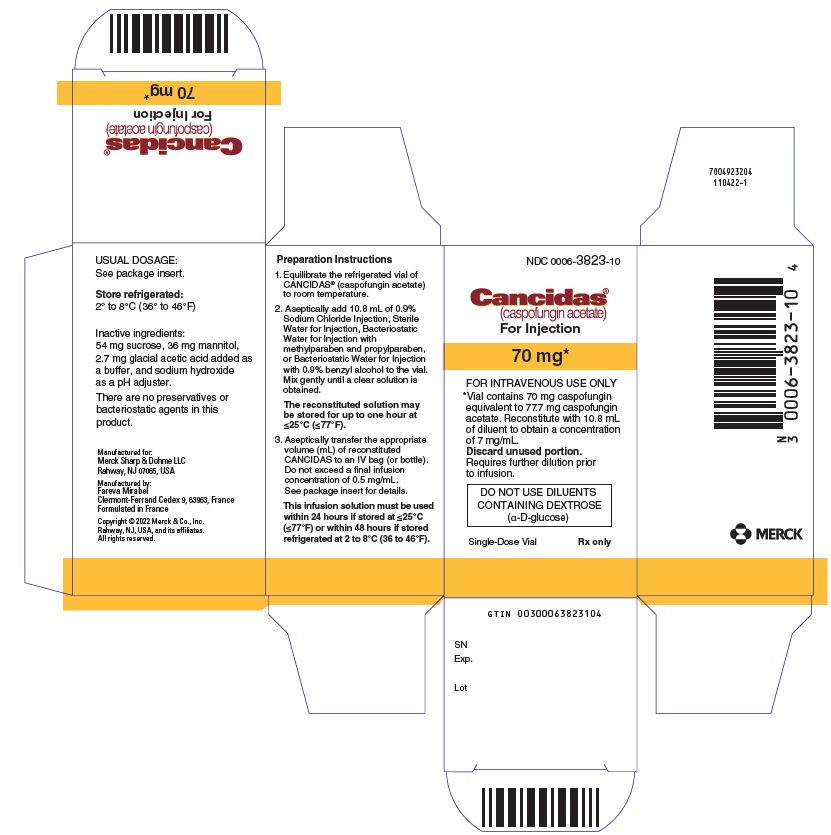
CANCIDAS 70 mg is a white to off-white powder/cake for infusion in a vial with a yellow/orange aluminum band and a plastic cap.
NDC 0006-3823-10 supplied as one single-dose vial.
Distributed by: Merck Sharp & Dohme Corp., a subsidiary of
MERCK & CO., INC., Whitehouse Station, NJ 08889, USA
The trademarks depicted herein are owned by their respective companies.
Copyright © 2001-2018 Merck Sharp & Dohme Corp., a subsidiary of Merck & Co., Inc.
All rights reserved.
uspi-mk0991-i-1803r010