In 11 clinical trials, 2615 healthy children 2 years through 18 years of age received at least one dose of VAQTA. These studies included administration of VAQTA in varying doses and regimens (1377 children received one or more 25U doses). The race distribution of the study subjects who received at least one dose of VAQTA in these studies was as follows: 84.7% Caucasian; 10.6% American Indian; 2.3% African-American; 1.5% Hispanic-American; 0.6% other; 0.2% Oriental. The distribution of subjects by gender was 51.2% male and 48.8% female.
In a double-blind, placebo-controlled efficacy trial (i.e. The Monroe Efficacy Study), 1037 healthy children and adolescents 2 through 16 years of age were randomized to receive a primary dose of 25U of VAQTA and a booster dose of VAQTA 6, 12, or 18 months later, or placebo (alum diluent). All study subjects were Caucasian: 51.5% were male and 48.5% were female. Subjects were followed days 1 to 5 postvaccination for fever and local adverse reactions and days 1 to 14 for systemic adverse events. The most common adverse events/reactions were injection-site reactions, reported by 6.4% of subjects. Table 5 summarizes local adverse reactions and systemic adverse events reported in ≥1% of subjects. There were no significant differences in the rates of any adverse events or adverse reactions between vaccine and placebo recipients after Dose 1.
In an open-label clinical trial, 240 healthy adults 18 to 54 years of age were randomized to receive either VAQTA (50U/1-mL) with Typhim Vi (Typhoid Vi polysaccharide vaccine) and YF-Vax (yellow fever vaccine) concomitantly (N=80), typhoid Vi polysaccharide and yellow fever vaccines concomitantly (N=80), or VAQTA alone (N=80). Approximately 6 months later, subjects who received VAQTA were administered a second dose of VAQTA. The race distribution of the study subjects who received VAQTA with or without typhoid Vi polysaccharide and yellow fever vaccine was as follows: 78.3% Caucasian; 14.2% Oriental; 3.3% other; 2.1% African-American; 1.7% Indian; 0.4% Hispanic-American. The distribution of subjects by gender was 40.8% male and 59.2% female. Subjects were monitored for local adverse reactions and fever for 5 days and systemic adverse events for 14 days after each vaccination. In the 14 days after the first dose of VAQTA, the proportion of subjects with adverse events was similar between recipients of VAQTA given concomitantly with typhoid Vi polysaccharide and yellow fever vaccines compared to recipients of typhoid Vi polysaccharide and yellow fever vaccines without VAQTA. Table 6 summarizes solicited local adverse reactions and Table 7 summarizes unsolicited systemic adverse events reported in ≥5% in adults who received one or two doses of VAQTA alone and for subjects who received VAQTA concomitantly with typhoid Vi polysaccharide and yellow fever vaccines. There were no solicited systemic complaints reported at a rate ≥5%. Fever ≥101°F occurred in 1.3% of subjects in each group.
In four clinical trials involving 1645 healthy adults 19 years of age and older who received one or more 50U doses of hepatitis A vaccine, subjects were followed for fever and local adverse reactions 1 to 5 days postvaccination and for systemic adverse events 1 to 14 days postvaccination. One single-blind study evaluated doses of VAQTA with varying amounts of viral antigen and/or alum content in healthy adults ≥170 pounds and ≥30 years of age (N=210 adults administered 50U/1-mL dose). One open-label study evaluated VAQTA given with immune globulin (IG) or alone (N=164 adults who received VAQTA alone). A third study was single-blind and evaluated 3 different lots of VAQTA (N=1112). The fourth study that was also single-blind evaluated doses of VAQTA with varying amounts of viral antigen in healthy adults ≥170 pounds and ≥30 years of age (N=159 adults administered the 50U/1-mL dose). Overall, the race distribution of the study subjects who received at least one dose of VAQTA was as follows: 94.2% Caucasian; 2.2% Black; 1.5% Hispanic; 1.5% Oriental; 0.4% other; 0.2% American Indian. 47.6% of subjects were male and 52.4% were female. The most common adverse event/reaction was injection-site pain/soreness/tenderness reported by 67.0% of subjects. Of all reported injection-site reactions 99.8% were mild (i.e., easily tolerated with no medical intervention) or moderate (i.e., minimally interfered with usual activity possibly requiring little medical intervention). Listed below in Table 8 are the local adverse reactions and systemic adverse events reported by ≥5% of subjects, in decreasing order of frequency within each body system.
The following additional unsolicited systemic adverse events were observed among recipients of VAQTA that occurred within 14 days at a common frequency of ≥1% to <10% following any dose not reported elsewhere in the label. These adverse reactions have been reported across 4 clinical studies.
- Musculoskeletal and connective tissue disorders: Back pain; stiffness
- Reproductive system and breast disorders: Menstruation disorders
Post-Marketing Observational Safety Study
In a post-marketing, 60-day safety surveillance study, conducted at a large health maintenance organization in the United States, a total of 42,110 individuals ≥2 years of age received 1 or 2 doses of VAQTA (13,735 children/adolescents and 28,375 adult subjects). Safety was passively monitored by electronic search of the automated medical records database for emergency room and outpatient visits, hospitalizations, and deaths. Medical charts were reviewed when an event was considered to be possibly vaccine-related by the investigator. None of the serious adverse events identified were assessed as being related to vaccine by the investigator. Diarrhea/gastroenteritis, resulting in outpatient visits, was determined by the investigator to be the only vaccine-related nonserious adverse reaction in the study. There was no vaccine-related adverse reaction identified that had not been reported in earlier clinical trials with VAQTA.
Risk Summary
All pregnancies have a risk of birth defect, loss, or other adverse outcomes. In the U.S. general population, the estimated background risk of major birth defects and miscarriage in clinically recognized pregnancies is 2% to 4% and 15% to 20%, respectively.
There are no adequate and well-controlled studies designed to evaluate VAQTA in pregnant women. Available post-approval data do not suggest an increased risk of miscarriage or major birth defects in women who received VAQTA during pregnancy.
Developmental toxicity studies have not been conducted with VAQTA in animals.
Data
Human Data
Post-approval adverse reactions are reported voluntarily from a population of uncertain size. It is not always possible to reliably estimate their frequency or establish a causal relationship to the vaccine.
In prospectively reported spontaneous post-approval reports from 1995 to 2018, 36 women with a known pregnancy outcome were exposed to VAQTA during pregnancy following the last menstrual period. After excluding induced abortions (n=4) and those with exposure in the third trimester (n=2), there were 30 pregnancies with known outcomes with exposures in the first or second trimester. Miscarriage was reported for 3 of 30 (10%) pregnancies. Major birth defects were reported for 1 of 27 (3.7%) live born infants. The rates of miscarriage and major birth defects were consistent with estimated background rates.
Risk Summary
It is not known whether VAQTA is excreted in human milk. Data are not available to assess the effects of VAQTA on the breastfed infant or on milk production/excretion.
The developmental and health benefits of breastfeeding should be considered along with the mother's clinical need for VAQTA and any potential adverse effects on the breastfed child from VAQTA or from the underlying maternal condition. For preventive vaccines the underlying condition is susceptibility to disease prevented by the vaccine.
Children — 12 through 23 Months of Age
In a clinical trial, children 12 through 23 months of age were randomized to receive the first dose of VAQTA with or without M-M-R II and VARIVAX (N=617) and the second dose of VAQTA with or without Tripedia and optionally either oral poliovirus vaccine (no longer licensed in the US) or IPOL (N=555). The race distribution of study subjects who received at least one dose of VAQTA was as follows: 56.7% Caucasian; 17.5% Hispanic-American; 14.3% African-American; 7.0% Native American; 3.4% other; 0.8% Oriental; 0.2% Asian; and 0.2% Indian. The distribution of subjects by gender was 53.6% male and 46.4% female. In the analysis population, there were 471 initially seronegative children 12 through 23 months of age, who received the first dose of VAQTA with (N=237) or without (N=234) M-M-R II and VARIVAX of whom 96% (95% CI: 93.7%, 97.5%) seroconverted (defined as having an anti-HAV titer ≥10 mIU/mL) post dose 1 with an anti-HAV geometric mean titer (GMT) of 48 mIU/mL (95% CI: 44.7, 51.6). There were 343 children in the analysis population who received the second dose of VAQTA with (N=168) or without (N=175) Tripedia and optional oral poliovirus vaccine or IPOL of whom 100% (95% CI: 99.3%, 100%) seroconverted post dose 2 with an anti-HAV GMT of 6920 mIU/mL (95% CI: 6136, 7801). Of children who received only VAQTA at both visits, 100% (n=97) seroconverted after the second dose of VAQTA.
In a clinical trial involving 653 healthy children 12 to 15 months of age, 330 were randomized to receive VAQTA, ProQuad, and pneumococcal 7-valent conjugate vaccine concomitantly, and 323 were randomized to receive ProQuad and pneumococcal 7-valent conjugate vaccine concomitantly followed by VAQTA 6 weeks later. The race distribution of the study subjects was as follows: 60.3% Caucasian; 21.6% African-American; 9.5% Hispanic-American; 7.2% other; 1.1% Asian/Pacific; and 0.3% Native American. The distribution of subjects by gender was 50.7% male and 49.3% female. In the analysis population, the seropositivity rate for hepatitis A antibody (defined as the percent of subjects with an anti-HAV titer ≥10 mIU/mL) was 100% (n=182; 95% CI: 98.0%, 100%) post dose 2 with an anti-HAV GMT of 4977 mIU/mL (95% CI: 4068, 6089) when VAQTA was given with ProQuad and pneumococcal 7-valent conjugate vaccine and 99.4% (n=159, 95% CI: 96.5%, 100%) post dose 2 with an anti-HAV GMT of 6123 mIU/mL (95% CI: 4826, 7770) when VAQTA alone was given. These seropositivity rates were similar whether VAQTA was administered with or without ProQuad and pneumococcal 7-valent conjugate vaccine.
In an open, multicenter, randomized study involving 617 children 15 months of age, 306 were randomized to receive VAQTA with or without PedvaxHIB and INFANRIX, and 311 were randomized to receive VAQTA with or without PedvaxHIB. The race distribution of the study subjects was as follows: 63.9% Caucasian; 17.5% Hispanic-American; 14.7% Black; 2.6% other; and 1.3% Asian. The distribution of subjects by gender was 54.0% male and 46.0% female. The seropositivity rate for hepatitis A antibody (defined as the percent of subjects with an anti-HAV titer ≥ 10 mIU/mL) 4 weeks post dose 2 was 100% (n=208, 95% CI: 98.2%, 100.0%) in those who received VAQTA concomitantly with PedvaxHIB and INFANRIX or concomitantly with PedvaxHIB. In those subjects who received VAQTA alone, the seropositivity rate for hepatitis A antibody was 100% (n=183, 95% CI: 98.0%, 100.0%), regardless of baseline hepatitis A serostatus. Overall, the anti-HAV GMT in the concomitant groups was 3616.5 mIU/mL (95% CI: 3084.5, 4240.2). The anti-HAV GMT in the nonconcomitant groups was 4712.6 mIU/mL (95% CI: 3996.8, 5556.8). Comparable responses were observed in both the initially seronegative and seropositive subjects.
In three combined clinical studies 1022 initially seronegative subjects received 2 doses of VAQTA alone or concomitantly with other vaccines. Of the seronegative subjects, 99.9% achieved an anti-HAV titer ≥10 mIU/mL (95% CI: 99.5%, 100%) and an anti-HAV GMT of 5392.1 mIU/mL (95% CI: 4996.5, 5819.0) 4 weeks following dose 2 of VAQTA.
Children/Adolescents — 2 Years through 18 Years of Age
Immunogenicity data were combined from eleven randomized clinical studies in children and adolescents 2 through 18 years of age who received VAQTA (25U/0.5 mL). These included administration of VAQTA in varying doses and regimens (N=404 received 25U/0.5 mL), the Monroe Efficacy Study (N=973), and comparison studies for process and formulation changes (N=1238). The race distribution of the study subjects who received at least one dose of VAQTA in these studies was as follows: 84.8% Caucasian; 10.6% American Indian; 2.3% African-American; 1.5% Hispanic-American; 0.6% other; 0.2% Oriental. The distribution of subjects by gender was 51.2% male and 48.8% female. The proportions of subjects who seroconverted 4 weeks after the first and second doses administered 6 months apart were 97% (n=1230; 95% CI: 96%, 98%) and 100% (n=1057; 95% CI: 99.5%, 100%) of subjects with anti-HAV GMTs of 43 mIU/mL (95% CI: 40, 45) and 10,077 mIU/mL (95% CI: 9394, 10,810), respectively.
Adults — 19 Years of Age and Older
Immunogenicity data were combined from five randomized clinical studies in adults 19 years of age and older who received VAQTA (50U/1-mL). One single-blind study evaluated doses of VAQTA with varying amounts of viral antigen and/or alum content in healthy adults ≥170 pounds and ≥30 years of age (N=208 adults administered 50U/1-mL dose). One open-label study evaluated VAQTA given with immune globulin or alone (N=164 adults who received VAQTA alone). A third study was single-blind and evaluated 3 different lots of VAQTA (N=1112). The fourth study was single-blind and evaluated doses of VAQTA with varying amounts of viral antigen in healthy adults ≥170 pounds and ≥30 years of age (N=159 adults administered the 50U/1-mL dose). The fifth study was an open-label study to evaluate various regimens for time of administration of the booster dose of VAQTA (6, 12, and 18 months post dose 1, N=354). The race distribution of the study subjects who received at least one dose of VAQTA in these studies was as follows: 93.2% Caucasian; 2.5% African-American; 2.1% Hispanic-American; 1.4% Oriental; 0.5% other; 0.3% American Indian. The distribution of subjects by gender was 44.8% male and 55.2% female. The proportion of subjects who seroconverted 4 weeks after the first and second doses administered 6 months apart was 95% (n=1411; 95% CI: 94%, 96%) and 99.9% (n=1244; 95% CI: 99.4%, 100%) with GMTs of 37 mIU/mL (95% CI: 35, 38) and 6013 mIU/mL (95% CI: 5592, 6467), respectively. Furthermore, at 2 weeks postvaccination, 69.2% (n=744; 95% CI: 65.7%, 72.5%) of adults seroconverted with an anti-HAV GMT of 16 mIU/mL after a single dose of VAQTA.
Children/Adolescents — 2 through 18 Years of Age
In the Monroe Efficacy Study, children were administered a second dose of VAQTA (25U/0.5 mL) 6, 12, or 18 months following the initial dose. For subjects who received both doses of VAQTA, the GMTs and proportions of subjects who seroconverted 4 weeks after the booster dose administered 6, 12, and 18 months after the first dose are presented in Table 9.
Table 9: Children/Adolescents from the Monroe Efficacy Study Seroconversion Rates (%) and Geometric Mean Titers (GMT) for Cohorts of Initially Seronegative Vaccinees at the Time of the Booster(25U) and 4 Weeks Later| Months Following Initial 25U Dose | Cohort Blood samples were taken at prebooster and postbooster time points. (n=960)
0 and 6 Months | Cohort (n=35)
0 and 12 Months | Cohort (n=39)
0 and 18 Months |
|---|
| Seroconversion Rate
GMT (mIU/mL) (95% CI) |
|---|
| 6 | 97%
107 (98, 117) | — | — |
| 7 | 100%
10433 (9681, 11243) | — | — |
| 12 | — | 91%
48 (33, 71) | — |
| 13 | — | 100%
12308 (9337, 16226) | — |
| 18 | — | — | 90%
50 (28, 89) |
| 19 | — | — | 100%
9591 (7613, 12082) |
Adults — 19 years of age and older
Among the 5 randomized clinical studies in adults 19 years of age and older described in Section 14.2, there were additional data in which a booster dose of VAQTA (50U/1-mL) was administered 12 or 18 months after the first dose. For subjects in these studies who received both doses of VAQTA, the proportions who seroconverted 4 weeks after the booster dose administered 6, 12, and 18 months after the first dose were 100% of 1201 subjects, 98% of 91 subjects, and 100% of 84 subjects, respectively. GMTs in mIU/mL one month after the subjects received the booster dose at 6, 12, or 18 months after the primary dose were 5987 mIU/mL (95% CI: 5561, 6445), 4896 mIU/mL (95% CI: 3589, 6679), and 6043 mIU/mL (95% CI: 4687, 7793), respectively.
Clinical Studies of VAQTA with M-M-R II, VARIVAX, and Tripedia
In the clinical trial in which children 12 months of age received the first dose of VAQTA concomitantly with M-M-R II and VARIVAX described in Section 14.2, rates of seroprotection to hepatitis A were similar between the two groups who received VAQTA with or without M-M-R II and VARIVAX. Measles, mumps, and rubella immune responses were tested in 241 subjects, 263 subjects, and 270 subjects, respectively. Seropositivity rates were 98.8% [95% CI: 96.4%, 99.7%] for measles, 99.6% [95% CI: 97.9%, 100%] for mumps, and 100% [95% CI: 98.6%, 100%] for rubella, which were similar to observed historical rates (seropositivity rates 99% for all three antigens, with lower bound of the 95% CI >89%) following vaccination with a first dose of M-M-R II in this age group. Data from this study were insufficient to adequately assess the immune response to VARIVAX administered concomitantly with VAQTA. In this same study, the second dose of VAQTA at 18 months of age was given with or without Tripedia (DTaP). Seropositivity rates for diphtheria and tetanus were similar to those in historical controls. However, data from this study were insufficient to assess the pertussis response of DTaP when administered with VAQTA. Rates of seroprotection to hepatitis A were similar between the two groups who received VAQTA with or without M-M-R II and VARIVAX, and between the two groups who received VAQTA with or without DTaP.
Clinical Studies of VAQTA with ProQuad and Prevnar
In the clinical trial of concomitant use of VAQTA with ProQuad and pneumococcal 7-valent conjugate vaccine in children 12 to 15 months of age described in Section 14.2, the antibody GMTs for S. pneumoniae types 4, 6B, 9V, 14, 18C, 19F, and 23F 6 weeks after vaccination with pneumococcal 7-valent conjugate vaccine administered concomitantly with ProQuad and VAQTA were non-inferior as compared to GMTs observed in the group given pneumococcal 7-valent conjugate vaccine with ProQuad alone (the lower bounds of the 95% CI around the fold-difference for the 7 serotypes excluded 0.5). For the varicella component of ProQuad, in subjects with baseline antibody titers <1.25 gpELISA units/mL, the proportion with a titer ≥5 gpELISA units/mL 6 weeks after their first dose of ProQuad was non-inferior (defined as -10 percentage point change) when ProQuad was administered with VAQTA and pneumococcal 7-valent conjugate vaccine as compared to the proportion with a titer ≥5 gpELISA units/mL when ProQuad was administered with pneumococcal 7-valent conjugate vaccine alone (difference in seroprotection rate -5.1% [95% CI: -9.3, -1.4%]). Hepatitis A responses were similar when compared between the two groups who received VAQTA with or without ProQuad and pneumococcal 7-valent conjugate vaccine. Seroconversion rates and antibody titers for varicella and S. pneumoniae types 4, 6B, 9V, 14, 18C, 19F, and 23F were similar between groups at 6 weeks postvaccination.
Clinical Studies of VAQTA with INFANRIX and PedvaxHIB
In the clinical trial of concomitant administration of VAQTA with INFANRIX and PedvaxHIB in children 15 months of age, described in Section 14.2, when the first dose of VAQTA was administered concomitantly with either INFANRIX and PedvaxHIB or PedvaxHIB, there was no interference in immune response to hepatitis A as measured by seropositivity rates after dose 2 of VAQTA compared to administration of both doses of VAQTA alone. When dose 1 of VAQTA was administered concomitantly with either PedvaxHIB and INFANRIX or PedvaxHIB, there was no interference in immune response to Haemophilus influenzae b (as measured by the proportion of subjects who attained an anti-polyribosylribitol phosphate antibody titer >1.0 mcg/mL at 4 weeks after vaccination), compared to subjects receiving either PedvaxHIB and INFANRIX or PedvaxHIB. When VAQTA was administered concomitantly with INFANRIX and PedvaxHIB, there was no interference in immune responses at 4 weeks after vaccination to the pertussis antigens (PT, FHA, or pertactin, as measured by GMTs) and no interference in immune responses to diphtheria toxoid or tetanus toxoid (as measured by the proportion of subjects achieving an antibody titer >0.1 IU/mL) compared to administration of INFANRIX and PedvaxHIB.
Clinical Studies of VAQTA with Typhoid Vi Polysaccharide Vaccine and Yellow Fever Vaccine, Live Attenuated
In the clinical trial of concomitant use of VAQTA with typhoid Vi polysaccharide and yellow fever vaccines in adults 18-54 years of age described in Section 6.1, the antibody response rates for typhoid Vi polysaccharide and yellow fever were adequate when typhoid Vi polysaccharide and yellow fever vaccines were administered concomitantly with (N=80) and nonconcomitantly without VAQTA (N=80). The seropositivity rate for hepatitis A when VAQTA, typhoid Vi polysaccharide, and yellow fever vaccines were administered concomitantly was generally similar to when VAQTA was given alone [see Drug Interactions (7.1)].
Data are insufficient to assess the immune response to VAQTA and poliovirus vaccine when administered concomitantly.
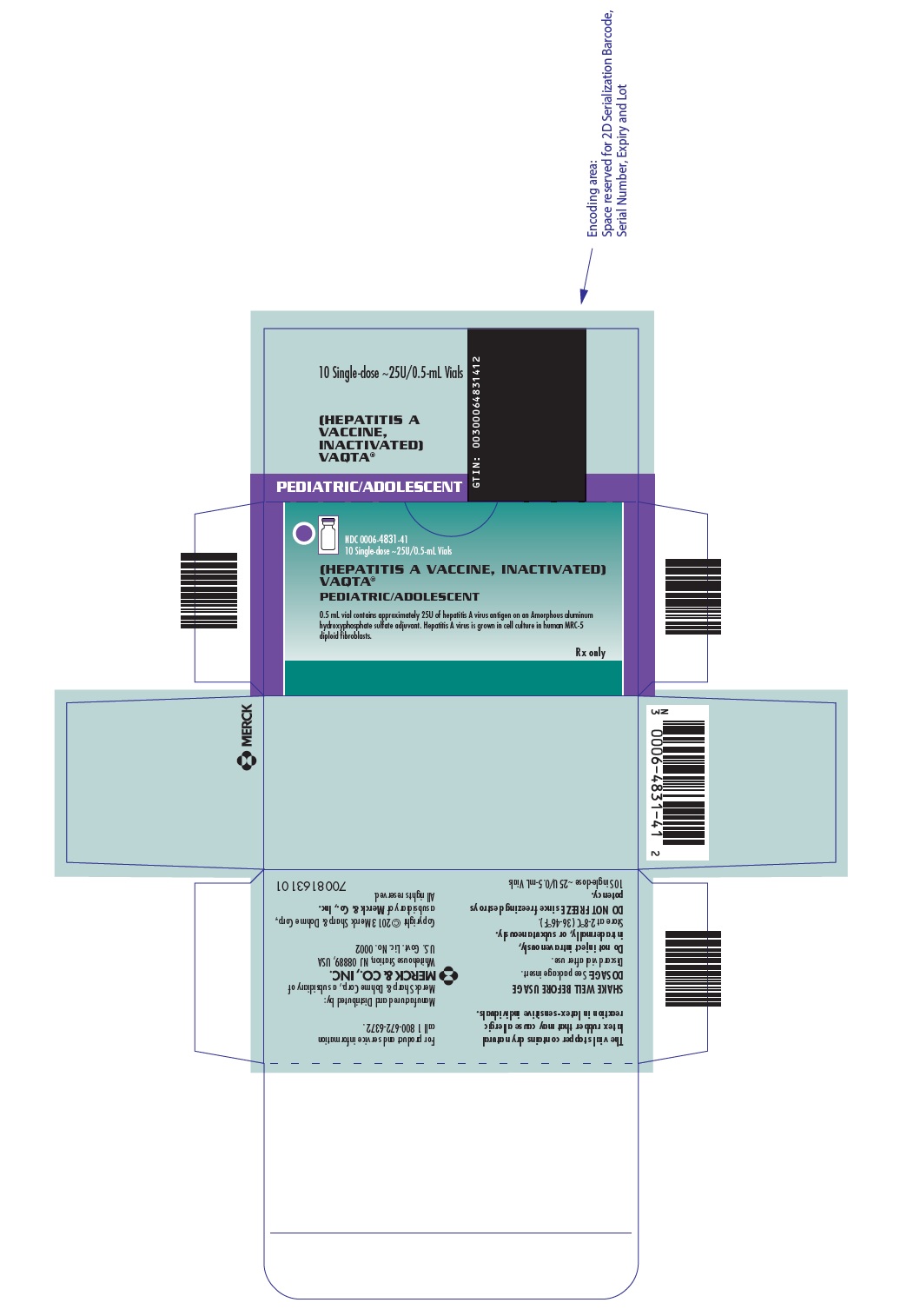
Pediatric/Adolescent Formulations
25U/0.5 mL in single-dose vials and prefilled Luer-Lok® syringes.
NDC 0006-4831-41 – box of ten 0.5-mL single dose vials.
NDC 0006-4095-02 – carton of ten 0.5-mL prefilled single-dose Luer-Lok® syringes with tip caps.
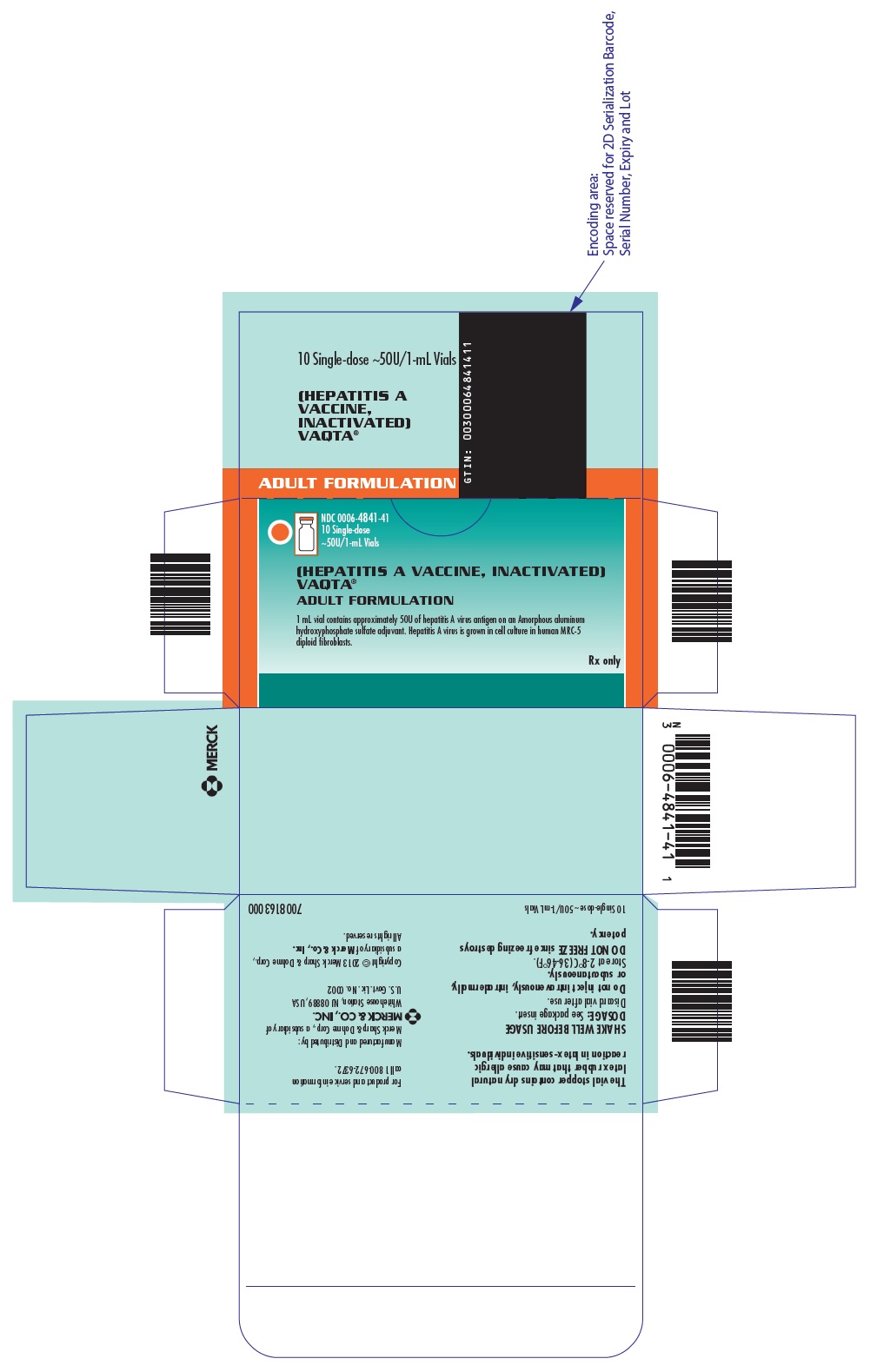
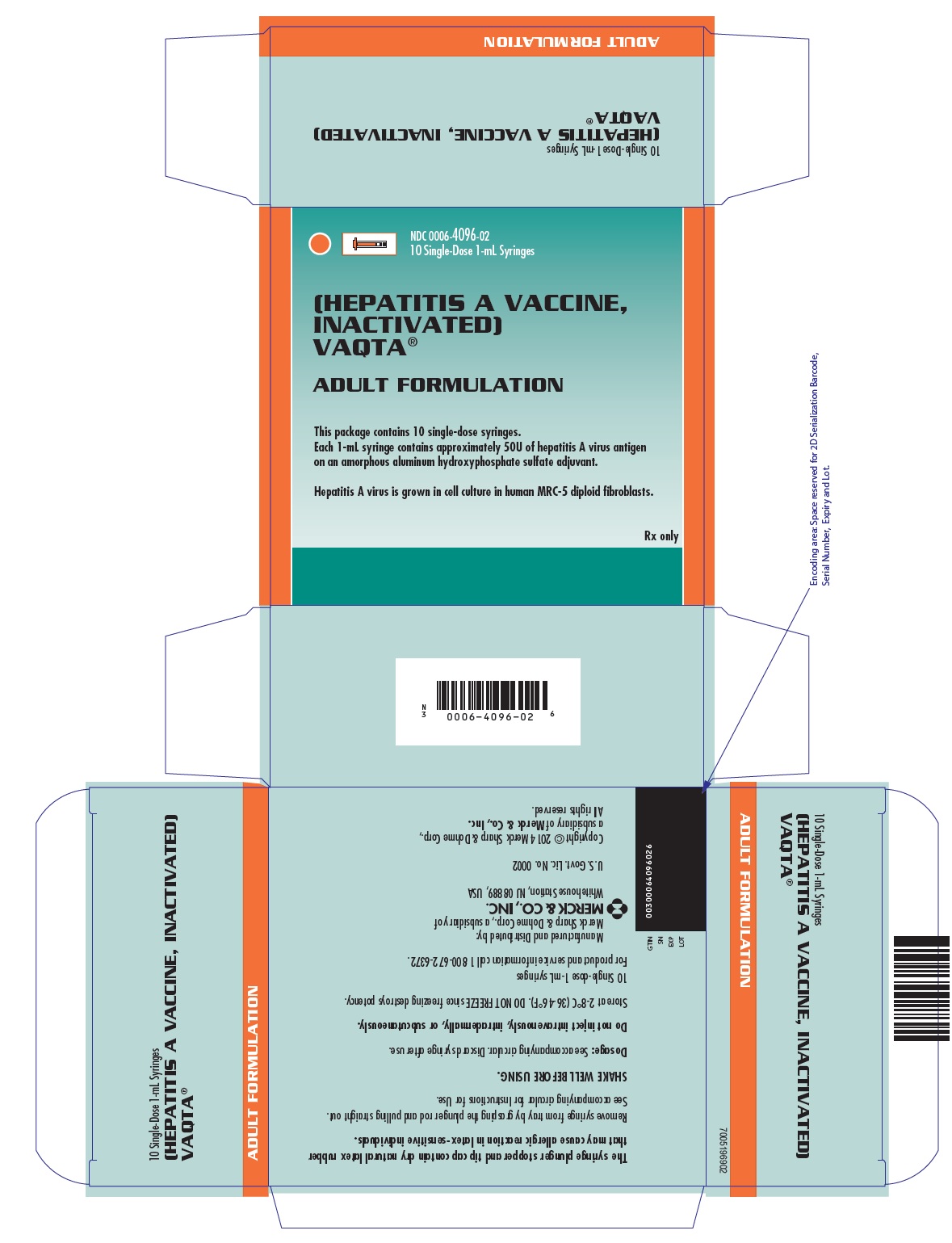
Adult Formulations
50U/1-mL in single-dose vials and prefilled Luer-Lok® syringes.
NDC 0006-4841-00 – 1-mL single dose vial.
NDC 0006-4841-41 – box of ten 1-mL single dose vials.
NDC 0006-4096-02 – carton of ten 1-mL prefilled single-dose Luer-Lok® syringes with tip caps.
Manuf. and Dist. by: Merck Sharp & Dohme Corp., a subsidiary of
MERCK & CO., INC., Whitehouse Station, NJ 08889, USA
For patent information: www.merck.com/product/patent/home.html
The trademarks depicted herein are owned by their respective companies.
Copyright ©1996-2020 Merck Sharp & Dohme Corp., a subsidiary of Merck & Co., Inc.
All rights reserved.
uspi-v251-i-2010r019
Manuf. and Dist. by: Merck Sharp & Dohme Corp., a subsidiary of
MERCK & CO., INC., Whitehouse Station, NJ 08889, USA
For patent information: www.merck.com/product/patent/home.html
Copyright © 2006-2020 Merck Sharp & Dohme Corp., a subsidiary of Merck & Co., Inc.
All rights reserved.
crt-usppi-v251-i-2010r000
This Patient Information has been approved by the U.S. Food and Drug Administration.
Issued: 10/2020