Camptosar Injection, Solution
Product Images NDC 0009-0082

View Photos of Packaging, Regulatory Labels, and Product Appearance

Product Visual Gallery

This gallery contains 8 technical images submitted to the FDA as part of the official labeling for Camptosar (NDC 0009-0082). Unlike standard consumer photos, these assets often include clinical data figures, molecular chemical structures, and official manufacturer packaging layouts.

As provided by Pharmacia & Upjohn Company Llc, these visuals offer a comprehensive scientific overview of the product's physical and chemical identity, aiding pharmacists and researchers in product verification and study.

FDA Label Image

Chemical Structure (Camptosar 01)
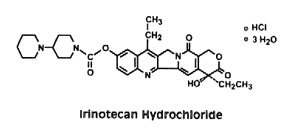
Chemical Structure (Camptosar 01)
Chemical structure of irinotecan hydrochloride, the active ingredient in Camptosar injection. The structure includes molecular groups and denotes associated hydrochloride and hydrate components.*
FDA Label Image

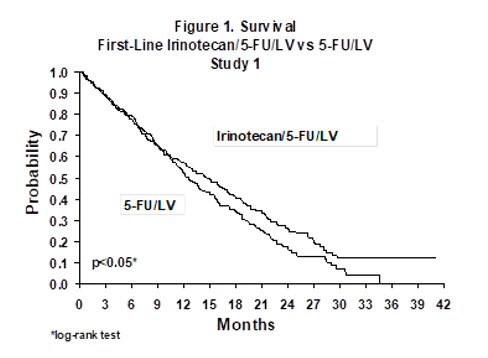
Figure 1 (Camptosar 02)

Figure 1 (Camptosar 02)
A survival curve chart comparing First-Line Irinotecan/5-FU/LV versus 5-FU/LV alone over a period of up to 42 months. The vertical axis represents probability from 0.0 to 1.0, and the horizontal axis shows months. The curves illustrate higher survival probability with Irinotecan/5-FU/LV compared to 5-FU/LV, with a noted statistical significance (p<0.05).*
FDA Label Image

Figure 2 (Camptosar 03)

Figure 2 (Camptosar 03)
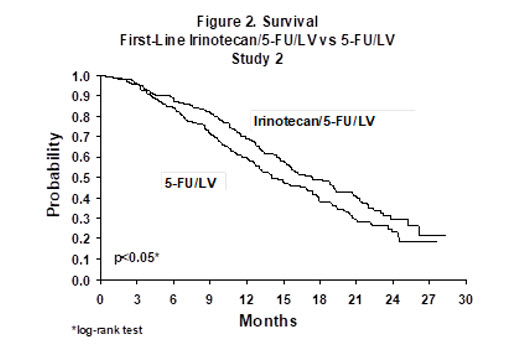
A survival curve chart titled 'Figure 2. Survival First-Line Irinotecan/5-FU/LV vs 5-FU/LV Study 2.' It plots probability on the vertical axis against months on the horizontal axis, comparing survival probabilities over time between two treatments: Irinotecan/5-FU/LV and 5-FU/LV. The Irinotecan/5-FU/LV curve shows generally higher survival probabilities than the 5-FU/LV curve across the 30-month period. A note indicates the use of a log-rank test with p<0.05 significance.*
FDA Label Image

Figure 3 (Camptosar 04)

Figure 3 (Camptosar 04)
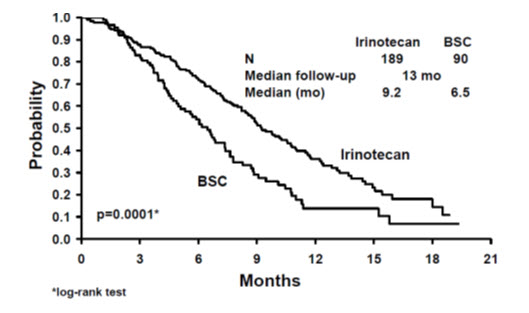
A Kaplan-Meier survival curve comparing the probability of survival over months between two groups: Irinotecan and BSC (best supportive care). The chart shows the number of participants, median follow-up time, and median survival time for each group, with a p-value indicating statistical significance.*
FDA Label Image

Figure 4 (Camptosar 05)

Figure 4 (Camptosar 05)
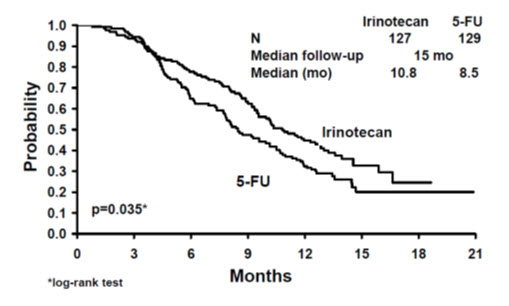
A Kaplan-Meier survival probability curve comparing irinotecan and 5-FU over a follow-up period of 21 months. The x-axis represents time in months, and the y-axis shows probability from 0 to 1. The graph includes sample sizes and median follow-up times for each treatment group.*
FDA Label Image

Logo (Camptosar 06)

Logo (Camptosar 06)
Label displaying Pfizer Injectables logo and distribution information for Camptosar (irinotecan hydrochloride) injection. The distributor is Pharmacia & Upjohn Company LLC, a division of Pfizer Inc, located in New York, NY 10017.*
FDA Label Image

Principal Display Panel (100 mg/5 mL Vial Label)

Principal Display Panel (100 mg/5 mL Vial Label)
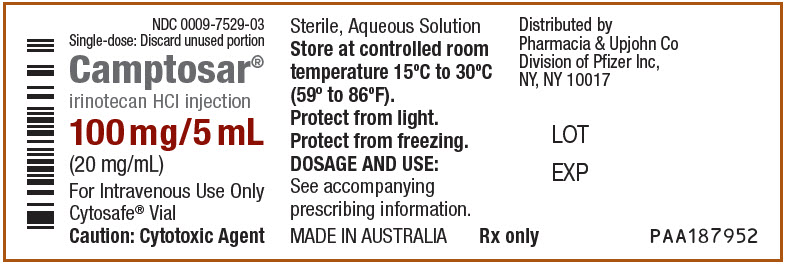
Label for Camptosar injection, irinotecan hydrochloride, 100 mg/5 mL (20 mg/mL) solution for intravenous use. The single-dose Cytosafe vial is labeled as a cytotoxic agent, with storage instructions to protect from light and freezing and to store at controlled room temperature (15°C to 30°C). Distributed by Pharmacia & Upjohn Co, a division of Pfizer Inc, made in Australia.*
FDA Label Image

Principal Display Panel (100 mg/5 mL Vial Carton)

Principal Display Panel (100 mg/5 mL Vial Carton)
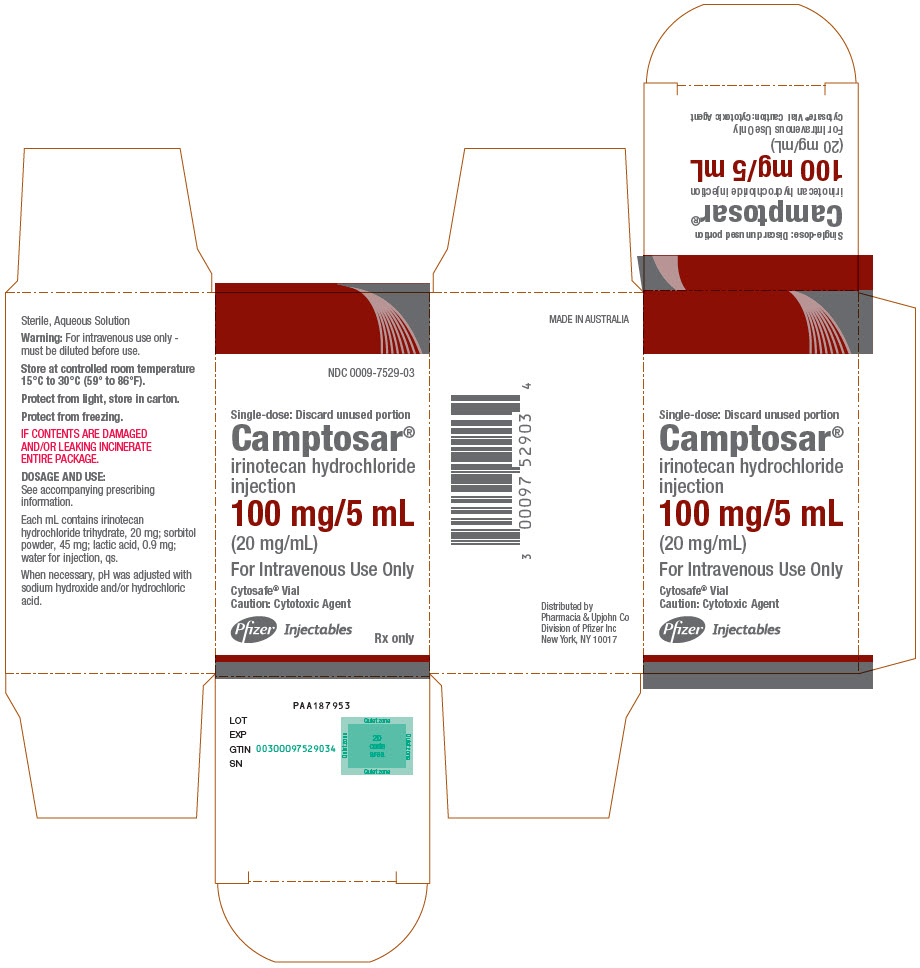
Camptosar 100 mg/5 mL (20 mg/mL) injection carton label for intravenous use containing irinotecan hydrochloride. The single-dose vial comes from Pharmacia & Upjohn Company LLC, a Pfizer division. Label emphasizes cytotoxic agent caution, storage instructions, and disposal warnings, with branding and regulatory information.*

* About these descriptions: Image descriptions on this page are generated by automated AI analysis of the product label images from the manufacturer's FDA label submission (SPL). They are provided for reference only and may contain errors or omissions. Always rely on the printed label itself and the official FDA labeling, and consult a pharmacist or healthcare professional with any questions about this product.