Dose Modifications
Based on recommended dose levels described in Table 1, Combination Regimens of CAMPTOSAR and Dose Modifications, subsequent doses should be adjusted as suggested in Table 2, Recommended Dose Modifications for Combination Regimens. All dose modifications should be based on the worst preceding toxicity.
Table 2. Recommended Dose Modifications for CAMPTOSAR/5-Fluorouracil (5-FU)/Leucovorin (LV) Combination Schedules| Patients should return to pre-treatment bowel function without requiring antidiarrhea medications for at least 24 hours before the next chemotherapy administration. A new cycle of therapy should not begin until the granulocyte count has recovered to ≥1500/mm3, and the platelet count has recovered to ≥100,000/mm3, and treatment-related diarrhea is fully resolved. Treatment should be delayed 1 to 2 weeks to allow for recovery from treatment-related toxicities. If the patient has not recovered after a 2-week delay, consideration should be given to discontinuing therapy. |
|---|
Toxicity
NCI CTC GradeNational Cancer Institute Common Toxicity Criteria (version 1.0) (Value) | During a Cycle of Therapy | At the Start of Subsequent Cycles of Therapy Relative to the starting dose used in the previous cycle |
|---|
| No toxicity | Maintain dose level | Maintain dose level |
| Neutropenia | | |
| 1 (1500 to 1999/mm3) | Maintain dose level | Maintain dose level |
| 2 (1000 to 1499/mm3) | ↓ 1 dose level | Maintain dose level |
| 3 (500 to 999/mm3) | Omit dose until resolved to ≤ grade 2, then ↓ 1 dose level | ↓ 1 dose level |
| 4 (<500/mm3) | Omit dose until resolved to ≤ grade 2, then ↓ 2 dose levels | ↓ 2 dose levels |
| Neutropenic fever | Omit dose until resolved, then ↓ 2 dose levels |
| Other hematologic toxicities | Dose modifications for leukopenia or thrombocytopenia during a cycle of therapy and at the start of subsequent cycles of therapy are also based on NCI toxicity criteria and are the same as recommended for neutropenia above. |
| Diarrhea | | |
| 1 (2–3 stools/day > pretx Pretreatment ) | Delay dose until resolved to baseline, then give same dose | Maintain dose level |
| 2 (4–6 stools/day > pretx) | Omit dose until resolved to baseline, then ↓ 1 dose level | Maintain dose level |
| 3 (7–9 stools/day > pretx) | Omit dose until resolved to baseline, then ↓ 1 dose level | ↓ 1 dose level |
| 4 (≥10 stools/day > pretx) | Omit dose until resolved to baseline, then ↓ 2 dose levels | ↓ 2 dose levels |
| Other nonhematologic toxicities Excludes alopecia, anorexia, asthenia | | |
| 1 | Maintain dose level | Maintain dose level |
| 2 | Omit dose until resolved to ≤ grade 1, then ↓ 1 dose level | Maintain dose level |
| 3 | Omit dose until resolved to ≤ grade 2, then ↓ 1 dose level | ↓ 1 dose level |
| 4 | Omit dose until resolved to ≤ grade 2, then ↓ 2 dose levels | ↓ 2 dose levels |
| For mucositis/stomatitis decrease only 5-FU, not CAMPTOSAR | For mucositis/stomatitis decrease only 5-FU, not CAMPTOSAR. |
Dose Modifications
Based on recommended dose-levels described in Table 3, Single-Agent Regimens of CAMPTOSAR and Dose Modifications, subsequent doses should be adjusted as suggested in Table 4, Recommended Dose Modifications for Single-Agent Schedules. All dose modifications should be based on the worst preceding toxicity.
Table 4: Recommended Dose Modifications For Single-Agent SchedulesAll dose modifications should be based on the worst preceding toxicity
| A new cycle of therapy should not begin until the granulocyte count has recovered to ≥1500/mm3, and the platelet count has recovered to ≥100,000/mm3, and treatment-related diarrhea is fully resolved. Treatment should be delayed 1 to 2 weeks to allow for recovery from treatment-related toxicities. If the patient has not recovered after a 2-week delay, consideration should be given to discontinuing CAMPTOSAR. |
|---|
Worst Toxicity
NCI GradeNational Cancer Institute Common Toxicity Criteria (version 1.0) (Value) | During a Cycle of Therapy | At the Start of the Next Cycles of Therapy (After Adequate Recovery), Compared with the Starting Dose in the Previous Cycle |
|---|
| Weekly | Weekly | Once Every 3 Weeks |
|---|
| No toxicity | Maintain dose level | ↑ 25 mg/m2 up to a maximum dose of 150 mg/m2 | Maintain dose level |
| Neutropenia | | | |
| 1 (1500 to 1999/mm3) | Maintain dose level | Maintain dose level | Maintain dose level |
| 2 (1000 to 1499/mm3) | ↓ 25 mg/m2 | Maintain dose level | Maintain dose level |
| 3 (500 to 999/mm3) | Omit dose until resolved to ≤ grade 2, then ↓ 25 mg/m2 | ↓ 25 mg/m2 | ↓ 50 mg/m2 |
| 4 (<500/mm3) | Omit dose until resolved to ≤ grade 2, then ↓ 50 mg/m2 | ↓ 50 mg/m2 | ↓ 50 mg/m2 |
| Neutropenic fever | Omit dose until resolved, then ↓ 50 mg/m2 when resolved | ↓ 50 mg/m2 | ↓ 50 mg/m2 |
| Other hematologic toxicities | Dose modifications for leukopenia, thrombocytopenia, and anemia during a cycle of therapy and at the start of subsequent cycles of therapy are also based on NCI toxicity criteria and are the same as recommended for neutropenia above. |
| Diarrhea | | | |
| 1 (2–3 stools/day > pretx Pretreatment ) | Maintain dose level | Maintain dose level | Maintain dose level |
| 2 (4–6 stools/day > pretx) | ↓ 25 mg/m2 | Maintain dose level | Maintain dose level |
| 3 (7–9 stools/day > pretx) | Omit dose until resolved to ≤ grade 2, then ↓ 25 mg/m2 | ↓ 25 mg/m2 | ↓ 50 mg/m2 |
| 4 (≥10 stools/day > pretx) | Omit dose until resolved to ≤ grade 2 then ↓ 50 mg/m2 | ↓ 50 mg/m2 | ↓ 50 mg/m2 |
| Other nonhematologic Excludes alopecia, anorexia, asthenia toxicities | | | |
| 1 | Maintain dose level | Maintain dose level | Maintain dose level |
| 2 | ↓ 25 mg/m2 | ↓ 25 mg/m2 | ↓ 50 mg/m2 |
| 3 | Omit dose until resolved to ≤ grade 2, then ↓ 25 mg/m2 | ↓ 25 mg/m2 | ↓ 50 mg/m2 |
| 4 | Omit dose until resolved to ≤ grade 2, then ↓ 50 mg/m2 | ↓ 50 mg/m2 | ↓ 50 mg/m2 |
UGT1A1 Testing
A laboratory test is available to determine the UGT1A1 status of patients. Testing can detect the UGT1A1 6/6, 6/7 and 7/7 genotypes.
First-Line Combination Therapy
A total of 955 patients with metastatic colorectal cancer received the recommended regimens of irinotecan in combination with 5-FU/LV, 5-FU/LV alone, or irinotecan alone. In the two phase 3 studies, 370 patients received irinotecan in combination with 5-FU/LV, 362 patients received 5-FU/LV alone, and 223 patients received irinotecan alone [see Dosage and Administration (2)].
In Study 1, 49 (7.3%) patients died within 30 days of last study treatment: 21 (9.3%) received irinotecan in combination with 5-FU/LV, 15 (6.8%) received 5-FU/LV alone, and 13 (5.8%) received irinotecan alone. Deaths potentially related to treatment occurred in 2 (0.9%) patients who received irinotecan in combination with 5-FU/LV (2 neutropenic fever/sepsis), 3 (1.4%) patients who received 5-FU/LV alone (1 neutropenic fever/sepsis, 1 CNS bleeding during thrombocytopenia, 1 unknown) and 2 (0.9%) patients who received irinotecan alone (2 neutropenic fever). Deaths from any cause within 60 days of first study treatment were reported for 15 (6.7%) patients who received irinotecan in combination with 5-FU/LV, 16 (7.3%) patients who received 5-FU/LV alone, and 15 (6.7%) patients who received irinotecan alone. Discontinuations due to adverse events were reported for 17 (7.6%) patients who received irinotecan in combination with 5FU/LV, 14 (6.4%) patients who received 5-FU/LV alone, and 26 (11.7%) patients who received irinotecan alone.
In Study 2, 10 (3.5%) patients died within 30 days of last study treatment: 6 (4.1%) received irinotecan in combination with 5-FU/LV and 4 (2.8%) received 5-FU/LV alone. There was one potentially treatment-related death, which occurred in a patient who received irinotecan in combination with 5-FU/LV (0.7%, neutropenic sepsis). Deaths from any cause within 60 days of first study treatment were reported for 3 (2.1%) patients who received irinotecan in combination with 5-FU/LV and 2 (1.4%) patients who received 5-FU/LV alone. Discontinuations due to adverse events were reported for 9 (6.2%) patients who received irinotecan in combination with 5FU/LV and 1 (0.7%) patient who received 5-FU/LV alone.
The most clinically significant adverse events for patients receiving irinotecan-based therapy were diarrhea, nausea, vomiting, neutropenia, and alopecia. The most clinically significant adverse events for patients receiving 5-FU/LV therapy were diarrhea, neutropenia, neutropenic fever, and mucositis. In Study 1, grade 4 neutropenia, neutropenic fever (defined as grade 2 fever and grade 4 neutropenia), and mucositis were observed less often with weekly irinotecan/5-FU/LV than with monthly administration of 5-FU/LV.
Tables 5 and 6 list the clinically relevant adverse events reported in Studies 1 and 2, respectively.
Table 5. Study 1: Percent (%) of Patients Experiencing Clinically Relevant Adverse Events in Combination TherapiesSeverity of adverse events based on NCI CTC (version 1.0)
| Adverse Event | Study 1 |
|---|
Irinotecan + Bolus 5-FU/LV weekly × 4 every 6 weeks
N=225 | Bolus 5-FU/LV daily × 5 every 4 weeks
N=219 | Irinotecan weekly × 4 every 6 weeks
N=223 |
|---|
| Grade 1–4 | Grade 3&4 | Grade 1–4 | Grade 3&4 | Grade 1–4 | Grade 3&4 |
|---|
| TOTAL Adverse Events | 100 | 53.3 | 100 | 45.7 | 99.6 | 45.7 |
| GASTROINTESTINAL | | | | | | |
| Diarrhea | 84.9 | 22.7 | 69.4 | 13.2 | 83.0 | 31.0 |
| Late | -- | 15.1 | -- | 5.9 | -- | 18.4 |
| grade 3 | -- | 7.6 | -- | 7.3 | -- | 12.6 |
| grade 4 | 45.8 | 4.9 | 31.5 | 1.4 | 43.0 | 6.7 |
| Early | | | | | | |
| Nausea | 79.1 | 15.6 | 67.6 | 8.2 | 81.6 | 16.1 |
| Abdominal pain | 63.1 | 14.6 | 50.2 | 11.5 | 67.7 | 13.0 |
| Vomiting | 60.4 | 9.7 | 46.1 | 4.1 | 62.8 | 12.1 |
| Anorexia | 34.2 | 5.8 | 42.0 | 3.7 | 43.9 | 7.2 |
| Constipation | 41.3 | 3.1 | 31.5 | 1.8 | 32.3 | 0.4 |
| Mucositis | 32.4 | 2.2 | 76.3 | 16.9 | 29.6 | 2.2 |
| HEMATOLOGIC | | | | | | |
| Neutropenia | 96.9 | 53.8 | 98.6 | 66.7 | 96.4 | 31.4 |
| grade 3 | -- | 29.8 | -- | 23.7 | -- | 19.3 |
| grade 4 | -- | 24.0 | -- | 42.5 | -- | 12.1 |
| Leukopenia | 96.9 | 37.8 | 98.6 | 23.3 | 96.4 | 21.5 |
| Anemia | 96.9 | 8.4 | 98.6 | 5.5 | 96.9 | 4.5 |
| Neutropenic fever | -- | 7.1 | -- | 14.6 | -- | 5.8 |
| Thrombocytopenia | 96.0 | 2.6 | 98.6 | 2.7 | 96.0 | 1.7 |
| Neutropenic infection | -- | 1.8 | -- | 0 | -- | 2.2 |
| BODY AS A WHOLE | | | | | | |
| Asthenia | 70.2 | 19.5 | 64.4 | 11.9 | 69.1 | 13.9 |
| Pain | 30.7 | 3.1 | 26.9 | 3.6 | 22.9 | 2.2 |
| Fever | 42.2 | 1.7 | 32.4 | 3.6 | 43.5 | 0.4 |
| Infection | 22.2 | 0 | 16.0 | 1.4 | 13.9 | 0.4 |
| METABOLIC & NUTRITIONAL | | | | | | |
| Bilirubin | 87.6 | 7.1 | 92.2 | 8.2 | 83.9 | 7.2 |
| DERMATOLOGIC | 0.9 | 0 | 3.2 | 0.5 | 0 | 0 |
| Exfoliative dermatitis | 19.1 | 0 | 26.5 | 0.9 | 14.3 | 0.4 |
| Rash | 43.1 | -- | 26.5 | -- | 46.1 | -- |
| Alopecia Complete hair loss = Grade 2 | | | | | | |
| RESPIRATORY | | | | | | |
| Dyspnea | 27.6 | 6.3 | 16.0 | 0.5 | 22.0 | 2.2 |
| Cough | 26.7 | 1.3 | 18.3 | 0 | 20.2 | 0.4 |
| Pneumonia | 6.2 | 2.7 | 1.4 | 1.0 | 3.6 | 1.3 |
| NEUROLOGIC | | | | | | |
| Dizziness | 23.1 | 1.3 | 16.4 | 0 | 21.1 | 1.8 |
| Somnolence | 12.4 | 1.8 | 4.6 | 1.8 | 9.4 | 1.3 |
| Confusion | 7.1 | 1.8 | 4.1 | 0 | 2.7 | 0 |
| CARDIOVASCULAR | 9.3 | 0.9 | 5.0 | 0 | 9.0 | 0 |
| Vasodilatation | 5.8 | 1.3 | 2.3 | 0.5 | 5.8 | 1.7 |
| Hypotension | 9.3 | -- | 11.4 | -- | 5.4 | -- |
| Thromboembolic events Includes angina pectoris, arterial thrombosis, cerebral infarct, cerebrovascular accident, deep thrombophlebitis, embolus lower extremity, heart arrest, myocardial infarct, myocardial ischemia, peripheral vascular disorder, pulmonary embolus, sudden death, thrombophlebitis, thrombosis, vascular disorder. | | | | | | |
Table 6. Study 2: Percent (%) of Patients Experiencing Clinically Relevant Adverse Events in Combination TherapiesSeverity of adverse events based on NCI CTC (version 1.0)
| Adverse Event | Study 2 |
|---|
Irinotecan + 5-FU/LV infusional days 1&2 every 2 weeks
N= 145 | 5-FU/LV infusional days 1&2 every 2 weeks
N=143 |
|---|
| Grades 1–4 | Grades 3&4 | Grades 1–4 | Grades 3&4 |
|---|
| TOTAL Adverse Events | 100 | 72.4 | 100 | 39.2 |
| GASTROINTESTINAL | | | | |
| Diarrhea | 72.4 | 14.4 | 44.8 | 6.3 |
| late | -- | 10.3 | -- | 4.2 |
| grade 3 | -- | 4.1 | -- | 2.1 |
| grade 4 | 28.3 | 1.4 | 0.7 | 0 |
| Cholinergic syndrome Includes rhinitis, increased salivation, miosis, lacrimation, diaphoresis, flushing, abdominal cramping or diarrhea (occurring during or shortly after infusion of irinotecan) | | | | |
| Nausea | 66.9 | 2.1 | 55.2 | 3.5 |
| Abdominal pain | 17.2 | 2.1 | 16.8 | 0.7 |
| Vomiting | 44.8 | 3.5 | 32.2 | 2.8 |
| Anorexia | 35.2 | 2.1 | 18.9 | 0.7 |
| Constipation | 30.3 | 0.7 | 25.2 | 1.4 |
| Mucositis | 40.0 | 4.1 | 28.7 | 2.8 |
| HEMATOLOGIC | | | | |
| Neutropenia | 82.5 | 46.2 | 47.9 | 13.4 |
| grade 3 | -- | 36.4 | -- | 12.7 |
| grade 4 | -- | 9.8 | -- | 0.7 |
| Leukopenia | 81.3 | 17.4 | 42.0 | 3.5 |
| Anemia | 97.2 | 2.1 | 90.9 | 2.1 |
| Neutropenic fever | -- | 3.4 | -- | 0.7 |
| Thrombocytopenia | 32.6 | 0 | 32.2 | 0 |
| Neutropenic infection | -- | 2.1 | -- | 0 |
| BODY AS A WHOLE | | | | |
| Asthenia | 57.9 | 9.0 | 48.3 | 4.2 |
| Pain | 64.1 | 9.7 | 61.5 | 8.4 |
| Fever | 22.1 | 0.7 | 25.9 | 0.7 |
| Infection | 35.9 | 7.6 | 33.6 | 3.5 |
| METABOLIC AND NUTRITIONAL | | | | |
| Bilirubin | 19.1 | 3.5 | 35.9 | 10.6 |
| DERMATOLOGIC | 10.3 | 0.7 | 12.6 | 0.7 |
| Hand and foot syndrome | 17.2 | 0.7 | 20.3 | 0 |
| Cutaneous signs | 56.6 | -- | 16.8 | -- |
| Alopecia Complete hair loss = Grade 2 | | | | |
| RESPIRATORY | | | | |
| Dyspnea | 9.7 | 1.4 | 4.9 | 0 |
| CARDIOVASCULAR | 3.4 | 1.4 | 0.7 | 0 |
| Hypotension | 11.7 | -- | 5.6 | -- |
| Thromboembolic events Includes angina pectoris, arterial thrombosis, cerebral infarct, cerebrovascular accident, deep thrombophlebitis, embolus lower extremity, heart arrest, myocardial infarct, myocardial ischemia, peripheral vascular disorder, pulmonary embolus, sudden death, thrombophlebitis, thrombosis, vascular disorder. | | | | |
Second-Line Single-Agent Therapy
Weekly Dosage Schedule
In three clinical studies evaluating the weekly dosage schedule, 304 patients with metastatic carcinoma of the colon or rectum that had recurred or progressed following 5-FU-based therapy were treated with CAMPTOSAR. Seventeen of the patients died within 30 days of the administration of CAMPTOSAR; in five cases (1.6%, 5/304), the deaths were potentially drug-related. One of the patients died of neutropenic sepsis without fever. Neutropenic fever occurred in nine (3.0%) other patients; these patients recovered with supportive care.
One hundred nineteen (39.1%) of the 304 patients were hospitalized because of adverse events; 81 (26.6%) patients were hospitalized for events judged to be related to administration of CAMPTOSAR. The primary reasons for drug-related hospitalization were diarrhea, with or without nausea and/or vomiting (18.4%); neutropenia/leukopenia, with or without diarrhea and/or fever (8.2%); and nausea and/or vomiting (4.9%).
The first dose of at least one cycle of CAMPTOSAR was reduced for 67% of patients who began the studies at the 125-mg/m2 starting dose. Within-cycle dose reductions were required for 32% of the cycles initiated at the 125-mg/m2 dose level. The most common reasons for dose reduction were late diarrhea, neutropenia, and leukopenia. Thirteen (4.3%) patients discontinued treatment with CAMPTOSAR because of adverse events. The adverse events in Table 7 are based on the experience of the 304 patients enrolled in the three studies described in Clinical Studies (14.1).
Table 7. Adverse Events Occurring in >10% of 304 Previously Treated Patients with Metastatic Carcinoma of the Colon or RectumSeverity of adverse events based on NCI CTC (version 1.0)
| % of Patients Reporting |
|---|
| Body System & Event | NCI Grades 1–4 | NCI Grades 3 & 4 |
|---|
| GASTROINTESTINAL | | |
| Diarrhea (late) Occurring >24 hours after administration of CAMPTOSAR | 88 | 31 |
| 7–9 stools/day (grade 3) | — | (16) |
| ≥10 stools/day (grade 4) | — | (14) |
| Nausea | 86 | 17 |
| Vomiting | 67 | 12 |
| Anorexia | 55 | 6 |
| Diarrhea (early) Occurring ≤24 hours after administration of CAMPTOSAR | 51 | 8 |
| Constipation | 30 | 2 |
| Flatulence | 12 | 0 |
| Stomatitis | 12 | 1 |
| Dyspepsia | 10 | 0 |
| HEMATOLOGIC | | |
| Leukopenia | 63 | 28 |
| Anemia | 60 | 7 |
| Neutropenia | 54 | 26 |
| 500 to <1000/mm3 (grade 3) | — | (15) |
| <500/mm3 (grade 4) | — | (12) |
| BODY AS A WHOLE | | |
| Asthenia | 76 | 12 |
| Abdominal cramping/pain | 57 | 16 |
| Fever | 45 | 1 |
| Pain | 24 | 2 |
| Headache | 17 | 1 |
| Back pain | 14 | 2 |
| Chills | 14 | 0 |
| Minor infection Primarily upper respiratory infections | 14 | 0 |
| Edema | 10 | 1 |
| Abdominal enlargement | 10 | 0 |
| METABOLIC AND NUTRITIONAL | | |
| ↓ Body weight | 30 | 1 |
| Dehydration | 15 | 4 |
| ↑ Alkaline phosphatase | 13 | 4 |
| ↑ SGOT | 10 | 1 |
| DERMATOLOGIC | | |
| Alopecia | 60 | NA Not applicable; complete hair loss = NCI grade 2 |
| Sweating | 16 | 0 |
| Rash | 13 | 1 |
| RESPIRATORY | | |
| Dyspnea | 22 | 4 |
| ↑ Coughing | 17 | 0 |
| Rhinitis | 16 | 0 |
| NEUROLOGIC | | |
| Insomnia | 19 | 0 |
| Dizziness | 15 | 0 |
| CARDIOVASCULAR | | |
| Vasodilation (flushing) | 11 | 0 |
Once-Every-3-Week Dosage Schedule
A total of 535 patients with metastatic colorectal cancer whose disease had recurred or progressed following prior 5-FU therapy participated in the two phase 3 studies: 316 received irinotecan, 129 received 5-FU, and 90 received best supportive care. Eleven (3.5%) patients treated with irinotecan died within 30 days of treatment. In three cases (1%, 3/316), the deaths were potentially related to irinotecan treatment and were attributed to neutropenic infection, grade 4 diarrhea, and asthenia, respectively. One (0.8%, 1/129) patient treated with 5-FU died within 30 days of treatment; this death was attributed to grade 4 diarrhea.
Hospitalizations due to serious adverse events occurred at least once in 60% (188/316) of patients who received irinotecan, 63% (57/90) who received best supportive care, and 39% (50/129) who received 5-FU-based therapy. Eight percent of patients treated with irinotecan and 7% treated with 5-FU-based therapy discontinued treatment due to adverse events.
Of the 316 patients treated with irinotecan, the most clinically significant adverse events (all grades, 1–4) were diarrhea (84%), alopecia (72%), nausea (70%), vomiting (62%), cholinergic symptoms (47%), and neutropenia (30%). Table 8 lists the grade 3 and 4 adverse events reported in the patients enrolled to all treatment arms of the two studies described in Clinical Studies (14.1).
Table 8: Percent Of Patients Experiencing Grade 3 & 4 Adverse Events In Comparative Studies Of Once-Every-3-Week Irinotecan TherapySeverity of adverse events based on NCI CTC (version 1.0)
| Study 1 | Study 2 |
|---|
| Adverse Event | Irinotecan
N=189 | BSC BSC = best supportive care
N=90 | Irinotecan
N=127 | 5-FU
N=129 |
|---|
| TOTAL Grade 3/4 Adverse Events | 79 | 67 | 69 | 54 |
| GASTROINTESTINAL | | | | |
| Diarrhea | 22 | 6 | 22 | 11 |
| Vomiting | 14 | 8 | 14 | 5 |
| Nausea | 14 | 3 | 11 | 4 |
| Abdominal pain | 14 | 16 | 9 | 8 |
| Constipation | 10 | 8 | 8 | 6 |
| Anorexia | 5 | 7 | 6 | 4 |
| Mucositis | 2 | 1 | 2 | 5 |
| HEMATOLOGIC | | | | |
| Leukopenia/Neutropenia | 22 | 0 | 14 | 2 |
| Anemia | 7 | 6 | 6 | 3 |
| Hemorrhage | 5 | 3 | 1 | 3 |
| Thrombocytopenia | 1 | 0 | 4 | 2 |
| Infection | | | | |
| without grade 3/4 neutropenia | 8 | 3 | 1 | 4 |
| with grade 3/4 neutropenia | 1 | 0 | 2 | 0 |
| Fever | | | | |
| without grade 3/4 neutropenia | 2 | 1 | 2 | 0 |
| with grade 3/4 neutropenia | 2 | 0 | 4 | 2 |
| BODY AS A WHOLE | | | | |
| Pain | 19 | 22 | 17 | 13 |
| Asthenia | 15 | 19 | 13 | 12 |
| METABOLIC AND NUTRITIONAL | | | | |
| Hepatic Hepatic includes events such as ascites and jaundice | 9 | 7 | 9 | 6 |
| DERMATOLOGIC | | | | |
| Hand and foot syndrome | 0 | 0 | 0 | 5 |
| Cutaneous signs Cutaneous signs include events such as rash | 2 | 0 | 1 | 3 |
| RESPIRATORY Respiratory includes events such as dyspnea and cough | 10 | 8 | 5 | 7 |
| NEUROLOGIC Neurologic includes events such as somnolence | 12 | 13 | 9 | 4 |
| CARDIOVASCULAR Cardiovascular includes events such as dysrhythmias, ischemia, and mechanical cardiac dysfunction | 9 | 3 | 4 | 2 |
| OTHER Other includes events such as accidental injury, hepatomegaly, syncope, vertigo, and weight loss | 32 | 28 | 12 | 14 |
The incidence of akathisia in clinical trials of the weekly dosage schedule was greater (8.5%, 4/47 patients) when prochlorperazine was administered on the same day as CAMPTOSAR than when these drugs were given on separate days (1.3%, 1/80 patients). The 8.5% incidence of akathisia, however, is within the range reported for use of prochlorperazine when given as a premedication for other chemotherapies.
Risk Summary
Based on findings from animal studies and its mechanism of action, CAMPTOSAR can cause fetal harm when administered to a pregnant woman [see Clinical Pharmacology (12.1)]. Available postmarketing and published data reporting the use of CAMPTOSAR in pregnant women, are insufficient and confounded by the concomitant use of other cytotoxic drugs, to evaluate for any drug-associated risk for major birth defects, miscarriage, or adverse maternal or fetal outcomes. In animal studies, intravenous administration of irinotecan to rats and rabbits during the period of organogenesis resulted in embryofetal mortality and teratogenicity in pregnant animals at exposures lower than the human exposure based on AUC at the clinical dose of 125 mg/m2 (see Data). Advise pregnant women of the potential risk to a fetus.
In the U.S. general population, the estimated background risk of major birth defects and miscarriage in clinically recognized pregnancies is 2 to 4% and 15 to 20%, respectively.
Data
Animal Data
Radioactivity related to 14C-irinotecan crosses the placenta of rats following intravenous administration. Intravenous administration of irinotecan to rats at a dose of 6 mg/kg/day (approximately 0.2 times the clinical exposure (AUC) at the 125 mg/m2 dose based on exposure data from a separate rat study) during the period of organogenesis resulted in increased post-implantation loss and decreased numbers of live fetuses; at doses ≥ 1.2 mg/kg/day (approximately 0.03 times the clinical exposure (AUC) at the 125 mg/m2 dose based on exposure data from a separate rat study) there were increases in a variety of external, visceral, and skeletal abnormalities. Administration of irinotecan to pregnant rabbits at a dose of 6 mg/kg (approximately half of the clinical dose of 125 mg/m2 based on BSA) resulted in similar findings to those in rats, with increased post-implantation loss, decreased live fetuses, and increased external, visceral, and skeletal abnormalities.
Irinotecan administered to rat dams for the period following organogenesis through weaning at doses of 6 mg/kg/day caused decreased learning ability and decreased female body weights in the offspring.
Risk Summary
Irinotecan and its metabolites are present in human milk. There is no information regarding the effects of irinotecan on the breastfed infant, or on milk production. Because of the potential for serious adverse reactions from CAMPTOSAR in the breastfed child, advise lactating women not to breastfeed during treatment with CAMPTOSAR and for 7 days after the final dose.
Pregnancy Testing
Verify the pregnancy status in female patients of reproductive potential prior to initiating CAMPTOSAR.
Contraception
CAMPTOSAR can cause fetal harm when administered to a pregnant woman.
Females
Advise female patients of reproductive potential to use effective contraception during treatment and for 6 months after the final dose of CAMPTOSAR [see Use in Specific Populations (8.1) and Nonclinical Toxicology (13.1)].
Males
Due to the potential for genotoxicity, advise male patients with female partners of reproductive potential to use condoms during treatment and for 3 months after the final dose of CAMPTOSAR [see Nonclinical Toxicology (13.1)].
Infertility
Females
Based on postmarketing reports, female fertility may be impaired by treatment with CAMPTOSAR. Menstrual dysfunction has been reported following CAMPTOSAR administration.
Males
Based on findings from animal studies, male fertility may be impaired by treatment with CAMPTOSAR [see Nonclinical Toxicology (13.1)].
Distribution
Irinotecan exhibits moderate plasma protein binding (30% to 68% bound). SN-38 is highly bound to human plasma proteins (approximately 95% bound). The plasma protein to which irinotecan and SN-38 predominantly binds is albumin.
Metabolism
Irinotecan is subject to extensive metabolic conversion by various enzyme systems, including esterases to form the active metabolite SN-38, and UGT1A1 mediating glucuronidation of SN-38 to form the inactive glucuronide metabolite SN-38G. Irinotecan can also undergo CYP3A4-mediated oxidative metabolism to several inactive oxidation products, one of which can be hydrolyzed by carboxylesterase to release SN-38. In vitro studies indicate that irinotecan, SN-38 and another metabolite aminopentane carboxylic acid (APC), do not inhibit cytochrome P-450 isozymes. UGT1A1 activity is reduced in individuals with genetic polymorphisms that lead to reduced enzyme activity such as the UGT1A1*28 polymorphism. Approximately 10% of the North American population is homozygous for the UGT1A1*28 allele (also referred to as UGT1A1 7/7 genotype). In a prospective study, in which irinotecan was administered as a single-agent (350 mg/m2) on a once-every-3-week schedule, patients with the UGT1A1 7/7 genotype had a higher exposure to SN-38 than patients with the wild-type UGT1A1 allele (UGT1A1 6/6 genotype) [see Warnings and Precautions (5.3) and Dosage and Administration (2.3)]. SN-38 glucuronide had 1/50 to 1/100 the activity of SN-38 in cytotoxicity assays using two cell lines in vitro.
Excretion
The disposition of irinotecan has not been fully elucidated in humans. The urinary excretion of irinotecan is 11% to 20%; SN-38, <1%; and SN-38 glucuronide, 3%. The cumulative biliary and urinary excretion of irinotecan and its metabolites (SN-38 and SN-38 glucuronide) over a period of 48 hours following administration of irinotecan in two patients ranged from approximately 25% (100 mg/m2) to 50% (300 mg/m2).
Effect of Age
The pharmacokinetics of irinotecan administered using the weekly schedule was evaluated in a study of 183 patients that was prospectively designed to investigate the effect of age on irinotecan toxicity. Results from this trial indicate that there are no differences in the pharmacokinetics of irinotecan, SN-38, and SN-38 glucuronide in patients <65 years of age compared with patients ≥65 years of age. In a study of 162 patients that was not prospectively designed to investigate the effect of age, small (less than 18%) but statistically significant differences in dose-normalized irinotecan pharmacokinetic parameters in patients <65 years of age compared to patients ≥65 years of age were observed. Although dose-normalized AUC0–24 for SN-38 in patients ≥65 years of age was 11% higher than in patients <65 years of age, this difference was not statistically significant. No change in the starting dose is recommended for geriatric patients receiving the weekly dosage schedule of irinotecan [see Dosage and Administration (2)].
Effect of Gender
The pharmacokinetics of irinotecan do not appear to be influenced by gender.
Effect of Race
The influence of race on the pharmacokinetics of irinotecan has not been evaluated.
Effect of Hepatic Impairment
Irinotecan clearance is diminished in patients with hepatic impairment while exposure to the active metabolite SN-38 is increased relative to that in patients with normal hepatic function. The magnitude of these effects is proportional to the degree of liver impairment as measured by elevations in total bilirubin and transaminase concentrations. However, the tolerability of irinotecan in patients with hepatic dysfunction (bilirubin greater than 2 mg/dl) has not been assessed sufficiently, and no recommendations for dosing can be made [see Dosage and Administration (2.1), Warnings and Precautions (5.10) and Use in Specific Populations (8.7)].
Effect of Renal Impairment
The influence of renal impairment on the pharmacokinetics of irinotecan has not been evaluated. Therefore, caution should be undertaken in patients with impaired renal function. CAMPTOSAR is not recommended for use in patients on dialysis [see Use in Specific Populations (8.6)].
Drug Interactions
Dexamethasone, a moderate CYP3A4 inducer, does not appear to alter the pharmacokinetics of irinotecan.
First Line Therapy in Combination with 5-FU/LV: Studies 1 and 2
Two phase 3, randomized, controlled, multinational clinical trials support the use of CAMPTOSAR Injection as first-line treatment of patients with metastatic carcinoma of the colon or rectum. In each study, combinations of irinotecan with 5-FU and LV were compared with 5-FU and LV alone. Study 1 compared combination irinotecan/bolus 5-FU/LV therapy given weekly with a standard bolus regimen of 5-FU/LV alone given daily for 5 days every 4 weeks; an irinotecan-alone treatment arm given on a weekly schedule was also included. Study 2 evaluated two different methods of administering infusional 5-FU/LV, with or without irinotecan. In both studies, concomitant medications such as antiemetics, atropine, and loperamide were given to patients for prophylaxis and/or management of symptoms from treatment. In Study 2, a 7-day course of fluoroquinolone antibiotic prophylaxis was given in patients whose diarrhea persisted for greater than 24 hours despite loperamide or if they developed a fever in addition to diarrhea. Treatment with oral fluoroquinolone was also initiated in patients who developed an absolute neutrophil count (ANC) <500/mm3, even in the absence of fever or diarrhea. Patients in both studies also received treatment with intravenous antibiotics if they had persistent diarrhea or fever or if ileus developed.
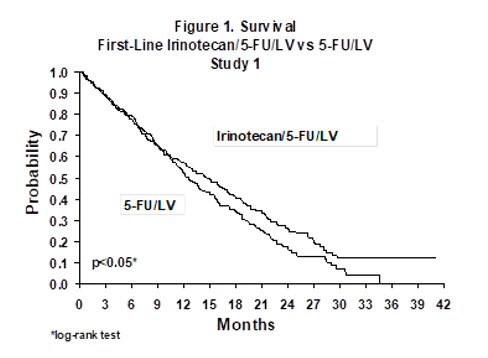
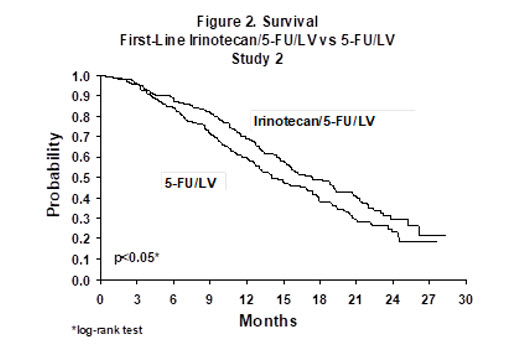
In both studies, the combination of irinotecan/5-FU/LV therapy resulted in significant improvements in objective tumor response rates, time to tumor progression, and survival when compared with 5-FU/LV alone. These differences in survival were observed in spite of second-line therapy in a majority of patients on both arms, including crossover to irinotecan-containing regimens in the control arm. Patient characteristics and major efficacy results are shown in Table 10.
Table 10. Combination Dosage Schedule: Study Results | Study 1 | Study 2 |
|---|
| Irinotecan + Bolus 5-FU/LV weekly × 4 every 6 weeks | Bolus 5-FU/LV daily × 5 every 4 weeks | Irinotecan weekly × 4 every 6 weeks | Irinotecan + Infusional 5-FU/LV | Infusional 5-FU/LV |
|---|
| Number of patients | 231 | 226 | 226 | 198 | 187 |
| Demographics and treatment administration |
| Female/Male (%) | 34/65 | 45/54 | 35/64 | 33/67 | 47/53 |
| Median age in years (range) | 62 (25–85) | 61 (19–85) | 61 (30–87) | 62 (27–75) | 59 (24–75) |
| Performance status (%) | | | | | |
| 0 | 39 | 41 | 46 | 51 | 51 |
| 1 | 46 | 45 | 46 | 42 | 41 |
| 2 | 15 | 13 | 8 | 7 | 8 |
| Primary tumor (%) | | | | | |
| Colon | 81 | 85 | 84 | 55 | 65 |
| Rectum | 17 | 14 | 15 | 45 | 35 |
| Median time from diagnosis to randomization (months, range) | 1.9
(0–161) | 1.7
(0–203) | 1.8
(0.1–185) | 4.5
(0–88) | 2.7
(0–104) |
Prior adjuvant 5-FU therapy (%)
No
Yes | 89
11 | 92
8 | 90
10 | 74
26 | 76
24 |
| Median duration of study treatment Study 1: N=225 (irinotecan/5-FU/LV),N=219 (5-FU/LV),N=223 (irinotecan)
Study 2: N=199 (irinotecan/5-FU/LV),N=186 (5-FU/LV) (months) | 5.5 | 4.1 | 3.9 | 5.6 | 4.5 |
Median Relative Dose Intensity (%)
Irinotecan
5-FU | 72
71 | —
86 | 75
— | 87
86 | —
93 |
| Efficacy Results |
| Confirmed objective tumor response rate Confirmed ≥ 4 to 6 weeks after first evidence of objective response (%) | 39 | 21 | 18 | 35 | 22 |
| (p<0.0001) Chi-square test | | (p<0.005) |
| Median time to tumor progression Log-rank test
(months) | 7.0 | 4.3 | 4.2 | 6.7 | 4.4 |
| (p=0.004) | | (p<0.001) |
Median survival
(months) | 14.8 | 12.6 | 12.0 | 17.4 | 14.1 |
| (p<0.05) | | (p<0.05) |
Improvement was noted with irinotecan-based combination therapy relative to 5-FU/LV when response rates and time to tumor progression were examined across the following demographic and disease-related subgroups (age, gender, ethnic origin, performance status, extent of organ involvement with cancer, time from diagnosis of cancer, prior adjuvant therapy, and baseline laboratory abnormalities). Figures 1 and 2 illustrate the Kaplan-Meier survival curves for the comparison of irinotecan/5-FU/LV versus 5-FU/LV in Studies 1 and 2, respectively.
Second-Line Therapy After 5-FU-Based Treatment
4 Weekly Doses on a 6-Week Cycle: Studies 3, 4, and 5
Data from three open-label, single-agent, clinical studies, involving a total of 304 patients in 59 centers, support the use of CAMPTOSAR in the treatment of patients with metastatic cancer of the colon or rectum that has recurred or progressed following treatment with 5-FU-based therapy. These studies were designed to evaluate tumor response rate and do not provide information on effects on survival and disease-related symptoms. In each study, CAMPTOSAR was administered in repeated 6-week cycles consisting of a 90-minute intravenous infusion once weekly for 4 weeks, followed by a 2-week rest period. Starting doses of CAMPTOSAR in these trials were 100, 125, or 150 mg/m2, but the 150-mg/m2 dose was poorly tolerated (due to high rates of grade 4 late diarrhea and febrile neutropenia). Study 3 enrolled 48 patients and was conducted by a single investigator at several regional hospitals. Study 4 was a multicenter study conducted by the North Central Cancer Treatment Group. All 90 patients enrolled in Study 4 received a starting dose of 125 mg/m2. Study 5 was a multicenter study that enrolled 166 patients from 30 institutions. The initial dose in Study 5 was 125 mg/m2 but was reduced to 100 mg/m2 because the toxicity seen at the 125-mg/m2 dose was perceived to be greater than that seen in previous studies. All patients in these studies had metastatic colorectal cancer, and the majority had disease that recurred or progressed following a 5-FU-based regimen administered for metastatic disease. The results of the individual studies are shown in Table 11.
Table 11. Weekly Dosage Schedule: Study Results | Study |
|---|
| 3 | 4 | 5 |
|---|
| Number of Patients | 48 | 90 | 64 | 102 |
| Starting Dose (mg/m2/week × 4) | 125 Nine patients received 150 mg/m2 as a starting dose; two (22.2%) responded to CAMPTOSAR. | 125 | 125 | 100 |
| Demographics and Treatment Administration |
| Female/Male (%) | 46/54 | 36/64 | 50/50 | 51/49 |
| Median Age in years (range) | 63 (29–78) | 63 (32–81) | 61 (42–84) | 64 (25–84) |
| Ethnic Origin (%) | | | | |
| White | 79 | 96 | 81 | 91 |
| African American | 12 | 4 | 11 | 5 |
| Hispanic | 8 | 0 | 8 | 2 |
| Oriental/Asian | 0 | 0 | 0 | 2 |
| Performance Status (%) | | | | |
| 0 | 60 | 38 | 59 | 44 |
| 1 | 38 | 48 | 33 | 51 |
| 2 | 2 | 14 | 8 | 5 |
| Primary Tumor (%) | | | | |
| Colon | 100 | 71 | 89 | 87 |
| Rectum | 0 | 29 | 11 | 8 |
| Unknown | 0 | 0 | 0 | 5 |
| Prior 5-FU Therapy (%) | | | | |
| For Metastatic Disease | 81 | 66 | 73 | 68 |
| ≤ 6 months after Adjuvant | 15 | 7 | 27 | 28 |
| > 6 months after Adjuvant | 2 | 16 | 0 | 2 |
| Classification Unknown | 2 | 12 | 0 | 3 |
| Prior Pelvic/Abdominal Irradiation (%) | | | | |
| Yes | 3 | 29 | 0 | 0 |
| Other | 0 | 9 | 2 | 4 |
| None | 97 | 62 | 98 | 96 |
| Duration of Treatment with CAMPTOSAR (median, months) | 5 | 4 | 4 | 3 |
| Relative Dose Intensity Relative dose intensity for CAMPTOSAR based on planned dose intensity of 100, 83.3, and 66.7 mg/m2/wk corresponding with 150, 125, and 100 mg/m2 starting doses, respectively. (median %) | 74 | 67 | 73 | 81 |
| Efficacy |
| Confirmed Objective Response Rate (%) Confirmed ≥ 4 to 6 weeks after first evidence of objective response.
(95% CI) | 21
(9.3 – 32.3) | 13
(6.3 – 20.4) | 14
(5.5 – 22.6) | 9
(3.3 – 14.3) |
| Time to Response (median, months) | 2.6 | 1.5 | 2.8 | 2.8 |
| Response Duration (median, months) | 6.4 | 5.9 | 5.6 | 6.4 |
| Survival (median, months) | 10.4 | 8.1 | 10.7 | 9.3 |
| 1-Year Survival (%) | 46 | 31 | 45 | 43 |
In the intent-to-treat analysis of the pooled data across all three studies, 193 of the 304 patients began therapy at the recommended starting dose of 125 mg/m2. Among these 193 patients, 2 complete and 27 partial responses were observed, for an overall response rate of 15.0% (95% Confidence Interval [CI], 10.0% to 20.1%) at this starting dose. A considerably lower response rate was seen with a starting dose of 100 mg/m2. The majority of responses were observed within the first two cycles of therapy, but responses did occur in later cycles of treatment (one response was observed after the eighth cycle). The median response duration for patients beginning therapy at 125 mg/m2 was 5.8 months (range, 2.6 to 15.1 months). Of the 304 patients treated in the three studies, response rates to CAMPTOSAR were similar in males and females and among patients older and younger than 65 years. Rates were also similar in patients with cancer of the colon or cancer of the rectum and in patients with single and multiple metastatic sites. The response rate was 18.5% in patients with a performance status of 0 and 8.2% in patients with a performance status of 1 or 2. Patients with a performance status of 3 or 4 have not been studied. Over half of the patients responding to CAMPTOSAR had not responded to prior 5-FU. Patients who had received previous irradiation to the pelvis responded to CAMPTOSAR at approximately the same rate as those who had not previously received irradiation.
Once-Every-3-Week Dosage Schedule
Single Arm Study: Study 6
Data from an open-label, single-agent, single-arm, multicenter, clinical study involving a total of 132 patients support a once every-3-week dosage schedule of irinotecan in the treatment of patients with metastatic cancer of the colon or rectum that recurred or progressed following treatment with 5-FU. Patients received a starting dose of 350 mg/m2 given by 30-minute intravenous infusion once every 3 weeks. Among the 132 previously treated patients in this trial, the intent-to-treat response rate was 12.1% (95% CI, 7.0% to 18.1%).
Randomized Studies: Studies 7 and 8
Two multicenter, randomized, clinical studies further support the use of irinotecan given by the once-every-3-week dosage schedule in patients with metastatic colorectal cancer whose disease has recurred or progressed following prior 5-FU therapy. In Study 7, second-line irinotecan therapy plus best supportive care was compared with best supportive care alone. In Study 8, second-line irinotecan therapy was compared with infusional 5-FU-based therapy. In both studies, irinotecan was administered intravenously at a starting dose of 350 mg/m2 over 90 minutes once every 3 weeks. The starting dose was 300 mg/m2 for patients who were 70 years and older or who had a performance status of 2. The highest total dose permitted was 700 mg. Dose reductions and/or administration delays were permitted in the event of severe hematologic and/or nonhematologic toxicities while on treatment. Best supportive care was provided to patients in both arms of Study 7 and included antibiotics, analgesics, corticosteroids, transfusions, psychotherapy, or any other symptomatic therapy as clinically indicated. In both studies, concomitant medications such as antiemetics, atropine, and loperamide were given to patients for prophylaxis and/or management of symptoms from treatment. If late diarrhea persisted for greater than 24 hours despite loperamide, a 7-day course of fluoroquinolone antibiotic prophylaxis was given. Patients in the control arm of the Study 8 received one of the following 5-FU regimens: (1) LV, 200 mg/m2 IV over 2 hours; followed by 5-FU, 400 mg/m2 IV bolus; followed by 5-FU, 600 mg/m2 continuous IV infusion over 22 hours on days 1 and 2 every 2 weeks; (2) 5-FU, 250 to 300 mg/m2/day protracted continuous IV infusion until toxicity; (3) 5-FU, 2.6 to 3 g/m2 IV over 24 hours every week for 6 weeks with or without LV, 20 to 500 mg/m2/day every week IV for 6 weeks with 2-week rest between cycles. Patients were to be followed every 3 to 6 weeks for 1 year.
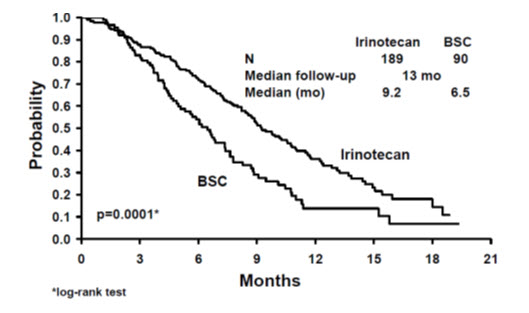
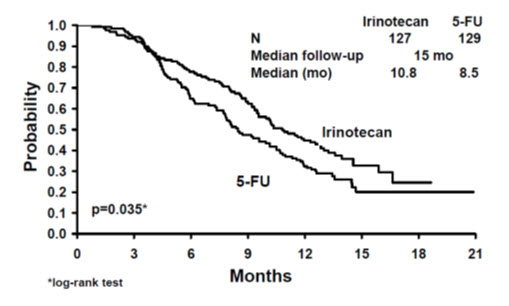
A total of 535 patients were randomized in the two studies at 94 centers. The primary endpoint in both studies was survival. The studies demonstrated a significant overall survival advantage for irinotecan compared with best supportive care (p=0.0001) and infusional 5-FU-based therapy (p=0.035) as shown in Figures 3 and 4. In Study 7, median survival for patients treated with irinotecan was 9.2 months compared with 6.5 months for patients receiving best supportive care. In Study 8, median survival for patients treated with irinotecan was 10.8 months compared with 8.5 months for patients receiving infusional 5-FU-based therapy. Multiple regression analyses determined that patients' baseline characteristics also had a significant effect on survival. When adjusted for performance status and other baseline prognostic factors, survival among patients treated with irinotecan remained significantly longer than in the control populations (p=0.001 for Study 7 and p=0.017 for Study 8). Measurements of pain, performance status, and weight loss were collected prospectively in the two studies; however, the plan for the analysis of these data was defined retrospectively. When comparing irinotecan with best supportive care in Study 7, this analysis showed a statistically significant advantage for irinotecan, with longer time to development of pain (6.9 months versus 2.0 months), time to performance status deterioration (5.7 months versus 3.3 months), and time to > 5% weight loss (6.4 months versus 4.2 months). Additionally, 33.3% (33/99) of patients with a baseline performance status of 1 or 2 showed an improvement in performance status when treated with irinotecan versus 11.3% (7/62) of patients receiving best supportive care (p=0.002). Because of the inclusion of patients with non-measurable disease, intent-to-treat response rates could not be assessed.
Figure 3. Survival Second-Line Irinotecan vs Best Supportive Care (BSC)
Study 7 |
|---|
|
Figure 4. Survival Second-Line Irinotecan vs Infusion 5-FU
Study 8 |
|---|
|
Table 12. Once-Every-3-Week Dosage Schedule: Study Results | Study 7 | Study 8 |
|---|
| Irinotecan | BSC BSC = best supportive care | Irinotecan | 5-FU |
|---|
| Number of patients | 189 | 90 | 127 | 129 |
| Demographics and treatment administration |
| Female/Male (%) | 32/68 | 42/58 | 43/57 | 35/65 |
| Median age in years (range) | 59 (22–75) | 62 (34–75) | 58 (30–75) | 58 (25–75) |
| Performance status (%) | | | | |
| 0 | 47 | 31 | 58 | 54 |
| 1 | 39 | 46 | 35 | 43 |
| 2 | 14 | 23 | 8 | 3 |
| Primary tumor (%) | | | | |
| Colon | 55 | 52 | 57 | 62 |
| Rectum | 45 | 48 | 43 | 38 |
| Prior 5-FU therapy (%) | | | | |
| For metastatic disease | 70 | 63 | 58 | 68 |
| As adjuvant treatment | 30 | 37 | 42 | 32 |
| Prior irradiation (%) | 26 | 27 | 18 | 20 |
| Duration of study treatment (median, months) | 4.1 | -- | 4.2 | 2.8 |
| (Log-rank test) | | | (p=0.02) | |
| Relative dose intensity (median %) Relative dose intensity for irinotecan based on planned dose intensity of 116.7 and 100 mg/m2/wk corresponding with 350 and 300 mg/m2 starting doses, respectively. | 94 | -- | 95 | 81–99 |
| Survival |
| Survival (median, months) | 9.2 | 6.5 | 10.8 | 8.5 |
| (Log-rank test) | (p=0.0001) | | (p=0.035) | |
In the two randomized studies, the EORTC QLQ-C30 instrument was utilized. At the start of each cycle of therapy, patients completed a questionnaire consisting of 30 questions, such as "Did pain interfere with daily activities?" (1 = Not at All, to 4 = Very Much) and "Do you have any trouble taking a long walk?" (Yes or No). The answers from the 30 questions were converted into 15 subscales, that were scored from 0 to 100, and the global health status subscale that was derived from two questions about the patient's sense of general well being in the past week. The results as summarized in Table 13 are based on patients' worst post-baseline scores. In Study 7, a multivariate analysis and univariate analyses of the individual subscales were performed and corrected for multivariate testing. Patients receiving irinotecan reported significantly better results for the global health status, on two of five functional subscales, and on four of nine symptom subscales. As expected, patients receiving irinotecan noted significantly more diarrhea than those receiving best supportive care. In Study 8, the multivariate analysis on all 15 subscales did not indicate a statistically significant difference between irinotecan and infusional 5-FU.
Table 13. EORTC QLQ-C30: Mean Worst Post-Baseline ScoreFor the five functional subscales and global health status subscale, higher scores imply better functioning, whereas, on the nine symptom subscales, higher scores imply more severe symptoms. The subscale scores of each patient were collected at each visit until the patient dropped out of the study.
| QLQ-C30 Subscale | Study 7 | Study 8 |
|---|
| Irinotecan | BSC | p-value | Irinotecan | 5-FU | p-value |
|---|
| Global health status | 47 | 37 | 0.03 | 53 | 52 | 0.9 |
| Functional scales |
| Cognitive | 77 | 68 | 0.07 | 79 | 83 | 0.9 |
| Emotional | 68 | 64 | 0.4 | 64 | 68 | 0.9 |
| Social | 58 | 47 | 0.06 | 65 | 67 | 0.9 |
| Physical | 60 | 40 | 0.0003 | 66 | 66 | 0.9 |
| Role | 53 | 35 | 0.02 | 54 | 57 | 0.9 |
| Symptom Scales |
| Fatigue | 51 | 63 | 0.03 | 47 | 46 | 0.9 |
| Appetite loss | 37 | 57 | 0.0007 | 35 | 38 | 0.9 |
| Pain assessment | 41 | 56 | 0.009 | 38 | 34 | 0.9 |
| Insomnia | 39 | 47 | 0.3 | 39 | 33 | 0.9 |
| Constipation | 28 | 41 | 0.03 | 25 | 19 | 0.9 |
| Dyspnea | 31 | 40 | 0.2 | 25 | 24 | 0.9 |
| Nausea/Vomiting | 27 | 29 | 0.5 | 25 | 16 | 0.09 |
| Financial impact | 22 | 26 | 0.5 | 24 | 15 | 0.3 |
| Diarrhea | 32 | 19 | 0.01 | 32 | 22 | 0.2 |
This product's label may have been updated. For current full prescribing information, please visit www.pfizer.com.
LAB-0134-23.0