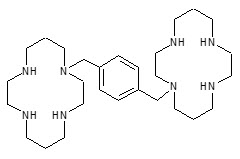
Leukocytosis
Administration of Mozobil in conjunction with G-CSF increases circulating leukocytes as well as HSC populations. Monitor white blood cell counts during Mozobil use [see Adverse Reactions (6.1)].
Thrombocytopenia
Thrombocytopenia has been observed in patients receiving Mozobil. Monitor platelet counts in all patients who receive Mozobil and then undergo apheresis.
Blood and lymphatic system: Splenomegaly and splenic rupture
Immune System Disorders: Anaphylactic reactions, including anaphylactic shock
Psychiatric disorders: Abnormal dreams and nightmares
Risk Summary
Mozobil may cause fetal harm when administered to a pregnant woman. Plerixafor is teratogenic in animals.
Animal Data
Plerixafor administered to pregnant rats induced embryo-fetal toxicities including fetal death, increased resorptions and postimplantation loss, decreased fetal weights, anophthalmia, shortened digits, cardiac interventricular septal defect, ringed aorta, globular heart, hydrocephaly, dilatation of olfactory ventricles, and retarded skeletal development. Embryo-fetal toxicities occurred mainly at a dose of 90 mg/m2 (approximately 10 times the recommended human dose of 0.24 mg/kg when compared on a mg/m2 basis or 10 times the AUC in subjects with normal renal function who received a single dose of 0.24 mg/kg).
QT/QTc Prolongation
There is no indication of a QT/QTc prolonging effect of Mozobil in single doses up to 0.40 mg/kg. In a randomized, double-blind, crossover study, 48 healthy subjects were administered a single subcutaneous dose of plerixafor (0.24 mg/kg and 0.40 mg/kg) and placebo. Peak concentrations for 0.40 mg/kg Mozobil were approximately 1.8-fold higher than the peak concentrations following the 0.24 mg/kg single subcutaneous dose.
Absorption
Peak plasma concentrations occurred at approximately 30 to 60 minutes after a SC dose.
Distribution
Plerixafor is bound to human plasma proteins up to 58%. The apparent volume of distribution of plerixafor in humans is 0.3 L/kg demonstrating that plerixafor is largely confined to, but not limited to, the extravascular fluid space.
Metabolism
The metabolism of plerixafor was evaluated with in vitro assays. Plerixafor is not metabolized as shown in assays using human liver microsomes or human primary hepatocytes and does not exhibit inhibitory activity in vitro towards the major drug metabolizing cytochrome P450 enzymes (1A2, 2A6, 2B6, 2C8, 2C9, 2C19, 2D6, 2E1 and 3A4/5). In in vitro studies with human hepatocytes, plerixafor does not induce CYP1A2, CYP2B6, or CYP3A4 enzymes. These findings suggest that plerixafor has a low potential for involvement in cytochrome P450-dependent drug-drug interactions.
Elimination
The major route of elimination of plerixafor is urinary. Following a 0.24 mg/kg dose in healthy volunteers with normal renal function, approximately 70% of the dose was excreted in the urine as the parent drug during the first 24 hours following administration. In studies with healthy subjects and patients, the terminal half-life in plasma ranges between 3 and 5 hours. At concentrations similar to what are seen clinically, plerixafor did not act as a substrate or inhibitor of P-glycoprotein in an in vitro study with MDCKII and MDCKII-MDR1 cell models.
Special Populations
Renal Impairment
Following a single 0.24 mg/kg SC dose, plerixafor clearance was reduced in subjects with varying degrees of renal impairment and was positively correlated with CLCR. The mean AUC0–24h of plerixafor in subjects with mild (CLCR 51–80 mL/min), moderate (CLCR 31–50 mL/min), and severe (CLCR <31 mL/min) renal impairment was 7%, 32%, and 39% higher than healthy subjects with normal renal function, respectively. Renal impairment had no effect on Cmax. A population pharmacokinetic analysis indicated an increased exposure (AUC0–24h) in patients with moderate and severe renal impairment compared to patients with CLCR >50 mL/min. These results support a dose reduction of one-third in patients with moderate to severe renal impairment (CLCR ≤50 mL/min) in order to match the exposure in patients with normal renal function. The population pharmacokinetic analysis showed that the mg/kg-based dosage results in an increased plerixafor exposure (AUC0–24h) with increasing body weight; therefore, if CLCR is ≤50 mL/min the dose should not exceed 27 mg/day [see Dosage and Administration (2.3)].
Since plerixafor is primarily eliminated by the kidneys, coadministration of plerixafor with drugs that reduce renal function or compete for active tubular secretion may increase serum concentrations of plerixafor or the coadministered drug. The effects of coadministration of plerixafor with other drugs that are renally eliminated or are known to affect renal function have not been evaluated.
Race
Clinical data show similar plerixafor pharmacokinetics for Caucasians and African Americans, and the effect of other racial/ethnic groups has not been studied.
Gender
Clinical data show no effect of gender on plerixafor pharmacokinetics.
Age
Clinical data show no effect of age on plerixafor pharmacokinetics.
Genzyme Corporation
500 Kendall Street
Cambridge, MA 02142 USA
A SANOFI COMPANY
©2017 Genzyme Corporation. All rights reserved.
Mozobil is a registered trademark of Genzyme Corporation.
Revised: December 2017