- The recommended initial dosage regimen is 60 IU/kg twice weekly.
- Adjust the dose based on the patient's clinical response and/or recovery [see Warnings and Precautions (5.3)].
Reconstitution
Work on a clean surface and wash hands thoroughly using soap and warm water before performing the procedures.
- 1.Warm both unopened JIVI vial and prefilled diluent syringe in your hands to a comfortable temperature (do not exceed 37°C or 99°F).
|
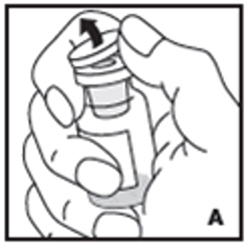
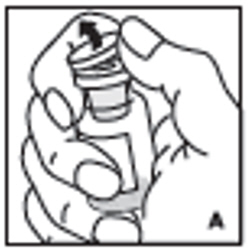
- 2.Remove the protective cap from the vial (A). Aseptically cleanse the rubber stopper with a sterile alcohol swab, being careful not to handle the rubber stopper.
| |
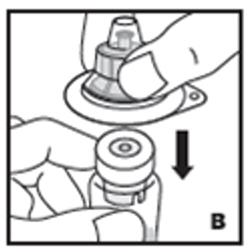
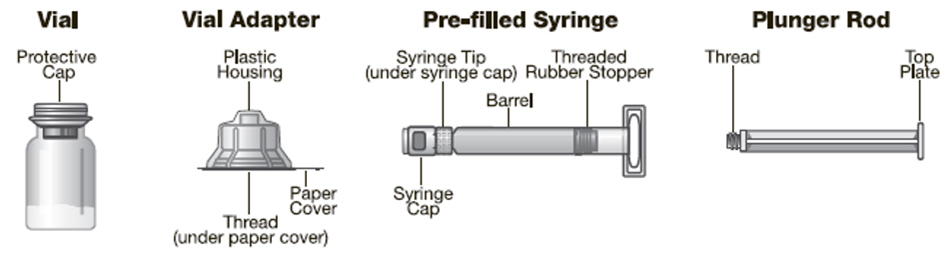
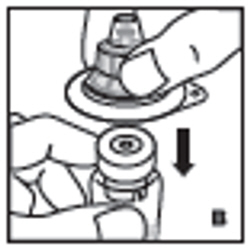
- 3.Place the product vial on a firm, non-skid surface. Peel off the paper cover on the vial adapter plastic housing. Do not remove the adapter from the plastic housing. Holding the adapter housing, place over the product vial and firmly press down (B). The adapter will snap over the vial cap. Do not remove the adapter housing at this step.
| |
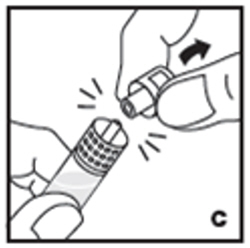
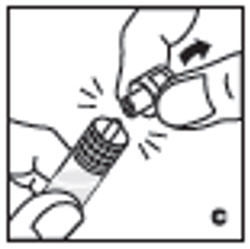
- 4.Holding the syringe by the barrel, snap the syringe cap off the tip (C). Do not touch the syringe tip with your hand or any surface. Set the syringe aside for further use.
| |
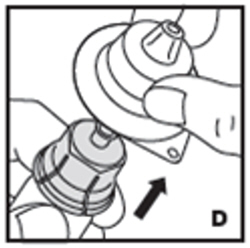
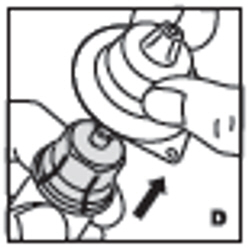
- 5.Now remove and discard the adapter plastic housing (D).
| |
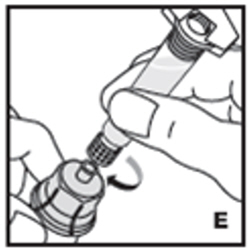
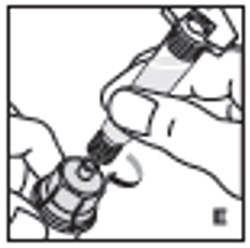
- 6.Attach the prefilled syringe to the vial adapter thread by turning clockwise (E).
| |
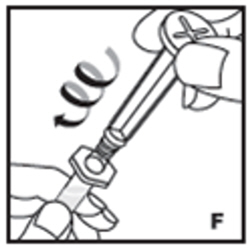
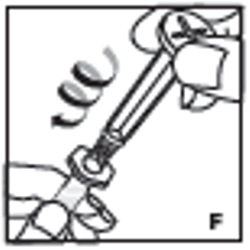
- 7.Remove the clear plastic plunger rod from the carton. Grasp the plunger rod by the top plate. Avoid touching the sides and threads of the plunger rod. Attach the plunger rod by turning it clockwise into the threaded rubber stopper of the prefilled syringe (F).
| |
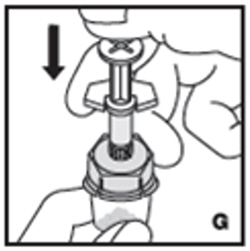
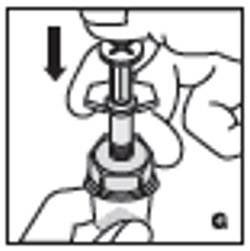
- 8.Inject the diluent slowly by pushing down on the plunger rod (G).
| |
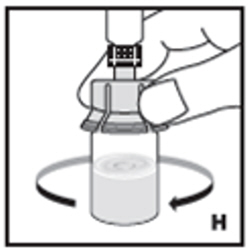
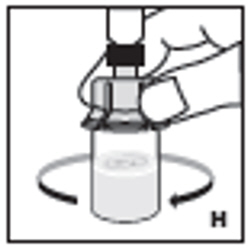
- 9.Swirl vial gently until all powder on all sides of the vial is dissolved (H). Do not shake vial. Be sure that all powder is completely dissolved. Do not use if solution contains visible particles or is cloudy.
| |
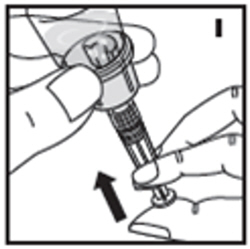
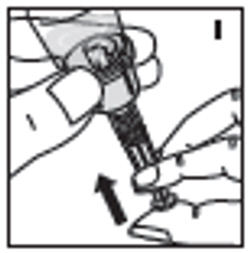
- 10.Push down on the plunger to push all air back into the vial. Then while holding the plunger down, turn the vial with syringe upside-down (invert) so the vial is now above the syringe (I). Pooling: If the dose requires more than one vial, reconstitute each vial as described above with the diluent syringe provided. Use a larger plastic syringe (not provided) to combine the contents of the vials into the syringe.
| |
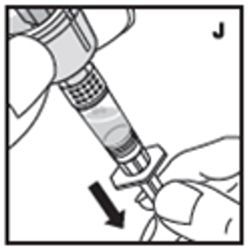
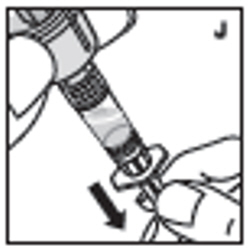
- 11.Filter the reconstituted product to remove potential particulate matter in the solution. Filtering is achieved by using the vial adapter. Withdraw all the solution through the vial adapter into the syringe by pulling the plunger rod back slowly and smoothly (J). Tilt the vial to the side and back to make sure all the solution has been drawn toward the large opening in the rubber stopper and into the syringe. Remove as much air as possible before removing the syringe from the vial by slowly and carefully pushing the air back into the vial.
| |
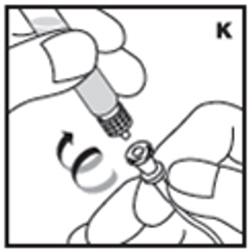
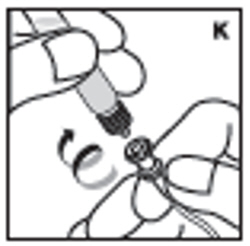
- 12.Detach the syringe with plunger rod from the vial adapter by turning counter-clockwise. Attach the syringe to the infusion set provided and inject the reconstituted product intravenously (K).
Note: follow instructions for infusion set provided.
| |
Immunogenicity: Anti-Drug Antibody-Associated Adverse Reactions
The observed incidence of anti-drug antibodies is highly dependent on the sensitivity and specificity of the assay. Differences in assay methods preclude meaningful comparisons of the incidence of anti-drug antibodies to JIVI in the studies described below with the incidence of anti-drug antibodies in studies with other products.
Immunogenicity was evaluated during clinical trials with JIVI in 158 (including surgery patients ) previously treated adult and pediatric patients (≥ 12 years of age) severe hemophilia A (Factor VIII activity < 1%) patients with previous exposure to Factor VIII concentrates ≥ 150 EDs. There were 108 previously treated pediatric patients < 12 years of age [see Use in Specific Populations (8.4)].
Factor VIII Inhibitors
In Study 2, a Factor VIII inhibitor (1.7 BU/mL) was reported in 1 out of 144 patients [see Warning and Precautions (5.2)].
Anti-PEG Antibodies
In Study 2, immunogenicity against PEG was evaluated by anti-PEG screening and specific IgM anti-PEG ELISA assays. One patient (19 years of age) with asthma, presented at 4 exposure days (EDs) with a clinical hypersensitivity reaction after infusion of JIVI. The patient reported headache, abdominal pain, shortness of breath, and flushing, all of which resolved following his standard asthma treatment. No further medical intervention was required. The event was associated with a transient increase of IgM anti-PEG antibody titer, which was negative upon retest during follow-up within 30 days.
In Study 4 (7 to <12 years of age), one pediatric patient developed high titer neutralizing anti-PEG IgM antibodies (titer 1:64) after 2 EDs associated with low post-infusion FVIII levels and loss of efficacy. Antibodies disappeared after discontinuation and patient restarted treatment with JIVI 2 months later.
Three pediatric patients developed low titer and transient anti-PEG IgM antibodies (highest titer 1:4) within the first 4 EDs resulting in reduction of JIVI recovery (lowest recovery 0.8 kg/dl) in two patients and inconclusive data on recovery in one patient.
Risk Summary
There are no data with JIVI use in pregnant women to inform on drug-associated risk. Animal developmental and reproductive toxicity studies have not been conducted with JIVI. It is not known whether JIVI can cause fetal harm when administered to a pregnant woman or can affect reproduction capacity.
In the U.S. general population, the estimated background risk of major birth defects and miscarriage in clinically recognized pregnancies is 2–4% and 15–20%, respectively.
Risk Summary
There is no information regarding the presence of JIVI in human milk, the effects on the breastfed infant, or the effects on milk production. The developmental and health benefits of breastfeeding should be considered along with the mother's clinical need for JIVI and any potential adverse effects on the breastfed infant from JIVI or from the underlying maternal condition.
Study 2
A multinational, prospective, single-arm study in adult and pediatric previously treated patients (PTP) 12 to 65 years of age with ≥ 150 exposure days (EDs). The study consisted of three parts: Part A (Weeks 0 – 36); an optional extension phase for patients who completed Part A to accumulate at least 100 EDs; and Part B, a surgical phase.
Part A of the study evaluated the PK (single dose of 60 IU/kg), safety and efficacy of JIVI for on-demand treatment and routine prophylaxis. A total of 134 PTPs received at least one infusion of JIVI, including 20 on-demand treating patients with a median age of 48 years (range: 22 to 61), 114 prophylaxis-treating patients with a median age of 33 years (range: 12 to 62). The prophylaxis group (n=112, excluding 2 patients who dropped out after single infusion) completed a 10-week run-in phase during which patients received 25 IU/kg twice weekly JIVI before patients were randomized to the different dosing regimens based on their bleeding frequency for weeks 10–36. The on-demand group (n=20) treated with JIVI on-demand for the full 36 weeks. One hundred thirty two patients were evaluable for efficacy, of which 126 (94%) patients (prophylaxis group: n=108; on-demand group: n=18) completed the 36 weeks of treatment in Part A. The primary efficacy endpoint was annualized bleed rate (ABR).
A total of 121 patients received treatment during the extension phase (107 patients received prophylaxis and 14 patients continued on-demand treatment).
Safety and efficacy of JIVI in hemostasis during major surgical procedures were evaluated in 17 patients in Part B.
Study 3
A multi-center, prospective, single-arm trial to evaluate the pharmacokinetics, safety, and efficacy of JIVI for prophylaxis and treatment of bleeding in previously treated pediatric patients <12 years of age with severe hemophilia A. The study consisted of three parts: the main study with 2 subgroups by age (<6 years and 6 to <12 years), an expansion study in children <6 years and an optional extension study. The main study evaluated the PK (single dose of 60 IU/kg) in each age subgroup, safety and efficacy of JIVI for on-demand treatment and routine prophylaxis for a minimum of 50 EDs and 6 months. A total of 73 PTPs were included, and were treated prophylactically with regimens of twice weekly (25-60 IU/kg) or every 5 days (45-60 IU/kg) or every 7 days at any given time as per investigator's discretion. The median age was 5 years (range: 2 to 11). The primary efficacy endpoint was the annualized bleed rate (ABR).
Study 4
A multi-center, prospective, single-arm, study to evaluate the safety of JIVI infusions for prophylaxis and treatment of bleeding in previously treated pediatric patients 7 to <12 years of age with severe hemophilia A. The study evaluated the potential risk of hypersensitivity and loss of drug effect associated with an immune response to polyethylene glycol (PEG) during the first 4 exposure days to JIVI. A total of 35 patients with a median age of 8 years (range: 7 to 11) were enrolled and treated prophylactically for a minimum of 50 EDs and 26 weeks. The patients received a treatment regimen of JIVI twice weekly (40-60 IU/kg) at investigator's discretion. Thirty-two patients completed the treatment phase and were offered continuation in an 18 months extension study. A key secondary endpoint was the annualized bleed rate (ABR).
On-demand Treatment and Control of Bleeding Episodes
In Study 2, approximately 91% of bleeds were successfully treated with 1 or 2 infusions in both the on-demand and prophylaxis groups. In Studies 3 and 4, approximately 97% of bleeds were successfully treated with 1 or 2 infusions. Efficacy in control of bleeding episodes is summarized in Table 5.
Table 5: On-Demand Treatment and Control of Bleeding Episodes | Characteristics of Bleeding Episodes | Adults and Adolescents
(≥12 Years of Age) | Children
(7 to <12 Years of Age)Pooled patients from Studies 3 and 4 in the age group 7 to <12 years of age with a twice weekly regimen and at least a 3 months treatment period, modified ITT set |
|---|
On-Demand
n=20 | Routine Prophylaxis
n=112 | Routine prophylaxis
n=42 |
|---|
Definitions:
Excellent: Abrupt pain relief and/or improvement in signs of bleeding with no additional infusion administered
Good: Definite pain relief and/or improvement in signs of bleeding, but possibly requiring more than one infusion for complete resolution
Moderate: Probable or slight improvement, with at least one additional infusion for complete resolution
Poor: No improvement or condition worsened |
| Total number of bleeds treated | 388 For two bleeds in the on-demand group and one bleed in the prophylaxis group, limited information is available. | 317a | 36 |
| 1 infusion | 309 (80%) | 263 (83%) | 30 (83%) |
| 2 infusions | 45 (11%) | 22 (7%) | 5 (14%) |
| ≥ 3 infusions | 34 (9%) | 32 (10%) | 1 (3%) |
| Number of bleeds with assessment | 384 | 310 | 36 |
| Number of responses to treatment of bleeds assessed as 'Excellent' or 'Good' (%) | 253 (66%) | 256 (83%) | 30 (83%) |
| Number of responses to treatment of bleeds assessed as 'Moderate' | 115 (30%) | 47 (15%) | 5 (14%) |
| Number of responses to treatment of bleeds assessed as 'Poor' | 16 (4%) | 7 (2%) | 1 (3%) |
Perioperative Management
In Study 2, a total of 17 patients successfully completed 20 major surgeries. In Part B of the study, 14 patients underwent 17 surgeries and in the extension study, 3 patients underwent 3 surgeries, using JIVI for hemostasis. There were 6 non-orthopedic surgeries and 14 orthopedic surgeries (3 arthroplasties, 6 joint replacements, 3 synovectomies, and 2 other joint procedures). Treatment with JIVI provided 'good' or 'excellent' hemostatic control during all 20 major surgeries. The initial JIVI pre-surgery doses administered ranged between 2500 and 5000 IU. The median total dose per surgery was 219 IU/kg with a median of 35 IU/kg/infusion and a median of 7 infusions per surgery (up to 3 weeks). The median number of infusions on day of surgery was 2 (range: 1 – 3).
An additional 17 minor surgeries were performed in 10 patients during Part A of Study 2 . The adequacy of hemostasis during minor surgeries was assessed as either 'good' or 'excellent' in 16 cases and not reported in one case.
A total of 7 patients in the age group 7 to <12 years, 5 patients in Study 3 and 2 patients in Study 4 had 10 minor surgeries. The adequacy of hemostasis during minor surgeries was assessed as either 'good' or 'excellent' in 4 cases, moderate in 1 case and not reported in 5 cases.
Routine Prophylaxis
Adults and Adolescents (≥12 years of age)
In Study 2, the primary assessment of efficacy was based on 110 patients who received JIVI for routine prophylaxis during Weeks 10–36 of Part A. Of these, 107 patients participated in the optional extension phase.
All patients in the prophylaxis treatment arms began treatment with twice weekly infusions of 25 IU/kg for 10 weeks (run-in phase). After the run-in phase (Weeks 0 – 10), patients (97 of 110; 88%) who experienced ≤ 1 breakthrough bleeds during the first 10 weeks of treatment qualified for randomization to a less frequent dosing regimen, 86 were randomized 1:1 (n = 43 to either arm) to either every 5 days of 45–60 IU/kg, with a median of 45.3 IU/kg (range: 39 to 58) or every 7 days for an additional 26 weeks (Weeks 10–36; 6.5 months). Eleven additional patients, who completed the run-in phase and were eligible for randomization after the every 5- and 7-day arms were filled, remained in the twice weekly regimen of 30–40 IU/kg, with a median of 30.6 (range: 29 to 41). Dose adjustments were recommended for randomized patients who experienced 2 joint and/or muscle bleeds within a 10-week interval during week 10–36 and included the increase of the dose up to 60 IU/kg or changing to more frequent dosing.
Twelve percent of patients (n=13) who experienced ≥ 2 spontaneous bleeds during the 10 week run-in phase were ineligible for randomization and continued on the 2 times per week dosing frequency at a higher dose of 30–40 IU/kg, with a median of 39.2 IU/kg (range: 33 to 42) for the additional 26 weeks. Nine of the 13 patients were on prior prophylaxis (n=9) and were observed to have a higher mean number of bleeds in the 12 months prior to study entry of 17.4 compared to a mean of 5–7 bleeds for all other patients eligible for randomization to less frequent dosing regimens. The median cumulative number of days in the study (Part A plus extension) was 716 (range: 0 to 952) with a median number of 137 EDs (range: 1 to 309).
In Weeks 10–36 of Part A, the majority [99/110 (90%)] of patients did not change their treatment regimens. All patients randomized to the every 5-day regimen (43/43 patients) or assigned to the 2 times per week regimen (24/24 patients) remained in their assigned treatment arm until Week 36. Treatment success in the every 7 day arm was not established. For ABR by regimen, see Table 6.
During the extension phase of Study 2, the median prophylaxis dose was maintained for the median duration of 1.3 years (range: 0.1–1.9).
An analysis compared ABRs between the on-demand group and the different prophylaxis regimens indicated that the ABR was significantly reduced by 88.2% in the every 5-days (p<0.0001) in comparison with on-demand treatment. There was no significant difference in ABRs between the twice weekly and extended interval treatment arms. Nineteen (19) of 43 patients in the every 5-day arm (44%) experienced no bleeding episode during week 10–36.
Table 6: ABRThe ABR was calculated based on the time treated in the assigned treatment regimen.
for Treated Bleeds by Treatment Regimen in ITT population of Adults and Adolescents (≥12 Years of Age) | Main Study (Week 10 – 36) |
|---|
| Treatment Regimen (n) | | Type of Bleed | Patients with Zero Bleeds, % (n) |
|---|
| Total | Spontaneous | Joint |
|---|
2 times per week
30–40 IU/kg | Eligible for randomization
(11) | Median
(Q1; Q3) | 1.9
(0.0; 5.2) | 0.0
(0.0; 1.9) | 1.9
(0.0; 5.2) | 46% (5) |
| Mean (SD) | 2.2 (2.7) | 1.2 (2.2) | 2.2 (2.7) |
Ineligible for randomization
(13) | Median
(Q1; Q3) | 4.1
(2.0; 10.6) | 3.9
(0.0; 4.1) | 4.0
(2; 8.0) | 15% (2) |
| Mean (SD) | 7.2 (7.5) | 3.9 (4.3) | 5.2 (4.8) |
Every 5 days
45 – 60 IU/kg
(43) | Median
(Q1; Q3) | 1.9
(0.0; 4.2) | 0.0
(0.0; 4) | 1.9
(0.0; 4) | 44% (19) |
| Mean (SD) | 3.3 (4.3) | 1.8 (2.6) | 2.5 (3.5) |
| On-Demand The treatment period for on-demand was Weeks 0 – 36.
(20) | Median
(Q1; Q3) | 24.1
(17.8; 37.3) | 14.3
(7.3; 22.7) | 16.3
(11.6; 30.3) | 0 (0) |
| Mean (SD) | 28.8 (17.8) | 17.2 (13.2) | 22.2 (16.7) |
Children (7 to <12 years of age)
In Study 3 and Study 4, the efficacy of prophylactic treatment was assessed in 57 patients. Forty-two of 57 patients were treated with a twice weekly regimen of 25-60 IU/kg, with a median dose per infusion of 51.7 IU/kg (range: 22 to 69). The median cumulative number of days in the study for patients in the twice weekly treatment group was 182 (range: 172-238 days) with a median number of 53.5 EDs (range: 35-62 EDs). The ABR is presented in Table 7.
Table 7: ABR for Treated Bleeds in mITTModified ITT population included patients with at least a 3 months treatment period
population of Children (7 to <12 Years of Age) | Treatment Regimen (n) Pooled patients from Study 3 and Study 4 in the age group 7 to <12 years of age, modified ITT set | | Type of Bleed | Patients with Zero Bleeds, % (n) |
|---|
| Total | Spontaneous | Joint |
|---|
2 times per week
25-60 IU/kg
(n=42) | Median
(Q1; Q3) | 0.0 (0.0; 2.0) | 0.0 (0.0; 0.0) | 0.0 (0.0; 0.0) | 67% (28) |
| Mean (SD) | 1.7 (3.0) | 0.9 (2.0) | 0.9 (2.1) |
How Supplied
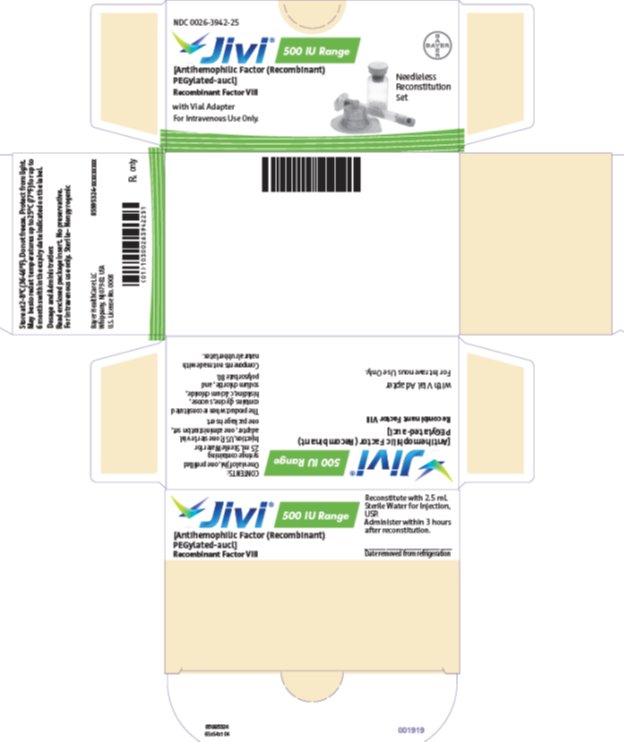
JIVI is available as a lyophilized powder in single-dose glass vials, one vial per carton. It is supplied with a sterile vial adapter with 15-micrometer filter and a prefilled diluent glass barrel syringe, which together serve as a needleless reconstitution system. The prefilled diluent syringe contains sterile Water for Injection, USP. An administration set is also provided in the package. Available sizes:
Nominal
Strength (IU) | Diluent
(mL) | Kit NDC Number | Color Code |
|---|
| 500 | 2.5 | 0026-3942-25 | Green |
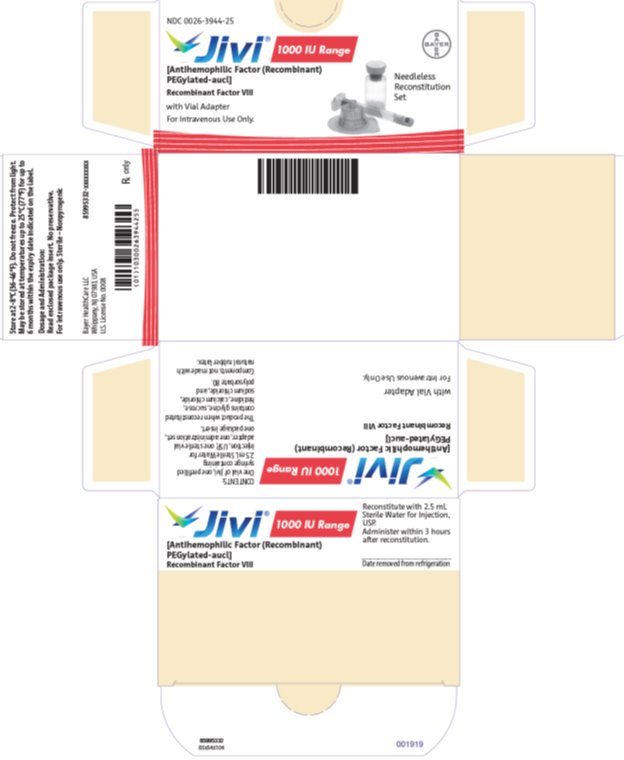
| 1000 | 2.5 | 0026-3944-25 | Red |
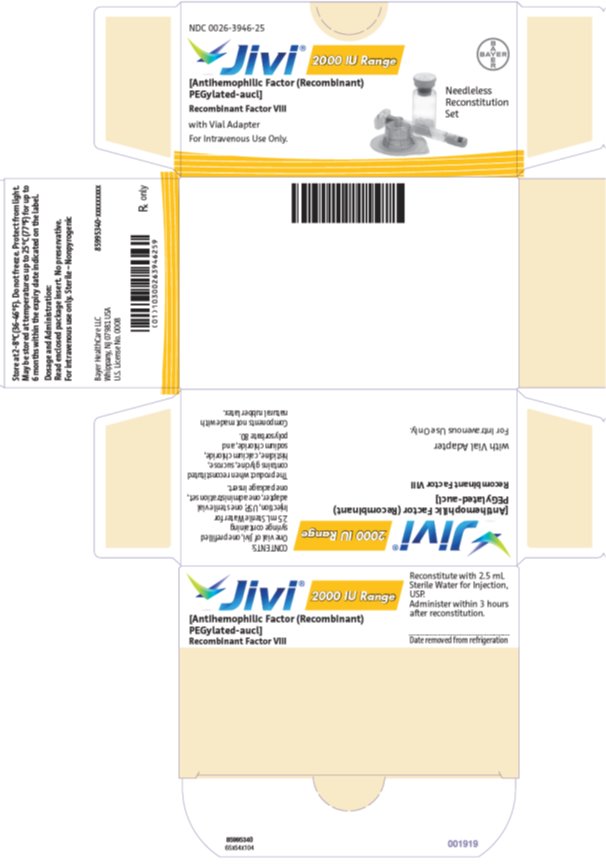
| 2000 | 2.5 | 0026-3946-25 | Yellow |
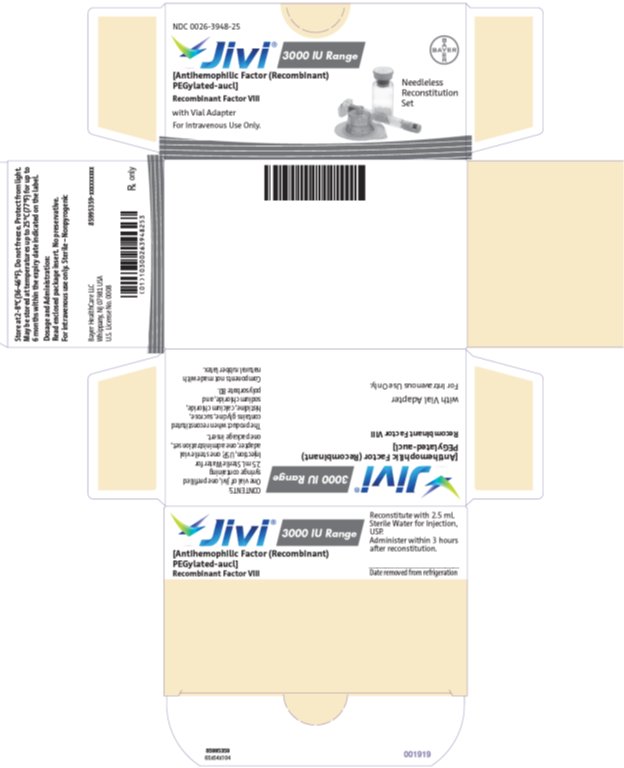
| 3000 | 2.5 | 0026-3948-25 | Gray |
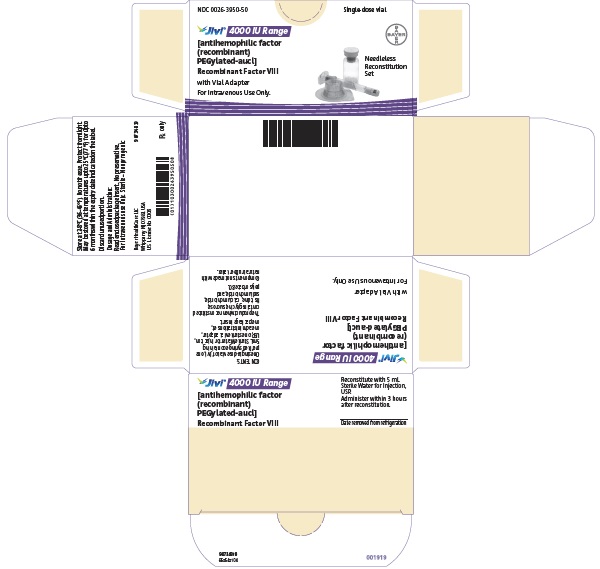
| 4000 | 5 | 0026-3950-50 | Purple |
Actual Factor VIII activity in IU is stated on the label of each JIVI vial.
The product vial and diluent syringe are not made with natural rubber latex.
Product as Packaged for Sale
- Store JIVI at +2°C to +8°C (36°F to 46°F) for up to 24 months from the date of manufacture. Do not freeze. Within this period, JIVI may be stored for a single period of up to 6 months at temperatures up to +25°C or 77°F.
- Record the starting date of room temperature storage on the unopened product carton. Once stored at room temperature, do not return the product to the refrigerator. The shelf-life then expires after storage at room temperature for 6 months, or after the expiration date on the product vial, whichever is earlier.
- Do not use JIVI after the expiration date indicated on the vial.
- Protect JIVI from extreme exposure to light and store the vial with the lyophilized powder in the carton prior to use.
Product After Reconstitution
- Administer reconstituted JIVI as soon as possible. If you do not administer the reconstituted JIVI immediately, then store at room temperature for no longer than 3 hours.
- Do not use JIVI if the reconstituted solution is cloudy or has particulate matter.
- Use the administration set provided.
Bayer HealthCare LLC
Whippany, NJ 07981 USA
U.S. License No. 0008