- Somnolence
- Extrapyramidal Symptoms which includes the following adverse reaction terms: extrapyramidal syndrome, hypertonia, dystonia, dyskinesia, hypokinesia, tremor, paralysis and twitching. None of these adverse reactions occurred individually at an incidence greater than 10% in bipolar mania trials.
- Dizziness which includes the adverse reaction terms dizziness and lightheadedness.
- Akathisia
- Abnormal Vision
- Asthenia
- Vomiting
SCHIZOPHRENIA
Adverse Reactions Associated With Discontinuation of Treatment in Short-Term, Placebo-Controlled Trials of Oral Ziprasidone
Approximately 4.1% (29/702) of ziprasidone-treated patients in short-term, placebo-controlled studies discontinued treatment due to an adverse reaction, compared with about 2.2% (6/273) on placebo. The most common reaction associated with dropout was rash, including 7 dropouts for rash among ziprasidone patients (1%) compared to no placebo patients [see Warnings and Precautions (5.8)].
Adverse Reactions Occurring at an Incidence of 2% or More Among Ziprasidone-Treated Patients in Short-Term, Oral, Placebo-Controlled Trials
Table 11 enumerates the incidence, rounded to the nearest percent, of treatment-emergent adverse reactions that occurred during acute therapy (up to 6 weeks) in predominantly patients with schizophrenia, including only those reactions that occurred in 2% or more of patients treated with ziprasidone and for which the incidence in patients treated with ziprasidone was greater than the incidence in placebo-treated patients.
Table 11: Treatment-Emergent Adverse Reaction Incidence In Short-Term Oral Placebo-Controlled Trials – Schizophrenia | Percentage of Patients
Reporting Reaction |
|---|
| Body System/Adverse Reaction | Ziprasidone
(N=702) | Placebo
(N=273) |
|---|
| Body as a Whole | | |
| Asthenia | 5 | 3 |
| Accidental Injury | 4 | 2 |
| Chest Pain | 3 | 2 |
| Cardiovascular | | |
| Tachycardia | 2 | 1 |
| Digestive | | |
| Nausea | 10 | 7 |
| Constipation | 9 | 8 |
| Dyspepsia | 8 | 7 |
| Diarrhea | 5 | 4 |
| Dry Mouth | 4 | 2 |
| Anorexia | 2 | 1 |
| Nervous | | |
| Extrapyramidal Symptoms | 14 | 8 |
| Somnolence | 14 | 7 |
| Akathisia | 8 | 7 |
| Dizziness | 8 | 6 |
| Respiratory | | |
| Respiratory Tract Infection | 8 | 3 |
| Rhinitis | 4 | 2 |
| Cough Increased | 3 | 1 |
| Skin and Appendages | | |
| Rash | 4 | 3 |
| Fungal Dermatitis | 2 | 1 |
| Special Senses | | |
| Abnormal Vision | 3 | 2 |
Dose Dependency of Adverse Reactions in Short-Term, Fixed-Dose, Placebo-Controlled Trials
An analysis for dose response in the schizophrenia 4-study pool revealed an apparent relation of adverse reaction to dose for the following reactions: asthenia, postural hypotension, anorexia, dry mouth, increased salivation, arthralgia, anxiety, dizziness, dystonia, hypertonia, somnolence, tremor, rhinitis, rash, and abnormal vision.
Extrapyramidal Symptoms (EPS) - The incidence of reported EPS (which included the adverse reaction terms extrapyramidal syndrome, hypertonia, dystonia, dyskinesia, hypokinesia, tremor, paralysis and twitching) for ziprasidone-treated patients in the short-term, placebo-controlled schizophrenia trials was 14% vs. 8% for placebo. Objectively collected data from those trials on the Simpson-Angus Rating Scale (for EPS) and the Barnes Akathisia Scale (for akathisia) did not generally show a difference between ziprasidone and placebo.
Dystonia - Class Effect: Symptoms of dystonia, prolonged abnormal contractions of muscle groups, may occur in susceptible individuals during the first few days of treatment. Dystonic symptoms include: spasm of the neck muscles, sometimes progressing to tightness of the throat, swallowing difficulty, difficulty breathing, and/or protrusion of the tongue. While these symptoms can occur at low doses, they occur more frequently and with greater severity with high potency and at higher doses of first generation antipsychotic drugs. An elevated risk of acute dystonia is observed in males and younger age groups.
Vital Sign Changes - Ziprasidone is associated with orthostatic hypotension [see Warnings and Precautions (5.9)]
ECG Changes - Ziprasidone is associated with an increase in the QTc interval [see Warnings and Precautions (5.3)]. In the schizophrenia trials, ziprasidone was associated with a mean increase in heart rate of 1.4 beats per minute compared to a 0.2 beats per minute decrease among placebo patients.
Other Adverse Reactions Observed During the Premarketing Evaluation of Oral Ziprasidone
Following is a list of COSTART terms that reflect treatment-emergent adverse reactions as defined in the introduction to the ADVERSE REACTIONS section reported by patients treated with ziprasidone in schizophrenia trials at multiple doses >4 mg/day within the database of 3834 patients. All reported reactions are included except those already listed in Table 11 or elsewhere in labeling, those reaction terms that were so general as to be uninformative, reactions reported only once and that did not have a substantial probability of being acutely life-threatening, reactions that are part of the illness being treated or are otherwise common as background reactions, and reactions considered unlikely to be drug-related. It is important to emphasize that, although the reactions reported occurred during treatment with ziprasidone, they were not necessarily caused by it.
Adverse reactions are further categorized by body system and listed in order of decreasing frequency according to the following definitions:
Frequent - adverse reactions occurring in at least 1/100 patients (≥1.0% of patients) (only those not already listed in the tabulated results from placebo-controlled trials appear in this listing);
Infrequent - adverse reactions occurring in 1/100 to 1/1000 patients (in 0.1–1.0% of patients)
Rare – adverse reactions occurring in fewer than 1/1000 patients (<0.1% of patients).
| Body as a Whole |
| Frequent | abdominal pain, flu syndrome, fever, accidental fall, face edema, chills, photosensitivity reaction, flank pain, hypothermia, motor vehicle accident |
| Cardiovascular System |
| Frequent | tachycardia, hypertension, postural hypotension |
| Infrequent | bradycardia, angina pectoris, atrial fibrillation |
| Rare | first degree AV block, bundle branch block, phlebitis, pulmonary embolus, cardiomegaly, cerebral infarct, cerebrovascular accident, deep thrombophlebitis, myocarditis, thrombophlebitis |
| Digestive System |
| Frequent | anorexia, vomiting |
| Infrequent | rectal hemorrhage, dysphagia, tongue edema |
| Rare | gum hemorrhage, jaundice, fecal impaction, gamma glutamyl transpeptidase increased, hematemesis, cholestatic jaundice, hepatitis, hepatomegaly, leukoplakia of mouth, fatty liver deposit, melena |
| Endocrine |
| Rare | hypothyroidism, hyperthyroidism, thyroiditis |
| Hemic and Lymphatic System |
| Infrequent | anemia, ecchymosis, leukocytosis, leukopenia, eosinophilia, lymphadenopathy |
| Rare | thrombocytopenia, hypochromic anemia, lymphocytosis, monocytosis, basophilia, lymphedema, polycythemia, thrombocythemia |
| Metabolic and Nutritional Disorders |
| Infrequent | thirst, transaminase increased, peripheral edema, hyperglycemia, creatine phosphokinase increased, alkaline phosphatase increased, hypercholesteremia, dehydration, lactic dehydrogenase increased, albuminuria, hypokalemia |
| Rare | BUN increased, creatinine increased, hyperlipemia, hypocholesteremia, hyperkalemia, hypochloremia, hypoglycemia, hyponatremia, hypoproteinemia, glucose tolerance decreased, gout, hyperchloremia, hyperuricemia, hypocalcemia, hypoglycemicreaction, hypomagnesemia, ketosis, respiratory alkalosis |
| Musculoskeletal System |
| Frequent | myalgia |
| Infrequent | tenosynovitis |
| Rare | myopathy |
| Nervous System |
| Frequent | agitation, extrapyramidal syndrome, tremor, dystonia, hypertonia, dyskinesia, hostility, twitching, paresthesia, confusion, vertigo, hypokinesia, hyperkinesia, abnormal gait, oculogyric crisis, hypesthesia, ataxia, amnesia, cogwheel rigidity, delirium, hypotonia, akinesia, dysarthria, withdrawal syndrome, buccoglossal syndrome, choreoathetosis, diplopia, incoordination, neuropathy |
| Infrequent | paralysis |
| Rare | myoclonus, nystagmus, torticollis, circumoral paresthesia, opisthotonos, reflexes increased, trismus |
| Respiratory System |
| Frequent | dyspnea |
| Infrequent | pneumonia, epistaxis |
| Rare | hemoptysis, laryngismus |
| Skin and Appendages |
| Infrequent | maculopapular rash, urticaria, alopecia, eczema, exfoliative dermatitis, contact dermatitis, vesiculobullous rash |
| Special Senses |
| Frequent | fungal dermatitis |
| Infrequent | conjunctivitis, dry eyes, tinnitus, blepharitis, cataract, photophobia |
| Rare | eye hemorrhage, visual field defect, keratitis, keratoconjunctivitis |
| Urogenital System |
| Infrequent | impotence, abnormal ejaculation, amenorrhea, hematuria, menorrhagia, female lactation, polyuria, urinary retention metrorrhagia, male sexual dysfunction, anorgasmia, glycosuria |
| Rare | gynecomastia, vaginal hemorrhage, nocturia, oliguria, female sexual dysfunction, uterine hemorrhage |
BIPOLAR DISORDER
Acute Treatment of Manic or Mixed Episodes
Adverse Reactions Associated With Discontinuation of Treatment in Short Term, Placebo-Controlled Trials
Approximately 6.5% (18/279) of ziprasidone-treated patients in short-term, placebo-controlled studies discontinued treatment due to an adverse reaction, compared with about 3.7% (5/136) on placebo. The most common reactions associated with dropout in the ziprasidone-treated patients were akathisia, anxiety, depression, dizziness, dystonia, rash and vomiting, with 2 dropouts for each of these reactions among ziprasidone patients (1%) compared to one placebo patient each for dystonia and rash (1%) and no placebo patients for the remaining adverse reactions.
Adverse Reactions Occurring at an Incidence of 2% or More Among Ziprasidone-Treated Patients in Short-Term, Oral, Placebo-Controlled Trials
Table 12 enumerates the incidence, rounded to the nearest percent, of treatment-emergent adverse reactions that occurred during acute therapy (up to 3 weeks) in patients with bipolar mania, including only those reactions that occurred in 2% or more of patients treated with ziprasidone and for which the incidence in patients treated with ziprasidone was greater than the incidence in placebo-treated patients.
Table 12: Treatment-Emergent Adverse Reactions Incidence In Short-Term Oral Placebo-Controlled Trials – Manic and Mixed Episodes Associated With Bipolar Disorder | Percentage of Patients
Reporting Reaction |
|---|
| Body System/Adverse Reaction | Ziprasidone
(N=279) | Placebo
(N=136) |
|---|
| Body as a Whole | | |
| Headache | 18 | 17 |
| Asthenia | 6 | 2 |
| Accidental Injury | 4 | 1 |
| Cardiovascular | | |
| Hypertension | 3 | 2 |
| Digestive | | |
| Nausea | 10 | 7 |
| Diarrhea | 5 | 4 |
| Dry Mouth | 5 | 4 |
| Vomiting | 5 | 2 |
| Increased Salivation | 4 | 0 |
| Tongue Edema | 3 | 1 |
| Dysphagia | 2 | 0 |
| Musculoskeletal | | |
| Myalgia | 2 | 0 |
| Nervous | | |
| Somnolence | 31 | 12 |
| Extrapyramidal Symptoms | 31 | 12 |
| Dizziness | 16 | 7 |
| Akathisia | 10 | 5 |
| Anxiety | 5 | 4 |
| Hypesthesia | 2 | 1 |
| Speech Disorder | 2 | 0 |
| Respiratory | | |
| Pharyngitis | 3 | 1 |
| Dyspnea | 2 | 1 |
| Skin and Appendages | | |
| Fungal Dermatitis | 2 | 1 |
| Special Senses | | |
| Abnormal Vision | 6 | 3 |
Explorations for interactions on the basis of gender did not reveal any clinically meaningful differences in the adverse reaction occurrence on the basis of this demographic factor.
INTRAMUSCULAR ZIPRASIDONE
Adverse Reactions Occurring at an Incidence of 1% or More Among Ziprasidone-Treated Patients in Short-Term Trials of Intramuscular Ziprasidone
Table 13 enumerates the incidence, rounded to the nearest percent, of treatment-emergent adverse reactions that occurred during acute therapy with intramuscular ziprasidone in 1% or more of patients.
In these studies, the most commonly observed adverse reactions associated with the use of intramuscular ziprasidone (incidence of 5% or greater) and observed at a rate on intramuscular ziprasidone (in the higher dose groups) at least twice that of the lowest intramuscular ziprasidone group were headache (13%), nausea (12%), and somnolence (20%).
Table 13: Treatment-Emergent Adverse Reaction Incidence In Short-Term Fixed-Dose Intramuscular Trials | Percentage of Patients Reporting Reaction |
|---|
| Body System/Adverse Reaction | Ziprasidone 2 mg (N=92) | Ziprasidone 10 mg (N=63) | Ziprasidone 20 mg (N=41) |
|---|
| Body as a Whole | |
| Headache | 3 | 13 | 5 |
| Injection Site Pain | 9 | 8 | 7 |
| Asthenia | 2 | 0 | 0 |
| Abdominal Pain | 0 | 2 | 0 |
| Flu Syndrome | 1 | 0 | 0 |
| Back Pain | 1 | 0 | 0 |
| Cardiovascular | |
| Postural Hypotension | 0 | 0 | 5 |
| Hypertension | 2 | 0 | 0 |
| Bradycardia | 0 | 0 | 2 |
| Vasodilation | 1 | 0 | 0 |
| Digestive | |
| Nausea | 4 | 8 | 12 |
| Rectal Hemorrhage | 0 | 0 | 2 |
| Diarrhea | 3 | 3 | 0 |
| Vomiting | 0 | 3 | 0 |
| Dyspepsia | 1 | 3 | 2 |
| Anorexia | 0 | 2 | 0 |
| Constipation | 0 | 0 | 2 |
| Tooth Disorder | 1 | 0 | 0 |
| Dry Mouth | 1 | 0 | 0 |
| Nervous | |
| Dizziness | 3 | 3 | 10 |
| Anxiety | 2 | 0 | 0 |
| Insomnia | 3 | 0 | 0 |
| Somnolence | 8 | 8 | 20 |
| Akathisia | 0 | 2 | 0 |
| Agitation | 2 | 2 | 0 |
| Extrapyramidal Syndrome | 2 | 0 | 0 |
| Hypertonia | 1 | 0 | 0 |
| Cogwheel Rigidity | 1 | 0 | 0 |
| Paresthesia | 0 | 2 | 0 |
| Personality Disorder | 0 | 2 | 0 |
| Psychosis | 1 | 0 | 0 |
| Speech Disorder | 0 | 2 | 0 |
| Respiratory | |
| Rhinitis | 1 | 0 | 0 |
| Skin and Appendages | |
| Furunculosis | 0 | 2 | 0 |
| Sweating | 0 | 0 | 2 |
| Urogenital | | |
| Dysmenorrhea | 0 | 2 | 0 |
| Priapism | 1 | 0 | 0 |
Carbamazepine
Carbamazepine is an inducer of CYP3A4; administration of 200 mg twice daily for 21 days resulted in a decrease of approximately 35% in the AUC of ziprasidone. This effect may be greater when higher doses of carbamazepine are administered.
Ketoconazole
Ketoconazole, a potent inhibitor of CYP3A4, at a dose of 400 mg QD for 5 days, increased the AUC and Cmax of ziprasidone by about 35–40%. Other inhibitors of CYP3A4 would be expected to have similar effects.
Cimetidine
Cimetidine at a dose of 800 mg QD for 2 days did not affect ziprasidone pharmacokinetics.
Antacid
The co-administration of 30 mL of Maalox® with ziprasidone did not affect the pharmacokinetics of ziprasidone.
Pregnancy Exposure Registry
There is a pregnancy exposure registry that monitors pregnancy outcomes in women exposed to atypical antipsychotics, including GEODON, during pregnancy. Healthcare providers are encouraged to register patients by contacting the National Pregnancy Registry for Atypical Antipsychotics at 1-866-961-2388 or online at http://womensmentalhealth.org/clinical-and-research-programs/pregnancyregistry/.
Risk Summary
Neonates exposed to antipsychotic drugs, including GEODON, during the third trimester are at risk for extrapyramidal and/or withdrawal symptoms following delivery (see Clinical Considerations). Overall available data from published epidemiologic studies of pregnant women exposed to ziprasidone have not established a drug-associated risk of major birth defects, miscarriage, or adverse maternal or fetal outcomes (see Data). There are risks to the mother associated with untreated schizophrenia or bipolar I disorder and with exposure to antipsychotics, including GEODON, during pregnancy (see Clinical Considerations).
In animal studies, ziprasidone administration to pregnant rats and rabbits during organogenesis caused developmental toxicity at doses similar to recommended human doses, and was teratogenic in rabbits at 3 times the maximum recommended human dose (MRHD). Rats exposed to ziprasidone during gestation and lactation exhibited increased perinatal pup mortality and delayed neurobehavioral and functional development of offspring at doses less than or similar to human therapeutic doses. (see Data).
The estimated background risk of major birth defects and miscarriage for the indicated populations is unknown. All pregnancies have a background risk of birth defect, loss, or other adverse outcomes. In the U.S. general population, the estimated background risk of major birth defects and miscarriage in clinically recognized pregnancies is 2 to 4% and 15 to 20%, respectively.
Clinical Considerations
Disease-associated maternal and/or embryo/fetal risk
There is risk to the mother from untreated schizophrenia or bipolar I disorder, including increased risk of relapse, hospitalization, and suicide. Schizophrenia and bipolar I disorder are associated with increased adverse perinatal outcomes, including preterm birth. It is not known if this is a direct result of the illness or other comorbid factors.
Fetal/neonatal adverse reactions
Extrapyramidal and/or withdrawal symptoms, including agitation, hypertonia, hypotonia, tremor, somnolence, respiratory distress, and feeding disorder have been reported in neonates who were exposed to antipsychotic drugs, including GEODON, during the third trimester of pregnancy. These symptoms have varied in severity. Monitor neonates for extrapyramidal and/or withdrawal symptoms and manage symptoms appropriately. Some neonates recovered within hours or days without specific treatment; others required prolonged hospitalization.
Data
Human Data
Published data from observational studies, birth registries, and case reports on the use of atypical antipsychotics during pregnancy do not report a clear association with antipsychotics and major birth defects. A retrospective cohort study from a Medicaid database of 9258 women exposed to antipsychotics during pregnancy did not indicate an overall increased risk for major birth defects.
Animal Data
When ziprasidone was administered to pregnant rabbits during the period of organogenesis, an increased incidence of fetal structural abnormalities (ventricular septal defects and other cardiovascular malformations, and kidney alterations) was observed at a dose of 30 mg/kg/day (3 times the MRHD of 200 mg/day based on mg/m2 body surface area). There was no evidence to suggest that these developmental effects were secondary to maternal toxicity. The developmental no effect dose was 10 mg/kg/day (equivalent to the MRHD based on a mg/m2 body surface area). In rats, embryofetal toxicity (decreased fetal weights, delayed skeletal ossification) was observed following administration of 10 to 160 mg/kg/day (0.5 to 8 times the MRHD based on mg/m2 body surface area) during organogenesis or throughout gestation, but there was no evidence of teratogenicity. Doses of 40 and 160 mg/kg/day (2 and 8 times the MRHD based on mg/m2 body surface area) were associated with maternal toxicity. The developmental no-effect dose is 5 mg/kg/day (0.2 times the MRHD based on mg/m2 body surface area).
There was an increase in the number of pups born dead and a decrease in postnatal survival through the first 4 days of lactation among the offspring of female rats treated during gestation and lactation with doses of 10 mg/kg/day (0.5 times the MRHD based on mg/m2 body surface area) or greater. Offspring developmental delays (decreased pup weights) and neurobehavioral functional impairment (eye opening air righting) were observed at doses of 5 mg/kg/day (0.2 times the MRHD based on mg/m2 body surface area) or greater. A no-effect level was not established for these effects.
Risk Summary
Limited data from a published case report indicate the presence of ziprasidone in human milk. Although there are no reports of adverse effects on a breastfed infant exposed to ziprasidone via breast milk, there are reports of excess sedation, irritability, poor feeding, and extrapyramidal symptoms (tremors and abnormal muscle movements) in infants exposed to other atypical antipsychotics through breast milk (see Clinical Considerations). There is no information on the effects of ziprasidone on milk production. The developmental and health benefits of breastfeeding should be considered along with the mother's clinical need for GEODON and any potential adverse effects on the breastfed child from GEODON or from the mother's underlying condition.
Clinical Considerations
Infants exposed to GEODON should be monitored for excess sedation, irritability, poor feeding, and extrapyramidal symptoms (tremors and abnormal muscle movements).
Infertility
Females
Based on the pharmacologic action of ziprasidone (D2 antagonism), treatment with GEODON may result in an increase in serum prolactin levels, which may lead to a reversible reduction in fertility in females of reproductive potential [see Warnings and Precautions (5.15) and Nonclinical Toxicology (13.1)].
Oral Pharmacokinetics
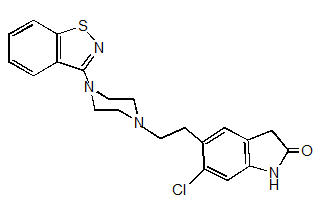
Ziprasidone's activity is primarily due to the parent drug. The multiple-dose pharmacokinetics of ziprasidone are dose-proportional within the proposed clinical dose range, and ziprasidone accumulation is predictable with multiple dosing. Elimination of ziprasidone is mainly via hepatic metabolism with a mean terminal half-life of about 7 hours within the proposed clinical dose range. Steady-state concentrations are achieved within one to three days of dosing. The mean apparent systemic clearance is 7.5 mL/min/kg. Ziprasidone is unlikely to interfere with the metabolism of drugs metabolized by cytochrome P450 enzymes.
Absorption: Ziprasidone is well absorbed after oral administration, reaching peak plasma concentrations in 6 to 8 hours. The absolute bioavailability of a 20 mg dose under fed conditions is approximately 60%. The absorption of ziprasidone is increased up to two-fold in the presence of food.
Distribution: Ziprasidone has a mean apparent volume of distribution of 1.5 L/kg. It is greater than 99% bound to plasma proteins, binding primarily to albumin and α1-acid glycoprotein. The in vitro plasma protein binding of ziprasidone was not altered by warfarin or propranolol, two highly protein-bound drugs, nor did ziprasidone alter the binding of these drugs in human plasma. Thus, the potential for drug interactions with ziprasidone due to displacement is minimal.
Metabolism and Elimination: Ziprasidone is extensively metabolized after oral administration with only a small amount excreted in the urine (<1%) or feces (<4%) as unchanged drug. Ziprasidone is primarily cleared via three metabolic routes to yield four major circulating metabolites, benzisothiazole (BITP) sulphoxide, BITP-sulphone, ziprasidone sulphoxide, and S-methyldihydroziprasidone. Approximately 20% of the dose is excreted in the urine, with approximately 66% being eliminated in the feces. Unchanged ziprasidone represents about 44% of total drug-related material in serum. In vitro studies using human liver subcellular fractions indicate that S-methyldihydroziprasidone is generated in two steps. These studies indicate that the reduction reaction is mediated primarily by chemical reduction by glutathione as well as by enzymatic reduction by aldehyde oxidase and the subsequent methylation is mediated by thiol methyltransferase. In vitro studies using human liver microsomes and recombinant enzymes indicate that CYP3A4 is the major CYP contributing to the oxidative metabolism of ziprasidone. CYP1A2 may contribute to a much lesser extent. Based on in vivo abundance of excretory metabolites, less than one-third of ziprasidone metabolic clearance is mediated by cytochrome P450 catalyzed oxidation and approximately two-thirds via reduction. There are no known clinically relevant inhibitors or inducers of aldehyde oxidase.
Intramuscular Pharmacokinetics
Systemic Bioavailability: The bioavailability of ziprasidone administered intramuscularly is 100%. After intramuscular administration of single doses, peak serum concentrations typically occur at approximately 60 minutes post-dose or earlier and the mean half-life (T½) ranges from two to five hours. Exposure increases in a dose-related manner and following three days of intramuscular dosing, little accumulation is observed.
Metabolism and Elimination: Although the metabolism and elimination of IM ziprasidone have not been systematically evaluated, the intramuscular route of administration would not be expected to alter the metabolic pathways.
Carcinogenesis
Lifetime carcinogenicity studies were conducted with ziprasidone in Long Evans rats and CD-1 mice. Ziprasidone was administered for 24 months in the diet at doses of 2, 6, or 12 mg/kg/day to rats, and 50, 100, or 200 mg/kg/day to mice (0.1 to 0.6 and 1 to 5 times the maximum recommended human dose (MRHD) of 200 mg/day based on mg/m2 body surface area, respectively). In the rat study, there was no evidence of an increased incidence of tumors compared to controls. In male mice, there was no increase in incidence of tumors relative to controls. In female mice, there were dose-related increases in the incidences of pituitary gland adenoma and carcinoma, and mammary gland adenocarcinoma at all doses tested (50 to 200 mg/kg/day or 1 to 5 times the MRHD based on mg/m2 body surface area). Proliferative changes in the pituitary and mammary glands of rodents have been observed following chronic administration of other antipsychotic agents and are considered to be prolactin-mediated. Increases in serum prolactin were observed in a 1-month dietary study in female, but not male, mice at 100 and 200 mg/kg/day (or 2.5 and 5 times the MRHD based on mg/m2 body surface area). Ziprasidone had no effect on serum prolactin in rats in a 5-week dietary study at the doses that were used in the carcinogenicity study. The relevance for human risk of the findings of prolactin-mediated endocrine tumors in rodents is unknown [see Warnings and Precautions (5.14)].
Mutagenesis
Ziprasidone was tested in the Ames bacterial mutation assay, the in vitro mammalian cell gene mutation mouse lymphoma assay, the in vitro chromosomal aberration assay in human lymphocytes, and the in vivo chromosomal aberration assay in mouse bone marrow. There was a reproducible mutagenic response in the Ames assay in one strain of S. typhimurium in the absence of metabolic activation. Positive results were obtained in both the in vitro mammalian cell gene mutation assay and the in vitro chromosomal aberration assay in human lymphocytes.
Impairment of Fertility
Ziprasidone was shown to increase time to copulation in Sprague-Dawley rats in two fertility and early embryonic development studies at doses of 10 to 160 mg/kg/day (0.5 to 8 times the MRHD of 200 mg/day based on mg/m2 body surface area). Fertility rate was reduced at 160 mg/kg/day (8 times the MRHD based on mg/m2 body surface area). There was no effect on fertility at 40 mg/kg/day (2 times the MRHD based on mg/m2 body surface area). The effect on fertility appeared to be in the female since fertility was not impaired when males given 160 mg/kg/day (8 times the MRHD based on mg/m2 body surface area) were mated with untreated females.
Acute Manic and Mixed Episodes Associated With Bipolar I Disorder
The efficacy of ziprasidone was established in 2 placebo-controlled, double-blind, 3-week monotherapy studies in patients meeting DSM-IV criteria for bipolar I disorder, manic or mixed episode with or without psychotic features. Primary rating instruments used for assessing manic symptoms in these trials were: (1) the Mania Rating Scale (MRS), which is derived from the Schedule for Affective Disorders and Schizophrenia-Change Version (SADS-CB) with items grouped as the Manic Syndrome subscale (elevated mood, less need for sleep, excessive energy, excessive activity, grandiosity), the Behavior and Ideation subscale (irritability, motor hyperactivity, accelerated speech, racing thoughts, poor judgment) and impaired insight; and (2) the Clinical Global Impression-Severity of Illness Scale (CGI-S), which was used to assess the clinical significance of treatment response.
The results of the oral ziprasidone trials in adult bipolar I disorder, manic/mixed episode follow: in a 3-week placebo-controlled trial (n=210), the dose of ziprasidone was 40 mg twice daily on Day 1 and 80 mg twice daily on Day 2. Titration within the range of 40–80 mg twice daily (in 20 mg twice daily increments) was permitted for the duration of the study. Ziprasidone was significantly more effective than placebo in reduction of the MRS total score and the CGI-S score. The mean daily dose of ziprasidone in this study was 132 mg. In a second 3-week placebo-controlled trial (n=205), the dose of ziprasidone was 40 mg twice daily on Day 1. Titration within the range of 40–80 mg twice daily (in 20 mg twice daily increments) was permitted for the duration of study (beginning on Day 2). Ziprasidone was significantly more effective than placebo in reduction of the MRS total score and the CGI-S score. The mean daily dose of ziprasidone in this study was 112 mg.
Administration Information for Capsules
Advise patients to take GEODON capsules whole. Do not open, crush, or chew the capsules. Instruct patients to take GEODON capsules with food for optimal absorption. The absorption of ziprasidone is increased up to two-fold in the presence of food [see Dosage and Administration (2.1), Drug Interactions (7.10), and Clinical Pharmacology (12.3)].
QTc Prolongation
Advise patients to inform their health care providers of the following: History of QT prolongation; recent acute myocardial infarction; uncompensated heart failure; prescription of other drugs that have demonstrated QT prolongation; risk for significant electrolyte abnormalities; and history of cardiac arrhythmia [see Contraindications (4.1) and Warnings and Precautions (5.3)].
Instruct patients to report the onset of any conditions that put them at risk for significant electrolyte disturbances, hypokalemia in particular, including but not limited to the initiation of diuretic therapy or prolonged diarrhea. In addition, instruct patients to report symptoms such as dizziness, palpitations, or syncope to the prescriber [see Warnings and Precautions (5.3)].
Severe Cutaneous Adverse Reactions
Instruct patients to report to their health care provider at the earliest onset any signs or symptoms that may be associated with Drug Reaction with Eosinophilia and Systemic Symptoms (DRESS) or with severe cutaneous adverse reactions, such as Stevens-Johnson syndrome [see Warnings and Precautions (5.5)].
Pregnancy
Advise pregnant women to notify their healthcare provider if they become pregnant or intend to become pregnant during treatment with GEODON. Advise patients that GEODON may cause extrapyramidal and/or withdrawal symptoms (agitation, hypertonia, hypotonia, tremor, somnolence, respiratory distress, and feeding disorder) in a neonate. Advise patients that there is a pregnancy exposure registry that monitors pregnancy outcomes in women exposed to GEODON during pregnancy [see Use in Specific Populations (8.1)].
Lactation
Advise breastfeeding women using GEODON to monitor infants for excess sedation, irritability, poor feeding, and extrapyramidal symptoms (tremors, and abnormal muscle movements) and to seek medical care if they notice these signs [see Use in Specific Populations (8.2)].
Infertility
Advise females of reproductive potential that GEODON may impair fertility due to an increase in serum prolactin levels. The effects on fertility are reversible [see Warnings and Precautions (5.15) and Use in Specific Populations (8.3)].
This product's labeling may have been updated. For the most recent prescribing information, please visit www.pfizer.com.
Distributed by
Roerig
Division of Pfizer Inc.
New York, NY 10017
LAB-0273-30.0