Alendronate Sodium Solution
Product Images NDC 0054-0282

View Photos of Packaging, Regulatory Labels, and Product Appearance

Product Visual Gallery

This gallery contains 9 technical images submitted to the FDA as part of the official labeling for Alendronate Sodium (NDC 0054-0282). Unlike standard consumer photos, these assets often include clinical data figures, molecular chemical structures, and official manufacturer packaging layouts.

As provided by Hikma Pharmaceuticals Usa Inc., these visuals offer a comprehensive scientific overview of the product's physical and chemical identity, aiding pharmacists and researchers in product verification and study.

FDA Label Image

Chem.jpg (Chem)

Chem.jpg (Chem)
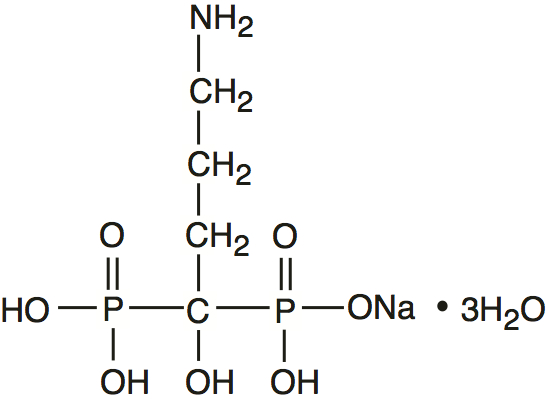
Chemical structure diagram of Alendronate Sodium, showing its detailed molecular arrangement including phosphate groups, hydroxyl groups, an amino group, sodium ion, and water molecules as part of its hydrated form.*
FDA Label Image

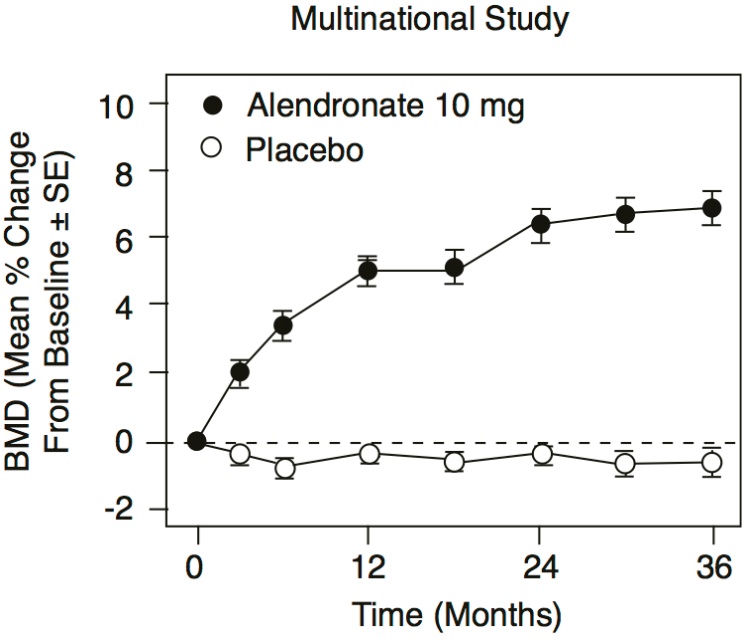
Fig3-multi.jpg (Fig3 Multi)

Fig3-multi.jpg (Fig3 Multi)
A line graph titled 'Multinational Study' comparing the mean percentage change in Bone Mineral Density (BMD) from baseline over 36 months. The graph shows two lines: one for Alendronate 10 mg with increasing BMD change up to around 7-8%, and one for placebo showing minimal change near 0%. Error bars represent standard error.*
FDA Label Image

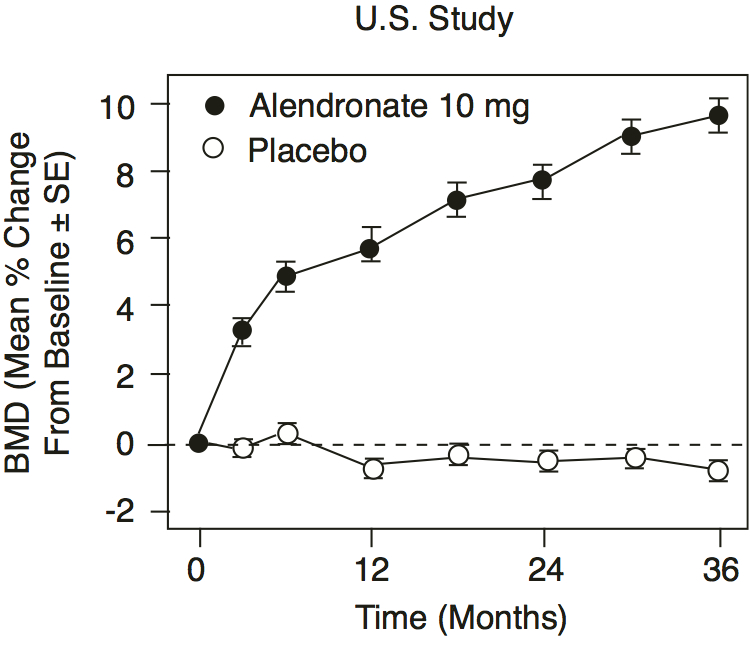
Fig3-us.jpg (Fig3 Us)

Fig3-us.jpg (Fig3 Us)
A line graph from a U.S. study showing the mean percentage change in Bone Mineral Density (BMD) from baseline over 36 months. Two groups are depicted: Alendronate 10 mg and placebo, with Alendronate showing a steady increase in BMD, while the placebo remained near baseline values throughout the period.*
FDA Label Image

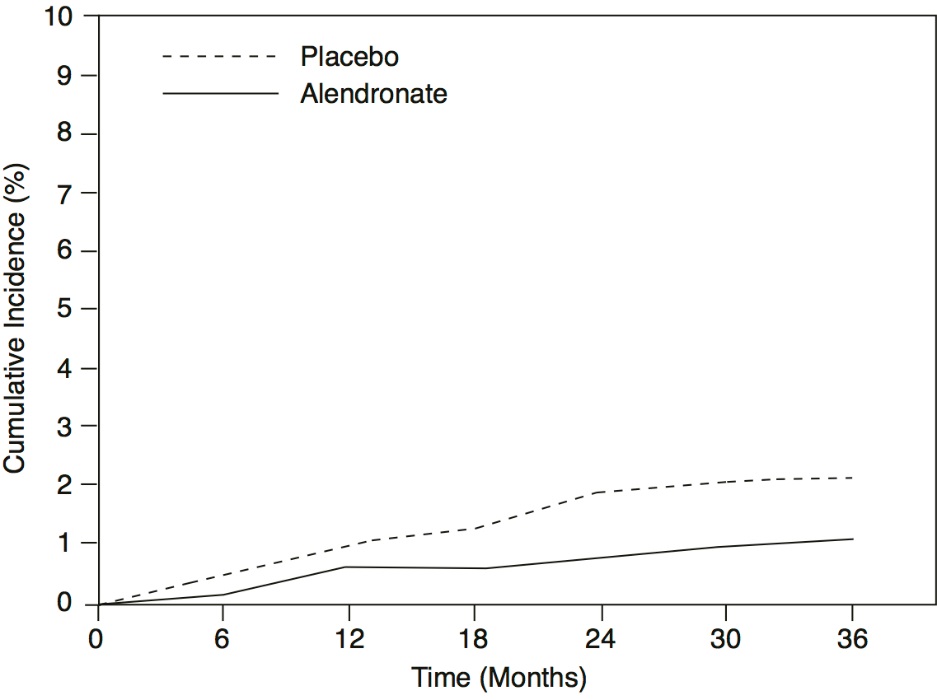
Figure1.jpg (Figure1)

Figure1.jpg (Figure1)
A line graph showing cumulative incidence (%) on the vertical axis versus time in months on the horizontal axis. Two lines represent Placebo (dashed) and Alendronate (solid), with Placebo incidence increasing more sharply over 36 months compared to Alendronate.*
FDA Label Image

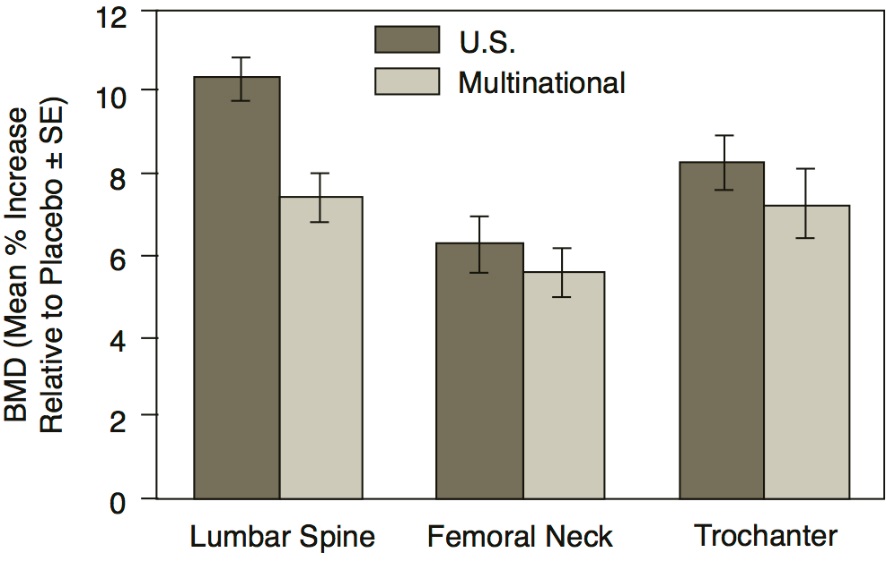
Figure2.jpg (Figure2)

Figure2.jpg (Figure2)
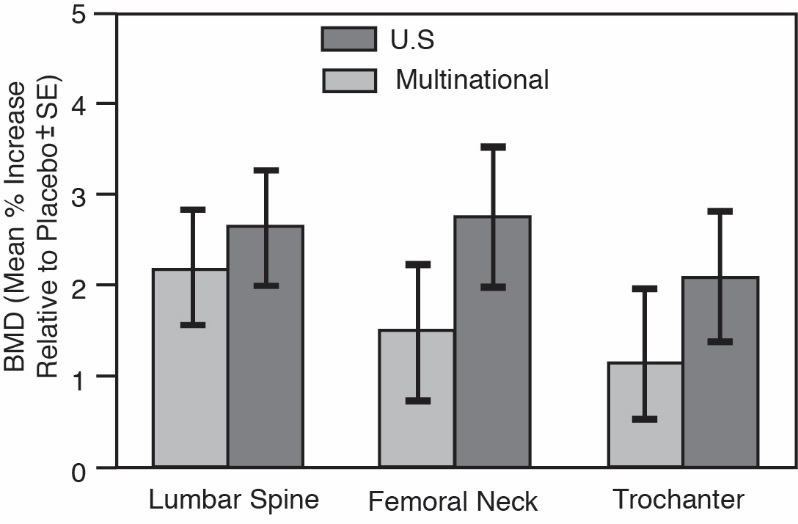
A bar graph comparing mean percentage increases in bone mineral density (BMD) relative to placebo with standard error for U.S. and multinational populations at three anatomical sites: lumbar spine, femoral neck, and trochanter. The U.S. bars show higher increases across all sites compared to multinational data.*
FDA Label Image

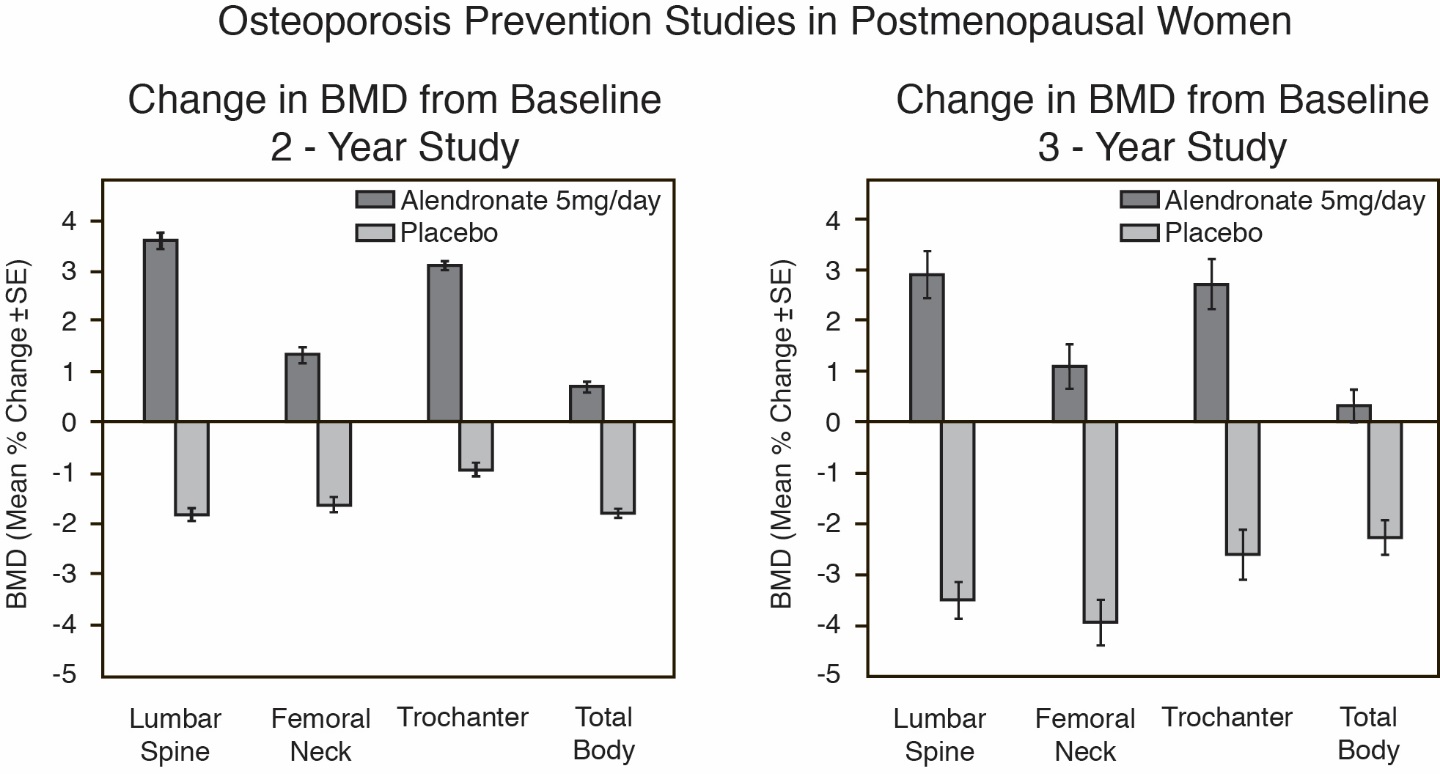
Figure4.jpg (Figure4)

Figure4.jpg (Figure4)
A bar chart titled "Osteoporosis Prevention Studies in Postmenopausal Women" comparing bone mineral density (BMD) change from baseline over 2-year and 3-year studies. The chart shows mean percentage change in BMD (± standard error) for Alendronate 5 mg/day versus placebo at lumbar spine, femoral neck, trochanter, and total body sites.*
FDA Label Image

Figure5.jpg (Figure5)

Figure5.jpg (Figure5)
A bar graph comparing mean percentage increase in bone mineral density (BMD) relative to placebo with standard error (SE) for Alendronate Sodium oral solution in U.S. and multinational groups across three anatomical sites: lumbar spine, femoral neck, and trochanter. The U.S. data bars are darker, showing higher BMD increases relative to multinational lighter bars at each site.*
FDA Label Image

Figure6.jpg (Figure6)

Figure6.jpg (Figure6)
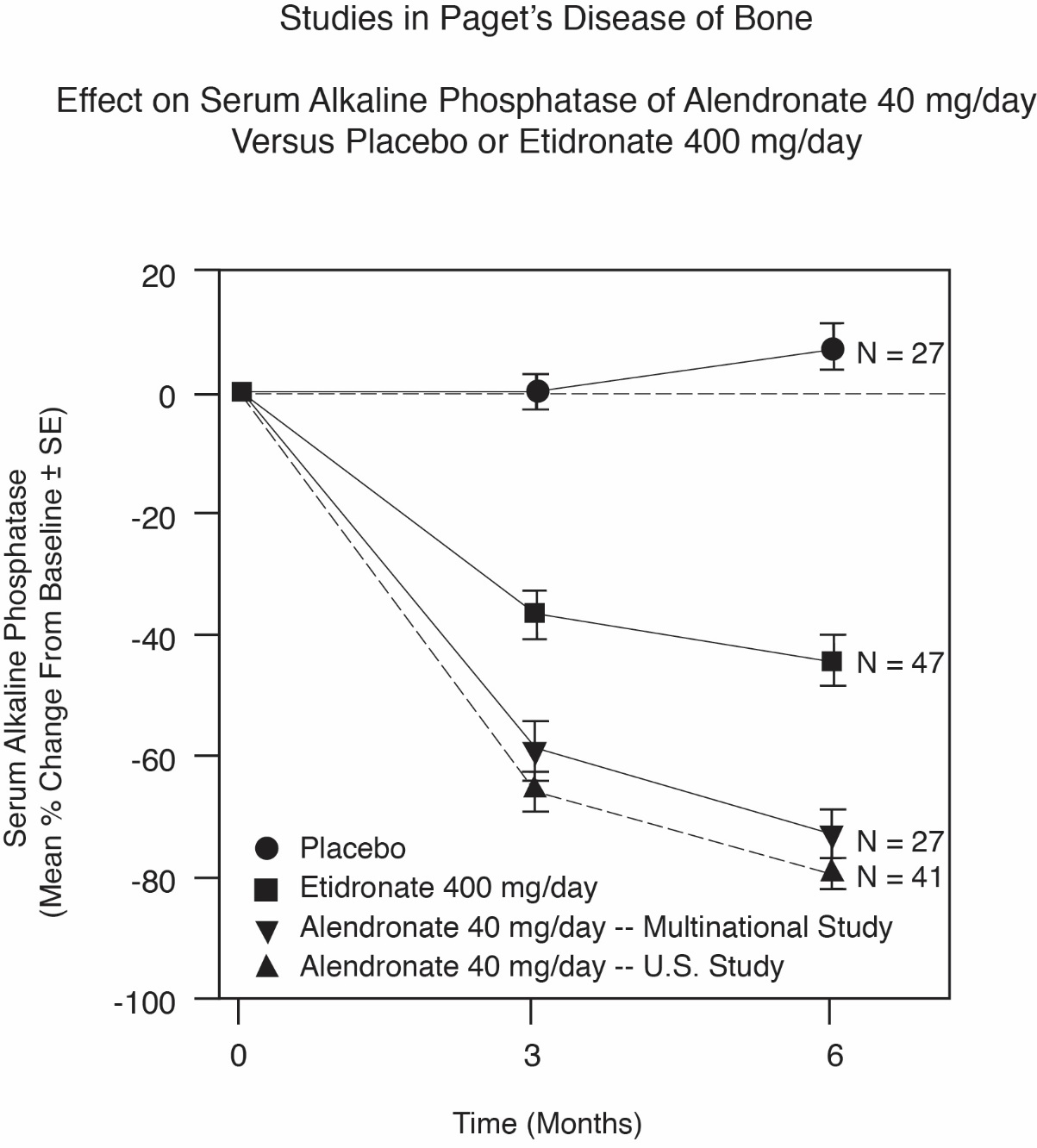
A line graph depicting the effect of Alendronate 40 mg/day versus placebo and Etidronate 400 mg/day on serum alkaline phosphatase levels over six months in studies of Paget's Disease of Bone. The y-axis shows mean percent change from baseline ± SE in serum alkaline phosphatase, and the x-axis shows time in months (0, 3, 6). Four groups are represented: Placebo (circle), Etidronate 400 mg/day (square), Alendronate 40 mg/day Multinational Study (downward triangle), and Alendronate 40 mg/day U.S. Study (upward triangle). Sample sizes range from 27 to 47 participants per group.*
FDA Label Image

0054-0282-59 (Image 01)

0054-0282-59 (Image 01)
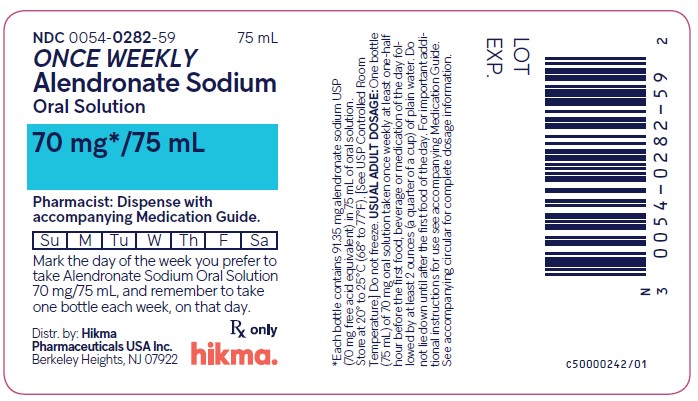
Alendronate Sodium 70 mg/75 mL oral solution label by Hikma Pharmaceuticals USA Inc. The label includes dosage strength, directions to mark the preferred day for weekly dose, pharmacist dispensing instructions, storage conditions, manufacturer details, and a barcode for scanning. The label is primarily white with blue and black text.*

* About these descriptions: Image descriptions on this page are generated by automated AI analysis of the product label images from the manufacturer's FDA label submission (SPL). They are provided for reference only and may contain errors or omissions. Always rely on the printed label itself and the official FDA labeling, and consult a pharmacist or healthcare professional with any questions about this product.