Limitations of Use
FRAGMIN is not indicated for the acute treatment of VTE.
Prophylaxis of Ischemic Complications in Unstable Angina and Non-Q-Wave Myocardial Infarction: In patients with unstable angina or non-Q-wave myocardial infarction, the recommended dose of FRAGMIN Injection is 120 IU/kg of body weight, but not more than 10,000 IU, subcutaneously every 12 hours with concurrent oral aspirin (75 to 165 mg once daily) therapy. Treatment should be continued until the patient is clinically stabilized. The usual duration of administration is 5 to 8 days. Concurrent aspirin therapy is recommended except when contraindicated.
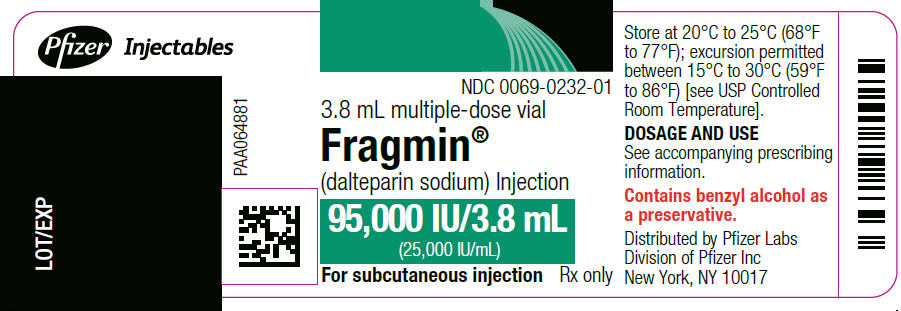
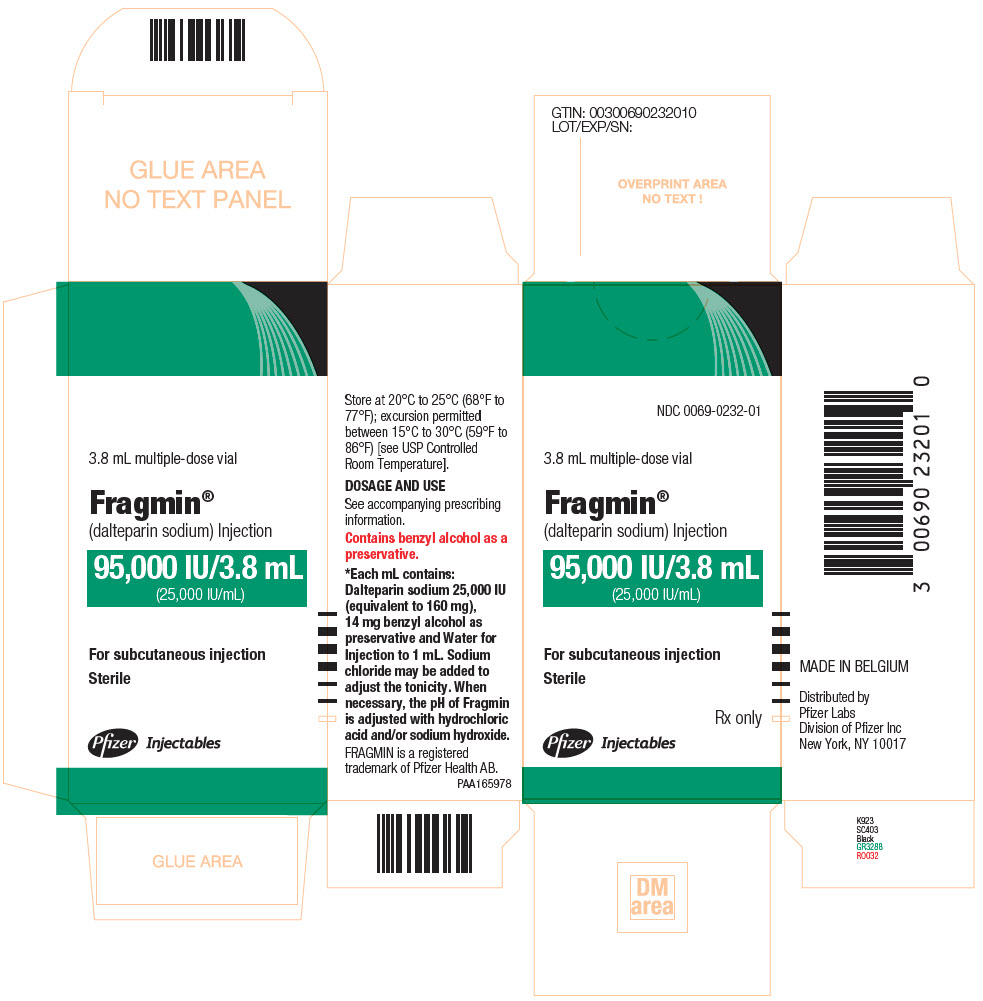
Table 1 lists the volume of FRAGMIN in mL (based on the 3.8 mL multiple-dose vial 25,000 IU/ mL) and quantity of FRAGMIN in IU, to be administered for a range of patient weights.
Table 1 Quantity and Volume of FRAGMIN to be Administered by Patient Weight| Patient weight (lb) | < 110 | 110 to 131 | 132 to 153 | 154 to 175 | 176 to 197 | ≥198 |
| Patient weight (kg) | < 50 | 50 to 59 | 60 to 69 | 70 to 79 | 80 to 89 | ≥90 |
| Quantity of FRAGMIN (IU) | 5,500 IU | 6,500 IU | 7,500 IU | 9,000 IU | 10,000 IU | 10,000 IU |
| Volume of FRAGMIN (mL) 95,000 IU / 3.8 mL | 0.22 | 0.26 | 0.30 | 0.36 | 0.40 | 0.40 |
Prophylaxis of Venous Thromboembolism Following Hip Replacement Surgery: Table 2 presents the dosing options for patients undergoing hip replacement surgery. The usual duration of administration is 5 to 10 days after surgery; up to 14 days of treatment with FRAGMIN have been well tolerated in clinical trials.
Table 2 Dosing Options for Patients Undergoing Hip Replacement Surgery| Timing of First Dose of FRAGMIN | Dose of FRAGMIN to be Given Subcutaneously |
|---|
| 10 to 14 Hours Before Surgery | Within 2 Hours Before Surgery | 4 to 8 Hours After Surgery Or later, if hemostasis has not been achieved. | Postoperative Period Up to 14 days of treatment was well tolerated in controlled clinical trials, where the usual duration of treatment was 5 to 10 days postoperatively. |
|---|
| Postoperative Start | --- | --- | 2,500 IU Allow a minimum of 6 hours between this dose and the dose to be given on Postoperative Day 1. Adjust the timing of the dose on Postoperative Day 1 accordingly. | 5,000 IU once daily |
Preoperative Start - Day of
Surgery | --- | 2,500 IU | 2,500 IU | 5,000 IU once daily |
| Preoperative Start - Evening Before Surgery Allow approximately 24 hours between doses. | 5,000 IU | --- | 5,000 IU | 5,000 IU once daily |
Abdominal Surgery: In patients undergoing abdominal surgery with a risk of thromboembolic complications, the recommended dose of FRAGMIN is 2,500 IU administered by subcutaneous injection once daily, starting 1 to 2 hours prior to surgery and repeated once daily postoperatively. The usual duration of administration is 5 to 10 days.
In patients undergoing abdominal surgery associated with a high risk of thromboembolic complications, such as malignant disorder, the recommended dose of FRAGMIN is 5,000 IU subcutaneously the evening before surgery, then once daily postoperatively. The usual duration of administration is 5 to 10 days. Alternatively, in patients with malignancy, 2,500 IU of FRAGMIN can be administered subcutaneously 1 to 2 hours before surgery followed by 2,500 IU subcutaneously 12 hours later, and then 5,000 IU once daily postoperatively. The usual duration of administration is 5 to 10 days.
Medical Patients During Acute Illness: In medical patients with severely restricted mobility during acute illness, the recommended dose of FRAGMIN is 5,000 IU administered by subcutaneous injection once daily. In clinical trials, the usual duration of administration was 12 to 14 days.
Extended Treatment of Symptomatic Venous Thromboembolism in Patients with Cancer: In patients with cancer and symptomatic venous thromboembolism, the recommended dosing of FRAGMIN is as follows: for the first 30 days of treatment administer FRAGMIN 200 IU/kg total body weight subcutaneously once daily. The total daily dose should not exceed 18,000 IU. Table 3 lists the dose of FRAGMIN to be administered once daily during the first month for a range of patient weights
Month 1
Table 3 Dose of FRAGMIN to be Administered Subcutaneously by Patient Weight during the First Month| Body Weight (lbs) | Body Weight (kg) | FRAGMIN Dose (IU) (prefilled syringe) once daily |
|---|
| ≤ 124 | ≤ 56 | 10,000 |
| 125 to 150 | 57 to 68 | 12,500 |
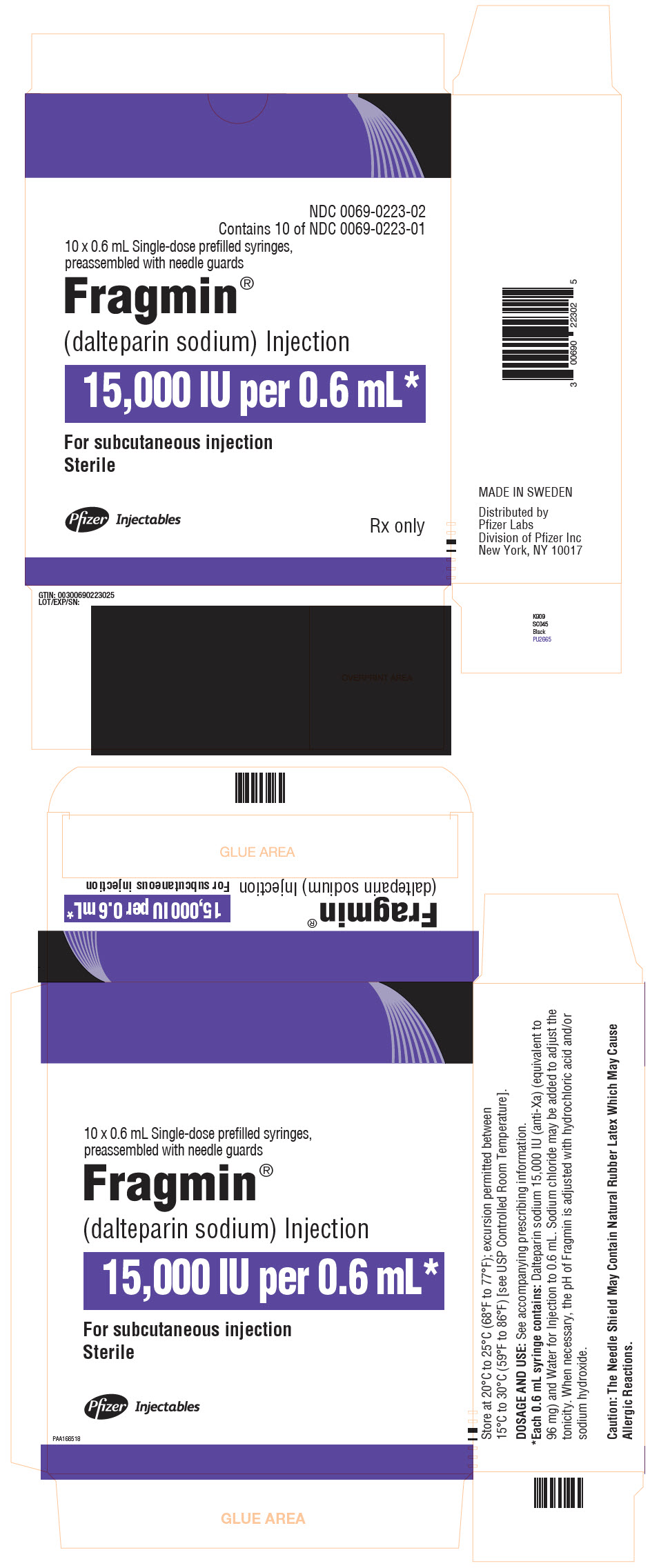
| 151 to 181 | 69 to 82 | 15,000 |
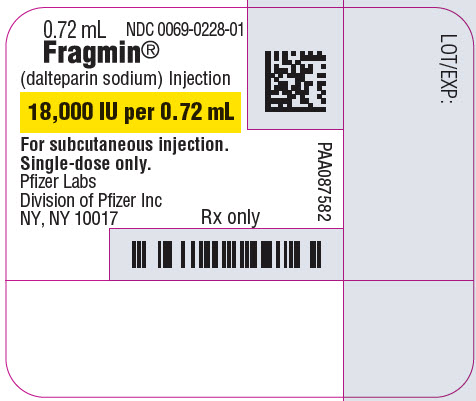
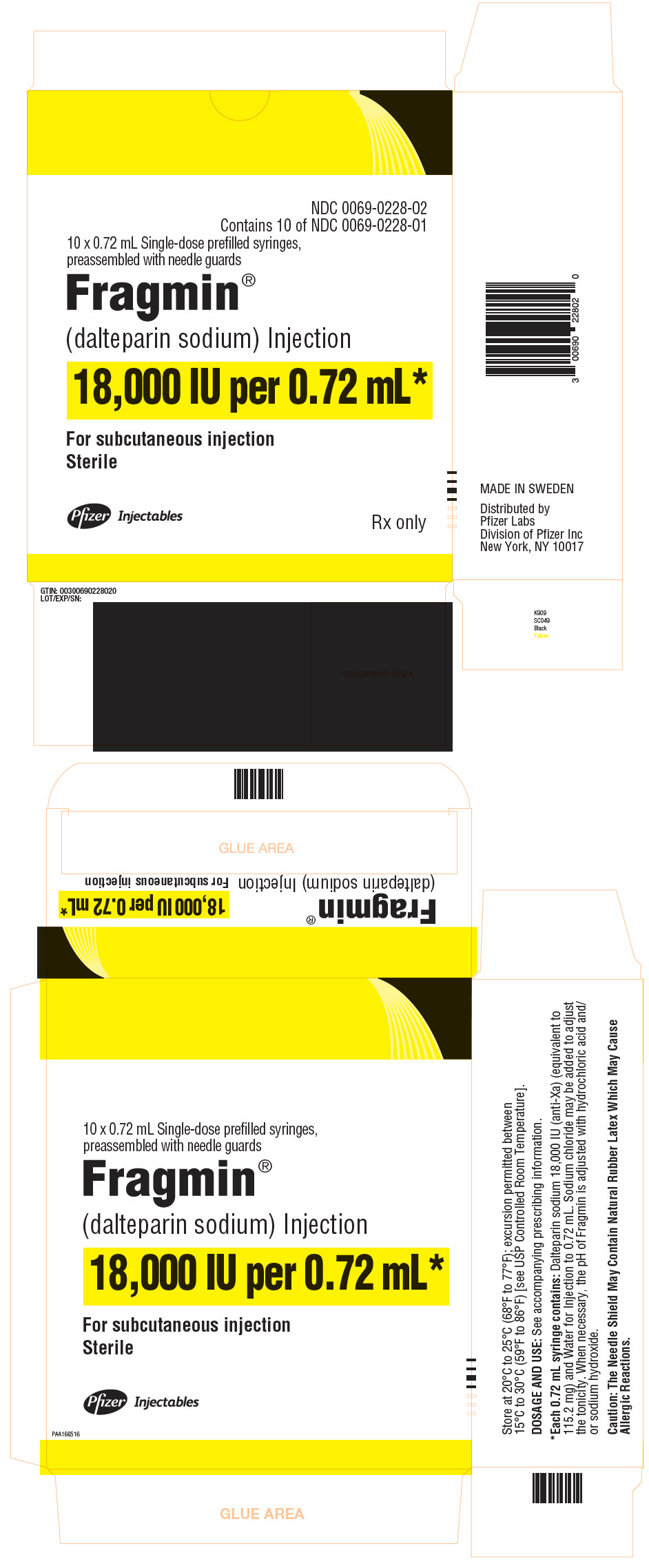
| 182 to 216 | 83 to 98 | 18,000 |
| ≥ 217 | ≥ 99 | 18,000 |
Months 2 to 6
Administer FRAGMIN at a dose of approximately 150 IU/kg, subcutaneously once daily during Months 2 through 6. The total daily dose should not exceed 18,000 IU. Table 4 lists the dose of FRAGMIN to be administered once daily for a range of patient weights during months 2–6.
Table 4 Dose of FRAGMIN to be Administered Subcutaneously by Patient Weight during Months 2–6| Body Weight (lbs) | Body Weight (kg) | FRAGMIN Dose (IU) (prefilled syringe) once daily |
|---|
| ≤ 124 | ≤ 56 | 7,500 |
| 125 to 150 | 57 to 68 | 10,000 |
| 151 to 181 | 69 to 82 | 12,500 |
| 182 to 216 | 83 to 98 | 15,000 |
| ≥ 217 | ≥ 99 | 18,000 |
Safety and efficacy beyond six months have not been evaluated in patients with cancer and acute symptomatic VTE [see Warnings and Precaution (5) and Adverse Reactions (6.1)].
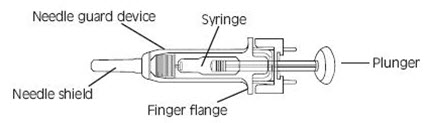
Instructions for using the prefilled single-dose syringes preassembled with needle guard devices
Fixed dose syringes: To ensure delivery of the full dose, do not expel the air bubble from the prefilled syringe before injection. Hold the syringe assembly by the open sides of the device. Remove the needle shield. Insert the needle into the injection area as instructed above. Depress the plunger of the syringe while holding the finger flange until the entire dose has been given. The needle guard will not be activated unless the entire dose has been given. Remove needle from the patient. Let go of the plunger and allow syringe to move up inside the device until the entire needle is guarded. Discard the syringe assembly in approved containers.
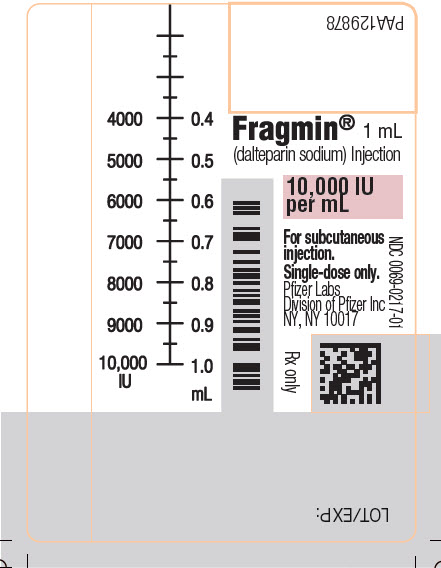
Graduated syringes: Hold the syringe assembly by the open sides of the device. Remove the needle shield. With the needle pointing up, prepare the syringe by expelling the air bubble and then continuing to push the plunger to the desired dose or volume, discarding the extra solution in an appropriate manner. Insert the needle into the injection area as instructed above. Depress the plunger of the syringe while holding the finger flange until the entire dose remaining in the syringe has been given. The needle guard will not be activated unless the entire dose has been given. Remove needle from the patient. Let go of the plunger and allow syringe to move up inside the device until the entire needle is guarded. Discard the syringe assembly in approved containers.
Hemorrhage
The most commonly reported adverse reactions are hematoma at the injection site and hemorrhagic complications. The risk for bleeding varies with the indication and may increase with higher doses.
Unstable Angina and Non-Q-Wave Myocardial Infarction
Table 5 summarizes major bleeding reactions that occurred with FRAGMIN, heparin, and placebo in clinical trials of unstable angina and non-Q-wave myocardial infarction.
Table 5 Major Bleeding Reactions in Unstable Angina and Non-Q-Wave Myocardial Infarction| Indication | Dosing Regimen |
|---|
| Unstable Angina and Non-Q-Wave MI | FRAGMIN
120 IU/kg/12 hr subcutaneousTreatment was administered for 5 to 8 days.
n (%) | Heparin Heparin intravenous infusion for at least 48 hours, APTT 1.5 to 2 times control, then 12,500 U subcutaneously every 12 hours for 5 to 8 days.
intravenous and subcutaneous
n (%) | Placebo
every 12 hr subcutaneous
n (%) |
|---|
| Major Bleeding Reactions Aspirin (75 to 165 mg per day) and beta blocker therapies were administered concurrently. ,Bleeding reactions were considered major if: 1) accompanied by a decrease in hemoglobin of ≥2 g/dL in connection with clinical symptoms; 2) a transfusion was required; 3) bleeding led to interruption of treatment or death; or 4) intracranial bleeding. | 15/1497 (1.0) | 7/731 (1.0) | 4/760 (0.5) |
Hip Replacement Surgery
Table 6 summarizes: 1) all major bleeding reactions and, 2) other bleeding reactions possibly or probably related to treatment with FRAGMIN (preoperative dosing regimen), warfarin sodium, or heparin in two hip replacement surgery clinical trials.
Table 6 Bleeding Reactions Following Hip Replacement Surgery| Indication | FRAGMIN vs Warfarin Sodium | FRAGMIN vs Heparin |
|---|
| Dosing Regimen | Dosing Regimen |
|---|
| Hip Replacement Surgery | FRAGMIN Includes three treated patients who did not undergo a surgical procedure.
5,000 IU once daily subcutaneous
n (%) | Warfarin
SodiumWarfarin sodium dosage was adjusted to maintain a prothrombin time index of 1.4 to 1.5, corresponding to an International Normalized Ratio (INR) of approximately 2.5. oral
n (%) | FRAGMIN Includes two treated patients who did not undergo a surgical procedure.
5,000 IU once daily subcutaneous
n (%) | Heparin
5,000 U three times a day subcutaneous
n (%) |
|---|
| Major Bleeding Reactions A bleeding event was considered major if: 1) hemorrhage caused a significant clinical event, 2) it was associated with a hemoglobin decrease of ≥2 g/dL or transfusion of 2 or more units of blood products, 3) it resulted in reoperation due to bleeding, or 4) it involved retroperitoneal or intracranial hemorrhage. | 7/274 (2.6) | 1/279 (0.4) | 0 | 3/69 (4.3) |
| Other Bleeding Reactions Occurred at a rate of at least 2% in the group treated with FRAGMIN 5,000 IU once daily.
Hematuria | 8/274 (2.9) | 5/279 (1.8) | 0 | 0 |
| Wound Hematoma | 6/274 (2.2) | 0 | 0 | 0 |
| Injection Site Hematoma | 3/274 (1.1) | NA | 2/69 (2.9) | 7/69 (10.1) |
Six of the patients treated with FRAGMIN experienced seven major bleeding reactions. Two of the reactions were wound hematoma (one requiring reoperation), three were bleeding from the operative site, one was intraoperative bleeding due to vessel damage, and one was gastrointestinal bleeding.
In the third hip replacement surgery clinical trial, the incidence of major bleeding reactions was similar in all three treatment groups: 3.6% (18/496) for patients who started FRAGMIN before surgery; 2.5% (12/487) for patients who started FRAGMIN after surgery; and 3.1% (15/489) for patients treated with warfarin sodium.
Abdominal Surgery
Table 7 summarizes bleeding reactions that occurred in clinical trials which studied FRAGMIN 2,500 and 5,000 IU administered once daily to abdominal surgery patients.
Table 7 Bleeding Reactions Following Abdominal Surgery| Indication | FRAGMIN vs Placebo | FRAGMIN vs FRAGMIN |
|---|
| Dosing Regimen | Dosing Regimen |
|---|
| Abdominal Surgery | FRAGMIN 2,500 IU once daily subcutaneous
n (%) | Placebo once daily subcutaneous
n (%) | FRAGMIN 2,500 IU once daily subcutaneous
n (%) | FRAGMIN 5,000 IU once daily subcutaneous
n (%) |
|---|
| Postoperative Transfusions | 14/182
(7.7) | 13/182
(7.1) | 89/1,025
(8.7) | 125/1,033
(12.1) |
| Wound Hematoma | 2/79
(2.5) | 2/77
(2.6) | 1/1,030
(0.1) | 4/1,039
(0.4) |
| Reoperation Due to Bleeding | 1/79
(1.3) | 1/78
(1.3) | 2/1,030
(0.2) | 13/1,038
(1.3) |
| Injection Site Hematoma | 8/172
(4.7) | 2/174
(1.1) | 36/1,026
(3.5) | 57/1,035
(5.5) |
Table 7 Cont. Bleeding Reactions Following Abdominal Surgery| Indication | FRAGMIN vs Heparin |
|---|
| Dosing Regimen |
|---|
| Abdominal Surgery | FRAGMIN 2,500 IU once daily subcutaneous
n (%) | Heparin 5,000 U twice daily subcutaneous
n (%) | FRAGMIN 5,000 IU once daily subcutaneous
n (%) | Heparin 5,000 U twice daily subcutaneous
n (%) |
|---|
| Postoperative Transfusions | 26/459
(5.7) | 36/454
(7.9) | 81/508
(15.9) | 63/498
(12.7) |
| Wound Hematoma | 16/467
(3.4) | 18/467
(3.9) | 12/508
(2.4) | 6/498
(1.2) |
| Reoperation Due to Bleeding | 2/392
(0.5) | 3/392
(0.8) | 4/508
(0.8) | 2/498
(0.4) |
| Injection Site Hematoma | 1/466
(0.2) | 5/464
(1.1) | 36/506
(7.1) | 47/493
(9.5) |
In a trial comparing FRAGMIN 5,000 IU once daily to FRAGMIN 2,500 IU once daily in patients undergoing surgery for malignancy, the incidence of bleeding reactions was 4.6% and 3.6%, respectively (n.s.). In a trial comparing FRAGMIN 5,000 IU once daily to heparin 5,000 U twice daily, in the malignancy subgroup the incidence of bleeding reactions was 3.2% and 2.7%, respectively for FRAGMIN and Heparin (n.s.).
Medical Patients with Severely Restricted Mobility During Acute Illness
Table 8 summarizes major bleeding reactions that occurred in a clinical trial of medical patients with severely restricted mobility during acute illness.
Table 8 Bleeding Reactions in Medical Patients with Severely Restricted Mobility During Acute Illness| Indication | Dosing Regimen |
|---|
| Medical Patients with Severely Restricted Mobility | FRAGMIN
5,000 IU once daily subcutaneous
n (%) | Placebo
once daily subcutaneous
n (%) |
|---|
| Major Bleeding Reactions A bleeding event was considered major if: 1) it was accompanied by a decrease in hemoglobin of ≥2 g/dL in connection with clinical symptoms; 2) intraocular, spinal/epidural, intracranial, or retroperitoneal bleeding; 3) required transfusion of ≥ 2 units of blood products; 4) required significant medical or surgical intervention; or 5) led to death. at Day 14 | 8/1,848 (0.4) | 0/1,833 (0) |
| Major Bleeding Reactions at Day 21 | 9/1,848 (0.5) | 3/1,833 (0.2) |
Three of the major bleeding reactions that occurred by Day 21 were fatal, all due to gastrointestinal hemorrhage (two patients in the group treated with FRAGMIN and one in the group receiving placebo).
Patients with Cancer and Acute Symptomatic Venous Thromboembolism
Table 9 summarizes the number of patients with bleeding reactions that occurred in the clinical trial of patients with cancer and acute symptomatic venous thromboembolism. A bleeding event was considered major if it: 1) was accompanied by a decrease in hemoglobin of ≥ 2 g/dL in connection with clinical symptoms; 2) occurred at a critical site (intraocular, spinal/epidural, intracranial, retroperitoneal, or pericardial bleeding); 3) required transfusion of ≥ 2 units of blood products; or 4) led to death. Minor bleeding was classified as clinically overt bleeding that did not meet criteria for major bleeding.
At the end of the six-month study, a total of 46 (13.6%) patients in the FRAGMIN arm and 62 (18.5%) patients in the OAC arm experienced any bleeding event. One bleeding event (hemoptysis in a patient in the FRAGMIN arm at Day 71) was fatal.
Table 9 Bleeding Reactions (Major and Any) (As treated population)Patients with multiple bleeding episodes within any time interval were counted only once in that interval. However, patients with multiple bleeding episodes that occurred at different time intervals were counted once in each interval in which the event occurred.
| Study period | FRAGMIN 200 IU/kg (max. 18,000 IU) subcutaneous once daily × 1 month, then 150 IU/kg (max. 18,000 IU) subcutaneous once daily × 5 months | OAC FRAGMIN 200 IU/kg (max 18,000 IU) subcutaneous once daily × 5–7 days and OAC for 6 months (target INR 2–3) |
|---|
| Number at risk | Patients with Major Bleeding
n (%) | Patients with Any Bleeding
n (%) | Number at risk | Patients with Major Bleeding
n (%) | Patients with Any Bleeding
n (%) |
|---|
| Total during study | 338 | 19 (5.6) | 46 (13.6) | 335 | 12 (3.6) | 62 (18.5) |
| Week 1 | 338 | 4 (1.2) | 15 (4.4) | 335 | 4 (1.2) | 12 (3.6) |
| Weeks 2–4 | 332 | 9 (2.7) | 17 (5.1) | 321 | 1 (0.3) | 12 (3.7) |
| Weeks 5–28 | 297 | 9 (3.0) | 26 (8.8) | 267 | 8 (3.0) | 40 (15.0) |
Thrombocytopenia
[see Warnings and Precautions (5.2)].
Elevations of Serum Transaminases
In FRAGMIN clinical trials supporting non-cancer indications, where hepatic transaminases were measured, asymptomatic increases in transaminase levels (SGOT/AST and SGPT/ALT) greater than three times the upper limit of normal of the laboratory reference range were seen in 4.7% and 4.2%, respectively, of patients during treatment with FRAGMIN.
In the FRAGMIN clinical trial of patients with cancer and acute symptomatic venous thromboembolism treated with FRAGMIN for up to 6 months, asymptomatic increases in transaminase levels, AST and ALT, greater than three times the upper limit of normal of the laboratory reference range were reported in 8.9% and 9.5% of patients, respectively. The frequencies of Grades 3 and 4 increases in AST and ALT, as classified by the National Cancer Institute, Common Toxicity Criteria (NCI-CTC) Scoring System, were 3% and 3.8%, respectively. Grades 2, 3 & 4 combined have been reported in 12% and 14% of patients, respectively.
Other
Allergic Reactions: Allergic reactions (i.e., pruritus, rash, fever, injection site reaction, bullous eruption) have occurred. Cases of anaphylactoid reactions have been reported.
Local Reactions: Pain at the injection site was reported in 4.5% of patients treated with FRAGMIN 5,000 IU once daily vs 11.8% of patients treated with heparin 5,000 U twice daily in the abdominal surgery trials. In the hip replacement trials, pain at injection site was reported in 12% of patients treated with FRAGMIN 5,000 IU once daily vs 13% of patients treated with heparin 5,000 U three times a day.
Risk Summary
Available data from published literature and postmarketing reports have not reported a clear association with dalteparin and adverse developmental outcomes. There are risks to the mother associated with untreated venous thromboembolism (VTE) in pregnancy, and a potential for adverse effects on the preterm infant when dalteparin is used in pregnancy (see Clinical Considerations). In animal reproduction studies, there was no evidence of embryo-fetal toxicity or teratogenicity when dalteparin sodium was administered to pregnant rats and rabbits during organogenesis at doses 2 to 4 times (rats) and 4 times (rabbits) the human dose of 100 IU/kg dalteparin based on the body surface area [see Data]. Because animal reproduction studies are not always predictive of human response, this drug should be used during pregnancy only if clearly needed.
The estimated background risk of major birth defects and miscarriage for the indicated population is unknown. All pregnancies have a background risk of birth defect, loss, or other adverse outcomes.
In the U.S. general population, the estimated background risk of major birth defects and miscarriage in clinically recognized pregnancies is 2–4% and 15–20%, respectively.
Clinical Considerations
Disease-Associated Maternal and/or Embryo/Fetal Risk
Published data describe that women with a previous history of VTE in pregnancy are at higher risk for recurrence during subsequent pregnancies compared to those with no risk factor for VTE (4.5% versus 2.7% respectively, relative risk 1.7, 95% CI: 1.0–2.8).
Fetal/Neonatal Adverse Reactions
Cases of "gasping syndrome" have occurred in premature infants when large amounts of benzyl alcohol have been administered (99–404 mg/kg/day). The 3.8 mL multiple-dose vials of FRAGMIN contain 14 mg/mL of benzyl alcohol [see Warnings and Precautions (5.3)].
Data
Animal Data
In reproductive and developmental toxicity studies, pregnant rats and rabbits received dalteparin sodium during organogenesis at intravenous doses up to 2,400 IU/kg (14,160 IU/m2) (rats) and 4,800 IU/kg (40,800 IU/m2) (rabbits). These exposures were 2 to 4 times (rats) and 4 times (rabbits) the human dose of 100 IU/kg dalteparin based on the body surface area. These studies revealed no evidence of teratogenicity or embryo-fetal toxicity.
Risk Summary
Limited published data indicate that dalteparin is present in human milk in small amounts (see Data). No adverse effects on the breastfed infant have been reported. There are no data on the effects of the drug on milk production. Oral absorption of dalteparin is expected to be low, but the clinical implications, if any, of this small amount of anticoagulant activity on a breastfed infant are unknown. The developmental and health benefits of breastfeeding should be considered along with the mother's clinical need for FRAGMIN and any potential adverse effects on the breastfed child from FRAGMIN or from the underlying maternal condition.
Data
A study evaluated samples of maternal blood and breast milk in 15 lactating women receiving prophylactic doses of dalteparin in the immediate postpartum period (days 4–8 after Cesarean-section). The samples were collected before and 3–4 hours after daily injections of 2500 IU dalteparin. Small amounts of anti-Xa activity (range<0.005 to 0.037 IU/mL) in breast milk were detected in 11 of the 15 women. Because this study evaluated colostrum or transitional milk at a single timepoint during the 24-hour dosing interval, the clinical relevance of this data is unclear in regards to passage of drug into mature milk and the quantification of drug exposure to the infant over the full dosing interval.
Risk of Hemorrhage including Spinal/Epidural Hematoma
If patients have had neuraxial anesthesia or spinal puncture, and particularly, if they are taking concomitant NSAIDs, platelet inhibitors, or other anticoagulants, inform the patients to watch for signs and symptoms of spinal or epidural hematoma, such as tingling, numbness (especially in the lower limbs) and muscular weakness. If any of these symptoms occur the patient should contact his or her physician immediately.
Additionally, the use of aspirin and other NSAIDs may enhance the risk of hemorrhage. Discontinue their use prior to dalteparin therapy whenever possible; if co-administration is essential, the patient's clinical and laboratory status should be closely monitored [see Drug Interactions (7)].
Inform Patients: