Immediately discontinue Doxorubicin Hydrochloride Injection/for Injection for burning or stinging sensation or other evidence indicating peri-venous infiltration or extravasation. Manage confirmed or suspected extravasation as follows:
- Do not remove the needle until attempts are made to aspirate extravasated fluid.
- Do not flush the line.
- Avoid applying pressure to the site.
- Apply ice to the site intermittently for 15 minutes, 4 times a day for 3 days.
- If the extravasation is in an extremity, elevate the extremity.
- In adults, consider administration of dexrazoxane [see Warnings and Precautions (5.3)].
Management of Contact with Skin or Eyes
Treat accidental contact with the skin or eyes immediately by copious lavage with water, or soap and water, or sodium bicarbonate solution. Do not abrade the skin by using a scrub brush. Seek medical attention.
Incompatibility with Other Drugs
Do not admix Doxorubicin Hydrochloride Injection/for Injection with other drugs. If Doxorubicin Hydrochloride Injection/for Injection is mixed with heparin or fluorouracil, a precipitate may form. Avoid contact with alkaline solutions which can lead to hydrolysis of doxorubicin hydrochloride.
Cardiomyopathy
Doxorubicin hydrochloride can result in myocardial damage, including acute left ventricular failure. The risk of cardiomyopathy is generally proportional to the cumulative exposure. Include prior doses of other anthracyclines or anthracenediones in calculations of total cumulative dosage for doxorubicin hydrochloride. Cardiomyopathy may develop during treatment or up to several years after completion of treatment and can include decrease in LVEF and signs and symptoms of congestive heart failure (CHF). The probability of developing cardiomyopathy is estimated to be 1 to 2% at a total cumulative dose of 300 mg/m2 of doxorubicin hydrochloride, 3 to 5% at a dose of 400 mg/m2, 5 to 8% at a dose of 450 mg/m2, and 6 to 20% at a dose of 500 mg/m2, when doxorubicin hydrochloride is administered every 3 weeks. There is an additive or potentially synergistic increase in the risk of cardiomyopathy in patients who have received radiotherapy to the mediastinum or concomitant therapy with other known cardiotoxic agents, such as cyclophosphamide and trastuzumab.
Pericarditis and myocarditis have also been reported during or following doxorubicin hydrochloride treatment.
Assess left ventricular cardiac function (e.g., MUGA or echocardiogram) prior to initiation of Doxorubicin Hydrochloride Injection/for Injection, during treatment to detect acute changes, and after treatment to detect delayed cardiotoxicity. Increase the frequency of assessments as the cumulative dose exceeds 300 mg/m2. Use the same method of assessment of LVEF at all time points [see Use in Specific Populations (8.4)]. Discontinue Doxorubicin Hydrochloride Injection/for Injection in patients who develop signs or symptoms of cardiomyopathy [see Dosage and Administration (2.3)].
Consider the use of dexrazoxane to reduce the incidence and severity of cardiomyopathy due to doxorubicin hydrochloride administration in patients who have received a cumulative doxorubicin hydrochloride dose of 300 mg/m2 and who will continue to receive doxorubicin hydrochloride.
Arrhythmias
Doxorubicin hydrochloride can result in arrhythmias, including life-threatening arrhythmias, during or within a few hours after doxorubicin hydrochloride administration and at any time point during treatment. Tachyarrhythmias, including sinus tachycardia, premature ventricular contractions, and ventricular tachycardia, as well as bradycardia, can occur. Electrocardiographic changes, including non-specific ST-T wave changes, atrioventricular and bundle-branch block can also occur. These electrocardiographic changes may be transient and self-limited and may not require a dosage modification of doxorubicin hydrochloride.
Breast Cancer
The safety data below were collected from 1492 women who received doxorubicin hydrochloride at a dose of 60 mg/m2 and cyclophosphamide at a dose of 600 mg/m2 (AC) every 3 weeks for 4 cycles for the adjuvant treatment of axillary lymph node positive breast cancer. The median number of cycles received was 4. Selected adverse reactions reported in this study are provided in Table 2. No treatment-related deaths were reported in patients on either arm of the study.
Table 2. Selected Adverse Reactions in Patients with Early Breast Cancer Involving Axillary Lymph Nodes| Adverse Reactions | AC Includes pooled data from patients who received either AC for 4 cycles or AC for 4 cycles followed by CMF for 3 cycles
N=1492 | Conventional CMF
N=739 |
|---|
| % | % |
|---|
| AC = doxorubicin hydrochloride, cyclophosphamide; CMF = cyclophosphamide, methotrexate, fluorouracil |
| Alopecia | 92 | 71 |
| Vomiting | | |
| Vomiting ≤12 hours | 34 | 25 |
| Vomiting >12 hours | 37 | 12 |
| Intractable | 5 | 2 |
| Leukopenia | | |
| Grade 3 (1,000–1,999 /mm3) | 3.4 | 9.4 |
| Grade 4 (<1000 /mm3) | 0.3 | 0.3 |
| Shock, sepsis | 2 | 1 |
| Systemic infection | 2 | 1 |
| Cardiac dysfunction | | |
| Asymptomatic | 0.2 | 0.1 |
| Transient | 0.1 | 0 |
| Symptomatic | 0.1 | 0 |
| Thrombocytopenia | | |
| Grade 3 (25,000–49,999 /mm3) | 0 | 0.3 |
| Grade 4 (<25,000 /mm3) | 0.1 | 0 |
Inhibitors of CYP3A4, CYP2D6, and P-gp
Concomitant use of doxorubicin hydrochloride with inhibitors of CYP3A4, CYP2D6, or P-glycoprotein (P-gp), increased concentrations of doxorubicin, which may increase the incidence and severity of adverse reactions of doxorubicin hydrochloride. Avoid concomitant use of Doxorubicin Hydrochloride Injection/for Injection with inhibitors of CYP3A4, CYP2D6, or P-gp.
Inducers of CYP3A4, CYP2D6, or P-gp
Concomitant use of doxorubicin hydrochloride with inducers of CYP3A4, CYP2D6, or P-gp may decrease the concentration of doxorubicin. Avoid concomitant use of Doxorubicin Hydrochloride Injection/for Injection with inducers of CYP3A4, CYP2D6, or P-gp.
Paclitaxel
Paclitaxel, when given prior to doxorubicin hydrochloride, increases the plasma-concentrations of doxorubicin and its metabolites. Administer Doxorubicin Hydrochloride Injection/for Injection prior to paclitaxel if used concomitantly.
Risk Summary
Based on findings in animals and its mechanism of action, Doxorubicin Hydrochloride Injection/for Injection can cause fetal harm when administered to a pregnant woman; avoid the use of Doxorubicin Hydrochloride Injection/for Injection during the 1st trimester. Available human data do not establish the presence or absence of major birth defects and miscarriage related to the use of doxorubicin hydrochloride during the 2nd and 3rd trimesters. Doxorubicin hydrochloride was teratogenic and embryotoxic in rats and embryotoxic in rabbits when administered during organogenesis at doses approximately 0.07 times (based on body surface area) the recommended human dose of 60 mg/m2 (see Data). Advise pregnant women of the potential risk to a fetus.
In the U.S. general population, the estimated background risk of major birth defects and miscarriage in clinically recognized pregnancies is 2 to 4% and 15 to 20%, respectively.
Data
Animal Data
Doxorubicin hydrochloride was teratogenic and embryotoxic at doses of 0.8 mg/kg/day (about 0.07 times the recommended human dose based on body surface area) when administered during the period of organogenesis in rats. Teratogenicity and embryotoxicity were also seen using discrete periods of treatment. The most susceptible was the 6- to 9-day gestation period at doses of 1.25 mg/kg/day and greater. Characteristic malformations included esophageal and intestinal atresia, tracheo-esophageal fistula, hypoplasia of the urinary bladder, and cardiovascular anomalies. Doxorubicin hydrochloride was embryotoxic (increase in embryofetal deaths) and abortifacient at 0.4 mg/kg/day (about 0.07 times the recommended human dose based on body surface area) in rabbits when administered during the period of organogenesis.
Risk Summary
Doxorubicin was measured in the milk of one lactating patient after therapy with 70 mg/m2 of doxorubicin hydrochloride given as a 15-minute intravenous infusion. The peak milk concentration at 24 hours after treatment was 4.4-fold greater than the corresponding plasma concentration. Doxorubicin was detectable in the milk up to 72 hours. There are no data on the effects of doxorubicin hydrochloride on the breastfed child or the effects on milk production. Because of the potential for serious adverse reactions in the breastfed child, advise women not to breastfeed during treatment with Doxorubicin Hydrochloride Injection/for Injection and for 10 days after the final dose.
Pregnancy Testing
Verify the pregnancy status of females of reproductive potential prior to initiating Doxorubicin Hydrochloride Injection/for Injection.
Contraception
Females
Doxorubicin Hydrochloride Injection/for Injection can cause fetal harm when administered to pregnant women [see Use in Specific Populations (8.1)]. Advise female patients of reproductive potential to use highly effective contraception during treatment with Doxorubicin Hydrochloride Injection/for Injection and for 6 months after treatment. [see Use in Specific Populations (8.1)].
Males
Doxorubicin hydrochloride may damage spermatozoa and testicular tissue, resulting in possible genetic fetal abnormalities. Due to the potential for genotoxicity, advise males with female partners of reproductive potential to use effective contraception during treatment with Doxorubicin Hydrochloride Injection/for Injection and for 3 months after treatment [see Nonclinical Toxicology (13.1)]. Males with pregnant partners should use condoms during treatment and for at least 10 days after the final dose [see Nonclinical Toxicology (13.1), Use in Specific Populations (8.1)].
Infertility
Females
In females of reproductive potential, Doxorubicin hydrochloride may cause infertility and result in amenorrhea. Premature menopause can occur. Recovery of menses and ovulation is related to age at treatment [see Nonclinical Toxicology (13.1)].
Males
Doxorubicin hydrochloride may result in oligospermia, azoospermia, and permanent loss of fertility. Sperm counts have been reported to return to normal levels in some men. This may occur several years after the end of therapy [see Nonclinical Toxicology (13.1)].
Distribution
The distribution half-life is approximately 5 minutes. Steady-state distribution volume ranges from 809 L/m2 to 1214 L/m2. Binding of doxorubicin and its major metabolite, doxorubicinol, to plasma proteins is 75% and is independent of plasma concentration of doxorubicin up to 1.1 µg/mL.
Doxorubicin does not cross the blood brain barrier.
Elimination
Plasma clearance is ranges from 324 mL/min/m2 to 809 mL/min/m2. The terminal half-life is 20 hours to 48 hours.
Metabolism
Doxorubicin is a substrate of CYP3A4, CYP2D6, and P-gp.
Enzymatic reduction at the 7 position and cleavage of the daunosamine sugar yields aglycones which are accompanied by free radical formation, the local production of which may contribute to the cardiotoxic activity of doxorubicin hydrochloride.
Disposition of doxorubicinol in patients is formation rate limited, with the terminal half-life of doxorubicinol being similar to doxorubicin. The relative exposure of doxorubicinol, i.e., the ratio between the AUC of doxorubicinol and the AUC of doxorubicin is approximately 0.5.
Excretion
Plasma clearance is predominately by metabolism and biliary excretion. Approximately 40% of the dose appears in the bile in 5 days, while only 5% to 12% of the drug and its metabolites appear in the urine during the same time period. In urine, <3% of the dose was recovered as doxorubicinol over 7 days.
Specific Populations
Weight
Systemic clearance of doxorubicin is significantly reduced in obese women with ideal body weight greater than 130%. There was a significant reduction in clearance without any change in volume of distribution in obese patients when compared with normal patients with less than 115% ideal body weight.
Pediatric Patients
Following administration of doses ranging from 10 mg/m2 to 75 mg/m2 of doxorubicin hydrochloride to 60 patients ranging from 2 months to 20 years, doxorubicin clearance averaged 1443 ± 114 mL/min/m2. Further analysis demonstrated that clearance in 52 patients ranging from 2 to 20 years (1540 mL/min/m2) was increased compared with adults. However, clearance in infants younger than 2 years of age (813 mL/min/m2) was decreased compared with older patients (ranging from 2 to 20 years) and approached the range of clearance values determined in adults [see Use in Specific Populations (8.4)].
Sex
A published clinical study involving 6 men and 21 women with no prior anthracycline therapy reported a significantly higher median doxorubicin clearance in men compared to women (1088 mL/min/m2 versus 433 mL/min/m2). However, the terminal half-life of doxorubicin was longer in men compared to women (54 versus 35 hours).
Patients with Hepatic Impairment
The clearance of doxorubicin and doxorubicinol was reduced in patients with elevated serum total bilirubin concentrations [see Dosage and Administration (2.4), Warnings and Precautions (5.5)].
Doxorubicin Hydrochloride Injection
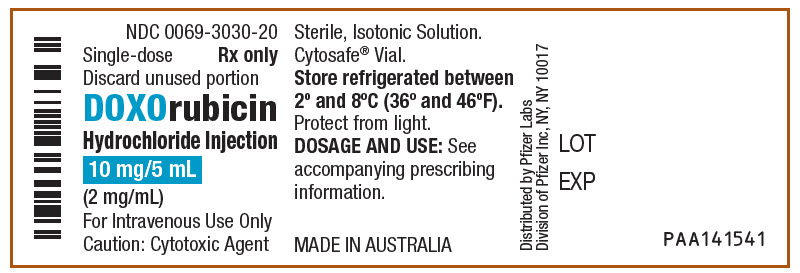
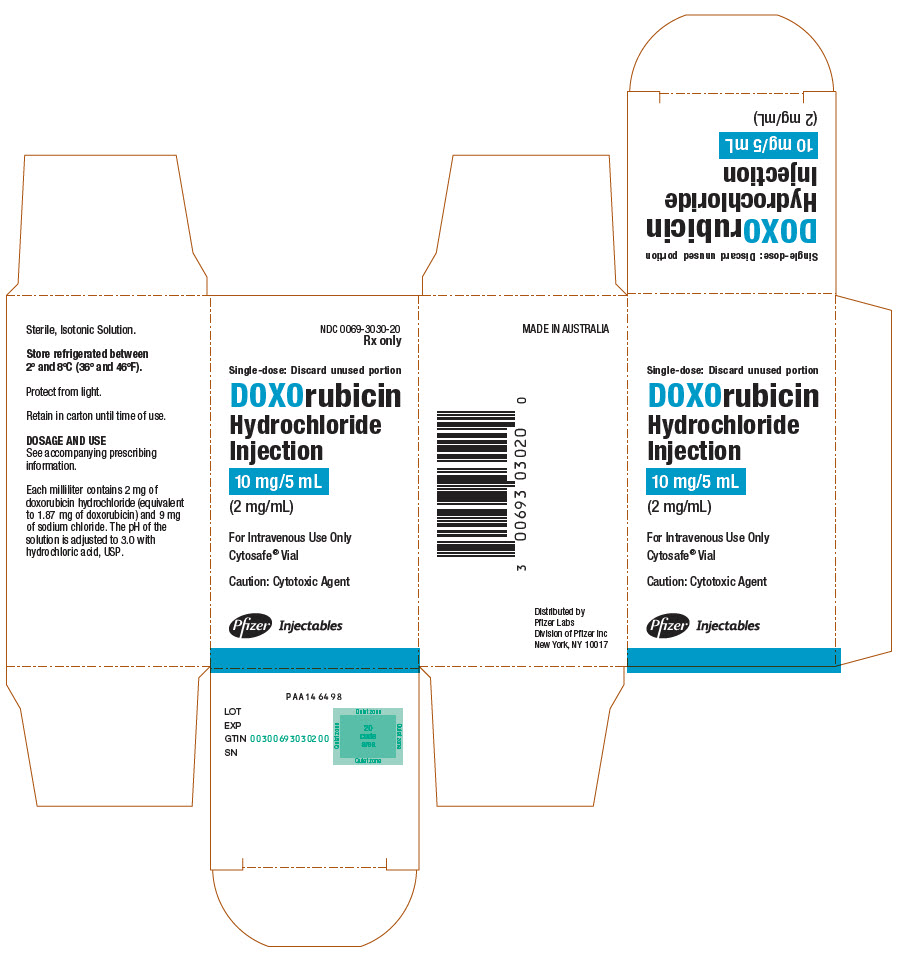
Doxorubicin Hydrochloride Injection is a sterile, isotonic solution, available in polypropylene (CYTOSAFE)® vials in single vial packs as:
Single-dose Vials
- 10 mg/5 mL (2 mg/mL) NDC 0069-3030-20
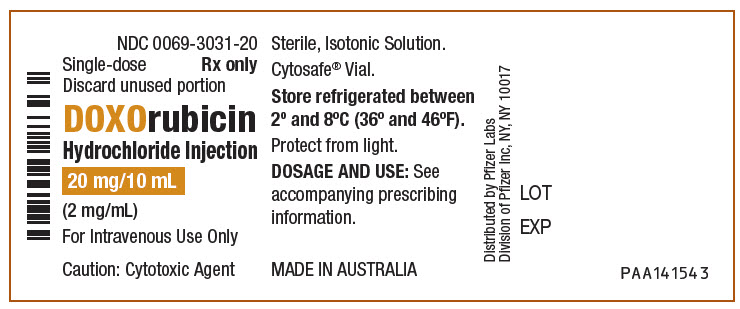
- 20 mg/10 mL (2 mg/mL) NDC 0069-3031-20
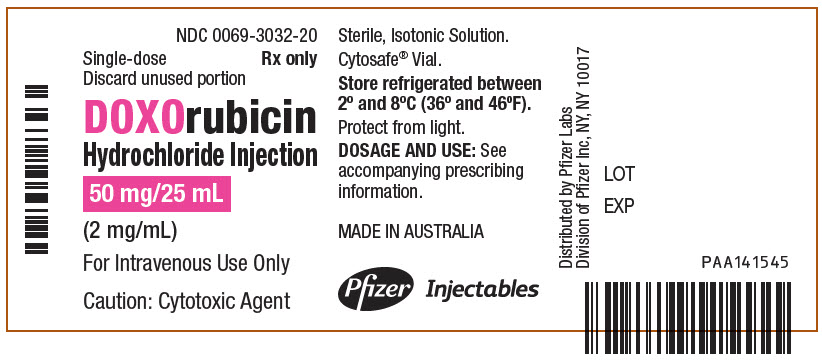
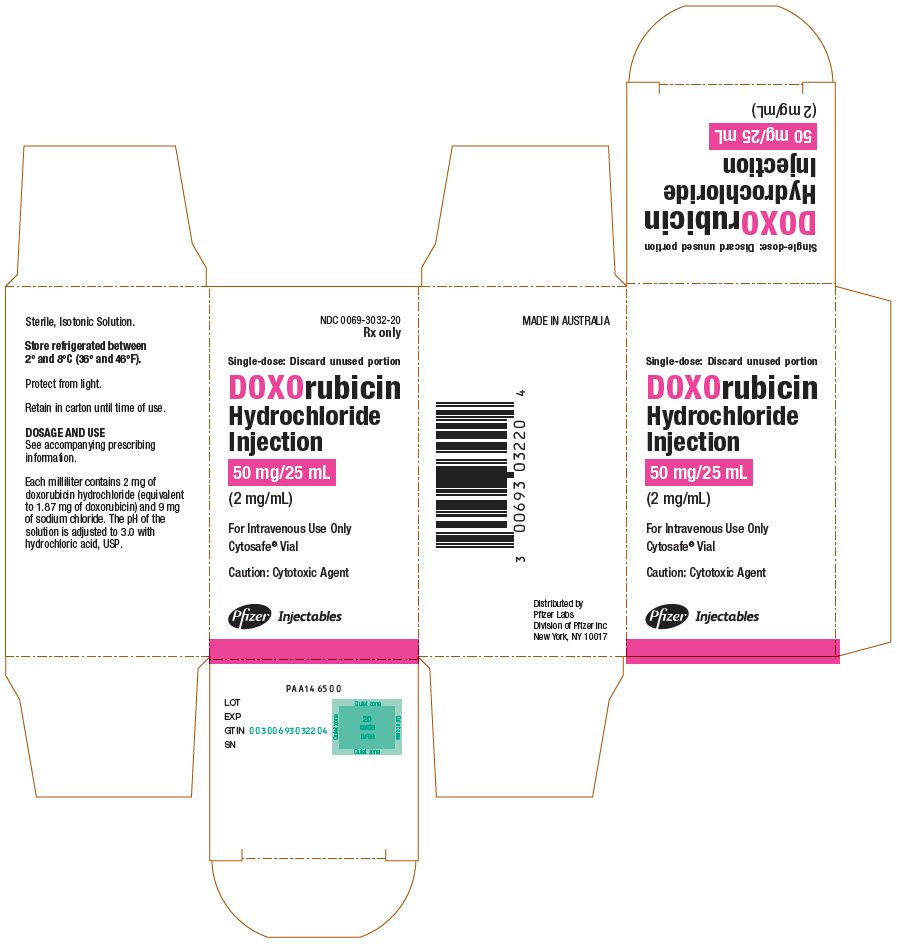
- 50 mg/25 mL (2 mg/mL) NDC 0069-3032-20
Retain in carton until time of use. Discard unused portion.
Multiple-dose Vials
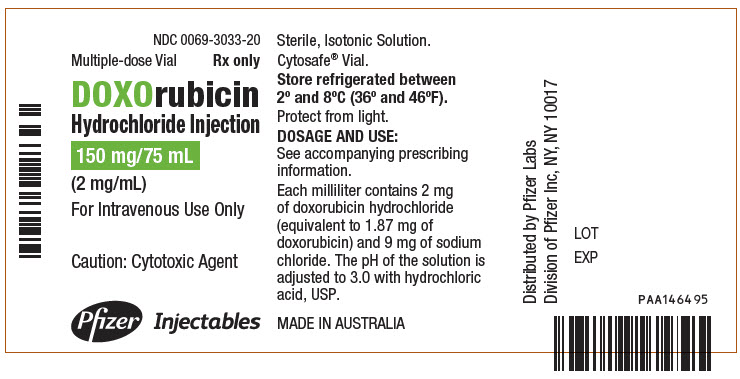
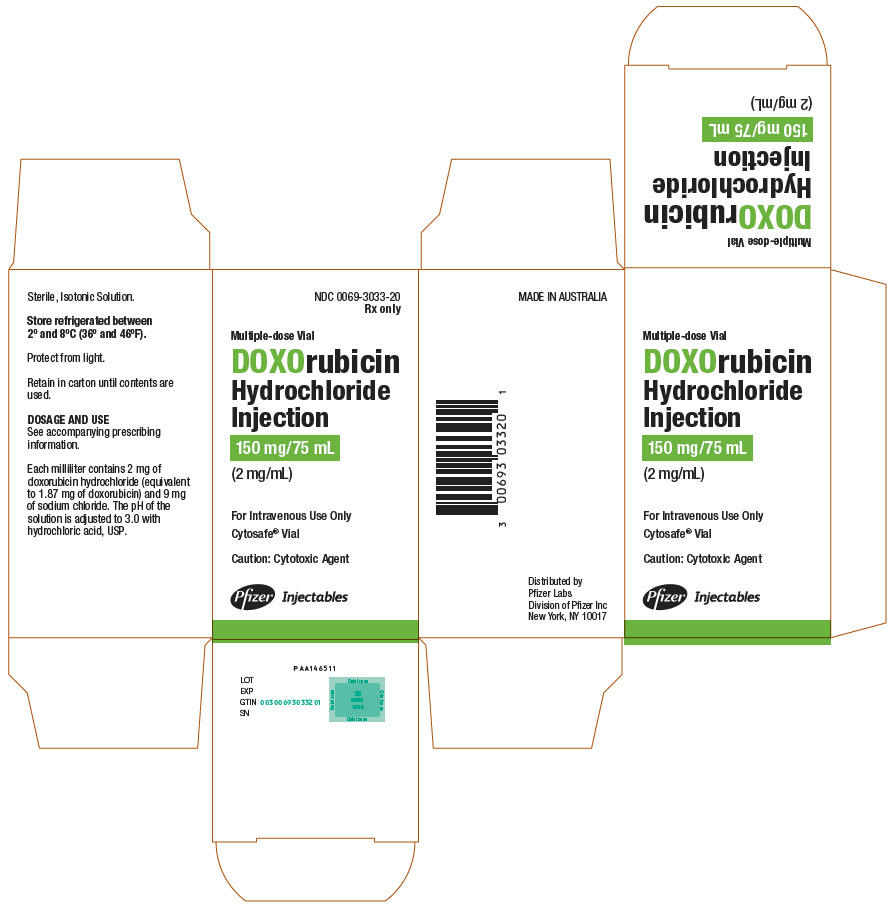
- 150 mg/75 mL (2 mg/mL) NDC 0069-3033-20
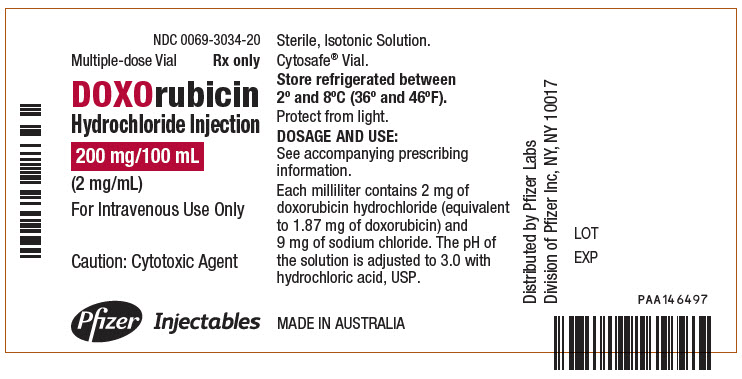
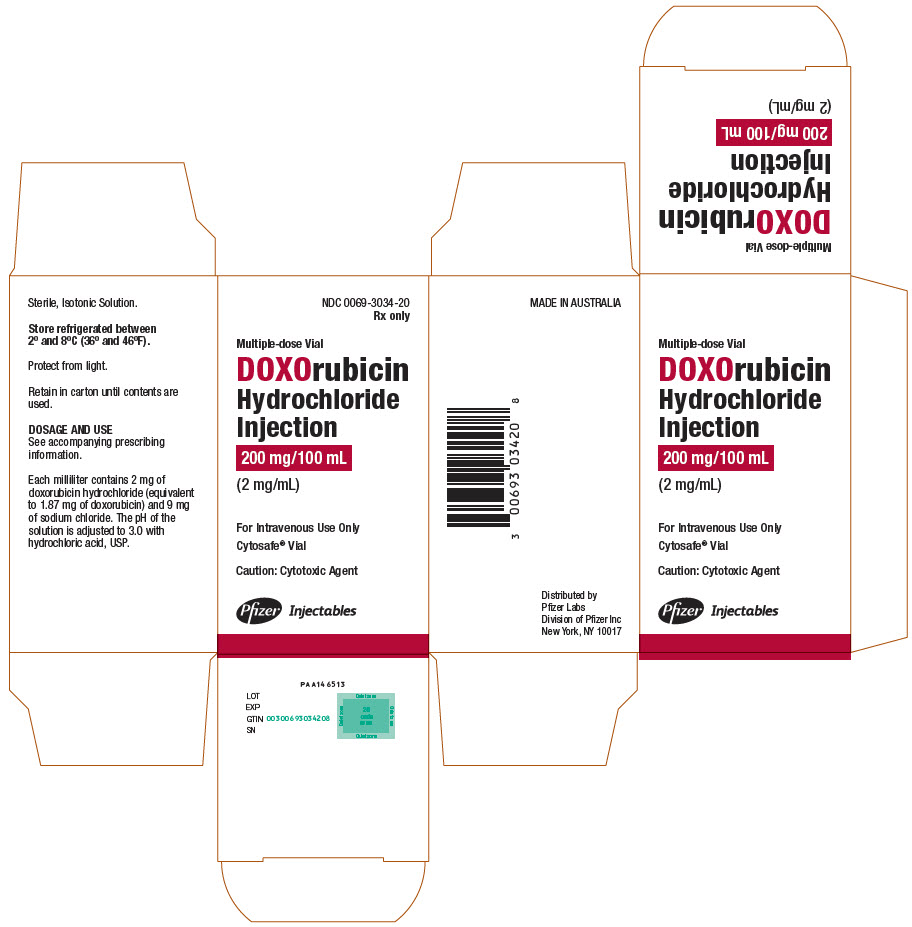
- 200 mg/100 mL (2 mg/mL) NDC 0069-3034-20
Retain in carton until contents are used.
Cardiomyopathy
Advise patients that Doxorubicin Hydrochloride Injection/for Injection can cause irreversible myocardial damage and to contact a healthcare provider for symptoms of heart failure during or after treatment [see Warnings and Precautions (5.1)].
Secondary Malignancy
Advise patients of the increased risk of treatment-related leukemia [see Warnings and Precautions (5.2)].
Myelosuppression
Advise patients that Doxorubicin Hydrochloride Injection/for Injection can reduce the absolute neutrophil count resulting in an increased risk of infection and to contact a healthcare provider for new onset fever or symptoms of infection [see Warnings and Precautions (5.4)].
Embryo-Fetal Toxicity
Advise pregnant women and females of reproductive potential of the potential risk to a fetus, and to inform their healthcare provider of a known or suspected pregnancy [see Warnings and Precautions (5.8), Use in Specific Populations (8.1)].
Advise females of reproductive potential to use effective contraception during treatment with Doxorubicin Hydrochloride Injection/for Injection and for 6 months after treatment [see Warnings and Precautions (5.8), Use in Specific Populations (8.3)].
Advise patients that Doxorubicin Hydrochloride Injection/for Injection may induce chromosomal damage in sperm, which may lead to loss of fertility and offspring with birth defects. Advise males with female partners of reproductive potential to use effective contraception during treatment with Doxorubicin Hydrochloride Injection/for Injection and for 3 months after treatment [see Warnings and Precautions (5.8), Use in Specific Populations (8.3), Nonclinical Toxicology (13.1)].
Advise males with pregnant partners to use condoms during treatment with Doxorubicin Hydrochloride Injection/for Injection and for at least 10 days after the final dose [see Use in Specific Populations (8.3)].
Lactation
Advise females not to breastfeed during treatment with Doxorubicin Hydrochloride Injection/for Injection and for 10 days after the final dose [see Use in Specific Populations (8.2)].
Infertility
Advise females and males of the potential loss of fertility from Doxorubicin Hydrochloride Injection/for Injection [see Use in Specific Populations (8.3)].
Gastrointestinal and Dermatologic Adverse Reactions
Advise patients that Doxorubicin Hydrochloride Injection/for Injection can cause nausea, vomiting, diarrhea, mouth/oral pain and sores and to contact a healthcare provider should they develop any severe symptoms that prevent them from eating and drinking [see Adverse Reactions (6)]. Advise patients that Doxorubicin Hydrochloride Injection/for Injection can cause alopecia [see Adverse Reactions (6.1)].
Administration
Advise patients that Doxorubicin Hydrochloride Injection/for Injection can cause their urine to appear red for 1 to 2 days after administration.
This product's label may have been updated. For full prescribing information, please visit www.pfizer.com.
LAB-0073-17.0