Ngenla Injection, Solution
Product Images NDC 0069-0505

View Photos of Packaging, Regulatory Labels, and Product Appearance

Product Visual Gallery

This gallery contains 48 technical images submitted to the FDA as part of the official labeling for Ngenla (NDC 0069-0505). Unlike standard consumer photos, these assets often include clinical data figures, molecular chemical structures, and official manufacturer packaging layouts.

As provided by Pfizer Laboratories Div Pfizer Inc, these visuals offer a comprehensive scientific overview of the product's physical and chemical identity, aiding pharmacists and researchers in product verification and study.

FDA Label Image

Logo (Somatrogon 01)
Logo (Somatrogon 01)
Ngenla injection, solution, 24 mg/1.2 mL or 60 mg/1.2 mL, subcutaneous use. The label shows the Pfizer logo and states distribution by Pfizer Labs, Division of Pfizer Inc., New York, NY 10001.*
FDA Label Image

Logo (Somatrogon 02)

FDA Label Image

Logo (Somatrogon 03)

FDA Label Image

Image (Somatrogon 05)

Image (Somatrogon 05)
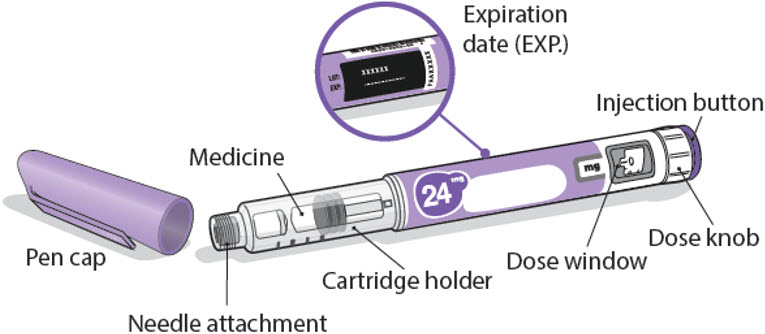
Illustration of the Ngenla injection pen for subcutaneous use, showing components including the pen cap, needle attachment, cartridge holder with medicine, dose window displaying 24 mg, dose knob, injection button, and expiration date label area.*
FDA Label Image

Image (Somatrogon 06)

Image (Somatrogon 06)
An instructional diagram showing the components of a sterile needle for injection, including the outer needle cover, inner needle cap, needle, and protective paper. The diagram visually breaks down the parts of the needle used for subcutaneous injection.*
FDA Label Image

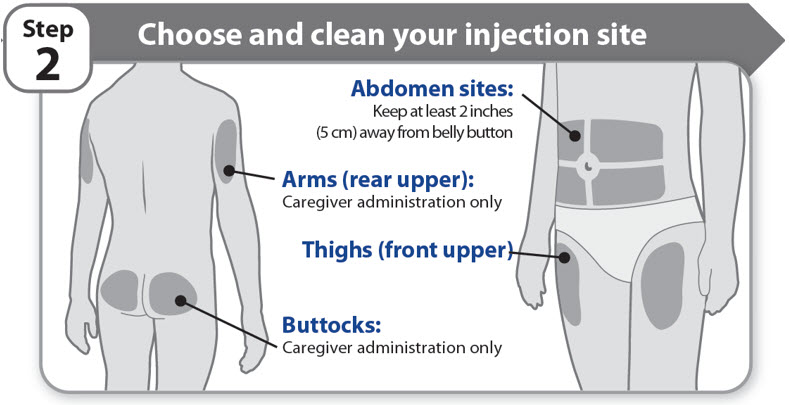
Step 2 (Somatrogon 07)

Step 2 (Somatrogon 07)
An instructional illustration labeled Step 2 titled "Choose and clean your injection site" showing a front and rear view of a person. It highlights recommended injection sites for subcutaneous injection: abdomen (at least 2 inches from the belly button), arms (rear upper, caregiver administration only), thighs (front upper), and buttocks (caregiver administration only).*
FDA Label Image

Step 3 (Somatrogon 08)

Step 3 (Somatrogon 08)
Illustration from Ngenla injection instructions showing Step 3 titled 'Check medicine.' It depicts hands holding and preparing the injection device with an inset close-up of the medication chamber, demonstrating verification of the medicine before administration.*
FDA Label Image

Step 4 (Somatrogon 09)

Step 4 (Somatrogon 09)
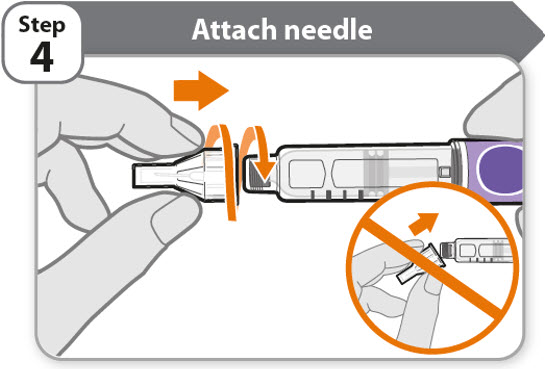
Instructional diagram illustrating Step 4 for attaching a needle to a syringe or injection pen. The image shows hands holding the syringe and needle with arrows indicating the correct attachment motion and a warning circle indicating an incorrect method to avoid.*
FDA Label Image

Step 5 (Somatrogon 10)

Step 5 (Somatrogon 10)
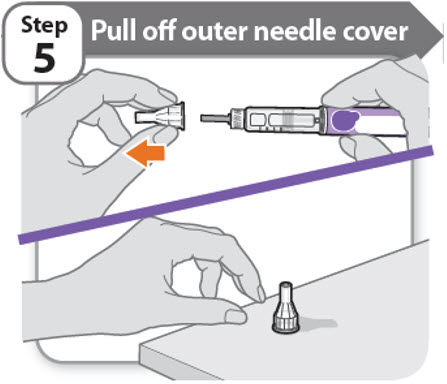
Instructional illustration showing Step 5 of preparing a Ngenla (somatrogon-ghla) injection, solution for subcutaneous use. The image depicts hands pulling off the outer needle cover from the syringe before administration.*
FDA Label Image

Step 6 (Somatrogon 11)

Step 6 (Somatrogon 11)
Illustration showing Step 6 in the preparation of a Ngenla injection, solution. It depicts hands pulling off the inner needle cap from the prefilled syringe and disposing of the cap into a sharps container. This is part of the subcutaneous injection administration process for Ngenla (somatrogon-ghla).*
FDA Label Image

Image (Somatrogon 12)

Image (Somatrogon 12)
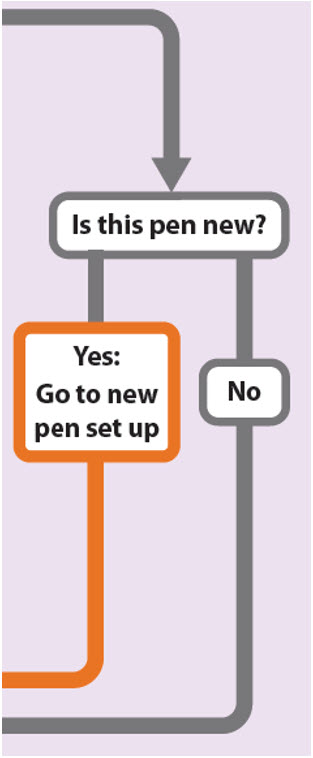
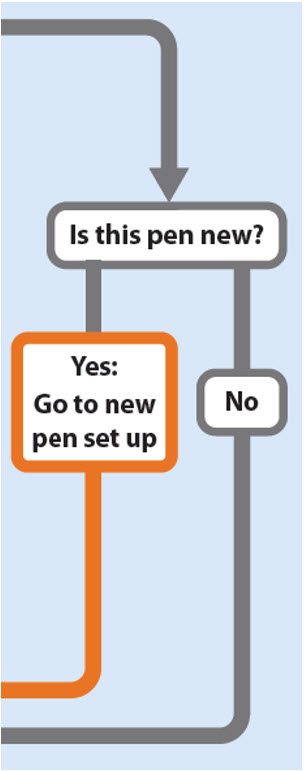
A segment of a flowchart with a decision box labeled "Is this pen new?" and two paths labeled "Yes: Go to new pen set up" and "No." The flowchart uses arrows and a combination of white and orange backgrounds for boxes.*
FDA Label Image

Image (Somatrogon 13)

Image (Somatrogon 13)
An instructional illustration demonstrating the step to set the priming dose on a Ngenla injection pen for subcutaneous administration. It shows a hand adjusting the dose selector on the pen, with an arrow indicating the turning motion, and a close-up view of the dose window displaying the numeric dose setting.*
FDA Label Image

Image (Somatrogon 14)

Image (Somatrogon 14)
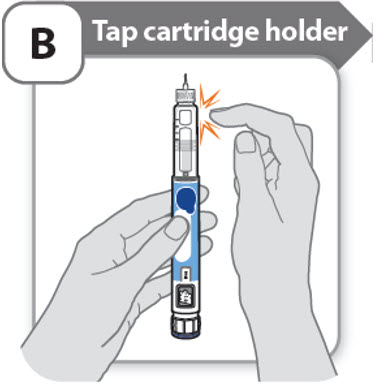
An instructional illustration showing hands holding and tapping the cartridge holder of a medication injection pen. The diagram highlights the action required to tap the cartridge holder, likely part of the preparation for subcutaneous administration.*
FDA Label Image

Image (Somatrogon 15)

Image (Somatrogon 15)
An instructional illustration showing hands holding a Ngenla (somatrogon-ghla) injection pen. The diagram highlights pressing a button on the pen and checking for liquid at the needle tip, indicating proper preparation for subcutaneous injection.*
FDA Label Image

Step 7 (Somatrogon 16)

Step 7 (Somatrogon 16)
An instructional illustration labeled 'Step 7 Set your dose' showing hands adjusting the dose on a purple and white injection device for subcutaneous use. The device display indicates the dose in milligrams, with an arrow showing the twisting motion to set the dose.*
FDA Label Image

Example A (Somatrogon 17)

Example A (Somatrogon 17)
An illustration showing a dose window on a medical device displaying a dose range between 3.6 and 4.0, with a note below stating '3.8 mg shown in the dose window.' The device appears to be a dosing pen or injector, likely related to medication dosing.*
FDA Label Image

Example B (Somatrogon 18)

Example B (Somatrogon 18)
An illustration showing a subcutaneous injection device with a dose window displaying "12.0 mg". The image highlights how the dosage amount is indicated on the injection pen for the drug Ngenla (somatrogon-ghla), a solution for subcutaneous injection.*
FDA Label Image

Step 8 (Somatrogon 19)

Step 8 (Somatrogon 19)
Illustration showing Step 8 to insert the needle for subcutaneous injection of Ngenla (somatrogon-ghla) solution. The image depicts a hand holding an injection device, aligning the needle downward with an orange arrow indicating the insertion direction.*
FDA Label Image

Step 9 (Somatrogon 20)

Step 9 (Somatrogon 20)
An instructional illustration labeled Step 9 showing a hand holding an injection pen for Ngenla (somatrogon-ghla) subcutaneous injection. The diagram emphasizes pressing the top of the pen to inject the medicine, with a zoomed-in view of the pen's dose window indicating the number zero after injection.*
FDA Label Image

Step 10 (Somatrogon 21)

Step 10 (Somatrogon 21)
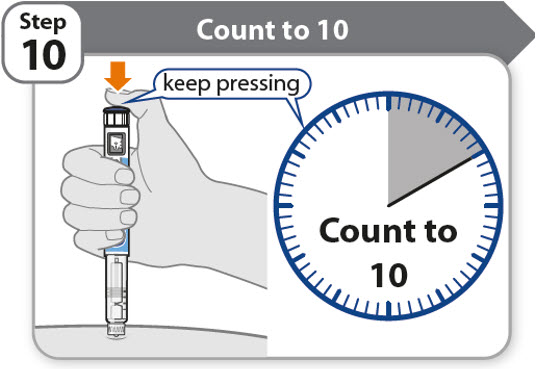
An instructional illustration showing Step 10 of a process for administering an injection using a device. The image shows a hand holding the injector pressed against skin with an arrow indicating downward pressure. A speech bubble instructs to "keep pressing" while a countdown timer graphic labeled "Count to 10" is shown.*
FDA Label Image

Step 11 (Somatrogon 22)

Step 11 (Somatrogon 22)
Instructional illustration showing Step 11 for Ngenla injection, solution. It depicts attaching the outer needle cover to the injection device by aligning and pushing the cover onto the needle end. The image is part of usage directions for the subcutaneous injection of somatrogon-ghla by Pfizer Laboratories.*
FDA Label Image

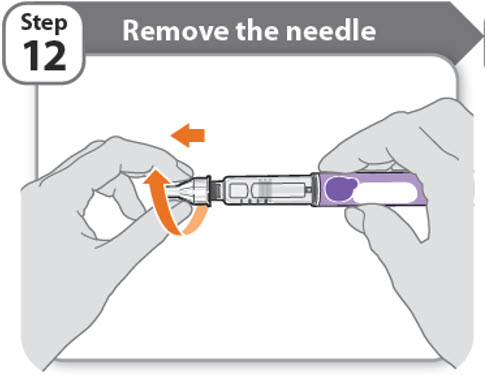
Step 12 (Somatrogon 23)

Step 12 (Somatrogon 23)
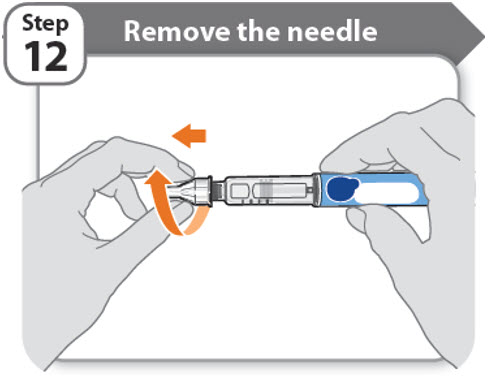
Instructional illustration showing Step 12 to remove the needle from a Ngenla (somatrogon-ghla) subcutaneous injection device. Two hands are depicted; one hand stabilizes the device while the other hand is pulling the needle cap upwards and away from the injection pen, indicated by an orange arrow, demonstrating safe needle removal.*
FDA Label Image

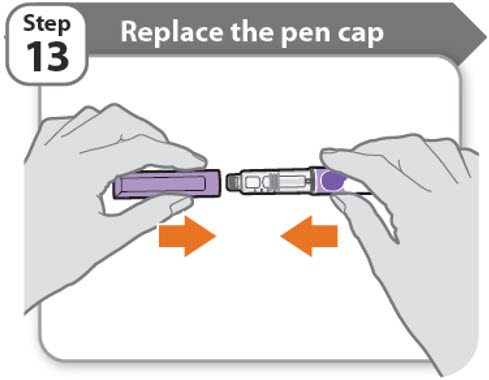
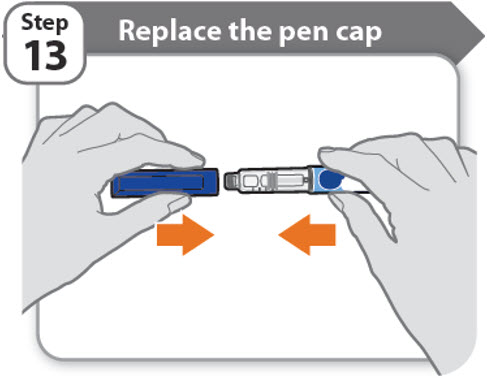
Step 13 (Somatrogon 24)

Step 13 (Somatrogon 24)
Illustration showing step 13 of a procedure to replace the pen cap on a drug injection device. Two hands are depicted, with the left hand holding the pen cap and the right hand holding the injection pen; orange arrows indicate the motion to bring the cap and pen together. The instruction text reads 'Replace the pen cap.'*
FDA Label Image

Logo (Somatrogon 25)

FDA Label Image

Image (Somatrogon 26)

Image (Somatrogon 26)
An instructional diagram of a Ngenla injection pen showing labeled parts including the pen cap, needle attachment, cartridge holder containing medicine, dose window, dose knob, injection button, and expiration date indicator. The pen is marked with a 60 mg dosage label.*
FDA Label Image

Image (Somatrogon 27)

Image (Somatrogon 27)
Illustration showing the components of a sterile needle assembly. It includes the outer needle cover, inner needle cap, needle, and protective paper, with a focus on the sterile needle setup for injection use.*
FDA Label Image

Step 2 (Somatrogon 28)

Step 2 (Somatrogon 28)
Instructional illustration showing preferred injection sites for Ngenla (somatrogon-ghla) subcutaneous injection. The diagram highlights abdomen (at least 2 inches from the belly button), rear upper arms, front upper thighs, and buttocks as injection areas; caregiver administration is noted for arms and buttocks only.*
FDA Label Image

Step 3 (Somatrogon 29)

Step 3 (Somatrogon 29)
An instructional diagram labeled Step 3, titled 'Check medicine,' showing hands holding a prefilled injection pen. A magnified circular inset highlights the medicine inside the syringe portion of the pen, demonstrating how to visually check the medicine before use.*
FDA Label Image

Step 4 (Somatrogon 30)

Step 4 (Somatrogon 30)
An instructional diagram labeled Step 4 demonstrating how to attach a needle to a syringe or injection device. The image shows a hand aligning and twisting the needle onto the device with directional arrows and a cautionary inset indicating not to pull the needle straight off.*
FDA Label Image

Step 5 (Somatrogon 31)

Step 5 (Somatrogon 31)
Instructional illustration showing Step 5 for Ngenla (somatrogon-ghla) injection: pulling off the outer needle cover from the syringe before subcutaneous injection. It depicts hands removing the cover and placing it down on a surface.*
FDA Label Image

Step 6 (Somatrogon 32)

Step 6 (Somatrogon 32)
Instructional illustration labeled Step 6, showing how to pull off the inner needle cap from an injection device for Ngenla (somatrogon-ghla) subcutaneous injection. The image depicts hands removing the cap and discarding it into a sharps disposal container.*
FDA Label Image

Image (Somatrogon 33)

Image (Somatrogon 33)
Diagram excerpt showing a decision flowchart for a pen device with the question 'Is this pen new?' and two paths: 'Yes' leads to 'Go to new pen set up,' and 'No' leads directly forward. The flow lines are gray, with the 'Yes' box outlined in orange.*
FDA Label Image

Image (Somatrogon 34)

Image (Somatrogon 34)
An instructional illustration showing a hand setting the priming dose on a Ngenla injection device. The image highlights turning the dose selector knob and includes a close-up of the dose window displaying the number 1.0.*
FDA Label Image

Image (Somatrogon 35)

Image (Somatrogon 35)
An instructional illustration showing a person holding an injection pen device labeled with a blue section. The right hand's index finger is depicted tapping the cartridge holder at the top of the pen. The instruction title reads "Tap cartridge holder," guiding on preparing the device for use.*
FDA Label Image

Image (Somatrogon 36)

Image (Somatrogon 36)
Instructional diagram showing hands holding a prefilled Ngenla injection pen. It highlights pressing a button on the pen and checking the liquid inside, with close-up views of the liquid level indicator on the pen and the needle cap. The instruction heading reads 'Press button and check for liquid.'*
FDA Label Image

Step 7 (Somatrogon 37)

Step 7 (Somatrogon 37)
An instructional illustration showing step 7 of using the Ngenla (somatrogon-ghla) injection pen. It depicts hands setting the dose by twisting the dose selector on the pen device before subcutaneous administration.*
FDA Label Image

Example A (Somatrogon 38)

Example A (Somatrogon 38)
An instructional illustration titled 'Example A' showing a dosing device with a dose window displaying a dose of 21.5 mg. The image highlights the method for reading the medication dose on the device, which is used with Ngenla (somatrogon-ghla) injection, solution for subcutaneous use.*
FDA Label Image

Example B (Somatrogon 39)

Example B (Somatrogon 39)
An instructional illustration labeled Example B showing a dose window on a drug delivery device. The dose window displays a numeric value "30.0 mg," indicating a medication dose setting, with an arrow pointing to it. The device includes a dose scale and a dial, likely used for adjusting the dose of a subcutaneous injection.*
FDA Label Image

Step 8 (Somatrogon 40)

Step 8 (Somatrogon 40)
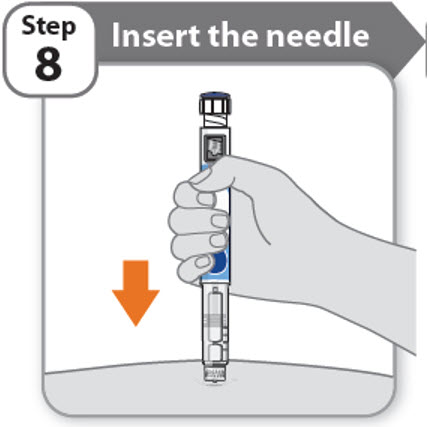
An instructional illustration labeled 'Step 8 Insert the needle,' showing a hand holding a pen-like injection device vertically above a surface with an orange downward arrow indicating the insertion direction.*
FDA Label Image

Step 9 (Somatrogon 41)

Step 9 (Somatrogon 41)
Instructional illustration showing the step to inject the medicine from a prefilled syringe device. A hand is pressing down a plunger on the syringe, with a close-up inset showing the syringe's dose counter indicating zero to confirm the full dose has been delivered.*
FDA Label Image

Step 10 (Somatrogon 42)

Step 10 (Somatrogon 42)
Instructional illustration labeled Step 10 showing a hand pressing down on the top of an injection device while the syringe is inserted subcutaneously. A clock face indicates counting to 10 seconds with a note advising to keep pressing during this count.*
FDA Label Image

Step 11 (Somatrogon 43)

Step 11 (Somatrogon 43)
Instructional illustration for Ngenla injection pen showing Step 11: attaching the outer needle cover by aligning and pushing it onto the needle assembly. The diagram uses arrows to indicate the attachment motion.*
FDA Label Image

Step 12 (Somatrogon 44)

Step 12 (Somatrogon 44)
An instructional illustration labeled 'Step 12 Remove the needle' showing two hands removing the needle cover from a prefilled injection pen. One hand grips the pen barrel while the other hand pulls the needle cover away with arrows indicating the direction to remove the needle.*
FDA Label Image

Step 13 (Somatrogon 45)

Step 13 (Somatrogon 45)
An instructional illustration showing hands replacing the pen cap on an injection device. The image includes arrows indicating the motion to put the cap back onto the pen. It is labeled as Step 13 in the procedure.*
FDA Label Image

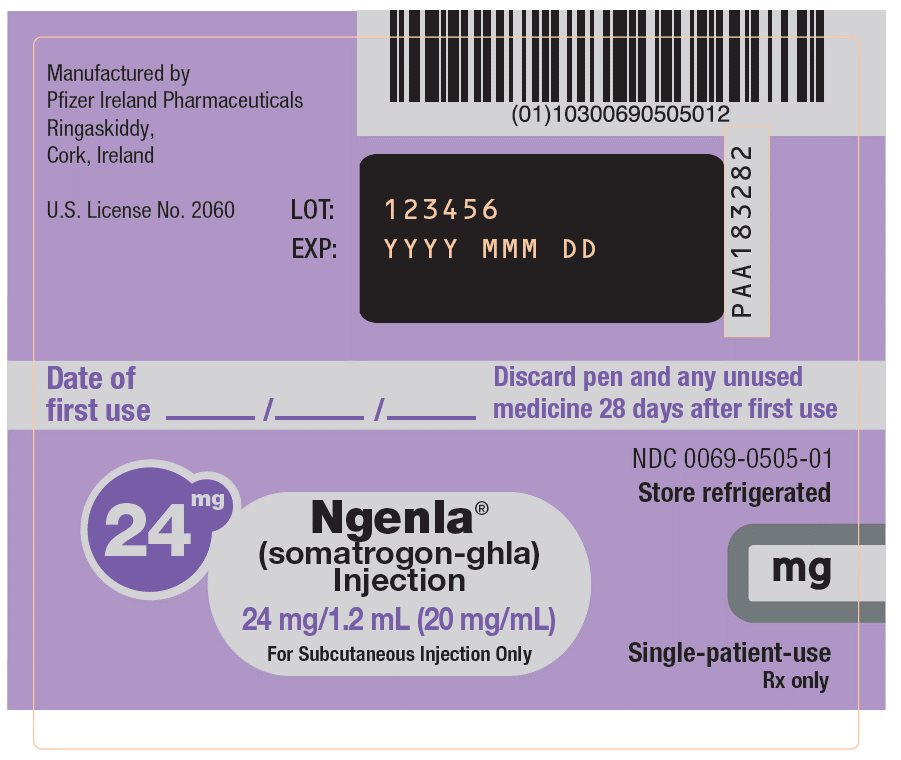
Principal Display Panel (24 mg Cartridge Label)

Principal Display Panel (24 mg Cartridge Label)
Label image for Ngenla (somatrogon-ghla) Injection, 24 mg/1.2 mL (20 mg/mL) strength. The label indicates it is for subcutaneous injection only. Manufactured by Pfizer Ireland Pharmaceuticals in Cork, Ireland. Includes storage instructions to refrigerate and notes single-patient-use with recommendation to discard pen and unused medicine 28 days after first use. The NDC code visible is 0069-0505-01.*
FDA Label Image

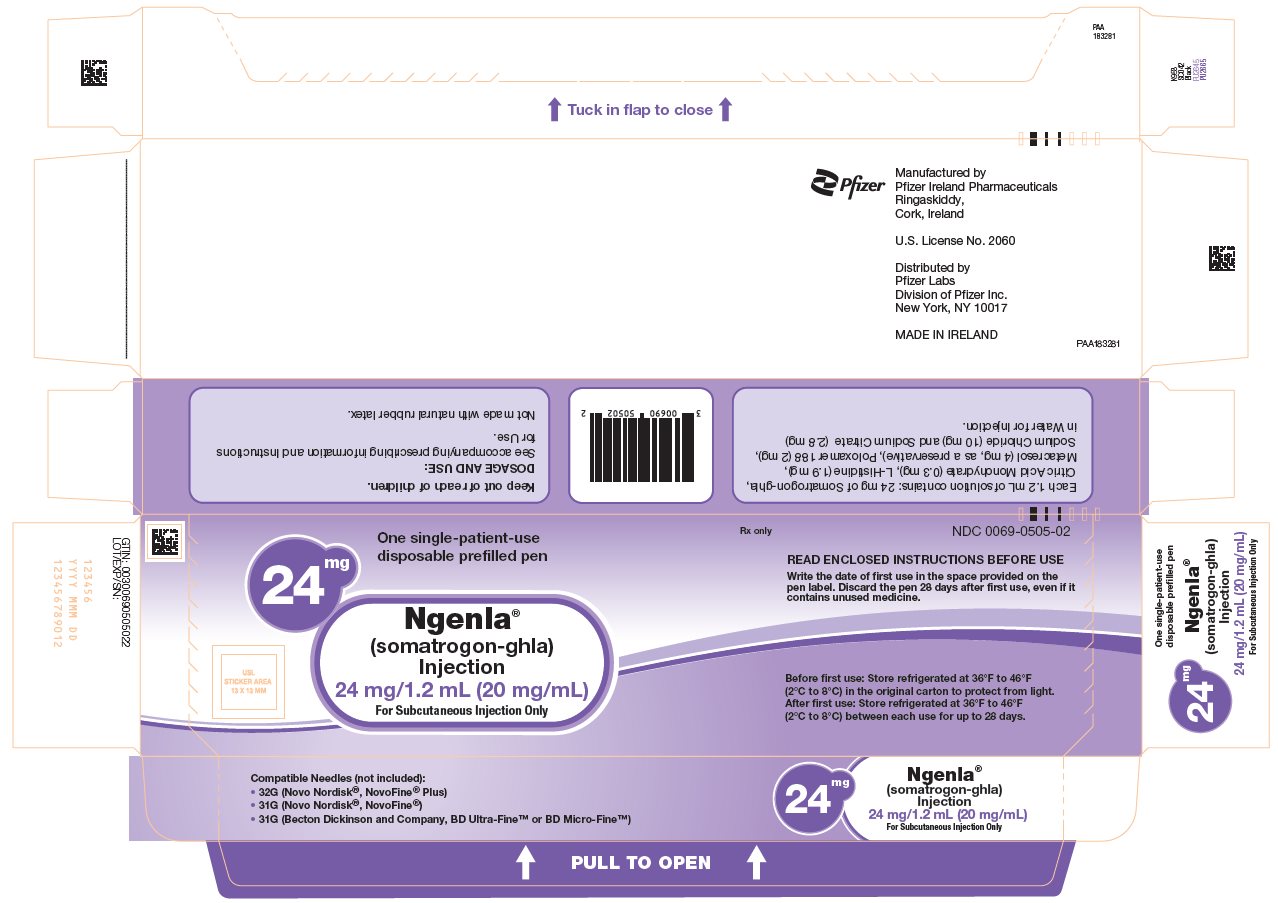
Principal Display Panel (24 mg Cartridge Carton)

Principal Display Panel (24 mg Cartridge Carton)
Box packaging label for Ngenla (somatrogon-ghla) Injection 24 mg/1.2 mL (20 mg/mL) by Pfizer Laboratories. The label indicates a single-patient-use disposable prefilled pen for subcutaneous injection only. The box displays storage instructions, barcode, and manufacturer information including Pfizer Ireland Pharmaceuticals, Ringaskiddy, Cork, Ireland.*
FDA Label Image

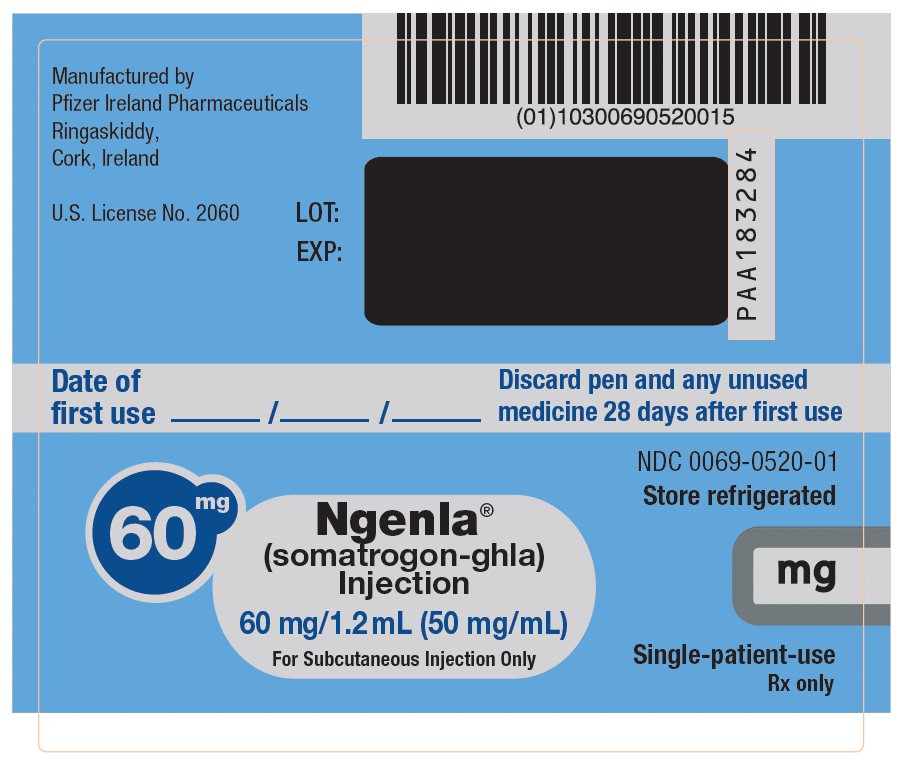
Principal Display Panel (60 mg Cartridge Label)

Principal Display Panel (60 mg Cartridge Label)
Label for Ngenla (somatrogon-ghla) Injection, 60 mg/1.2 mL (50 mg/mL) solution for subcutaneous injection. The label includes storage instructions to refrigerate, single-patient-use indication, manufacturer information (Pfizer Ireland Pharmaceuticals), NDC 0069-0520-01, and spaces for lot number, expiration date, and date of first use.*
FDA Label Image

Principal Display Panel (60 mg Cartridge Carton)

Principal Display Panel (60 mg Cartridge Carton)
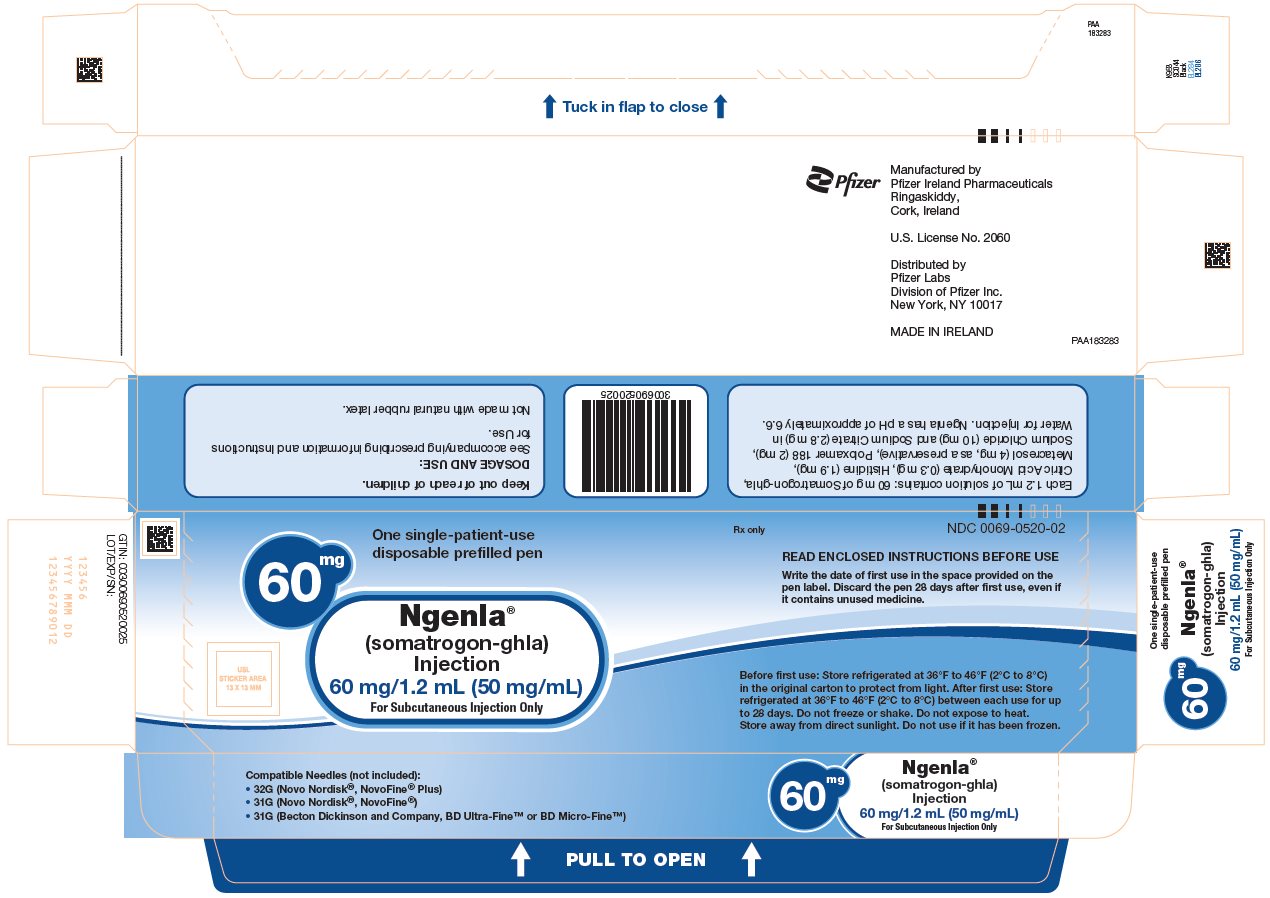
Packaging label for Ngenla (somatrogon-ghla) Injection, 60 mg/1.2 mL (50 mg/mL) prefilled disposable pen for subcutaneous injection. The label shows dosage, storage instructions, compatible needles, manufacturer information (Pfizer Ireland Pharmaceuticals, Cork, Ireland), and distributor (Pfizer Labs).*

* About these descriptions: Image descriptions on this page are generated by automated AI analysis of the product label images from the manufacturer's FDA label submission (SPL). They are provided for reference only and may contain errors or omissions. Always rely on the printed label itself and the official FDA labeling, and consult a pharmacist or healthcare professional with any questions about this product.