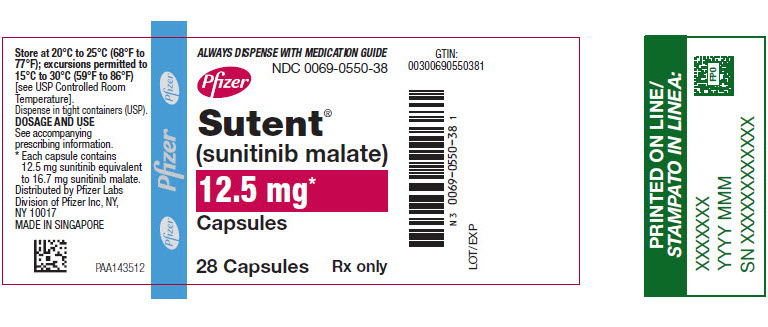
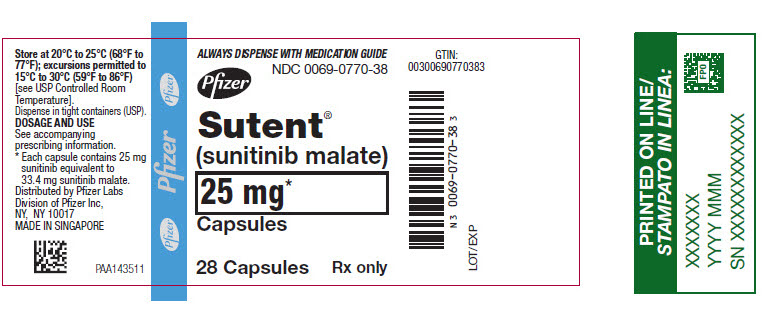
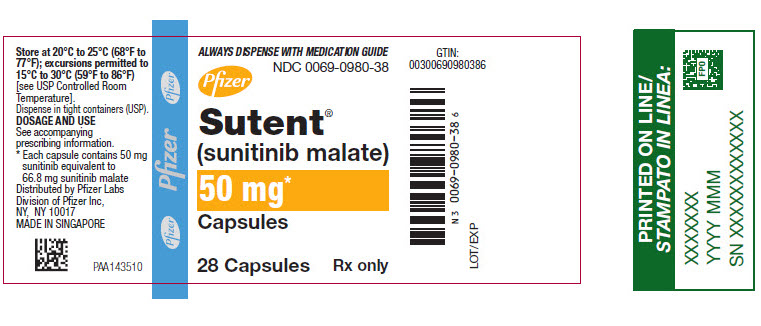
12.5 mg capsules
Hard gelatin capsule with orange cap and orange body, printed with white ink "Pfizer" on the cap and "STN 12.5 mg" on the body.
25 mg capsules
Hard gelatin capsule with caramel cap and orange body, printed with white ink "Pfizer" on the cap and "STN 25 mg" on the body.
37.5 mg capsules
Hard gelatin capsule with yellow cap and yellow body, printed with black ink "Pfizer" on the cap and "STN 37.5 mg" on the body.
50 mg capsules
Hard gelatin capsule with caramel top and caramel body, printed with white ink "Pfizer" on the cap and "STN 50 mg" on the body.
Gastrointestinal Stromal Tumor (GIST)
The safety of SUTENT was evaluated in Study 1, a randomized, double-blind, placebo-controlled trial in which previously treated patients with GIST received SUTENT 50 mg daily on Schedule 4/2 (n=202) or placebo (n=102).
Median duration of blinded study treatment was 2 cycles for patients on SUTENT (mean: 3.0; range: 1–9) and 1 cycle (mean; 1.8; range: 1–6) for patients on placebo at the time of the interim analysis. Dose reductions occurred in 23 patients (11%) on SUTENT and none on placebo. Dose interruptions occurred in 59 patients (29%) on SUTENT and 31 patients (30%) on placebo. The rates of treatment-emergent, nonfatal adverse reactions resulting in permanent discontinuation were 7% and 6% in the SUTENT and placebo groups, respectively.
Most treatment-emergent adverse reactions in both study arms were Grade 1 or 2 in severity. Grade 3 or 4 treatment-emergent adverse reactions were reported in 56% versus 51% of patients on SUTENT versus placebo, respectively, in the double-blind treatment phase of the trial. Table 1 compares the incidence of common (≥10%) treatment-emergent adverse reactions for patients receiving SUTENT and reported more commonly in patients receiving SUTENT than in patients receiving placebo.
Table 1. Adverse Reactions Reported in Study 1 in ≥10% of GIST Patients Who Received SUTENT in the Double-Blind Treatment Phase and More Commonly Than in Patients Given PlaceboCommon Terminology Criteria for Adverse Events (CTCAE), version 3.0.
| Adverse Reaction | GIST |
|---|
| SUTENT (N=202) | Placebo (N=102) |
|---|
| All Grades % | Grade 3–4 % | All Grades % | Grade 3–4 % |
|---|
| Abbreviations: GIST=gastrointestinal stromal tumor; N=number of patients. |
| Any Adverse Reaction | 94 | 56 | 97 | 51 |
| Gastrointestinal | | | | |
| Diarrhea | 40 | 4 | 27 | 0 |
| Mucositis/stomatitis | 29 | 1 | 18 | 2 |
| Constipation | 20 | 0 | 14 | 2 |
| Cardiac | | | | |
| Hypertension | 15 | 4 | 11 | 0 |
| Dermatology | | | | |
| Skin discoloration | 30 | 0 | 23 | 0 |
| Rash | 14 | 1 | 9 | 0 |
| Hand-foot syndrome | 14 | 4 | 10 | 3 |
| Neurology | | | | |
| Altered taste | 21 | 0 | 12 | 0 |
| Musculoskeletal | | | | |
| Myalgia/limb pain | 14 | 1 | 9 | 1 |
| Metabolism/Nutrition | | | | |
| Anorexia Includes decreased appetite. | 33 | 1 | 29 | 5 |
| Asthenia | 22 | 5 | 11 | 3 |
In the double-blind treatment phase of GIST Study 1, oral pain other than mucositis/stomatitis occurred in 12 patients (6%) on SUTENT versus 3 (3%) on placebo. Hair color changes occurred in 15 patients (7%) on SUTENT versus 4 (4%) on placebo. Alopecia was observed in 10 patients (5%) on SUTENT versus 2 (2%) on placebo.
Table 2 provides common (≥10%) treatment-emergent laboratory abnormalities.
Table 2. Laboratory Abnormalities Reported in Study 1 in ≥10% of GIST Patients Who Received SUTENT or Placebo in the Double-Blind Treatment PhaseCommon Terminology Criteria for Adverse Events (CTCAE), version 3.0.
| Laboratory Parameter | GIST |
|---|
| SUTENT (N=202) | Placebo (N=102) |
|---|
| All Grades % | Grade 3–4, Grade 4 laboratory abnormalities in patients on SUTENT included alkaline phosphatase (1%), lipase (2%), creatinine (1%), potassium decreased (1%), neutrophils (2%), hemoglobin (2%), and platelets (1%). % | All Grades % | Grade 3–4, Grade 4 laboratory abnormalities in patients on placebo included amylase (1%), lipase (1%), and hemoglobin (2%). % |
|---|
| Abbreviations: ALT=alanine aminotransferase; AST=aspartate aminotransferase; GIST=gastrointestinal stromal tumor; LVEF=left ventricular ejection fraction; N=number of patients. |
| Any | | 68 (34) | | 22 (22) |
| Gastrointestinal | | | | |
| AST/ALT | 39 | 2 | 23 | 1 |
| Lipase | 25 | 10 | 17 | 7 |
| Alkaline phosphatase | 24 | 4 | 21 | 4 |
| Amylase | 17 | 5 | 12 | 3 |
| Total bilirubin | 16 | 1 | 8 | 0 |
| Indirect bilirubin | 10 | 0 | 4 | 0 |
| Cardiac | | | | |
| Decreased LVEF | 11 | 1 | 3 | 0 |
| Renal/Metabolic | | | | |
| Creatinine | 12 | 1 | 7 | 0 |
| Potassium decreased | 12 | 1 | 4 | 0 |
| Sodium increased | 10 | 0 | 4 | 1 |
| Hematology | | | | |
| Neutrophils | 53 | 10 | 4 | 0 |
| Lymphocytes | 38 | 0 | 16 | 0 |
| Platelets | 38 | 5 | 4 | 0 |
| Hemoglobin | 26 | 3 | 22 | 2 |
After an interim analysis, the study was unblinded and patients on the placebo arm were given the opportunity to receive open-label SUTENT treatment [see Clinical Studies (14.1)]. For 241 patients randomized to the SUTENT arm, including 139 who received SUTENT in both the double-blind and open-label treatment phases, the median duration of SUTENT treatment was 6 cycles (mean: 8.5; range: 1–44). For the 255 patients who ultimately received open-label SUTENT treatment, median duration of study treatment was 6 cycles (mean: 7.8; range: 1–37) from the time of the unblinding. A total of 118 patients (46%) required dosing interruptions, and a total of 72 patients (28%) required dose reductions. The incidence of treatment-emergent adverse reactions resulting in permanent discontinuation was 20%. The most common Grade 3 or 4 treatment-related adverse reactions experienced by patients receiving SUTENT in the open-label treatment phase were fatigue (10%), hypertension (8%), asthenia (5%), diarrhea (5%), hand-foot syndrome (5%), nausea (4%), abdominal pain (3%), anorexia (3%), mucositis (2%), vomiting (2%), and hypothyroidism (2%).
Advanced Renal Cell Carcinoma (RCC)
The safety of SUTENT was evaluated in Study 3, a double-blind, active-controlled trial in which previously untreated patients with locally advanced or metastatic RCC received SUTENT 50 mg daily on Schedule 4/2 (n=375) or IFN-α 9 million International Units (MIU) (n=360). The median duration of treatment was 11.1 months (range: 0.4–46.1) for SUTENT treatment and 4.1 months (range: 0.1–45.6) for IFN-α treatment. Dose interruptions occurred in 202 patients (54%) on SUTENT and 141 patients (39%) on IFN-α. Dose reductions occurred in 194 patients (52%) on SUTENT and 98 patients (27%) on IFN-α. Discontinuation rates due to adverse reactions were 20% for SUTENT and 24% for IFN-α. Most treatment-emergent adverse reactions in both study arms were Grade 1 or 2 in severity. Grade 3 or 4 treatment-emergent adverse reactions were reported in 77% versus 55% of patients on SUTENT versus IFN-α, respectively.
Table 3 compares the incidence of common (≥10%) treatment-emergent adverse reactions for patients receiving SUTENT versus IFN-α.
Table 3. Adverse Reactions Reported in Study 3 in ≥10% of Patients With RCC Who Received SUTENT or IFN-αCommon Terminology Criteria for Adverse Events (CTCAE), version 3.0.
| Adverse Reaction | Treatment-Naïve RCC |
|---|
| SUTENT (N=375) | IFN-α (N=360) |
|---|
| All Grades % | Grade 3–4 Grade 4 ARs in patients on SUTENT included back pain (1%), arthralgia (<1%), dyspnea (<1%), asthenia (<1%), fatigue (<1%), limb pain (<1%) and rash (<1%). % | All Grades % | Grade 3–4 Grade 4 ARs in patients on IFN-α included dyspnea (1%), fatigue (1%), abdominal pain (<1%), and depression (<1%). % |
|---|
| Abbreviations: ARs=adverse reactions; IFN=interferon-α; N=number of patients; RCC=renal cell carcinoma. |
| Any Adverse Reaction | 99 | 77 | 99 | 55 |
| Constitutional | | | | |
| Fatigue | 62 | 15 | 56 | 15 |
| Asthenia | 26 | 11 | 22 | 6 |
| Fever | 22 | 1 | 37 | <1 |
| Weight decreased | 16 | <1 | 17 | 1 |
| Chills | 14 | 1 | 31 | 0 |
| Chest Pain | 13 | 2 | 7 | 1 |
| Influenza like illness | 5 | 0 | 15 | <1 |
| Gastrointestinal | | | | |
| Diarrhea | 66 | 10 | 21 | <1 |
| Nausea | 58 | 6 | 41 | 2 |
| Mucositis/stomatitis | 47 | 3 | 5 | <1 |
| Vomiting | 39 | 5 | 17 | 1 |
| Dyspepsia | 34 | 2 | 4 | 0 |
| Abdominal pain Includes flank pain. | 30 | 5 | 12 | 1 |
| Constipation | 23 | 1 | 14 | <1 |
| Dry mouth | 13 | 0 | 7 | <1 |
| GERD/reflux esophagitis | 12 | <1 | 1 | 0 |
| Flatulence | 14 | 0 | 2 | 0 |
| Oral pain | 14 | <1 | 1 | 0 |
| Glossodynia | 11 | 0 | 1 | 0 |
| Hemorrhoids | 10 | 0 | 2 | 0 |
| Cardiac | | | | |
| Hypertension | 34 | 13 | 4 | <1 |
| Edema peripheral | 24 | 2 | 5 | 1 |
| Ejection fraction decreased | 16 | 3 | 5 | 2 |
| Dermatology | | | | |
| Rash | 29 | 2 | 11 | <1 |
| Hand-foot syndrome | 29 | 8 | 1 | 0 |
| Skin discoloration/yellow skin | 25 | <1 | 0 | 0 |
| Dry skin | 23 | <1 | 7 | 0 |
| Hair color changes | 20 | 0 | <1 | 0 |
| Alopecia | 14 | 0 | 9 | 0 |
| Erythema | 12 | <1 | 1 | 0 |
| Pruritus | 12 | <1 | 7 | <1 |
| Neurology | | | | |
| Altered taste Includes ageusia, hypogeusia, and dysgeusia. | 47 | <1 | 15 | 0 |
| Headache | 23 | 1 | 19 | 0 |
| Dizziness | 11 | <1 | 14 | 1 |
| Musculoskeletal | | | | |
| Back pain | 28 | 5 | 14 | 2 |
| Arthralgia | 30 | 3 | 19 | 1 |
| Pain in extremity/limb discomfort | 40 | 5 | 30 | 2 |
| Endocrine | | | | |
| Hypothyroidism | 16 | 2 | 1 | 0 |
| Respiratory | | | | |
| Cough | 27 | 1 | 14 | <1 |
| Dyspnea | 26 | 6 | 20 | 4 |
| Nasopharyngitis | 14 | 0 | 2 | 0 |
| Oropharyngeal pain | 14 | <1 | 2 | 0 |
| Upper respiratory tract infection | 11 | <1 | 2 | 0 |
| Metabolism/Nutrition | | | | |
| Anorexia Includes decreased appetite. | 48 | 3 | 42 | 2 |
| Hemorrhage/Bleeding | | | | |
| Bleeding, all sites | 37 | 4 Includes 1 patient with Grade 5 gastric hemorrhage. | 10 | 1 |
| Psychiatric | | | | |
| Insomnia | 15 | <1 | 10 | 0 |
| Depression Includes depressed mood. | 11 | 0 | 14 | 1 |
Treatment-emergent Grade 3–4 laboratory abnormalities are presented in Table 4.
Table 4. Laboratory Abnormalities Reported in Study 3 in ≥10% of Treatment-Naïve RCC Patients Who Received SUTENT or IFN-α| Laboratory Parameter | Treatment-Naïve RCC |
|---|
| SUTENT (N=375) | IFN-α (N=360) |
|---|
| All Grades Common Terminology Criteria for Adverse Events (CTCAE), version 3.0. % | Grade 3–4, Grade 4 laboratory abnormalities in patients on SUTENT included uric acid (14%), lipase (3%), neutrophils (2%), lymphocytes (2%), hemoglobin (2%), platelets (1%), amylase (1%), ALT (<1%), creatine kinase (<1%), creatinine (<1%), glucose increased (<1%), calcium decreased (<1%), phosphorous (<1%), potassium increased (<1%), and sodium decreased (<1%). % | All Grades % | Grade 3–4, Grade 4 laboratory abnormalities in patients on IFN-α included uric acid (8%), lymphocytes (2%), lipase (1%), neutrophils (1%), amylase (<1%), calcium increased (<1%), glucose decreased (<1%), potassium increased (<1%), and hemoglobin (<1%). % |
|---|
| Abbreviations: ALT=alanine aminotransferase; AST=aspartate aminotransferase; IFN=interferon-α; N=number of patients; RCC=renal cell carcinoma. |
| Gastrointestinal | | | | |
| AST | 56 | 2 | 38 | 2 |
| ALT | 51 | 3 | 40 | 2 |
| Lipase | 56 | 18 | 46 | 8 |
| Alkaline phosphatase | 46 | 2 | 37 | 2 |
| Amylase | 35 | 6 | 32 | 3 |
| Total bilirubin | 20 | 1 | 2 | 0 |
| Indirect bilirubin | 13 | 1 | 1 | 0 |
| Renal/Metabolic | | | | |
| Creatinine | 70 | <1 | 51 | <1 |
| Creatine kinase | 49 | 2 | 11 | 1 |
| Uric acid | 46 | 14 | 33 | 8 |
| Calcium decreased | 42 | 1 | 40 | 1 |
| Phosphorus | 31 | 6 | 24 | 6 |
| Albumin | 28 | 1 | 20 | 0 |
| Glucose increased | 23 | 6 | 15 | 6 |
| Sodium decreased | 20 | 8 | 15 | 4 |
| Glucose decreased | 17 | 0 | 12 | <1 |
| Potassium increased | 16 | 3 | 17 | 4 |
| Calcium increased | 13 | <1 | 10 | 1 |
| Potassium decreased | 13 | 1 | 2 | <1 |
| Sodium increased | 13 | 0 | 10 | 0 |
| Hematology | | | | |
| Neutrophils | 77 | 17 | 49 | 9 |
| Hemoglobin | 79 | 8 | 69 | 5 |
| Platelets | 68 | 9 | 24 | 1 |
| Lymphocytes | 68 | 18 | 68 | 26 |
| Leukocytes | 78 | 8 | 56 | 2 |
Long-Term Safety in RCC
The long-term safety of SUTENT in patients with metastatic RCC was analyzed across 9 completed clinical studies conducted in the first-line, bevacizumab-refractory, and cytokine-refractory treatment settings. The analysis included 5739 patients, of whom 807 (14%) were treated for at least 2 years and 365 (6%) for at least 3 years. Prolonged treatment with SUTENT did not appear to be associated with new types of adverse reactions. There appeared to be no increase in the yearly incidence of adverse reactions at later time points. Hypothyroidism increased during the second year of treatment with new cases reported up to year 4.
Adjuvant Treatment of RCC
The safety of SUTENT was evaluated in S-TRAC, a randomized, double-blind, placebo-controlled trial in which patients who had undergone nephrectomy for RCC received SUTENT 50 mg daily (n=306) on Schedule 4/2 or placebo (n=304). The median duration of treatment was 12.4 months (range: 0.13–14.9) for SUTENT and 12.4 months (range: 0.03–13.7) for placebo. Permanent discontinuation due to an adverse reaction occurred in 28% of patients on SUTENT and 6% on placebo. Adverse reactions leading to permanent discontinuation in >2% of patients include hand-foot syndrome and fatigue/asthenia. Dosing interruptions or delays occurred in 166 (54%) and 84 (28%) patients on SUTENT and placebo, respectively. One hundred forty patients (45.8%) out of 306 patients in the SUTENT arm and 15 patients (5%) out of 304 patients in the placebo arm had dose reductions.
Table 5 compares the incidence of common (≥10%) treatment-emergent adverse reactions for patients receiving SUTENT versus placebo.
Table 5. Adverse Reactions Reported in S-TRAC in ≥10% of Patients With RCC Who Received SUTENT and More Commonly Than in Patients Given PlaceboCommon Terminology Criteria for Adverse Events (CTCAE), version 3.0.
| Adverse Reaction | Adjuvant Treatment of RCC |
|---|
| SUTENT (N=306) | Placebo (N=304) |
|---|
| All Grades % | Grade 3–4 % | All Grades % | Grade 3–4 % |
|---|
| Abbreviations: ARs=adverse reactions; N=number of patients; RCC=renal cell carcinoma. |
| Any Adverse Reaction | 99 | 60 | 88 | 15 |
| Constitutional | | | | |
| Fatigue/Asthenia | 57 | 8 | 34 | 2 |
| Localized edema Includes edema localized, face edema, eyelid edema, periorbital edema, swelling face, and eye edema. | 18 | <1 | <1 | 0 |
| Pyrexia | 12 | <1 | 6 | 0 |
| Gastrointestinal | | | | |
| Mucositis/Stomatitis Includes mucosal inflammation, stomatitis apthous ulcer, mouth ulceration, tongue ulceration, oropharyngeal pain and oral pain. | 61 | 6 | 15 | 0 |
| Diarrhea | 57 | 4 | 22 | <1 |
| Nausea | 34 | 2 | 15 | 0 |
| Dyspepsia | 27 | 1 | 7 | 0 |
| Abdominal pain Includes abdominal pain, abdominal pain lower, and abdominal pain upper. | 25 | 2 | 9 | <1 |
| Vomiting | 19 | 2 | 7 | 0 |
| Constipation | 12 | 0 | 11 | 0 |
| Cardiac | | | | |
| Hypertension Includes hypertension, blood pressure increased, blood pressure systolic increased, blood pressure diastolic increased, and hypertensive crisis. | 39 | 8 | 14 | 1 |
| Edema/Peripheral edema | 10 | <1 | 7 | 0 |
| Dermatology | | | | |
| Hand-foot syndrome | 50 | 16 | 10 | <1 |
| Hair color changes | 22 | 0 | 2 | 0 |
| Rash Includes dermatitis, dermatitis psoriasiform, exfoliative rash, genital rash, rash, rash erythematous, rash follicular, rash generalized, rash macular, rash maculopapular, rash papular, and rash pruritic. | 24 | 2 | 12 | 0 |
| Skin discoloration/Yellow skin | 18 | 0 | 1 | 0 |
| Dry skin | 14 | 0 | 6 | 0 |
| Neurology | | | | |
| Altered taste Includes ageusia, hypogeusia, and dysgeusia. | 38 | <1 | 6 | 0 |
| Headache | 19 | <1 | 12 | 0 |
| Musculoskeletal | | | | |
| Pain in extremity | 15 | <1 | 7 | 0 |
| Arthralgia | 11 | <1 | 10 | 0 |
| Endocrine | | | | |
| Hypothyroidism/TSH increased | 24 | <1 | 4 | 0 |
| Metabolism/Nutrition | | | | |
| Anorexia/Decreased appetite | 19 | <1 | 5 | 0 |
| Hemorrhage/Bleeding | | | | |
| Bleeding events, all sites Includes epistaxis, gingival bleeding, rectal hemorrhage, hemoptysis, anal hemorrhage, upper gastrointestinal hemorrhage, hematuria. | 24 | <1 | 5 | <1 |
Grade 4 adverse reactions in patients on SUTENT included hand-foot syndrome (1%), fatigue (<1%), abdominal pain (< 1%), stomatitis (<1%), and pyrexia (< 1%). Grade 4 adverse reactions in patients on placebo included asthenia (<1%) and hypertension (<1%).
Grade 3–4 laboratory abnormalities that occurred in ≥2% of patients receiving SUTENT include neutropenia (13%), thrombocytopenia (5%), leukopenia (3%), lymphopenia (3%), elevated alanine aminotransferase (2%), elevated aspartate aminotransferase (2%), hyperglycemia (2%), and hyperkalemia (2%).
Advanced Pancreatic Neuroendocrine Tumors (pNET)
The safety of SUTENT was evaluated in Study 6, a randomized, double-blind, placebo-controlled trial in which patients with progressive pNET received SUTENT 37.5 mg daily continuous dosing (n=83) or placebo (n=82). The median number of days on treatment was 139 days (range: 13–532 days) for patients on SUTENT and 113 days (range: 1–614 days) for patients on placebo. Nineteen patients (23%) on SUTENT and 4 patients (5%) on placebo were on study for >1 year. Dose interruptions occurred in 25 patients (30%) on SUTENT and 10 patients (12%) on placebo. Dose reductions occurred in 26 patients (31%) on SUTENT and 9 patients (11%) on placebo. Discontinuation rates due to adverse reactions were 22% for SUTENT and 17% for placebo.
Most treatment-emergent adverse reactions in both study arms were Grade 1 or 2 in severity. Grade 3 or 4 treatment-emergent adverse reactions were reported in 54% versus 50% of patients on SUTENT versus placebo, respectively. Table 6 compares the incidence of common (≥10%) treatment-emergent adverse reactions for patients receiving SUTENT and reported more commonly in patients receiving SUTENT than in patients receiving placebo.
Table 6. Adverse Reactions Reported in the pNET Study 6 in ≥10% of Patients Who Received SUTENT and More Commonly Than in Patients Given PlaceboCommon Terminology Criteria for Adverse Events (CTCAE), version 3.0.
| Adverse Reaction | pNET |
|---|
| SUTENT (N=83) | Placebo (N=82) |
|---|
| All Grades % | Grade 3–4 Grade 4 adverse reactions in patients on SUTENT included fatigue (1%). % | All Grades % | Grade 3–4 % |
|---|
| Abbreviations: N=number of patients; pNET=pancreatic neuroendocrine tumors. |
| Any Adverse Reaction | 99 | 54 | 95 | 50 |
| Constitutional | | | | |
| Asthenia | 34 | 5 | 27 | 4 |
| Fatigue | 33 | 5 | 27 | 9 |
| Weight decreased | 16 | 1 | 11 | 0 |
| Gastrointestinal | | | | |
| Diarrhea | 59 | 5 | 39 | 2 |
| Stomatitis/oral syndromes Includes aphthous stomatitis, gingival pain, gingivitis, glossitis, glossodynia, mouth ulceration, oral discomfort, oral pain, tongue ulceration, mucosal dryness, mucosal inflammation, and dry mouth. | 48 | 6 | 18 | 0 |
| Nausea | 45 | 1 | 29 | 1 |
| Abdominal pain Includes abdominal discomfort, abdominal pain, and abdominal pain upper. | 39 | 5 | 34 | 10 |
| Vomiting | 34 | 0 | 31 | 2 |
| Dyspepsia | 15 | 0 | 6 | 0 |
| Cardiac | | | | |
| Hypertension | 27 | 10 | 5 | 1 |
| Dermatology | | | | |
| Hair color changes | 29 | 1 | 1 | 0 |
| Hand-foot syndrome | 23 | 6 | 2 | 0 |
| Rash | 18 | 0 | 5 | 0 |
| Dry skin | 15 | 0 | 11 | 0 |
| Neurology | | | | |
| Dysgeusia | 21 | 0 | 5 | 0 |
| Headache | 18 | 0 | 13 | 1 |
| Musculoskeletal | | | | |
| Arthralgia | 15 | 0 | 6 | 0 |
| Psychiatric | | | | |
| Insomnia | 18 | 0 | 12 | 0 |
| Hemorrhage/Bleeding | | | | |
| Bleeding events Includes hematemesis, hematochezia, hematoma, hemoptysis, hemorrhage, melena, and metrorrhagia. | 22 | 0 | 10 | 4 |
| Epistaxis | 21 | 1 | 5 | 0 |
Table 7 provides common (≥10%) treatment-emergent laboratory abnormalities.
Table 7. Laboratory Abnormalities Reported in the pNET Study 6 in ≥10% of Patients Who Received SUTENT| Laboratory Parameter | pNET |
|---|
| SUTENT | Placebo |
|---|
| N | All Grades Common Terminology Criteria for Adverse Events (CTCAE), version 3.0. % | Grade 3–4, Grade 4 laboratory abnormalities in patients on SUTENT included creatinine (4%), lipase (4%), glucose decreased (2%), glucose increased (2%), neutrophils (2%), ALT (1%), AST (1%), platelets (1%), potassium increased (1%), and total bilirubin (1%). % | N | All Grades % | Grade 3–4, Grade 4 laboratory abnormalities in patients on placebo included creatinine (3%), alkaline phosphatase (1%), glucose increased (1%), and lipase (1%). % |
|---|
| Abbreviations: ALT=alanine aminotransferase; AST=aspartate aminotransferase; N=number of patients; pNET=pancreatic neuroendocrine tumors. |
| Gastrointestinal | | | | | | |
| AST increased | 82 | 72 | 5 | 80 | 70 | 3 |
| ALT increased | 82 | 61 | 4 | 80 | 55 | 3 |
| Alkaline phosphatase increased | 82 | 63 | 10 | 80 | 70 | 11 |
| Total bilirubin increased | 82 | 37 | 1 | 80 | 28 | 4 |
| Amylase increased | 74 | 20 | 4 | 74 | 10 | 1 |
| Lipase increased | 75 | 17 | 5 | 72 | 11 | 4 |
| Renal/Metabolic | | | | | | |
| Glucose increased | 82 | 71 | 12 | 80 | 78 | 18 |
| Albumin decreased | 81 | 41 | 1 | 79 | 37 | 1 |
| Phosphorus decreased | 81 | 36 | 7 | 77 | 22 | 5 |
| Calcium decreased | 82 | 34 | 0 | 80 | 19 | 0 |
| Sodium decreased | 82 | 29 | 2 | 80 | 34 | 3 |
| Creatinine increased | 82 | 27 | 5 | 80 | 28 | 5 |
| Glucose decreased | 82 | 22 | 2 | 80 | 15 | 4 |
| Potassium decreased | 82 | 21 | 4 | 80 | 14 | 0 |
| Magnesium decreased | 52 | 19 | 0 | 39 | 10 | 0 |
| Potassium increased | 82 | 18 | 1 | 80 | 11 | 1 |
| Hematology | | | | | | |
| Neutrophils decreased | 82 | 71 | 16 | 80 | 16 | 0 |
| Hemoglobin decreased | 82 | 65 | 0 | 80 | 55 | 1 |
| Platelets decreased | 82 | 60 | 5 | 80 | 15 | 0 |
| Lymphocytes decreased | 82 | 56 | 7 | 80 | 35 | 4 |
Venous Thromboembolic Events
In patients treated with SUTENT (N=7527) for GIST, advanced RCC, adjuvant treatment of RCC and pNET, 3.5% of patients experienced a venous thromboembolic event; 2.2% Grade 3–4.
Reversible Posterior Leukoencephalopathy Syndrome
There have been reports (<1%), some fatal, of patients presenting with seizures and radiological evidence of reversible posterior leukoencephalopathy syndrome (RPLS). Patients with seizures and signs/symptoms consistent with RPLS, such as hypertension, headache, decreased alertness, altered mental functioning, and visual loss, including cortical blindness, should be controlled with medical management including control of hypertension. Temporary suspension of SUTENT is recommended; following resolution, treatment may be resumed at the discretion of the treating healthcare provider.
Pancreatic Function
Pancreatitis was observed in 5 patients (1%) receiving SUTENT for treatment-naïve RCC compared to 1 patient (<1%) receiving IFN-α. In a trial of patients receiving adjuvant treatment for RCC, 1 patient (<1%) on SUTENT and none on placebo experienced pancreatitis. Pancreatitis was observed in 1 patient (1%) receiving SUTENT for pNET and 1 patient (1%) receiving placebo.
Risk Summary
Based on animal reproduction studies and its mechanism of action, SUTENT can cause fetal harm when administered to a pregnant woman [see Clinical Pharmacology (12.1)]. There are no available data in pregnant women to inform a drug-associated risk. In animal developmental and reproductive toxicology studies, oral administration of sunitinib to pregnant rats and rabbits throughout organogenesis resulted in teratogenicity (embryolethality, craniofacial and skeletal malformations) at 5.5 and 0.3 times the AUC in patients administered the recommended daily doses (RDD), respectively (see Data). Advise pregnant women or females of reproductive potential of the potential hazard to a fetus.
The background risk of major birth defects and miscarriage for the indicated populations are unknown. However, the estimated background risk in the United States (U.S.) general population of major birth defects is 2%–4% and of miscarriage is 15%–20% of clinically recognized pregnancies.
Data
Animal Data
In a female fertility and early embryonic development study, female rats were administered oral sunitinib (0.5, 1.5, 5 mg/kg/day) for 21 days prior to mating and for 7 days after mating. Embryolethality was observed at 5 mg/kg/day (approximately 5 times the AUC in patients administered the RDD of 50 mg/day).
In embryo-fetal developmental toxicity studies, oral sunitinib was administered to pregnant rats (0.3, 1.5, 3, 5 mg/kg/day) and rabbits (0.5, 1, 5, 20 mg/kg/day) during the period of organogenesis. In rats, embryolethality and skeletal malformations of the ribs and vertebrae were observed at the dose of 5 mg/kg/day (approximately 5.5 times the systemic exposure [combined AUC of sunitinib + primary active metabolite] in patients administered the RDD). No adverse fetal effects were observed in rats at doses ≤3 mg/kg/day (approximately 2 times the AUC in patients administered the RDD). In rabbits, embryolethality was observed at 5 mg/kg/day (approximately 3 times the AUC in patients administered the RDD), and craniofacial malformations (cleft lip and cleft palate) were observed at ≥1 mg/kg/day (approximately 0.3 times the AUC in patients administered the RDD of 50 mg/day).
Sunitinib (0.3, 1, 3 mg/kg/day) was evaluated in a pre- and postnatal development study in pregnant rats. Maternal body weight gains were reduced during gestation and lactation at doses ≥1 mg/kg/day (approximately 0.5 times the AUC in patients administered the RDD). At 3 mg/kg/day (approximately 2 times the AUC in patients administered the RDD), reduced neonate body weights were observed at birth and persisted in the offspring of both sexes during the preweaning period and in males during postweaning period. No adverse developmental effects were observed at doses ≤1 mg/kg/day.
Data
Animal Data
In lactating female rats administered 15 mg/kg, sunitinib and its metabolites were excreted in milk at concentrations up to 12-fold higher than in plasma.
Pregnancy Testing
Females of reproductive potential should have a pregnancy test before treatment with SUTENT is started.
Contraception
Females
Advise females of reproductive potential to use effective contraception during treatment with SUTENT and for at least 4 weeks after the last dose.
Males
Based on findings in animal reproduction studies, advise male patients with female partners of reproductive potential to use effective contraception during treatment with SUTENT and for 7 weeks after the last dose.
Infertility
Based on findings in animals, male and female fertility may be compromised by treatment with SUTENT [see Nonclinical Toxicology (13.1)].
Pharmacokinetics in Special Populations
Population pharmacokinetic analyses of demographic data indicate that there are no clinically relevant effects of age, body weight, creatinine clearance, race, gender, or Eastern Cooperative Oncology Group (ECOG) score on the pharmacokinetics of SUTENT or the primary active metabolite.
Pediatric Use: The pharmacokinetics of SUTENT have not been evaluated in pediatric patients.
Renal Insufficiency: Sunitinib systemic exposure after a single dose of SUTENT was similar in patients with severe renal impairment (CLcr <30 mL/min) compared to patients with normal renal function (CLcr >80 mL/min). Although sunitinib was not eliminated through hemodialysis, the sunitinib systemic exposure was 47% lower in patients with ESRD on hemodialysis compared to patients with normal renal function.
Hepatic Insufficiency: Systemic exposures after a single dose of SUTENT were similar in patients with mild exocrine (Child-Pugh Class A) or moderate (Child-Pugh Class B) hepatic impairment compared to patients with normal hepatic function.
Study 1
Study 1 (NCT#00075218) was a 2-arm, international, randomized, double-blind, placebo-controlled trial of SUTENT in patients with GIST who had disease progression during prior imatinib mesylate (imatinib) treatment or who were intolerant of imatinib. The objective was to compare time-to-tumor progression (TTP) in patients receiving SUTENT plus best supportive care versus patients receiving placebo plus best supportive care. Other objectives included progression-free survival (PFS), objective response rate (ORR), and overall survival (OS). Patients were randomized (2:1) to receive either 50 mg SUTENT or placebo orally, once daily, on Schedule 4/2 until disease progression or withdrawal from the study for another reason. Treatment was unblinded at the time of disease progression. Patients randomized to placebo were then offered crossover to open-label SUTENT and patients randomized to SUTENT were permitted to continue treatment per investigator judgment.
At the time of a prespecified interim analysis, the intent-to-treat (ITT) population included 312 patients. Two hundred seven (207) patients were randomized to the SUTENT arm and 105 patients were randomized to the placebo arm. Demographics were comparable between the SUTENT and placebo groups with regard to age (69% versus 72% <65 years for SUTENT versus placebo, respectively), gender (male: 64% versus 61%), race (White: 88% both arms, Asian: 5% both arms, Black: 4% both arms, remainder not reported), and performance status (ECOG 0: 44% versus 46%, ECOG 1: 55% versus 52%, and ECOG 2: 1% versus 2%). Prior treatment included surgery (94% versus 93%) and radiotherapy (8% versus 15%). Outcome of prior imatinib treatment was also comparable between arms with intolerance (4% versus 4%), progression within 6 months of starting treatment (17% versus 16%), or progression beyond 6 months (78% versus 80%) balanced.
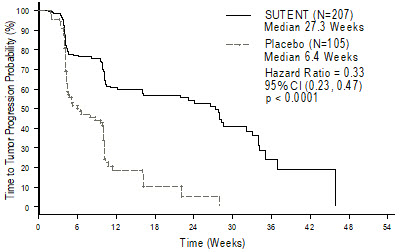
The planned interim efficacy and safety analysis was performed after 149 TTP events had occurred. There was a statistically significant advantage for SUTENT over placebo in TTP, meeting the primary endpoint. Efficacy results are summarized in Table 8 and the Kaplan-Meier curve for TTP is shown in Figure 1.
Table 8. GIST Efficacy Results From Study 1 (Double-Blind Treatment Phase)| Efficacy Parameter | SUTENT
(N=207) | Placebo
(N=105) | p-value
(log-rank test) | HR
(95% CI) |
|---|
| Abbreviations: CI=confidence interval; GIST=gastrointestinal stromal tumor; HR=hazard ratio; N=number of patients; PR=partial response. |
| Time-to-tumor progression Time from randomization to progression; deaths prior to documented progression were censored at time of last radiographic evaluation.
[median, weeks (95% CI)] | 27.3
(16.0, 32.1) | 6.4
(4.4, 10.0) | <0.0001 A comparison is considered statistically significant if the p-value is <0.00417 (O'Brien Fleming stopping boundary). | 0.33
(0.23, 0.47) |
| Progression-free survival Time from randomization to progression or death due to any cause.
[median, weeks (95% CI)] | 24.1
(11.1, 28.3) | 6.0
(4.4, 9.9) | <0.0001 | 0.33
(0.24, 0.47) |
Objective response rate (PR)
[%, (95% CI)] | 6.8
(3.7, 11.1) | 0 | 0.006 Pearson chi-square test. | |
Figure 1. Kaplan-Meier Curve of TTP in GIST Study 1 (Intent-to-Treat Population)
Abbreviations: CI=confidence interval; GIST=gastrointestinal stromal tumor; N=number of patients; TTP=time-to-tumor progression.
The final ITT population enrolled in the double-blind treatment phase of the study included 243 patients randomized to the SUTENT arm and 118 patients randomized to the placebo arm. After the primary endpoint was met at the interim analysis, the study was unblinded, and patients on the placebo arm were offered open-label SUTENT treatment. Ninety-nine (99) of the patients initially randomized to placebo crossed over to receive SUTENT in the open-label treatment phase. At the protocol specified final analysis of OS, the median OS was 72.7 weeks for the SUTENT arm and 64.9 weeks for the placebo arm [hazard ratio (HR)=0.876, 95% confidence interval (CI) (0.679, 1.129)].
Study 2
Study 2 was an open-label, multi-center, single-arm, dose-escalation study conducted in patients with GIST following progression on, or intolerance to imatinib. Following identification of the recommended regimen (50 mg once daily on Schedule 4/2), 55 patients in this study received the 50 mg dose of SUTENT on treatment Schedule 4/2. Partial responses (PR) were observed in 5 of 55 patients (9.1% PR rate; 95% CI: 3.0%, 20.0%).
Treatment-Naïve RCC
Study 3 (NCT#00083889) was a multi-center, international, randomized study comparing single-agent SUTENT with IFN-α was conducted in patients with treatment-naïve RCC. The objective was to compare PFS in patients receiving SUTENT versus patients receiving IFN-α. Other endpoints included ORR, OS, and safety. Seven hundred fifty (750) patients were randomized (1:1) to receive either 50 mg SUTENT once daily on Schedule 4/2 or to receive IFN-α administered subcutaneously at 9 million international units (MIU) 3 times a week. Patients were treated until disease progression or withdrawal from the study.
The ITT population included 750 patients, 375 randomized to SUTENT and 375 randomized to IFN-α. Demographics were comparable between the SUTENT and IFN-α groups with regard to age (59% versus 67% <65 years for SUTENT versus IFN-α, respectively), gender (male: 71% versus 72%), race (White: 94% versus 91%, Asian: 2% versus 3%, Black: 1% versus 2%, remainder not reported), and performance status (ECOG 0: 62% versus 61%, ECOG 1: 38% each arm, ECOG 2: 0 versus 1%). Prior treatment included nephrectomy (91% versus 89%) and radiotherapy (14% each arm). The most common site of metastases present at screening was the lung (78% versus 80%, respectively), followed by the lymph nodes (58% versus 53%, respectively) and bone (30% each arm); the majority of the patients had multiple (2 or more) metastatic sites at baseline (80% versus 77%, respectively).
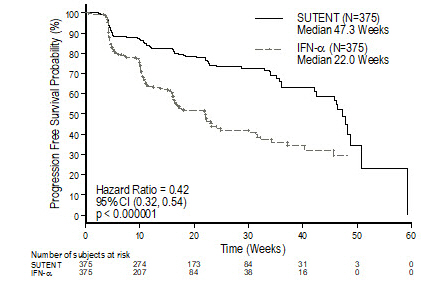
There was a statistically significant advantage for SUTENT over IFN-α in the endpoint of PFS (see Table 9 and Figure 2). In the prespecified stratification factors of lactate dehydrogenase (LDH) (>1.5 ULN versus ≤1.5 ULN), ECOG performance status (0 versus 1), and prior nephrectomy (yes versus no), the hazard ratio favored SUTENT over IFN-α. The ORR was higher in the SUTENT arm (see Table 9).
Table 9. Treatment-Naïve RCC Efficacy Results (Interim Analysis)| Efficacy Parameter | SUTENT
(N=375) | IFN-α
(N=375) | p-value
(log-rank test) | HR
(95% CI) |
|---|
| Abbreviations: CI=confidence interval; HR=hazard ratio; N=number of patients; INF-α=interferon-alfa; NA=not applicable; RCC=renal cell carcinoma. |
| Progression-free survival Assessed by blinded core radiology laboratory; 90 patients' scans had not been read at time of analysis.
[median, weeks (95% CI)] | 47.3
(42.6, 50.7) | 22.0
(16.4, 24.0) | <0.000001 A comparison is considered statistically significant if the p-value is <0.0042 (O'Brien Fleming stopping boundary). | 0.415
(0.320, 0.539) |
Objective response rate
[%, (95% CI)] | 27.5
(23.0, 32.3) | 5.3
(3.3, 8.1) | <0.001 Pearson chi-square test. | NA |
Figure 2. Kaplan-Meier Curve of PFS in Treatment-Naïve RCC Study 3 (Intent-to-Treat Population)
Abbreviations: CI=confidence interval; INF-α=interferon-alfa; N=number of patients; PFS=progression-free survival; RCC=renal cell carcinoma.
At the protocol-specified final analysis of OS, the median OS was 114.6 weeks for the SUTENT arm and 94.9 weeks for the IFN-α arm (HR=0.821; 95% CI: 0.673, 1.001). The median OS for the IFN-α arm includes 25 patients who discontinued IFN-α treatment because of disease progression and crossed over to treatment with SUTENT as well as 121 patients (32%) on the IFN-α arm who received post-study cancer treatment with SUTENT.
Cytokine-Refractory RCC
The use of single-agent SUTENT in the treatment of cytokine-refractory RCC was investigated in 2 single-arm, multi-center studies. All patients enrolled into these studies experienced failure of prior cytokine-based therapy. In Study 4 (NCT#00077974), failure of prior cytokine therapy was based on radiographic evidence of disease progression defined by response evaluation criteria in solid tumors (RECIST) or World Health Organization (WHO) criteria during or within 9 months of completion of 1 cytokine therapy treatment (IFN-α, interleukin-2, or IFN-α plus interleukin-2; patients who were treated with IFN-α alone must have received treatment for at least 28 days). In Study 5 (NCT#00054886), failure of prior cytokine therapy was defined as disease progression or unacceptable treatment-related toxicity. The endpoint for both studies was ORR. Duration of response (DR) was also evaluated.
One hundred and six patients (106) were enrolled into Study 4 and 63 patients were enrolled into Study 5. Patients received 50 mg SUTENT on Schedule 4/2. Therapy was continued until the patients met withdrawal criteria or had progressive disease. The baseline age, gender, race, and ECOG performance statuses of the patients were comparable between Studies 4 and 5. Approximately 86%–94% of patients in the 2 studies were White. Men comprised 65% of the pooled population. The median age was 57 years and ranged from 24 to 87 years in the studies. All patients had an ECOG performance status <2 at the screening visit.
The baseline malignancy and prior treatment history of the patients were comparable between Studies 4 and 5. Across the 2 studies, 95% of the pooled population of patients had at least some component of clear-cell histology. All patients in Study 4 were required to have a histological clear-cell component. Most patients enrolled in the studies (97% of the pooled population) had undergone nephrectomy; prior nephrectomy was required for patients enrolled in Study 4. All patients had received 1 previous cytokine regimen. Metastatic disease present at the time of study entry included lung metastases in 81% of patients. Liver metastases were more common in Study 4 (27% versus 16% in Study 5) and bone metastases were more common in Study 5 (51% versus 25% in Study 4); 52% of patients in the pooled population had at least 3 metastatic sites. Patients with known brain metastases or leptomeningeal disease were excluded from both studies.
The ORR and DR data from Studies 4 and 5 are provided in Table 10. There were 36 PRs in Study 4 as assessed by a core radiology laboratory for an ORR of 34.0% (95% CI: 25.0%, 43.8%). There were 23 PRs in Study 5 as assessed by the investigators for an ORR of 36.5% (95% CI: 24.7%, 49.6%). The majority (>90%) of objective disease responses were observed during the first 4 cycles; the latest reported response was observed in Cycle 10. DR data from Study 4 is premature as only 9 of 36 patients (25%) responding to treatment had experienced disease progression or died at the time of the data cutoff.
Table 10. Cytokine-Refractory RCC Efficacy Results| Efficacy Parameter | Study 4
(N=106) | Study 5
(N=63) |
|---|
| Abbreviations: CI=confidence interval; N=number of patients; NR=not reached; RCC=renal cell carcinoma. |
Objective response rate
[%, (95% CI)] | 34.0 Assessed by blinded core radiology laboratory.
(25.0, 43.8) | 36.5 Assessed by investigators.
(24.7, 49.6) |
Duration of response
[median, weeks (95% CI)] | NR Data not mature enough to determine upper confidence limit.
(42.0, ) | 54
(34.3, 70.1) |
Adjuvant Treatment of RCC
In the adjuvant treatment setting, SUTENT was investigated in S-TRAC (NCT#00375674), a multi-center, international, randomized, double-blind, placebo-controlled, trial in patients with high risk of recurrent RCC following nephrectomy. Patients were required to have clear cell histology and high risk of recurrence defined as ≥T3 and/or N+ tumors. Six hundred fifteen (615) patients were randomized 1:1 to receive either 50 mg SUTENT once daily on Schedule 4/2 or placebo. Patients were treated for 9 cycles (approximately 1 year), or until disease recurrence, unacceptable toxicity, or withdrawal of consent.
Demographics were generally comparable between the SUTENT and placebo arms with regard to age (median age 58 years), gender (73% male), and race (84% White, 12% Asian and 4% Other). At randomization, most patients had an ECOG performance status of 0 (74% SUTENT and 72% placebo). The remainder of the patients had an ECOG performance status of 1; 1 patient on SUTENT had a performance status of 2.
The major efficacy outcome measure was disease-free survival (DFS) in patients receiving SUTENT versus placebo as assessed by blinded independent central review (BICR). Overall survival was an additional endpoint. There was a statistically significant improvement in DFS in patients who were treated with SUTENT compared to placebo (Table 11 and Figure 3). Prespecified subgroup analyses are presented in Table 12. At the time of the DFS analysis, overall survival data were not mature, with 141/615 (23%) patient deaths.
Table 11. Disease-free Survival Results as Assessed by BICR in Adjuvant RCC (Intent to Treat Population) | SUTENT
N = 309 | Placebo
N = 306 | p-value P-value based on log-rank test stratified by University of California Los Angeles Integrated Staging System (UISS) prognostic group; HR based on a Cox proportional hazard model stratified by UISS prognostic group | HR (95% CI) |
|---|
| Abbreviations: BICR=blinded independent central review; CI=confidence interval; DFS=disease-free survival; HR=hazard ratio; N=number of patients; RCC=renal cell carcinoma. |
| Median DFS [years (95% CI)] | 6.8 (5.8, NR) | 5.6 (3.8, 6.6) | 0.03 | 0.76 (0.59, 0.98) |
| DFS Events | 113 (36.6%) | 144 (47.1%) | |
| 5 Year DFS Rate | 59.3% | 51.3% | |
Table 12. Disease-free Survival by Baseline Disease Characteristics | Number of Events/ Total
n/N | Median DFS
[years (95% CI)] | HR HR based on a Cox proportional hazards model
(95% CI) |
|---|
| SUTENT | Placebo | SUTENT | Placebo | |
|---|
| Abbreviations: CI=confidence interval; DFS=disease-free survival; HR=hazard ratio; N=number of patients; n=number of events; NR=not reached |
| T3 Intermediate T3 Intermediate: T3, N0 or NX, M0, any Fuhrman's grade, ECOG PS 0 OR T3, N0 or NX, M0, Fuhrman's grade 1, ECOG PS ≥ 1 | 35/115 | 46/112 | NR
(5.2, NR) | 6.4
(4.7, NR) | 0.82
(0.53, 1.28) |
| T3 High T3 High: T3, N0 or NX, M0, Fuhrman's grade ≥ 2, ECOG PS ≥ 1 | 63/165 | 79/166 | 6.8
(5.0, NR) | 5.3
(2.9, NR) | 0.77
(0.55, 1.07) |
| T4/Node Positive T4/Node Positive: T4, N0 or NX, M0, any Fuhrman's grade, any ECOG PS OR Any T, N1–2, M0, any Fuhrman's grade, any ECOG PS | 15/29 | 19/28 | 3.5
(1.2, NR) | 1.7
(0.4, 3.0) | 0.62
(0.31, 1.23) |
Figure 3. Kaplan-Meier Curve of Disease-free Survival as Assessed by BICR (Intent-to-Treat Population)
Abbreviations: BICR=blinded independent central review; CI=confidence interval; N=number of patients.
12.5 mg capsules
Hard gelatin capsule with orange cap and orange body, printed with white ink "Pfizer" on the cap, "STN 12.5 mg" on the body; available in:
Bottles of 28 capsules: NDC 0069-0550-38
25 mg capsules
Hard gelatin capsule with caramel cap and orange body, printed with white ink "Pfizer" on the cap, "STN 25 mg" on the body; available in:
Bottles of 28 capsules: NDC 0069-0770-38
37.5 mg capsules
Hard gelatin capsule with yellow cap and yellow body, printed with black ink "Pfizer" on the cap, "STN 37.5 mg" on the body; available in:
Bottles of 28 capsules: NDC 0069-0830-38
50 mg capsules
Hard gelatin capsule with caramel cap and caramel body, printed with white ink "Pfizer" on the cap, "STN 50 mg" on the body; available in:
Bottles of 28 capsules: NDC 0069-0980-38
Hepatotoxicity
Inform patients of the signs and symptoms of hepatotoxicity. Advise patients to contact their healthcare provider immediately for signs or symptoms of hepatotoxicity [see Warnings and Precautions (5.1)].
Cardiovascular Events
Advise patients to contact their healthcare provider if they develop symptoms of heart failure [see Warnings and Precautions (5.2)].
QT Prolongation and Torsade de Pointes
Inform patients of the signs and symptoms of QT prolongation. Advise patients to contact their healthcare provider immediately in the event of syncope, pre-syncopal symptoms, and cardiac palpitations [see Warnings and Precautions (5.3)].
Hypertension
Inform patients of the signs and symptoms of hypertension. Advise patients to undergo routine blood pressure monitoring and to contact their health care provider if blood pressure is elevated or if they experience signs or symptoms of hypertension [see Warnings and Precautions (5.4)].
Hemorrhagic Events
Advise patients that SUTENT can cause severe bleeding. Advise patients to immediately contact their healthcare provider for bleeding or symptoms of bleeding [see Warnings and Precautions (5.5)].
Gastrointestinal Disorders
Advise patients that gastrointestinal disorders such as diarrhea, nausea, vomiting, and constipation may develop during SUTENT treatment and to seek immediate medical attention if they experience persistent or severe abdominal pain because cases of gastrointestinal perforation and fistula have been reported in patients taking SUTENT [see Warnings and Precautions (5.5) and Adverse Reactions (6.1)].
Dermatologic Effects and Toxicities
Advise patients that depigmentation of the hair or skin may occur during treatment with SUTENT due to the drug color (yellow). Other possible dermatologic effects may include dryness, thickness or cracking of skin, blister or rash on the palms of the hands and soles of the feet. Severe dermatologic toxicities including Stevens-Johnson syndrome, Toxic Epidermal Necrolysis, erythema multiforme, and necrotizing fasciitis have been reported. Advise patients to immediately inform their healthcare provider if severe dermatologic reactions occur [see Warnings and Precautions (5.9) and Adverse Reactions (6.1)].
Thyroid Dysfunction
Advise patients that SUTENT can cause thyroid dysfunction. Advise patient to contact their healthcare provider if symptoms of abnormal thyroid function occur [see Warnings and Precautions (5.10)].
Hypoglycemia
Advise patients that SUTENT can cause severe hypoglycemia and may be more severe in patients with diabetes taking antidiabetic medications. Inform patients of the signs, symptoms, and risks associated with hypoglycemia. Advise patients to immediately inform their healthcare provider if severe signs or symptoms of hypoglycemia occur [see Warnings and Precautions (5.11)].
Osteonecrosis of the Jaw
Advise patients to consider preventive dentistry prior to treatment with SUTENT. Inform patients being treated with SUTENT, particularly who are receiving bisphosphonates, to avoid invasive dental procedures if possible [see Warnings and Precautions (5.12)].
If possible, avoid invasive dental procedures while on SUTENT treatment, particularly in patients receiving intravenous bisphosphonate therapy.
Concomitant Medications
Advise patients to inform their healthcare providers of all concomitant medications, including over-the-counter medications and dietary supplements [see Drug Interactions (7)].
Embryo-Fetal Toxicity
Advise females to inform their healthcare provider if they are pregnant or become pregnant. Inform female patients of the risk to a fetus and potential loss of the pregnancy [see Use in Specific Populations (8.1)].
Advise females of reproductive potential to use effective contraception during treatment and for 4 weeks after receiving the last dose of SUTENT [see Warnings and Precautions (5.14) and Use in Specific Populations (8.1, 8.3)].
Advise males with female partners of reproductive potential to use effective contraception during treatment and for 7 weeks after receiving the last dose of SUTENT [see Warnings and Precautions (5.14) and Use in Specific Populations (8.1, 8.3)].
Lactation
Advise lactating women not to breastfeed during treatment with SUTENT and for at least 4 weeks after the last dose [see Use in Specific Populations (8.2)].
Infertility
Advise patients that male and female fertility may be compromised by treatment with SUTENT [see Use in Specific Populations (8.3) and Nonclinical Toxicology (13.1)].
Missed Dose
Advise patients that miss a dose of SUTENT by less than 12 hours to take the missed dose right away. Advise patients that miss a dose of SUTENT by more than 12 hours to take the next scheduled dose at its regular time.
This product's label may have been updated. For full prescribing information, please visit www.pfizer.com.
LAB-0317-22.0