Other
SERIOUS INFECTIONS
Patients treated with XELJANZ/XELJANZ XR/XELJANZ Oral Solution are at increased risk for developing serious infections that may lead to hospitalization or death [see Warnings and Precautions (5.1), Adverse Reactions (6.1)]. Most patients who developed these infections were taking concomitant immunosuppressants such as methotrexate or corticosteroids.
If a serious infection develops, interrupt XELJANZ/XELJANZ XR/XELJANZ Oral Solution until the infection is controlled.
Reported infections include:
- Active tuberculosis, which may present with pulmonary or extrapulmonary disease. Patients should be tested for latent tuberculosis before XELJANZ/XELJANZ XR/XELJANZ Oral Solution use and during therapy. Treatment for latent infection should be initiated prior to XELJANZ/XELJANZ XR/XELJANZ Oral Solution use.
- Invasive fungal infections, including cryptococcosis and pneumocystosis. Patients with invasive fungal infections may present with disseminated, rather than localized, disease.
- Bacterial, viral, including herpes zoster, and other infections due to opportunistic pathogens.
- Limitations of Use: Use of XELJANZ/XELJANZ XR in combination with biologic disease-modifying antirheumatic drugs (DMARDs) or with potent immunosuppressants such as azathioprine and cyclosporine is not recommended.
- Limitations of Use: Use of XELJANZ/XELJANZ XR in combination with biologic DMARDs or with potent immunosuppressants such as azathioprine and cyclosporine is not recommended.
- Limitations of Use: Use of XELJANZ/XELJANZ XR in combination with biological therapies for UC or with potent immunosuppressants such as azathioprine and cyclosporine is not recommended.
- Limitations of Use: Use of XELJANZ/XELJANZ Oral Solution in combination with biologic DMARDs or with potent immunosuppressants such as azathioprine and cyclosporine is not recommended.
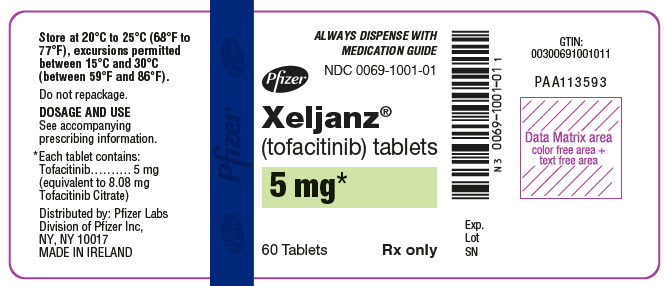
- 5 mg tofacitinib: White, round, immediate-release film-coated tablets, debossed with "Pfizer" on one side, and "JKI 5" on the other side.
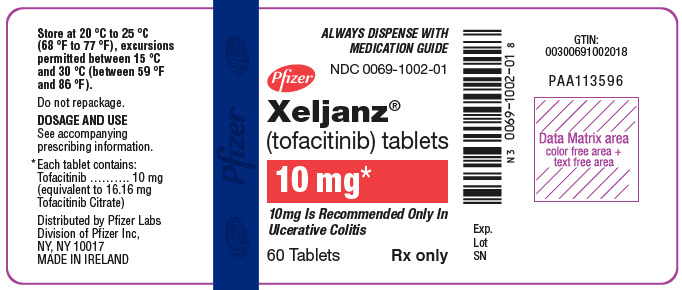
- 10 mg tofacitinib: Blue, round, immediate-release film-coated tablets, debossed with "Pfizer" on one side, and "JKI 10" on the other side.
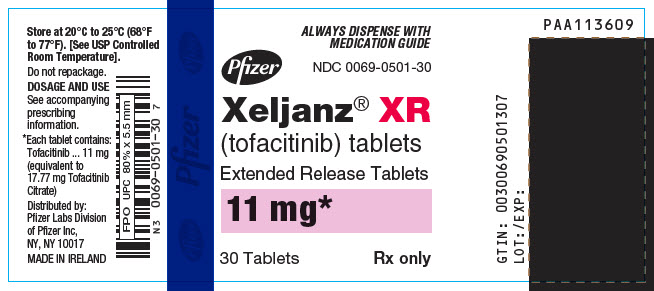
- 11 mg tofacitinib: Pink, oval, extended-release film-coated tablets with a drilled hole at one end of the tablet band and "JKI 11" printed on one side of the tablet.
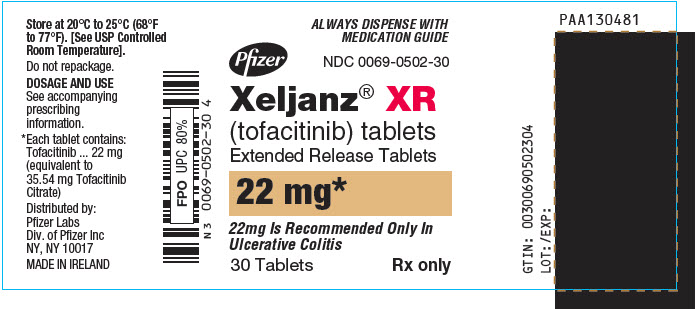
- 22 mg tofacitinib: Beige, oval, extended-release film-coated tablets with a drilled hole at one end of the tablet band and "JKI 22" printed on one side of the tablet.
- Mean LDL cholesterol increased by 15% in the XELJANZ 5 mg twice daily arm and 19% in the XELJANZ 10 mg twice daily arm.
- Mean HDL cholesterol increased by 10% in the XELJANZ 5 mg twice daily arm and 12% in the XELJANZ 10 mg twice daily arm.
- Mean LDL/HDL ratios were essentially unchanged in XELJANZ-treated patients.
- 179 (30%) patients were in remission
- 289 (49%) patients were receiving oral corticosteroids
- 265 (45%), 445 (75%), and 413 (70%) patients had previously failed or were intolerant to TNF blocker therapy, corticosteroids, and immunosuppressants, respectively.
The risks and benefits of treatment with XELJANZ/XELJANZ XR/XELJANZ Oral Solution should be carefully considered prior to initiating therapy in patients with chronic or recurrent infection.
Patients should be closely monitored for the development of signs and symptoms of infection during and after treatment with XELJANZ/XELJANZ XR/XELJANZ Oral Solution, including the possible development of tuberculosis in patients who tested negative for latent tuberculosis infection prior to initiating therapy [see Warnings and Precautions (5.1)].
MORTALITY
Rheumatoid arthritis patients 50 years of age and older with at least one cardiovascular (CV) risk factor treated with XELJANZ 10 mg twice a day had a higher rate of all-cause mortality, including sudden CV death, compared to those treated with XELJANZ 5 mg given twice daily or TNF blockers in a large, ongoing, postmarketing safety study [see Warnings and Precautions (5.2)].
MALIGNANCIES
Lymphoma and other malignancies have been observed in patients treated with XELJANZ. Epstein Barr Virus-associated post-transplant lymphoproliferative disorder has been observed at an increased rate in renal transplant patients treated with XELJANZ and concomitant immunosuppressive medications [see Warnings and Precautions (5.3)].
THROMBOSIS
Thrombosis, including pulmonary embolism, deep venous thrombosis, and arterial thrombosis have occurred in patients treated with XELJANZ and other Janus kinase inhibitors used to treat inflammatory conditions. Rheumatoid arthritis patients who were 50 years of age and older with at least one CV risk factor treated with XELJANZ 10 mg twice daily compared to XELJANZ 5 mg twice daily or TNF blockers in a large, ongoing postmarketing safety study had an observed increase in incidence of these events. Many of these events were serious and some resulted in death. Avoid XELJANZ/XELJANZ XR/XELJANZ Oral Solution in patients at risk. Discontinue XELJANZ/XELJANZ XR/XELJANZ Oral Solution and promptly evaluate patients with symptoms of thrombosis [see Warnings and Precautions (5.4)].
For patients with ulcerative colitis, use XELJANZ at the lowest effective dose and for the shortest duration needed to achieve/maintain therapeutic response [see Dosage and Administration (2.3)].
Rheumatoid Arthritis
XELJANZ/XELJANZ XR is indicated for the treatment of adult patients with moderately to severely active rheumatoid arthritis (RA) who have had an inadequate response or intolerance to methotrexate.
Psoriatic Arthritis
XELJANZ/XELJANZ XR is indicated for the treatment of adult patients with active psoriatic arthritis (PsA) who have had an inadequate response or intolerance to methotrexate or other disease-modifying antirheumatic drugs (DMARDs).
Ulcerative Colitis
XELJANZ/XELJANZ XR is indicated for the treatment of adult patients with moderately to severely active ulcerative colitis (UC), who have an inadequate response or who are intolerant to TNF blockers.
Polyarticular Course Juvenile Idiopathic Arthritis
XELJANZ/XELJANZ Oral Solution is indicated for the treatment of active polyarticular course juvenile idiopathic arthritis (pcJIA) in patients 2 years of age and older.
Switching from XELJANZ Tablets to XELJANZ XR Extended-Release Tablets
Patients treated with XELJANZ tablets 5 mg twice daily may be switched to XELJANZ XR extended-release tablets 11 mg once daily the day following the last dose of XELJANZ 5 mg.
Switching from XELJANZ Tablets to XELJANZ XR Extended-Release Tablets
Patients treated with XELJANZ 5 mg tablets twice daily may be switched to XELJANZ XR extended-release tablets 11 mg once daily the day following the last dose of XELJANZ tablets 5 mg. Patients treated with XELJANZ 10 mg tablets twice daily may be switched to XELJANZ XR extended-release tablets 22 mg once daily the day following the last dose of XELJANZ 10 mg.
XELJANZ Tablets:
XELJANZ XR Tablets:
XELJANZ Oral Solution:
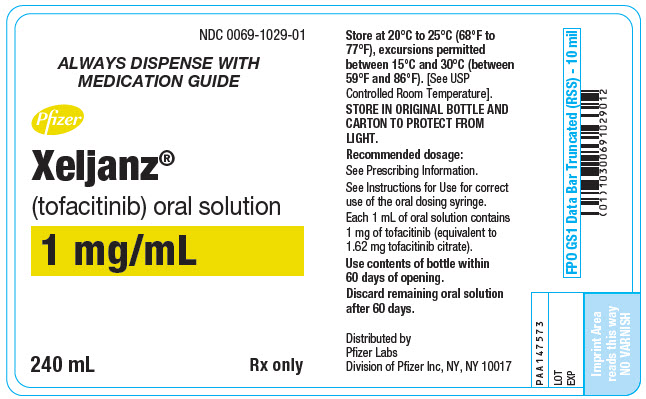
1 mg/mL tofacitinib: Clear, colorless oral solution.
Tuberculosis
Patients should be evaluated and tested for latent or active infection prior to and per applicable guidelines during administration of XELJANZ/XELJANZ XR/XELJANZ Oral Solution.
Anti-tuberculosis therapy should also be considered prior to administration of XELJANZ/XELJANZ XR/XELJANZ Oral Solution in patients with a past history of latent or active tuberculosis in whom an adequate course of treatment cannot be confirmed, and for patients with a negative test for latent tuberculosis but who have risk factors for tuberculosis infection. Consultation with a physician with expertise in the treatment of tuberculosis is recommended to aid in the decision about whether initiating anti-tuberculosis therapy is appropriate for an individual patient.
Patients should be closely monitored for the development of signs and symptoms of tuberculosis, including patients who tested negative for latent tuberculosis infection prior to initiating therapy.
Patients with latent tuberculosis should be treated with standard antimycobacterial therapy before administering XELJANZ/XELJANZ XR/XELJANZ Oral Solution.
Viral Reactivation
Viral reactivation, including cases of herpes virus reactivation (e.g., herpes zoster), were observed in clinical studies with XELJANZ/XELJANZ Oral Solution. Postmarketing cases of hepatitis B reactivation have been reported in patients treated with XELJANZ. The impact of XELJANZ/XELJANZ XR/XELJANZ Oral Solution on chronic viral hepatitis reactivation is unknown. Patients who screened positive for hepatitis B or C were excluded from clinical trials. Screening for viral hepatitis should be performed in accordance with clinical guidelines before starting therapy with XELJANZ/XELJANZ XR/XELJANZ Oral Solution. The risk of herpes zoster is increased in patients treated with XELJANZ/XELJANZ XR/XELJANZ Oral Solution and appears to be higher in patients treated with XELJANZ in Japan and Korea.
Non-Melanoma Skin Cancer
Non-melanoma skin cancers (NMSCs) have been reported in patients treated with XELJANZ. Periodic skin examination is recommended for patients who are at increased risk for skin cancer. In the UC population, treatment with XELJANZ 10 mg twice daily was associated with greater risk of NMSC.
Lymphocyte Abnormalities
Treatment with XELJANZ was associated with initial lymphocytosis at one month of exposure followed by a gradual decrease in mean absolute lymphocyte counts below the baseline of approximately 10% during 12 months of therapy. Lymphocyte counts less than 500 cells/mm3 were associated with an increased incidence of treated and serious infections.
Avoid initiation of XELJANZ/XELJANZ XR/XELJANZ Oral Solution treatment in patients with a low lymphocyte count (i.e., less than 500 cells/mm3). In patients who develop a confirmed absolute lymphocyte count less than 500 cells/mm3, treatment with XELJANZ/XELJANZ XR/XELJANZ Oral Solution is not recommended.
Monitor lymphocyte counts at baseline and every 3 months thereafter. For recommended modifications based on lymphocyte counts [see Dosage and Administration (2.2, 2.3, 2.4)].
Neutropenia
Treatment with XELJANZ was associated with an increased incidence of neutropenia (less than 2000 cells/mm3) compared to placebo.
Avoid initiation of XELJANZ/XELJANZ XR/XELJANZ Oral Solution treatment in patients with a low neutrophil count (i.e., ANC less than 1000 cells/mm3). For patients who develop a persistent ANC of 500 to 1000 cells/mm3, interrupt XELJANZ/XELJANZ XR/XELJANZ Oral Solution dosing until ANC is greater than or equal to 1000 cells/mm3. In patients who develop an ANC less than 500 cells/mm3, treatment with XELJANZ/XELJANZ XR/XELJANZ Oral Solution is not recommended.
Monitor neutrophil counts at baseline and after 4–8 weeks of treatment and every 3 months thereafter. For recommended modifications based on ANC results [see Dosage and Administration (2.2, 2.3)].
Anemia
Avoid initiation of XELJANZ/XELJANZ XR/XELJANZ Oral Solution treatment in patients with a low hemoglobin level (i.e., less than 9 g/dL). Treatment with XELJANZ/XELJANZ XR/XELJANZ Oral Solution should be interrupted in patients who develop hemoglobin levels less than 8 g/dL or whose hemoglobin level drops greater than 2 g/dL on treatment.
Monitor hemoglobin at baseline and after 4–8 weeks of treatment and every 3 months thereafter. For recommended modifications based on hemoglobin results [see Dosage and Administration (2)].
Liver Enzyme Elevations
Treatment with XELJANZ was associated with an increased incidence of liver enzyme elevation compared to placebo. Most of these abnormalities occurred in studies with background DMARD (primarily methotrexate) therapy.
Routine monitoring of liver tests and prompt investigation of the causes of liver enzyme elevations is recommended to identify potential cases of drug-induced liver injury. If drug-induced liver injury is suspected, the administration of XELJANZ/XELJANZ XR/XELJANZ Oral Solution should be interrupted until this diagnosis has been excluded.
Lipid Elevations
Treatment with XELJANZ was associated with dose-dependent increases in lipid parameters including total cholesterol, low-density lipoprotein (LDL) cholesterol, and high-density lipoprotein (HDL) cholesterol. Maximum effects were generally observed within 6 weeks. There were no clinically relevant changes in LDL/HDL cholesterol ratios. The effect of these lipid parameter elevations on cardiovascular morbidity and mortality has not been determined.
Assessment of lipid parameters should be performed approximately 4–8 weeks following initiation of XELJANZ/XELJANZ XR/XELJANZ Oral Solution therapy.
Manage patients according to clinical guidelines [e.g., National Cholesterol Educational Program (NCEP)] for the management of hyperlipidemia.
Rheumatoid Arthritis
The clinical studies described in the following sections were conducted using XELJANZ. Although other doses of XELJANZ have been studied, the recommended dose of XELJANZ is 5 mg twice daily. The recommended dose for XELJANZ XR is 11 mg once daily. A dosage of XELJANZ 10 mg twice daily or XELJANZ XR 22 mg once daily is not a recommended regimen for the treatment of rheumatoid arthritis [see Dosage and Administration (2.2)].
The following data includes two Phase 2 and five Phase 3 double-blind, controlled, multicenter trials. In these trials, patients were randomized to doses of XELJANZ 5 mg twice daily (292 patients) and 10 mg twice daily (306 patients) monotherapy, XELJANZ 5 mg twice daily (1044 patients) and 10 mg twice daily (1043 patients) in combination with DMARDs (including methotrexate) and placebo (809 patients). All seven protocols included provisions for patients taking placebo to receive treatment with XELJANZ at Month 3 or Month 6 either by patient response (based on uncontrolled disease activity) or by design, so that adverse events cannot always be unambiguously attributed to a given treatment. Therefore, some analyses that follow include patients who changed treatment by design or by patient response from placebo to XELJANZ in both the placebo and XELJANZ group of a given interval. Comparisons between placebo and XELJANZ were based on the first 3 months of exposure, and comparisons between XELJANZ 5 mg twice daily and XELJANZ 10 mg twice daily were based on the first 12 months of exposure.
The long-term safety population includes all patients who participated in a double-blind, controlled trial (including earlier development phase studies) and then participated in one of two long-term safety studies. The design of the long-term safety studies allowed for modification of XELJANZ doses according to clinical judgment. This limits the interpretation of the long-term safety data with respect to dose.
The most common serious adverse reactions were serious infections [see Warnings and Precautions (5.1)].
The proportion of patients who discontinued treatment due to any adverse reaction during the 0 to 3 months exposure in the double-blind, placebo-controlled trials was 4% for patients taking XELJANZ and 3% for placebo-treated patients.
Overall Infections
In the seven controlled trials, during the 0 to 3 months exposure, the overall frequency of infections was 20% and 22% in the 5 mg twice daily and 10 mg twice daily groups, respectively, and 18% in the placebo group.
The most commonly reported infections with XELJANZ were upper respiratory tract infections, nasopharyngitis, and urinary tract infections (4%, 3%, and 2% of patients, respectively).
Serious Infections
In the seven controlled trials, during the 0 to 3 months exposure, serious infections were reported in 1 patient (0.5 events per 100 patient-years) who received placebo and 11 patients (1.7 events per 100 patient-years) who received XELJANZ 5 mg or 10 mg twice daily. The rate difference between treatment groups (and the corresponding 95% confidence interval) was 1.1 (-0.4, 2.5) events per 100 patient-years for the combined 5 mg twice daily and 10 mg twice daily XELJANZ group minus placebo.
In the seven controlled trials, during the 0 to 12 months exposure, serious infections were reported in 34 patients (2.7 events per 100 patient-years) who received 5 mg twice daily of XELJANZ and 33 patients (2.7 events per 100 patient-years) who received 10 mg twice daily of XELJANZ. The rate difference between XELJANZ doses (and the corresponding 95% confidence interval) was -0.1 (-1.3, 1.2) events per 100 patient-years for 10 mg twice daily XELJANZ minus 5 mg twice daily XELJANZ.
The most common serious infections included pneumonia, cellulitis, herpes zoster, and urinary tract infection [see Warnings and Precautions (5.1)].
Tuberculosis
In the seven controlled trials, during the 0 to 3 months exposure, tuberculosis was not reported in patients who received placebo, 5 mg twice daily of XELJANZ, or 10 mg twice daily of XELJANZ.
In the seven controlled trials, during the 0 to 12 months exposure, tuberculosis was reported in 0 patients who received 5 mg twice daily of XELJANZ and 6 patients (0.5 events per 100 patient-years) who received 10 mg twice daily of XELJANZ. The rate difference between XELJANZ doses (and the corresponding 95% confidence interval) was 0.5 (0.1, 0.9) events per 100 patient-years for 10 mg twice daily XELJANZ minus 5 mg twice daily XELJANZ.
Cases of disseminated tuberculosis were also reported. The median XELJANZ exposure prior to diagnosis of tuberculosis was 10 months (range from 152 to 960 days) [see Warnings and Precautions (5.1)].
Opportunistic Infections (excluding tuberculosis)
In the seven controlled trials, during the 0 to 3 months exposure, opportunistic infections were not reported in patients who received placebo, 5 mg twice daily of XELJANZ, or 10 mg twice daily of XELJANZ.
In the seven controlled trials, during the 0 to 12 months exposure, opportunistic infections were reported in 4 patients (0.3 events per 100 patient-years) who received 5 mg twice daily of XELJANZ and 4 patients (0.3 events per 100 patient-years) who received 10 mg twice daily of XELJANZ. The rate difference between XELJANZ doses (and the corresponding 95% confidence interval) was 0 (-0.5, 0.5) events per 100 patient-years for 10 mg twice daily XELJANZ minus 5 mg twice daily XELJANZ.
The median XELJANZ exposure prior to diagnosis of an opportunistic infection was 8 months (range from 41 to 698 days) [see Warnings and Precautions (5.1)].
Malignancy
In the seven controlled trials, during the 0 to 3 months exposure, malignancies excluding NMSC were reported in 0 patients who received placebo and 2 patients (0.3 events per 100 patient-years) who received either XELJANZ 5 mg or 10 mg twice daily. The rate difference between treatment groups (and the corresponding 95% confidence interval) was 0.3 (-0.1, 0.7) events per 100 patient-years for the combined 5 mg and 10 mg twice daily XELJANZ group minus placebo.
In the seven controlled trials, during the 0 to 12 months exposure, malignancies excluding NMSC were reported in 5 patients (0.4 events per 100 patient-years) who received 5 mg twice daily of XELJANZ and 7 patients (0.6 events per 100 patient-years) who received 10 mg twice daily of XELJANZ. The rate difference between XELJANZ doses (and the corresponding 95% confidence interval) was 0.2 (-0.4, 0.7) events per 100 patient-years for 10 mg twice daily XELJANZ minus 5 mg twice daily XELJANZ. One of these malignancies was a case of lymphoma that occurred during the 0 to 12 month period in a patient treated with XELJANZ 10 mg twice daily.
The most common types of malignancy, including malignancies observed during the long-term extension, were lung and breast cancer, followed by gastric, colorectal, renal cell, prostate cancer, lymphoma, and malignant melanoma [see Warnings and Precautions (5.3)].
Laboratory Abnormalities
Lymphopenia
In the controlled clinical trials, confirmed decreases in absolute lymphocyte counts below 500 cells/mm3 occurred in 0.04% of patients for the 5 mg twice daily and 10 mg twice daily XELJANZ groups combined during the first 3 months of exposure.
Confirmed lymphocyte counts less than 500 cells/mm3 were associated with an increased incidence of treated and serious infections [see Warnings and Precautions (5.7)].
Neutropenia
In the controlled clinical trials, confirmed decreases in ANC below 1000 cells/mm3 occurred in 0.07% of patients for the 5 mg twice daily and 10 mg twice daily XELJANZ groups combined during the first 3 months of exposure.
There were no confirmed decreases in ANC below 500 cells/mm3 observed in any treatment group.
There was no clear relationship between neutropenia and the occurrence of serious infections.
In the long-term safety population, the pattern and incidence of confirmed decreases in ANC remained consistent with what was seen in the controlled clinical trials [see Warnings and Precautions (5.7)].
Liver Enzyme Elevations
Confirmed increases in liver enzymes greater than 3 times the upper limit of normal (3× ULN) were observed in patients treated with XELJANZ. In patients experiencing liver enzyme elevation, modification of treatment regimen, such as reduction in the dose of concomitant DMARD, interruption of XELJANZ, or reduction in XELJANZ dose, resulted in decrease or normalization of liver enzymes.
In the controlled monotherapy trials (0–3 months), no differences in the incidence of ALT or AST elevations were observed between the placebo, and XELJANZ 5 mg, and 10 mg twice daily groups.
In the controlled background DMARD trials (0–3 months), ALT elevations greater than 3× ULN were observed in 1.0%, 1.3% and 1.2% of patients receiving placebo, 5 mg, and 10 mg twice daily, respectively. In these trials, AST elevations greater than 3× ULN were observed in 0.6%, 0.5% and 0.4% of patients receiving placebo, 5 mg, and 10 mg twice daily, respectively.
One case of drug-induced liver injury was reported in a patient treated with XELJANZ 10 mg twice daily for approximately 2.5 months. The patient developed symptomatic elevations of AST and ALT greater than 3× ULN and bilirubin elevations greater than 2× ULN, which required hospitalizations and a liver biopsy.
Lipid Elevations
In the controlled clinical trials, dose-related elevations in lipid parameters (total cholesterol, LDL cholesterol, HDL cholesterol, triglycerides) were observed at one month of exposure and remained stable thereafter. Changes in lipid parameters during the first 3 months of exposure in the controlled clinical trials are summarized below:
In a controlled clinical trial, elevations in LDL cholesterol and ApoB decreased to pretreatment levels in response to statin therapy.
In the long-term safety population, elevations in lipid parameters remained consistent with what was seen in the controlled clinical trials.
Serum Creatinine Elevations
In the controlled clinical trials, dose-related elevations in serum creatinine were observed with XELJANZ treatment. The mean increase in serum creatinine was <0.1 mg/dL in the 12-month pooled safety analysis; however with increasing duration of exposure in the long-term extensions, up to 2% of patients were discontinued from XELJANZ treatment due to the protocol-specified discontinuation criterion of an increase in creatinine by more than 50% of baseline. The clinical significance of the observed serum creatinine elevations is unknown.
Other Adverse Reactions
Adverse reactions occurring in 2% or more of patients on 5 mg twice daily or 10 mg twice daily XELJANZ and at least 1% greater than that observed in patients on placebo with or without DMARD are summarized in Table 4.
| Preferred Term | XELJANZ 5 mg Twice Daily | XELJANZ 10 mg Twice Daily the recommended dose of XELJANZ for the treatment of rheumatoid arthritis is 5 mg twice daily [see Dosage and Administration (2)]. | Placebo |
|---|---|---|---|
| N = 1336 (%) | N = 1349 (%) | N = 809 (%) | |
| N reflects randomized and treated patients from the seven clinical trials. | |||
| Upper respiratory tract infection | 4 | 4 | 3 |
| Nasopharyngitis | 4 | 3 | 3 |
| Diarrhea | 4 | 3 | 2 |
| Headache | 4 | 3 | 2 |
| Hypertension | 2 | 2 | 1 |
Other adverse reactions occurring in controlled and open-label extension studies included:
Blood and lymphatic system disorders: Anemia
Infections and infestations: Diverticulitis
Metabolism and nutrition disorders: Dehydration
Psychiatric disorders: Insomnia
Nervous system disorders: Paresthesia
Respiratory, thoracic and mediastinal disorders: Dyspnea, cough, sinus congestion, interstitial lung disease (cases were limited to patients with rheumatoid arthritis and some were fatal)
Gastrointestinal disorders: Abdominal pain, dyspepsia, vomiting, gastritis, nausea
Hepatobiliary disorders: Hepatic steatosis
Skin and subcutaneous tissue disorders: Rash, erythema, pruritus
Musculoskeletal, connective tissue and bone disorders: Musculoskeletal pain, arthralgia, tendonitis, joint swelling
Neoplasms benign, malignant and unspecified (including cysts and polyps): Non-melanoma skin cancers
General disorders and administration site conditions: Pyrexia, fatigue, peripheral edema
Clinical Experience in Methotrexate-Naïve Patients
Study RA-VI was an active-controlled clinical trial in methotrexate-naïve patients [see Clinical Studies (14)]. The safety experience in these patients was consistent with Studies RA-I through V.
Psoriatic Arthritis
XELJANZ 5 mg twice daily and 10 mg twice daily were studied in 2 double-blind Phase 3 clinical trials in patients with active psoriatic arthritis (PsA). Although other doses of XELJANZ have been studied, the recommended dose of XELJANZ is 5 mg twice daily. The recommended dose for XELJANZ XR is 11 mg once daily. A dosage of XELJANZ 10 mg twice daily or XELJANZ XR 22 mg once daily is not recommended for the treatment of PsA [see Dosage and Administration (2.2)].
Study PsA-I (NCT01877668) had a duration of 12 months and enrolled patients who had an inadequate response to a nonbiologic DMARD and who were naïve to treatment with a TNF blocker. Study PsA-I included a 3-month placebo-controlled period and also included adalimumab 40 mg subcutaneously once every 2 weeks for 12 months.
Study PsA-II (NCT01882439) had a duration of 6 months and enrolled patients who had an inadequate response to at least one approved TNF blocker. This clinical trial included a 3-month placebo controlled period.
In these combined Phase 3 clinical trials, 238 patients were randomized and treated with XELJANZ 5 mg twice daily and 236 patients were randomized and treated with XELJANZ 10 mg twice daily. All patients in the clinical trials were required to receive treatment with a stable dose of a nonbiologic DMARD [the majority (79%) received methotrexate]. The study population randomized and treated with XELJANZ (474 patients) included 45 (9.5%) patients aged 65 years or older and 66 (13.9%) patients with diabetes at baseline.
The safety profile observed in patients with active psoriatic arthritis treated with XELJANZ was consistent with the safety profile observed in rheumatoid arthritis patients.
Ulcerative Colitis
XELJANZ has been studied in patients with moderately to severely active UC in 4 randomized, double-blind, placebo-controlled trials (UC-I, UC-II, UC-III, and dose-ranging UC-V) and an open-label long-term extension study (UC-IV) [see Clinical Studies (14.3)].
Adverse reactions reported in ≥5% of patients treated with either 5 mg or 10 mg twice daily of XELJANZ and ≥1% greater than reported in patients receiving placebo in either the induction or maintenance clinical trials were: nasopharyngitis, elevated cholesterol levels, headache, upper respiratory tract infection, increased blood creatine phosphokinase, rash, diarrhea, and herpes zoster.
Induction Trials (Study UC-I, UC-II, and UC-V):
Common adverse reactions reported in ≥2% of patients treated with XELJANZ 10 mg twice daily and ≥1% greater than that reported in patients receiving placebo in the 3 induction trials were: headache, nasopharyngitis, elevated cholesterol levels, acne, increased blood creatine phosphokinase, and pyrexia.
Maintenance Trial (Study UC-III)
Common adverse reactions reported in ≥4% of patients treated with either dose of XELJANZ and ≥1% greater than reported in patients receiving placebo are shown in Table 5.
| Preferred Term | XELJANZ 5 mg Twice Daily | XELJANZ 10 mg Twice Daily | Placebo |
|---|---|---|---|
| N = 198 (%) | N = 196 (%) | N = 198 (%) | |
| Nasopharyngitis | 10 | 14 | 6 |
| Elevated cholesterol levels includes hypercholesterolemia, hyperlipidemia, blood cholesterol increased, dyslipidemia, blood triglycerides increased, low density lipoprotein increased, low density lipoprotein abnormal, or lipids increased. | 5 | 9 | 1 |
| Headache | 9 | 3 | 6 |
| Upper respiratory tract infection | 7 | 6 | 4 |
| Increased blood creatine phosphokinase | 3 | 7 | 2 |
| Rash | 3 | 6 | 4 |
| Diarrhea | 2 | 5 | 3 |
| Herpes zoster | 1 | 5 | 1 |
| Gastroenteritis | 3 | 4 | 3 |
| Anemia | 4 | 2 | 2 |
| Nausea | 1 | 4 | 3 |
In the long-term extension study, malignancies (including solid cancers, lymphomas and NMSC) were observed more often in patients treated with XELJANZ 10 mg twice daily [see Warnings and Precautions (5.3)]. Four cases of pulmonary embolism were reported in patients taking XELJANZ 10 mg twice daily, including one fatality in a patient with advanced cancer [see Warnings and Precautions (5.4)].
Dose-dependent adverse reactions seen in patients treated with XELJANZ 10 mg twice daily, in comparison to 5 mg twice daily, include the following: herpes zoster infections, serious infections, and NMSC [see Warnings and Precautions (5.1, 5.3)].
Polyarticular Course Juvenile Idiopathic Arthritis
XELJANZ/XELJANZ Oral Solution 5 mg twice daily or weight-based equivalent twice daily was studied in 225 patients from 2 years to 17 years of age in Study pcJIA-I [see Clinical Studies (14.4)] and one open-label extension study. The total patient exposure (defined as patients who received at least one dose of XELJANZ/XELJANZ Oral Solution) was 351 patient-years.
In general, the types of adverse drug reactions in patients with pcJIA were consistent with those seen in adult RA patients [see Adverse Reactions (6.1)].
Pregnancy Exposure Registry
There is a pregnancy exposure registry that monitors pregnancy outcomes in women exposed to XELJANZ/XELJANZ XR/XELJANZ Oral Solution during pregnancy. Patients should be encouraged to enroll in the XELJANZ/XELJANZ XR/XELJANZ Oral Solution pregnancy registry if they become pregnant. To enroll or obtain information from the registry, patients can call the toll free number 1-877-311-8972.
Risk Summary
Available data with XELJANZ/XELJANZ XR/XELJANZ Oral Solution use in pregnant women are insufficient to establish a drug associated risk of major birth defects, miscarriage or adverse maternal or fetal outcomes. There are risks to the mother and the fetus associated with rheumatoid arthritis and UC in pregnancy (see Clinical Considerations). In animal reproduction studies, fetocidal and teratogenic effects were noted when pregnant rats and rabbits received tofacitinib during the period of organogenesis at exposures multiples of 73-times and 6.3-times the maximum recommended dose of 10 mg twice daily, respectively. Further, in a peri- and post-natal study in rats, tofacitinib resulted in reductions in live litter size, postnatal survival, and pup body weights at exposure multiples of approximately 73-times the recommended dose of 5 mg twice daily and approximately 36 times the maximum recommended dose of 10 mg twice daily, respectively (see Data).
The estimated background risks of major birth defects and miscarriage for the indicated populations are unknown. All pregnancies have a background risk of birth defect, loss, or other adverse outcomes. The background risks in the U.S. general population of major birth defects and miscarriages are 2 to 4% and 15 to 20% of clinically recognized pregnancies, respectively.
Clinical Considerations
Disease-Associated Maternal and/or Embryo/Fetal Risk
Published data suggest that increased disease activity is associated with the risk of developing adverse pregnancy outcomes in women with rheumatoid arthritis or ulcerative colitis. Adverse pregnancy outcomes include preterm delivery (before 37 weeks of gestation), low birth weight (less than 2500 g) infants, and small for gestational age at birth.
Data
Animal Data
In a rat embryofetal developmental study, in which pregnant rats received tofacitinib during organogenesis, tofacitinib was teratogenic at exposure levels approximately 146 times the recommended dose of 5 mg twice daily, and approximately 73 times the maximum recommended dose of 10 mg twice daily (on an AUC basis at oral doses of 100 mg/kg/day in rats). Teratogenic effects consisted of external and soft tissue malformations of anasarca and membranous ventricular septal defects, respectively; and skeletal malformations or variations (absent cervical arch; bent femur, fibula, humerus, radius, scapula, tibia, and ulna; sternoschisis; absent rib; misshapen femur; branched rib; fused rib; fused sternebra; and hemicentric thoracic centrum). In addition, there was an increase in post-implantation loss, consisting of early and late resorptions, resulting in a reduced number of viable fetuses. Mean fetal body weight was reduced. No developmental toxicity was observed in rats at exposure levels approximately 58 times the recommended dose of 5 mg twice daily, and approximately 29 times the maximum recommended dose of 10 mg twice daily (on an AUC basis at oral doses of 30 mg/kg/day in pregnant rats).
In a rabbit embryofetal developmental study in which pregnant rabbits received tofacitinib during the period of organogenesis, tofacitinib was teratogenic at exposure levels approximately 13 times the recommended dose of 5 mg twice daily, and approximately 6.3 times the maximum recommended dose of 10 mg twice daily (on an AUC basis at oral doses of 30 mg/kg/day in rabbits) in the absence of signs of maternal toxicity. Teratogenic effects included thoracogastroschisis, omphalocele, membranous ventricular septal defects, and cranial/skeletal malformations (microstomia, microphthalmia), mid-line and tail defects. In addition, there was an increase in post-implantation loss associated with late resorptions. No developmental toxicity was observed in rabbits at exposure levels approximately 3 times the recommended dose of 5 mg twice daily, and approximately 1.5 times the maximum recommended dose of 10 mg twice daily (on an AUC basis at oral doses of 10 mg/kg/day in pregnant rabbits).
In a peri- and postnatal development study in pregnant rats that received tofacitinib from gestation day 6 through day 20 of lactation, there were reductions in live litter size, postnatal survival, and pup body weights at exposure levels approximately 73 times the recommended dose of 5 mg twice daily, and approximately 36 times the maximum recommended dose of 10 mg twice daily (on an AUC basis at oral doses of 50 mg/kg/day in rats). There was no effect on behavioral and learning assessments, sexual maturation or the ability of the F1 generation rats to mate and produce viable F2 generation fetuses in rats at exposure levels approximately 17 times the recommended dose of 5 mg twice daily, and approximately 8.3 times the maximum recommended dose of 10 mg twice daily (on an AUC basis at oral doses of 10 mg/kg/day in rats).
Risk Summary
There are no data on the presence of tofacitinib in human milk, the effects on a breastfed infant, or the effects on milk production. Tofacitinib is present in the milk of lactating rats (see Data). When a drug is present in animal milk, it is likely that the drug will be present in human milk. Given the serious adverse reactions seen in patients treated with XELJANZ/XELJANZ XR/XELJANZ Oral Solution, such as increased risk of serious infections, advise patients that breastfeeding is not recommended during treatment and for at least 18 hours after the last dose of XELJANZ/XELJANZ Oral Solution or 36 hours after the last dose of XELJANZ XR (approximately 6 elimination half-lives).
Data
Following administration of tofacitinib to lactating rats, concentrations of tofacitinib in milk over time paralleled those in serum, and were approximately 2 times higher in milk relative to maternal serum at all time points measured.
Contraception
Females
In an animal reproduction study, tofacitinib at AUC multiples of 13 times the recommended dose of 5 mg twice daily and 6.3 times the maximum recommended dose of 10 mg twice daily demonstrated adverse embryo-fetal findings [see Use in Specific Populations (8.1)]. However, there is uncertainty as to how these animal findings relate to females of reproductive potential treated with the recommended clinical dose. Consider pregnancy planning and prevention for females of reproductive potential.
Infertility
Females
Based on findings in rats, treatment with XELJANZ/XELJANZ XR/XELJANZ Oral Solution may result in reduced fertility in females of reproductive potential. It is not known if this effect is reversible [see Nonclinical Toxicology (13.1)].
Moderate and Severe Impairment
XELJANZ-treated patients with moderate or severe renal impairment had greater tofacitinib blood concentrations than XELJANZ-treated patients with normal renal function. Therefore, dosage adjustment of XELJANZ/XELJANZ XR/XELJANZ Oral Solution is recommended in patients with moderate or severe renal impairment (including but not limited to those with severe insufficiency who are undergoing hemodialysis) [see Dosage and Administration (2.2, 2.3, 2.4)].
Mild impairment
No dosage adjustment is required in patients with mild renal impairment.
Severe Impairment
XELJANZ/XELJANZ XR/XELJANZ Oral Solution has not been studied in patients with severe hepatic impairment; therefore, use of XELJANZ/XELJANZ XR/XELJANZ Oral Solution in patients with severe hepatic impairment is not recommended.
Moderate Impairment
XELJANZ-treated patients with moderate hepatic impairment had greater tofacitinib blood concentration than XELJANZ-treated patients with normal hepatic function [see Clinical Pharmacology (12.3)]. Higher blood concentrations may increase the risk of some adverse reactions. Therefore, dosage adjustment of XELJANZ/XELJANZ XR/XELJANZ Oral Solution is recommended in patients with moderate hepatic impairment [see Dosage and Administration (2.2, 2.3, 2.4)].
Mild Impairment
No dosage adjustment of XELJANZ/XELJANZ XR/XELJANZ Oral Solution is required in patients with mild hepatic impairment.
Hepatitis B or C Serology
The safety and efficacy of XELJANZ/XELJANZ XR/XELJANZ Oral Solution have not been studied in patients with positive hepatitis B virus or hepatitis C virus serology.
XELJANZ/XELJANZ Oral Solution
Following oral administration of XELJANZ/XELJANZ Oral Solution, peak plasma concentrations are reached within 0.5–1 hour, elimination half-life is about 3 hours and a dose-proportional increase in systemic exposure was observed in the therapeutic dose range. Steady state concentrations are achieved in 24–48 hours with negligible accumulation after twice daily administration.
XELJANZ XR
Following oral administration of XELJANZ XR, peak plasma concentrations are reached at 4 hours and half-life is about 6 to 8 hours. Steady state concentrations are achieved within 48 hours with negligible accumulation after once daily administration.
| PK Parameters Values represent the geometric mean, except T max, for which is the median (range) is shown. (CV%) | XELJANZ | XELJANZ XR | ||
|---|---|---|---|---|
| Dosing Regimen | 5 mg Twice Daily | 10 mg Twice Daily | 11 mg Once Daily | 22 mg Once Daily |
| Abbreviations: AUC24 = area under the concentration-time profile from time 0 to 24 hours; Cmax = maximum plasma concentration; Cmin = minimum plasma concentration; Tmax = time to Cmax; CV = Coefficient of variation. | ||||
| AUC24 (ng.hr/mL) | 263.4 (15) | 539.6 (22) | 269.0 (18) | 596.6 (19) |
| Cmax (ng/mL) | 42.7 (26) | 84.7 (18) | 38.2 (15) | 83.8 (25) |
| Cmin (ng/mL) | 1.41 (40) | 3.10 (54) | 1.07 (69) | 3.11 (43) |
| Tmax (hours) | 1.0 (0.5 to14.0 Values beyond 12 hours were after the evening dose which was administered 12 hours after the morning dose of twice-daily XELJANZ ) | 0.8 (0.5 to 14.0 | 4.0 (3.0 to 4.0) | 4.0 (2.0 to 4.0) |
Absorption
XELJANZ
The absolute oral bioavailability of XELJANZ is 74%. Coadministration of XELJANZ with a high-fat meal resulted in no changes in AUC while Cmax was reduced by 32%. In clinical trials, XELJANZ was administered without regard to meals [see Dosage and Administration (2.1)].
XELJANZ XR
Coadministration of XELJANZ XR 11 and 22 mg with a high-fat meal resulted in no changes in AUC while Cmax was increased by 27% and 19% respectively. Tmax was extended by approximately 1 hour for both XELJANZ XR 11 and 22 mg.
Distribution
After intravenous administration, the volume of distribution is 87 L. The protein binding of tofacitinib is approximately 40%. Tofacitinib binds predominantly to albumin and does not appear to bind to α1-acid glycoprotein. Tofacitinib distributes equally between red blood cells and plasma.
Metabolism and Excretion
Clearance mechanisms for tofacitinib are approximately 70% hepatic metabolism and 30% renal excretion of the parent drug. The metabolism of tofacitinib is primarily mediated by CYP3A4 with minor contribution from CYP2C19. In a human radiolabeled study, more than 65% of the total circulating radioactivity was accounted for by unchanged tofacitinib, with the remaining 35% attributed to 8 metabolites, each accounting for less than 8% of total radioactivity. The pharmacologic activity of tofacitinib is attributed to the parent molecule.
Pharmacokinetics in Patient Populations
Population pharmacokinetic analyses indicated that pharmacokinetic characteristics were similar between patients with rheumatoid arthritis, psoriatic arthritis, and UC. The coefficient of variation (%) in AUC of tofacitinib were generally similar across different disease patients, ranging from 22% to 34% (Table 8).
| Pharmacokinetic Parameters Pharmacokinetic parameters estimated based on population pharmacokinetic analysis. Geometric Mean (CV%) | XELJANZ 5 mg Twice Daily | XELJANZ 10 mg Twice Daily | ||
|---|---|---|---|---|
| Rheumatoid Arthritis | Psoriatic Arthritis | Ulcerative Colitis | Ulcerative Colitis | |
| Abbreviations: AUC0–24,ss=area under the plasma concentration-time curve over 24 hours at steady state; CV=coefficient of variation. | ||||
| AUC0–24,ss (ng∙h/mL) | 504 (22.0%) | 419 (34.1%) | 423 (22.6%) | 807 (24.6%) |
Specific Populations
Covariate evaluation as part of population PK analyses in adult patient populations indicated no clinically relevant change in tofacitinib exposure, after accounting for differences in renal function (i.e., creatinine clearance) between patients, based on age, weight, gender and race (Figure 1). An approximately linear relationship between body weight and volume of distribution was observed, resulting in higher peak (Cmax) and lower trough (Cmin) concentrations in lighter patients. However, this difference is not considered to be clinically relevant.
Covariate evaluation as part of population PK analyses in pcJIA patients identified body weight significantly impacting tofacitinib exposure, which supports weight-based dosing in this population. No additional dose adjustment is needed based on age, gender, race, or disease severity in pcJIA patients.
The effect of renal and hepatic impairment and other intrinsic factors on the pharmacokinetics of tofacitinib is shown in Figure 1.
| Note: Reference values for weight, age, gender, and race comparisons are 70 kg, 55 years, male, and white, respectively; reference groups for renal and hepatic impairment data are subjects with normal renal and hepatic function. |
| a Refer to Dosage and Administration (2.2, 2.3, 2.4) for dosage adjustment in RA, PsA, UC, and pcJIA patients. |
| Figure 1: Impact of Intrinsic Factors on Tofacitinib Pharmacokinetics |
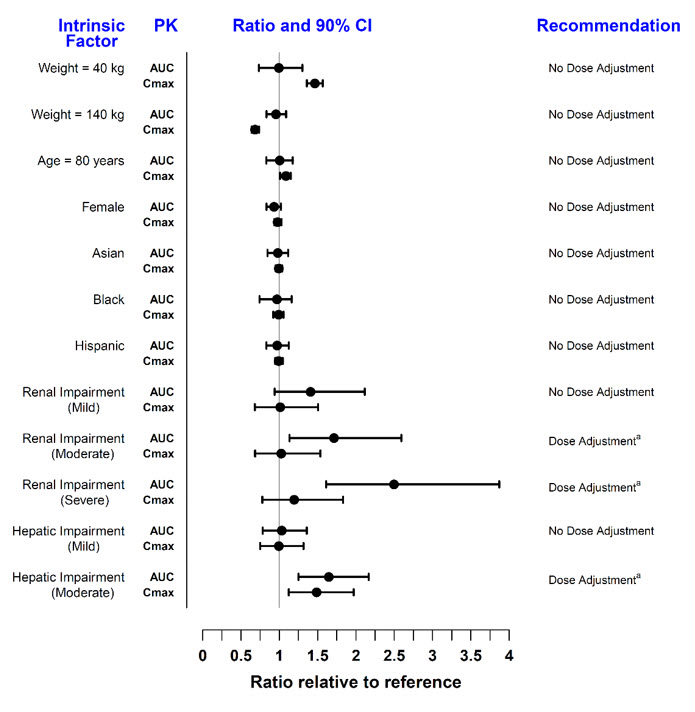 Figure 1 (Xeljanz 02) |
In subjects with ESRD maintained on hemodialysis, mean AUC was approximately 40% higher compared with historical healthy subject data, consistent with approximately 30% contribution of renal clearance to the total clearance of tofacitinib. Dose adjustment is recommended in RA, PsA, UC, and pcJIA patients with ESRD maintained on hemodialysis [see Dosage and Administration (2.2, 2.3, 2.4)].
Drug Interaction Studies
Potential for XELJANZ/XELJANZ XR/XELJANZ Oral Solution to Influence the PK of Other Drugs
In vitro studies indicate that tofacitinib does not significantly inhibit or induce the activity of the major human drug-metabolizing CYPs (CYP1A2, CYP2B6, CYP2C8, CYP2C9, CYP2C19, CYP2D6, and CYP3A4) at concentrations corresponding to the steady state Cmax of a 10 mg twice daily dose. These in vitro results were confirmed by a human drug interaction study showing no changes in the pharmacokinetics of midazolam, a highly sensitive CYP3A4 substrate, when coadministered with XELJANZ.
In vitro studies indicate that tofacitinib does not significantly inhibit the activity of the major human drug-metabolizing uridine 5'-diphospho-glucuronosyltransferases (UGTs) [UGT1A1, UGT1A4, UGT1A6, UGT1A9, and UGT2B7] at concentrations exceeding 250 times the steady state Cmax of a 10 mg twice daily dose.
In rheumatoid arthritis patients, the oral clearance of tofacitinib does not vary with time, indicating that tofacitinib does not normalize CYP enzyme activity in rheumatoid arthritis patients. Therefore, coadministration with XELJANZ/XELJANZ XR is not expected to result in clinically relevant increases in the metabolism of CYP substrates in rheumatoid arthritis patients.
In vitro data indicate that the potential for tofacitinib to inhibit transporters such as P-glycoprotein, organic anionic or cationic transporters at therapeutic concentrations is low.
Dosing recommendations for coadministered drugs following administration with XELJANZ/XELJANZ XR/XELJANZ Oral Solution are shown in Figure 2.
| Note: Reference group is administration of concomitant medication alone; OCT = Organic Cationic Transporter; MATE = Multidrug and Toxic Compound Extrusion. |
| Figure 2: Impact of Tofacitinib on the Pharmacokinetics of Other Drugs |
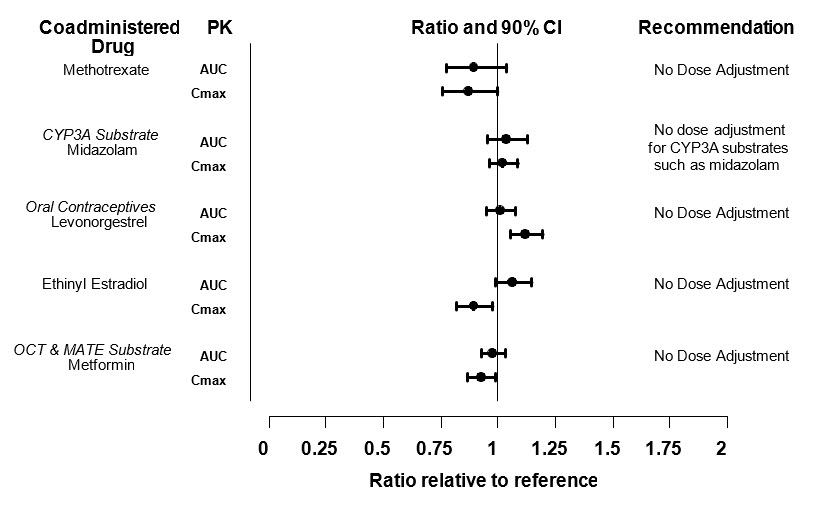 Figure 2 (Xeljanz 03) |
Potential for Other Drugs to Influence the Pharmacokinetics of Tofacitinib
Since tofacitinib is metabolized by CYP3A4, interaction with drugs that inhibit or induce CYP3A4 is likely. Inhibitors of CYP2C19 alone or P-glycoprotein are unlikely to substantially alter the pharmacokinetics of tofacitinib (see Figure 3).
| Note: Reference group is administration of tofacitinib alone. |
| a [see Dosage and Administration (2.2, 2.3, 2.4), Drug Interactions (7)]. |
| Figure 3: Impact of Other Drugs on the Pharmacokinetics of Tofacitinib |
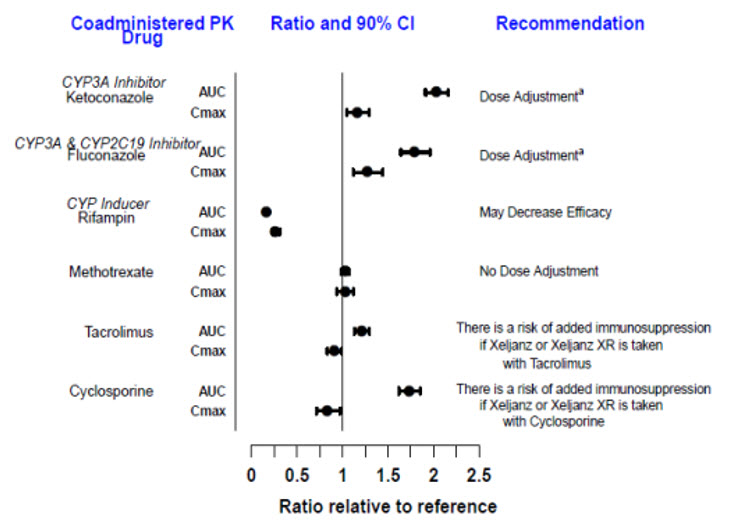 Figure 3 (Xeljanz 04) |
Dose-Ranging Trials
Dose selection for XELJANZ was based on two pivotal dose-ranging trials.
Dose-Ranging Study 1 was a 6-month monotherapy trial in 384 patients with active rheumatoid arthritis who had an inadequate response to a DMARD. Patients who previously received adalimumab therapy were excluded. Patients were randomized to 1 of 7 monotherapy treatments: XELJANZ 1, 3, 5, 10 or 15 mg twice daily, adalimumab 40 mg subcutaneously every other week for 10 weeks followed by XELJANZ 5 mg twice daily for 3 months, or placebo.
Dose-Ranging Study 2 was a 6-month trial in which 507 patients with active rheumatoid arthritis who had an inadequate response to MTX alone received one of 6 dose regimens of XELJANZ (20 mg once daily; 1, 3, 5, 10 or 15 mg twice daily), or placebo added to background MTX.
The results of XELJANZ-treated patients achieving ACR20 responses in Studies 1 and 2 are shown in Figure 4. Although a dose-response relationship was observed in Study 1, the proportion of patients with an ACR20 response did not clearly differ between the 10 mg and 15 mg doses. In Study 2, a smaller proportion of patients achieved an ACR20 response in the placebo and XELJANZ 1 mg groups compared to patients treated with the other XELJANZ doses. However, there was no difference in the proportion of responders among patients treated with XELJANZ 3, 5, 10, 15 mg twice daily or 20 mg once daily doses.
Figure 4: Proportion of Patients with ACR20 Response at Month 3 in Dose-Ranging Studies 1 and 2

Figure 4 (Xeljanz 05)
Study 1 was a dose-ranging monotherapy trial not designed to provide comparative effectiveness data and should not be interpreted as evidence of superiority to adalimumab.
Confirmatory Trials
Study RA-I (NCT00814307) was a 6-month monotherapy trial in which 610 patients with moderate to severe active rheumatoid arthritis who had an inadequate response to a DMARD (nonbiologic or biologic) received XELJANZ 5 or 10 mg twice daily or placebo. At the Month 3 visit, all patients randomized to placebo treatment were advanced in a blinded fashion to a second predetermined treatment of XELJANZ 5 or 10 mg twice daily. The primary endpoints at Month 3 were the proportion of patients who achieved an ACR20 response, changes in Health Assessment Questionnaire – Disability Index (HAQ-DI), and rates of Disease Activity Score DAS28-4(ESR) less than 2.6.
Study RA-II (NCT00856544) was a 12-month trial in which 792 patients with moderate to severe active rheumatoid arthritis who had an inadequate response to a nonbiologic DMARD received XELJANZ 5 or 10 mg twice daily or placebo added to background DMARD treatment (excluding potent immunosuppressive treatments such as azathioprine or cyclosporine). At the Month 3 visit, nonresponding patients were advanced in a blinded fashion to a second predetermined treatment of XELJANZ 5 or 10 mg twice daily. At the end of Month 6, all placebo patients were advanced to their second predetermined treatment in a blinded fashion. The primary endpoints were the proportion of patients who achieved an ACR20 response at Month 6, changes in HAQ-DI at Month 3, and rates of DAS28-4(ESR) less than 2.6 at Month 6.
Study RA-III (NCT00853385) was a 12-month trial in 717 patients with moderate to severe active rheumatoid arthritis who had an inadequate response to MTX. Patients received XELJANZ 5 or 10 mg twice daily, adalimumab 40 mg subcutaneously every other week, or placebo added to background MTX. Placebo patients were advanced as in Study II. The primary endpoints were the proportion of patients who achieved an ACR20 response at Month 6, HAQ-DI at Month 3, and DAS28-4(ESR) less than 2.6 at Month 6.
Study RA-IV (NCT00847613) was a 2-year trial with a planned analysis at 1 year in which 797 patients with moderate to severe active rheumatoid arthritis who had an inadequate response to MTX received XELJANZ 5 or 10 mg twice daily or placebo added to background MTX. Placebo patients were advanced as in Study II. The primary endpoints were the proportion of patients who achieved an ACR20 response at Month 6, mean change from baseline in van der Heijde-modified total Sharp Score (mTSS) at Month 6, HAQ-DI at Month 3, and DAS28-4(ESR) less than 2.6 at Month 6.
Study RA-V (NCT00960440) was a 6-month trial in which 399 patients with moderate to severe active rheumatoid arthritis who had an inadequate response to at least one approved TNF blocking biologic agent received XELJANZ 5 or 10 mg twice daily or placebo added to background MTX. At the Month 3 visit, all patients randomized to placebo treatment were advanced in a blinded fashion to a second predetermined treatment of XELJANZ 5 or 10 mg twice daily. The primary endpoints at Month 3 were the proportion of patients who achieved an ACR20 response, HAQ-DI, and DAS28-4(ESR) less than 2.6.
Study RA-VI (NCT01039688) was a 2-year monotherapy trial with a planned analysis at 1 year in which 952 MTX-naïve patients with moderate to severe active rheumatoid arthritis received XELJANZ 5 or 10 mg twice daily or MTX dose-titrated over 8 weeks to 20 mg weekly. The primary endpoints were mean change from baseline in van der Heijde-modified Total Sharp Score (mTSS) at Month 6 and the proportion of patients who achieved an ACR70 response at Month 6.
Clinical Response
The percentages of XELJANZ-treated patients achieving ACR20, ACR50, and ACR70 responses in Studies RA-I, IV, and V are shown in Table 9. Similar results were observed with Studies RA-II and III. In trials RA-I through V, patients treated with 5 mg twice daily XELJANZ had higher ACR20, ACR50, and ACR70 response rates versus placebo, with or without background DMARD treatment, at Month 3 and Month 6. Higher ACR20 response rates were observed within 2 weeks compared to placebo. In the 12-month trials, ACR response rates in XELJANZ-treated patients were consistent at 6 and 12 months.
| Percent of Patients | ||||||
|---|---|---|---|---|---|---|
| Monotherapy in Nonbiologic or Biologic DMARD Inadequate Responders Inadequate response to at least one DMARD (biologic or nonbiologic) due to lack of efficacy or toxicity. | MTX Inadequate Responders Inadequate response to MTX defined as the presence of sufficient residual disease activity to meet the entry criteria. | TNF Blocker Inadequate Responders Inadequate response to a least one TNF blocker due to lack of efficacy and/or intolerance. | ||||
| Study I | Study IV | Study V | ||||
| N N is number of randomized and treated patients. | PBO | XELJANZ 5 mg Twice Daily | PBO + MTX | XELJANZ 5 mg Twice Daily + MTX | PBO + MTX | XELJANZ 5 mg Twice Daily + MTX |
| 122 | 243 | 160 | 321 | 132 | 133 | |
| ACR20 | ||||||
| Month 3 | 26% | 59% | 27% | 55% | 24% | 41% |
| Month 6 | NA NA Not applicable, as data for placebo treatment is not available beyond 3 months in Studies I and V due to placebo advancement. | 69% | 25% | 50% | NA | 51% |
| ACR50 | ||||||
| Month 3 | 12% | 31% | 8% | 29% | 8% | 26% |
| Month 6 | NA | 42% | 9% | 32% | NA | 37% |
| ACR70 | ||||||
| Month 3 | 6% | 15% | 3% | 11% | 2% | 14% |
| Month 6 | NA | 22% | 1% | 14% | NA | 16% |
In Study RA-IV, a greater proportion of patients treated with XELJANZ 5 mg twice daily plus MTX achieved a low level of disease activity as measured by a DAS28-4(ESR) less than 2.6 at 6 months compared to those treated with MTX alone (Table 10).
| Study IV | ||
|---|---|---|
| DAS28-4(ESR) Less Than 2.6 | Placebo + MTX | XELJANZ 5 mg Twice Daily + MTX |
| 160 | 321 | |
| Proportion of responders at Month 6 (n) | 1% (2) | 6% (19) |
| Of responders, proportion with 0 active joints (n) | 50% (1) | 42% (8) |
| Of responders, proportion with 1 active joint (n) | 0 | 5% (1) |
| Of responders, proportion with 2 active joints (n) | 0 | 32% (6) |
| Of responders, proportion with 3 or more active joints (n) | 50% (1) | 21% (4) |
The results of the components of the ACR response criteria for Study RA-IV are shown in Table 11. Similar results were observed for XELJANZ in Studies RA-I, II, III, V, and VI.
| Study IV | ||||
|---|---|---|---|---|
| XELJANZ 5 mg Twice Daily + MTX | Placebo + MTX | |||
| N=321 | N=160 | |||
| Component (mean) Data shown is mean (Standard Deviation) at Month 3. | Baseline | Month 3 | Baseline | Month 3 |
| Number of tender joints (0–68) | 24 (14) | 13 (14) | 23 (13) | 18 (14) |
| Number of swollen joints (0–66) | 14 (8) | 6 (8) | 14 (9) | 10 (9) |
| Pain Visual analog scale: 0 = best, 100 = worst. | 58 (23) | 34 (23) | 55 (24) | 47 (24) |
| Patient global assessment | 58 (24) | 35 (23) | 54 (23) | 47 (24) |
| Disability index (HAQ-DI) Health Assessment Questionnaire Disability Index: 0 = best, 3 = worst; 20 questions; categories: dressing and grooming, arising, eating, walking, hygiene, reach, grip, and activities. | 1.41 (0.68) | 0.99 (0.65) | 1.32 (0.67) | 1.19 (0.68) |
| Physician global assessment | 59 (16) | 30 (19) | 56 (18) | 43 (22) |
| CRP (mg/L) | 15.3 (19.0) | 7.1 (19.1) | 13.7 (14.9) | 14.6 (18.7) |
The percent of ACR20 responders by visit for Study RA-IV is shown in Figure 5. Similar responses were observed for XELJANZ in Studies RA-I, II, III, V, and VI.
Figure 5: Percentage of ACR20 Responders by Visit for Study RA-IV
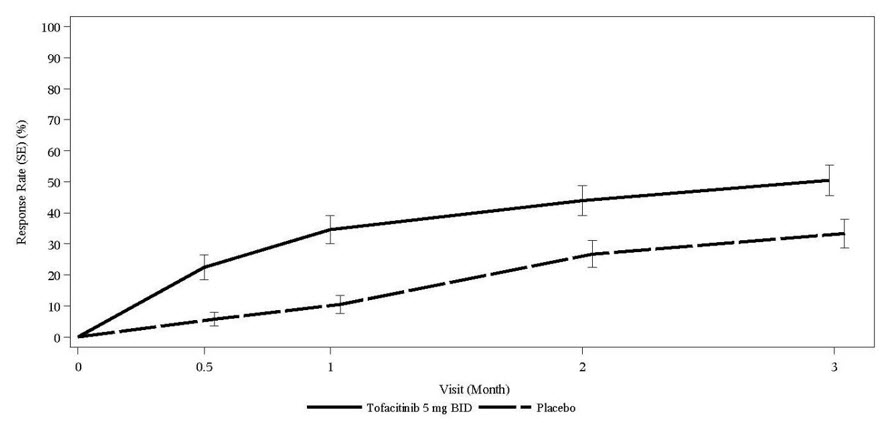
Figure 5 (Xeljanz 06)
Radiographic Response
Two studies were conducted to evaluate the effect of XELJANZ on structural joint damage. In Study RA-IV and Study RA-VI, progression of structural joint damage was assessed radiographically and expressed as change from baseline in mTSS and its components, the erosion score and joint space narrowing score, at Months 6 and 12. The proportion of patients with no radiographic progression (mTSS change less than or equal to 0) was also assessed.
In Study RA-IV, XELJANZ 5 mg twice daily reduced the mean progression of structural damage (not statistically significant) as shown in Table 12. Analyses of erosion and joint space narrowing scores were consistent with the overall results.
In the placebo plus MTX group, 74% of patients experienced no radiographic progression at Month 6 compared to 84% of patients treated with XELJANZ plus MTX 5 mg twice daily.
In Study RA-VI, XELJANZ monotherapy inhibited the progression of structural damage compared to MTX at Months 6 and 12 as shown in Table 12. Analyses of erosion and joint space narrowing scores were consistent with the overall results.
In the MTX group, 55% of patients experienced no radiographic progression at Month 6 compared to 73% of patients treated with XELJANZ 5 mg twice daily.
| Study IV | |||
| Placebo N=139 Mean (SD) SD = Standard Deviation | XELJANZ 5 mg Twice Daily N=277 Mean (SD) | XELJANZ 5 mg Twice Daily Mean Difference from Placebo Difference between least squares means XELJANZ minus placebo or MTX (95% CI = 95% confidence interval) (CI) | |
| mTSS Month 6 and Month 12 data are mean change from baseline. | |||
| Baseline | 33 (42) | 31 (48) | - |
| Month 6 | 0.5 (2.0) | 0.1 (1.7) | -0.3 (-0.7, 0.0) |
| Study VI | |||
| MTX N=166 Mean (SD) | XELJANZ 5 mg Twice Daily N=346 Mean (SD) | XELJANZ 5 mg Twice Daily Mean Difference from MTX | |
| mTSS | |||
| Baseline | 17 (29) | 20 (40) | - |
| Month 6 | 0.8 (2.7) | 0.2 (2.3) | -0.7 (-1.0, -0.3) |
| Month 12 | 1.3 (3.7) | 0.4 (3.0) | -0.9 (-1.4, -0.4) |
Physical Function Response
Improvement in physical functioning was measured by the HAQ-DI. Patients receiving XELJANZ 5 mg twice daily demonstrated greater improvement from baseline in physical functioning compared to placebo at Month 3.
The mean (95% CI) difference from placebo in HAQ-DI improvement from baseline at Month 3 in Study RA-III was -0.22 (-0.35, -0.10) in patients receiving 5 mg XELJANZ twice daily. Similar results were obtained in Studies RA-I, II, IV and V. In the 12-month trials, HAQ-DI results in XELJANZ-treated patients were consistent at 6 and 12 months.
Other Health-Related Outcomes
General health status was assessed by the Short Form health survey (SF-36). In Studies RA-I, IV, and V, patients receiving XELJANZ 5 mg twice daily demonstrated greater improvement from baseline compared to placebo in physical component summary (PCS), mental component summary (MCS) scores and in all 8 domains of the SF-36 at Month 3.
Clinical Response
At Month 3, patients treated with XELJANZ 5 mg twice daily had higher (p≤0.05) response rates versus placebo for ACR20, ACR50, and ACR70 in Study PsA-I and for ACR20 and ACR50 in Study PsA-II; ACR70 response rates were also higher for XELJANZ 5 mg twice daily versus placebo in Study PsA-II, although the differences versus placebo were not statistically significant (p>0.05) (Tables 13 and 14).
| Treatment Group | Placebo | XELJANZ 5 mg Twice Daily | |
|---|---|---|---|
| N N is number of randomized and treated patients. | 105 | 107 | |
| Response Rate | Response Rate | Difference (%) 95% CI from Placebo | |
| Subjects with missing data were treated as non-responders. | |||
| Month 3 | |||
| ACR20 | 33% | 50% | 17.1 (4.1, 30.2) |
| ACR50 | 10% | 28% | 18.5 (8.3, 28.7) |
| ACR70 | 5% | 17% | 12.1 (3.9, 20.2) |
| Treatment Group | Placebo | XELJANZ 5 mg Twice Daily | |
|---|---|---|---|
| N N is number of randomized and treated patients. | 131 | 131 | |
| Response Rate | Response Rate | Difference (%) 95% CI from Placebo | |
| Subjects with missing data were treated as non-responders. | |||
| Month 3 | |||
| ACR20 | 24% | 50% | 26.0 (14.7, 37.2) |
| ACR50 | 15% | 30% | 15.3 (5.4, 25.2) |
| ACR70 | 10% | 17% | 6.9 (-1.3, 15.1) |
Improvements from baseline in the ACR response criteria components for both studies are shown in Table 15.
| Nonbiologic DMARD Inadequate Responders (TNF Blocker-Naïve) | TNF Blocker Inadequate Responders | |||
|---|---|---|---|---|
| Study PsA-I Subjects received one concomitant nonbiologic DMARD. | Study PsA-II | |||
| Treatment Group | Placebo | XELJANZ 5 mg Twice Daily | Placebo | XELJANZ 5 mg Twice Daily |
| N at Baseline | 105 | 107 | 131 | 131 |
| ACR Component Data shown are mean value at baseline and at Month 3. | ||||
| Number of tender/painful joints (0–68) | ||||
| Baseline | 20.6 | 20.5 | 19.8 | 20.5 |
| Month 3 | 14.6 | 12.2 | 15.1 | 11.5 |
| Number of swollen joints (0–66) | ||||
| Baseline | 11.5 | 12.9 | 10.5 | 12.1 |
| Month 3 | 7.1 | 6.3 | 7.7 | 4.8 |
| Patient assessment of arthritis pain Visual analog scale (VAS): 0 = best, 100 = worst. | ||||
| Baseline | 53.2 | 55.7 | 54.9 | 56.4 |
| Month 3 | 44.7 | 34.7 | 48.0 | 36.1 |
| Patient global assessment of arthritis | ||||
| Baseline | 53.9 | 54.7 | 55.8 | 57.4 |
| Month 3 | 44.4 | 35.5 | 49.2 | 36.9 |
| HAQ-DI HAQ-DI = Health Assessment Questionnaire – Disability Index: 0 = best, 3 = worst; 20 questions; categories: dressing and grooming, arising, eating, walking, hygiene, reach, grip, and activities. | ||||
| Baseline | 1.11 | 1.16 | 1.25 | 1.26 |
| Month 3 | 0.95 | 0.81 | 1.09 | 0.88 |
| Physician's Global Assessment of Arthritis | ||||
| Baseline | 53.8 | 54.6 | 53.7 | 53.5 |
| Month 3 | 35.4 | 29.5 | 36.4 | 27.0 |
| CRP (mg/L) | ||||
| Baseline | 10.4 | 10.5 | 12.1 | 13.8 |
| Month 3 | 8.6 | 4.0 | 11.4 | 7.7 |
The percentage of ACR20 responders by visit for Study PsA-I is shown in Figure 6. Similar responses were observed in Study PsA-II. In both studies, improvement in ACR20 response on XELJANZ was observed at the first visit after baseline (Week 2).
| BID=twice daily; SE=standard error. Subjects with missing data were treated as non-responders. |
| Figure 6: Percentage of ACR20 Responders by Visit Through Month 3 in Study PsA-I Subjects received one concomitant nonbiologic DMARD. |
 Figure 6 (Xeljanz 07) |
In patients with active psoriatic arthritis evidence of benefit in enthesitis and dactylitis was observed with XELJANZ treatment.
Physical Function
Improvement in physical functioning was measured by the HAQ-DI. Patients receiving XELJANZ 5 mg twice daily demonstrated significantly greater improvement (p ≤0.05) from baseline in physical functioning compared to placebo at Month 3 (Table 16).
| Least Squares Mean Change from Baseline In HAQ-DI at Month 3 | ||||
|---|---|---|---|---|
| Nonbiologic DMARD Inadequate Responders Inadequate response to at least one nonbiologic DMARD due to lack of efficacy and/or intolerability. (TNF Blocker-Naïve) | TNF Blocker Inadequate Responders Inadequate response to at least one TNF blocker due to lack of efficacy and/or intolerability. | |||
| Study PsA-I Subjects received one concomitant nonbiologic DMARD. | Study PsA-II | |||
| Treatment Group | Placebo | XELJANZ 5 mg Twice Daily | Placebo | XELJANZ 5 mg Twice Daily |
| N N is the total number of subjects in the statistical analysis. | 104 | 107 | 131 | 129 |
| LSM Change from Baseline | -0.18 | -0.35 | -0.14 | -0.39 |
| Difference from Placebo (95% CI) | - | -0.17 (-0.29, -0.05) | - | -0.25 (-0.38, -0.13) |
In Study PsA-I, the HAQ-DI responder rate (response defined as having improvement from baseline of ≥0.35) at Month 3 was 53% in patients receiving XELJANZ 5 mg twice daily and 31% in patients receiving placebo. Similar responses were observed in Study PsA-II.
Other Health-Related Outcomes
General health status was assessed by the Short Form health survey (SF-36). In Studies PsA-I and PsA-II, patients receiving XELJANZ 5 mg twice daily had greater improvement from baseline compared to placebo in Physical Component Summary (PCS) score, but not in Mental Component Summary (MCS) score at Month 3. Patients receiving XELJANZ 5 mg twice daily reported consistently greater improvement relative to placebo in the domains of Physical Functioning, Bodily Pain, Vitality, and Social Functioning, but not in Role Physical, General Health, Role Emotional, or Mental Health.
Radiographic Response
Treatment effect on inhibition of radiographic progression in psoriatic arthritis could not be established from the results of Study PsA-I.
Induction Trials (Study UC-I [NCT01465763] and Study UC-II [NCT01458951])
In two identical induction trials (UC-I and UC-II), 1139 patients were randomized (598 and 541 patients, respectively) to XELJANZ 10 mg twice daily or placebo with a 4:1 treatment allocation ratio. These trials included adult patients with moderately to severely active UC (total Mayo score of 6 to 12, with an endoscopy subscore of at least 2, and rectal bleeding subscore of at least 1) and who had failed or were intolerant to at least 1 of the following treatments: oral or intravenous corticosteroids, azathioprine, 6-MP or TNF blocker. XELJANZ is indicated for patients who have an inadequate response or who are intolerant to TNF blockers [see Indications and Usage (1)].
The disease activity was assessed by Mayo scoring index (0 to 12) which consists of four subscores (0 to 3 for each subscore): stool frequency, rectal bleeding, findings on endoscopy, and physician global assessment. An endoscopy subscore of 2 was defined by marked erythema, absent vascular pattern, any friability, and erosions; an endoscopy subscore of 3 was defined by spontaneous bleeding and ulceration.
Patients were permitted to use stable doses of oral aminosalicylates and corticosteroids (prednisone daily dose up to 25 mg equivalent). Concomitant immunosuppressants (oral immunomodulators or biologic therapies) were not permitted for UC patients during these studies.
A total of 52%, 73% and 72% of patients had previously failed or were intolerant to TNF blockers (51% in Study UC-1 and 52% in Study UC-II), corticosteroids (75% in Study UC-I and 71% in Study UC-II), and/or immunosuppressants (74% in Study UC-I and 70% in Study UC-II), respectively.
Oral corticosteroids were received as concomitant treatment for UC by 47% of patients (45% in Study UC-I and 48% in Study UC-II) and 71% were receiving concomitant aminosalicylates as treatment for UC (71% in Study UC-I, and 72% in Study UC-II). The baseline clinical characteristics were generally similar between the XELJANZ treated patients and patients receiving placebo.
The primary endpoint of Study UC-I and Study UC-II was the proportion of patients in remission at Week 8, and the key secondary endpoint was the proportion of patients with improvement of endoscopic appearance of the mucosa at Week 8.
The efficacy results of Study UC-I and Study UC-II based on the centrally read endoscopy results are shown in Table 17.
| CI = Confidence interval; N = number of patients in the analysis set; TNF = tumor necrosis factor | |||
| Study UC-I | |||
| Endpoint | Placebo | XELJANZ 10 mg Twice Daily | Treatment Difference versus Placebo (95% CI) |
| Remission at Week 8 Remission was defined as clinical remission (a Mayo score ≤2 with no individual subscore >1) and rectal bleeding subscore of 0. | |||
| Total Population | N=122 | N=476 | 10% p-value <0.01, (4.3, 16.3) |
| 8% | 18% | ||
| With Prior TNF Blocker Failure Prior TNF blocker failure was defined in this program as inadequate response, loss of response, or intolerance to TNF blocker therapy. | N=64 | N=243 | |
| 2% | 11% | ||
| Without Prior TNF Blocker Failure Patients in this group had failed one or more conventional therapies (corticosteroid, azathioprine, 6-mercaptopurine) but did not have history of prior failure of TNF blocker therapy. | N=58 | N=233 | |
| 16% | 26% | ||
| Improvement of endoscopic appearance of the mucosa at Week 8 Improvement of endoscopic appearance of the mucosa was defined as Mayo endoscopy subscore of 0 (normal or inactive disease) or 1 (erythema, decreased vascular pattern). | |||
| Total Population | N=122 | N=476 | 16% p-value <0.001. (8.1, 23.4) |
| 16% | 31% | ||
| With Prior TNF Blocker Failure | N=64 | N=243 | |
| 6% | 23% | ||
| Without Prior TNF Blocker Failure | N=58 | N=233 | |
| 26% | 40% | ||
| Study UC-II | |||
| Endpoint | Placebo | XELJANZ 10 mg Twice Daily | Treatment Difference (95% CI) |
| Remission at Week 8 | |||
| Total Population | N=112 | N=429 | 13% (8.1, 17.9) |
| 4% | 17% | ||
| With Prior TNF Blocker Failure | N=60 | N=222 | |
| 0% | 12% | ||
| Without Prior TNF Blocker Failure | N=52 | N=207 | |
| 8% | 22% | ||
| Improvement of endoscopic appearance of the mucosa at Week 8 | |||
| Total Population | N=112 | N-429 | 17% (9.5, 24.1) |
| 12% | 28% | ||
| With Prior TNF Blocker Failure | N=60 | N=222 | |
| 7% | 22% | ||
| Without Prior TNF Blocker Failure | N=52 | N=207 | |
| 17% | 36% | ||
Clinical Response at Week 8
Clinical response was defined as a decrease from baseline in Mayo score of ≥3 points and ≥30%, with an accompanying decrease in the subscore for rectal bleeding of ≥1 point or absolute subscore for rectal bleeding of 0 or 1.
Clinical response was observed in 60% of patients treated with XELJANZ 10 mg twice daily compared to 33% of placebo patients in Study UC-I and 55% compared to 29% in Study UC-II.
Normalization of the Endoscopic Appearance of the Mucosa at Week 8
Normalization of endoscopic appearance of the mucosa was defined as a Mayo endoscopic subscore of 0 and was observed in 7% of patients treated with XELJANZ 10 mg twice daily compared to 2% of placebo patients in both Studies UC-I and UC-II.
Rectal Bleeding and Stool Frequency
Decreases in rectal bleeding and stool frequency subscores were observed as early as Week 2 in patients treated with XELJANZ.
Maintenance Trial (Study UC-III [NCT01458574])
A total of 593 patients who completed the induction trials (UC-I or UC-II) and achieved clinical response were re-randomized with 1:1:1 treatment allocation ratio to XELJANZ 5 mg twice daily, XELJANZ 10 mg twice daily, or placebo for 52 weeks in Study UC-III. XELJANZ 5 mg twice daily is the recommended dosage for maintenance therapy; limit use of XELJANZ 10 mg twice daily beyond induction to those with loss of response and should be used for the shortest duration [see Dosage and Administration (2.3)]. As in the induction trials, patients were permitted to use stable doses of oral aminosalicylates; however, corticosteroid tapering was required upon entrance into this study for patients who were receiving corticosteroids at baseline. Concomitant immunosuppressants (oral immunomodulators or biologic therapies) were not permitted.
At baseline of Study UC-III:
The primary endpoint was the proportion of patients in remission at Week 52. There were 2 key secondary endpoints: the proportion of patients with improvement of endoscopic appearance at Week 52, and the proportion of patients with sustained corticosteroid-free remission at both Week 24 and Week 52 among patients in remission at baseline of Study UC-III.
The efficacy results of Study UC-III based on the centrally read endoscopy results are summarized in Table 18.
| Treatment Difference versus Placebo (95% CI) | |||||
|---|---|---|---|---|---|
| Endpoint | Placebo | XELJANZ 5 mg Twice Daily | XELJANZ 10 mg Twice Daily | XELJANZ 5 mg Twice Daily | XELJANZ 10 mg Twice Daily |
| CI = Confidence interval; N = number of patients in the analysis set; TNF = tumor necrosis factor. | |||||
| Remission at Week 52 Remission was defined as clinical remission (a Mayo score ≤2 with no individual subscore >1) and rectal bleeding subscore of 0. | |||||
| Total Population | N=198 | N=198 | N=197 | 23% p-value <0.0001. (15.3, 31.2) | 30% (21.4, 37.6) |
| 11% | 34% | 41% | |||
| With Prior TNF Blocker Failure Prior TNF blocker failure was defined in this program as inadequate response, loss of response, or intolerance to TNF blocker therapy. | N=89 | N=83 | N=93 | ||
| 11% | 24% | 37% | |||
| Without Prior TNF Blocker Failure Patients in this group had failed one or more conventional therapies (corticosteroid, azathioprine, 6-mercaptopurine) but did not have history of prior failure of TNF blocker therapy. | N=109 | N=115 | N=104 | ||
| 11% | 42% | 44% | |||
| Improvement of endoscopic appearance of the mucosa at Week 52 Improvement of endoscopic appearance of the mucosa was defined as Mayo endoscopy subscore of 0 (normal or inactive disease) or 1 (erythema, decreased vascular pattern). | |||||
| Total Population | N=198 | N=198 | N=197 | 24% (16.0, 32.5) | 33% (24.2, 41.0) |
| 13% | 37% | 46% | |||
| With Prior TNF Blocker Failure | N=89 | N=83 | N=93 | ||
| 12% | 30% | 40% | |||
| Without Prior TNF Blocker Failure | N=109 | N=115 | N=104 | ||
| 14% | 43% | 51% | |||
| Sustained corticosteroid-free remission at both Week 24 and Week 52 among patients in remission at baseline Sustained corticosteroid-free remission was defined as being in remission and not taking corticosteroids for at least 4 weeks prior to the visit at both Week 24 and Week 52. | |||||
| Total Population | N=59 | N=65 | N=55 | 30% (17.4, 43.2) | 42% (27.9, 56.5) |
| 5% | 35% | 47% | |||
| With Prior TNF Blocker Failure | N=21 | N=18 | N=18 | ||
| 5% | 22% | 39% | |||
| Without Prior TNF Blocker Failure | N=38 | N=47 | N=37 | ||
| 5% | 40% | 51% | |||
Maintenance of Clinical Response
Maintenance of clinical response was defined as the proportion of patients who met the definition of clinical response (defined as a decrease from the induction study (UC-I, UC-II) baseline Mayo score of ≥3 points and ≥30%, with an accompanying decrease in the rectal bleeding subscore of ≥1 point or rectal bleeding subscore of 0 or 1) at both Baseline and Week 52 of Study UC-III.
Maintenance of clinical response was observed in 52% in the XELJANZ 5 mg twice daily group and 62% in the XELJANZ 10 mg twice daily group compared to 20% of placebo patients.
Maintenance of Remission (Among Patients in Remission at Baseline)
In the 179 patients who were in remission at baseline of Study UC-III (N = 59 for placebo, N = 65 for XELJANZ 5 mg twice daily, N = 55 for XELJANZ 10 mg twice daily), 46% in the XELJANZ 5 mg twice daily group and 56% in the XELJANZ 10 mg twice daily group maintained remission at Week 52 compared to 10% of placebo patients.
Normalization of the Endoscopic Appearance of the Mucosa
Normalization of endoscopic appearance of the mucosa was defined as a Mayo endoscopic subscore of 0 and was observed at Week 52 in 15% of patients in the XELJANZ 5 mg twice daily group and 17% of patients in the XELJANZ 10 mg twice daily group compared to 4% of placebo patients.
Open-label Extension Study (Study UC-IV [NCT01470612])
In Study UC-IV, 914 patients were treated of which 156 received 5 mg twice daily and 758 received 10 mg twice daily.
Of the 905 patients who were assigned to XELJANZ 10 mg twice daily in the 8-week induction studies (Study UC-I or Study UC-II), 322 patients completed the induction studies but did not achieve clinical response. Of these 322 patients, 291 continued to receive XELJANZ 10 mg twice daily (unblinded) and had available data after an additional 8 weeks in Study UC-IV. After 8 additional weeks (a total of 16 weeks treatment), 148 patients achieved clinical response, and 25 patients achieved remission (based on central endoscopy read). Among those 143 patients who achieved clinical response by 16 weeks and had available data at Week 52, 66 patients achieved remission (based on local endoscopy read) after continued treatment with XELJANZ 10 mg twice daily for 52 weeks.
Serious Infections
Inform patients that XELJANZ/XELJANZ XR/XELJANZ Oral Solution may lower the ability of their immune system to fight infections. Advise patients not to start taking XELJANZ/XELJANZ XR/XELJANZ Oral Solution if they have an active infection. Instruct patients to contact their healthcare provider immediately during treatment if symptoms suggesting infection appear in order to ensure rapid evaluation and appropriate treatment [see Warnings and Precautions (5.1)].
Advise patients that the risk of herpes zoster, some cases of which can be serious, is increased in patients treated with XELJANZ/XELJANZ XR [see Warnings and Precautions (5.1)].
Malignancies and Lymphoproliferative Disorders
Inform patients that XELJANZ/XELJANZ XR/XELJANZ Oral Solution may increase their risk of certain cancers, and that lymphoma and other cancers have been observed in patients taking XELJANZ. Instruct patients to inform their healthcare provider if they have ever had any type of cancer [see Warnings and Precautions (5.3)].
Thrombosis
Advise patients to stop taking XELJANZ/XELJANZ XR/XELJANZ Oral Solution and to call their healthcare provider right away if they experience any symptoms of thrombosis (sudden shortness of breath, chest pain worsened with breathing, swelling of leg or arm, leg pain or tenderness, red or discolored skin in the affected leg or arm) [see Warnings and Precautions (5.4)].
Hypersensitivity
Advise patients to stop taking XELJANZ/XELJANZ XR/XELJANZ Oral Solution and to call their healthcare provider right away if they experience any symptoms of allergic reactions while taking XELJANZ/XELJANZ XR/XELJANZ Oral Solution [see Warnings and Precautions (5.6)].
Important Information on Laboratory Abnormalities
Inform patients that XELJANZ/XELJANZ XR/XELJANZ Oral Solution may affect certain lab test results, and that blood tests are required before and during XELJANZ/XELJANZ XR/XELJANZ Oral Solution treatment [see Warnings and Precautions (5.7)].
Pregnancy
Advise pregnant women and females of reproductive potential of the potential risk to a fetus. Advise females to inform their prescriber of a known or suspected pregnancy. Inform patients that Pfizer has a registry for pregnant women who have taken XELJANZ/XELJANZ XR/XELJANZ Oral Solution during pregnancy. Advise patients to contact the registry at 1-877-311-8972 to enroll [see Use in Specific Populations (8.1)].
Lactation
Advise women not to breastfeed during treatment with XELJANZ/XELJANZ XR/XELJANZ Oral Solution and for at least 18 hours after the last dose of XELJANZ/XELJANZ Oral Solution or 36 hours after the last dose of XELJANZ XR [see Use in Specific Populations (8.2)].
Infertility
Advise females of reproductive potential that XELJANZ/XELJANZ XR/XELJANZ Oral Solution may impair fertility [see Use in Specific Populations (8.3), Nonclinical Toxicology (13.1)]. It is not known if this effect is reversible.
Residual Tablet Shell
Patients receiving XELJANZ XR may notice an inert tablet shell passing in the stool or via colostomy. Patients should be informed that the active medication has already been absorbed by the time the patient sees the inert tablet shell.
This product's label may have been updated. For current full prescribing information, please visit www.pfizer.com.
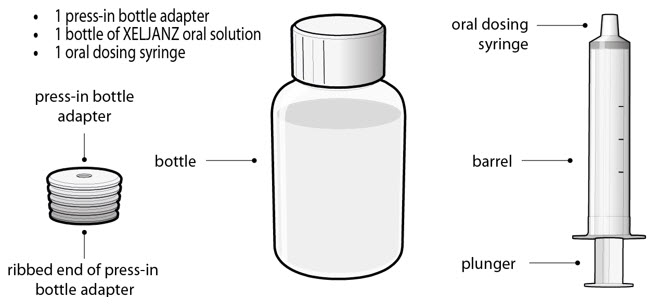
Logo (Xeljanz 10)
LAB-0445-21.0