Serious adverse reactions occurred in 22% of patients with newly-diagnosed CP CML who received bosutinib. Serious adverse reactions reported in >2% of patients included hepatic dysfunction (4.1%), pneumonia (3.4%), coronary artery disease (3.4%), and gastroenteritis (2.2%). Fatal adverse reactions occurred in 3 patients (1.1%) due to coronary artery disease (0.4%), cardiac failure acute (0.4%), and renal failure (0.4%).
Permanent discontinuation of bosutinib due to an adverse reaction occurred in 20% of patients with newly-diagnosed CP CML who received bosutinib. Adverse reactions which resulted in permanent discontinuation in > 2% of patients included hepatic dysfunction (9%).
Dose modifications (dose interruption or reductions) of bosutinib due to an adverse reaction occurred in 68% of patients with newly-diagnosed CP CML. Adverse reactions which required dose interruptions or reductions in >5% of patients included hepatic dysfunction (27%), thrombocytopenia (16%), diarrhea (16%), lipase increased (10%), neutropenia (7%), abdominal pain (6%), rash (5%).
The most common adverse reactions, in >20% of bosutinib-treated patients with newly-diagnosed CML (N=268) were diarrhea (75%), hepatic dysfunction (45%), rash (40%), abdominal pain (39%), nausea (37%), fatigue (33%), respiratory tract infection (27%), headache (22%), and vomiting (21%).
The most common laboratory abnormalities that worsened from baseline in ≥20% of patients were creatinine increased (94%), hemoglobin decreased (89%), lymphocyte count decreased (84%), ALT increased (68%), platelet count decreased (68%), glucose increased (57%), AST increased (56%), calcium decreased (55%), phosphorus decreased (54%), lipase increased (53%), white blood cell count decreased (50%), absolute neutrophil count decreased (42%), alkaline phosphatase increased (41%), creatine kinase increased (36%), and amylase increased (32%).
Table 7 identifies adverse reactions greater than or equal to 10% for All Grades and Grades 3 or 4 (3/4) for the Phase 3 CP CML safety population.
In the randomized study in patients with newly-diagnosed CP CML, one patient in the group treated with BOSULIF experienced a Grade 3 QTcF prolongation (>500 msec). Patients with uncontrolled or significant cardiovascular disease including QT interval prolongation were excluded by protocol.
Table 8 identifies the clinically relevant or severe Grade 3/4 laboratory test abnormalities for the Phase 3 newly-diagnosed CML safety population.
The single-arm clinical trial enrolled patients with Ph+ CP, AP, or BP CML and with resistance or intolerance to prior therapy [see Clinical Studies (14.2)]. The safety population (received at least 1 dose of BOSULIF) included 546 CML patients:
- two hundred eighty-four (284) patients with CP CML previously treated with imatinib only who had a median duration of BOSULIF treatment of 26 months (range: 0.2 to 155 months), and a median dose intensity of 437 mg/day.
- one hundred nineteen (119) patients with CP CML previously treated with both imatinib and at least 1 additional tyrosine kinase inhibitor (TKI) who had a median duration of BOSULIF treatment of 9 months (range: 0.2 to 148 months) and a median dose intensity of 427 mg/day.
- one hundred forty-three (143) patients with advanced phase (AdvP) CML including 79 patients with AP CML and 64 patients with BP CML. In the patients with AP CML and BP CML, the median duration of BOSULIF treatment was 10 months (range: 0.1 to 140 months) and 3 months (range: 0.03 to 71 months), respectively. The median dose intensity was 406 mg/day, and 456 mg/day, in the AP CML and BP CML cohorts, respectively.
Serious adverse reactions occurred in 30% of patients in the safety population of the single-arm trial in patients with CML (N=546) who were resistant or intolerant to prior therapy. Serious adverse reactions reported in >2% of patients included pneumonia (7%), pleural effusion (6%), pyrexia (3.7%), coronary artery disease (3.5%), dyspnea (2.6%), rash (2.2%), thrombocytopenia (2%), abdominal pain (2%), and diarrhea (2%).
Fatal adverse reactions occurred in 12 patients (2.2%) due to coronary artery disease (0.9%), pneumonia (0.4%), respiratory failure (0.4%), gastrointestinal hemorrhage (0.2%), acute kidney injury (0.2%), and acute pulmonary edema (0.2%).
Permanent discontinuation of bosutinib due to an adverse reaction occurred in 22% of patients with CML who were resistant or intolerant to prior therapy. Adverse reactions which resulted in permanent discontinuation in >2% of patients included thrombocytopenia (6%), hepatic dysfunction (3.3%), and neutropenia (2%).
Dose modifications (dose interruption or reductions) of bosutinib due to an adverse reaction occurred in 66% of patients with CML who were resistant or intolerant to prior therapy. Adverse reactions which required dose interruptions or reductions in >5% of patients included thrombocytopenia (24%), diarrhea (14%), rash (13%), hepatic dysfunction (10%), neutropenia (9%), pleural effusion (8%), vomiting (7%), anemia (6%), and abdominal pain (6%).
The most common adverse reactions, in ≥20% of patients in the safety population of the single-arm trial in patients with CML (N=546) who were resistant or intolerant to prior therapy were diarrhea (83%), nausea (47%), rash (46%), abdominal pain (45%), vomiting (39%), fatigue (33%), pyrexia (28%), hepatic dysfunction (27%), respiratory tract infection (24%), cough (23%), and headache (21%).
The most common laboratory abnormalities that worsened from baseline in ≥20% were creatinine increased (93%), hemoglobin decreased (91%), lymphocyte decreased (80%), platelets decreased (69%), absolute neutrophil count (54%), ALT increased (53%), calcium decreased (53%), white blood cell count decreased (52%), urate increased (48%), AST increased (47%), phosphorus decreased (39%), alkaline phosphatase increased (39%), lipase increased (28%), magnesium increased (25%), potassium decreased (24%), potassium increased (23%). See Table 10 for Grade 3/4 laboratory abnormalities.
Table 9 identifies adverse reactions greater than or equal to 10% for All Grades and Grades 3 or 4 for the Phase 1/2 CML safety population based on long-term follow-up.
Table 9: Adverse Reactions (10% or Greater) in Patients With CML Who Were Resistant or Intolerant to Prior Therapy in Single-Arm TrialBased on a Minimum of 105 Months of Follow-up.
Adverse drug reactions are based on all-causality treatment-emergent adverse events.
The commonality stratification is based on 'All Grades' under Total column.
'Grade 3', 'Grade 4' columns indicate maximum toxicity
| | CP CML
(N=403) | AdvP CML
(N=143) |
|---|
| System Organ Class | Preferred Term | All Grades
% | Grade 3/4
% | All Grades
% | Grade 3/4
% |
|---|
| ADR Definition |
Gastrointestinal disorders | Diarrhea | 85 | 10 | 76 | 4 |
| Abdominal pain Abdominal pain includes the following preferred terms: Abdominal discomfort, Abdominal pain, Abdominal pain lower, Abdominal pain upper, Abdominal tenderness, Dyspepsia, Epigastric discomfort, Gastrointestinal pain, Hepatic pain. | 49 | 2 | 36 | 7 |
| Nausea | 47 | 1 | 48 | 2 |
| Vomiting | 38 | 3 | 43 | 3 |
| Constipation | 15 | <1 | 17 | 1 |
Skin and subcutaneous tissue disorders | Rash Rash includes the following preferred terms: Acarodermatitis, Acne, Angular cheilitis, Blister, Dermatitis, Dermatitis acneiform, Dermatitis psoriasiform, Drug eruption, Eczema, Eczema asteatotic, Erythema, Erythema annulare, Exfoliative rash, Lichenoid keratosis, Palmar erythema, Photosensitivity reaction, Pigmentation disorder, Psoriasis, Pyoderma gangrenosum, Pyogenic granuloma, Rash, Rash erythematous, Rash generalised, Rash macular, Rash maculo-papular, Rash pruritic, Rash pustular, Seborrhoeic dermatitis, Seborrhoeic keratosis, Skin depigmentation, Skin discoloration, Skin disorder, Skin exfoliation, Skin hyperpigmentation, Skin hypopigmentation, Skin irritation, Skin lesion, Skin plaque, Skin toxicity, Stasis dermatitis. | 48 | 9 | 42 | 5 |
| Pruritus | 12 | 1 | 7 | 0 |
General disorders and administration-site conditions | Fatigue | 35 | 3 | 27 | 6 |
| Pyrexia | 25 | 1 | 37 | 3 |
| Edema Edema includes the following preferred terms: Eye edema, Eyelid edema, Face edema, Generalized edema, Localized edema, Edema, Edema peripheral, Penile edema, Periorbital edema, Periorbital swelling, Peripheral swelling, Scrotal edema, Scrotal swelling, Swelling, Swelling face, Swelling of eyelid, Testicular edema, Tongue edema. | 19 | <1 | 17 | 1 |
| Chest pain Chest pain includes the following preferred terms: Chest discomfort, Chest pain. | 8 | 1 | 12 | 1 |
Hepatobiliary disorders | Hepatic dysfunction Hepatic dysfunction includes the following preferred terms: Alanine aminotransferase increased, Aspartate aminotransferase increased, Bilirubin conjugated increased, Blood alkaline phosphatase increased, Blood bilirubin increased, Blood bilirubin unconjugated increased, Gamma-glutamyltransferase increased, Hepatic enzyme increased, Hepatic function abnormal, Hepatic steatosis, Hepatitis toxic, Hepatomegaly, Hepatotoxicity, Hyperbilirubinemia, Liver disorder, Liver function test abnormal, Liver function test increased, Transaminases increased. | 29 | 11 | 21 | 10 |
Infections and infestations | Respiratory tract infection Respiratory tract infection includes the following preferred terms: Nasopharyngitis, Respiratory tract congestion, Respiratory tract infection, Respiratory tract infection viral, Upper respiratory tract infection, Viral upper respiratory tract infection. | 27 | <1 | 17 | 0 |
| Influenza Influenza includes the following preferred terms: H1N1 influenza, Influenza. | 11 | 1 | 3 | 0 |
| Pneumonia Pneumonia includes the following preferred terms: Atypical pneumonia, Lower respiratory tract congestion, Lower respiratory tract infection, Pneumonia, Pneumonia aspiration, Pneumonia bacterial, Pneumonia fungal, Pneumonia necrotising, Pneumonia streptococcal. | 10 | 4 | 18 | 12 |
Respiratory, thoracic, and mediastinal disorders | Cough | 24 | 0 | 22 | 0 |
| Pleural effusion | 14 | 4 | 9 | 4 |
| Dyspnea | 12 | 2 | 20 | 6 |
Nervous system disorders | Headache | 21 | 1 | 18 | 4 |
| Dizziness | 11 | 0 | 14 | 1 |
Musculoskeletal and connective tissue disorders | Arthralgia | 19 | 1 | 15 | 0 |
| Back pain | 14 | 1 | 8 | 1 |
Metabolism and nutrition disorders | Decreased appetite | 14 | 1 | 14 | 0 |
Vascular disorders | Hypertension Hypertension* includes the following preferred terms: Blood pressure increased, Blood pressure systolic increased, Essential hypertension, Hypertension, Hypertensive crisis, Retinopathy hypertensive.
* ADR identified post-marketing | 11 | 3 | 8 | 3 |
In the single-arm study in patients with CML who were resistant or intolerant to prior therapy, 2 patients (0.4%) experienced QTcF interval of greater than 500 milliseconds. Patients with uncontrolled or significant cardiovascular disease including QT interval prolongation were excluded by protocol.
Table 10 identifies the clinically relevant or severe Grade 3/4 laboratory test abnormalities for the safety population of the study in patients with CML who were resistant or intolerant to prior therapy based on long-term follow-up.
Table 10: Number (%) of Patients With Clinically Relevant All Grade or Grade 3/4 Laboratory Test Abnormalities in the Safety Population of the Study of Patients With CML Who Were Resistant or Intolerant to Prior TherapyBased on a Minimum of 105 Months of Follow-up.
| CP CML
N=403
% | AdvP CML
N=143
% |
|---|
| All grade | Grade 3/4 | All grade | Grade 3/4 |
|---|
| Abbreviations: AdvP=advanced phase; ALT=alanine aminotransferase; AST=aspartate aminotransferase; CML=chronic myelogenous leukemia; CP=chronic phase; N/n=number of patients; SGPT=serum glutamate-pyruvate transaminase; SGOT=serum glutamate-oxaloacetate aminotransferase; ULN=upper limit of normal. |
Hematology Parameters | |
Platelet Count decreased | 66 | 26 | 80 | 57 |
Absolute Neutrophil Count decreased | 50 | 16 | 66 | 39 |
Hemoglobin decreased | 89 | 13 | 97 | 38 |
Lymphocyte decreased | 79 | 14 | 82 | 21 |
White Blood Cell Count decreased | 51 | 7 | 57 | 27 |
Biochemistry Parameters | |
SGPT/ALT increased | 58 | 11 | 39 | 6 |
SGOT/AST increased | 50 | 5 | 37 | 3.5 |
Lipase increased | 32 | 12 | 19 | 6 |
Phosphorus decreased | 41 | 8 | 33 | 7 |
Total Bilirubin increased | 16 | 0.7 | 22 | 2.8 |
Creatinine increased | 95 | 3 | 87 | 1.4 |
Alkaline Phosphatase increased | 39 | 0 | 39 | 1.4 |
Glucose increased | 42 | 2.7 | 39 | 6 |
Sodium increased | 23 | 0.5 | 11 | 0 |
Sodium decreased | 18 | 2.2 | 27 | 6 |
Calcium decreased | 55 | 4.7 | 45 | 3.5 |
Urate increased | 49 | 6 | 43 | 6 |
Magnesium increased | 27 | 7 | 18 | 4.9 |
Potassium decreased | 22 | 1.7 | 29 | 4.9 |
Potassium increased | 25 | 2.7 | 19 | 2.1 |
Pediatric Patients with Newly-Diagnosed CP Ph+ CML or CP Ph+ CML that is Resistant or Intolerant to Prior Therapy
The safety of BOSULIF was evaluated in BCHILD, a single-arm trial for the treatment of pediatric patients aged 1 year and older with newly-diagnosed CP Ph+ CML or in patients with CP Ph+ CML who are resistant or intolerant to prior therapy [see Clinical Studies (14.3)]. Patients received BOSULIF (n = 49) 300 mg/m2 to 400 mg/m2 orally once daily until disease progression or unacceptable toxicity. The median time on treatment with BOSULIF was 12.2 months (range, 0.2 to 60.9 months). Among patients who received BOSULIF, 77.6% were exposed for 6 months or longer and 51% were exposed for one year or longer.
Permanent discontinuation of BOSULIF due to an adverse reaction occurred in 20% of patients. Adverse reactions which resulted in permanent discontinuation in 2 or more patients included ALT increased (6%), AST increased (4%), diarrhea (4%), fatigue (4%) and rash maculo-papular (4%).
The most common adverse reactions, in ≥20% of BOSULIF-treated pediatric patients were diarrhea, abdominal pain, vomiting, nausea, rash, fatigue, hepatic dysfunction, headache, pyrexia, decreased appetite, and constipation.
Table 11 summarizes the adverse reactions in BCHILD.
Table 11: Adverse Reactions (10% or Greater) in Pediatric Patients with Newly Diagnosed CP Ph+ CML or CP Ph+ CML Resistant or Intolerant to Prior Therapy Who Received BOSULIF in BCHILD | Adverse drug reactions are based on all-causality treatment-emergent adverse reactions. |
| The commonality stratification is based on 'All Grades' under Bosutinib 400 mg column. |
| 'Grade 3/4 columns indicate maximum toxicity. |
System Organ Class | Preferred Term | BOSULIF Total
(N=49) % |
All Grades | Grade 3/4 |
Gastrointestinal disorders | Diarrhea | 82 | 12 |
| Abdominal pain Abdominal pain includes the following preferred terms: Abdominal discomfort, Abdominal pain, Abdominal pain lower, Abdominal pain upper, Abdominal tenderness, Dyspepsia, Epigastric discomfort, Gastrointestinal pain, Hepatic pain. | 73 | 4 |
| Vomiting | 55 | 6 |
| Nausea | 49 | 2 |
| Constipation | 20 | 0 |
Skin and subcutaneous tissue disorders | Rash Rash includes the following preferred terms: Acarodermatitis, Acne, Angular cheilitis, Blister, Dermatitis, Dermatitis acneiform, Dermatitis bullous, Dermatitis exfoliative generalized, Dermatitis psoriasiform, Drug eruption, Drug reaction with eosinophilia and systemic symptoms, Dyshidrotic eczema, Eczema, Eczema asteatotic, Erythema, Erythema annulare, Erythema nodosum, Exfoliative rash, Genital rash, Lichen planus, Lichenoid keratosis, Palmar erythema, Palmar-plantar erythrodysesthesia syndrome, Perivascular dermatitis, Photosensitivity reaction, Pigmentation disorder, Pruritus allergic, Psoriasis, Punctate keratitis, Pyoderma gangrenosum, Pyogenic granuloma, Rash, Rash erythematous, Rash generalized, Rash macular, Rash maculo-papular, Rash papular, Rash pruritic, Rash pustular, Rash vesicular, Seborrheic dermatitis, Seborrhoeic keratosis, Skin depigmentation, Skin discoloration, Skin disorder, Skin exfoliation, Skin hyperpigmentation, Skin hypopigmentation, Skin irritation, Skin lesion, Skin plaque, Skin reaction, Skin toxicity, Stasis dermatitis. | 49 | 8 |
Hepatobiliary disorders | Hepatic dysfunction Hepatic dysfunction includes the following preferred terms: Alanine aminotransferase abnormal, Alanine aminotransferase increased, Aspartate aminotransferase, Aspartate aminotransferase increased, Bilirubin conjugated increased, Blood alkaline phosphatase increased, Blood bilirubin increased, Blood bilirubin unconjugated increased, Gamma-glutamyltransferase increased, Hepatic enzyme increased, Hepatomegaly, Hepatosplenomegaly, Hyperbilirubinaemia, Jaundice, Liver function test abnormal, Liver function test increased, Ocular icterus, Transaminases increased, Hepatic function abnormal, Drug-induced liver injury, Hepatic steatosis, Hepatitis, Hepatitis toxic, Hepatobiliary disease, Hepatocellular injury, Hepatotoxicity, Liver disorder, Liver injury. | 37 | 14 |
General disorders and administration-site conditions | Fatigue Fatigue includes the following preferred terms: Asthenia, Fatigue, Malaise. | 37 | 4 |
| Pyrexia | 31 | 4 |
Nervous system disorders | Headache | 35 | 2 |
Metabolism and nutrition disorders | Decreased appetite | 27 | 2 |
Infections and infestations | Respiratory tract infection Respiratory tract infection includes the following preferred terms: Nasopharyngitis, Respiratory tract congestion, Respiratory tract infection, Respiratory tract infection viral, Upper respiratory tract congestion, Upper respiratory tract infection, Upper respiratory tract inflammation, Viral upper respiratory tract infection. | 12 | 2 |
The most common laboratory abnormalities that worsened from baseline in ≥20% of patients were creatinine increased, alanine aminotransferase increased, white blood cell count decreased, aspartate aminotransferase increased, platelet count decreased, glucose increased, calcium decreased, hemoglobin decreased, neutrophil count decreased, lymphocyte count decreased, serum amylase increased and CPK increased.
Table 12 summarizes laboratory test abnormalities in BCHILD.
Table 12: Laboratory Abnormalities (≥ 20%) That Worsened From Baseline in Pediatric Patients with Newly-Diagnosed CP Ph+ CML or CP Ph+ CML Resistant or Intolerant to Prior Therapy Who Received BOSULIF in BCHILD| Grades are defined using CTCAE V4.03. Based on CTCAE grading without regard to fasting status for 'Hyperglycemia' lab parameter. |
| Includes data up to 28 days after last dose of study treatment. |
| BOSULIF (N= 49) |
All Grade | Grade 3/4 |
% | % |
Creatinine increased | 92 | 0 |
Alanine aminotransferase increased | 59 | 14 |
White blood cell count decreased | 53 | 4 |
Aspartate aminotransferase increased | 51 | 6 |
Platelet count decreased | 49 | 18 |
Glucose increased | 41 | 0 |
Calcium decreased | 31 | 0 |
Hemoglobin decreased | 31 | 8 |
Neutrophil count decreased | 31 | 12 |
Lymphocyte count decreased | 29 | 2 |
Serum amylase increased | 27 | 4 |
CPK increased | 25 | 0 |
Additional Adverse Reactions From Multiple Clinical Trials
The following adverse reactions were reported in patients in clinical trials with BOSULIF (less than 10% of BOSULIF-treated patients). They represent an evaluation of the adverse reaction data from all 1372 patients with leukemia who received at least 1 dose of single-agent BOSULIF. These adverse reactions are presented by system organ class and are ranked by frequency. These adverse reactions are included based on clinical relevance and ranked in order of decreasing seriousness within each category.
Blood and Lymphatic System Disorders: 0.1% and less than 1% - Febrile neutropenia
Cardiac Disorders: 1% and less than 10% - Cardiac ischemia (includes Acute coronary syndrome, Acute myocardial infarction, Angina pectoris, Angina unstable, Arteriosclerosis coronary artery, Coronary artery disease, Coronary artery occlusion, Coronary artery stenosis, Myocardial infarction, Myocardial ischemia, Troponin increased), Pericardial effusion, Cardiac failure (includes Cardiac failure, Cardiac failure acute, Cardiac failure chronic, Cardiac failure congestive, Cardiogenic shock, Cardiorenal syndrome, Ejection fraction decreased, Left ventricular failure); 0.1% and less than 1% - Pericarditis
Ear and Labyrinth Disorders: 1% and less than 10% - Tinnitus
Endocrine Disorders: 1% and less than 10% - Hypothyroidism; 0.1% and less than 1% - Hyperthyroidism
Gastrointestinal Disorders: 1% and less than 10% - Gastritis, Pancreatitis (includes Edematous pancreatitis, Pancreatic enzymes increased, Pancreatitis, Pancreatitis acute, Pancreatitis chronic), Gastrointestinal hemorrhage (includes Anal hemorrhage, Gastric hemorrhage, Gastrointestinal hemorrhage, Intestinal hemorrhage, Lower gastrointestinal hemorrhage, Rectal hemorrhage, Upper gastrointestinal hemorrhage)
General Disorders and Administrative Site Conditions: 1% and less than 10% - Pain
Immune System Disorders: 1% and less than 10% - Drug hypersensitivity; 0.1% and less than 1% - Anaphylactic shock
Infections and Infestations: 1% and less than 10% - Bronchitis
Investigations: 1% and less than 10% - Electrocardiogram QT prolonged (includes Electrocardiogram QT prolonged, Long QT syndrome)
Metabolism and Nutrition Disorders: 1% and less than 10% - Dehydration
Musculoskeletal and Connective Tissue Disorders: 1% and less than 10% - Myalgia
Nervous System Disorders: 1% and less than 10% - Dysgeusia
Renal and Urinary Disorders: 1% and less than 10% - Acute kidney injury, Renal impairment, Renal failure
Respiratory, Thoracic and Mediastinal Disorders: 1% and less than 10% - Pulmonary hypertension (includes Pulmonary hypertension, Pulmonary arterial hypertension, Pulmonary arterial pressure increased); 0.1% and less than 1% - Acute pulmonary edema (includes Acute pulmonary edema, Pulmonary edema), Interstitial lung disease, Respiratory failure
Skin and Subcutaneous Disorders: 0.1% and less than 1% - Erythema multiforme, Cutaneous vasculitis
Strong or Moderate CYP3A Inhibitors
Avoid the concomitant use of strong or moderate CYP3A inhibitors with BOSULIF. Bosutinib is a CYP3A substrate. Concomitant use with a strong or moderate CYP3A inhibitor increases bosutinib Cmax and AUC [see Clinical Pharmacology (12.3)] which may increase the risk of toxicities.
Strong CYP3A Inducers
Avoid the concomitant use of strong CYP3A inducers with BOSULIF. Bosutinib is a CYP3A substrate. Concomitant use with a strong CYP3A inducer decreases bosutinib Cmax and AUC [see Clinical Pharmacology (12.3)] which may reduce BOSULIF efficacy.
Proton Pump Inhibitors (PPI)
As an alternative to PPIs, use short-acting antacids or H2 blockers and separate dosing by more than 2 hours from BOSULIF dosing. Bosutinib displays pH dependent aqueous solubility, Concomitant use with a PPI decreases bosutinib Cmax and AUC [see Clinical Pharmacology (12.3)] which may reduce BOSULIF efficacy.
Risk Summary
Based on findings from animal studies and its mechanism of action, BOSULIF can cause fetal harm when administered to a pregnant woman [see Clinical Pharmacology (12.1)].
There are no available data in pregnant women to inform the drug-associated risk. In animal reproduction studies conducted in rats and rabbits, oral administration of bosutinib during organogenesis caused adverse developmental outcomes, including structural abnormalities, embryo-fetal mortality, and alterations to growth at maternal exposures (AUC) as low as 1.2 times the human exposure at the dose of 500 mg/day (see Data). Advise pregnant women of the potential risk to a fetus.
The background risk of major birth defects and miscarriage for the indicated population is unknown. All pregnancies have a background risk of birth defect, loss, or other adverse outcomes. In the U.S. general population, the estimated background risk of major birth defects and miscarriage in clinically recognized pregnancies are 2–4% and 15–20%, respectively.
Data
Animal Data
In a rat fertility and early embryonic development study, bosutinib was administered orally to female rats for approximately 3 to 6 weeks, depending on day of mating (2 weeks prior to cohabitation with untreated breeder males until gestation day [GD] 7). Increased embryonic resorptions occurred at greater than or equal to 10 mg/kg/day of bosutinib (1.6 and 1.2 times the human exposure at the recommended doses of 400 or 500 mg/day, respectively), and decreased implantations and reduced number of viable embryos at 30 mg/kg/day of bosutinib (3.4 and 2.5 times the human exposure at the recommended doses of 400 or 500 mg/day, respectively).
In an embryo-fetal development study conducted in rabbits, bosutinib was administered orally to pregnant animals during the period of organogenesis at doses of 3, 10, and 30 mg/kg/day. At the maternally-toxic dose of 30 mg/kg/day of bosutinib, there were fetal anomalies (fused sternebrae, and 2 fetuses had various visceral observations), and an approximate 6% decrease in fetal body weight. The dose of 30 mg/kg/day resulted in exposures (AUC) approximately 5.1 and 3.8 times the human exposures at the recommended doses of 400 and 500 mg/day, respectively.
Fetal exposure to bosutinib-derived radioactivity during pregnancy was demonstrated in a placental-transfer study in pregnant rats. In a rat pre- and postnatal development study, bosutinib was administered orally to pregnant animals during the period of organogenesis through lactation day 20 at doses of 10, 30, and 70 mg/kg/day. Reduced number of pups born occurred at greater than or equal to 30 mg/kg/day bosutinib (3.4 and 2.5 times the human exposure at the recommended doses of 400 or 500 mg/day, respectively), and increased incidence of total litter loss and decreased growth of offspring after birth occurred at 70 mg/kg/day bosutinib (6.9 and 5.1 times the human exposure at the recommended doses of 400 or 500 mg/day, respectively).
Risk Summary
No data are available regarding the presence of bosutinib or its metabolites in human milk or its effects on a breastfed child or on milk production. However, bosutinib is present in the milk of lactating rats. Because of the potential for serious adverse reactions in a nursing child, breastfeeding is not recommended during treatment with BOSULIF and for 2 weeks after the last dose.
Animal Data
After a single radiolabeled bosutinib dose to lactating rats, radioactivity was present in the plasma of suckling offspring for 24 to 48 hours.
Based on findings from animal studies, BOSULIF can cause fetal harm when administered to a pregnant woman [see Use in Specific Populations (8.1)].
Pregnancy
Females of reproductive potential should have a pregnancy test prior to starting treatment with BOSULIF.
Contraception
Females
Advise females of reproductive potential to use effective contraception (methods that result in less than 1% pregnancy rates) during treatment with BOSULIF and for 2 weeks after the last dose.
Infertility
The risk of infertility in females or males of reproductive potential has not been studied in humans. Based on findings from animal studies, BOSULIF may cause reduced fertility in females and males of reproductive potential [see Nonclinical Toxicology (13.1)].
Cardiac Electrophysiology
At a single oral dose of 500 mg BOSULIF with ketoconazole (a strong CYP3A inhibitor), BOSULIF does not prolong the QT interval to any clinically relevant extent.
Absorption
The median bosutinib (minimum, maximum) time-‑to-Cmax (tmax) was 6.0 (6.0, 6.0) hours following oral administration of a single oral dose of BOSULIF 500 mg with food. The absolute bioavailability was 34% in healthy subjects.
Effect of Food
Bosutinib Cmax increased 1.8-fold and AUC increased 1.7-fold when BOSULIF tablets were given with a high fat meal to healthy subjects compared to administration under fasted condition. Bosutinib Cmax increased 1.6‑fold and AUC increased 1.5-fold when BOSULIF capsules were given with a high fat meal to healthy subjects compared to administration under fasted condition. The high-fat meal (800-1000 total calories) consisted of approximately 150 protein calories, 250 carbohydrate calories, and 500-600 fat calories.
No clinically significant differences in the pharmacokinetics of bosutinib were observed following administration of a BOSULIF capsule that was opened and the contents mixed with applesauce or yogurt immediately before use.
Distribution
The mean (SD) apparent bosutinib volume of distribution is 6080 (1230) L after an oral dose of 500 mg of BOSULIF.
Bosutinib protein binding is 94% in vitro and 96% ex vivo, and is independent of concentration.
Elimination
The mean (SD) bosutinib terminal phase elimination half life (t½) was 22.5 (1.7) hours, and the mean (SD) apparent clearance was 189 (48) L/h following a single oral dose of BOSULIF.
Metabolism
Bosutinib is primarily metabolized by CYP3A4.
Excretion
Following a single oral dose of [14C] radiolabeled bosutinib without food, 91.3% of the dose was recovered in feces and 3.3% of the dose recovered in urine.
Specific Populations
Patients with Renal Impairment
Bosutinib AUC increased 1.4-fold in subjects with moderate renal impairment (CLcr: 30 to 50 mL/min, estimated by Cockcroft-Gault (C-G)) and increased 1.6-fold in subjects with severe renal impairment (CLcr less than 30 mL/min) following a single oral dose of BOSULIF 200 mg (0.33 times the maximum approved recommended dosage of 600 mg). No clinically significant difference in the pharmacokinetics of bosutinib was observed in subjects with mild renal impairment (CLcr: 51 to 80 mL/min, C-G). BOSULIF has not been studied in patients undergoing hemodialysis.
Patients with Hepatic Impairment
Bosutinib Cmax increased 2.4-fold, 2-fold, and 1.5-fold, and AUC increased 2.3-fold, 2-fold, and 1.9-fold in hepatic impairment Child-Pugh A, B, and C, respectively, following a single oral dose of BOSULIF 200 mg (0.33 times the maximum approved recommended dosage of 600 mg).
Pediatric Patients
The pharmacokinetics of bosutinib in 27 pediatric patients aged 4 to less than 17 years with newly diagnosed CP Ph+ CML or resistant/intolerant CP Ph+ CML were evaluated over the dose range of 300 mg/m2 to 400 mg/m2 administered orally once daily with food. Exposures increased in a dose proportional manner over the dose range of 300 mg/m2 to 400 mg/m2. The bosutinib median (min, max) tmax is approximately 3 hours post-dose (1, 8 hours). In 15 pediatric patients aged 4 to less than 17 years who received 300 mg/m2 daily, steady state Cmax was 159 ng/mL (42%), Ctrough was 49 ng/mL (53%) and AUC was 2027 ng•h/mL (47%). In 6 pediatric patients aged 6 to less than 17 years who received 400 mg/m2 daily, steady state Cmax was 198 ng/mL (37%), Ctrough was 42 ng/mL (105%), and AUC was 2514 ng•h/mL (35%).
An increase in BSA correlated with an increase in apparent clearance and exposure metrics did not significantly differ across BSA or age in pediatric patients following the approved recommended BSA-based dosage.
Drug Interaction Studies
Clinical Studies
Strong CYP3A Inhibitors: Bosutinib Cmax increased 5.2-fold and AUC increased 8.6-foldfollowing a single dose of BOSULIF 100 mg (0.17 times the maximum approved recommended dosage) without food when used concomitantly with 400 mg ketoconazole (a strong CYP3A inhibitor) administered over multiple daily doses.
Moderate CYP3A Inhibitors: Bosutinib Cmax increased 1.5-fold and AUC increased 2.0-fold following a single dose of BOSULIF 500 mg with food when administered concomitantly with 125 mg aprepitant (a moderate CYP3A inhibitor).
Strong CYP3A Inducers: Bosutinib Cmax decreased by 86% and AUC decreased by 94% following a single dose of BOSULIF 500 mg with food administered concomitantly with multiple daily doses of 600 mg of rifampin (a strong CYP3A inducer).
Proton Pump Inhibitors: Lansoprazole decreased bosutinib Cmax by 46% and AUC by 26% following a single oral dose of BOSULIF 400 mg without food when used concomitantly with lansoprazole 60 mg (proton pump inhibitor) administered over multiple daily doses. Bosutinib displays pH‑dependent aqueous solubility, in vitro [see Description (11)].
P-gp Substrates: No clinically significant differences in bosutinib pharmacokinetics were observed when used concomitantly with dabigatran etexilate mesylate (a P-glycoprotein (P-gp) substrate).
In Vitro Studies
Transporters Systems:
Bosutinib inhibits breast cancer resistance protein (BCRP)but, does not inhibit organic anion transporting polypeptide (OATP)1B1, OATP1B3, organic anion transporter (OAT)1, OAT3, organic cation transporter (OCT)1, and OCT2.
Tablets – How Supplied
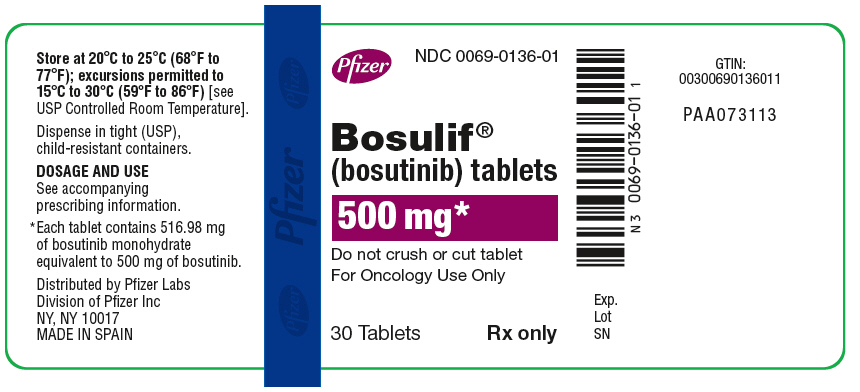
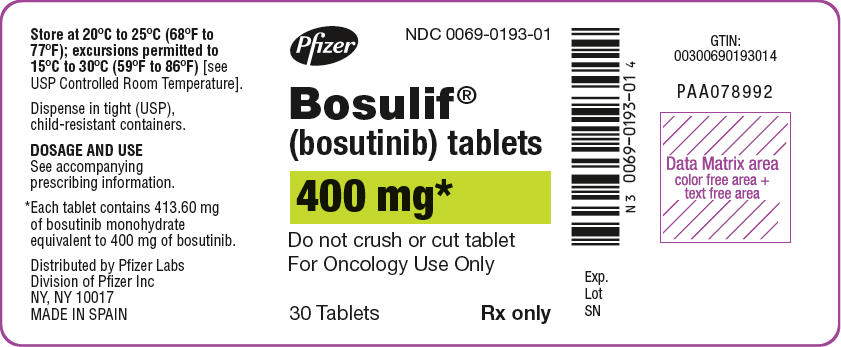
BOSULIF (bosutinib) tablets are supplied for oral administration in 3 strengths: a 100 mg yellow, oval, biconvex, film-coated tablet debossed with "Pfizer" on one side and "100" on the other; a 400 mg orange, oval, biconvex, film coated tablet debossed with "Pfizer" on one side and "400" on the other; and a 500 mg red, oval, biconvex, film-coated tablet debossed with "Pfizer" on one side and "500" on the other. BOSULIF (bosutinib) tablets are available in the following packaging configurations with a child-resistant (CR) closure (Table 17). Bottles contain a desiccant.
Table 17: Tablet Presentations| BOSULIF Tablets |
|---|
| Package Configuration | Tablet Strength (mg) | NDC | Tablet Description |
|---|
| Abbreviation: NDC=National drug code. |
120 tablets per bottle | 100 mg | 0069-0135-01 | Yellow, oval, biconvex, film-coated tablets, debossed "Pfizer" on one side and "100" on the other. |
30 tablets per bottle | 400 mg | 0069-0193-01 | Orange, oval, biconvex, film-coated tablet debossed with "Pfizer" on one side and "400" on the other. |
30 tablets per bottle | 500 mg | 0069-0136-01 | Red, oval, biconvex, film-coated tablets, debossed "Pfizer" on one side and "500" on the other. |
- Dosage and Administration
Instruct patients to take BOSULIF exactly as prescribed, not to change their dose or to stop taking BOSULIF unless they are told to do so by their doctor. If patients miss a dose beyond 12 hours, they should be advised to take the next scheduled dose at its regular time. A double dose should not be taken to make up for any missed dose. Advise patients to take BOSULIF with food. Patients should be advised: “Swallow tablets whole. Do not crush, break, or cut tablet. Do not touch or handle crushed or broken tablets.” Patients should be advised: “Capsules may be swallowed whole. For those that cannot swallow the capsule whole, the capsule can be opened and the contents mixed with applesauce or yogurt.”
- Gastrointestinal Toxicity
Advise patients that they may experience diarrhea, nausea, vomiting, abdominal pain, or blood in their stools with BOSULIF and to seek medical attention promptly for these symptoms [see Warnings and Precautions (5.1)].
- Myelosuppression
Advise patients of the possibility of developing low blood cell counts and to immediately report fever, any suggestion of infection, or signs or symptoms suggestive of bleeding or easy bruising [see Warnings and Precautions (5.2)].
- Hepatic Toxicity
Advise patients of the possibility of developing liver function abnormalities and to immediately report jaundice [see Warnings and Precautions (5.3)].
- Cardiovascular Toxicity
Advise patients that cardiac failure, left ventricular dysfunction, and cardiac ischemic events have been reported. Advise patients to seek immediate medical attention if any symptoms suggestive of cardiac failure and cardiac ischemia occur, such as shortness of breath, weight gain, or fluid retention [see Warnings and Precautions (5.4)].
- Fluid Retention
Advise patients of the possibility of developing fluid retention (swelling, weight gain, or shortness of breath) and to seek medical attention promptly if these symptoms arise [see Warnings and Precautions (5.5)].
- Renal Toxicity
Advise patients of the possibility of developing renal problems and to immediately report frequent urination, polyuria or oliguria [see Warnings and Precautions (5.6)].
- Adverse Reactions
Advise patients that they may experience other adverse reactions such as respiratory tract infections, rash, fatigue, loss of appetite, headache, dizziness, back pain, arthralgia, pruritus or constipation with BOSULIF and to seek medical attention if symptoms are significant. There is a possibility of anaphylactic shock [see Contraindications (4) and Adverse Reactions (6)].
- Embryo-Fetal Toxicity
Advise females to inform their healthcare provider if they are pregnant or become pregnant. Advise female patients of the risk to a fetus and potential loss of the pregnancy [see Use in Specific Populations (8.1)].
Advise females of reproductive potential, to use effective contraception during treatment and for 2 weeks after receiving the last dose of BOSULIF [see Warnings and Precautions (5.7) and Use in Specific Populations (8.1, 8.3)].
Advise lactating women not to breastfeed during treatment with BOSULIF and for 2 weeks after the last dose [see Use in Specific Populations (8.2)].
- Drug Interactions
Advise patients that BOSULIF and certain other medicines, including over the counter medications or herbal supplements (such as St. John's wort) can interact with each other and may alter the effects of BOSULIF [see Drug Interactions (7)].
LAB-0443-20.0