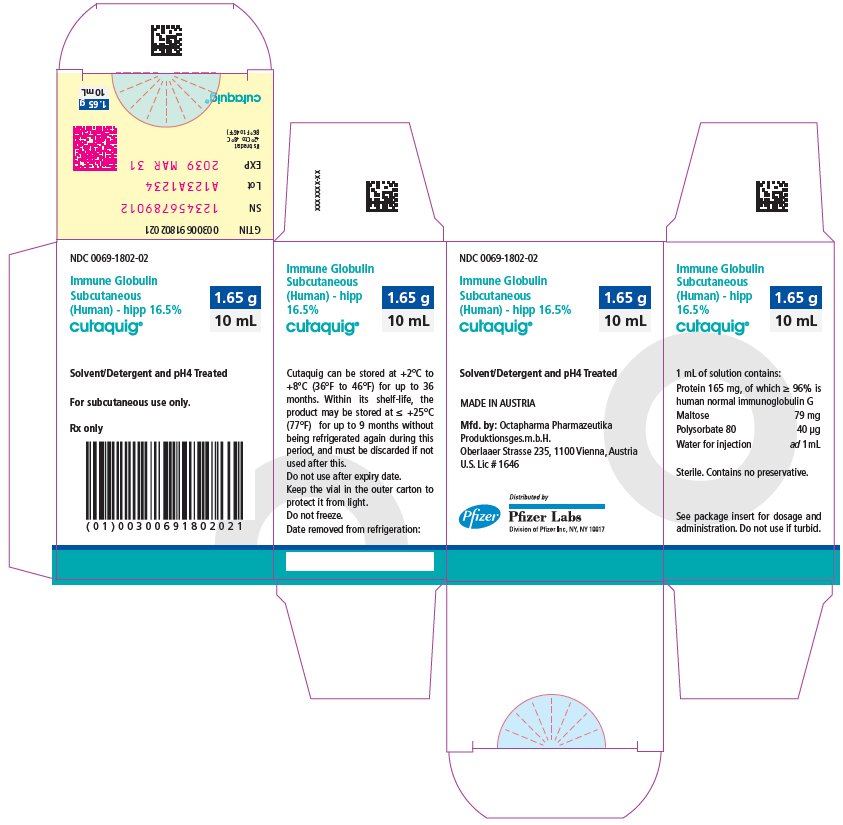
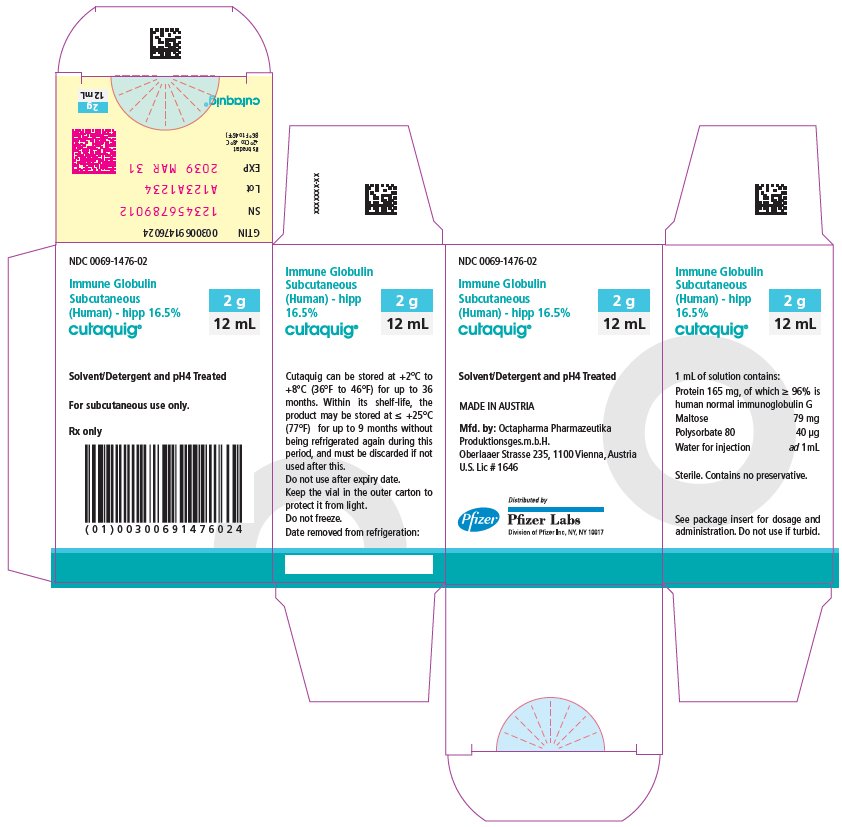
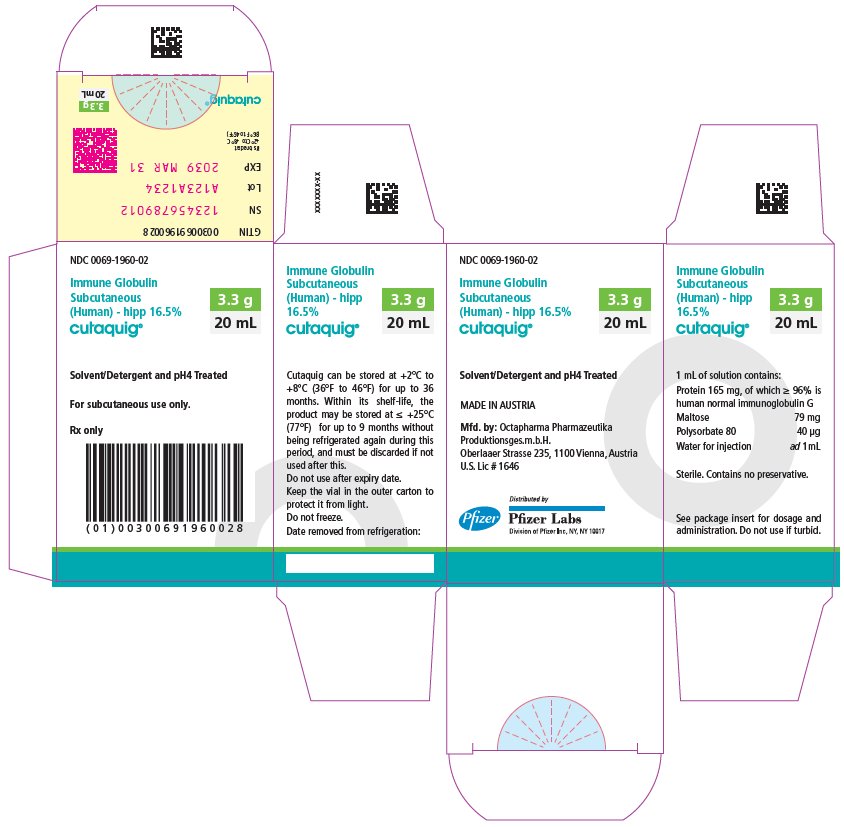
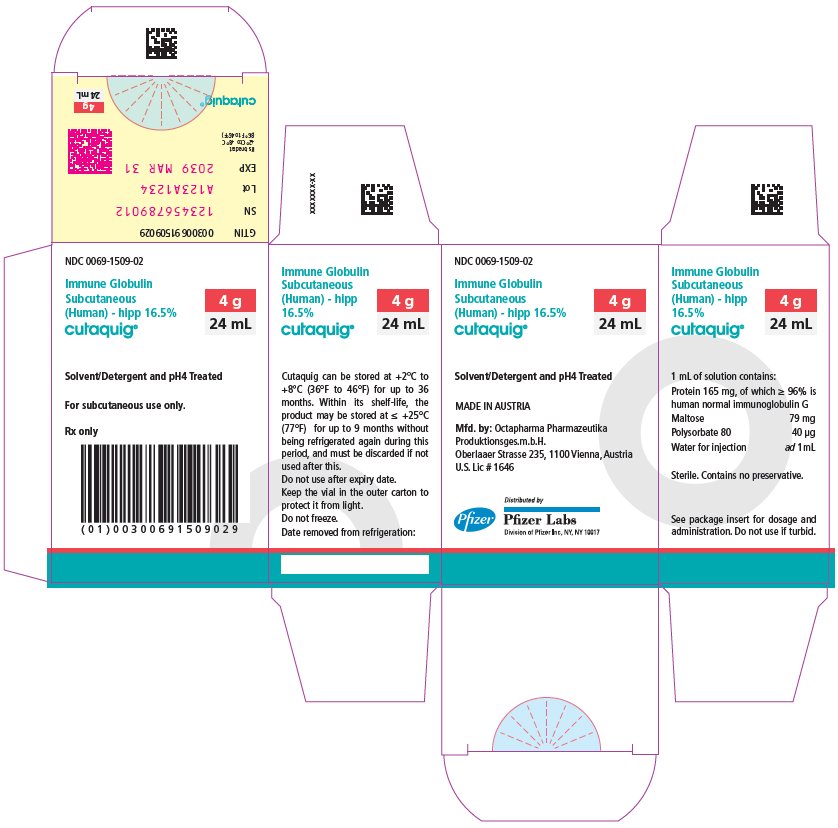
CUTAQUIG is for subcutaneous use only.
Administer CUTAQUIG weekly by a healthcare provider, or by caregiver or self-administered by the patient after appropriate training.
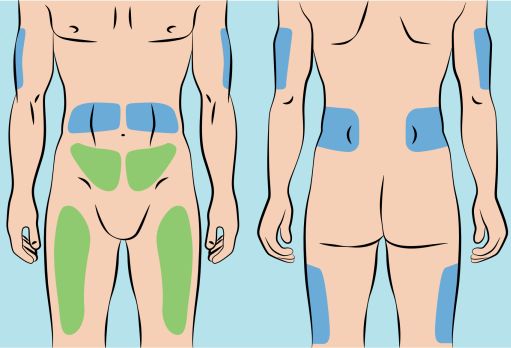
CUTAQUIG may be infused in the following areas: abdomen, thigh, upper arm, and/or upper leg/hip area.
CUTAQUIG is intended for subcutaneous use using an infusion pump and compatible syringe(s).
CUTAQUIG may be infused simultaneously into up to 6 different sites. Infusion sites should be at least 2 inches (5 cm) apart. Rotate infusion sites between subsequent administrations.
Volume:
For patients not already on Immune Globulin Subcutaneous (Human) (IGSC) therapy, the maximum initial volume per injection site should not exceed 25 mL. From the 6
th
infusion onwards the volume may be gradually increased to a maximum of 40 mL/site as tolerated.
Rate:
Maximum recommended
flow rates per hour per infusion site
are as follows:
First 6 infusions: 15-20 mL per hour per site.
Subsequent infusions: 25 mL per hour per site as tolerated.
Maximum recommended
flow rates per hour for all sites combined
:
First 6 infusions: 30 mL per hour for all sites combined.
From infusion number 7 onwards a gradual increase to 50 mL per hour for all sites combined, subsequently to 80 mL per hour for all sites combined, and if tolerated a further gradual increase to up to 100 mL per hour for all sites combined may be possible.
Table 2 Infusion Volumes and Infusion Rates
|
Infusion parameters* |
Infusion Number | |
|
1
st
-6
th |
7
th
and above |
|
Volume (mL/site) |
≤ 25 |
gradually increase to max of 40 |
|
Rate (mL/hr/site) |
≤ 20 |
25 |
|
Rate (mL/hr/all sites combined) |
30 |
Gradually increase to 50 mL, then to 80 mL; if well tolerated, use a max of 100 mL |
* As tolerated
Administration/Handling instructions
CUTAQUIG is for subcutaneous use only.
Follow the administration guidance below and use aseptic technique when administrating CUTAQUIG.
| |
Figure 1
|
1. Getting ready for infusion
- Choose and prepare a clean work area.
- Gather your infusion equipment:
Infusion pump and compatible syringe(s).
Needle or needleless transfer device (for drawing up product from the vial).
Infusion set (varies according to manufacturer’s instructions).
Infusion tubing and Y-connector (if required).
Ancillary supplies: disinfectant wipes, gauze or transparent dressing, tape and sharps container.
Patient’s treatment diary/log book.
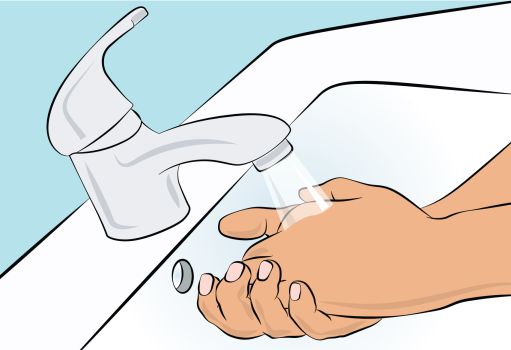
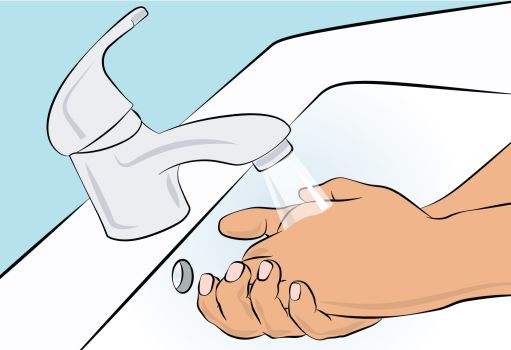
- Wash your hands thoroughly and let them dry (
Figure 1
).
|
Figure 2 |
2. Checking and opening the vials
- If taken out of the refrigerator, allow products to reach room temperature (≤ 25°C / 77°F).
- Inspect each vial carefully:
Check that labelled dose is correct and based on prescription.
Check that the expiration date has not been passed.
Check the appearance of the solution: do not use the solution if it is cloudy or contains particles.
Make sure the protective cap is not broken or missing.
- Remove the protective cap.
- Disinfect the rubber stopper by using a sterile wipe and allow it to dry (
Figure 2).
|
Figure 3 |
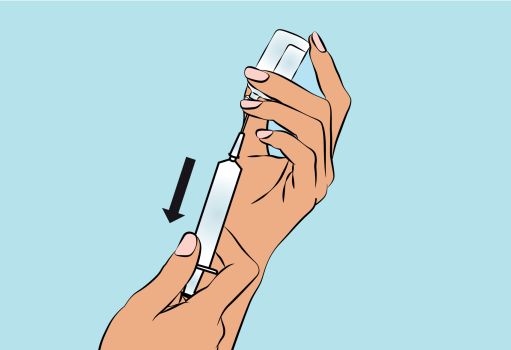
3. Preparing and filling the syringe
- Open sterile syringe and needle or needleless transfer device.
- If a needleless transfer device is used, follow the instructions of the device manufacturer.
- If the transfer is done using needle and syringe follow the instructions below:
Attach the needle to the syringe with a screw action.
Draw back on the plunger to fill the syringe with air which should be roughly equal to the amount of solution needed from the vial.
Insert the needle into the center of the vial stopper and turn the vial upside down. To avoid foaming, ensure that the tip of the needle is not in the solution, and then inject the air.
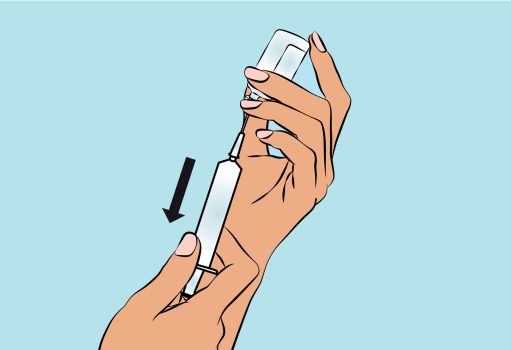
Next, move the needle so that the tip is in the solution, and then slowly draw up the desired volume of CUTAQUIG (
Figure 3
).
Withdraw the needle from the vial.
This procedure might be repeated if you need to use more than one vial.
When finished, remove the needle and dispose of it into the sharps bin and proceed to the next step.
|
Figure 4 |
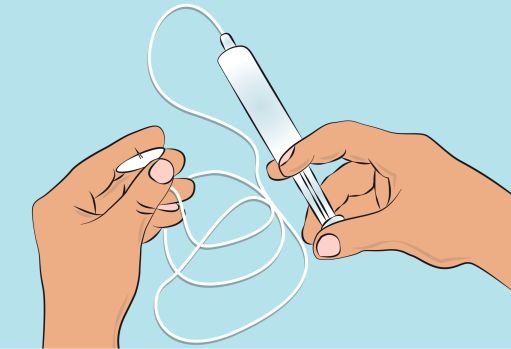
4. Preparing the infusion pump and tubing
- Follow the manufacturer’s instructions for preparing the infusion pump.
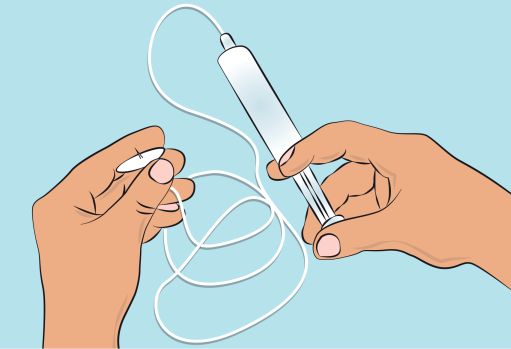
- Prime the administration tubing according to manufacturer’s instruction to eliminate all remaining air (
Figure 4
).
|
Figure 5 |
5. Preparing the infusion site(s) and inserting the infusion needle(s)
- CUTAQUIG can be infused in the following areas: abdomen, thigh, upper arm, and/or upper leg/hip area (
Figure 5
).
- The number and location of injection sites depends on the volume of the total dose. The infusion sites should be at least 2 inches apart. A maximum of 6 infusion sites can be used simultaneously.
- Rotate sites between infusions.
- Avoid inserting the needle into scars, tattoos or injured/inflamed skin areas and inspect skin for signs of infection.
- Clean your skin at your selected infusion site(s) with an antiseptic skin wipe starting at the center and working outward in a circular motion, and allow each site to dry before proceeding. |
Figure 6 |
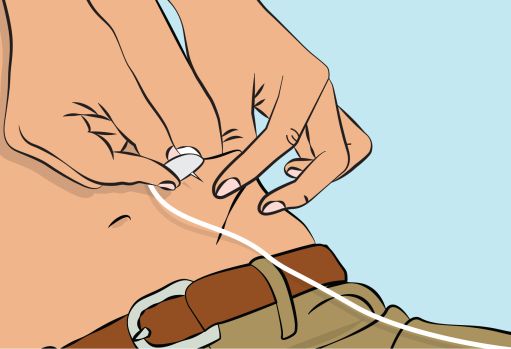
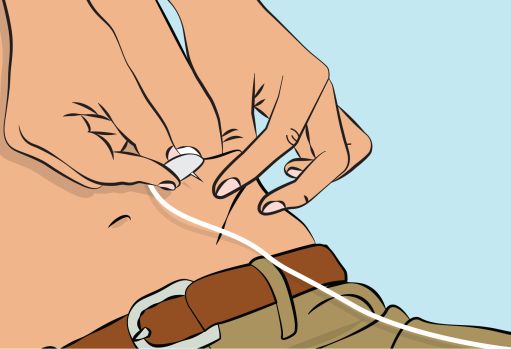
- Pinch the skin between your thumb and forefinger around the injection site (
Figure 6
) and insert the needle into the subcutaneous tissue (
Figure 7
). The angle of the needle will depend on the type of infusion set being used.
|
Figure 7 | |
Figure 8 |
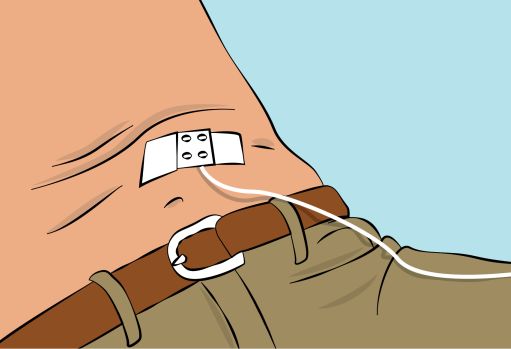
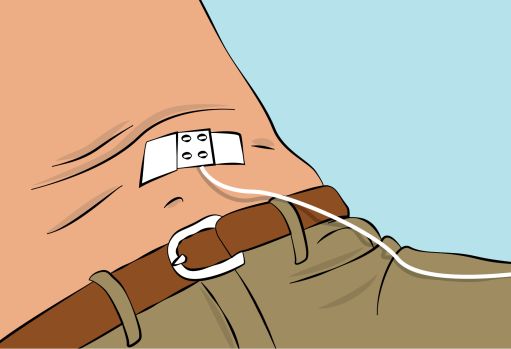
- Secure the needle in place by applying sterile gauze and tape or transparent dressing (
Figure 8
). |
6. Checking the infusion
- Check needle placement by pulling back on the syringe plunger. There should not be any blood return in the tubing.
- If blood return is seen, remove needle and restart from step 5 with new tubing at a different location.
7. Starting the infusion
- Start the infusion. Follow infusion pump manufacturer’s instructions.
8. Recording the infusion
- On each vial of CUTAQUIG, you will find a peel-off portion of the label with the batch number details. Stick this label in your patient’s treatment diary or infusion log book. Record details of the dose, date, time, infusion site location and any infections, side effects or other comments.
9. After infusion is complete
- Gently remove the needle(s) and immediately place into the sharps bin.
- If necessary press a small piece of gauze on the needle site and apply a dressing.
- Discard all used disposable supplies as well as any unused product and the empty vial(s) as recommended by your healthcare provider and according to local requirements.
- Clean and store the infusion pump according to the manufacturer’s instructions.
For self-administration, provide the patient and caregiver with instructions and appropriate training for infusion at home or other appropriate setting. Verify that the patient or caregiver is capable of self-administration using appropriate technique.