Vyndaqel Capsule, Liquid Filled
Product Images NDC 0069-1975

13 FDA label images from Pfizer Laboratories Div Pfizer Inc · Packaging, Regulatory Labels, and Product Appearance

Product Visual Gallery

This gallery contains 13 technical images submitted to the FDA as part of the official labeling for Vyndaqel (NDC 0069-1975). Unlike standard consumer photos, these assets often include clinical data figures, molecular chemical structures, and official manufacturer packaging layouts.

As provided by Pfizer Laboratories Div Pfizer Inc, these visuals offer a comprehensive scientific overview of the product's physical and chemical identity, aiding pharmacists and researchers in product verification and study.

FDA Label Image

Chemical Structure (Tafamidis 01)
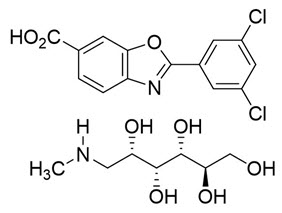
Chemical Structure (Tafamidis 01)
Chemical structure of tafamidis, the active ingredient in Vyndamax capsules. The diagram shows the arrangement of atoms including chlorine, oxygen, nitrogen, and carbon atoms in the molecule.*
FDA Label Image

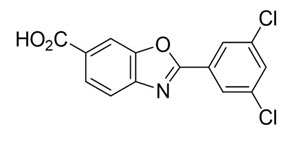
Chemical Structure (Tafamidis 02)

Chemical Structure (Tafamidis 02)
Chemical structure of tafamidis, the active ingredient in Vyndamax capsules. The diagram shows the molecular arrangement including aromatic rings, carboxylic acid, and chlorine substituents.*
FDA Label Image

Figure 1 (Tafamidis 03)

Figure 1 (Tafamidis 03)
A survival probability plot comparing pooled Vyndaqel (tafamidis) and placebo groups over 33 months from the first dose. The graph shows time in months on the x-axis and survival probability on the y-axis, with Vyndaqel demonstrating higher survival probability over time than placebo. Below the graph is a table listing subjects remaining at risk and cumulative events for both groups at specified time points.*
FDA Label Image

Figure 2 (Tafamidis 04)

Figure 2 (Tafamidis 04)
Two line graphs showing changes from baseline over months in patients treated with pooled VYNDAQEL versus placebo. The left graph depicts 6-Minute Walk Test distance changes, while the right graph shows KCCQ-OS score changes. Both graphs demonstrate less decline over time in the VYNDAQEL group compared to placebo, with statistical significance indicated (p<0.0001). Patient numbers at each time point are listed below each graph.*
FDA Label Image

Figure 3 (Tafamidis 05)

Figure 3 (Tafamidis 05)
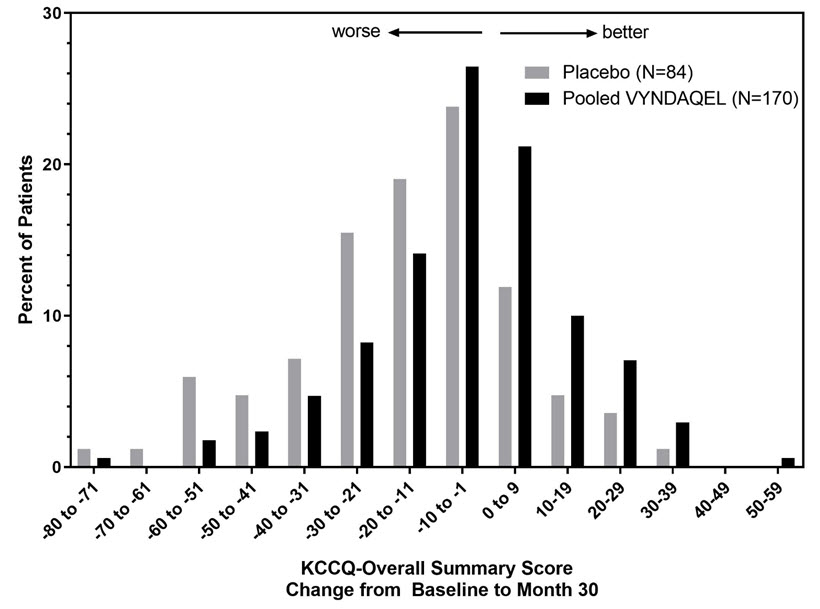
A bar chart comparing the percentage of patients by KCCQ-Overall Summary Score change from baseline to month 30 between placebo (N=84) and pooled VYNDAQEL (N=170) groups. The horizontal axis shows score change categories from -80 to 59, with annotations indicating worse (left) or better (right) outcomes. The vertical axis shows percent of patients, illustrating distribution differences between groups.*
FDA Label Image

Figure 4 (Tafamidis 06)

Figure 4 (Tafamidis 06)
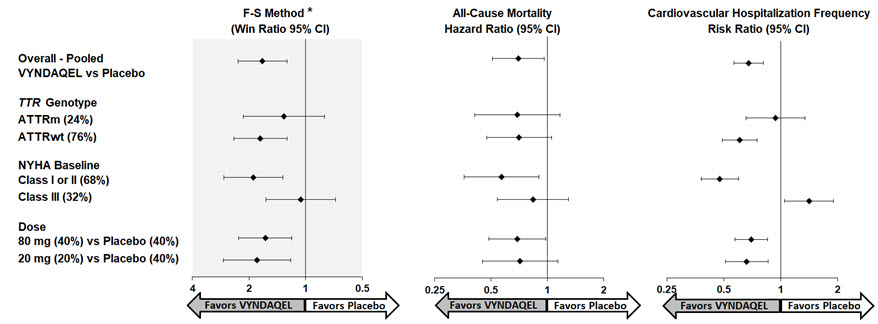
A figure presenting three forest plots summarizing clinical comparison data between VYNDAQEL and placebo. The first plot shows the F-S Method win ratios with 95% confidence intervals across subgroups by TTR genotype, NYHA baseline class, and dose. The second plot displays all-cause mortality hazard ratios with 95% confidence intervals. The third plot shows cardiovascular hospitalization frequency risk ratios with 95% confidence intervals. Each plot indicates whether outcomes favor VYNDAQEL or placebo.*
FDA Label Image

Logo (Tafamidis 07)

FDA Label Image

Logo (Tafamidis 08)

FDA Label Image

Principal Display Panel (20 mg Capsule Blister Card)

Principal Display Panel (20 mg Capsule Blister Card)
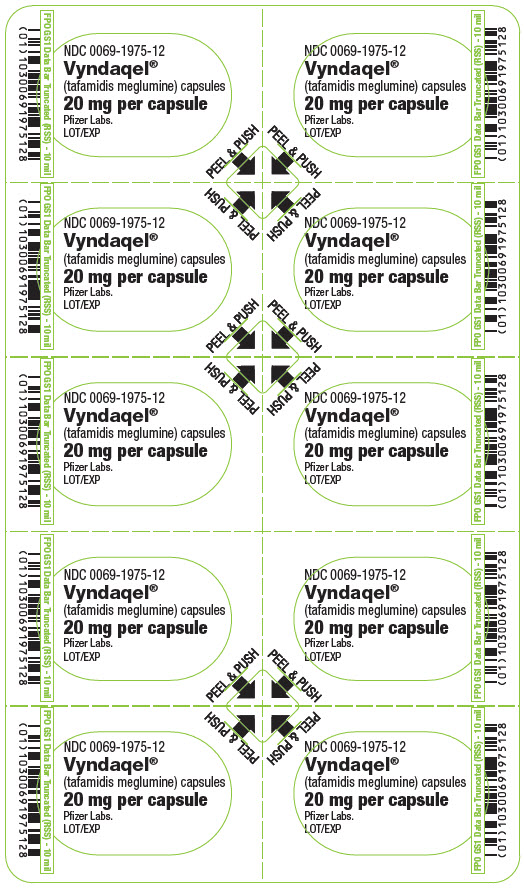
Packaging label for Vyndaquel 20 mg capsules containing tafamidis meglumine, manufactured by Pfizer Labs. The label includes the NDC 0069-1975-12 and identifies the capsule strength as 20 mg per capsule. It also displays instructions to peel and push for accessing the capsules, along with lot and expiration placeholders.*
FDA Label Image

Principal Display Panel (20 mg Capsule Blister Card Carton)

Principal Display Panel (20 mg Capsule Blister Card Carton)
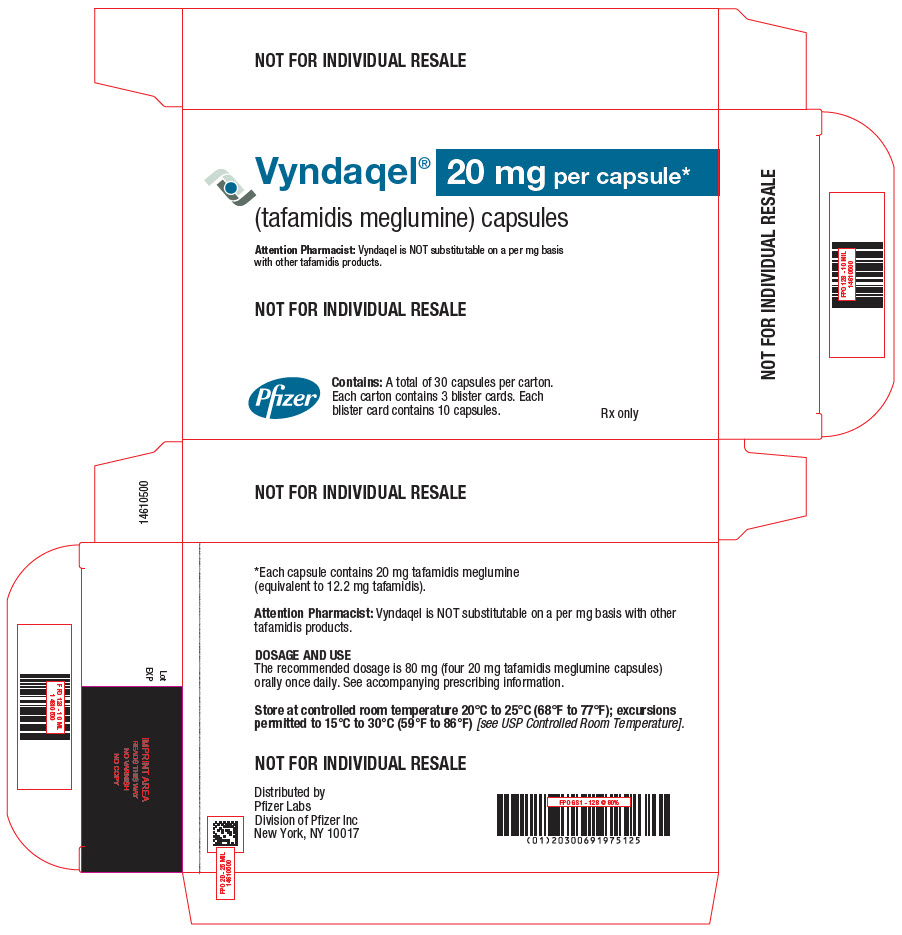
Packaging label for Vyndaqel 20 mg capsules, containing tafamidis meglumine as the active ingredient. The label indicates the product is distributed by Pfizer Laboratories Div Pfizer Inc and includes details such as the total capsule count of 30 per carton, with each carton containing three blister cards of 10 capsules each. The capsules are liquid-filled and intended for oral use. Warnings about substitution and storage conditions are also present.*
FDA Label Image

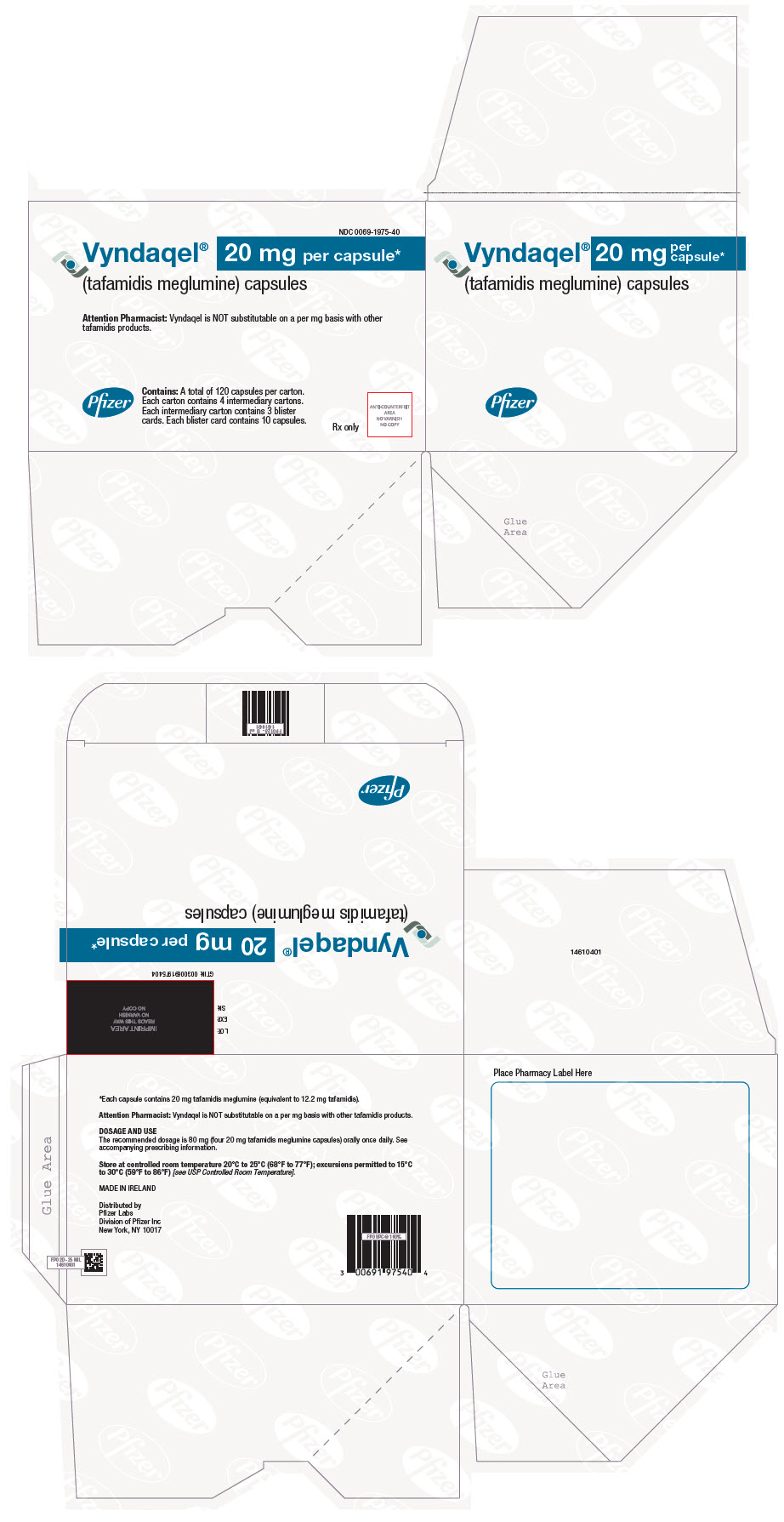
Principal Display Panel (20 mg Capsule Blister Card Carton Carton)

Principal Display Panel (20 mg Capsule Blister Card Carton Carton)
Packaging label for Vyndaqel 20 mg capsules (tafamidis meglumine) by Pfizer. The label includes the product name, strength, and mentions it as capsules. It indicates a total of 120 capsules per carton distributed in intermediary cartons and blister cards. The label also shows storage instructions, barcode, and areas for pharmacy labeling.*
FDA Label Image

Principal Display Panel (61 mg Capsule Blister Card)

Principal Display Panel (61 mg Capsule Blister Card)
Blister card label for Vyndamax (tafamidis) capsules, 61 mg per capsule, manufactured by Pfizer Laboratories. The label includes the NDC 0069-8730-01, the product name, strength, dosage form as liquid-filled capsules, and placeholders for lot number and expiration date. The card features multiple dose unit labels arranged in pairs with instructions to peel and push to access the capsules.*
FDA Label Image

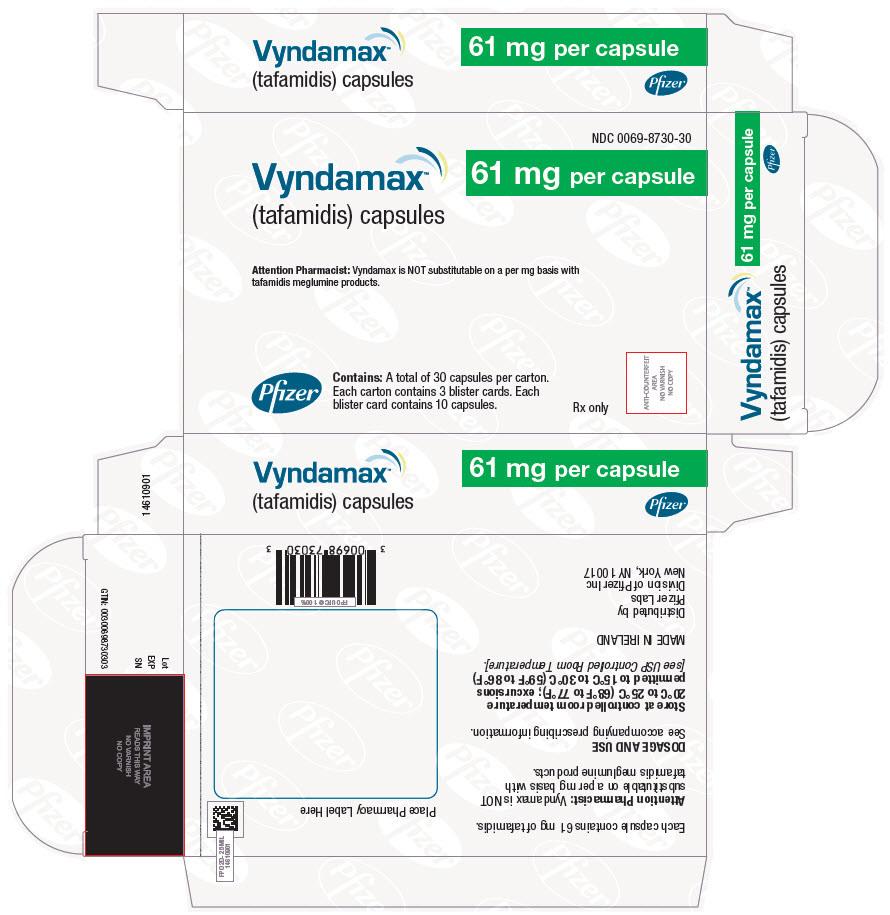
Principal Display Panel (61 mg Capsule Blister Card Carton)

Principal Display Panel (61 mg Capsule Blister Card Carton)
Vyndamax 61 mg capsules carton label showing tafamidis capsules by Pfizer Laboratories. The package contains 30 capsules divided into 3 blister cards of 10 capsules each. The label includes dosage strength, manufacturer details, and pharmacist substitution notice.*

* About these descriptions: Image descriptions on this page are generated by automated AI analysis of the product label images from the manufacturer's FDA label submission (SPL). They are provided for reference only and may contain errors or omissions. Always rely on the printed label itself and the official FDA labeling, and consult a pharmacist or healthcare professional with any questions about this product.