1 Indications And Usage
JUVMO is indicated for the treatment of Parkinson’s disease (PD) in adults.
The following Structured Product Label (SPL) was submitted to the FDA by Abbvie Inc. for the product Juvmo (NDC 0074-6210). This document serves as the official prescribing information, containing essential scientific data and clinical materials required for healthcare providers and patients.
This specific version of the label includes detailed information regarding 1 indications and usage, 2.1 dosing recommendations, 2.2 dosage modifications for cyp3a inhibitors, 2.3 dosage modifications for cyp3a inducers, 2.4 missed dose, 3 dosage forms and strengths, 4 contraindications, 5.1 hypotension/orthostatic hypotension, and other regulatory disclosures. Use the navigation below to review specific sections of the FDA submission.
JUVMO is indicated for the treatment of Parkinson’s disease (PD) in adults.
Administer JUVMO orally once daily with or without food.
The recommended dosage and titration are included in Table 1.
The JUVMO titration pack is recommended for patients initiating therapy with JUVMO to provide doses consistent with the recommended titration schedule to reach the 5 mg maintenance dosage [see How Supplied/Storage and Handling (16.1)].
| Titration Regimen* | |
| Treatment Days | JUVMO Dosage |
| Days 1 to 4 | 0.25 mg once daily |
| Days 5 to 8 | 0.5 mg once daily |
| Days 9 to 12 | 0.75 mg once daily |
| Days 13 to 16 | 1 mg once daily |
| Days 17 to 20 | 1.5 mg once daily |
| Days 21 to 24 | 2.25 mg once daily |
| Days 25 to 40 | 3 mg once daily |
| Maintenance Dosage | |
| Day 41 and thereafter | 5 mg once daily |
| Maximum Dosage | |
| If needed, based on tolerability and clinical response, the maintenance dose may be increased in increments of 5 mg approximately every 15 days to the maximum recommended daily dosage. | 15 mg once daily |
* Dose and titration should be guided by tolerability and clinical response. If required, longer intervals between dose adjustment can be used.
Strong or Moderate CYP3A Inhibitors [see Warnings and Precautions (5.3), Drug Interactions (7.1)]
JUVMO Titration
Avoid concomitant use of strong or moderate CYP3A inhibitors during titration of JUVMO.
JUVMO Maintenance when Initiating Strong or Moderate CYP3A Inhibitors
Follow the JUVMO dosage modifications in Table 2 when initiating a strong or moderate CYP3A inhibitor for patients already on JUVMO maintenance.
| Current JUVMO Maintenance Dosage | Recommended JUVMO Modification for Maintenance Dosage | |
| When Initiating a Strong CYP3A Inhibitor | When Initiating a Moderate CYP3A Inhibitor | |
| 5 mg once daily | 5 mg every 7 days | 5 mg every 3 days |
| 10 mg once daily | 10 mg every 7 days | 10 mg every 3 days |
| 15 mg once daily | 15 mg every 7 days | 15 mg every 3 days |
Discontinuing CYP3A Inhibitors
Upon discontinuation of the strong or moderate CYP3A inhibitor, resume the JUVMO maintenance dosage that was used prior to the initiation of the CYP3A inhibitor. Monitor patients for clinical response and tolerability.
Strong CYP3A Inducers [see Drug Interactions (7.1)]
Avoid concomitant use of strong CYP3A inducers during titration and maintenance of JUVMO.
Moderate CYP3A Inducers [see Drug Interactions (7.1)]
Initiating JUVMO Titration and Maintenance when on Long-Term Moderate CYP3A Inducers
Follow the JUVMO dosage modifications in Table 3 when initiating JUVMO titration and maintenance in patients who are already on long-term moderate CYP3A inducers.
| Titration Regimen (requires two JUVMO titration packs)* | |
| Treatment Days | JUVMO Dosage |
| Days 1 to 4 | 0.25 mg twice daily |
| Days 5 to 8 | 0.5 mg twice daily |
| Days 9 to 12 | 0.75 mg twice daily |
| Days 13 to 16 | 1 mg twice daily |
| Days 17 to 20 | 1.5 mg twice daily |
| Days 21 to 24 | 2.25 mg twice daily |
| Days 25 to 40 | 3 mg twice daily |
| Maintenance Dosage | |
| Day 41 and thereafter | 5 mg twice daily |
| Maximum Dosage | |
| If needed, based on clinical response and tolerability, the maintenance dosage may be increased to 5 mg three times a day. If further escalation is needed, the dose may be increased by 5 mg every 15 days, administered in divided doses (either twice a day or three times a day), to the maximum recommended daily dosage. | 45 mg daily (15 mg three times daily) |
* Use one JUVMO titration pack for the morning dose and the second JUVMO titration pack for the evening dose.
JUVMO Maintenance when Initiating Moderate CYP3A Inducers
For patients who are already on JUVMO maintenance dosage and start to take moderate CYP3A inducers, modifications to JUVMO dosing are provided below:
Discontinuing CYP3A Inducers
Upon discontinuation of moderate CYP3A inducers, gradually reduce the JUVMO dosage to once daily. Monitor patients for clinical response and tolerability.
If a dose of JUVMO is missed, take it as soon as remembered on the same day, but do not double the dose. Do not take a missed dose on the following day. Skip the missed dose and resume the regular dosing schedule.
Tablets supplied as:
None.
Patients with PD may have an impaired capacity to respond to an orthostatic challenge. In clinical studies and clinical experience, dopaminergic medications appear to impair the systemic regulation of blood pressure, resulting in hypotension and/or orthostatic hypotension, especially during dose escalation. For these reasons, patients with PD being treated with JUVMO should be monitored for signs and symptoms of hypotension/orthostatic hypotension especially during dose escalation, and should be informed of this risk.
In Study 1 and Study 2 in patients with PD who were not taking levodopa [see Clinical Studies (14.1)], orthostatic hypotension was reported in 5% of patients treated with JUVMO compared to 1% of patients who received placebo. Hypotension was reported in 4% of patients treated with JUVMO tablets compared to 1% on placebo.
In Study 3 in patients taking JUVMO as adjunctive therapy to fixed dose levodopa [see Clinical Studies (14.2)], orthostatic hypotension was reported in 8% of patients treated with JUVMO compared to 2% of patients on placebo. Hypotension was reported in 4% of patients treated with JUVMO compared to 0.4% on placebo.
Patients may experience intense urges to gamble, increased sexual urges, intense urges to spend money, binge or compulsive eating, and/or other intense urges, and the inability to control these urges while taking one or more of the medications that increase central dopaminergic tone and are generally used for the treatment of PD, including JUVMO. In some cases, although not all, these urges were reported to have stopped when the dose was reduced or the medication was discontinued.
In Study 1 and Study 2, impulse control disorders were reported in 1% of patients treated with JUVMO compared to no patients on placebo. In Study 3, impulse control disorders were reported in 2% of patients treated with JUVMO compared to 1% of patients on placebo.
Because patients may not recognize these behaviors as abnormal, it is important for prescribers to ask patients or their caregivers specifically about the development of new or increased gambling urges, sexual urges, uncontrolled spending, binge or compulsive eating, or other urges while being treated with JUVMO. Consider reducing the dose or discontinuing JUVMO if a patient develops such urges.
Medications for the treatment of PD, including JUVMO, can have effects on thinking and behavior. This abnormal thinking and behavior can consist of one or more of a variety of manifestations including paranoid ideation, delusions, hallucinations, confusion, psychotic-like behavior, symptoms of mania (e.g., insomnia, psychomotor agitation), disorientation, aggressive behavior, agitation, and delirium.
In Study 1 and Study 2, hallucination was reported in 3% of patients treated with JUVMO compared to no patients on placebo. In Study 3, when added as an adjunct to a fixed dose of levodopa, hallucination was reported in 7% of patients treated with JUVMO compared to 1% of patients on placebo.
Age appears to increase the risk of hallucinations in patients taking JUVMO. In Study 1 and Study 2, among patients 65 years of age and older, hallucination was reported in 4% of patients treated with JUVMO compared to no patients on placebo. In Study 3, among patients 65 years of age and older, hallucination was reported in 9% of patients treated with JUVMO compared to 1% of patients on placebo.
The risk of hallucination may be increased when JUVMO is co-administered with strong CYP3A inhibitors during the maintenance phase [see Dosage and Administration (2.2)].
Consider the risks and benefits prior to initiating treatment with JUVMO in patients with a major psychotic disorder because of the risk of exacerbating psychosis. In addition, certain medications used to treat psychosis may exacerbate the symptoms of PD. Consider stopping JUVMO if hallucinations or psychotic-like behaviors occur.
JUVMO may cause or exacerbate pre-existing dyskinesia. In Study 1 and Study 2, 0.6% of patients with PD treated with JUVMO reported dyskinesia compared with no patients on placebo. In Study 3, 10.0% of patients treated with JUVMO reported dyskinesia compared to 2% on placebo. Consider decreasing the dosage of JUVMO or other dopaminergic medications if dyskinesia occurs.
The following clinically significant adverse reactions are discussed in greater detail in other sections of the labeling:
Because clinical trials are conducted under widely varying conditions, adverse reaction rates observed in the clinical trials of a drug cannot be directly compared to rates in the clinical trials of another drug and may not reflect the rates observed in clinical practice.
The safety of JUVMO was evaluated in 1,279 patients with PD who received at least one dose of JUVMO. Of the patients with PD who received JUVMO, 870 were treated for at least 6 months and 630 were treated for at least 1 year.
JUVMO without Concomitant Levodopa
Study 1 evaluated fixed doses of once daily JUVMO 5 mg (n=177) and JUVMO 15 mg (n=177) compared to placebo (n=175). Study 2 evaluated doses of JUVMO 5 mg to 15 mg unless prevented by intolerance (n=151) compared to placebo (n=153) [see Clinical Studies (14.1)].
In Study 1 and Study 2 combined (n=833 total patients), the most common adverse reactions that occurred in ≥ 5% of patients treated with JUVMO were nausea, headache, dizziness, fatigue, dysgeusia, vomiting, dry mouth, and anxiety. Adverse reactions led to discontinuation of JUVMO in 100 of 505 patients (20%). Of the 100 patients receiving JUVMO who discontinued because of an adverse reaction, 85 (85%) did so during the titration and/or adjustment phases. The most common adverse reactions leading to discontinuation in patients taking JUVMO were nausea, dizziness, headache, and vomiting.
Table 4 presents the adverse reactions that occurred in ≥ 3% of patients treated with JUVMO and with a difference of ≥ 2% between the JUVMO and the placebo group in Study 1 and Study 2.
| Adverse Reaction | JUVMO | Placebo |
| (N=505) % | (N=328) % | |
| Nausea | 27 | 2 |
| Headachea | 17 | 5 |
| Dizziness | 14 | 4 |
| Fatigueb | 10 | 3 |
| Dysgeusia | 8 | 0 |
| Vomiting | 7 | <1 |
| Dry mouth | 5 | <1 |
| Anxiety | 5 | 2 |
| Hypotension | 4 | 1 |
| Dyspepsia | 4 | 1 |
| Abnormal dreams | 4 | <1 |
| Orthostatic hypotension | 4 | <1 |
| Hallucinationc | 3 | 0 |
| Gastroesophageal reflux disease | 3 | <1 |
| Constipation | 3 | 1 |
a Headache includes multiple related terms
b Fatigue includes asthenia
c Hallucination includes multiple related terms
JUVMO with Concomitant Levodopa
Patients in Study 3 were on a fixed dose of levodopa and were titrated to JUVMO 15 mg once daily unless prevented by intolerance, resulting in maintenance doses between 5 mg and 15 mg (n=251), compared to placebo (n=254). The most common adverse reactions that occurred in ≥ 5% of patients treated with JUVMO were nausea, dyskinesia, dizziness, headache, hallucinations, and orthostatic hypotension. Adverse reactions led to discontinuation of JUVMO in 43 of 251 patients (17%). Of the 43 patients receiving JUVMO who discontinued because of an adverse reaction, 38 (88%) did so during the titration and adjustment phases. The most common adverse reactions leading to discontinuation included nausea, dyskinesia, visual hallucination, and dizziness.
Table 5 summarizes the adverse reactions that occurred in ≥ 3% of patients who received JUVMO and with a difference of ≥ 2% between the JUVMO and the placebo groups in Study 3.
| Adverse Reaction | JUVMO | Placebo |
| (N=251) % | (N=254) % | |
| Nausea | 14 | 4 |
| Dyskinesia | 10 | 2 |
| Dizziness | 8 | 3 |
| Headachea | 7 | 3 |
| Hallucinationb | 7 | 1 |
| Orthostatic hypotension | 6 | 1 |
| Hypotension | 4 | <1 |
| Abdominal pain | 3 | <1 |
| Asthenia | 3 | 0 |
a Headache includes multiple related terms
b Hallucination includes multiple related terms
Table 6 describes drug interactions where concomitant use of another drug affects the use of JUVMO.
| Strong and Moderate CYP3A Inhibitors | |
| Prevention or Management | If JUVMO is used with a strong or moderate CYP3A inhibitor during JUVMO maintenance, reduce JUVMO dosage frequency [see Dosage and Administration (2.2)]. |
| Mechanism and Clinical Effect(s) | Tavapadon is CYP3A substrate. Concomitant use of strong and moderate CYP3A inhibitors increase the exposure of tavapadon, which may increase the risk of adverse reactions [see Clinical Pharmacology (12.3)]. Concomitant use of strong CYP3A inhibitors may increase the risk of hallucinations [see Warnings and Precautions (5.3), Clinical Pharmacology (12.3)]. |
| Strong and Moderate CYP3A Inducers | |
| Prevention or Management | Concomitant use of JUVMO with a strong CYP3A inducer is not recommended [see Dosage and Administration (2.3)]. If JUVMO is used in a patient already on a long-term moderate CYP3A inducer, increase JUVMO dosage frequency [see Dosage and Administration (2.3)]. |
| Mechanism and Clinical Effect(s) | Tavapadon is CYP3A substrate. Concomitant use of strong or moderate CYP3A inducer decreases the exposure of tavapadon which may result in reduced JUVMO efficacy [see Clinical Pharmacology (12.3)]. |
Table 7 describes drug interactions where JUVMO affects concomitant use of another drug.
| CYP3A Substrates | |
| Prevention or Management | Consider a dose modification of sensitive CYP3A substrates or CYP3A substrates where minimal concentration changes may lead to loss of efficacy, as clinically appropriate, when initiating or discontinuing JUVMO. |
| Mechanism and Clinical Effect(s) | JUVMO is an inducer of CYP3A [see Clinical Pharmacology (12.3)]. Concomitant use of JUVMO may decrease the concentrations of CYP3A substrates. |
| CYP2C8 Substrates | |
| Prevention or Management | Consider a dosage reduction of sensitive CYP2C8 substrates or CYP2C8 substrates where minimal concentration changes may increase the risk of severe adverse reactions, as clinically appropriate, when concomitantly used with JUVMO. |
| Mechanism and Clinical Effect(s) | JUVMO is an inhibitor of CYP2C8 [see Clinical Pharmacology (12.3)]. Concomitant use of JUVMO may increase the plasma concentrations of CYP2C8 substrates. |
| BCRP Substrates | |
| Prevention or Management | Consider a dosage reduction of BCRP substrates, as clinically appropriate, when concomitantly used with JUVMO. |
| Mechanism and Clinical Effect(s) | JUVMO is an inhibitor of efflux transporter BCRP [see Clinical Pharmacology (12.3)]. Concomitant use of JUVMO may increase the exposure of BCRP substrates. |
Risk Summary
There are no adequate data on the developmental risk associated with the use of JUVMO in pregnant women. In animal studies, administration of tavapadon during organogenesis (rats and rabbits) did not result in adverse developmental effects at exposures greater than those used clinically (see Data). Following administration of tavapadon throughout pregnancy and lactation (rats), there were adverse effects on postnatal growth at exposures 7 times those used clinically (see Data).
The estimated background risk of major birth defects and of miscarriage in the indicated population is unknown. In the U.S. general population, the estimated background risk of major birth defects and miscarriage in clinically recognized pregnancies is 2% to 4% and 15% to 20%, respectively.
Data
Animal Data
There were no adverse embryo-fetal development effects following oral administration of tavapadon to pregnant rats (5, 15 and 120 mg/kg/day) and rabbits (1, 3 and 10 mg/kg/day) during organogenesis at the 120 mg/kg/day dose in rats (10.3 times the human AUC at the maximum recommended human dose [MRHD]) or the 10 mg/kg/day dose in rabbits (1.8 times the human AUC at the MRHD).
Oral administration of tavapadon to rats (5, 15, or 120 mg/kg/day) throughout gestation and lactation resulted in a reversible decrease in female pup body weights at 120 mg/kg/day. In male pups, there was a delay in preputial separation at all doses.
Risk Summary
There are no data on the presence of tavapadon in human milk, the effects of tavapadon on the breastfed infant, or the effects of tavapadon on milk production. Tavapadon was present in the milk when administered to lactating rats.
The developmental and health benefits of breastfeeding should be considered along with the mother’s clinical need for JUVMO and any potential adverse effects on the breastfed infant from JUVMO or from the underlying maternal condition.
Safety and effectiveness in pediatric patients have not been established.
Of the 1,279 patients who received JUVMO in clinical studies, 691 (54%) were ≥ 65 years of age and 166 (13%) were ≥ 75 years of age. Patients aged 65 years and older who are treated with JUVMO are at an increased risk of hallucinations [see Warnings and Precautions (5.3)].
The active ingredient of JUVMO is tavapadon, a non-ergot dopamine agonist. The chemical name is (S)-1,5-dimethyl-6-(2-methyl-4-{[3-(trifluoromethyl) pyridin-2-yl]oxy}phenyl)pyrimidine- 2,4(1H,3H)-dione. Its molecular formula is C19H16F3N3O3 and its molecular weight is 391.35 Daltons. The chemical structure is:
![The Chemical Structure Is: The Active Ingredient Of Tradename Is Tavapadon, A Selective Dopamine D1 And D5 Receptor Partial Agonist. The Chemical Name Is (s)-1,5-dimethyl-6-(2-methyl-4-{[3-(trifluoromethyl) Pyridin-2-yl]oxy}phenyl)pyrimidine- 2,4(1h,3h)-dione. Its Molecular Formula Is C19h16f3n3o3 And Its Molecular Weight Is 391.35 Daltons. (Juvmo 01)](https://ndclist.com/assets/spl/images/1ae6df6e-6ca0-420f-bec9-effa7acdd085/juvmo-01.jpg "juvmo-01.jpg")
The Chemical Structure Is: The Active Ingredient Of Tradename Is Tavapadon, A Selective Dopamine D1 And D5 Receptor Partial Agonist. The Chemical Name Is (s)-1,5-dimethyl-6-(2-methyl-4-{[3-(trifluoromethyl) Pyridin-2-yl]oxy}phenyl)pyrimidine- 2,4(1h,3h)-dione. Its Molecular Formula Is C19h16f3n3o3 And Its Molecular Weight Is 391.35 Daltons. (Juvmo 01)
Tavapadon is a white to pale-yellow solid that is practically insoluble in water.
JUVMO tablets are intended for oral administration. Each film-coated tablet contains 0.25 mg, 1 mg, 5 mg, 10 mg, or 15 mg tavapadon. Inactive ingredients include:
Tavapadon is a selective partial agonist at the dopamine D1 and D5 receptor subtypes (D1/D5).
Cardiac Electrophysiology
At the maximum recommended JUVMO dosage of 15 mg once daily, a mean increase in the QTc interval >20 ms is unlikely.
Absorption
Following oral administration of JUVMO, tavapadon is absorbed with peak plasma concentrations (Cmax) at approximately 2 to 4 hours. Tavapadon displays dose-proportional pharmacokinetics within the maintenance dose range of 5 mg to 15 mg.
Effect of Food
When JUVMO was administered with a high-fat/high-calorie meal, the food effect was not significant (AUCτ and Cmax were increased by approximately 10% and 12%, respectively, with no effect on median time to Cmax). JUVMO was administered without regard to food in clinical efficacy studies.
Distribution
Tavapadon plasma protein binding is 93% (primarily albumin). The apparent volume of distribution of tavapadon is 63.5 L.
Elimination
Metabolism
Tavapadon and its major inactive metabolite M4 are primarily metabolized by CYP3A. The AUC ratio of M4 to tavapadon is approximately 1.4.
Excretion
Unchanged tavapadon was a minor component in both urine and feces (less than 1%). Metabolite M4 accounted for less than 5% of the administered dose in both urine and feces.
The mean elimination half-life of tavapadon is approximately 25.5 hours.
Specific Populations
No clinically significant differences in pharmacokinetics of tavapadon were observed based on age (21 years to 79 years), sex, body weight (56 kg to 119 kg), race, severe renal impairment not requiring dialysis (eGFR < 30 mL/min estimated by CKD-EPI equation), mild hepatic impairment (Child-Pugh Class A), or moderate hepatic impairment (Child-Pugh Class B). The effects of renal impairment in patients with eGFR < 15 mL/min or on dialysis and severe hepatic impairment (Child-Pugh Class C) on tavapadon pharmacokinetics have not been studied.
Drug Interaction Studies
Clinical Studies and Model-based Approaches
Strong CYP3A Inhibitors
Concomitant administration of itraconazole (200 mg daily for 14 days), a strong CYP3A inhibitor, with JUVMO increased tavapadon AUCτ and Cmax by 5-fold and 4-fold, respectively. When a strong CYP3A inhibitor is initiated during tavapadon maintenance therapy (5, 10, or 15 mg doses) with a reduced dosing frequency of once-weekly, steady-state AUC₀₋₂₄ and Cmax, daily are predicted to fluctuate between +84% to -23% and +50% to -41%, respectively, across the 7-day dosing interval relative to once daily dosing of JUVMO without an inhibitor, with values highest on Day 1 of the dosing week [see Dosage and Administration (2.2), Warnings and Precautions (5.3), Drug Interactions (7.1)].
Moderate CYP3A Inhibitors
Concomitant administration of fluconazole (200 mg daily), a moderate CYP3A inhibitor, with 15 mg JUVMO at steady-state is predicted to increase the AUCτ and Cmax of tavapadon by approximately 2.6-fold and 2.3-fold, respectively. When a moderate CYP3A inhibitor is initiated during tavapadon maintenance therapy (5, 10, or 15 mg doses) with a reduced dosing frequency from once daily to once every 3 days, steady-state AUC₀₋₂₄ and Cmax, daily fluctuate between +14% to -40% and +1 to -43%, respectively from Day 1 to Day 3 of the dosing interval, relative to once daily dosing without an inhibitor. Exposures are predicted to be lowest on Day 3 of the once every 3 days dosing interval [see Dosage and Administration (2.2), Drug Interactions (7.1)].
Strong CYP3A Inducers
Concomitant administration of carbamazepine (300 mg twice daily), a strong CYP3A inducer, with JUVMO decreased tavapadon AUCτ and Cmax by 63% and 49%, respectively [see Dosage and Administration (2.3), Drug Interactions (7.1)].
Moderate CYP3A Inducers
Concomitant administration of efavirenz (600 mg), a moderate CYP3A inducer, with 15 mg JUVMO is predicted to decrease the AUCτ and Cmax of tavapadon by 70% and 58%, respectively. When a moderate CYP3A inducer is initiated during maintenance therapy (5, 10, or 15 mg doses) of tavapadon, with an increased dosing frequency from once daily to three times daily, steady state AUC₀₋₂₄ and Cmax,daily are not predicted to differ significantly relative to once daily dosing without an inducer [see Dosage and Administration (2.3), Drug Interactions (7.1)].
Effects of Tavapadon on Other Drugs
Tavapadon is predicted to cause clinically relevant induction of CYP3A, inhibition of CYP2C8, and BCRP [see Drug Interactions (7.2)].
In Vitro Assessment of Drug Interactions
Cytochrome P450 (CYP450) Enzymes: Tavapadon and M4 are substrates of CYP3A, but are not substrates of CYP1A2, CYP2B6, CYP2C8, CYP2C9, CYP2C19, or CYP2D6. Tavapadon and M4 are not reversible inhibitors of CYP1A2, CYP2B6, CYP2C8, CYP2C9, CYP2C19, CYP2D6, or CYP3A/5.
Tavapadon is a time-dependent inhibitor of CYP2C8. Tavapadon and M4 did not demonstrate time-dependent inhibition of CYP1A2, 2B6, 2C9, 2C19, 2D6, or 3A4.
Tavapadon and M4 are inducers of CYP3A, but are not inducers of CYP1A2 or CYP2B6.
UDP-Glucuronosyltransferase (UGT): Tavapadon is an inhibitor of UGT1A9 but is not expected to result in clinically significant drug interactions. M4 is not an inhibitor of UGT1A9.
Tavapadon and M4 are not inhibitors of UGT1A1, 1A3, 1A4, 1A6, 2B7, or 2B15.
Transporter Systems: Tavapadon is a substrate for P-gp and BCRP, but is not expected to result in clinically significant drug interactions. Tavapadon and M4 are not substrates of OATP1B1, OATP1B3, OCT1, OCT2, OAT1, OAT3, MATE1, or MATE2-K.
Tavapadon inhibits BCRP, but not P-gp, OATP1B1, OATP1B3, OCT1, OCT2, OAT1, or OAT3.
Tavapadon is an inhibitor of MATE1, while M4 is an inhibitor of both MATE1 and MATE2-K, but are not expected to result in clinically significant drug interactions.
M4 is not an inhibitor of BCRP, P-gp, OATP1B1, OATP1B3, OCT1, OCT2, OAT1, or OAT3.
Carcinogenesis
Carcinogenicity studies of tavapadon were conducted in Tg.rasH2 mice at oral doses of 10, 30 and 100 mg/kg/day for up to 26-weeks and in male and female rats at oral doses of 5, 15, 50 mg/kg/day and 2, 10, 120 mg/kg/day, respectively, for up to 2 years.
In the 26-week study, mice had an increased incidence of hepatocellular adenomas at 100 mg/kg/day. In the 2-year study in rats, female rats exhibited an increase in pancreatic and whole body adenocarcinoma at the high dose 120 mg/kg/day. Tavapadon exposure at this dose was 14-fold greater than the exposure at the MRHD. Male rats had an increased incidence of Leydig cell tumors at ≥ 15 mg/kg/day, and female rats showed increased incidences of uterine/cervical tumors at ≥ 10 mg/kg/day. The endocrine mechanism involved in the production of these tumors (prolactin reduction) in rats is not considered relevant to humans.
Mutagenesis
Tavapadon was not mutagenic or clastogenic in in vitro (bacterial mutagenicity and micronucleus TK6 cells) and in vivo (rat peripheral blood micronucleus) assays.
Impairment of Fertility
Tavapadon was orally administered to male (15, 50, 150 mg/kg/day) and female (0.5, 1.5, or 5 mg/kg/day) rats prior to and during mating and continuing in females through gestation day 7. There were no adverse effects on fertility or reproductive performance. Plasma exposures (AUC) at the highest dose tested are approximately 9.3 times (males) and 3.1 times (females) the MRHD.
The efficacy of JUVMO for the treatment of PD in adults not on concomitant levodopa was established in two 27-week randomized, multicenter, double-blind, placebo-controlled studies, Study 1 (NCT04201093) and Study 2 (NCT04223193). Both studies enrolled PD patients with the following criteria:
In each study, the dose of JUVMO was gradually titrated from 0.25 mg once daily to the target dose, which was then maintained for the remainder of the 27-week treatment period. Patients who could not achieve the 5 mg dose during the Titration Phase or tolerate their maintenance doses were discontinued from the study [see Adverse Reactions (6.1)]. Patients that completed the 27-week treatment period had the option to receive JUVMO in a 58-week open-label treatment period.
Efficacy was determined based on the change from baseline in the MDS-UPDRS Part II score at Week 26. The MDS-UPDRS Part II contains 13 questions related to activities of daily living, which are scored from 0 (normal) to 4 (maximal severity) for a maximum (worst) score of 52. A reduction in the score represents improvement, and a beneficial change from baseline appears as a negative number.
Study 1
In Study 1, 529 patients were randomized 1:1:1 to receive JUVMO 5 mg (N = 177), JUVMO 15 mg (N = 177), or placebo (N = 175) once daily. Patients were titrated based on their randomized arm to either 5 mg or 15 mg dose based on the recommended titration schedule [see Dosage and Administration (2.1)].
Patients had a mean age of 63.7 years (range: 40 to 80 years), 65% were male, 97% were White, and 6% were Hispanic. The mean duration of PD at baseline was 0.8 years (range: 0 to 3 years). The mean MDS-UPDRS Part II score at baseline was 7.4 and was similar across treatment groups.
There was a statistically significant difference in mean change from baseline in the MDS-UPDRS Part II score for patients receiving JUVMO 5 mg and 15 mg, compared to patients receiving placebo, at Week 26 (<0.0001). These results are summarized in Table 8.
| JUVMO 5 mg (N = 174) | JUVMO 15 mg (N = 172) | Placebo (N = 174) | |
| MDS-UPDRSa Part II Score | |||
| Baseline (SD) | 7.1 (4.00) | 7.7 (4.26) | 7.4 (3.83) |
| LS mean change (SE) from baseline to Week 26 | -1.6 (0.31) | -1.7 (0.32) | 0.9 (0.30) |
| LSMD vs Placebo (95% CI) | -2.5 (-3.3, -1.7) | -2.6 (-3.4, -1.7) | |
| p-value | <0.0001 | <0.0001 | |
| a Movement Disorder Society-sponsored revision of the Unified Parkinson's Disease Rating Scale SD=standard deviation; LS=least squares; SE=standard error; LSMD=least squares mean difference; CI=confidence interval | |||
Figure 1 shows the results over time for the MDS-UPDRS Part II for Study 1.
Figure 1: Study 1 LS Mean (SE) Change From Baseline in MDS-UPDRS Part II Score by Trial Visit (mITT Population)
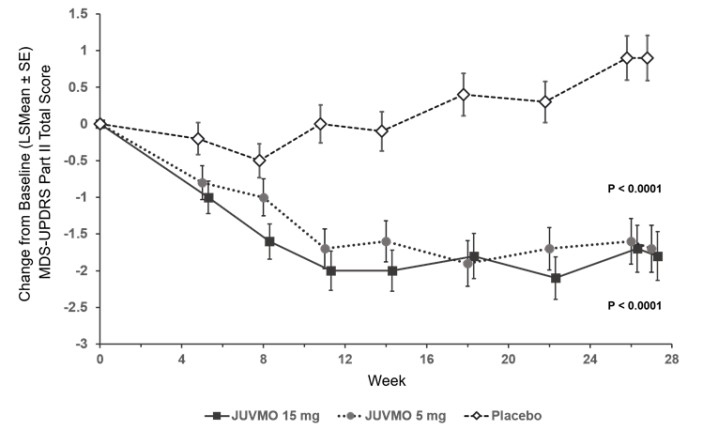
Figure 1: Study 1 Ls Mean (se) Change From Baseline In Mds-updrs Part Ii Score By Trial Visit (mitt Population) (Juvmo 02)
mITT=modified intent-to-treat
Study 2
In Study 2, 304 patients were randomized 1:1 to receive JUVMO 5 mg to 15 mg (N = 151) or placebo (N = 153) once daily. Patients in the JUVMO arm were titrated to receive 5 mg to 15 mg according to the recommended titration schedule unless limited by tolerability [see Dosage and Administration (2.1)].
Patients had a mean age of 62.9 years (range: 40 to 80 years), 56% were male, 88% were White, 11% were Asian, and 5% were Hispanic. The mean duration of PD at baseline was 0.9 years (range: 0 to 3 years). The mean MDS-UPDRS Part II score at baseline was 7.1 and was similar between treatment groups.
There was a statistically significant difference in mean change from baseline in MDS-UPDRS Part II score for patients receiving JUVMO, compared to patients receiving placebo, at Week 26 (p<0.0001). These results are summarized in Table 9.
| JUVMO (N = 150) | Placebo (N = 151) | |
| MDS-UPDRSa Part II Score | ||
| Baseline (SD) | 7.4 (4.32) | 6.8 (3.86) |
| LS mean change (SE) from baseline to Week 26 | -1.5 (0.33) | 0.0 (0.30) |
| LSMD vs Placebo (95% CI) | -1.5 (-2.4, -0.6) | |
| p-value | 0.0007 | |
| a Movement Disorder Society-sponsored revision of the Unified Parkinson's Disease Rating Scale SD=standard deviation; LS=least squares; SE=standard error; LSMD=least squares mean difference; CI=confidence interval | ||
Figure 2 shows the results over time for the MDS-UPDRS Part II in Study 2.
Figure 2: Study 2 LS Mean (SE) Change From Baseline of MDS-UPDRS Part II Score by Trial Visit (mITT Population)
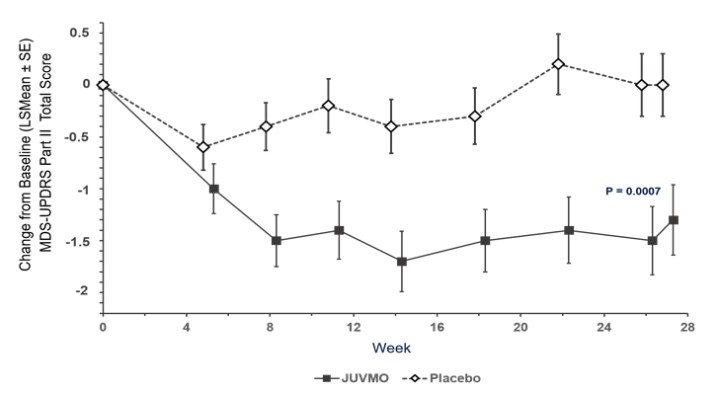
Figure 2 (Juvmo 03)
mITT=modified intent-to-treat
The efficacy of JUVMO for the treatment of PD as adjunctive therapy to levodopa was established in a 27-week, double-blind, randomized, placebo-controlled, parallel-group, flexible-dose trial, Study 3 (NCT04542499). Study 3 enrolled adult patients with the following criteria:
In this trial, 507 patients were randomized 1:1 to receive JUVMO 5 mg to 15 mg (N = 252) or placebo (N = 255) once daily as adjunctive therapy to the pre-study levodopa dose. No changes in levodopa were allowed during study participation.
Patients had a mean age of 64.9 years (range: 43 to 80 years), 63% were male, 97% were White, and 5% were Hispanic. The mean duration of PD at baseline was 6.7 years (range: 0.1 to 30.9 years). The mean total ON time without troublesome dyskinesia at baseline was 10.0 hours and was similar between treatment groups.
The primary efficacy measure was the change from baseline in the total daily ON time without troublesome dyskinesia at Week 26 based on the self-completed home diary for motor function status (Hauser diary).
The key secondary efficacy measure was change from baseline in total daily OFF time to Week 26. JUVMO demonstrated a statistically significant increase in daily ON time without troublesome dyskinesia in patients treated with JUVMO compared to placebo (p<0.0001; see Table 10). There was also a statistically significant reduction in daily OFF time in patients treated with JUVMO compared to placebo (p=0.0006; see Table 10).
| JUVMO (N = 242) | Placebo (N = 245) | |
| Primary Measure | ||
| Total daily ON time without troublesome dyskinesia (hours) | ||
| Baseline Mean (SD) | 9.9 (2.58) | 10.2 (2.58) |
| Change from baseline to Endpoint Week 26 Mean (SD) | 1.7 (0.21) | 0.6 (0.19) |
| LS Mean (SE) Difference | 1.1 (0.6, 1.7) | |
| p-value | <0.0001 | |
| Secondary Measure | ||
| Total daily OFF time (hours) | ||
| Baseline Mean (SD) | 5.6 (2.26) | 5.4 (2.36) |
| Change from Baseline to Endpoint Week 26 Mean (SD) | -1.9 (0.20) | -0.9 (0.18) |
| LS Mean (SE) Difference | -0.9 (-1.5, -0.4) | |
| p-value | 0.0006 | |
Figure 3 shows results over time according to treatment for the efficacy variables (mean change from baseline to week 26 in the total daily mean ON time without troublesome dyskinesia and in OFF time based on the PD diary).
Figure 3: LS Mean (SE) Change from Baseline in ON Time (Hours) Without Troublesome Dyskinesia and in OFF Time (Hours) by Study Visit in Study 3 (mITT Population)
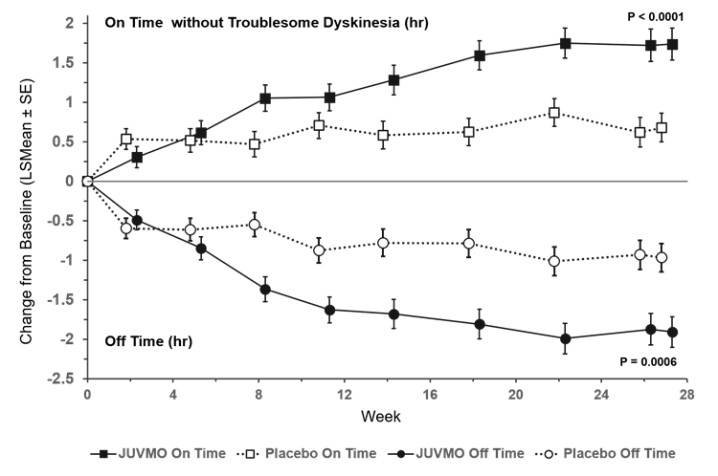
Figure 3: Ls Mean (se) Change From Baseline In On Time (hours) Without Troublesome Dyskinesia And In Off Time (hours) By Study Visit In Study 3 (mitt Population) (Juvmo 04)
mITT=modified intent-to-treat
JUVMO (tavapadon) tablets are supplied in the following configurations:
| Tablet Strength | Description | Package Configuration | NDC Code |
| 5 mg | Purple, film-coated, diamond, with “NRS” debossed on one side and “5” on the other side | Bottle of 30 | 0074-6105-30 |
| 10 mg | Purple, film-coated, oval, with “NRS” debossed on one side and “10” on the other side | Bottle of 30 | 0074-6210-30 |
| 15 mg | Purple, film-coated, rectangle, with “NRS” debossed on one side and “15” on the other side | Bottle of 30 | 0074-6315-30 |
| Titration Pack | 0.25 mg: Orange, film-coated, round, with “NRS” debossed on one side and “025” on the other side 1 mg: Orange, film-coated, rectangle, with “NRS” debossed on one side and “1” on the other side | Each carton contains 6 weekly blister cards containing the following total number of tablets:
| 0074-6090-40 |
Store at 20°C to 25°C (68°F to 77°F); excursions permitted between 15°C and 30°C (59°F and 86°F) [see USP Controlled Room Temperature].
Advise the patient to read the FDA-approved patient labeling (Patient Information).
Drug Interactions
Advise patients and/or caregivers to inform their healthcare provider of all the medicines the patient is taking, including over-the-counter medicines, dietary supplements, and herbal products (e.g., St. John’s Wort), and if there is a change (e.g., discontinuing) in their medication [see Dosage and Administration (2.2, 2.3), Drug Interactions (7.1, 7.2)]. Instruct patients who are initiating JUVMO when concomitantly taking a moderate CYP3A inducer how to properly administer the titration packs.
Hypotension/Orthostatic Hypotension
Advise patients that they may develop postural (orthostatic) hypotension with or without symptoms such as dizziness, nausea, falling, fainting, or blackouts, and sometimes sweating. Hypotension and/or orthostatic symptoms may occur more frequently during initial therapy or with an increase in dose at any time. Instruct patients to rise slowly after sitting or lying down while using JUVMO [see Warnings and Precautions (5.1)].
Impulse Control/Compulsive Behaviors
Advise patients and their caregivers that patients may experience intense urges to spend money uncontrollably, intense urges to gamble, increased sexual urges, binge or compulsive eating, and/or other intense urges and the inability to control these urges while taking JUVMO alone or with one or more medication(s) for the treatment of Parkinson’s disease. Advise patients that they should report any of these adverse reactions to their healthcare provider [see Warnings and Precautions (5.2)].
Hallucinations/Psychotic Behavior
Inform patients that they may experience hallucinations (unreal visions, sounds, or sensations) and other symptoms of psychosis while taking JUVMO. Advise patients that they should report any of these adverse reactions to their healthcare provider [see Warnings and Precautions (5.3)].
Dyskinesia
Inform patients that JUVMO may cause or exacerbate pre-existing dyskinesias [see Warnings and Precautions (5.4)].
Marketed by:
AbbVie Inc.
North Chicago, IL 60064 U.S.A.
JUVMO and its design are trademarks of Cerevel Therapeutics, LLC, an AbbVie company.
©2026 AbbVie. All rights reserved.
20095842
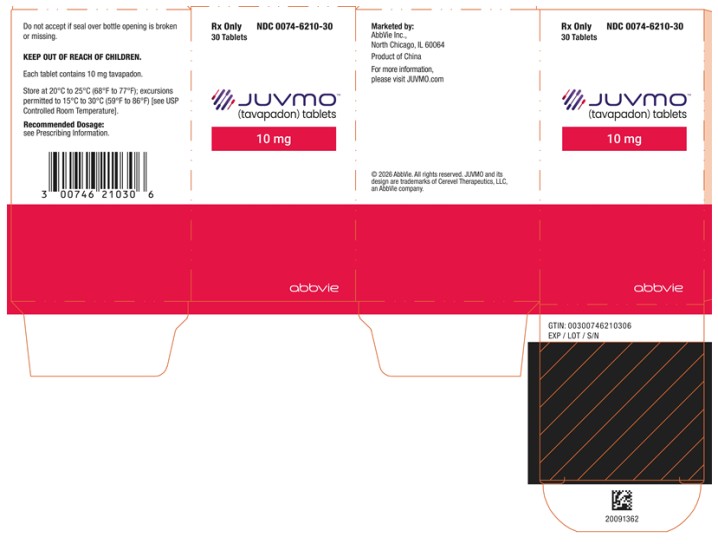
Rx Only NDC 0074-6210-30
30 Tablets
JUVMO™
(tavapadon) tablets
10 mg
Principal Display Panelrx Only Ndc 0074-6210-3030 Tabletsjuvmo™(tavapadon) Tablets10 mg (Juvmo 05)
Rx Only NDC 0074-6105-30
30 Tablets
JUVMO™
(tavapadon) tablets
5 mg
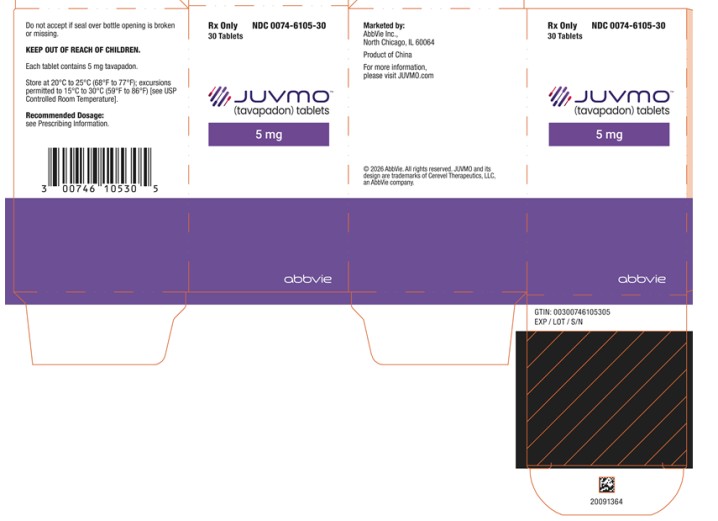
Principal Display Panelrx Only Ndc 0074-6105-3030 Tabletsjuvmo™(tavapadon) Tablets5 mg (Juvmo 06)
Rx Only NDC 0074-6315-30
30 Tablets
JUVMO™
(tavapadon) tablets
15 mg
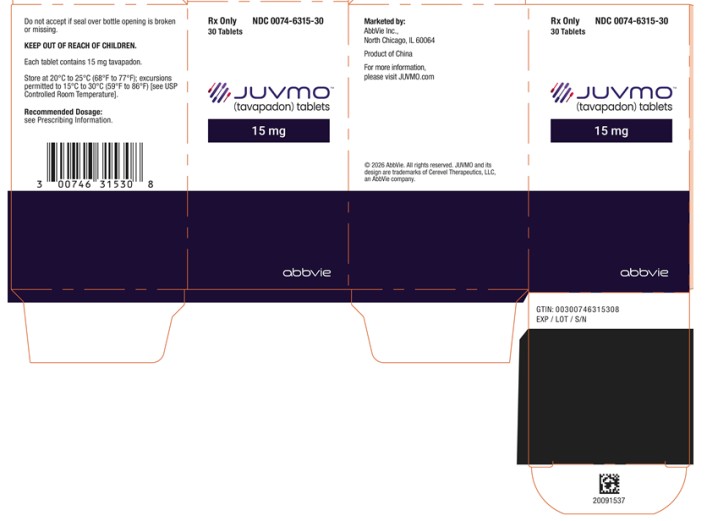
Principal Display Panelrx Only Ndc 0074-6315-3030 Tabletsjuvmo™(tavapadon) Tablets15 mg (Juvmo 07)
NDC 0074-6090-40 Rx only
JUVMO™
(tavapadon) tablets
.25 mg per tablet 1 mg per tablet
Titration Pack
Tablets are packaged as 6 weekly cards,
For a total of 40 days of treatment.
6-week carton contains 100 tablets
(36 x 0.25 mg per tablet and 64 x 1 mg per tablet)
supplied in weekly blister cards.
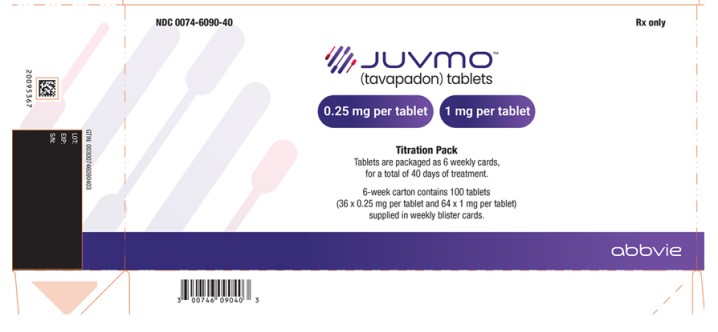
Principal Display Panelndc 0074-6090-40 Rx Onlyjuvmo™(tavapadon) Tablets.25 mg Per Tablet 1 mg Per Tablet Titration Packtablets Are Packaged As 6 Weekly Cards, For A Total Of 40 Days Of Treatment.6-week Carton Contains 100 Tablets(36 X 0.25 mg Per Tablet And 64 X 1 mg Per Tablet)supplied In Weekly Blister Cards. (Juvmo 08)
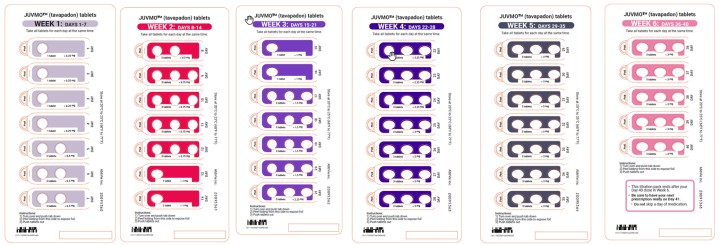
Principal Display Panelndc 0074-6090-40 Rx Onlyjuvmo™(tavapadon) Tablets.25 mg Per Tablet 1 mg Per Tablet Titration Packtablets Are Packaged As 6 Weekly Cards, For A Total Of 40 Days Of Treatment.6-week Carton Contains 100 Tablets(36 X 0.25 mg Per Tablet And 64 X 1 mg Per Tablet)supplied In Weekly Blister Cards. (Juvmo 09)
21 Tablets NDC 0074-5925-21
JUVMO™
(tavapadon) tablets
0.25 mg per tablet
PROFESSIONAL SAMPLE ONLY – NOT FOR SALE
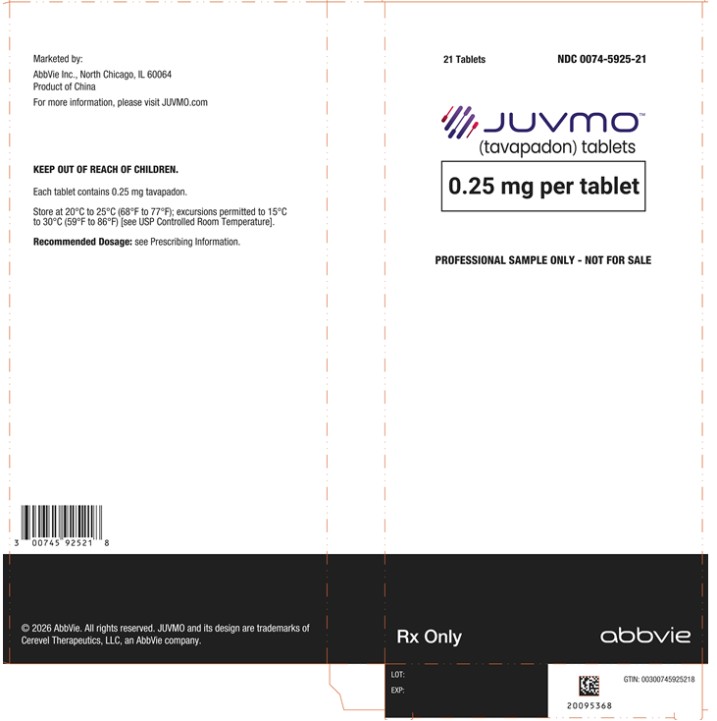
Principal Display Panel21 Tablets Ndc 0074-5925-21juvmo™(tavapadon) Tablets0.25 mg Per Tabletprofessional Sample Only – Not For Sale (Juvmo 0a)
* Please review the disclaimer below.
