1 Indications And Usage
ZYKADIA® is indicated for the treatment of patients with metastatic non-small cell lung cancer (NSCLC) whose tumors are anaplastic lymphoma kinase (ALK)-positive as detected by an FDA-approved test.
The following Structured Product Label (SPL) was submitted to the FDA by Novartis Pharmaceuticals Corporation for the product Zykadia (NDC 0078-0694). This document serves as the official prescribing information, containing essential scientific data and clinical materials required for healthcare providers and patients.
This specific version of the label includes detailed information regarding 1 indications and usage, 2.1 patient selection, 2.2 dosing and administration, 2.3 dose modifications for adverse reactions, 2.4 dose modification for strong cyp3a inhibitors, 2.5 dose modification for patients with severe hepatic impairment, 3 dosage forms and strengths, 4 contraindications, and other regulatory disclosures. Use the navigation below to review specific sections of the FDA submission.
ZYKADIA® is indicated for the treatment of patients with metastatic non-small cell lung cancer (NSCLC) whose tumors are anaplastic lymphoma kinase (ALK)-positive as detected by an FDA-approved test.
Select patients for treatment of metastatic NSCLC with ZYKADIA based on the presence of ALK positivity in tumor specimens [see Indications and Usage (1) and Clinical Studies (14.1)].
Information on FDA-approved tests for the detection of ALK rearrangements in NSCLC is available at: http://www.fda.gov/CompanionDiagnostics
The recommended dose of ZYKADIA is 450 mg orally once daily with food until disease progression or unacceptable toxicity [see Clinical Pharmacology (12.3)].
If a dose of ZYKADIA is missed, make up that dose unless the next dose is due within 12 hours.
If vomiting occurs during the course of treatment, do not administer an additional dose and continue with the next scheduled dose of ZYKADIA.
Recommendations for dose modifications of ZYKADIA for adverse reactions are provided in Table 2.
Discontinue ZYKADIA for patients unable to tolerate 150 mg daily with food.
| Dose Reduction Schedule | Dose Level |
| Starting dose | 450 mg taken orally once daily with food |
| First dose reduction | 300 mg taken orally once daily with food |
| Second dose reduction | 150 mg taken orally once daily with food |
| Adverse Reaction | ZYKADIA Dose Modification |
| Gastrointestinal Adverse Reactions | |
| Lipase or amylase elevation greater than 2 times ULN | Withhold and monitor serum lipase and amylase. Resume ZYKADIA with a 150 mg dose reduction after recovery to less than 1.5 times ULN. |
| Severe or intolerable nausea, vomiting or diarrhea despite optimal antiemetic or antidiarrheal therapy | Withhold until improved, then resume ZYKADIA with a 150 mg dose reduction. |
| Hyperglycemia | |
| Persistent hyperglycemia greater than 250 mg/dL despite optimal antihyperglycemic therapy | Withhold until hyperglycemia is adequately controlled, then resume ZYKADIA with a 150 mg dose reduction. If adequate hyperglycemic control cannot be achieved with optimal medical management, discontinue ZYKADIA. |
| Pneumonitis | |
| Any Grade treatment-related ILD/pneumonitis | Permanently discontinue ZYKADIA. |
| Cardiac Arrhythmias | |
| QTc interval greater than 500 msec on at least 2 separate ECGs | Withhold until QTc interval is less than 481 msec or recovery to baseline if baseline QTc is greater than or equal to 481 msec, then resume ZYKADIA with a 150 mg dose reduction. |
| QTc interval prolongation in combination with torsades de pointes or polymorphic ventricular tachycardia or signs/symptoms of serious arrhythmia | Permanently discontinue ZYKADIA. |
| Symptomatic bradycardia that is not life-threatening | Withhold until recovery to asymptomatic bradycardia or to a heart rate of 60 bpm or above, evaluate concomitant medications known to cause bradycardia, and adjust the dose of ZYKADIA. |
| Clinically significant bradycardia requiring intervention or life-threatening bradycardia in patients taking a concomitant medication also known to cause bradycardia or a medication known to cause hypotension | Withhold until recovery to asymptomatic bradycardia or to a heart rate of 60 bpm or above. If the concomitant medication can be adjusted or discontinued, resume ZYKADIA with a 150 mg dose reduction, with frequent monitoring. |
| Life-threatening bradycardia in patients who are not taking a concomitant medication also known to cause bradycardia or known to cause hypotension | Permanently discontinue ZYKADIA. |
| Hepatotoxicity | |
| ALT or AST elevation greater than 5 times ULN with total bilirubin elevation less than or equal to 2 times ULN | Withhold until recovery to baseline or less than or equal to 3 times ULN, then resume ZYKADIA with a 150 mg dose reduction. |
| ALT or AST elevation greater than 3 times ULN with total bilirubin elevation greater than 2 times ULN in the absence of cholestasis or hemolysis | Permanently discontinue ZYKADIA. |
| AST: aspartate aminotransferase; ALT: alanine aminotransferase; ULN: upper limit of normal; ILD: interstitial lung disease; ECG: electrocardiogram; bpm: beats per minute | |
Avoid concurrent use of strong CYP3A inhibitors during treatment with ZYKADIA [see Drug Interactions (7.1) and Clinical Pharmacology (12.3)].
If concomitant use of a strong CYP3A inhibitor is unavoidable, reduce the ZYKADIA dose by approximately one-third, rounded to the nearest multiple of the 150 mg dosage strength. After discontinuation of a strong CYP3A inhibitor, resume the ZYKADIA dose that was taken prior to initiating the strong CYP3A inhibitor.
For patients with severe hepatic impairment (Child-Pugh C), reduce the dose of ZYKADIA by approximately one-third, rounded to the nearest multiple of the 150 mg dosage strength [see Use in Specific Populations (8.6) and Clinical Pharmacology (12.3)].
150 mg hard gelatin capsule with opaque blue cap and opaque white body containing a white to off-white powder. The opaque blue cap is marked in black ink with “LDK 150MG” and the opaque white body is marked in black ink with “NVR”.
None.
Data in the Warnings and Precautions section reflect the safety of ZYKADIA 750 mg daily under fasted conditions in 925 patients with ALK-positive NSCLC across a pool of seven clinical studies at systemic exposures similar to the recommended dose of 450 mg with food. In a dose optimization study (ASCEND-8), there were no clinically meaningful differences observed in the incidence of toxicities described in Warnings and Precautions between patients receiving 750 mg daily under fasted conditions and 450 mg with food, except for a reduction in gastrointestinal adverse reactions as described [see Gastrointestinal Adverse Reactions (5.1)].
Severe gastrointestinal toxicity occurred in patients treated with ZYKADIA 750 mg under fasted conditions. Diarrhea, nausea, vomiting, or abdominal pain occurred in 95% of 925 patients, including severe cases (Grade 3 or 4) in 14% of patients treated with ZYKADIA across clinical studies. Diarrhea, nausea, vomiting, or abdominal pain leading to dose interruptions or reductions occurred in 36% of patients and leading to treatment discontinuation occurred in 1.6% of patients.
The incidence and severity of gastrointestinal adverse reactions were reduced for patients treated with ZYKADIA 450 mg with food in a dose optimization study (ASCEND-8). Diarrhea, nausea, vomiting, or abdominal pain occurred in 76% of 89 patients treated with ZYKADIA at the recommended dose of 450 mg with food. Of these, the majority experienced Grade 1 events (51%). One patient experienced Grade 3 diarrhea. No patients had diarrhea, nausea, vomiting, or abdominal pain that required dose reduction; 8% of patients had diarrhea or nausea that required at least one dose interruption
Monitor and manage patients using standards of care, including antidiarrheals, antiemetics, or fluid replacement, as indicated. Based on the severity of the adverse drug reaction, withhold ZYKADIA with resumption at a reduced dose as described in Table 2 [see Dosage and Administration (2.3) and Adverse Reactions (6)].
Drug-induced hepatotoxicity occurred in patients treated with ZYKADIA. Elevations in alanine aminotransferase (ALT) greater than 5 times the upper limit of normal (ULN) occurred in 28% and elevations in aspartate aminotransferase (AST) greater than 5 times ULN occurred in 16% of 925 patients across clinical studies. Concurrent elevations in ALT greater than 3 times the ULN and total bilirubin greater than 2 times the ULN, with alkaline phosphatase less than 2 times the ULN occurred in 0.3% of patients across clinical studies. Approximately 1.0% of patients required permanent discontinuation due to hepatotoxicity.
Monitor with liver laboratory tests including ALT, AST, and total bilirubin once a month and as clinically indicated, with more frequent testing in patients who develop transaminase elevations. Based on the severity of the adverse drug reaction, withhold ZYKADIA with resumption at a reduced dose, or permanently discontinue ZYKADIA as described in Table 2 [see Dosage and Administration (2.3) and Adverse Reactions (6)].
Severe, life-threatening, or fatal ILD/pneumonitis occurred in patients treated with ZYKADIA. Across clinical studies, ILD/pneumonitis was reported in 2.4% of 925 patients treated with ZYKADIA. National Cancer Institute Common Terminology Criteria for Adverse Events (NCI CTCAE) Grade 3 or 4 ILD/pneumonitis was reported in 1.3% of patients, with fatal events reported in 0.2% of patients. Ten patients (1.1%) discontinued ZYKADIA across clinical studies due to ILD/pneumonitis.
Monitor patients for pulmonary symptoms indicative of ILD/pneumonitis. Exclude other potential causes of ILD/pneumonitis, and permanently discontinue ZYKADIA in patients diagnosed with treatment-related ILD/pneumonitis [see Dosage and Administration (2.3) and Adverse Reactions (6)].
QTc interval prolongation, which may lead to an increased risk for ventricular tachyarrhythmia (e.g., torsades de pointes) or sudden death, occurred in patients treated with ZYKADIA. Across clinical studies, 6% of 919 patients with at least one post-baseline ECG assessment experienced a QTc interval increase over baseline of greater than 60 msec. Approximately 1.3% of patients taking ZYKADIA 750 mg fasted were found to have a QTc greater than 500 msec. A pharmacokinetic/pharmacodynamic analysis suggested that ZYKADIA causes concentration-dependent increases in the QTc interval. Across clinical studies, 0.2% of patients discontinued ceritinib due to QTc prolongation.
When possible, avoid use of ZYKADIA in patients with congenital long QT syndrome. Conduct periodic monitoring with electrocardiograms (ECGs) and electrolytes in patients with congestive heart failure, bradyarrhythmias, electrolyte abnormalities, or those who are taking medications that are known to prolong the QTc interval. Withhold ZYKADIA in patients who develop a QTc interval greater than 500 msec on at least 2 separate ECGs until the QTc interval is less than 481 msec or recovery to baseline if the QTc interval is greater than or equal to 481 msec, then resume ZYKADIA at a reduced dose as described in Table 2. Permanently discontinue ZYKADIA in patients who develop QTc interval prolongation in combination with torsades de pointes or polymorphic ventricular tachycardia or signs/symptoms of serious arrhythmia [see Dosage and Administration (2.3) and Clinical Pharmacology (12.2)].
Hyperglycemia occurred in patients receiving ZYKADIA. Across clinical studies, CTCAE Grade 3 or 4 hyperglycemia, based on laboratory values, occurred in 13% of 925 patients. Monitor fasting serum glucose prior to the start of ZYKADIA treatment and periodically thereafter as clinically indicated. Initiate or optimize antihyperglycemic medications as indicated. Based on the severity of the adverse drug reaction, withhold ZYKADIA until hyperglycemia is adequately controlled, then resume ZYKADIA at a reduced dose as described in Table 2. If adequate hyperglycemic control cannot be achieved with optimal medical management, permanently discontinue ZYKADIA [see Dosage and Administration (2.3) and Adverse Reactions (6)].
Bradycardia occurred in patients receiving ZYKADIA. Across clinical studies, sinus bradycardia, defined as a heart rate of less than 50 beats per minute, was noted as a new finding in 1% of 925 patients. Bradycardia was reported as an adverse drug reaction in 1% of patients. No patient required discontinuation and 0.1% required interruption with subsequent dose reduction for bradycardia.
Avoid using ZYKADIA in combination with other agents known to cause bradycardia (e.g., beta-blockers, non-dihydropyridine calcium channel blockers, clonidine, and digoxin) to the extent possible. Monitor heart rate and blood pressure regularly. In cases of symptomatic bradycardia that is not life-threatening, withhold ZYKADIA until recovery to asymptomatic bradycardia or to a heart rate of 60 bpm or above, evaluate the use of concomitant medications, and adjust the dose of ZYKADIA. Permanently discontinue ZYKADIA for life-threatening bradycardia if no contributing concomitant medication is identified; however, if associated with a concomitant medication known to cause bradycardia or hypotension, withhold ZYKADIA until recovery to asymptomatic bradycardia or to a heart rate of 60 bpm or above, and if the concomitant medication can be adjusted or discontinued, resume ZYKADIA at a reduced dose, as described in Table 2, upon recovery to asymptomatic bradycardia or to a heart rate of 60 bpm or above, with frequent monitoring [see Dosage and Administration (2.3) and Adverse Reactions (6)].
Pancreatitis occurred in patients receiving ZYKADIA. Pancreatitis, including one fatality, occurred in less than 1% of patients receiving ZYKADIA in clinical studies. CTCAE Grade 3 or 4 elevations of amylase occurred in 7% of patients receiving ZYKADIA across clinical studies, while CTCAE Grade 3 or 4 elevations of lipase occurred in 14% of patients. Monitor lipase and amylase prior to the start of ZYKADIA treatment and periodically thereafter as clinically indicated. Based on the severity of the laboratory abnormalities, withhold ZYKADIA with resumption at a reduced dose as described in Table 2 [see Dosage and Administration (2.3) and Adverse Reactions (6)].
Based on its mechanism of action and findings in animal studies, ZYKADIA can cause fetal harm when administered to a pregnant woman. In animal studies, administration of ceritinib to rats and rabbits during organogenesis at maternal plasma exposures below the recommended human dose caused increases in skeletal anomalies in rats and rabbits. Advise pregnant women of the potential risk to a fetus. Advise females of reproductive potential to use effective contraception during treatment with ZYKADIA and for 6 months following completion of therapy. Based on the potential for genotoxicity, advise males with female partners of reproductive potential to use condoms during treatment with ZYKADIA and for 3 months following completion of therapy [see Use in Specific Populations (8.1, 8.3) and Nonclinical Toxicology (13.1)].
The following adverse reactions are discussed in greater detail in other sections of the labeling:
Because clinical trials are conducted under widely varying conditions, adverse reaction rates observed in the clinical trials of a drug cannot be directly compared to rates in the clinical trials of another drug and may not reflect the rates observed in practice.
The data in the Warnings and Precautions section reflect exposure to ZYKADIA 750 mg once daily under fasted conditions in 925 patients with ALK-positive NSCLC across seven clinical studies, including ASCEND-4 and ASCEND-1, described below, a randomized active-controlled study, two single arm studies, and two dose-escalation studies. The majority of patients enrolled in these studies had received prior treatment with chemotherapy and/or crizotinib for NSCLC. Among these 925 patients the most common adverse reactions (greater than or equal to 25% incidence) were diarrhea, nausea, fatigue, vomiting, abdominal pain, decreased appetite, and weight loss. Approximately 45% of patients initiating treatment with ZYKADIA 750 mg under fasted conditions had an adverse reaction that required at least one dose reduction and 66% of patients had an adverse reaction that required at least one dose interruption. The median time to first dose reduction due to any reason was 7 weeks.
In ASCEND-8, a dose optimization study, ZYKADIA 450 mg daily with food (N=89) was compared to 750 mg daily under fasted conditions (N=90) in both previously treated and untreated patients with ALK-positive NSCLC. The overall safety profile of ZYKADIA 450 mg with food was consistent with ZYKADIA 750 mg fasted, except for a reduction in gastrointestinal adverse reactions, while achieving comparable steady-state exposure [see Clinical Pharmacology (12.3)]. The incidence and severity of gastrointestinal adverse reactions (diarrhea 56%, nausea 45%, vomiting 35%) were reduced for patients treated with ZYKADIA 450 mg with food; the only Grade ≥3 adverse reaction was Grade 3 diarrhea in one patient (1.1%) [see Gastrointestinal Adverse Reactions (5.1)]. In patients treated with ZYKADIA 450 mg with food, 10% of patients had an adverse reaction that required at least one dose reduction and 42% of patients had an adverse reaction that required at least one dose interruption. The median time to first dose reduction due to any reason was 8 weeks.
Previously Untreated ALK-Positive Metastatic NSCLC
The safety evaluation of ZYKADIA is based on ASCEND-4, an open-label, randomized, active-controlled multicenter study of 376 previously untreated ALK-positive NSCLC patients. Patients received ZYKADIA 750 mg daily (N=189) under fasted conditions or chemotherapy plus maintenance chemotherapy (N=187). Chemotherapy regimens were pemetrexed (500 mg/m2) plus investigator’s choice of cisplatin (75 mg/m2) or carboplatin (AUC of 5 - 6 mg*min/mL) administered every 21 days. Patients who completed 4 cycles of chemotherapy without progressive disease received pemetrexed (500 mg/m2) as single-agent maintenance therapy every 21 days.
The demographic characteristics of the study population were 57% female, median age 54 years (range: 22 to 81 years), 22% age 65 years or older, 54% White, 42% Asian, 2% Black, and 2% other races. Patients were enrolled in Europe (53%), Asia Pacific (42%), and South America (5%) regions. The majority of patients had adenocarcinoma (97%), never smoked (61%) and 32% had brain metastases at screening. The median duration of exposure to ZYKADIA was 18 months.
Serious adverse reactions were reported in 72 patients (38%) treated with ZYKADIA. The most frequent serious adverse reactions were pneumonia (4%), pleural effusion (4%), vomiting (4%), nausea (3%), dyspnea (3%), hyperglycemia (3%), AST increased (2%), lung infection (2%), and pericardial effusion (2%). Among patients treated with ZYKADIA, dose interruptions due to adverse reactions occurred in 77%, dose reductions were required in 66%, and adverse reactions that led to discontinuation of therapy occurred in 12% of patients. The most frequent adverse reactions, reported in at least 10% of patients treated with ZYKADIA, that led to dose interruptions or reductions were: ALT increased (48%), AST increased (34%), vomiting (15%), blood creatinine increased (14%), GGT increased (13%), diarrhea (13%), and nausea (13%). The most frequent adverse reactions that led to discontinuation of ZYKADIA in 1% or more of patients in ASCEND-4 were blood creatinine increased (2.1%), amylase increased (1.1%), and lipase increased (1.1%). The following fatal adverse reactions occurred in 4 patients treated with ZYKADIA: myocardial infarction, respiratory tract infection, pneumonitis, and unknown cause.
Tables 3 and 4 summarize adverse reactions and laboratory abnormalities, respectively, in ASCEND-4.
| ZYKADIA N=189 | Chemotherapy N=175a | |||
| All Grades | Grade 3-4 | All Grades | Grade 3-4 | |
| % | % | % | % | |
| Gastrointestinal** | ||||
| Diarrhea | 85 | 4.8 | 11 | 1.1 |
| Nausea | 69 | 2.6 | 55 | 5 |
| Vomiting | 67 | 5 | 36 | 6 |
| Abdominal painb | 40 | 3.7 | 13 | 0 |
| Constipation | 20 | 0 | 22 | 0 |
| Esophageal disorderc | 15 | 0.5 | 8 | 0.6 |
| General | ||||
| Fatigued | 45 | 7 | 49 | 6 |
| Non-cardiac chest pain | 21 | 1.1 | 10 | 0.6 |
| Back pain | 19 | 1.6 | 18 | 2.3 |
| Pain in extremity | 13 | 0 | 7 | 0 |
| Musculoskeletal pain | 11 | 0.5 | 6 | 0.6 |
| Pruritus | 11 | 0.5 | 5 | 0 |
| Pyrexia | 19 | 0 | 14 | 1.1 |
| Metabolism And Nutrition | ||||
| Decreased appetite | 34 | 1.1 | 32 | 1.1 |
| Weight loss | 24 | 3.7 | 15 | 0.6 |
| Respiratory | ||||
| Cough | 25 | 0 | 17 | 0 |
| Neurologic | ||||
| Headache | 19 | 0.5 | 13 | 1.1 |
| Dizziness | 12 | 1.1 | 10 | 0.6 |
| Skin | ||||
| Rashe | 21 | 1.1 | 8 | 0.6 |
| Cardiac | ||||
| Prolonged QT interval | 12 | 2.6 | 1.1 | 0.6 |
| Pericarditisf | 4.2 | 1.6 | 2.3 | 1.1 |
| *National Cancer Institute Common Terminology Criteria for Adverse Events (version 4.03) **For frequency of gastrointestinal adverse reactions at the recommended dose of 450 mg with food, see Gastrointestinal Adverse Reactions (5.1) and Clinical Trials Experience (6.1). aTwelve patients randomized to chemotherapy did not receive study drug. bAbdominal pain (abdominal pain, abdominal pain upper, abdominal discomfort, epigastric discomfort) cEsophageal disorder (dyspepsia, gastroesophageal reflux disease, dysphagia) dFatigue (fatigue and asthenia) eRash (rash, dermatitis acneiform, rash maculo-papular) fPericarditis (pericardial effusion and pericarditis) | ||||
Additional clinically significant adverse reactions occurring in 2% or more of patients treated with ZYKADIA 750 mg fasted included: vision disorder (4%; comprised of vision impairment, blurred vision, photopsia, accommodation disorder, presbyopia, reduced visual acuity, or vitreous floaters), bradycardia (4%), ILD/pneumonitis (2%), hepatotoxicity (2%) and renal failure (2%).
| ZYKADIA N=189 | Chemotherapy N=175a | |||
| All Grades | Grade 3–4 | All Grades | Grade 3–4 | |
| % | % | % | % | |
| Hematology | ||||
| Anemia | 67 | 4.2 | 84 | 11 |
| Neutropenia | 27 | 2.1 | 58 | 20 |
| Thrombocytopenia | 16 | 1.0 | 38 | 4.6 |
| Chemistry | ||||
| Increased alanine transaminase (ALT) | 91 | 34 | 65 | 3.4 |
| Increased aspartate transaminase (AST) | 86 | 21 | 58 | 2.3 |
| Increased gamma-glutamyl transpeptidase (GGT) | 84 | 49 | 67 | 10 |
| Increased alkaline phosphatase | 81 | 12 | 47 | 1.7 |
| Increased creatinine | 77 | 4.2 | 37 | 0.6 |
| Hyperglycemia | 53 | 10 | 67 | 10 |
| Increased amylase | 37 | 8 | 43 | 4.5 |
| Decreased phosphate | 38 | 3.7 | 27 | 4.0 |
| Increased bilirubin (total) | 15 | 0.5 | 6 | 0.6 |
| Increased lipaseb | 13 | 6 | 7 | 0.6 |
| aTwelve patients randomized to chemotherapy did not receive study drug. bIn the ZYKADIA arm, no patients had baseline lipase laboratory assessments, 112 had post-baseline assessments. In the chemotherapy arm, one patient had baseline lipase laboratory assessments but no post-baseline assessment; 49 patients had post-baseline assessments. | ||||
Previously Treated ALK-Positive Metastatic NSCLC
The safety evaluation of ZYKADIA is based on 255 ALK-positive patients in ASCEND-1 (246 patients with NSCLC and 9 patients with other cancers who received ZYKADIA at a dose of 750 mg daily under fasted conditions). The median duration of exposure to ZYKADIA was 6 months. The study population characteristics were: median age 53 years, age less than 65 (84%), female (53%), Caucasian (63%), Asian (34%), NSCLC adenocarcinoma histology (90%), never or former smoker (97%), ECOG PS 0 or 1 (89%), brain metastases (49%), and number of prior therapies 2 or more (67%).
Dose reductions due to adverse reactions occurred in 59% of patients treated with ZYKADIA. The most frequent adverse reactions, reported in at least 10% of patients, that led to dose reductions or interruptions were: increased ALT (29%), nausea (20%), increased AST (16%), diarrhea (16%), and vomiting (16%). Serious adverse drug reactions reported in 2% or more of patients in ASCEND-1 were convulsion, pneumonia, ILD/pneumonitis, dyspnea, dehydration, hyperglycemia, and nausea. Fatal adverse reactions in patients treated with ZYKADIA occurred in 5% of patients, consisting of: pneumonia (4 patients), respiratory failure, ILD/pneumonitis, pneumothorax, gastric hemorrhage, general physical health deterioration, pulmonary tuberculosis, cardiac tamponade, and sepsis (1 patient each). Discontinuation of therapy due to adverse reactions occurred in 10% of patients treated with ZYKADIA. The most frequent adverse drug reactions that led to discontinuation in 1% or more of patients in ASCEND-1 were pneumonia, ILD/pneumonitis, and decreased appetite.
Tables 5 and 6 summarize the common adverse reactions and laboratory abnormalities observed in ZYKADIA-treated patients.
| ZYKADIA N=255 | ||
| All Grades | Grade 3–4 | |
| % | % | |
| Gastrointestinal** | ||
| Diarrhea | 86 | 6 |
| Nausea | 80 | 4 |
| Vomiting | 60 | 4 |
| Abdominal paina | 54 | 2 |
| Constipation | 29 | 0 |
| Esophageal disorderb | 16 | 1 |
| General | ||
| Fatiguec | 52 | 5 |
| Metabolism and Nutrition | ||
| Decreased appetite | 34 | 1 |
| Skin | ||
| Rashd | 16 | 0 |
| Respiratory | ||
| Interstitial lung disease/pneumonitis | 4 | 3 |
| *National Cancer Institute Common Terminology Criteria for Adverse Events (version 4.03) **For frequency of gastrointestinal adverse reactions at the recommended dose of 450 mg with food, see Gastrointestinal Adverse Reactions (5.1) and Clinical Trials Experience (6.1). aAbdominal pain (abdominal pain, upper abdominal pain, abdominal discomfort, epigastric discomfort) bEsophageal disorder (dyspepsia, gastroesophageal reflux disease, dysphagia) cFatigue (fatigue, asthenia) dRash (rash, maculopapular rash, acneiform dermatitis) | ||
Additional clinically significant adverse reactions occurring in 2% or more of patients treated with ZYKADIA 750 mg fasted included neuropathy (17%; comprised of paresthesia, muscular weakness, gait disturbance, peripheral neuropathy, hypoesthesia, peripheral sensory neuropathy, dysesthesia, neuralgia, peripheral motor neuropathy, hypotonia, or polyneuropathy), vision disorder (9%; comprised of vision impairment, blurred vision, photopsia, accommodation disorder, presbyopia, or reduced visual acuity), prolonged QT interval (4%), and bradycardia (3%).
| ZYKADIA N=255 | ||
| All Grades | Grade 3–4 | |
| % | % | |
| Hematology | ||
| Anemia | 84 | 5 |
| Chemistry | ||
| Increased alanine transaminase (ALT) | 80 | 27 |
| Increased aspartate transaminase (AST) | 75 | 13 |
| Increased creatinine | 58 | 2 |
| Hyperglycemia | 49 | 13 |
| Decreased phosphate | 36 | 7 |
| Increased lipase | 28 | 10 |
| Increased bilirubin (total) | 15 | 1 |
Ceritinib is primarily metabolized by CYP3A4 and is a substrate of the efflux transporter P-glycoprotein (P-gp).
Strong CYP3A Inhibitors
A strong CYP3A4/P-gp inhibitor (ketoconazole) increased the systemic exposure of ceritinib [see Clinical Pharmacology (12.3)]. Avoid concurrent use of strong CYP3A inhibitors during treatment with ZYKADIA. If concomitant use of strong CYP3A inhibitors including certain antivirals (e.g., ritonavir), macrolide antibiotics (e.g., telithromycin), antifungals (e.g., ketoconazole), and nefazodone is unavoidable, reduce the ZYKADIA dose by approximately one-third, rounded to the nearest multiple of the 150 mg dosage strength. After discontinuation of a strong CYP3A inhibitor, resume the ZYKADIA dose that was taken prior to initiating the strong CYP3A inhibitor.
Do not consume grapefruit and grapefruit juice as they may inhibit CYP3A.
Strong CYP3A Inducers
A strong CYP3A4/P-gp inducer (rifampin) decreased the systemic exposure of ceritinib [see Clinical Pharmacology (12.3)]. Avoid concurrent use of strong CYP3A inducers (e.g., carbamazepine, phenytoin, rifampin, and St. John’s Wort) during treatment with ZYKADIA.
Ceritinib may inhibit CYP3A and CYP2C9 at clinical concentrations [see Clinical Pharmacology (12.3)]. Avoid concurrent use of CYP3A and CYP2C9 substrates known to have narrow therapeutic indices or substrates primarily metabolized by CYP3A and CYP2C9 during treatment with ZYKADIA. If use of these medications is unavoidable, consider dose reduction of CYP3A substrates with narrow therapeutic indices (e.g., alfentanil, cyclosporine, dihydroergotamine, ergotamine, fentanyl, pimozide, quinidine, sirolimus, tacrolimus) and CYP2C9 substrates with narrow therapeutic indices (e.g., phenytoin, warfarin).
Risk Summary
Based on animal studies and its mechanism of action, ZYKADIA can cause fetal harm when administered to a pregnant woman [see Clinical Pharmacology (12.1)]. The limited available data on the use of ZYKADIA in pregnant women are insufficient to inform a risk. Administration of ceritinib to rats and rabbits during the period of organogenesis at maternal plasma exposures below the recommended human dose caused increases in skeletal anomalies in rats and rabbits [see Data]. Advise a pregnant woman of the potential risk to a fetus.
In the U.S. general population, the estimated background risk of major birth defects and miscarriage in clinically recognized pregnancies are 2% to 4% and 15% to 20%, respectively.
Data
Animal Data
In an embryo-fetal development study in which pregnant rats were administered daily doses of ceritinib during organogenesis, dose-related skeletal anomalies were observed at doses as low as 50 mg/kg (less than 0.5-fold the human exposure by AUC at the recommended dose). Findings included delayed ossifications and skeletal variations.
In pregnant rabbits administered ceritinib daily during organogenesis, dose-related skeletal anomalies, including incomplete ossification, were observed at doses equal to or greater than 2 mg/kg/day (approximately 0.015-fold the human exposure by AUC at the recommended dose). A low incidence of visceral anomalies, including absent or malpositioned gallbladder and retroesophageal subclavian cardiac artery, was observed at doses equal to or greater than 10 mg/kg/day (approximately 0.13-fold the human exposure by AUC at the recommended dose). Maternal toxicity and abortion occurred in rabbits at doses of 35 mg/kg or greater. In addition, embryolethality was observed in rabbits at a dose of 50 mg/kg.
Risk Summary
There are no data regarding the presence of ceritinib or its metabolites in human milk, the effects of ceritinib on the breastfed infant, or its effects on milk production. Because of the potential for serious adverse reactions including gastrointestinal adverse reactions, hepatotoxicity, pneumonitis, bradycardia and pancreatitis, advise a woman not to breastfeed during treatment with ZYKADIA and for 2 weeks following completion of therapy.
Contraception
Females
ZYKADIA can cause fetal harm when administered to a pregnant woman [see Use in Specific Populations (8.1)]. Advise females of reproductive potential to use effective contraception during treatment with ZYKADIA and for 6 months following completion of therapy.
Males
Based on the potential for genotoxicity, advise males with female partners of reproductive potential to use condoms during treatment with ZYKADIA and for 3 months following completion of therapy [see Nonclinical Toxicology (13.1)].
The safety and effectiveness of ZYKADIA in pediatric patients have not been established.
Of the 925 patients in clinical studies of ZYKADIA, 18% were 65 years or older, while 5% were 75 years or older. No overall differences in safety or effectiveness were observed between these subjects and younger subjects.
For patients with severe hepatic impairment (Child-Pugh C), reduce the dose of ZYKADIA by approximately one-third, rounded to the nearest multiple of the 150 mg dosage strength [see Dosage and Administration (2.5) and Clinical Pharmacology (12.3)]. No dose adjustment is recommended in patients with mild (Child-Pugh A) or moderate (Child-Pugh B) hepatic impairment.
ZYKADIA (ceritinib) is a tyrosine kinase inhibitor for oral administration. The molecular formula for ceritinib is C28H36N5O3ClS. The molecular weight is 558.14 g/mole. Ceritinib is described chemically as 5-Chloro-N4-[2-[(1-methylethyl)sulfonyl]phenyl]-N2-[5-methyl-2-(1-methylethoxy)-4-(4-piperidinyl)phenyl]-2,4-pyrimidinediamine.
The chemical structure of ceritinib is shown below:
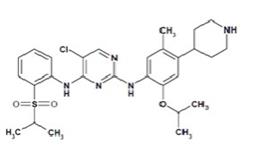
The Chemical Structure Of Ceritinib Is Ceritinib Is A White To Almost White Or Light Yellow Or Light Brown Powder With A Pka Of 9.7 And 4.1. (Zykadia 01)
Ceritinib is a white to almost white or light yellow or light brown powder with a pKa of 9.7 and 4.1.
ZYKADIA is supplied as printed hard-gelatin capsules containing 150 mg of ceritinib and the following inactive ingredients: colloidal anhydrous silica, L-hydroxypropylcellulose, magnesium stearate, microcrystalline cellulose, sodium starch glycolate, and hard gelatin capsule shells. The capsule shell is composed of gelatin, indigotine, and titanium dioxide.
Ceritinib is a kinase inhibitor. Targets of ceritinib inhibition identified in either biochemical or cellular assays at clinically relevant concentrations include ALK, insulin-like growth factor 1 receptor (IGF-1R), insulin receptor (InsR), and ROS1. Among these, ceritinib is most active against ALK. Ceritinib inhibited autophosphorylation of ALK, ALK-mediated phosphorylation of the downstream signaling protein STAT3, and proliferation of ALK-dependent cancer cells in in vitro and in vivo assays.
Ceritinib inhibited the in vitro proliferation of cell lines expressing EML4-ALK and NPM-ALK fusion proteins and demonstrated dose-dependent inhibition of EML4-ALK-positive NSCLC xenograft growth in mice and rats. Ceritinib exhibited dose-dependent anti-tumor activity in mice bearing EML4-ALK-positive NSCLC xenografts with demonstrated resistance to crizotinib, at concentrations within a clinically relevant range.
Cardiac Electrophysiology
Serial ECGs were collected following a single dose and at steady-state to evaluate the effect of ceritinib on the QT interval in 925 patients treated with ZYKADIA 750 mg once daily under fasted conditions. Twelve of 925 patients (1.3%) were found to have a QTc greater than 500 msec and 58 patients (6%) had an increase from baseline QTc greater than 60 msec. In ASCEND-4, a central tendency analysis of the QTc data at average steady-state concentrations demonstrated that the upper bound of the 2-sided 90% CI for QTc was 15.3 msec at ZYKADIA 750 mg once daily under fasted conditions. A pharmacokinetic/pharmacodynamic analysis suggested concentration-dependent QTc interval prolongation [see Warnings and Precautions (5.4)].
Based on central review of ECG data, 10 of 925 patients (1.1%) had bradycardia defined as less than 50 beats per minute.
Absorption
After a single oral administration of ZYKADIA in patients, peak plasma levels (Cmax) of ceritinib were achieved at approximately 4 to 6 hours, and area under the curve (AUC) and Cmax increased dose proportionally over 50 to 750 mg under fasted conditions. The absolute bioavailability of ZYKADIA has not been determined.
Following ZYKADIA 750 mg once daily dosing under fasted conditions, steady-state was reached by approximately 15 days with a geometric mean accumulation ratio of 6.2 after 3 weeks. Systemic exposure increased in a greater than dose proportional manner after repeat doses of 50 to 750 mg once daily under fasted conditions.
Systemic exposure of ceritinib was increased when administered with a meal. A food effect study conducted in healthy subjects with a single 500 mg ceritinib dose showed that a high‐fat meal (containing approximately 1000 calories and 58 grams of fat) increased ceritinib AUC by 73% and Cmax by 41% and a low‐fat meal (containing approximately 330 calories and 9 grams of fat) increased ceritinib AUC by 58% and Cmax by 43% as compared with the fasted state.
In a dose optimization study (ASCEND-8) in patients receiving ZYKADIA 450 mg or 600 mg daily with food (approximately 100 to 500 calories and 1.5 to 15 grams of fat) or 750 mg daily under fasted conditions, there was no clinically meaningful difference in the systemic steady-state exposure of ceritinib (AUC) for the 450 mg with food arm (n=36) compared to the 750 mg fasted arm (n=31). The steady-state AUC increased by 24% and Cmax increased by 25% in the 600 mg with food arm (n=30) compared to the 750 mg fasted arm (n=31).
Distribution
Ceritinib is 97% bound to human plasma proteins, independent of drug concentration. The apparent volume of distribution (Vd/F) is 4230 L following a single 750 mg fasted ZYKADIA dose in patients. Ceritinib also has a slight preferential distribution to red blood cells, relative to plasma, with a mean in vitro blood-to-plasma ratio of 1.35.
Elimination
Following a single 750 mg fasted ZYKADIA dose, the geometric mean apparent plasma terminal half-life (t1/2) of ceritinib was 41 hours in patients. Ceritinib demonstrates nonlinear PK over time. The geometric mean apparent clearance (CL/F) of ceritinib was lower at steady-state (33.2 L/h) after 750 mg daily dosing than after a single 750 mg dose (88.5 L/h).
Metabolism: In vitro studies demonstrated that CYP3A was the major enzyme involved in the metabolic clearance of ceritinib. Following oral administration of a single 750 mg radiolabeled ceritinib dose under fasted conditions, ceritinib as the parent compound was the main circulating component (82%) in human plasma.
Excretion: Following oral administration of a single 750 mg radiolabeled ceritinib dose under fasted conditions, 92.3% of the administered dose was recovered in the feces (with 68% as unchanged parent compound) while 1.3% of the administered dose was recovered in the urine.
Specific Populations
Age, Gender, Race, and Body Weight: Age, gender, race, and body weight had no clinically important effect on the systemic exposure of ceritinib based on population pharmacokinetic analyses.
Hepatic Impairment: Following a single 750 mg ZYKADIA dose under fasted conditions, the geometric mean systemic exposure (AUCinf) of ceritinib was increased by 66% and unbound ceritinib AUCinf was increased by 108% in subjects with severe (Child-Pugh C) hepatic impairment compared to healthy subjects with normal hepatic function [see Dosage and Administration (2.5) and Use in Specific Populations (8.6)]. Total and unbound systemic exposure of ceritinib were similar in subjects with mild (Child-Pugh A) to moderate (Child-Pugh B) hepatic impairment compared to healthy subjects with normal hepatic function.
Renal Impairment: A pharmacokinetic trial in patients with renal impairment has not been conducted as ceritinib elimination via the kidney is low (1.3% of a single oral administered dose). Ceritinib exposures were similar between patients with mild to moderate renal impairment and patients with normal renal function based on a population pharmacokinetic analysis of 345 patients with mild renal impairment (CLcr 60 to less than 90 mL/min), 82 patients with moderate renal impairment (CLcr 30 to less than 60 mL/min) and 546 patients with normal renal function (greater than or equal to 90 mL/min). Patients with severe renal impairment (CLcr less than 30 mL/min) were not included in the clinical trial.
Pediatrics: No trials have been conducted to evaluate the pharmacokinetics of ceritinib in pediatric patients.
Drug Interactions
Effect of Strong CYP3A Inhibitors on Ceritinib: In vitro studies show that ceritinib is a substrate of CYP3A. Coadministration of a single 450 mg fasted ZYKADIA dose with ketoconazole (a strong CYP3A inhibitor) 200 mg twice daily for 14 days increased ceritinib AUC (90% CI) by 2.9-fold (2.5, 3.3) and Cmax (90% CI) by 22% (7%, 39%) in 19 healthy subjects [see Drug Interactions (7.1)]. The steady-state AUC of ceritinib at reduced doses after coadministration with ketoconazole 200 mg twice daily for 14 days was predicted by simulations to be similar to the steady-state AUC of ceritinib alone [see Dosage and Administration (2.4)].
Effect of Strong CYP3A Inducers on Ceritinib: Coadministration of a single 750 mg fasted ZYKADIA dose with rifampin (a strong CYP3A inducer) 600 mg daily for 14 days decreased ceritinib AUC (90% CI) by 70% (61%, 77%) and Cmax (90% CI) by 44% (24%, 59%) in 19 healthy subjects [see Drug Interactions (7.1)].
Effect of Ceritinib on CYP Substrates: Based on in vitro data, ceritinib may inhibit CYP3A and CYP2C9 at clinical concentrations [see Drug Interactions (7.2)]. Time-dependent inhibition of CYP3A was also observed.
Effect of Transporters on Ceritinib Disposition: Ceritinib is a substrate of efflux transporter P-gp, but is not a substrate of Breast Cancer Resistance Protein (BCRP), Multidrug Resistance Protein (MRP2), Organic Cation Transporter (OCT1), Organic Anion Transporter (OAT2), or Organic Anion Transporting Polypeptide (OATP1B1) in vitro. Drugs that inhibit P-gp may increase ceritinib concentrations.
Effect of Ceritinib on Transporters: Based on in vitro data, ceritinib does not inhibit apical efflux transporters, P-gp, BCRP, or MRP2, hepatic uptake transporters OATP1B1 and OATP1B3, renal organic anion uptake transporters OAT1 and OAT3, or organic cation uptake transporters OCT1 and OCT2 at clinical concentrations.
Effect of Acid Reducing Agents on Ceritinib: Ceritinib demonstrates pH-dependent solubility and becomes poorly soluble as pH increases in vitro. Acid reducing agents (e.g., proton pump inhibitors, H2-receptor antagonists, antacids) can alter the solubility of ceritinib and reduce its bioavailability. Coadministration of a single 750 mg ZYKADIA dose under fasted conditions with a proton pump inhibitor (esomeprazole) 40 mg daily for 6 days in healthy subjects decreased ceritinib AUC (90% CI) by 76% (66%, 83%) and Cmax (90% CI) by 79% (70%, 86%). However, coadministration of a single 750 mg ZYKADIA dose under fasted conditions with proton pump inhibitors for 6 days in a subgroup of patients from ASCEND-1 suggested less effect on ceritinib exposure than that observed in healthy subjects as AUC (90% CI) decreased by 30% (0%, 52%) and Cmax (90% CI) decreased by 25% (5%, 41%) and no clinically meaningful effect on ceritinib exposure was observed at steady-state after ZYKADIA once daily dosing.
Carcinogenicity studies have not been performed with ceritinib.
Ceritinib was not mutagenic in vitro in the bacterial reverse mutation (Ames) assay but induced numerical aberrations (aneugenic) in the in vitro cytogenetic assay using human lymphocytes, and micronuclei in the in vitro micronucleus test using TK6 cells. Ceritinib was not clastogenic in the in vivo rat micronucleus assay.
There are no data on the effect of ceritinib on human fertility. Fertility/early embryonic development studies were not conducted with ceritinib. There were no adverse effects on male or female reproductive organs in general toxicology studies conducted in monkeys and rats at exposures equal to or greater than 0.5- and 1.5-fold, respectively, of the human exposure by AUC at the recommended dose.
Target organs in nonclinical animal models included, but were not limited to, the pancreas, biliopancreatic/bile ducts, gastrointestinal tract, and liver. Pancreatic focal acinar cell atrophy was observed in rats at 1.5-fold the human exposure by AUC at the recommended dose. Biliopancreatic duct and bile duct necrosis was observed in rats at exposures equal to or greater than 5% of the human exposure by AUC at the recommended dose. Bile duct inflammation and vacuolation were also noted in monkeys at exposures equal to or greater than 0.5-fold the human exposure by AUC at the recommended dose. Frequent minimal necrosis and hemorrhage of the duodenum was exhibited in monkeys at 0.5-fold the human exposure by AUC, and in rats at an exposure similar to that observed clinically.
Ceritinib crossed the blood brain barrier in rats with a brain-to-blood exposure (AUCinf) ratio of approximately 15%.
The efficacy of ZYKADIA for the treatment of patients with ALK-positive NSCLC who had not received prior systemic therapy for metastatic disease was established in an open-label, randomized, active-controlled, multicenter study (ASCEND-4, NCT01828099). Patients were required to have WHO performance status 0-2 and ALK-positive NSCLC as identified by the VENTANA ALK (D5F3) CDx Assay. Neurologically stable patients with central nervous system (CNS) metastases that did not require increasing doses of steroids to manage CNS symptoms were permitted to enroll. Patients with uncontrolled diabetes mellitus; a history of interstitial lung disease or interstitial pneumonitis; or a history of pancreatitis or increased amylase or lipase that was due to pancreatic disease were not eligible.
The major efficacy outcome measure was progression-free survival (PFS) as determined by blinded independent review committee (BIRC) according to RECIST v1.1. Additional efficacy outcome measures were overall survival (OS), overall response rate (ORR) and duration of response (DOR) determined by BIRC, overall intracranial response rate (OIRR), duration of intracranial response (DOIR) determined by BIRC neuro-radiologist, and patient reported outcomes.
Patients were randomized 1:1 to receive ZYKADIA 750 mg orally daily under fasted conditions or chemotherapy plus maintenance chemotherapy. Randomization was stratified by World Health Organization (WHO) performance status, prior adjuvant/neoadjuvant chemotherapy and presence or absence of brain metastases. Patients randomized to chemotherapy received pemetrexed (500 mg/m2) and investigator’s choice of cisplatin (75 mg/m2) or carboplatin (AUC of 5 - 6 mg*min/mL) administered on day 1 of each 21-day cycle for a maximum of 4 cycles followed by pemetrexed (500 mg/m2) every 21 days. Treatment in both arms was continued until disease progression or unacceptable toxicity.
A total of 376 patients were randomized to receive ZYKADIA (n=189) or chemotherapy (n=187). The demographic characteristics of the study population were 57% female, median age 54 years (range: 22 to 81 years), 22% age 65 years or older, 54% White, 42% Asian, 2% Black, and 2% other races. The majority of patients had adenocarcinoma (97%) and never smoked (61%). CNS metastases were present in 32% (n=121) of patients. Approximately half (n=55) had measurable CNS metastases as determined by BIRC neuro-radiologist and 71% (n=39) of these patients received no prior intracranial radiotherapy. Of those randomized to chemotherapy, 43% received ZYKADIA as the next antineoplastic therapy after platinum-based chemotherapy.
Efficacy results from ASCEND-4 are summarized in Table 7 and Figure 1.
| ZYKADIA (N=189) | Chemotherapy (N=187) | |
| Progression-Free Survival | ||
| Number of events, n (%) | 89 (47%) | 113 (60%) |
| Progressive disease, n (%) | 79 (42%) | 105 (56%) |
| Death, n (%) | 10 (5%) | 8 (4%) |
| Median PFS in months (95% CI) | 16.6 (12.6, 27.2) | 8.1 (5.8, 11.1) |
| Hazard ratio (95% CI)a | 0.55 (0.42, 0.73) | |
| P-valueb | <0.0001 | |
| Overall Response Rate | ||
| Overall response rate, % (95% CI)c | 73 (66, 79) | 27 (21, 34) |
| Complete response, % | 1 | 0 |
| Partial response, % | 72 | 27 |
| Duration of response | ||
| Number of responders | n=137 | n=50 |
| Median in months (95% CI) | 23.9 (16.6, NE) | 11.1 (7.8, 16.4) |
| BIRC: Blinded Independent Review Committee; CI: Confidence Interval; NE: Not Estimable aCox proportional hazards model stratified by brain metastases (absence vs. presence), WHO performance status (0 vs. ≥ 1), and prior adjuvant chemotherapy (absence vs. presence). bLog-rank test stratified by brain metastases (absence vs. presence), WHO performance status (0 vs. ≥ 1), and prior adjuvant chemotherapy (absence vs. presence). cClopper and Pearson exact binomial 95% confidence interval. | ||
There was no significant difference in OS in a pre-specified interim analysis conducted at 42% of the events required for the final analysis.
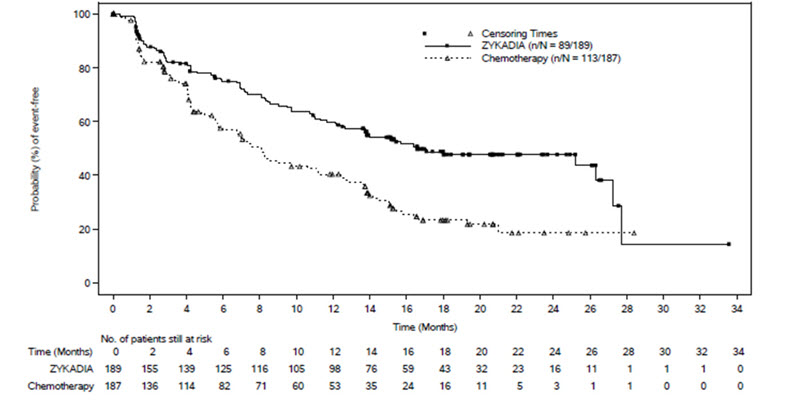
Figure 1: Kaplan-meier Plot Of Progression-free Survival As Assessed By Birc By Treatment Arm In Ascend-4 (Zykadia 02)
Antitumor activity of ZYKADIA in the brain was assessed in patients with measurable disease as determined by the BIRC neuro-radiologist at baseline (N=55) according to RECIST 1.1.
| ZYKADIA | Chemotherapy | |
| Intracranial Tumor Response Assessment | N=28 | N=27 |
| Overall intracranial response rate, % (95% CI)a | 57% (37, 76) | 22% (9, 42) |
| Complete response, % | 7% | 7% |
| Partial response, % | 50% | 15% |
| Duration of Intracranial Response | ||
| Number of responders | n=16 | n=6 |
| Median in months (95% CI) | 16.6 (8.1, NE) | NE (1.5, NE) |
| BIRC: Blinded Independent Review Committee; CI: Confidence Interval; NE: Not Estimable aClopper and Pearson exact binomial 95% confidence interval | ||
Exploratory analyses of patient-reported outcome measures suggested a delay in time to development of or worsening of shortness of breath in patients treated with ZYKADIA as compared to chemotherapy. The patient-reported delay in onset or worsening of shortness of breath may be an overestimation, because patients were not blinded to treatment assignment.
The efficacy of ZYKADIA was established in a multicenter, single-arm, open-label clinical trial (ASCEND-1, NCT01283516). A total of 163 patients with metastatic ALK-positive NSCLC who progressed while receiving or were intolerant to crizotinib were enrolled. All patients received ZYKADIA at a dose of 750 mg once daily under fasted conditions. The major efficacy outcome measure was objective response rate (ORR) according to RECIST v1.0 as evaluated by both investigators and a Blinded Independent Review Committee (BIRC). Duration of response (DOR) was an additional outcome measure.
The study population characteristics were: median age 52 years, age less than 65 (87%), female (54%), Caucasian (66%), Asian (29%), never or former smoker (97%), ECOG PS 0 or 1 (87%), progression on previous crizotinib (91%), number of prior therapies 2 or more (84%), and adenocarcinoma histology (93%). Sites of extra-thoracic metastases included brain (60%), liver (42%), and bone (42%). ALK-positivity was verified retrospectively by review of local test results for 99% of patients.
Efficacy results from ASCEND-1 are summarized in Table 9.
| Efficacy Parameter | Investigator Assessment (N=163) | BIRC Assessment (N=163) |
| Overall Response Rate (95% CI) | 54.6% (47, 62) | 43.6% (36, 52) |
| Complete response, % | 1.2% | 2.5% |
| Partial response, % | 53.4% | 41.1% |
| Duration of Response, median (months) (95% CI) | 7.4 (5.4, 10.1) | 7.1 (5.6, NE) |
| BIRC: Blinded Independent Review Committee; NE: Not Estimable 1Overall Response Rate and Duration of Response determined by RECIST v1.0 | ||
The analysis by the BIRC assessment was similar to the analysis by the investigator assessment.
ZYKADIA 150 mg capsules
Hard gelatin capsule with opaque blue cap and opaque white body; opaque blue cap marked in black ink with “LDK 150MG”, opaque white body marked in black ink with “NVR”. Available in:
Bottles of 70 capsules…………………………………………………………………………………….NDC 0078-0640-70
Store at 25°C (77°F); excursions permitted between 15°C to 30°C (59°F to 86°F) [see USP Controlled Room Temperature].
Advise the patient to read the FDA-approved patient labeling (Patient Information).
Distributed by:
Novartis Pharmaceuticals Corporation
East Hanover, New Jersey 07936
© Novartis
T2017-123
* Please review the disclaimer below.
