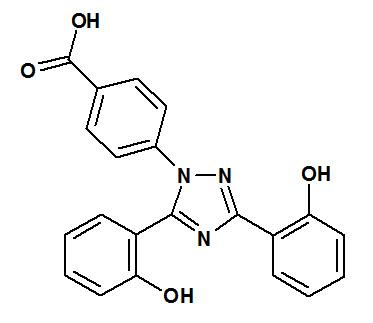
Because clinical trials are conducted under widely varying conditions, adverse reaction rates observed in the clinical trials of a drug cannot be directly compared to rates in the clinical trials of another drug and may not reflect the rates observed in practice. JADENU was evaluated in healthy volunteer trials. Currently, there are no clinical data in patients with JADENU tablets and JADENU Sprinkle granules. JADENU contains the same active ingredient as Exjade (deferasirox) tablets for oral suspension. The following adverse reactions have been reported with Exjade tablets for oral suspension.
Transfusional Iron Overload
A total of 700 adult and pediatric patients were treated with deferasirox for 48 weeks in premarketing studies. These included 469 patients with beta-thalassemia, 99 with rare anemias, and 132 with sickle cell disease. Of these patients, 45% were male, 70% were Caucasian and 292 patients were less than 16 years of age. In the sickle cell disease population, 89% of patients were black. Median treatment duration among the sickle cell patients was 51 weeks. Of the 700 patients treated, 469 (403 beta-thalassemia and 66 rare anemias) were entered into extensions of the original clinical protocols. In ongoing extension studies, median durations of treatment were 88 to 205 weeks.
Six hundred twenty-seven patients with MDS were enrolled across 5 uncontrolled trials. These studies varied in duration from 1 to 5 years. The discontinuation rate across studies in the first year was 46% (AEs 20%, withdrawal of consent 10%, death 8%, other 4%, lab abnormalities 3%, and lack of efficacy 1%). Among 47 patients enrolled in the study of 5-year duration, 10 remained on deferasirox at the completion of the study.
Table 1 displays adverse reactions occurring in greater than 5% of deferasirox-treated beta-thalassemia patients (Study 1), sickle cell disease patients (Study 3), and patients with MDS (MDS pool). Abdominal pain, nausea, vomiting, diarrhea, skin rashes, and increases in serum creatinine were the most frequent adverse reactions reported with a suspected relationship to deferasirox. Gastrointestinal symptoms, increases in serum creatinine, and skin rash were dose related.
Table 1. Adverse Reactions* Occurring in > 5% of Deferasirox-treated Patients in Study 1, Study 3, and MDS Pool*Adverse reaction frequencies are based on adverse events reported regardless of relationship to study drug.
**Includes ‘abdominal pain’, ‘abdominal pain lower’, and ‘abdominal pain upper’ which were reported as adverse events.
***Includes ‘blood creatinine increased’ and ‘blood creatinine abnormal’ which were reported as adverse events. Also see Table 2. |
| Study 1
(Beta-thalassemia) | Study 3
(Sickle Cell Disease) | MDS Pool |
| Adverse Reaction | Deferasirox
N = 296
n (%) | Deferoxamine
N = 290
n (%) | Deferasirox
N = 132
n (%) | Deferoxamine
N = 63
n (%) | Deferasirox
N = 627
n (%) |
| Abdominal Pain** | 63 (21) | 41 (14) | 37 (28) | 9 (14) | 145 (23) |
| Diarrhea | 35 (12) | 21 (7) | 26 (20) | 3 (5) | 297 (47) |
| Creatinine Increased*** | 33 (11) | 0 (0) | 9 (7) | 0 | 89 (14) |
| Nausea | 31 (11) | 14 (5) | 30 (23) | 7 (11) | 161 (26) |
| Vomiting | 30 (10) | 28 (10) | 28 (21) | 10 (16) | 83 (13) |
| Rash | 25 (8) | 9 (3) | 14 (11) | 3 (5) | 83 (13) |
In Study 1, a total of 113 (38%) patients treated with deferasirox had increases in serum creatinine greater than 33% above baseline on 2 separate occasions (Table 2) and 25 (8%) patients required dose reductions. Increases in serum creatinine appeared to be dose related [see Warnings and Precautions (5.1)]. In this study, 17 (6%) patients treated with deferasirox developed elevations in SGPT/ALT levels greater than 5 times the ULN at 2 consecutive visits. Of these, 2 patients had liver biopsy proven drug-induced hepatitis and both discontinued deferasirox therapy [see Warnings and Precautions (5.2)]. An additional 2 patients, who did not have elevations in SGPT/ALT greater than 5 times the ULN, discontinued deferasirox because of increased SGPT/ALT. Increases in transaminases did not appear to be dose related. Adverse reactions that led to discontinuations included abnormal liver function tests (2 patients) and drug-induced hepatitis (2 patients), skin rash, glycosuria/proteinuria, Henoch Schönlein purpura, hyperactivity/insomnia, drug fever, and cataract (1 patient each).
In Study 3, a total of 48 (36%) patients treated with deferasirox had increases in serum creatinine greater than 33% above baseline on 2 separate occasions (Table 2) [see Warnings and Precautions (5.1)]. Of the patients who experienced creatinine increases in Study 3, 8 deferasirox-treated patients required dose reductions. In this study, 5 patients in the deferasirox group developed elevations in SGPT/ALT levels greater than 5 times the ULN at 2 consecutive visits and 1 patient subsequently had deferasirox permanently discontinued. Four additional patients discontinued due to adverse reactions with a suspected relationship to study drug, including diarrhea, pancreatitis associated with gallstones, atypical tuberculosis, and skin rash.
In the MDS pool, in the first year, a total of 229 (37%) patients treated with deferasirox had increases in serum creatinine greater than 33% above baseline on 2 consecutive occasions (Table 2) and 8 (3.5%) patients permanently discontinued [see Warnings and Precautions (5.1)]. A total of 5 (0.8%) patients developed SGPT/ALT levels greater than 5 times the ULN at 2 consecutive visits. The most frequent adverse reactions that led to discontinuation included increases in serum creatinine, diarrhea, nausea, rash, and vomiting. Death was reported in the first year in 52 (8%) of patients [see Clinical Studies (14)].
Table 2. Number (%) of Patients with Increases in Serum Creatinine or SGPT/ALT in Study 1, Study 3, and MDS Pool | Study 1
(Beta-thalassemia) | Study 3
(Sickle Cell Disease) | MDS Pool |
| Laboratory Parameter | Deferasirox
N = 296
n (%) | Deferoxamine
N = 290
n (%) | Deferasirox
N = 132
n (%) | Deferoxamine
N = 63
n (%) | Deferasirox
N = 627
n (%) |
| Serum Creatinine |
| Creatinine increase > 33% at 2 consecutive postbaseline visits | 113 (38) | 41 (14) | 48 (36) | 14 (22) | 229 (37) |
| Creatinine increase > 33% and > ULN at 2 consecutive postbaseline visits | 7 (2) | 1 (0) | 3 (2) | 2 (3) | 126 (20) |
| SGPT/ALT |
| SGPT/ALT > 5 x ULN at 2 postbaseline visits | 25 (8) | 7 (2) | 2 (2) | 0 | 9 (1) |
| SGPT/ALT > 5 x ULN at 2 consecutive postbaseline visits | 17 (6) | 5 (2) | 5 (4) | 0 | 5 (1) |
Non-Transfusion-Dependent Thalassemia Syndromes
In Study 4, 110 patients with NTDT received 1 year of treatment with deferasirox 5 or 10 mg/kg/day and 56 patients received placebo in a double-blind, randomized trial. In Study 5, 130 of the patients who completed Study 4 were treated with open-label deferasirox at 5, 10, or 20 mg/kg/day (depending on the baseline LIC) for 1 year [see Clinical Studies (14)]. Table 3 displays adverse reactions occurring in greater than 5% in any group. The most frequent adverse reactions with a suspected relationship to study drug were nausea, rash, and diarrhea.
Table 3. Adverse Reactions Occurring in > 5% in NTDT Patients | Study 4 | Study 5 |
| Deferasirox | Placebo | Deferasirox |
| N = 110 | N = 56 | N = 130 |
| n (%) | n (%) | n (%) |
| Any adverse reaction | 31 (28) | 9 (16) | 27 (21) |
| Nausea | 7 (6) | 4 (7) | 2 (2) |
| Rash | 7 (6) | 1 (2) | 2 (2) |
| Diarrhea | 5 (5) | 1 (2) | 7 (5) |
In Study 4, 1 patient in the placebo 10 mg/kg/day group experienced an ALT increase to greater than 5 times ULN and greater than 2 times baseline (Table 4). Three deferasirox-treated patients (all in the 10 mg/kg/day group) had 2 consecutive serum creatinine level increases greater than 33% from baseline and greater than ULN. Serum creatinine returned to normal in all 3 patients (in 1 spontaneously and in the other 2 after drug interruption). Two additional cases of ALT increase and 2 additional cases of serum creatinine increase were observed in the 1-year extension of Study 4.
Table 4. Number (%) of NTDT Patients with Increases in Serum Creatinine or SGPT/ALT | Study 4 | Study 5 |
| Deferasirox | Placebo | Deferasirox |
| N = 110 | N = 56 | N = 130 |
| Laboratory Parameter | n (%) | n (%) | n (%) |
| Serum creatinine (> 33% increase from baseline and > ULN at ≥ 2 consecutive postbaseline values) | 3 (3) | 0 | 2 (2) |
| SGPT/ALT (> 5 x ULN and > 2 x baseline) | 1 (1) | 1 (2) | 2 (2) |
Proteinuria
In clinical studies, urine protein was measured monthly. Intermittent proteinuria (urine protein/creatinine ratio greater than 0.6 mg/mg) occurred in 18.6% of deferasirox-treated patients compared to 7.2% of deferoxamine-treated patients in Study 1 [see Warnings and Precautions (5.1)].
Other Adverse Reactions
In the population of more than 5,000 patients with transfusional iron overload who have been treated with deferasirox during clinical trials, adverse reactions occurring in 0.1% to 1% of patients included gastritis, edema, sleep disorder, pigmentation disorder, dizziness, anxiety, maculopathy, cholelithiasis, pyrexia, fatigue, laryngeal pain, cataract, hearing loss, gastrointestinal hemorrhage, gastric ulcer (including multiple ulcers), duodenal ulcer, renal tubular disorder (Fanconi’s syndrome), and acute pancreatitis (with and without underlying biliary conditions). Adverse reactions occurring in 0.01% to 0.1% of patients included optic neuritis, esophagitis, erythema multiforme, and drug reaction with eosinophilia and systemic symptoms (DRESS). Adverse reactions which most frequently led to dose interruption or dose adjustment during clinical trials were rash, gastrointestinal disorders, infections, increased serum creatinine, and increased serum transaminases.