1.1 Lepromatous Leprosy
LAMPRENE is indicated in combination with other anti-leprosy drugs for the treatment of lepromatous leprosy, including dapsone-resistant lepromatous leprosy, and lepromatous leprosy complicated by erythema nodosum leprosum.
The following Structured Product Label (SPL) was submitted to the FDA by Novartis Pharmaceuticals Corporation for the product Lamprene (NDC 0078-1049). This document serves as the official prescribing information, containing essential scientific data and clinical materials required for healthcare providers and patients.
This specific version of the label includes detailed information regarding 1.1 lepromatous leprosy, 1.2 usage, 2.1 dosage, 2.2 important pre-test prior to administration, 3 dosage forms and strengths, 4 contraindications, 5.1 abdominal obstruction and other gastrointestinal adverse reactions, 5.2 qt prolongation, and other regulatory disclosures. Use the navigation below to review specific sections of the FDA submission.
LAMPRENE is indicated in combination with other anti-leprosy drugs for the treatment of lepromatous leprosy, including dapsone-resistant lepromatous leprosy, and lepromatous leprosy complicated by erythema nodosum leprosum.
To prevent the development of drug-resistance, LAMPRENE should be used only as a part of combination therapy for initial treatment of lepromatous (multibacillary) leprosy [see Dosage and Administration (2.1)].
For further guidance on the treatment of leprosy, contact the National Hansen’s Disease Clinical Center, Baton Rouge, Louisiana (LA) at (1-800-642-2477) or http://www.hrsa.gov/hansensdisease/clinicalcenter.html.
Sexually-active females of reproductive potential should have a pregnancy test prior to LAMPRENE administration [see Use in Specific Populations (8.3)].
Capsules: 50 mg, brown opaque spherical soft gelatin capsule.
LAMPRENE is contraindicated in patients with known hypersensitivity to clofazimine or any of the excipients of LAMPRENE.
Clofazimine may accumulate in various organs as crystals, including the mesenteric lymph nodes and histiocytes at the lamina propria of the intestinal mucosa, spleen and liver. Deposition in the intestinal mucosa may lead to intestinal obstruction that may necessitate exploratory laparotomy. Splenic infarction, gastrointestinal bleeding, and death have been reported. If a patient complains of pain in the abdomen, nausea, vomiting, or diarrhea, initiate appropriate medical investigations and reduce the daily dose of LAMPRENE, or increase the dosing interval or discontinue the drug. Doses of LAMPRENE of more than 100 mg daily should be given for as short a period as possible (less than 3 months) and only under close medical supervision.
Cases of Torsade de Pointes with QT prolongation have been reported in patients receiving dosage regimens containing higher than 100 mg daily dose of LAMPRENE or in combination with QT prolonging medications. For QT prolongation and Torsade de Pointes cases, the patient must remain under medical surveillance. In all these patients, monitor electrocardiograms (ECGs) for QT prolongation and cardiac rhythm disturbances [see Dosage and Administration (2.1), Drug Interactions (7.1)].
QT prolongation has also been reported in patients who were receiving concomitant LAMPRENE and bedaquiline at the recommended dosages. Monitor ECGs in patients taking LAMPRENE and bedaquiline concomitantly, and discontinue LAMPRENE if clinically significant ventricular arrhythmia is noted or if the QTcF interval is 500 ms or greater. If syncope occurs, obtain an ECG to detect QT prolongation.
LAMPRENE causes orange-pink to brownish-black discoloration of the skin, as well as discoloration of the conjunctivae, tears, sweat, sputum, urine and feces in 75%-100% of patients. Advise patients that skin discoloration is likely to occur and that it may take several months or years to reverse after the conclusion of therapy.
Other skin reactions associated with LAMPRENE therapy include ichthyosis, dry skin, and pruritus.
Skin discoloration due to LAMPRENE therapy has been reported to result in depression and suicide. Advise patients regarding skin discoloration and monitor for depression or suicidal ideation during LAMPRENE therapy.
The following serious adverse reactions are discussed in greater detail in other sections of the labeling:
The following adverse reactions associated with the use of LAMPRENE were identified. Because these adverse reactions are reported from different studies, these adverse reactions cannot be directly compared to rates in the clinical trials of another drug and may not reflect the rates observed in practice.
Adverse Reactions Occurring In More Than 1% of Patients
Skin: Pigmentation from pink to brownish-black in 75% to 100% of the patients within a few weeks of treatment; ichthyosis and dryness (8% to 28%); rash and pruritus (1% to 5%).
Gastrointestinal: Abdominal and epigastric pain, diarrhea, nausea, vomiting, gastrointestinal intolerance (40% to 50%).
Ocular: Diminished vision, conjunctival and corneal pigmentation due to clofazimine crystal deposits; dryness; burning; itching; irritation.
Other: Discoloration of urine, feces, sputum, sweat; elevated blood sugar; elevated erythrocyte sedimentation rate (ESR).
Adverse Reactions Occurring In Less Than 1% of Patients
Skin: Phototoxicity, erythroderma, acneiform eruptions, monilial cheilosis.
Gastrointestinal: Bowel obstruction, gastrointestinal bleeding, anorexia, constipation, weight loss, hepatitis, jaundice, eosinophilic enteritis, enlarged liver.
Ocular: Maculopathy (bull’s eye retinopathy).
Nervous: Dizziness, drowsiness, fatigue, headache, giddiness, neuralgia, taste disorder.
Psychiatric: Depression and suicide secondary to skin discoloration.
Laboratory: Elevated levels of albumin, serum bilirubin, and aspartate aminotransferase (AST); eosinophilia; hypokalemia.
Other: Splenic infarction, thromboembolism, anemia, cystitis, bone pain, edema, fever, lymphadenopathy, vascular pain.
Concomitant use of LAMPRENE may increase concentrations of drugs that are substrates of CYP3A4/5 [see Clinical Pharmacology (12.3)] which may increase the risk of toxicity of these drugs. Monitor for toxicities of these drugs when used concomitantly with LAMPRENE.
QT prolongation and Torsade de Pointes have been reported in patients receiving LAMPRENE in combination with QT prolonging medications, such as bedaquiline. Monitor ECGs for QT prolongation when LAMPRENE is administered with other drugs known to prolong the QT interval [see Warnings and Precautions (5.2)].
Risk Summary
There are no data with LAMPRENE use in pregnant women to inform associated risk. Retardation of fetal skull ossification, increased incidences of abortions and stillbirths, and impaired neonatal survival were observed in mice following prenatal exposure to LAMPRENE at 25 mg/kg, equivalent to the 0.6 times maximum recommended human daily dose (200 mg), based on body surface area comparisons. Advise pregnant women of the potential risk to the fetus.
The background risk of major birth defects and miscarriage for the indicated population is unknown; however, in the U.S. general population, the estimated background risk of major birth defects is 2%-4% and of miscarriage is 15%-20% of clinically recognized pregnancies.
Clinical Considerations
Fetal/Neonatal Adverse Reactions
The skin of infants born to pregnant mothers who had received LAMPRENE during pregnancy is pigmented at birth.
Limited data is available regarding the reversibility of discoloration. Based on previous observations, discoloration gradually faded over the first year.
Data
Human Data
There are no studies of LAMPRENE use in pregnant women. Few cases of clofazimine use during pregnancy have been reported in the literature. These reports indicate that the skin of infants born to women who had received LAMPRENE during pregnancy was deeply pigmented at birth. LAMPRENE should be used during pregnancy only if the potential benefit justifies the risk to the fetus.
Animal Data
Embryo-fetal toxicity studies were conducted in rats, rabbits and mice. In mice, LAMPRENE-induced embryotoxicity and fetotoxicity was evident. Retardation of fetal skull ossification, increased incidences of abortions and stillbirths, and impaired neonatal survival were observed following prenatal exposure to LAMPRENE at 25 mg/kg, equivalent to the 0.6 times maximum recommended human daily dose [MRHD] (200 mg), based on body surface area comparisons. The skin and fatty tissue of offspring became discolored approximately 3 days after birth, which was attributed to the presence of clofazimine in the maternal milk. No developmental effects were observed in rat or rabbits orally administered clofazimine during organogenesis at doses up to 50 mg/kg and 15 mg/kg, (equivalent to about 2.4 and 1.5 times the MRHD of 200 mg based on body surface area) respectively. These animal studies were conducted according to the standards at the time of initial drug approval (1986) and not under current regulatory standards.
Risk Summary
LAMPRENE is excreted in human milk. Skin discoloration has been observed in breast fed neonates of mothers receiving clofazimine.
The developmental and health benefits of breastfeeding should be considered along with the mother’s clinical need for LAMPRENE and any potential adverse effects on the breastfed infant from LAMPRENE or from the underlying maternal condition.
Pregnancy Testing
Sexually-active females of reproductive potential should have a pregnancy test prior to starting treatment with LAMPRENE.
Contraception
Animal studies have shown LAMPRENE to be harmful to the developing fetus. Advise sexually active females of reproductive potential to use effective contraception (methods that result in less than 1% pregnancy rates) when using LAMPRENE during treatment and for at least 4 months after stopping treatment with LAMPRENE.
Advise males taking LAMPRENE to use a condom during intercourse while on treatment and for at least 4 months after stopping treatment with LAMPRENE.
Infertility
Impaired female fertility (reduced number of offspring and lower proportion of implantations) was observed in one study in rats receiving LAMPRENE [see Nonclinical Toxicology (13.1)]. There are no non-clinical data on male fertility.
Safety and effectiveness of LAMPRENE in pediatric patients have not been established.
Clinical studies of LAMPRENE did not include sufficient numbers of subjects aged 65 and older to determine whether they respond differently from younger subjects. Other reported clinical experience has not identified differences in responses between the elderly and younger patients. In general, dose selection for an elderly patient should be cautious, usually starting at the low end of the dosing range, reflecting the greater frequency of decreased hepatic, renal, or cardiac function, and of concomitant disease or other drug therapy.
Response to treatment, including treatment of erythema nodosum leprosum reactions, is not altered in HIV-positive and immunocompromised leprosy patients. Dose adjustments of LAMPRENE are not required in these patients.
No LAMPRENE dosage adjustments are recommended in patients with mild to moderate renal impairment. Use caution in patients with severe renal impairment.
Avoid LAMPRENE in patients with hepatic impairment (Child-Pugh Class A, B, and C) unless the benefit outweighs the risk.
No specific data are available on the treatment of over dosage with LAMPRENE. However, in case of overdose, the stomach should be emptied by inducing vomiting or by gastric lavage, and supportive symptomatic treatment should be employed.
LAMPRENE (clofazimine) is an antimycobacterial available as soft gelatin capsules for oral administration. Each capsule contains 50 mg of micronized clofazimine suspended in an oil-wax base. Clofazimine is a substituted iminophenazine bright-red dye. Its chemical name is 3-(p-chloroanilino)-10-(p-chlorophenyl)-2, 10-dihydro-2-isopropyliminophenazine, and its structural formula is
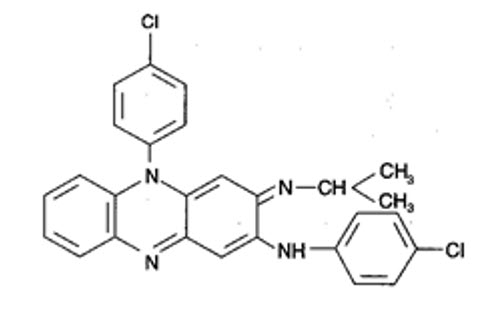
The Structural Formula Of Lamprene. (Lamprene 01)
Clofazimine is a reddish-brown powder. It is slightly soluble in acetic acid, dimethylformamide, chloroform and ether; very slightly soluble in ethanol and acetonitrile; soluble in methylene chloride. Its molecular weight is 473.4 g/mol. Its molecular formula is C27H22Cl2N4.
The Inactive Ingredients
Capsules fill: Anhydrous citric acid, Butylated hydroxytoluene, Fully hydrogenated rapeseed oil, Hydrogenated soybean oil, Lecithin, Partially hydrogenated soybean oil, Propylene glycol, Yellow wax.
Capsule Shells Contain: Ethyl vanillin, Ethylparaben sodium, Gelatin, Glycerol 85%, Iron oxide black slurry with glycerol 85%, Iron oxide red slurry with glycerol 85%, p-methoxy acetophenone, Propylparaben sodium, Purified water.
LAMPRENE is an anti-mycobacterial drug [see Microbiology (12.4)].
Clofazimine exposure-response relationships and the time course of pharmacodynamics response are unknown.
The average serum concentrations of clofazimine in leprosy patients treated with LAMPRENE 100 mg and 300 mg daily were 0.7 mcg/mL and 1 mcg/mL, respectively.
Absorption
Clofazimine absorption ranges from 45% to 62% in leprosy patients.
Effect of Food
Time to reach peak plasma concentration (median Tmax) of clofazimine decreases from 12 hours to 8 hours under fed conditions relative to the fasted state.
Distribution
Clofazimine is lipophilic and deposits predominantly in fatty tissue and in cells of the reticuloendothelial system. It is taken up by macrophages throughout the body. In autopsies performed on leprosy patients who had received LAMPRENE, clofazimine crystals were found predominantly in the mesenteric lymph nodes, adrenals, subcutaneous fat, liver, bile, gall bladder, spleen, small intestine, muscles, bones, and skin.
Clofazimine is bound to alpha- and primarily to beta-lipoproteins in serum, and the binding was saturable at plasma concentrations of approximately 10 mcg/mL. Binding to gamma-globulin and albumin was negligible.
Elimination
The mean elimination half-life of clofazimine is approximately 25 days (range 6.5 to 160 days) following repeated oral doses of 50 or 100 mg LAMPRENE in leprosy patients.
Metabolism
Information on the metabolism of clofazimine is limited. Three clofazimine metabolites were found in urine following repeated oral doses of LAMPRENE.
Excretion
After a single dose of LAMPRENE 300 mg, elimination of unchanged clofazimine and its metabolites was negligible in a 24-hour urine collection. Part of the ingested drug recovered from the feces may represent excretion via the bile. A small amount is also eliminated in the sputum, sebum, and sweat.
Drug Interaction Studies
Clinical Studies
No clinically significant differences in clofazimine pharmacokinetics have been observed when used concomitantly with bedaquiline, cycloserine, dapsone, ethionamide, para-aminosalicylic acid, pyrazinamide, and pyridoxine. In patients receiving high doses of clofazimine (300 mg daily) and isoniazid (300 mg daily), elevated concentrations of clofazimine were detected in plasma and urine, although skin concentrations were found to be lower, however the clinical consequences are unknown.
No clinically significant differences in the pharmacokinetics of the following drugs were observed when used concomitantly with clofazimine: dapsone or rifampicin.
In Vitro Studies
Clofazimine inhibits the metabolism of CYP2C8, CYP2D6, CYP3A4/5 drug substrates.
Mechanism of Action
Clofazimine exerts a slow bactericidal effect on Mycobacterium leprae (Hansen’s bacillus). Clofazimine inhibits mycobacterial growth and binds preferentially to mycobacterial DNA. Clofazimine also exerts anti-inflammatory properties in treating erythema nodosum leprosum reactions. However, its precise mechanisms of action are unknown.
The mechanism of action for the anti-mycobacterial activity of clofazimine can be postulated through its membrane-directed activity including the bacterial respiratory chain and ion transporters. Intracellular redox cycling, involving oxidation of reduced clofazimine, leads to the generation of antimicrobial reactive oxygen species (ROS), superoxide-hydrogen peroxide (H2O2). Secondly, interaction of clofazimine with membrane phospholipids results in the generation of antimicrobial lysophospholipids, which promote membrane dysfunction, resulting in interference with K+ uptake. Both mechanisms result in interference with cellular energy metabolism by disrupting ATP production. Anti-inflammatory activity of clofazimine is primarily through inhibition of T lymphocyte activation and proliferation. Clofazimine may indirectly interfere with the proliferation of T cells by promoting the release of ROS and E-series prostaglandins (PGs), especially PGE2 from neutrophils and monocytes.
Cross-Resistance
Clofazimine does not show cross-resistance with dapsone or rifampin.
Susceptibility Test Methods
For specific information regarding susceptibility test interpretive criteria and associated test methods and quality control standards recognized by FDA for this drug, please see: https://www.fda.gov/STIC.
Long-term carcinogenicity studies in animals have not been conducted with LAMPRENE. Results of mutagenicity studies (Ames test) were negative. There is some evidence of clastogenic potential in mice.
Impaired female fertility (reduced number of offspring and lower proportion of implantations) was observed in one study in rats receiving LAMPRENE (from 9 weeks before mating until weaning) at 50 mg/kg/day, equivalent to about 2.4 times the maximum recommended clinical dose (200 mg), based on body surface area comparisons. No non-clinical data on male fertility are available.
How Supplied
Soft Gelatin Capsules 50 mg-brown, opaque, spherical
Bottles of 100..............................................................NDC 0078-1049-05
Storage and Handling
Store at 20℃ to 25℃ (68℉ to 77℉); excursions permitted between 15℃ and 30℃ (59℉ and 86℉) [See USP Controlled Room Temperature]. Store and dispense in original container. Protect from moisture.
Information for Patients
Distributed by:
Novartis Pharmaceuticals Corporation
East Hanover, New Jersey 07936
© Novartis
T2026-29
NDC 0078-1049-05
Rx only
Lamprene®
(clofazimine)
Capsules
50 mg
For Oral Use
100 Capsules
NOVARTIS
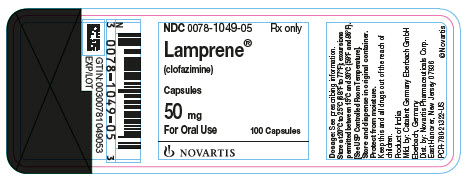
Principal Display Panel Ndc 0078-1049-05 Rx Only Lamprene® (clofazimine) Capsules 50 mg For Oral Use 100 Capsules Novartis (Lamprene 02)
* Please review the disclaimer below.
