Description
Cephalexin Tablets, USP contain the active ingredient cephalexin, which is a semisynthetic cephalosporin antibiotic intended for oral administration. It is 7-(D-α- amino-α-phenylacetamido)-3-methyl-3-cephem-4-carboxylic acid, monohydrate.
Cephalexin, USP has the molecular formula C16H17N3O4S•H2O and the molecular weight is 365.40. Cephalexin, USP has the following structural formula:

Cephalexin Structural Formula (Image 1)
The nucleus of cephalexin is related to that of other cephalosporin antibiotics. The compound is a zwitterion; i.e., the molecule contains both a basic and an acidic group. The isoelectric point of cephalexin in water is approximately 4.5 to 5.
The crystalline form of cephalexin which is available is a monohydrate. It is a white crystalline solid having a bitter taste. Solubility in water is low at room temperature; 1 or 2 mg/mL may be dissolved readily, but higher concentrations are obtained with increasing difficulty.
The cephalosporins differ from penicillins in the structure of the bicyclic ring system.
Cephalexin, USP has a D-phenylglycyl group as substituent at the 7-amino position and an unsubstituted methyl group at the 3-position.
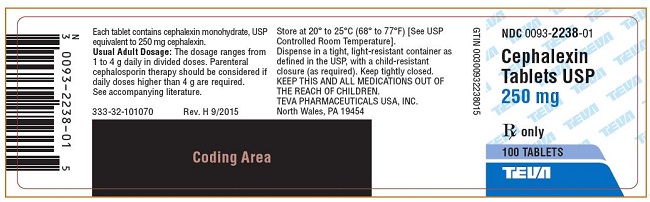
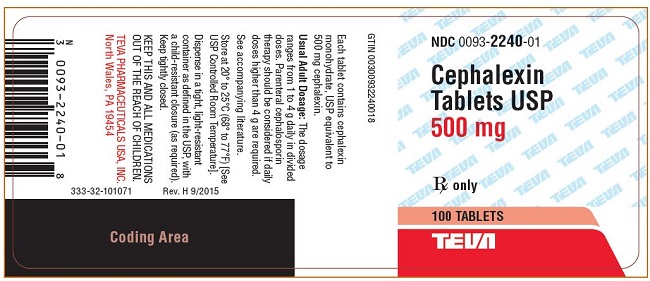
Each tablet contains cephalexin monohydrate equivalent to 250 mg, 500 mg, or 1 g of cephalexin. The tablet also contains hypromellose, magnesium stearate, microcrystalline cellulose, polyethylene glycol, polysorbate 80, sodium starch glycolate, and titanium dioxide.