Diclofenac Epolamine System
Product Images NDC 0093-3727

View Photos of Packaging, Regulatory Labels, and Product Appearance

Product Visual Gallery

This gallery contains 4 technical images submitted to the FDA as part of the official labeling for Diclofenac Epolamine (NDC 0093-3727). Unlike standard consumer photos, these assets often include clinical data figures, molecular chemical structures, and official manufacturer packaging layouts.

As provided by Teva Pharmaceuticals Usa Inc., these visuals offer a comprehensive scientific overview of the product's physical and chemical identity, aiding pharmacists and researchers in product verification and study.

FDA Label Image

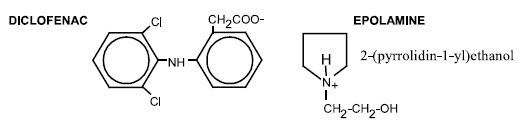
Chemical Structure (Diclofenac 01)
FDA Label Image

Figure 1 And 2 (Diclofenac 02)

Figure 1 And 2 (Diclofenac 02)
The text corresponds to two figures showing the percentage of patients achieving different levels of pain relief at day 3 and at the end of a 14-day study. There is also a mention of the percentage improvement from baseline. No further information is available.*
FDA Label Image

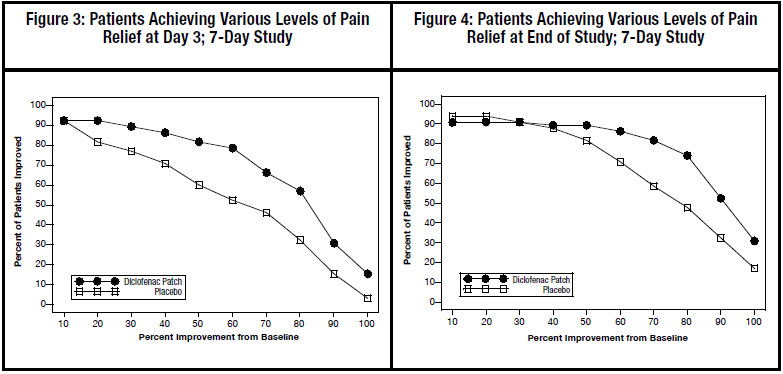
Figure 3 And 4 (Diclofenac 03)

FDA Label Image

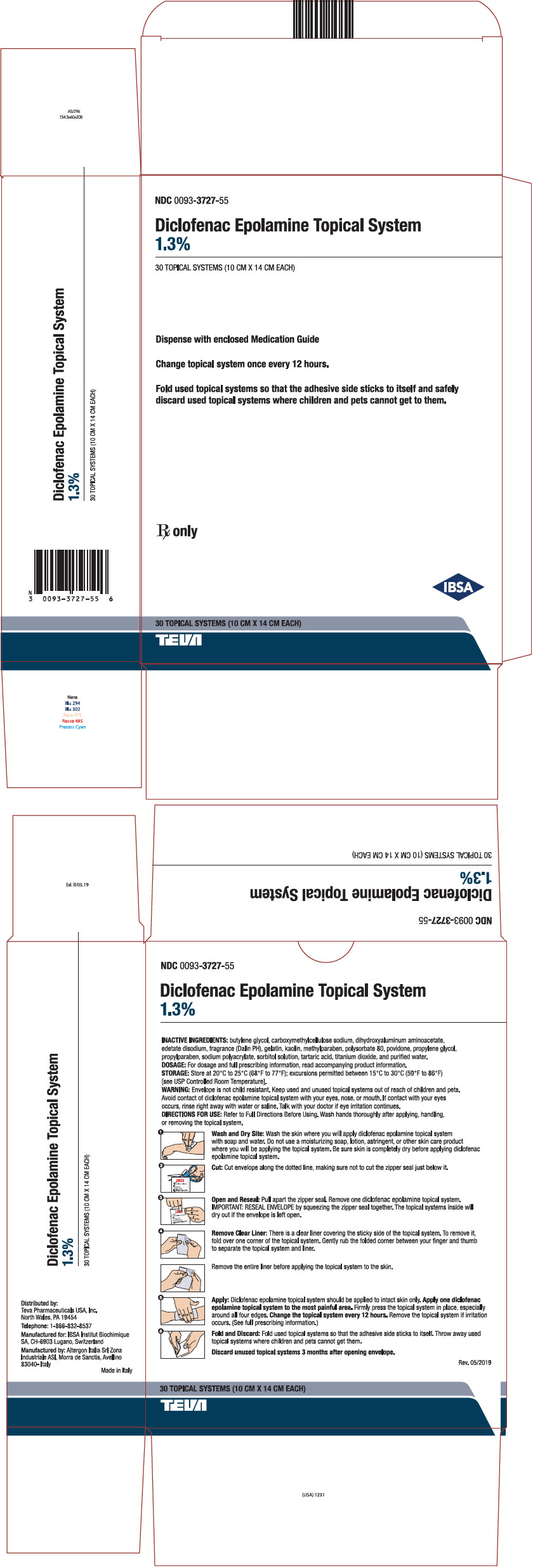
Principal Display Panel (30 Topical System Pouch Carton)

Principal Display Panel (30 Topical System Pouch Carton)
Diclofenac Epolamine Topical System 1.3% is a prescribed drug that comes in thirty topical systems (10 cm x 14 cm each). It contains active ingredients like diclofenac epolamine. It is recommended to change the topical system every 12 hours. After use, fold used topical systems so that the adhesive side sticks to itself and safely discard it away from children and pets. The inactive ingredients include polysorbate 80, tartaric acid, titanium dioxide. It is suggested to read the accompanying product information for dosage and full prescribing information. It is important to wash hands thoroughly after applying, handling, or removing the topical system. The topical system is to be applied to intact skin only and should not be applied to sensitive areas.*

* These product label images have been analyzed using experimental machine learning. Please verify findings with the primary label text.