Budesonide Inhalation Suspension
Product Images NDC 0115-1687

View Photos of Packaging, Regulatory Labels, and Product Appearance

Product Visual Gallery

This gallery contains 9 technical images submitted to the FDA as part of the official labeling for Budesonide Inhalation (NDC 0115-1687). Unlike standard consumer photos, these assets often include clinical data figures, molecular chemical structures, and official manufacturer packaging layouts.

As provided by Amneal Pharmaceuticals Of New York Llc, these visuals offer a comprehensive scientific overview of the product's physical and chemical identity, aiding pharmacists and researchers in product verification and study.

FDA Label Image

Chemical Structure Formula Of Budesonide (Budesonide Inhalation Suspension 1)
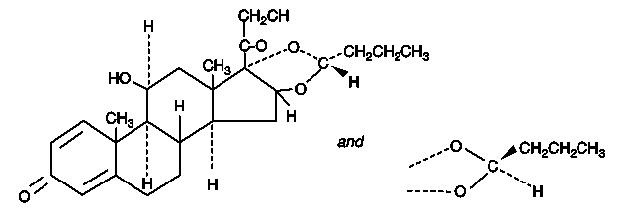
Chemical Structure Formula Of Budesonide (Budesonide Inhalation Suspension 1)
Chemical structure of budesonide, the active ingredient in Budesonide Inhalation suspension by Amneal Pharmaceuticals of New York LLC.*
FDA Label Image

Figure 1: A 12-week Trial In Pediatric Patients Previously Maintained On Inhaled Corticosteroid Therapy Prior To Study Entry. Nighttime Asthma Change From Baseline (Budesonide Inhalation Suspension 2)

Figure 1: A 12-week Trial In Pediatric Patients Previously Maintained On Inhaled Corticosteroid Therapy Prior To Study Entry. Nighttime Asthma Change From Baseline (Budesonide Inhalation Suspension 2)
A line graph showing the mean change from baseline in nighttime asthma symptoms over weeks 0 to 12. The x-axis represents the time intervals (baseline to weeks 10-12), and the y-axis represents the mean change from baseline in symptom scores. Three lines compare placebo, 0.25 mg twice daily, and 0.5 mg twice daily dosing of Budesonide Inhalation suspension.*
FDA Label Image

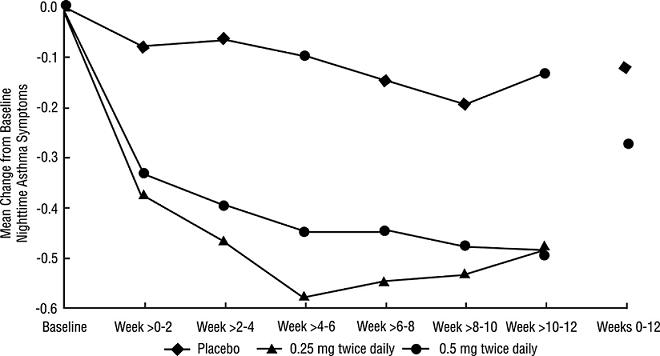
Figure 2: A 12-week Trial In Pediatric Patients Either Maintained On Bronchodilators Alone Or Inhaled Corticosteroid Therapy Prior To Study Entry. Nighttime Asthma Change From Baseline (Budesonide Inhalation Suspension 3)

Figure 2: A 12-week Trial In Pediatric Patients Either Maintained On Bronchodilators Alone Or Inhaled Corticosteroid Therapy Prior To Study Entry. Nighttime Asthma Change From Baseline (Budesonide Inhalation Suspension 3)
A line graph depicting the mean change from baseline in nighttime asthma symptoms over a 12-week period. The x-axis represents time in weeks divided into intervals, and the y-axis shows the mean change from baseline symptoms. The graph compares three groups: placebo, 0.25 mg twice daily, and 0.5 mg twice daily of Budesonide inhalation suspension, showing trends in symptom improvement over time.*
FDA Label Image

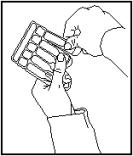
Figure 1 Open The Sealed Foil Envelope Along The Dotted Line And Take Out 1 Single-dose Ampule From The Strip. (Budesonide Inhalation Suspension 4)

Figure 1 Open The Sealed Foil Envelope Along The Dotted Line And Take Out 1 Single-dose Ampule From The Strip. (Budesonide Inhalation Suspension 4)
An instructional illustration depicts a person holding a blister strip of ampules, showing how to open an ampule by snapping off the top with one hand while holding the body with the other. The image is intended to instruct proper handling of ampules, likely for Budesonide Inhalation suspension.*
FDA Label Image

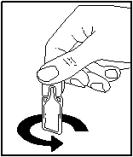
Figure 2 Gently Shake The Budesonide Inhalation Suspension Ampule Using A Circular Motion (Budesonide Inhalation Suspension 5)

Figure 2 Gently Shake The Budesonide Inhalation Suspension Ampule Using A Circular Motion (Budesonide Inhalation Suspension 5)
An instructional illustration showing a hand holding a Budesonide Inhalation suspension ampule, with an arrow indicating a twisting motion to open the ampule for inhalation use.*
FDA Label Image

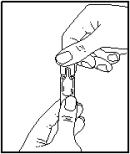
Figure 3 Hold The Budesonide Inhalation Suspension Ampule Upright Without Squeezing The Ampule And Open By Twisting Off The Top. (Budesonide Inhalation Suspension 6)

Figure 3 Hold The Budesonide Inhalation Suspension Ampule Upright Without Squeezing The Ampule And Open By Twisting Off The Top. (Budesonide Inhalation Suspension 6)
An instructional line drawing illustrating the proper use of a Budesonide inhalation suspension vial. The image shows one hand holding the vial while the other hand twists or removes the cap, demonstrating preparation for inhalation administration.*
FDA Label Image

4. Place The Open End Of The Budesonide Inhalation Suspension Ampule Into The Nebulizer Cup (reservoir) And Slowly Squeeze All Of The Medicine From The Ampule Into The Nebulizer Medicine Cup As Shown In Figure 4. Throw Away The Empty Ampule. (Budesonide Inhalation Suspension 7)

4. Place The Open End Of The Budesonide Inhalation Suspension Ampule Into The Nebulizer Cup (reservoir) And Slowly Squeeze All Of The Medicine From The Ampule Into The Nebulizer Medicine Cup As Shown In Figure 4. Throw Away The Empty Ampule. (Budesonide Inhalation Suspension 7)
An instructional diagram showing a person using a dropper to measure and transfer liquid into a dosing container, illustrating a preparation step for administering a respiratory inhalation suspension.*
FDA Label Image

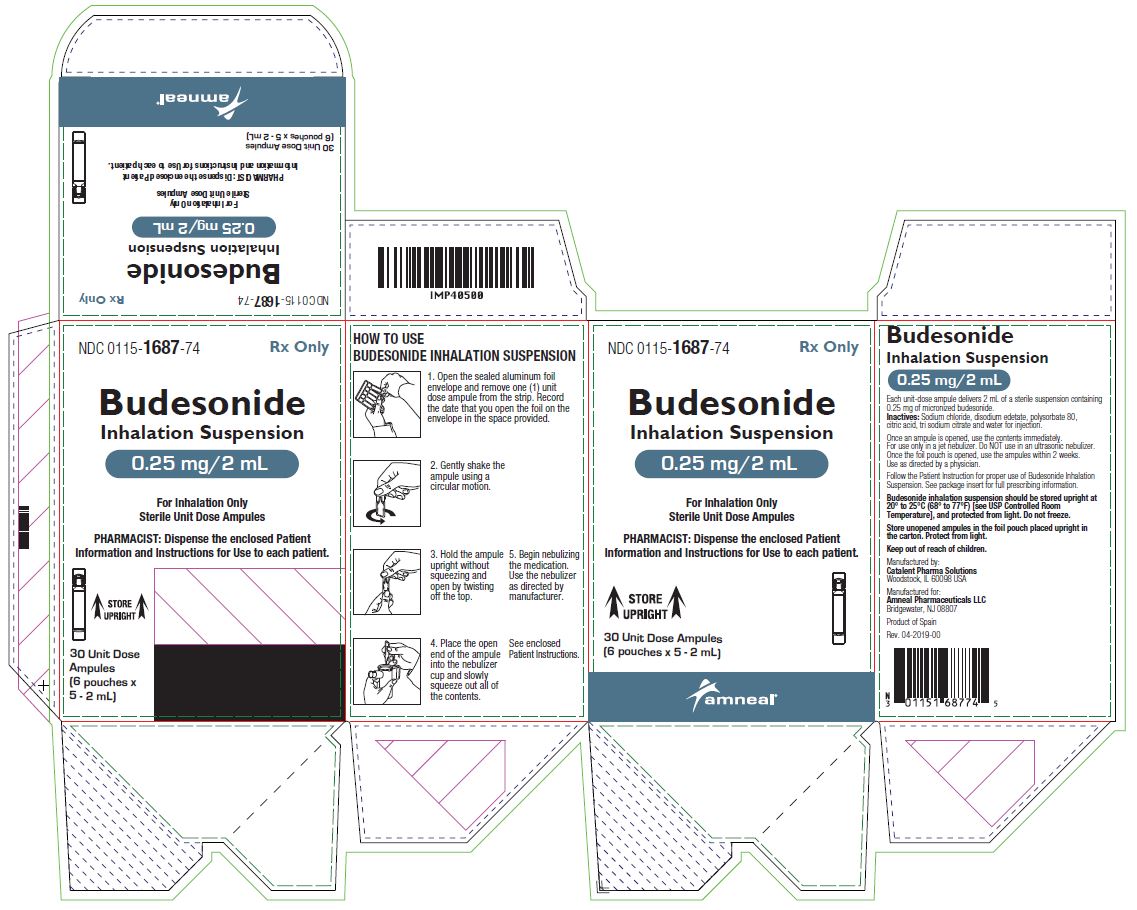
0.25 mg/2 mL Budesonide (Budesonide Inhalation Suspension 8)

0.25 mg/2 mL Budesonide (Budesonide Inhalation Suspension 8)
Budesonide Inhalation Suspension 0.25 mg/2 mL carton label for respiratory use. The packaging indicates sterile unit dose ampules with 30 unit dose ampules per carton (6 pouches of 5 ampules each). The labeler is Amneal Pharmaceuticals of New York LLC. Includes instructions for use with illustrations and storage directions.*
FDA Label Image

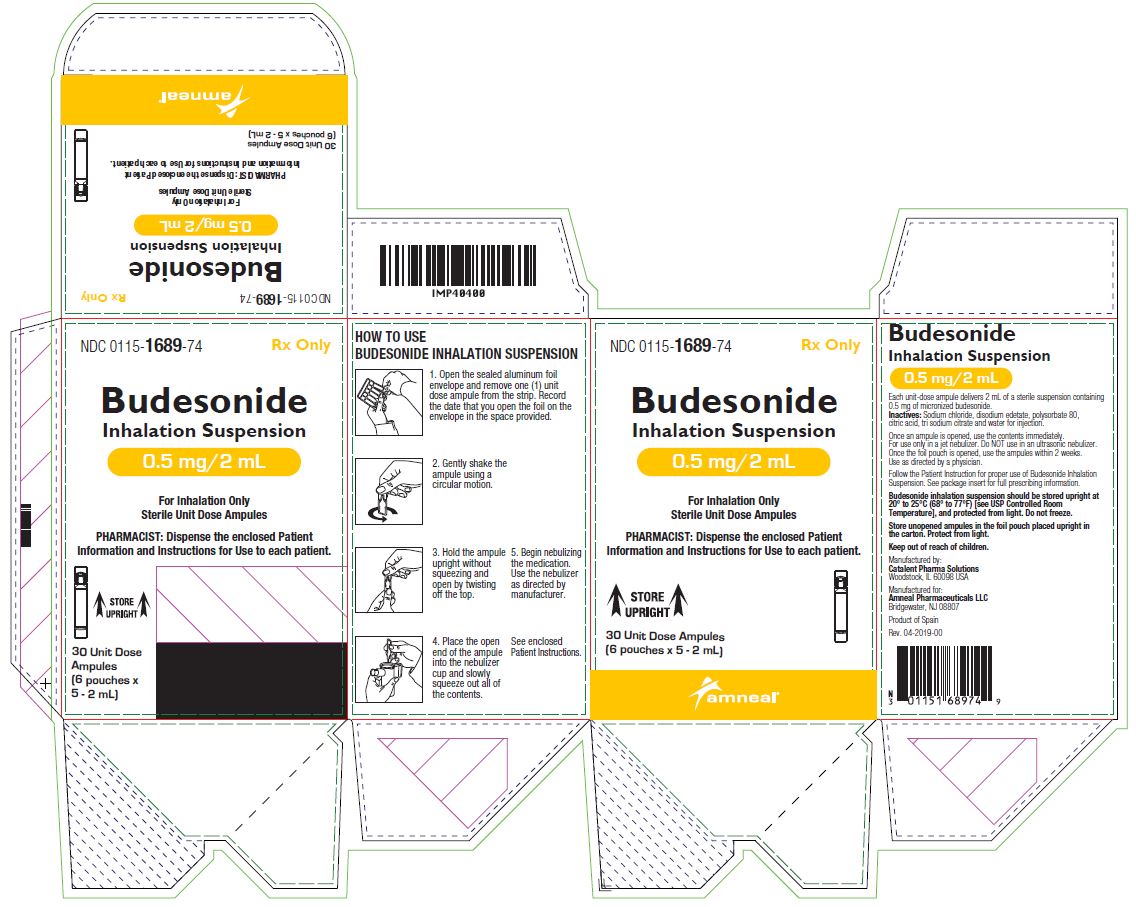
0.5 mg/2ml Budesonide (Budesonide Inhalation Suspension 9)

0.5 mg/2ml Budesonide (Budesonide Inhalation Suspension 9)
Packaging label for Budesonide Inhalation Suspension 0.5 mg/2 mL by Amneal Pharmaceuticals of New York LLC. It is a respiratory inhalation suspension in sterile unit dose ampules, containing 30 unit dose ampules (6 pouches x 5 ampules of 2 mL each). The label includes instructions for use, storage information, and manufacturer details.*

* About these descriptions: Image descriptions on this page are generated by automated AI analysis of the product label images from the manufacturer's FDA label submission (SPL). They are provided for reference only and may contain errors or omissions. Always rely on the printed label itself and the official FDA labeling, and consult a pharmacist or healthcare professional with any questions about this product.