Duodenal Ulcer
Cimetidine has been shown to be effective in the treatment of active duodenal ulcer and, at reduced dosage, in maintenance therapy following healing of active ulcers.
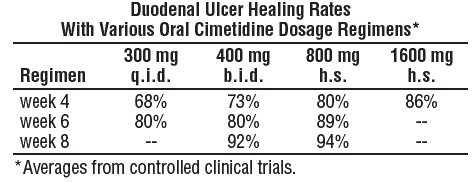
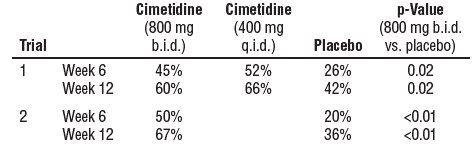
Active Duodenal Ulcer: Cimetidine accelerates the rate of duodenal ulcer healing. Healing rates reported in U.S. and foreign controlled trials with oral cimetidine are summarized below, beginning with the regimen providing the lowest nocturnal dose.

Table 2 (Cimetidine Os 3)
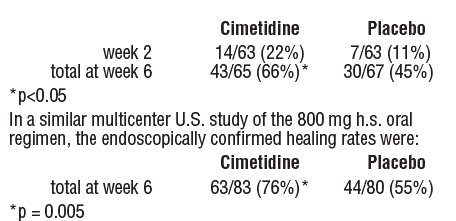
A U.S., double-blind, placebo-controlled, dose-ranging study demonstrated that all once-daily at bedtime (h.s.) cimetidine regimens were superior to placebo in ulcer healing and that cimetidine 800 mg h.s. healed 75% of patients at four weeks. The healing rate with 800 mg h.s. was significantly superior to 400 mg h.s. (66%) and not significantly different from 1600 mg h.s. (81%).
In the U.S. dose-ranging trial, over 80% of patients receiving cimetidine 800 mg h.s. experienced nocturnal pain relief after one day. Relief from daytime pain was reported in approximately 70% of patients after two days. As with ulcer healing, the 800 mg h.s. dose was superior to 400 mg h.s. and not different from 1600 mg h.s.
In foreign, double-blind studies with cimetidine 800 mg h.s. 79 to 85% of patients were healed at four weeks. While short-term treatment with cimetidine can result in complete healing of the duodenal ulcer, acute therapy will not prevent ulcer recurrence after cimetidine has been discontinued. Some follow-up studies have reported that the rate of recurrence once therapy was discontinued was slightly higher for patients healed on cimetidine than for patients healed on other forms of therapy; however, the cimetidine-treated patients generally had more severe disease.
Maintenance Therapy in Duodenal Ulcer: Treatment with a reduced dose of cimetidine has been proven effective as maintenance therapy following healing of active duodenal ulcers.
In numerous placebo-controlled studies conducted worldwide, the percent of patients with observed ulcers at the end of 1 year’s therapy with cimetidine 400 mg h.s. was significantly lower (10% to 45%) than in patients receiving placebo (44% to 70%). Thus, from 55% to 90% of patients were maintained free of observed ulcers at the end of 1 year with cimetidine 400 mg h.s.
Factors such as smoking, duration and severity of disease, gender, and genetic traits may contribute to variations in actual percentages.
Trials of other anti-ulcer therapy, whether placebo-controlled, positive-controlled or open, have demonstrated a range of results similar to that seen with cimetidine.