Dose Selection for Agitated Adult Patients with Schizophrenia and Bipolar I Mania — The efficacy of intramuscular olanzapine for injection in controlling agitation in these disorders was demonstrated in a dose range of 2.5 mg to 10 mg. The recommended dose in these patients is 10 mg. A lower dose of 5 or 7.5 mg may be considered when clinical factors warrant [see Clinical Studies (14.3)]. If agitation warranting additional intramuscular doses persists following the initial dose, subsequent doses up to 10 mg may be given. However, the efficacy of repeated doses of intramuscular olanzapine for injection in agitated patients has not been systematically evaluated in controlled clinical trials. Also, the safety of total daily doses greater than 30 mg, or 10 mg injections given more frequently than 2 hours after the initial dose, and 4 hours after the second dose have not been evaluated in clinical trials. Maximal dosing of intramuscular olanzapine (e.g., 3 doses of 10 mg administered 2-4 hours apart) may be associated with a substantial occurrence of significant orthostatic hypotension [see Warnings and Precautions (5.7)]. Thus, it is recommended that patients requiring subsequent intramuscular injections be assessed for orthostatic hypotension prior to the administration of any subsequent doses of intramuscular olanzapine for injection. The administration of an additional dose to a patient with a clinically significant postural change in systolic blood pressure is not recommended.
If ongoing olanzapine therapy is clinically indicated, oral olanzapine may be initiated in a range of 5-20 mg/day as soon as clinically appropriate.
Intramuscular Dosing in Special Populations — A dose of 5 mg/injection should be considered for geriatric patients or when other clinical factors warrant. A lower dose of 2.5 mg/injection should be considered for patients who otherwise might be debilitated, be predisposed to hypotensive reactions, or be more pharmacodynamically sensitive to olanzapine [see Warnings and Precautions (5.14), Drug Interactions (7), and Clinical Pharmacology (12.3)].
Administration of Olanzapine for Injection — Olanzapine for Injection is intended for intramuscular use only. Do not administer intravenously or subcutaneously. Inject slowly, deep into the muscle mass.
Parenteral drug products should be inspected visually for particulate matter and discoloration prior to administration, whenever solution and container permit.
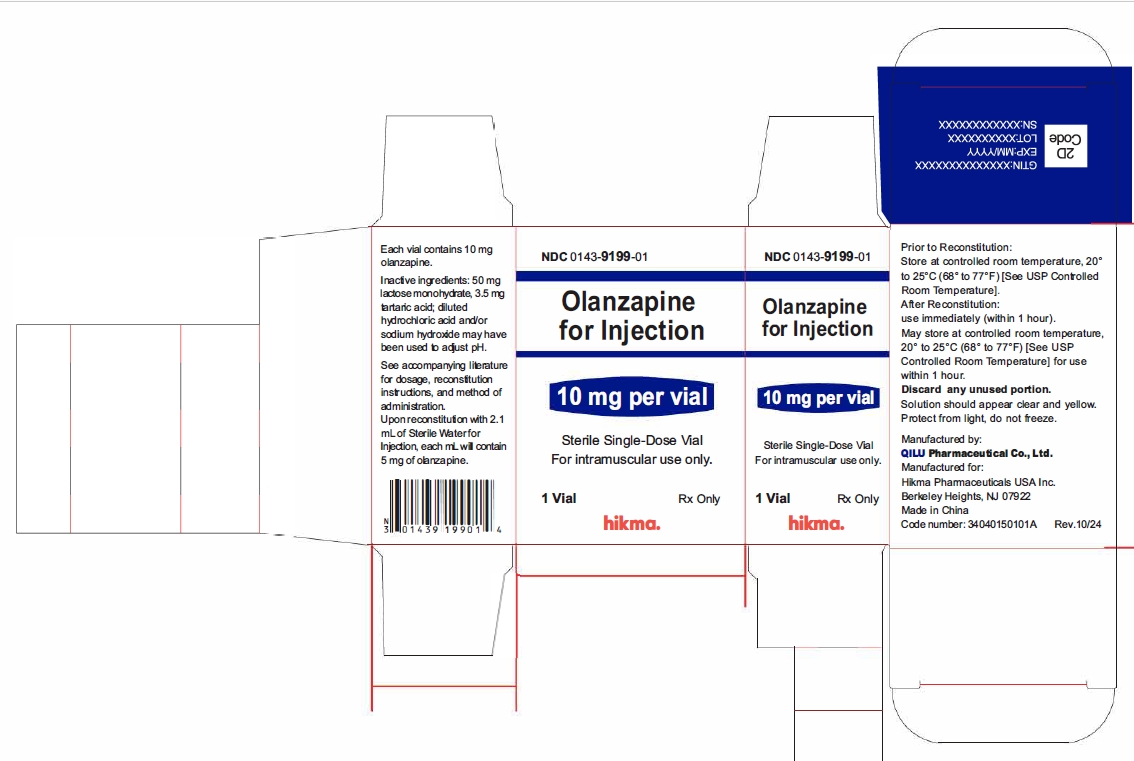
Directions for Preparation of Olanzapine for Injection with Sterile Water for Injection — Dissolve the contents of the vial using 2.1 mL of Sterile Water for Injection to provide a solution containing approximately 5 mg/mL of olanzapine. The resulting solution should appear clear and yellow. Olanzapine for Injection reconstituted with Sterile Water for Injection should be used immediately (within 1 hour) after reconstitution. Discard any unused portion.
The following table provides injection volumes for delivering various doses of intramuscular olanzapine for injection reconstituted with Sterile Water for Injection.
| Dose, mg Olanzapine | Volume of Injection, mL |
| 10 | Withdraw total contents of vial |
| 7.5 | 1.5 |
| 5 | 1 |
| 2.5 | 0.5 |
Physical Incompatibility Information — Olanzapine for Injection should be reconstituted only with Sterile Water for Injection. Olanzapine for Injection should not be combined in a syringe with diazepam injection because precipitation occurs when these products are mixed. Lorazepam injection should not be used to reconstitute Olanzapine for Injection as this combination results in a delayed reconstitution time. Olanzapine for Injection should not be combined in a syringe with haloperidol injection because the resulting low pH has been shown to degrade olanzapine over time.
Clinical Trials in Adults
The information below for olanzapine is derived from a clinical trial database for olanzapine consisting of 10,504 adult patients with approximately 4765 patient-years of exposure to olanzapine plus 722 patients with exposure to intramuscular olanzapine for injection. This database includes: (1) 2500 patients who participated in multiple-dose oral olanzapine premarketing trials in schizophrenia and Alzheimer's disease representing approximately 1122 patient-years of exposure as of February 14, 1995; (2) 182 patients who participated in oral olanzapine premarketing bipolar I disorder (manic or mixed episodes) trials representing approximately 66 patient-years of exposure; (3) 191 patients who participated in an oral olanzapine trial of patients having various psychiatric symptoms in association with Alzheimer's disease representing approximately 29 patient-years of exposure; (4) 5788 additional patients from 88 oral olanzapine clinical trials as of December 31, 2001; (5) 1843 additional patients from 41 olanzapine clinical trials as of October 31, 2011; and (6) 722 patients who participated in intramuscular olanzapine for injection premarketing trials in agitated patients with schizophrenia, bipolar I disorder (manic or mixed episodes), or dementia. Also included below is information from the premarketing 6-week clinical study database for olanzapine in combination with lithium or valproate, consisting of 224 patients who participated in bipolar I disorder (manic or mixed episodes) trials with approximately 22 patient-years of exposure.
The conditions and duration of treatment with olanzapine varied greatly and included (in overlapping categories) open-label and double-blind phases of studies, inpatients and outpatients, fixed-dose and dose-titration studies, and short-term or longer-term exposure. Adverse reactions were assessed by collecting adverse reactions, results of physical examinations, vital signs, weights, laboratory analytes, ECGs, chest x-rays, and results of ophthalmologic examinations.
Certain portions of the discussion below relating to objective or numeric safety parameters, namely, dose-dependent adverse reactions, vital sign changes, weight gain, laboratory changes, and ECG changes are derived from studies in patients with schizophrenia and have not been duplicated for bipolar I disorder (manic or mixed episodes) or agitation. However, this information is also generally applicable to bipolar I disorder (manic or mixed episodes) and agitation.
Adverse reactions during exposure were obtained by spontaneous report and recorded by clinical investigators using terminology of their own choosing. Consequently, it is not possible to provide a meaningful estimate of the proportion of individuals experiencing adverse reactions without first grouping similar types of reactions into a smaller number of standardized reaction categories. In the tables and tabulations that follow, MedDRA and COSTART Dictionary terminology has been used to classify reported adverse reactions.
The stated frequencies of adverse reactions represent the proportion of individuals who experienced, at least once, a treatment-emergent adverse reaction of the type listed. A reaction was considered treatment emergent if it occurred for the first time or worsened while receiving therapy following baseline evaluation. The reported reactions do not include those reaction terms that were so general as to be uninformative. Reactions listed elsewhere in labeling may not be repeated below. It is important to emphasize that, although the reactions occurred during treatment with olanzapine, they were not necessarily caused by it. The entire label should be read to gain a complete understanding of the safety profile of olanzapine.
The prescriber should be aware that the figures in the tables and tabulations cannot be used to predict the incidence of side effects in the course of usual medical practice where patient characteristics and other factors differ from those that prevailed in the clinical trials. Similarly, the cited frequencies cannot be compared with figures obtained from other clinical investigations involving different treatments, uses, and investigators. The cited figures, however, do provide the prescribing healthcare provider with some basis for estimating the relative contribution of drug and nondrug factors to the adverse reactions incidence in the population studied.
Incidence of Adverse Reactions in Short-Term, Placebo-Controlled and Combination Trials
The following findings are based on premarketing trials of (1) oral olanzapine for schizophrenia, bipolar I disorder (manic or mixed episodes), a subsequent trial of patients having various psychiatric symptoms in association with Alzheimer's disease, and premarketing combination trials, and (2) intramuscular olanzapine for injection in agitated patients with schizophrenia or bipolar I mania.
Adverse Reactions Associated with Discontinuation of Treatment in Short-Term, Placebo-Controlled Trials
Schizophrenia — Overall, there was no difference in the incidence of discontinuation due to adverse reactions (5% for oral olanzapine vs 6% for placebo). However, discontinuations due to increases in ALT were considered to be drug related (2% for oral olanzapine vs 0% for placebo).
Bipolar I Disorder (Manic or Mixed Episodes) Monotherapy — Overall, there was no difference in the incidence of discontinuation due to adverse reactions (2% for oral olanzapine vs 2% for placebo).
Agitation — Overall, there was no difference in the incidence of discontinuation due to adverse reactions (0.4% for intramuscular olanzapine for injection vs 0% for placebo).
Adverse Reactions Associated with Discontinuation of Treatment in Short-Term Combination Trials
Bipolar I Disorder (Manic or Mixed Episodes), Olanzapine as Adjunct to Lithium or Valproate — In a study of patients who were already tolerating either lithium or valproate as monotherapy, discontinuation rates due to adverse reactions were 11% for the combination of oral olanzapine with lithium or valproate compared to 2% for patients who remained on lithium or valproate monotherapy. Discontinuations with the combination of oral olanzapine and lithium or valproate that occurred in more than 1 patient were: somnolence (3%), weight gain (1%), and peripheral edema (1%).
Commonly Observed Adverse Reactions in Short-Term, Placebo-Controlled Trials
The most commonly observed adverse reactions associated with the use of oral olanzapine (incidence of 5% or greater) and not observed at an equivalent incidence among placebo-treated patients (olanzapine incidence at least twice that for placebo) were:
Table 9: Common Treatment-Emergent Adverse Reactions Associated with the Use of Oral Olanzapine in 6-Week Trials — SCHIZOPHRENIA |
| Adverse Reaction | Percentage of Patients Reporting Event |
Olanzapine
(N=248) | Placebo
(N=118) |
| Postural hypotension | 5 | 2 |
| Constipation | 9 | 3 |
| Weight gain | 6 | 1 |
| Dizziness | 11 | 4 |
| Personality disordera | 8 | 4 |
| Akathisia | 5 | 1 |
Table 10: Common Treatment-Emergent Adverse Reactions Associated with the Use of Oral Olanzapine in 3-Week and 4-Week Trials — Bipolar I Disorder (Manic or Mixed Episodes) | Adverse Reaction | Percentage of Patients Reporting Event |
Olanzapine
(N=125) | Placebo
(N=129) |
| Asthenia | 15 | 6 |
| Dry mouth | 22 | 7 |
| Constipation | 11 | 5 |
| Dyspepsia | 11 | 5 |
| Increased appetite | 6 | 3 |
| Somnolence | 35 | 13 |
| Dizziness | 18 | 6 |
| Tremor | 6 | 3 |
Olanzapine Intramuscular — There was 1 adverse reaction (somnolence) observed at an incidence of 5% or greater among intramuscular olanzapine for injection-treated patients and not observed at an equivalent incidence among placebo-treated patients (olanzapine incidence at least twice that for placebo) during the placebo-controlled premarketing studies. The incidence of somnolence during the 24 hour IM treatment period in clinical trials in agitated patients with schizophrenia or bipolar I mania was 6% for intramuscular olanzapine for injection and 3% for placebo.
Adverse Reactions Occurring at an Incidence of 2% or More among Oral Olanzapine-Treated Patients in Short-Term, Placebo-Controlled Trials
Table 11 enumerates the incidence, rounded to the nearest percent, of treatment-emergent adverse reactions that occurred in 2% or more of patients treated with oral olanzapine (doses ≥2.5 mg/day) and with incidence greater than placebo who participated in the acute phase of placebo-controlled trials.
Table 11: Treatment-Emergent Adverse Reactions: Incidence in Short-Term, Placebo-Controlled Clinical Trials with Oral Olanzapine | Body System/Adverse Reaction | Percentage of Patients Reporting Event |
Olanzapine
(N=532) | Placebo
(N=294) |
| Body as a Whole | | |
| Accidental injury | 12 | 8 |
| Asthenia | 10 | 9 |
| Fever | 6 | 2 |
| Back pain | 5 | 2 |
| Chest pain | 3 | 1 |
| Cardiovascular System | | |
| Postural hypotension | 3 | 1 |
| Tachycardia | 3 | 1 |
| Hypertension | 2 | 1 |
| Digestive System | | |
| Dry mouth | 9 | 5 |
| Constipation | 9 | 4 |
| Dyspepsia | 7 | 5 |
| Vomiting | 4 | 3 |
| Increased appetite | 3 | 2 |
| Hemic and Lymphatic System | | |
| Ecchymosis | 5 | 3 |
| Metabolic and Nutritional Disorders | | |
| Weight gain | 5 | 3 |
| Peripheral edema | 3 | 1 |
| Musculoskeletal System | | |
| Extremity pain (other than joint) | 5 | 3 |
| Joint pain | 5 | 3 |
| Nervous System | | |
| Somnolence | 29 | 13 |
| Insomnia | 12 | 11 |
| Dizziness | 11 | 4 |
| Abnormal gait | 6 | 1 |
| Tremor | 4 | 3 |
| Akathisia | 3 | 2 |
| Hypertonia | 3 | 2 |
| Articulation impairment | 2 | 1 |
| Respiratory System | | |
| Rhinitis | 7 | 6 |
| Cough increased | 6 | 3 |
| Pharyngitis | 4 | 3 |
| Special Senses | | |
| Amblyopia | 3 | 2 |
| Urogenital System | | |
| Urinary incontinence | 2 | 1 |
| Urinary tract infection | 2 | 1 |
Dose Dependency of Adverse Reactions
A dose group difference has been observed for fatigue, dizziness, weight gain and prolactin elevation. In a single 8-week randomized, double-blind, fixed-dose study comparing 10 (N=199), 20 (N=200) and 40 (N=200) mg/day of oral olanzapine in adult patients with schizophrenia or schizoaffective disorder, incidence of fatigue (10 mg/day: 1.5%; 20 mg/day: 2.1%; 40 mg/day: 6.6%) was observed with significant differences between 10 vs 40 and 20 vs 40 mg/day. The incidence of dizziness (10 mg/day: 2.6%; 20 mg/day: 1.6%; 40 mg/day: 6.6%) was observed with significant differences between 20 vs 40 mg. Dose group differences were also noted for weight gain and prolactin elevation [see Warnings and Precautions (5.5, 5.15)].
The following table addresses dose relatedness for other adverse reactions using data from a schizophrenia trial involving fixed dosage ranges of oral olanzapine. It enumerates the percentage of patients with treatment-emergent adverse reactions for the 3 fixed-dose range groups and placebo. The data were analyzed using the Cochran-Armitage test, excluding the placebo group, and the table includes only those adverse reactions for which there was a trend.
Table 12: Percentage of Patients from a Schizophrenia Trial with Treatment-Emergent Adverse Reactions for the 3 Dose Range Groups and Placebo | Percentage of Patients Reporting Event |
| | Olanzapine | Olanzapine | Olanzapine |
| Placebo | 5 ± 2.5 mg/day | 10 ± 2.5 mg/day | 15 ± 2.5 mg/day |
| Adverse Reaction | (N=68) | (N=65) | (N=64) | (N=69) |
| Asthenia | 15 | 8 | 9 | 20 |
| Dry mouth | 4 | 3 | 5 | 13 |
| Nausea | 9 | 0 | 2 | 9 |
| Somnolence | 16 | 20 | 30 | 39 |
| Tremor | 3 | 0 | 5 | 7 |
Commonly Observed Adverse Reactions in Short-Term Trials of Oral Olanzapine as Adjunct to Lithium or Valproate
In the bipolar I disorder (manic or mixed episodes) adjunct placebo-controlled trials, the most commonly observed adverse reactions associated with the combination of olanzapine and lithium or valproate (incidence of ≥5% and at least twice placebo) were:
Table 13: Common Treatment-Emergent Adverse Reactions Associated with the Use of Oral Olanzapine in 6-Week Adjunct to Lithium or Valproate Trials — Bipolar I Disorder (Manic or Mixed Episodes) | Adverse Reaction | Percentage of Patients Reporting Event |
Olanzapine with lithium or valproate
(N=229) | Placebo with lithium or valproate
(N=115) |
| Dry mouth | 32 | 9 |
| Weight gain | 26 | 7 |
| Increased appetite | 24 | 8 |
| Dizziness | 14 | 7 |
| Back pain | 8 | 4 |
| Constipation | 8 | 4 |
| Speech disorder | 7 | 1 |
| Increased salivation | 6 | 2 |
| Amnesia | 5 | 2 |
| Paresthesia | 5 | 2 |
Adverse Reactions Occurring at an Incidence of 2% or More among Oral Olanzapine-Treated Patients in Short-Term Trials of Olanzapine as Adjunct to Lithium or Valproate
Table 14 enumerates the incidence, rounded to the nearest percent, of treatment-emergent adverse reactions that occurred in 2% or more of patients treated with the combination of olanzapine (doses ≥5 mg/day) and lithium or valproate and with incidence greater than lithium or valproate alone who participated in the acute phase of placebo-controlled combination trials.
Table 14: Treatment-Emergent Adverse Reactions: Incidence in Short-Term, Placebo-Controlled Clinical Trials of Oral Olanzapine as Adjunct to Lithium or Valproate |
| Body System/Adverse Reaction | Percentage of Patients Reporting Event |
Olanzapine with lithium or valproate
(N=229) | Placebo with lithium or valproate
(N=115) |
| Body as a Whole | | |
| Asthenia | 18 | 13 |
| Back pain | 8 | 4 |
| Accidental injury | 4 | 2 |
| Chest pain | 3 | 2 |
| Cardiovascular System | | |
| Hypertension | 2 | 1 |
| Digestive System | | |
| Dry mouth | 32 | 9 |
| Increased appetite | 24 | 8 |
| Thirst | 10 | 6 |
| Constipation | 8 | 4 |
| Increased salivation | 6 | 2 |
| Metabolic and Nutritional Disorders | | |
| Weight gain | 26 | 7 |
| Peripheral edema | 6 | 4 |
| Edema | 2 | 1 |
| Nervous System | | |
| Somnolence | 52 | 27 |
| Tremor | 23 | 13 |
| Depression | 18 | 17 |
| Dizziness | 14 | 7 |
| Speech disorder | 7 | 1 |
| Amnesia | 5 | 2 |
| Paresthesia | 5 | 2 |
| Apathy | 4 | 3 |
| Confusion | 4 | 1 |
| Euphoria | 3 | 2 |
| Incoordination | 2 | 0 |
| Respiratory System | | |
| Pharyngitis | 4 | 1 |
| Dyspnea | 3 | 1 |
| Skin and Appendages | | |
| Sweating | 3 | 1 |
| Acne | 2 | 0 |
| Dry skin | 2 | 0 |
| Special Senses | | |
| Amblyopia | 9 | 5 |
| Abnormal vision | 2 | 0 |
| Urogenital System | | |
| Dysmenorrheaa | 2 | 0 |
| Vaginitisa | 2 | 0 |
For specific information about the adverse reactions observed with lithium or valproate, refer to the Adverse Reactions section of the package inserts for these other products.
Adverse Reactions Occurring at an Incidence of 1% or More among Intramuscular Olanzapine for Injection-Treated Patients in Short-Term, Placebo-Controlled Trials
Table 15 enumerates the incidence, rounded to the nearest percent, of treatment-emergent adverse reactions that occurred in 1% or more of patients treated with intramuscular olanzapine for injection (dose range of 2.5-10 mg/injection) and with incidence greater than placebo who participated in the short-term, placebo-controlled trials in agitated patients with schizophrenia or bipolar I mania.
Table 15: Treatment-Emergent Adverse Reactions: Incidence in Short-Term (24 Hour), Placebo-Controlled Clinical Trials with Intramuscular Olanzapine for Injection in Agitated Patients with Schizophrenia or Bipolar I Mania | Body System/Adverse Reaction | Percentage of Patients Reporting Event |
Olanzapine
(N=415) | Placebo
(N=150) |
| Body as a Whole | | |
| Asthenia | 2 | 1 |
| Cardiovascular System | | |
| Hypotension | 2 | 0 |
| Postural hypotension | 1 | 0 |
| Nervous System | | |
| Somnolence | 6 | 3 |
| Dizziness | 4 | 2 |
| Tremor | 1 | 0 |
Extrapyramidal Symptoms
The following table enumerates the percentage of patients with treatment-emergent extrapyramidal symptoms as assessed by categorical analyses of formal rating scales during acute therapy in a controlled clinical trial comparing oral olanzapine at 3 fixed doses with placebo in the treatment of schizophrenia in a 6-week trial.
Table 16: Treatment-Emergent Extrapyramidal Symptoms Assessed by Rating Scales Incidence in a Fixed Dosage Range, Placebo-Controlled Clinical Trial of Oral Olanzapine in Schizophrenia — Acute Phase |
|
| Percentage of Patients Reporting Event |
| Placebo | Olanzapine
5 ± 2.5 mg/day | Olanzapine
10 ± 2.5 mg/day | Olanzapine
15 ± 2.5 mg/day |
| Parkinsonisma | 15 | 14 | 12 | 14 |
| Akathisiab | 23 | 16 | 19 | 27 |
The following table enumerates the percentage of patients with treatment-emergent extrapyramidal symptoms as assessed by spontaneously reported adverse reactions during acute therapy in the same controlled clinical trial comparing olanzapine at 3 fixed doses with placebo in the treatment of schizophrenia in a 6-week trial.
Table 17: Treatment-Emergent Extrapyramidal Symptoms Assessed by Adverse Reactions Incidence in a Fixed Dosage Range, Placebo-Controlled Clinical Trial of Oral Olanzapine in Schizophrenia — Acute Phase |
|
|
|
|
| Percentage of Patients Reporting Event |
Placebo
(N=68) | Olanzapine
5 ± 2.5 mg/day
(N=65) | Olanzapine
10 ± 2.5 mg/day
(N=64) | Olanzapine
15 ± 2.5 mg/day
(N=69) |
| Dystonic eventsa | 1 | 3 | 2 | 3 |
| Parkinsonism eventsb | 10 | 8 | 14 | 20 |
| Akathisia eventsc | 1 | 5 | 11 | 10 |
| Dyskinetic eventsd | 4 | 0 | 2 | 1 |
| Residual eventse | 1 | 2 | 5 | 1 |
| Any extrapyramidal event | 16 | 15 | 25 | 32 |
The following table enumerates the percentage of adolescent patients with treatment-emergent extrapyramidal symptoms as assessed by spontaneously reported adverse reactions during acute therapy (dose range: 2.5 to 20 mg/day).
Table 18: Treatment-Emergent Extrapyramidal Symptoms Assessed by Adverse Reactions Incidence in Placebo-Controlled Clinical Trials of Oral Olanzapine in Schizophrenia and Bipolar I Disorder — Adolescents |
| Percentage of Patients Reporting Event |
| Placebo | Olanzapine |
| Categoriesa | (N=89) | (N=179) |
| Dystonic events | 0 | 1 |
| Parkinsonism events | 2 | 1 |
| Akathisia events | 4 | 6 |
| Dyskinetic events | 0 | 1 |
| Nonspecific events | 0 | 4 |
| Any extrapyramidal event | 6 | 10 |
The following table enumerates the percentage of patients with treatment-emergent extrapyramidal symptoms as assessed by categorical analyses of formal rating scales during controlled clinical trials comparing fixed doses of intramuscular olanzapine for injection with placebo in agitation. Patients in each dose group could receive up to 3 injections during the trials [see Clinical Studies (14.3)]. Patient assessments were conducted during the 24 hours following the initial dose of intramuscular olanzapine for injection.
Table 19: Treatment-Emergent Extrapyramidal Symptoms Assessed by Rating Scales Incidence in a Fixed Dose, Placebo-Controlled Clinical Trial of Intramuscular Olanzapine for Injection in Agitated Patients with Schizophrenia |
|
| Percentage of Patients Reporting Event |
| Placebo | Olanzapine
IM
2.5 mg | Olanzapine
IM
5 mg | Olanzapine
IM
7.5 mg | Olanzapine
IM
10 mg |
| Parkinsonisma | 0 | 0 | 0 | 0 | 3 |
| Akathisiab | 0 | 0 | 5 | 0 | 0 |
The following table enumerates the percentage of patients with treatment-emergent extrapyramidal symptoms as assessed by spontaneously reported adverse reactions in the same controlled clinical trial comparing fixed doses of intramuscular olanzapine for injection with placebo in agitated patients with schizophrenia.
Table 20: Treatment-Emergent Extrapyramidal Symptoms Assessed by Adverse Reactions Incidence in a Fixed Dose, Placebo-Controlled Clinical Trial of Intramuscular Olanzapine for Injection in Agitated Patients with Schizophrenia |
|
|
|
|
| Percentage of Patients Reporting Event |
Placebo
(N=45) | Olanzapine
IM
2.5 mg
(N=48) | Olanzapine
IM
5 mg
(N=45) | Olanzapine
IM
7.5 mg
(N=46) | Olanzapine
IM
10 mg
(N=46) |
| Dystonic eventsa | 0 | 0 | 0 | 0 | 0 |
| Parkinsonism eventsb | 0 | 4 | 2 | 0 | 0 |
| Akathisia eventsc | 0 | 2 | 0 | 0 | 0 |
| Dyskinetic eventsd | 0 | 0 | 0 | 0 | 0 |
| Residual eventse | 0 | 0 | 0 | 0 | 0 |
| Any extrapyramidal events | 0 | 4 | 2 | 0 | 0 |
Dystonia, Class Effect: Symptoms of dystonia, prolonged abnormal contractions of muscle groups, may occur in susceptible individuals during the first few days of treatment. Dystonic symptoms include: spasm of the neck muscles, sometimes progressing to tightness of the throat, swallowing difficulty, difficulty breathing, and/or protrusion of the tongue. While these symptoms can occur at low doses, the frequency and severity are greater with high potency and at higher doses of first generation antipsychotic drugs. In general, an elevated risk of acute dystonia may be observed in males and younger age groups receiving antipsychotics; however, events of dystonia have been reported infrequently (<1%) with olanzapine use.
Other Adverse Reactions
Other Adverse Reactions Observed During the Clinical Trial Evaluation of Oral Olanzapine
Following is a list of treatment-emergent adverse reactions reported by patients treated with oral olanzapine (at multiple doses ≥1 mg/day) in clinical trials. This listing is not intended to include reactions (1) already listed in previous tables or elsewhere in labeling, (2) for which a drug cause was remote, (3) which were so general as to be uninformative, (4) which were not considered to have significant clinical implications, or (5) which occurred at a rate equal to or less than placebo. Reactions are classified by body system using the following definitions: frequent adverse reactions are those occurring in at least 1/100 patients; infrequent adverse reactions are those occurring in 1/100 to 1/1000 patients; rare reactions are those occurring in fewer than 1/1000 patients.
Body as a Whole — Infrequent: chills, face edema, photosensitivity reaction, suicide attempt1; Rare: chills and fever, hangover effect, sudden death1.
Cardiovascular System — Infrequent: cerebrovascular accident, vasodilatation.
Digestive System — Infrequent: abdominal distension, nausea and vomiting, tongue edema; Rare: ileus, intestinal obstruction, liver fatty deposit.
Hemic and Lymphatic System — Infrequent: thrombocytopenia.
Metabolic and Nutritional Disorders — Frequent: alkaline phosphatase increased; Infrequent: bilirubinemia, hypoproteinemia.
Musculoskeletal System — Rare: osteoporosis.
Nervous System — Infrequent: ataxia, dysarthria, libido decreased, stupor; Rare: coma.
Respiratory System — Infrequent: epistaxis; Rare: lung edema.
Skin and Appendages — Infrequent: alopecia.
Special Senses — Infrequent: abnormality of accommodation, dry eyes; Rare: mydriasis.
Urogenital System — Infrequent: amenorrhea2, breast pain, decreased menstruation, impotence2, increased menstruation2, menorrhagia2, metrorrhagia2, polyuria2, urinary frequency, urinary retention, urinary urgency, urination impaired.
1 These terms represent serious adverse events but do not meet the definition for adverse drug reactions. They are included here because of their seriousness.
2 Adjusted for gender.
Other Adverse Reactions Observed During the Clinical Trial Evaluation of Intramuscular Olanzapine for Injection
Following is a list of treatment-emergent adverse reactions reported by patients treated with intramuscular olanzapine for injection (at 1 or more doses ≥2.5 mg/injection) in clinical trials. This listing is not intended to include reactions (1) already listed in previous tables or elsewhere in labeling, (2) for which a drug cause was remote, (3) which were so general as to be uninformative, (4) which were not considered to have significant clinical implications, or (5) for which occurred at a rate equal to or less than placebo. Reactions are classified by body system using the following definitions: frequent adverse reactions are those occurring in at least 1/100 patients; infrequent adverse reactions are those occurring in 1/100 to 1/1000 patients.
Body as a Whole — Frequent: injection site pain.
Cardiovascular System — Infrequent: syncope.
Digestive System — Infrequent: nausea.
Metabolic and Nutritional Disorders — Infrequent:creatine phosphokinase increased.
Clinical Trials in Adolescent Patients (age 13 to 17 years)
Commonly Observed Adverse Reactions in Oral Olanzapine Short-Term, Placebo-Controlled Trials
Adverse reactions in adolescent patients treated with oral olanzapine (doses ≥2.5 mg) reported with an incidence of 5% or more and reported at least twice as frequently as placebo-treated patients are listed in Table 21.
Table 21: Treatment-Emergent Adverse Reactions of ≥5% Incidence among Adolescents (13-17 Years Old) with Schizophrenia or Bipolar I Disorder (Manic or Mixed Episodes) |
|
| Adverse Reactions | Percentage of Patients Reporting Event |
6 Week Trial
% Schizophrenia Patients | 3 Week Trial
% Bipolar Patients |
Olanzapine
(N=72) | Placebo
(N=35) | Olanzapine
(N=107) | Placebo
(N=54) |
| Sedationa | 39 | 9 | 48 | 9 |
| Weight increased | 31 | 9 | 29 | 4 |
| Headache | 17 | 6 | 17 | 17 |
| Increased appetite | 17 | 9 | 29 | 4 |
| Dizziness | 8 | 3 | 7 | 2 |
| Abdominal painb | 6 | 3 | 6 | 7 |
| Pain in extremity | 6 | 3 | 5 | 0 |
| Fatigue | 3 | 3 | 14 | 6 |
| Dry mouth | 4 | 0 | 7 | 0 |
Adverse Reactions Occurring at an Incidence of 2% or More among Oral Olanzapine-Treated Patients in Short-Term (3-6 weeks), Placebo-Controlled Trials
Adverse reactions in adolescent patients treated with oral olanzapine (doses ≥2.5 mg) reported with an incidence of 2% or more and greater than placebo are listed in Table 22.
Table 22: Treatment-Emergent Adverse Reactions of ≥2% Incidence among Adolescents (13-17 Years Old) (Combined Incidence from Short-Term, Placebo-Controlled Clinical Trials of Schizophrenia or Bipolar I Disorder [Manic or Mixed Episodes]) |
|
|
| Adverse Reaction | Percentage of Patients Reporting Event |
Olanzapine
(N=179) | Placebo
(N=89) |
| Sedationa | 44 | 9 |
| Weight increased | 30 | 6 |
| Increased appetite | 24 | 6 |
| Headache | 17 | 12 |
| Fatigue | 9 | 4 |
| Dizziness | 7 | 2 |
| Dry mouth | 6 | 0 |
| Pain in extremity | 5 | 1 |
| Constipation | 4 | 0 |
| Nasopharyngitis | 4 | 2 |
| Diarrhea | 3 | 0 |
| Restlessness | 3 | 2 |
| Liver enzymes increasedb | 8 | 1 |
| Dyspepsia | 3 | 1 |
| Epistaxis | 3 | 0 |
| Respiratory tract infectionc | 3 | 2 |
| Sinusitis | 3 | 0 |
| Arthralgia | 2 | 0 |
| Musculoskeletal stiffness | 2 | 0 |
Vital Signs and Laboratory Studies
Vital Sign Changes — Oral olanzapine was associated with orthostatic hypotension and tachycardia in clinical trials. Intramuscular olanzapine for injection was associated with bradycardia, hypotension, and tachycardia in clinical trials [see Warnings and Precautions (5)].
Laboratory Changes
Olanzapine Monotherapy in Adults: An assessment of the premarketing experience for olanzapine revealed an association with asymptomatic increases in ALT, AST, and GGT. Within the original premarketing database of about 2400 adult patients with baseline ALT ≤90 IU/L, the incidence of ALT elevations to >200 IU/L was 2% (50/2381). None of these patients experienced jaundice or other symptoms attributable to liver impairment and most had transient changes that tended to normalize while olanzapine treatment was continued.
In placebo-controlled olanzapine monotherapy studies in adults, clinically significant ALT elevations (change from <3 times the upper limit of normal [ULN] at baseline to ≥3 times ULN) were observed in 5% (77/1426) of patients exposed to olanzapine compared to 1% (10/1187) of patients exposed to placebo. ALT elevations ≥5 times ULN were observed in 2% (29/1438) of olanzapine-treated patients, compared to 0.3% (4/1196) of placebo-treated patients. ALT values returned to normal, or were decreasing, at last follow-up in the majority of patients who either continued treatment with olanzapine or discontinued olanzapine. No patient with elevated ALT values experienced jaundice, liver failure, or met the criteria for Hy's Rule.
From an analysis of the laboratory data in an integrated database of 41 completed clinical studies in adult patients treated with oral olanzapine, high GGT levels were recorded in ≥1% (88/5245) of patients.
Caution should be exercised in patients with signs and symptoms of hepatic impairment, in patients with pre-existing conditions associated with limited hepatic functional reserve, and in patients who are being treated with potentially hepatotoxic drugs.
Olanzapine administration was also associated with increases in serum prolactin [see Warnings and Precautions (5.15)], with an asymptomatic elevation of the eosinophil count in 0.3% of patients, and with an increase in CPK.
From an analysis of the laboratory data in an integrated database of 41 completed clinical studies in adult patients treated with oral olanzapine, elevated uric acid was recorded in ≥3% (171/4641) of patients.
Olanzapine Monotherapy in Adolescents: In placebo-controlled clinical trials of adolescent patients with schizophrenia or bipolar I disorder (manic or mixed episodes), greater frequencies for the following treatment-emergent findings, at anytime, were observed in laboratory analytes compared to placebo: elevated ALT (≥3X ULN in patients with ALT at baseline <3X ULN), (12% vs 2%); elevated AST (28% vs 4%); low total bilirubin (22% vs 7%); elevated GGT (10% vs 1%); and elevated prolactin (47% vs 7%).
In placebo-controlled olanzapine monotherapy studies in adolescents, clinically significant ALT elevations (change from <3 times ULN at baseline to ≥3 times ULN) were observed in 12% (22/192) of patients exposed to olanzapine compared to 2% (2/109) of patients exposed to placebo. ALT elevations ≥5 times ULN were observed in 4% (8/192) of olanzapine-treated patients, compared to 1% (1/109) of placebo-treated patients. ALT values returned to normal, or were decreasing, at last follow-up in the majority of patients who either continued treatment with olanzapine or discontinued olanzapine. No adolescent patient with elevated ALT values experienced jaundice, liver failure, or met the criteria for Hy's Rule.
ECG Changes — In pooled studies of adults as well as pooled studies of adolescents, there were no significant differences between olanzapine and placebo in the proportions of patients experiencing potentially important changes in ECG parameters, including QT, QTc (Fridericia corrected), and PR intervals. Olanzapine use was associated with a mean increase in heart rate compared to placebo (adults: +2.4 beats per minute vs no change with placebo; adolescents: +6.3 beats per minute vs -5.1 beats per minute with placebo). This increase in heart rate may be related to olanzapine's potential for inducing orthostatic changes [see Warnings and Precautions (5.7)].
Oral Administration, Monotherapy — Olanzapine is well absorbed and reaches peak concentrations in approximately 6 hours following an oral dose. It is eliminated extensively by first pass metabolism, with approximately 40% of the dose metabolized before reaching the systemic circulation. Food does not affect the rate or extent of olanzapine absorption. Pharmacokinetic studies showed that Zyprexa tablets and Zyprexa Zydis dosage forms of olanzapine are bioequivalent.
Olanzapine displays linear kinetics over the clinical dosing range. Its half-life ranges from 21 to 54 hours (5th to 95th percentile; mean of 30 hr), and apparent plasma clearance ranges from 12 to 47 L/hr (5th to 95th percentile; mean of 25 L/hr).
Administration of olanzapine once daily leads to steady-state concentrations in about 1 week that are approximately twice the concentrations after single doses. Plasma concentrations, half-life, and clearance of olanzapine may vary between individuals on the basis of smoking status, gender, and age.
Olanzapine is extensively distributed throughout the body, with a volume of distribution of approximately 1000 L. It is 93% bound to plasma proteins over the concentration range of 7 to 1100 ng/mL, binding primarily to albumin and α1-acid glycoprotein.
Metabolism and Elimination — Following a single oral dose of 14C labeled olanzapine, 7% of the dose of olanzapine was recovered in the urine as unchanged drug, indicating that olanzapine is highly metabolized. Approximately 57% and 30% of the dose was recovered in the urine and feces, respectively. In the plasma, olanzapine accounted for only 12% of the AUC for total radioactivity, indicating significant exposure to metabolites. After multiple dosing, the major circulating metabolites were the 10-N-glucuronide, present at steady state at 44% of the concentration of olanzapine, and 4′-N-desmethyl olanzapine, present at steady state at 31% of the concentration of olanzapine. Both metabolites lack pharmacological activity at the concentrations observed.
Direct glucuronidation and cytochrome P450 (CYP) mediated oxidation are the primary metabolic pathways for olanzapine. In vitro studies suggest that CYPs 1A2 and 2D6, and the flavin-containing monooxygenase system are involved in olanzapine oxidation. CYP2D6 mediated oxidation appears to be a minor metabolic pathway in vivo, because the clearance of olanzapine is not reduced in subjects who are deficient in this enzyme.
Intramuscular Administration — Olanzapine for Injection results in rapid absorption with peak plasma concentrations occurring within 15 to 45 minutes. Based upon a pharmacokinetic study in healthy volunteers, a 5 mg dose of intramuscular olanzapine for injection produces, on average, a maximum plasma concentration approximately 5 times higher than the maximum plasma concentration produced by a 5 mg dose of oral olanzapine. Area under the curve achieved after an intramuscular dose is similar to that achieved after oral administration of the same dose. The half-life observed after intramuscular administration is similar to that observed after oral dosing. The pharmacokinetics are linear over the clinical dosing range. Metabolic profiles after intramuscular administration are qualitatively similar to metabolic profiles after oral administration.
Specific Populations
Renal Impairment — Because olanzapine is highly metabolized before excretion and only 7% of the drug is excreted unchanged, renal dysfunction alone is unlikely to have a major impact on the pharmacokinetics of olanzapine. The pharmacokinetic characteristics of olanzapine were similar in patients with severe renal impairment and normal subjects, indicating that dosage adjustment based upon the degree of renal impairment is not required. In addition, olanzapine is not removed by dialysis. The effect of renal impairment on metabolite elimination has not been studied.
Hepatic Impairment — Although the presence of hepatic impairment may be expected to reduce the clearance of olanzapine, a study of the effect of impaired liver function in subjects (n=6) with clinically significant (Childs Pugh Classification A and B) cirrhosis revealed little effect on the pharmacokinetics of olanzapine.
Geriatric — In a study involving 24 healthy subjects, the mean elimination half-life of olanzapine was about 1.5 times greater in elderly (≥65 years) than in nonelderly subjects (<65 years). Caution should be used in dosing the elderly, especially if there are other factors that might additively influence drug metabolism and/or pharmacodynamic sensitivity [see Dosage and Administration (2)].
Gender — Clearance of olanzapine is approximately 30% lower in women than in men. There were, however, no apparent differences between men and women in effectiveness or adverse effects. Dosage modifications based on gender should not be needed.
Smoking Status — Olanzapine clearance is about 40% higher in smokers than in nonsmokers, although dosage modifications are not routinely recommended.
Race — In vivo studies have shown that exposures are similar among Japanese, Chinese and Caucasians, especially after normalization for body weight differences. Dosage modifications for race are, therefore, not recommended.
Combined Effects — The combined effects of age, smoking, and gender could lead to substantial pharmacokinetic differences in populations. The clearance in young smoking males, for example, may be 3 times higher than that in elderly nonsmoking females. Dosing modification may be necessary in patients who exhibit a combination of factors that may result in slower metabolism of olanzapine [see Dosage and Administration (2)].
Adolescents (ages 13 to 17 years) — In clinical studies, most adolescents were nonsmokers and this population had a lower average body weight, which resulted in higher average olanzapine exposure compared to adults.