Warnings
WARNINGS
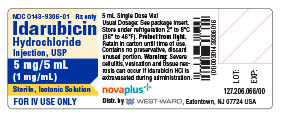
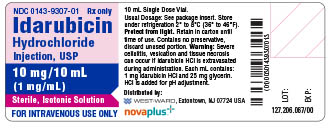
1. Idarubicin Hydrochloride Injection should be given slowly into a freely flowing intravenous infusion. It must never be given intramuscularly or subcutaneously. Severe local tissue necrosis can occur if there is extravasation during administration.
2. As is the case with other anthracyclines the use of idarubicin Hydrochloride can cause myocardial toxicity leading to congestive heart failure. Cardiac toxicity is more common in patients who have received prior anthracyclines or who have pre-existing cardiac disease.
3. As is usual with antileukemic agents, severe myelosuppression occurs when idarubicin hydrochloride is used at effective therapeutic doses.
4. It is recommended that idarubicin hydrochloride be administered only under the supervision of a physician who is experienced in leukemia chemotherapy and in facilities with laboratory and supportive resources adequate to monitor drug tolerance and protect and maintain a patient compromised by drug toxicity. The physician and institution must be capable of responding rapidly and completely to severe hemorrhagic conditions and/or overwhelming infection.
5. Dosage should be reduced in patients with impaired hepatic or renal function. (See DOSAGE AND ADMINISTRATION.)
Idarubicin is intended for administration under the supervision of a physician who is experienced in leukemia chemotherapy.
Idarubicin is a potent bone marrow suppressant. Idarubicin should not be given to patients with pre-existing bone marrow suppression induced by previous drug therapy or radiotherapy unless the benefit warrants the risk.
Severe myelosuppression will occur in all patients given a therapeutic dose of this agent for induction, consolidation or maintenance. Careful hematologic monitoring is required. Deaths due to infection and/or bleeding have been reported during the period of severe myelosuppression. Facilities with laboratory and supportive resources adequate to monitor drug tolerability and protect and maintain a patient compromised by drug toxicity should be available. It must be possible to treat rapidly and completely a severe hemorrhagic condition and/or a severe infection.
Pre-existing heart disease and previous therapy with anthracyclines at high cumulative doses or other potentially cardiotoxic agents are co-factors for increased risk of idarubicin-induced cardiac toxicity and the benefit to risk ratio of idarubicin therapy in such patients should be weighed before starting treatment with idarubicin.
Myocardial toxicity as manifested by potentially fatal congestive heart failure, acute life-threatening arrhythmias or other cardiomyopathies may occur following therapy with idarubicin. Appropriate therapeutic measures for the management of congestive heart failure and/or arrhythmias are indicated.
Cardiac function should be carefully monitored during treatment in order to minimize the risk of cardiac toxicity of the type described for other anthracycline compounds. The risk of such myocardial toxicity may be higher following concomitant or previous radiation to the mediastinal-pericardial area or in patients with anemia, bone marrow depression, infections, leukemic pericarditis and/or myocarditis, active or dormant cardiovascular disease, previous therapy with other anthracyclines or anthracenediones, and concomitant use of drugs with the ability to suppress cardiace contractility or cardiotoxic drugs (e.g., trastuzumab, cyclophosphamide and paclitaxel). Do not administer idarubicin with other cardiotoxic agents unless the patient’s cardiac function is monitored frequently. Patients receiving anthracyclines after stopping treatment with other cardiotoxic agents, especially those with long half-lives, may also be at an increased risk of developing cardiotoxicity. Avoid the use of anthracycline-based therapy for at least 5 half-lives after discontinuation of the cardiotoxic agent. If anthracyclines are used before this time, carefully monitor the cardiac function. While there are no reliable means for predicting congestive heart failure, cardiomyopathy induced by anthracyclines is usually associated with a decrease of the left ventricular ejection fraction (LVEF) from pretreatment baseline values.
Since hepatic and/or renal function impairment can affect the disposition of idarubicin, liver and kidney function should be evaluated with conventional clinical laboratory tests (using serum bilirubin and serum creatinine as indicators) prior to and during treatment. In a number of Phase III clinical trials, treatment was not given if bilirubin and/or creatinine serum levels exceeded 2 mg%. However, in one Phase III trial, patients with bilirubin levels between 2.6 and 5 mg% received the anthracycline with a 50% reduction in dose. Dose reduction of idarubicin should be considered if the bilirubin and/or creatinine levels are above the normal range. (See DOSAGE AND ADMINISTRATION.)
Pregnancy Category D - Idarubicin was embryotoxic and teratogenic in the rat at a dose of 1.2 mg/m2/day or one tenth the human dose, which was nontoxic to dams. Idarubicin was embryotoxic but not teratogenic in the rabbit even at a dose of 2.4 mg/m2/day or two tenths the human dose, which was toxic to dams. There is no conclusive information about idarubicin adversely affecting human fertility or causing teratogenesis. There has been one report of a fetal fatality after maternal exposure to idarubicin during the second trimester.
There are no adequate and well-controlled studies in pregnant women. If idarubicin is to be used during pregnancy, or if the patient becomes pregnant during therapy, the patient should be apprised of the potential hazard to the fetus. Women of childbearing potential should be advised to avoid pregnancy.