FDA Label for Tyzavan
View Indications, Usage & Precautions
- 1.1 SEPTICEMIA
- 1.2 INFECTIVE ENDOCARDITIS
- 1.3 SKIN AND SKIN STRUCTURE INFECTIONS
- 1.4 BONE INFECTIONS
- 1.5 LOWER RESPIRATORY TRACT INFECTIONS
- 1.6 USAGE
- 2.1 IMPORTANT ADMINISTRATION INSTRUCTIONS
- 2.2 RECOMMENDED DOSAGE IN ADULT PATIENTS WITH NORMAL RENAL FUNCTION
- 2.3 RECOMMENDED DOSAGE IN PEDIATRIC PATIENTS (1 MONTH AND OLDER) WITH NORMAL RENAL FUNCTION
- 2.4 RECOMMENDED DOSAGE IN ADULT PATIENTS WITH RENAL IMPAIRMENT
- 2.5 ADMINISTRATION AND PREPARATION AND STORAGE INSTRUCTIONS FOR TYZAVAN
- 2.6 INCOMPATIBILITIES FOR INTRAVENOUS USE
- 3 DOSAGE FORMS AND STRENGTHS
- 4 CONTRAINDICATIONS
- 5.1 INFUSION REACTIONS
- 5.2 NEPHROTOXICITY
- 5.3 OTOTOXICITY
- 5.4 SEVERE DERMATOLOGIC REACTIONS
- 5.5 CLOSTRIDIOIDES DIFFICILE-ASSOCIATED DIARRHEA (CDAD)
- 5.6 HEMORRHAGIC OCCLUSIVE RETINAL VASCULITIS (HORV)
- 5.7 NEUTROPENIA
- 5.8 PHLEBITIS AND OTHER ADMINISTRATION SITE REACTIONS
- 5.9 DEVELOPMENT OF DRUG-RESISTANT BACTERIA
- 6 ADVERSE REACTIONS
- 6.1 CLINICAL TRIALS EXPERIENCE
- 6.2 POSTMARKETING EXPERIENCE
- 7.1 ANESTHETIC AGENTS
- 7.2 PIPERACILLIN-TAZOBACTAM
- 7.3 OTOTOXIC AND/OR NEPHROTOXIC DRUGS
- 8.1 PREGNANCY
- 8.2 LACTATION
- 8.4 PEDIATRIC USE
- 8.5 GERIATRIC USE
- 8.6 RENAL IMPAIRMENT
- 10 OVERDOSAGE
- 11 DESCRIPTION
- 12.1 MECHANISM OF ACTION
- 12.2 PHARMACODYNAMICS
- 12.3 PHARMACOKINETICS
- 12.4 MICROBIOLOGY
- 13.1 CARCINOGENESIS, MUTAGENESIS, IMPAIRMENT OF FERTILITY
- 13.2 ANIMAL TOXICOLOGY AND/OR PHARMACOLOGY
- 15 REFERENCES
- 16.1 HOW SUPPLIED
- 16.2 STORAGE
- 17 PATIENT COUNSELING INFORMATION
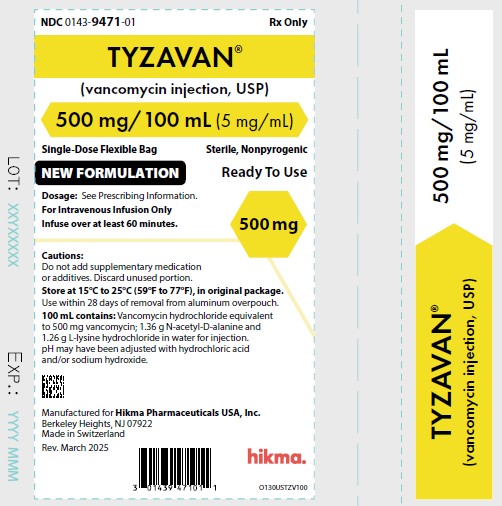
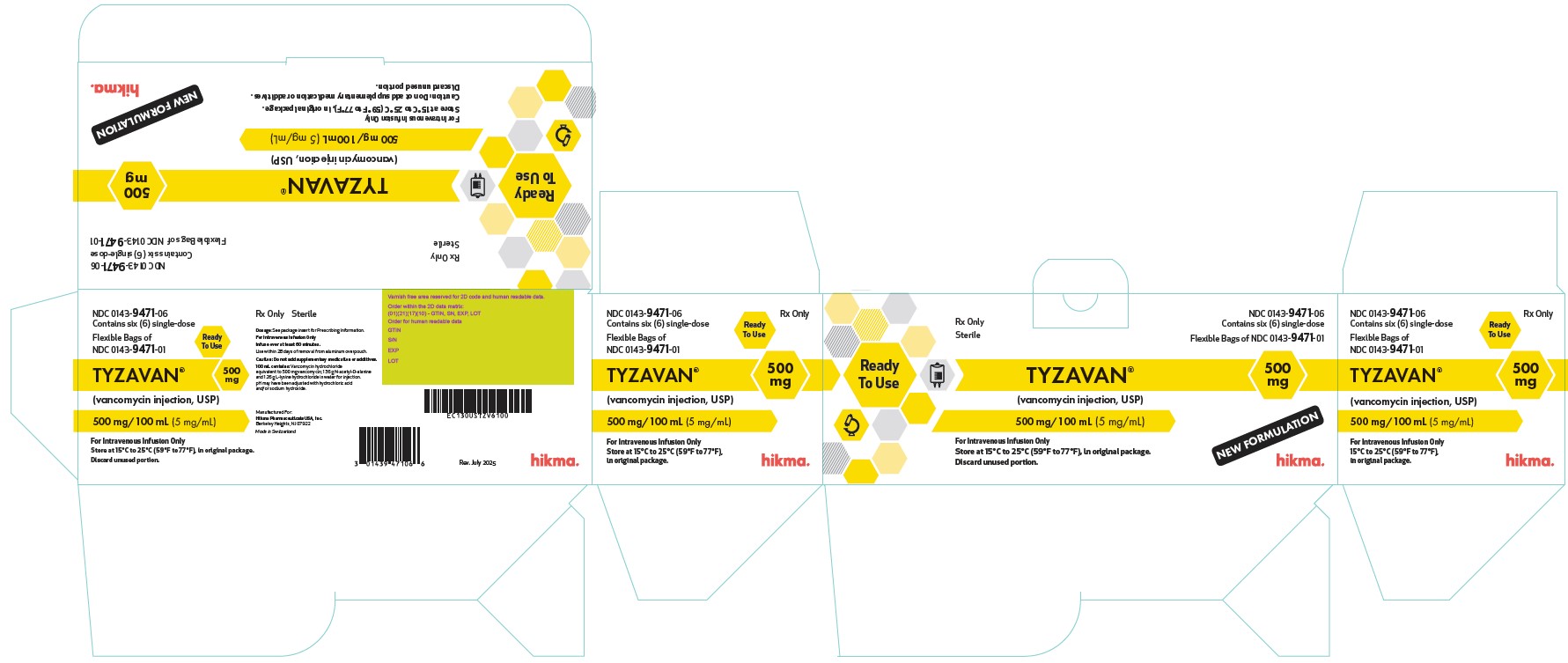
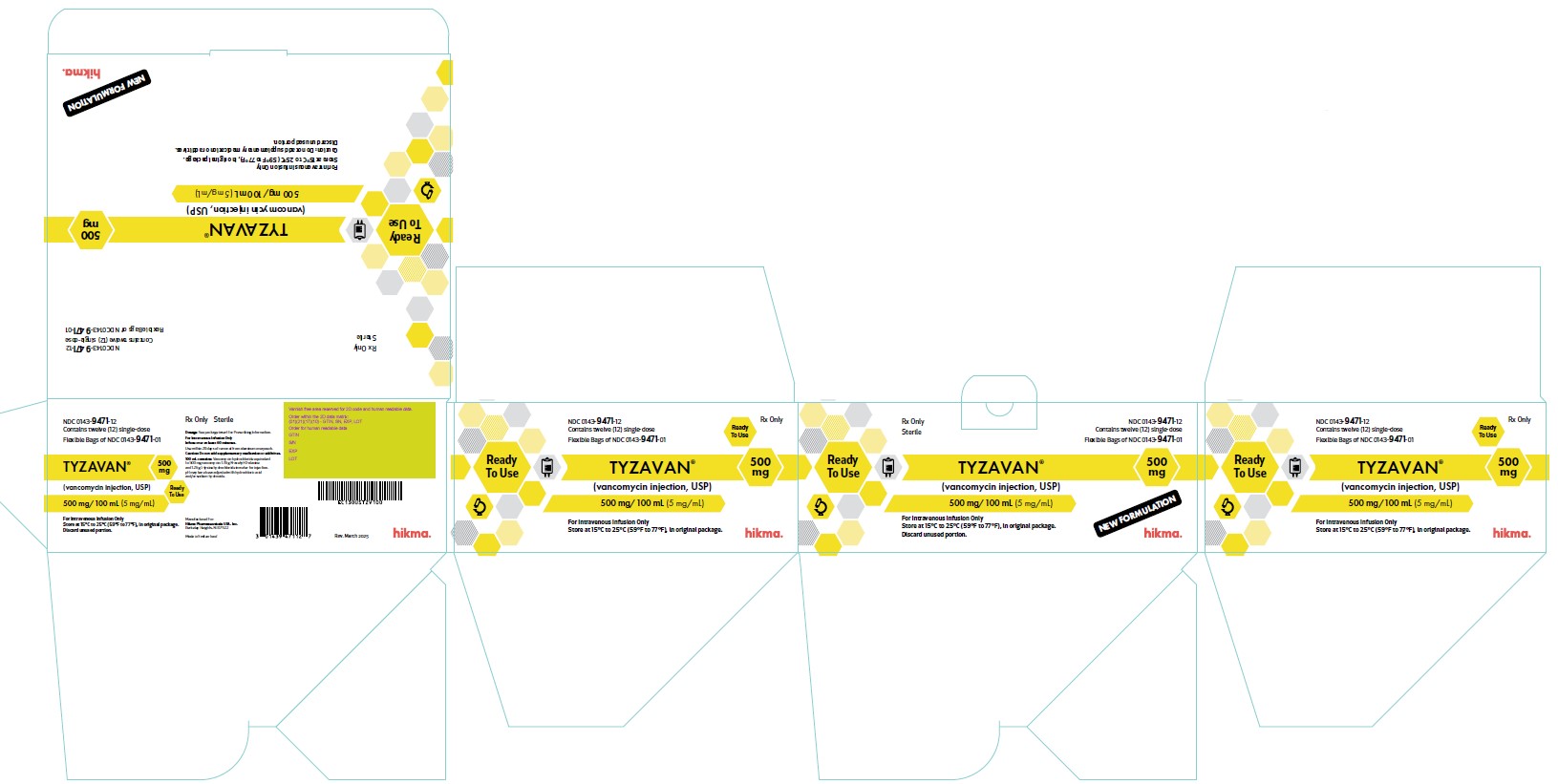
- PRINCIPAL DISPLAY PANEL - 500 MG/100 ML
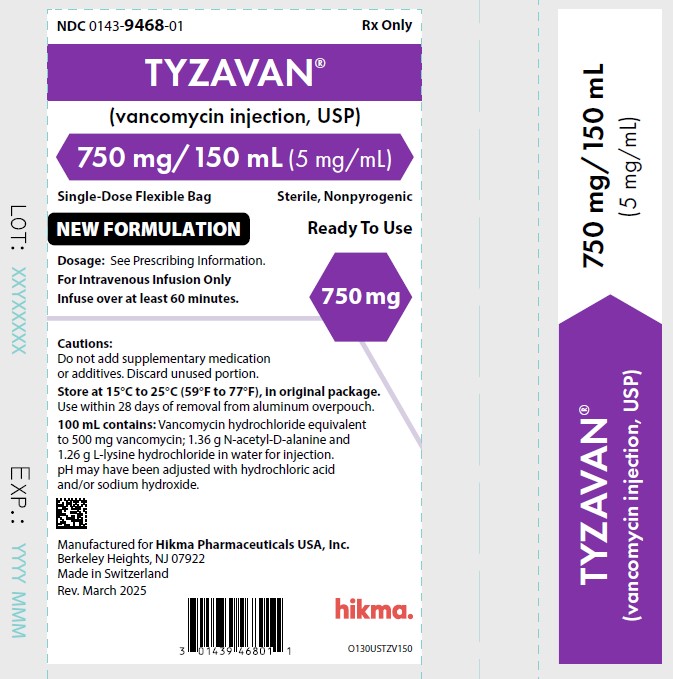
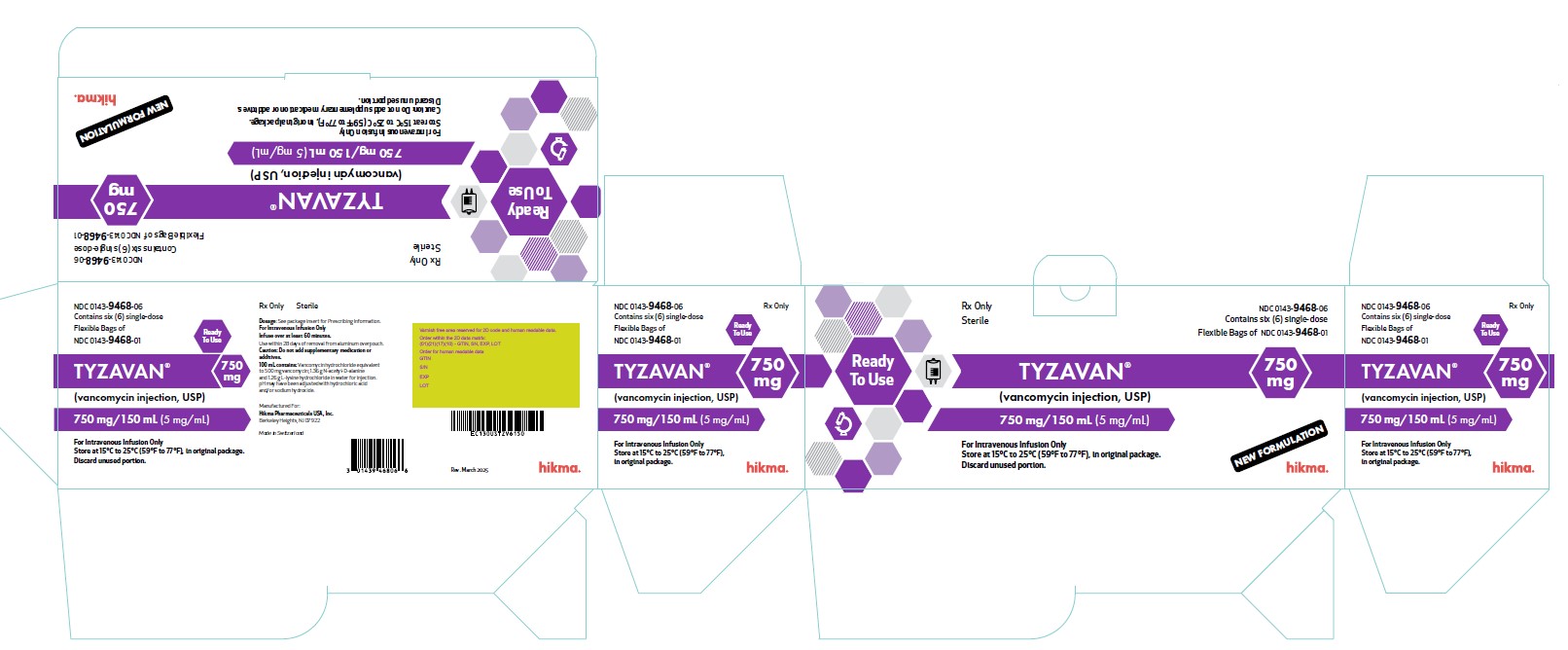
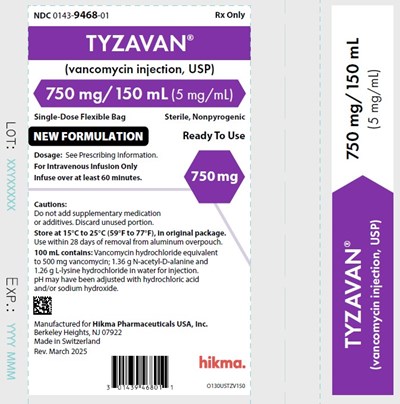
- PRINCIPAL DISPLAY PANEL - 750 MG/150 ML
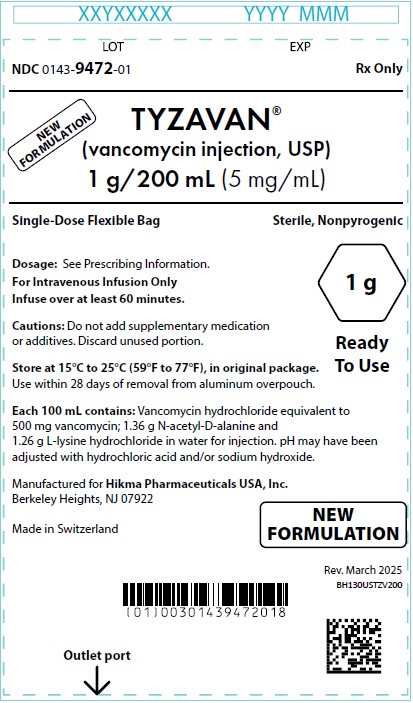
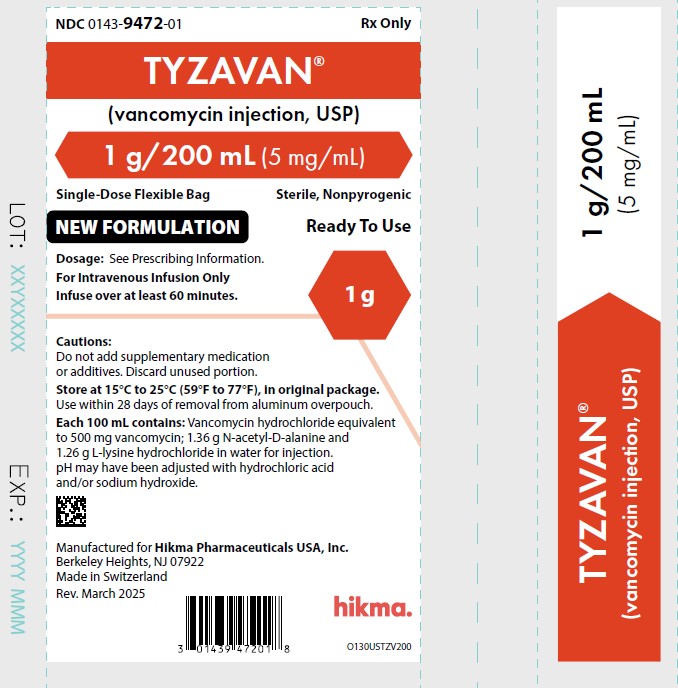
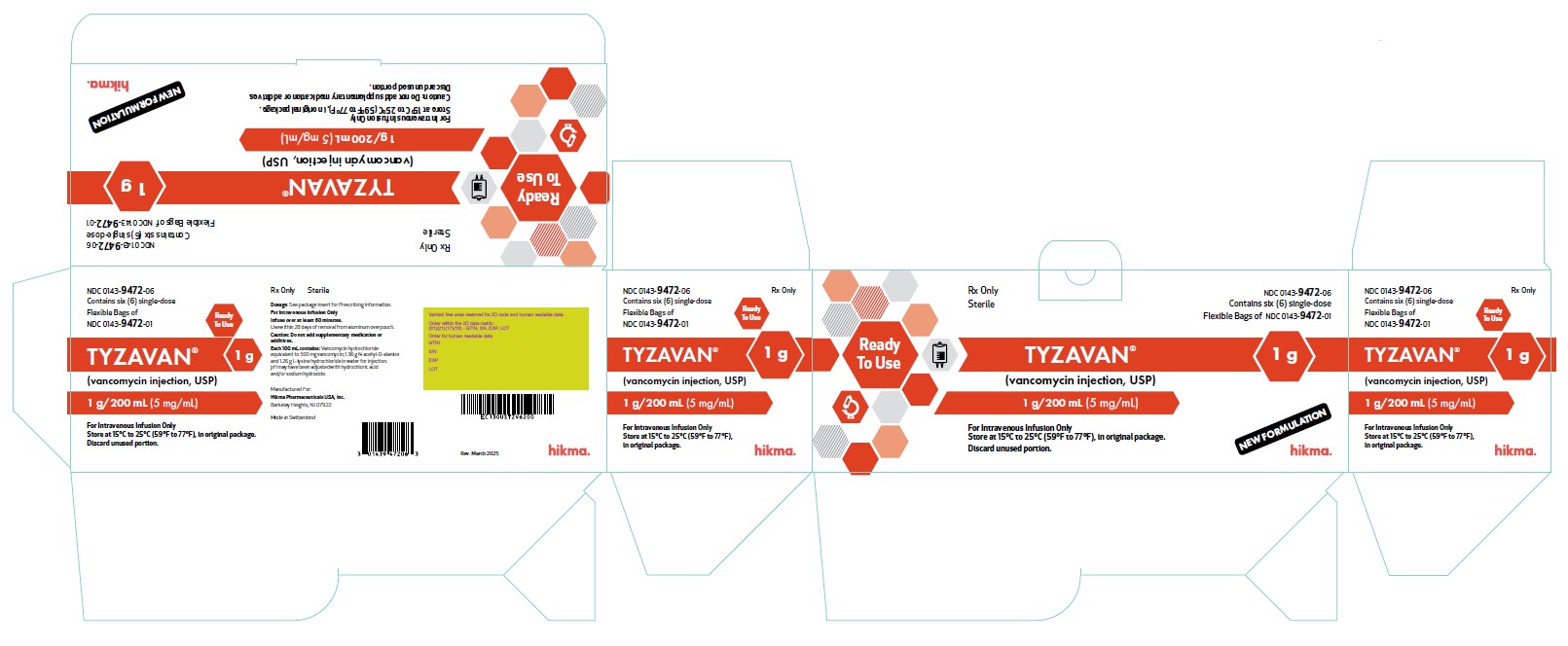
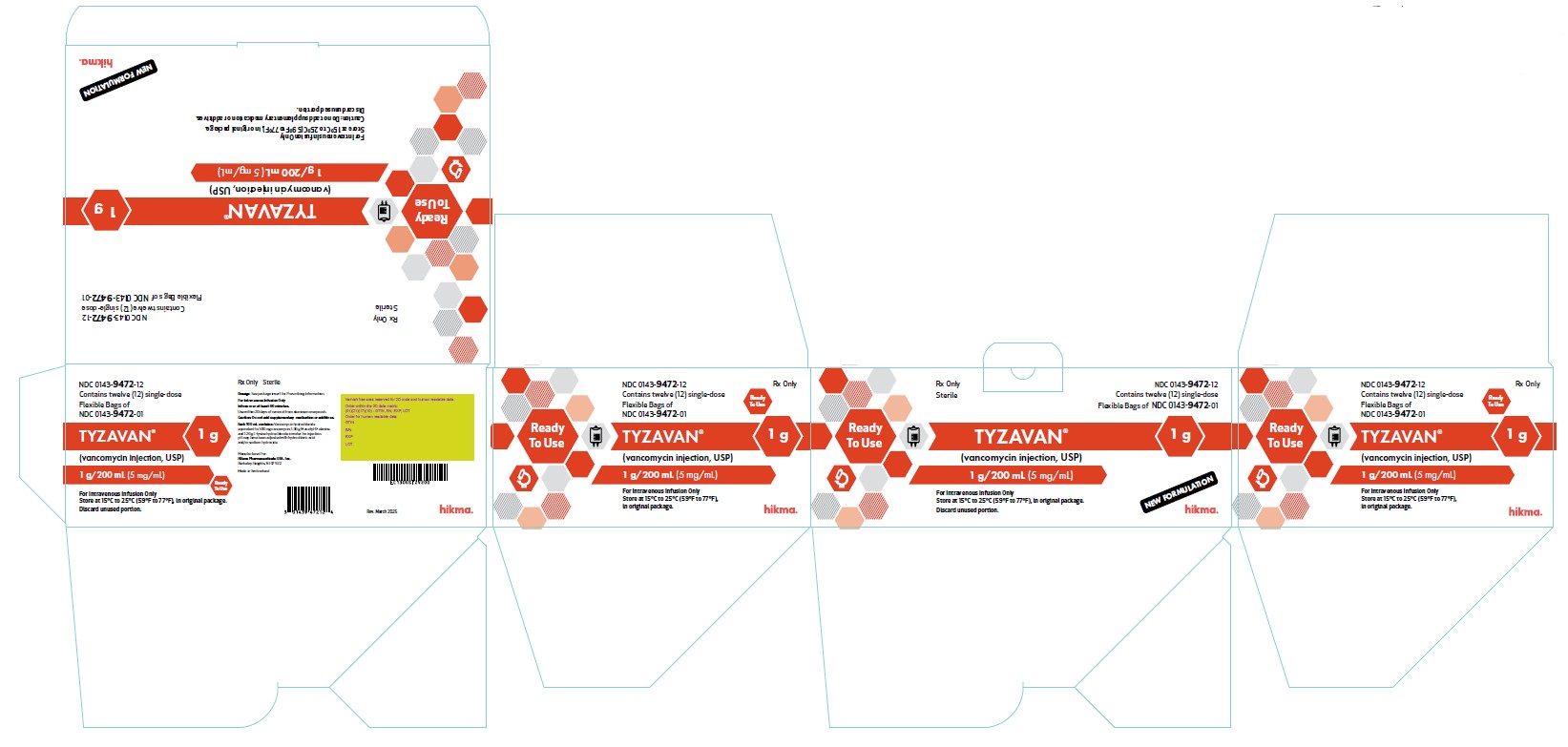
- PRINCIPAL DISPLAY PANEL - 1G/200ML
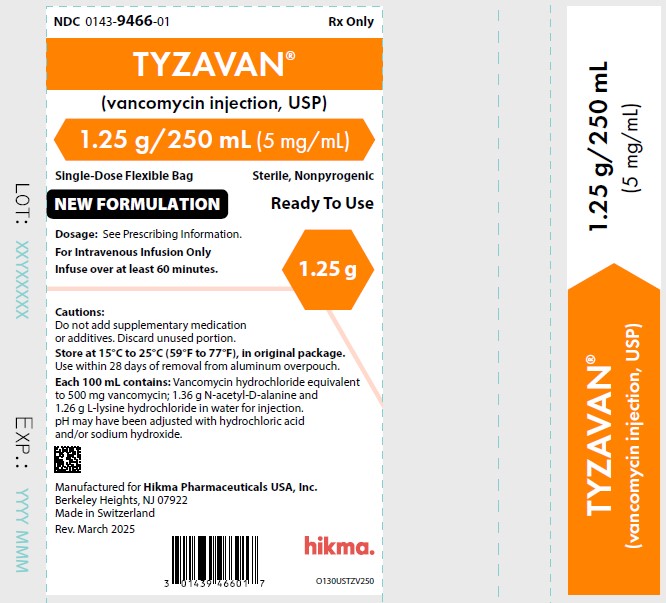
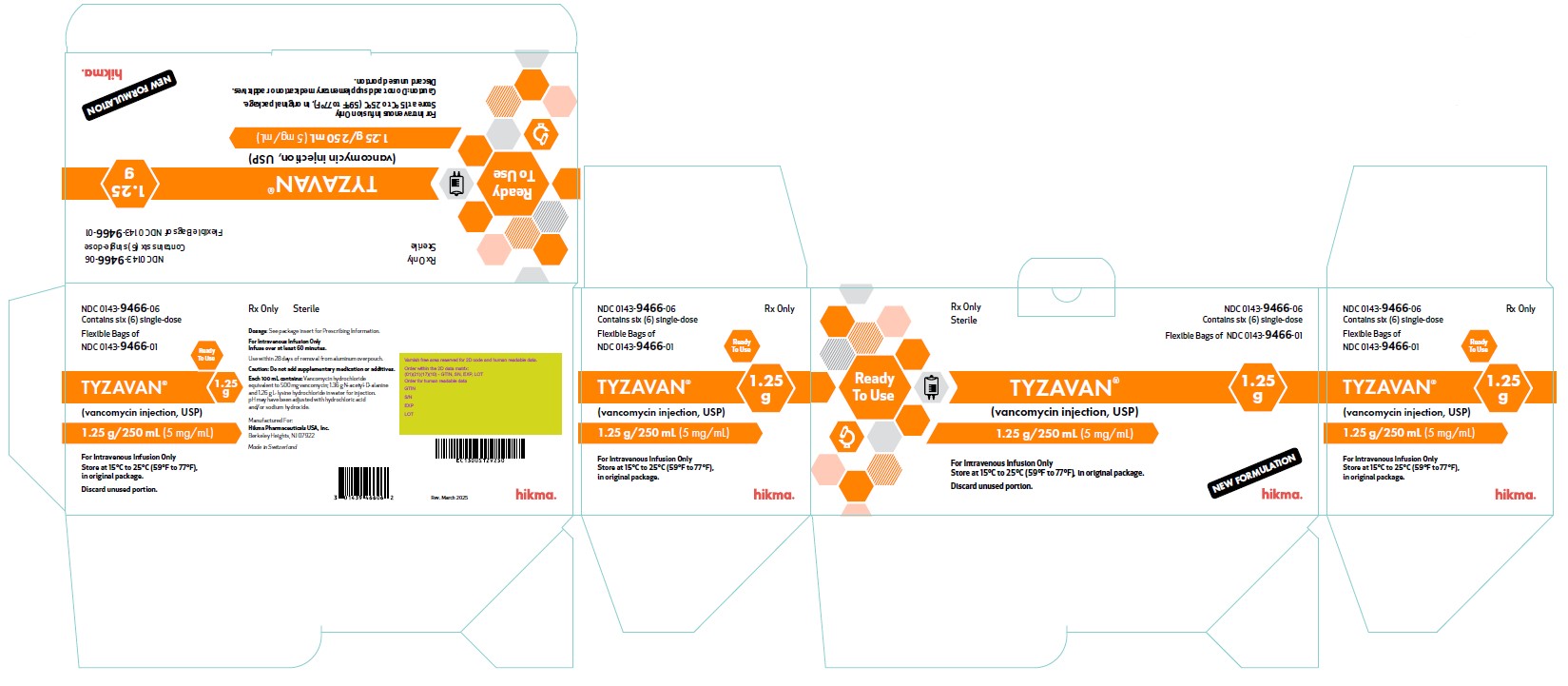
- PRINCIPAL DISPLAY PANEL - 1.25G/250ML
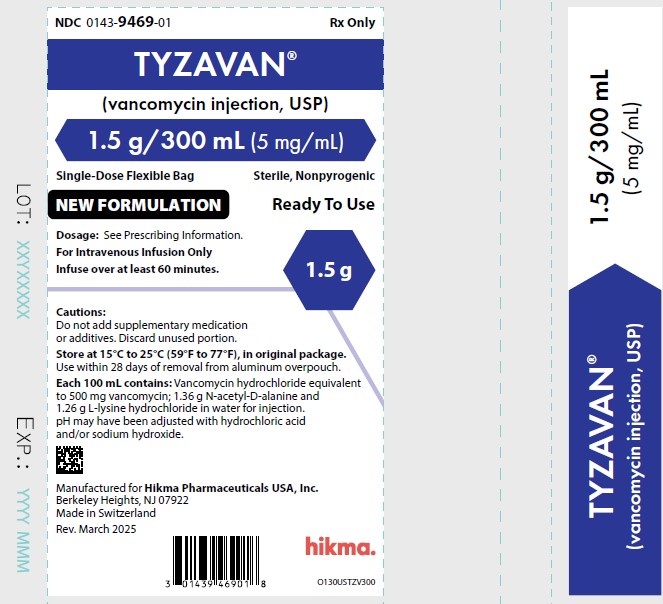
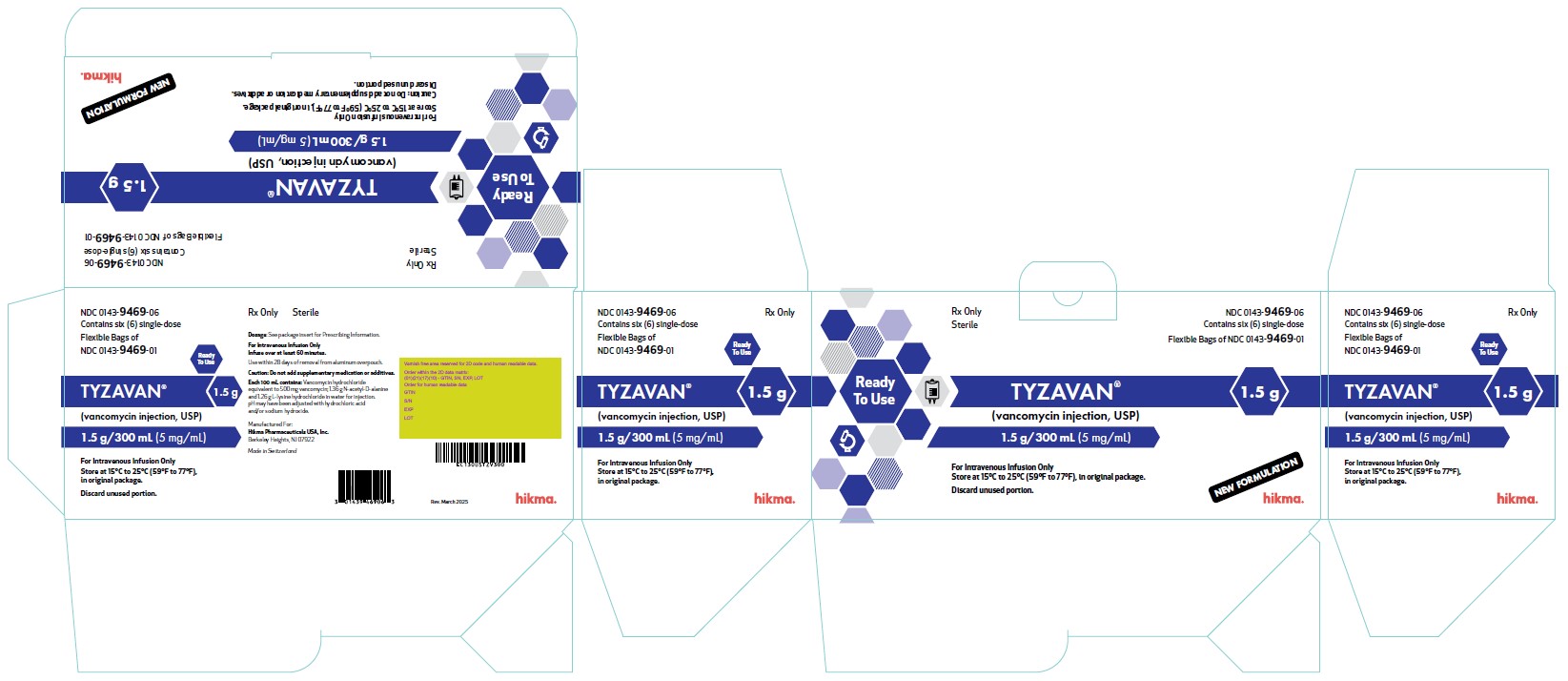
- PRINCIPAL DISPLAY PANEL - 1.5G/300ML
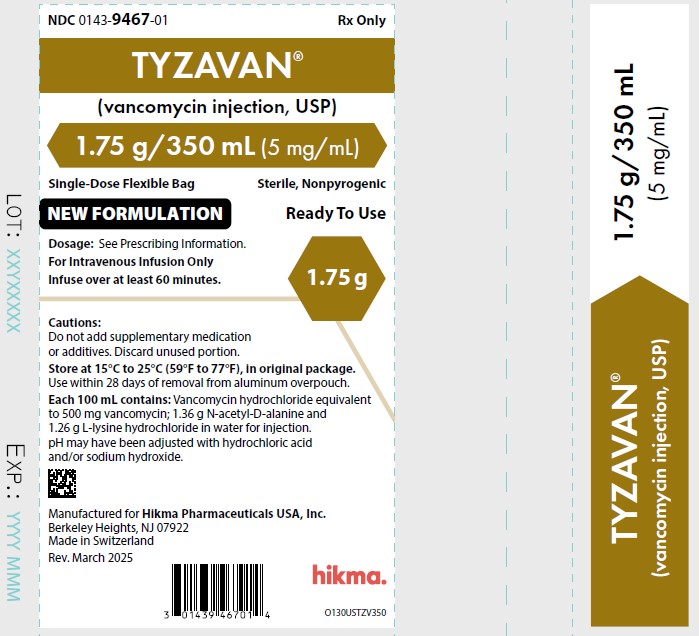
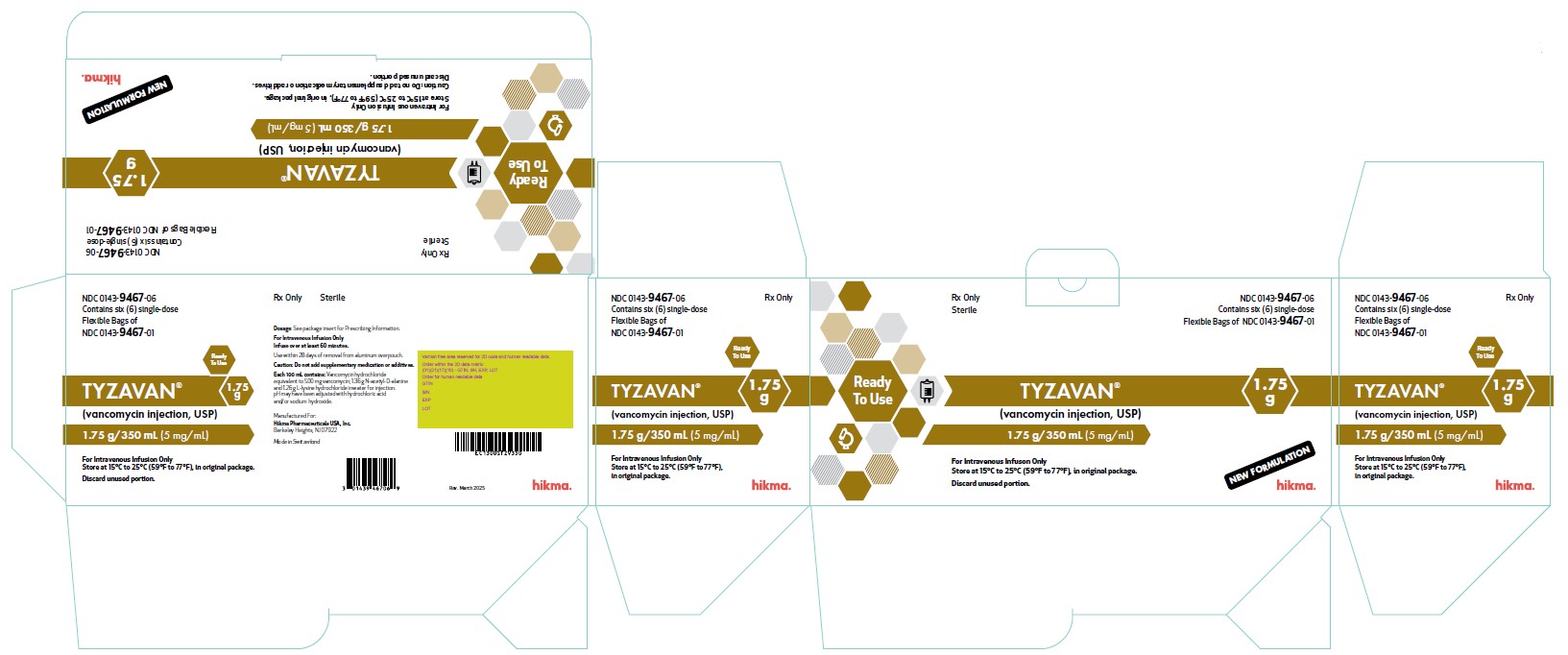
- PRINCIPAL DISPLAY PANEL - 1.75G/350ML
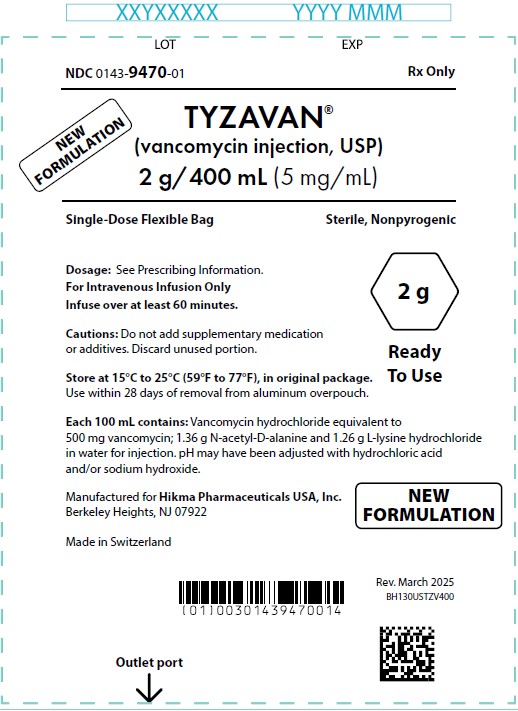
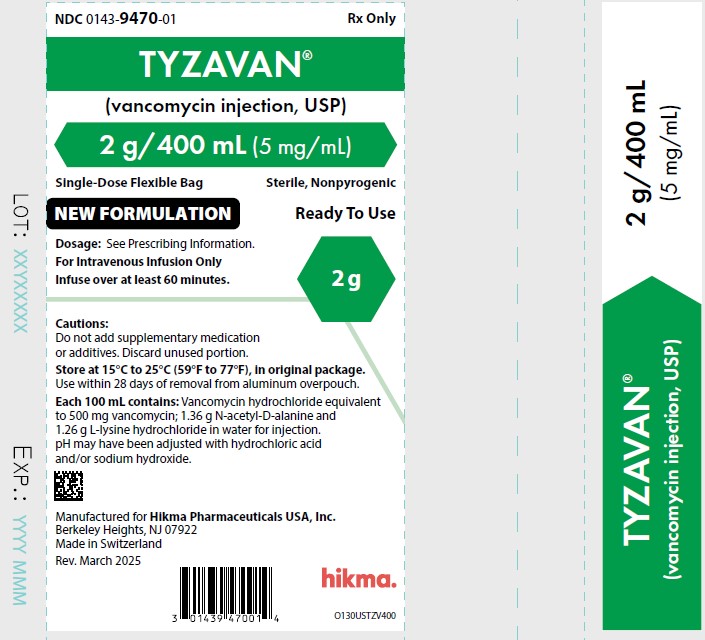
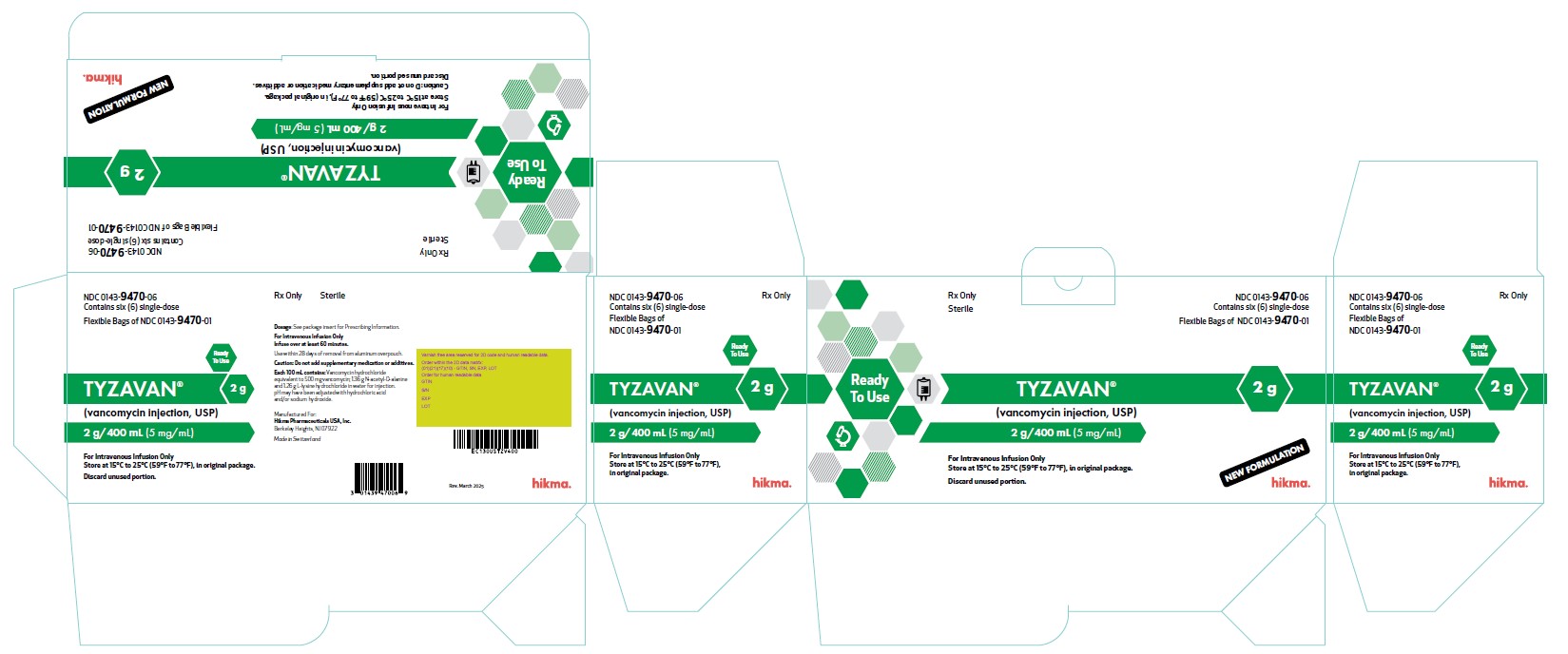
- PRINCIPAL DISPLAY PANEL - 2 G/400ML
Tyzavan Product Label
The following document was submitted to the FDA by the labeler of this product Hikma Pharmaceuticals Usa Inc.. The document includes published materials associated whith this product with the essential scientific information about this product as well as other prescribing information. Product labels may durg indications and usage, generic names, contraindications, active ingredients, strength dosage, routes of administration, appearance, warnings, inactive ingredients, etc.
1.1 Septicemia
TYZAVAN is indicated in adults and pediatric patients (1 month and older) for whom appropriate dosing with this formulation can be achieved [see Dosage and Administration (2) and Use in Specific Populations (8.4)] for the treatment of septicemia due to:
- Susceptible isolates of methicillin-resistant Staphylococcus aureus (MRSA) and coagulase negative staphylococci.
- Methicillin-susceptible staphylococci in penicillin-allergic patients, or those patients who cannot receive or who have failed to respond to other drugs, including penicillins or cephalosporins.
1.2 Infective Endocarditis
TYZAVAN is indicated in adults and pediatric patients (1 month and older) for whom appropriate dosing with this formulation can be achieved [see Dosage and Administration (2) and Use in Specific Populations (8.4)] for the treatment of infective endocarditis due to:
- Susceptible isolates of MRSA.
- Viridans group streptococci Streptococcus gallolyticus (previously known as Streptococcus bovis), Enterococcus species and Corynebacterium species. For enterococcal endocarditis, use TYZAVAN in combination with an aminoglycoside.
- Methicillin-susceptible staphylococci in penicillin-allergic patients, or those patients who cannot receive or who have failed to respond to other drugs, including penicillins or cephalosporins.
TYZAVAN is indicated in adults and pediatric patients (1 month and older) for whom appropriate dosing with this formulation can be achieved [see Dosage and Administration (2) and Use in Specific Populations (8.4)] for the treatment of early-onset prosthetic valve endocarditis caused by Staphylococcus epidermidis in combination with rifampin and an aminoglycoside.
1.3 Skin And Skin Structure Infections
TYZAVAN is indicated in adults and pediatric patients (1 month and older) for whom appropriate dosing with this formulation can be achieved [see Dosage and Administration (2) and Use in Specific Populations (8.4)] for the treatment of skin and skin structure infections due to:
- Susceptible isolates of MRSA and coagulase negative staphylococci.
- Methicillin-susceptible staphylococci in penicillin-allergic patients, or those patients who cannot receive or who have failed to respond to other drugs, including penicillins or cephalosporins.
1.4 Bone Infections
TYZAVAN is indicated in adults and pediatric patients (1 month and older) for whom appropriate dosing with this formulation can be achieved [see Dosage and Administration (2) and Use in Specific Populations (8.4)] for the treatment of bone infections due to:
- Susceptible isolates of MRSA and coagulase negative staphylococci.
- Methicillin-susceptible staphylococci in penicillin-allergic patients, or those patients who cannot receive or who have failed to respond to other drugs, including penicillins or cephalosporins.
1.5 Lower Respiratory Tract Infections
TYZAVAN is indicated in adults and pediatric patients (1 month and older) for whom appropriate dosing with this formulation can be achieved [see Dosage and Administration (2) and Use in Specific Populations (8.4)] for the treatment of lower respiratory tract infections due to:
- Susceptible isolates of MRSA
- Methicillin-susceptible staphylococci in penicillin-allergic patients, or those patients who cannot receive or who have failed to respond to other drugs, including penicillins or cephalosporins.
1.6 Usage
To reduce the development of drug-resistant bacteria and maintain the effectiveness TYZAVAN and other antibacterial drugs, TYZAVAN should be used only to treat or prevent infections that are proven or strongly suspected to be caused by susceptible bacteria. When culture and susceptibility information are available, they should be considered in selecting or modifying antibacterial therapy. In the absence of such data, local epidemiology and susceptibility patterns may contribute to the empiric selection of therapy.
2.1 Important Administration Instructions
If a dose of TYZAVAN is required that does not equal 500 mg, 750 mg, 1 g, 1.25 g, 1.5 g, 1.75 g or 2 g, this product is not recommended for use and an alternative formulation of vancomycin should be considered.
- TYZAVAN is intended for intravenous use only.
- TYZAVAN is not to be administered orally.
- To reduce the risk of infusion related adverse reactions, administer TYZAVAN by intravenous infusion over 60 minutes or greater [see Warnings and Precautions (5.1) and Adverse Reactions (6.1)]. An infusion rate of 10 mg/min or less is associated with fewer infusion-related adverse reactions [see Warnings and Precautions (5.1)]. Infusion related adverse reactions may occur, however, at any rate or concentration.
- Drug additives should not be made to this solution.
- TYZAVAN concentrations of no more than 5 mg/mL are recommended in adults and pediatric patients (1 month and older) [see Dosage and Administration (2.2)]. See also age-specific recommendations [see Dosage and Administration (2.3)].
- Administer TYZAVAN by a secure intravenous route of administration to reduce the risk of local irritation and phlebitis reactions [see Warnings and Precautions (5.8)].
- Administer TYZAVAN prior to intravenous anesthetic agents to reduce the risk of infusion related adverse reactions [see Warnings and Precautions (5.1)].
2.2 Recommended Dosage In Adult Patients With Normal Renal Function
The usual daily intravenous dosage of TYZAVAN is 2 grams (g) divided either as 500 mg every 6 hours or 1 g every 12 hours. Administer each dose by intravenous infusion over a period of 60 minutes or greater. Other patient factors, such as age or obesity, may call for modification of the usual intravenous daily dose. The initial daily dose should be no less than 15 mg/kg.
2.3 Recommended Dosage In Pediatric Patients (1 Month And Older) With Normal Renal Function
If a dose of TYZAVAN is required that does not equal 500 mg, 750 mg, 1 g, 1.25 g, 1.5 g, 1.75 g or 2 g, this product is not recommended for use and an alternative formulation of vancomycin should be considered [see Use in Specific Populations (8.4)].
Pediatric Patients (Aged 1 Month and Older)
The usual intravenous dosage of TYZAVAN is 10 mg/kg per dose given every 6 hours. Each dose should be administered over a period of at least 60 minutes. Close monitoring of serum concentrations of vancomycin may be warranted in these patients.
2.4 Recommended Dosage In Adult Patients With Renal Impairment
Dosage adjustment must be made in adult patients with renal impairment. The initial dose of TYZAVAN should be no less than 15 mg/kg in patients with any degree of renal impairment.
In the elderly, greater dosage reductions than expected may be necessary because of decreased renal function. Measure trough vancomycin serum concentrations to guide therapy, especially in seriously ill patients with changing renal function.
For functionally anephric patients, an initial dose of 15 mg/kg of body weight should be given to achieve prompt therapeutic serum concentration. A dose of 1.9 mg/kg/24 h should be given after the initial dose of 15 mg/kg. Measure vancomycin serum concentrations at 24 hours following the first dose to guide further intravenous therapy.
2.5 Administration And Preparation And Storage Instructions For Tyzavan
Administration Instructions
TYZAVAN in transparent single-dose flexible bag is for intravenous administration only. Intermittent infusion is the recommended method of administration.
TYZAVAN is a room temperature stable, ready-to-use drug product.
Parenteral drug products should be inspected visually for particulate matter and discoloration prior to administration, whenever solution and container permit.
Preparation for Intravenous Administration and Storage Instructions:
1. Remove the flexible bag from aluminum overpouch.
2. Check for minute leaks by squeezing the bag firmly. If leaks are detected, discard solution because sterility may be impaired. Leaks may be more readily detected by wrapping the bag with blotting paper or a tissue before squeezing.
3. Do not add supplemental medication.
4. Visually inspect the flexible bag. If the outlet port protector is damaged, detached, or not present, discard the flexible bag as solution path sterility may be impaired. If after visual inspection the solution is cloudy or if an insoluble precipitate is noted or if any seals are not intact, the flexible bag should be discarded.
5. The solution in the flexible bag remains chemically stable for 28 days at room temperature (15°C - 25°C (59°F – 77°F)) after removal from the aluminum overpouch. Discard unused drug.
6. Suspend the flexible bag from eyelet support.
7. Remove protector from outlet port at bottom of flexible bag.
8. Attach administration set. Refer to complete directions accompanying set.
9. Use sterile equipment.
Do not use flexible bags in series connections. Such use could result in an embolism due to residual air being drawn from the primary container before administration of the fluid from the secondary container is complete.
2.6 Incompatibilities For Intravenous Use
Vancomycin solution has a low pH and may cause chemical or physical instability when it is mixed with other compounds.
Mixtures of solutions of vancomycin and beta-lactam antibacterial drugs have been shown to be physically incompatible. The likelihood of precipitation increases with higher concentrations of vancomycin. It is recommended to adequately flush the intravenous lines between the administration of these antibacterial drugs.
3 Dosage Forms And Strengths
Injection: TYZAVAN (Vancomycin Injection, USP) is a ready to use clear, colorless to light brown sterile solution in single-dose flexible bags in the following strengths: 500 mg vancomycin in 100 mL (5 mg/mL), 750 mg vancomycin in 150 mL (5 mg/mL), 1 g vancomycin in 200 mL (5 mg/mL), 1.25 g vancomycin in 250 mL (5 mg/mL), 1.5 g vancomycin in 300 mL (5 mg/mL), 1.75 g vancomycin in 350 mL (5 mg/mL) and 2 g vancomycin in 400 mL (5mg/mL) of Water for Injection [see Description (11)].
4 Contraindications
TYZAVAN is contraindicated in patients with known hypersensitivity to vancomycin.
5.1 Infusion Reactions
Hypotension, including shock and cardiac arrest, wheezing, dyspnea, urticaria or pruritus, muscular and chest pain may occur with rapid TYZAVAN administration (e.g., over several minutes). The reactions may be more severe in pediatric patients (1 month and older) [see Use in Specific Populations (8.4)].
Rapid intravenous administration of TYZAVAN may also be associated with “vancomycin infusion reactions” which manifests as pruritus and erythema that involves the face, neck and upper body or pain and muscle spasm of the chest and back. There have been reports that the frequency of of infusion-related reactions (including hypotension, flushing, erythema, urticaria, and pruritus) increases with the concomitant administration of anesthetic agents.
Infusion-related adverse reactions are related to both the concentration and the rate of administration of TYZAVAN. Infusion-related adverse reactions may occur, however, at any rate or concentration.
Administer TYZAVAN over a period of 60 minutes or greater to reduce the risk of infusion-related adverse reactions. In selected patients in need of fluid restriction, a concentration up to 10 mg/mL may be used; use of such higher concentrations may increase the risk of infusion-related adverse reactions.
Administer TYZAVAN as a 60-minute infusion prior to administration of intravenous anesthetic agents when feasible to minimize infusion-related adverse reactions. Stop the infusion if a reaction occurs because this usually results in prompt cessation of these reactions.
5.2 Nephrotoxicity
TYZAVAN can result in acute kidney injury (AKI), including acute renal failure, mainly due to interstitial nephritis or less commonly acute tubular necrosis. AKI is manifested by increasing blood urea nitrogen (BUN) and serum creatinine (Cr). The risk of AKI increases with higher vancomycin serum levels, prolonged exposure, concomitant administration of other nephrotoxic drugs, concomitant administration of piperacillin-tazobactam [see Drug Interactions (7.2)], volume depletion, pre-existing renal impairment and in critically ill patients and patients with co-morbid conditions that predispose to renal impairment.
Monitor serum vancomycin concentrations and renal function in all patients receiving TYZAVAN. More frequent monitoring is recommended in patients with comorbidities that predispose to impairment in renal function or are concomitantly receiving other nephrotoxic drugs, in critically ill patients, in patients with changing renal function, and in patients requiring higher therapeutic vancomycin levels. If acute kidney injury occurs, discontinue TYZAVAN or reduce the dose [see Dosage and Administration (2.4)].
5.3 Ototoxicity
Ototoxicity has occurred in patients receiving vancomycin. It may be reversible or permanent. Ototoxicity manifests as tinnitus, hearing loss, dizziness or vertigo. The risk is higher in older patients, patients who are receiving higher doses, who have an underlying hearing loss, who are receiving concomitant therapy with another ototoxic agent, such as an aminoglycoside or who have underlying renal impairment. Monitor for signs and symptoms of ototoxicity during therapy. Monitor serum vancomycin concentrations and renal function in all patients receiving parenteral vancomycin. Discontinue TYZAVAN if ototoxicity occurs. Dosage of TYZAVAN must be adjusted for patients with renal impairment [see Dosage and Administration (2.3)]. Serial tests of auditory function may be helpful in order to minimize the risk of ototoxicity.
5.4 Severe Dermatologic Reactions
Severe dermatologic reactions such as toxic epidermal necrolysis (TEN), Stevens-Johnson syndrome (SJS), drug reaction with eosinophilia and systemic symptoms (DRESS), acute generalized exanthematous pustulosis (AGEP), and linear IgA bullous dermatosis (LABD) have been reported in association with the use of vancomycin. Cutaneous signs or symptoms reported include skin rashes (including exfoliative dermatitis), mucosal lesions, and blisters.
Discontinue TYZAVAN at the first appearance of signs and symptoms of TEN, SJS, DRESS, AGEP, or LABD.
5.5 Clostridioides Difficile-Associated Diarrhea (Cdad)
Clostridioides difficile-associated diarrhea (CDAD) has been reported with use of nearly all antibacterial agents, including vancomycin and may range in severity from mild diarrhea to fatal colitis. Treatment with antibacterial agents alters the normal flora of the colon leading to overgrowth of C. difficile.
C. difficile produces toxins A and B which contribute to the development of CDAD. Hypertoxin producing strains of C. difficile cause increased morbidity and mortality, as these infections can be refractory to antimicrobial therapy and may require colectomy. CDAD must be considered in all patients who present with diarrhea following antibacterial use. Careful medical history is necessary since CDAD has been reported to occur over two months after the administration of antibacterial agents.
If CDAD is suspected or confirmed, ongoing antibacterial use not directed against C. difficile may need to be discontinued. Appropriate fluid and electrolyte management, protein supplementation, antibacterial treatment of C. difficile, and surgical evaluation should be instituted as clinically indicated.
Prolonged use of TYZAVAN may result in the overgrowth of nonsusceptible microorganisms. Careful observation of the patient is essential. If superinfection occurs during therapy, appropriate measures should be taken. In rare instances, there have been reports of pseudomembranous colitis due to C. difficile developing in patients who received intravenous vancomycin.
5.6 Hemorrhagic Occlusive Retinal Vasculitis (Horv)
Hemorrhagic occlusive retinal vasculitis, including permanent loss of vision, occurred in patients receiving intracameral or intravitreal administration of vancomycin during or after cataract surgery. The safety and efficacy of vancomycin administered by the intracameral or the intravitreal route have not been established by adequate and well-controlled trials. Vancomycin is not indicated for the prophylaxis of endophthalmitis.
5.7 Neutropenia
Reversible neutropenia has been reported in patients receiving vancomycin [see Adverse Reactions (6.1)]. Patients who will undergo prolonged therapy with vancomycin or those who are receiving concomitant drugs that may cause neutropenia should have periodic monitoring of the leukocyte count.
Reversible neutropenia, usually starting 1 week or more after onset of therapy with vancomycin or after a total dosage of more than 25 g, has been reported for several dozen patients. Neutropenia appears to be promptly reversible when vancomycin is discontinued. Thrombocytopenia has been reported. Although a causal relationship has not been established, reversible agranulocytosis (granulocytes <500/mm3) has been reported.
5.8 Phlebitis And Other Administration Site Reactions
Inflammation at the injection site has been reported. Vancomycin is irritating to tissue and must be given by a secure intravenous route of administration. Thrombophlebitis may occur, the frequency and severity of which can be minimized by slow infusion of the drug and by rotation of venous access sites.
Administration of TYZAVAN by intramuscular (IM), intraperitoneal, intrathecal (intralumbar or intraventricular), or intravitreal routes has not been approved and is not recommended. The safety and efficacy of vancomycin administered by these routes of administration have not been established by adequate and well controlled trials. Pain, tenderness, and necrosis occur with intramuscular (IM) injection of vancomycin or with inadvertent extravasation. There have been reports that the frequency of infusion-related events (including hypotension, flushing, erythema, urticaria, and pruritus) increases with the concomitant administration of anesthetic agents. Infusion-related events may be minimized by the administration of vancomycin of at least a 60-minute infusion prior to anesthetic induction.
Administration of sterile vancomycin by the intraperitoneal route during continuous ambulatory peritoneal dialysis (CAPD) has been reported to result in chemical peritonitis. Manifestations of this syndrome range from a cloudy dialysate alone to a cloudy dialysate accompanied by variable degrees of abdominal pain and fever. This syndrome appears to be resolved after discontinuation of intraperitoneal vancomycin.
About 60% of an intraperitoneal dose of vancomycin administered during peritoneal dialysis is absorbed systemically in 6 hours. Serum concentrations of about 10 mcg/mL are achieved by intraperitoneal injection of 30 mg/kg of vancomycin. However, the safety and efficacy of the intraperitoneal use of vancomycin has not been established in adequate and well-controlled trials.
5.9 Development Of Drug-Resistant Bacteria
Prescribing TYZAVAN in the absence of a proven or strongly suspected bacterial infection or a prophylactic indication is unlikely to provide benefit to the patient and increases the risk of the development of drug-resistant bacteria.
6 Adverse Reactions
The following clinically significant adverse reactions are described elsewhere in the labeling:
- Infusion Reactions [see Warnings and Precautions (5.1)]
- Nephrotoxicity [see Warnings and Precautions (5.2)]
- Ototoxicity [see Warnings and Precautions (5.3)]
- Severe Dermatologic Reactions [see Warnings and Precautions (5.4)]
- Clostridioides Difficile-Associated Diarrhea [see Warnings and Precautions (5.5)]
- Hemorrhagic Occlusive Retinal Vasculitis [see Warnings and Precautions (5.6)]
- Neutropenia [see Warnings and Precautions (5.7)]
- Phlebitis and Other Administration Site Reactions [see Warnings and Precautions (5.8)]
6.1 Clinical Trials Experience
Because clinical trials are conducted under widely varying conditions, adverse reaction rates observed in the clinical trials of a drug cannot be directly compared to rates in the clinical trials of another drug and may not reflect the rates observed in practice. The following adverse reactions associated with the use of vancomycin were identified in clinical trials:
Immune System Disorders: Anaphylaxis and “vancomycin infusion reaction”
Renal and Urinary Disorders: Acute kidney injury and interstitial nephritis
Ear and Labyrinth Disorders: Hearing loss, vertigo, and tinnitus
Skin and Subcutaneous Tissue Disorders: Rashes including exfoliative dermatitis, and Stevens-Johnson syndrome (SJS)
Gastrointestinal Disorders: Clostridioides difficile colitis, nausea
Blood and Lymphatic System Disorders: Agranulocytosis, neutropenia, pancytopenia, leukopenia, thrombocytopenia, eosinophilia
Cardiac Disorders: Cardiac arrest, chest pain
General Disorders and Administration Site Conditions: General discomfort, fever, chills, phlebitis, injection site irritation, injection site pain and necrosis following intramuscular injection, chemical peritonitis following intraperitoneal administration (TYZAVAN is not approved for intramuscular and intraperitoneal administration)
Laboratory Abnormalities: Elevated blood urea nitrogen, elevated serum creatinine
Musculoskeletal and Connective Tissue Disorders: Muscle pain
Nervous System Disorders: Dizziness
Respiratory, Thoracic and Mediastinal Disorders: Wheezing, dyspnea
Vascular Disorders: Hypotension, shock, vasculitis
6.2 Postmarketing Experience
The following adverse reactions have been identified during postmarketing use of vancomycin. Because these reactions are reported voluntarily from a population of uncertain size, it is not possible to reliably estimate their frequency or establish a causal relationship to drug exposure.
Immune System Disorders: Acute myocardial ischemia with or without myocardial infarction may occur as part of an allergic reaction.
Skin and Subcutaneous Tissue Disorders: Severe dermatologic reactions such as toxic epidermal necrolysis (TEN), drug reaction with eosinophilia and systemic symptoms (DRESS), acute generalized exanthematous pustulosis (AGEP), and linear IgA bullous dermatosis (LABD).
7.1 Anesthetic Agents
Concomitant administration of vancomycin and anesthetic agents has been associated with erythema and histamine-like flushing [see Warnings and Precautions (5.1) and Use in Specific Populations (8.4)].
7.2 Piperacillin-Tazobactam
Studies have detected an increased incidence of acute kidney injury in patients administered concomitant piperacillin/tazobactam and vancomycin as compared to vancomycin alone. Monitor kidney function in patients receiving concomitant piperacillin/tazobactam and TYZAVAN. No pharmacokinetic interactions have been noted between piperacillin/tazobactam and vancomycin.
7.3 Ototoxic And/Or Nephrotoxic Drugs
Concurrent and/or sequential systemic or topical use of other potentially neurotoxic and/or nephrotoxic drugs with TYZAVAN requires more frequent monitoring of renal function.
8.1 Pregnancy
Risk Summary
The available data on the use of this formulation of TYZAVAN (which includes the excipient NADA) in pregnant women are insufficient to evaluate for a drug-associated risk of major birth defects, miscarriage, or other adverse maternal or fetal outcomes (see Data). Available data over several decades of vancomycin (without the excipient NADA) use in pregnant women have not identified a drug-associated risk of major birth defects, miscarriage, or adverse maternal or fetal outcomes (see Data).
Vancomycin did not show adverse developmental effects when administered intravenously to pregnant rats and rabbits during organogenesis at doses less than or equal to the recommended maximum human dose (see Data).
The background risk of major birth defects and miscarriage for the indicated population is unknown. All pregnancies have a background risk of birth defect, loss, or other adverse outcomes. In the U.S. general population, the estimated background risk of major birth defects and miscarriage in clinically recognized pregnancies is 2 to 4% and 15 to 20%, respectively.
Data
Human Data
Available data from postmarketing cases on use of this formulation of vancomycin injection (with the excipient NADA) in pregnant women are insufficient to evaluate for a drug-associated risk of major birth defects, miscarriage, or other adverse maternal or infant outcomes.
There are no available data on first trimester use of vancomycin (without the excipient NADA); however, available published data on use in pregnancy during the second and third trimesters have not shown an association with adverse pregnancy related outcomes.
A published study evaluated hearing loss and nephrotoxicity in infants of 10 pregnant intravenous drug users treated with intravenously administered vancomycin (formulation did not include the excipient NADA) for suspected or documented methicillin-resistant Staphylococcus aureus (MRSA) in the second or third trimester. The comparison groups were 10 non-intravenous drug-dependent patients who received no treatment, and 10 untreated intravenous drug-dependent patients who served as substance abuse controls. No infant in the vancomycin exposed group had abnormal sensorineural hearing at 3 months of age or nephrotoxicity.
A published prospective study assessed outcomes in 55 pregnant women with a positive Group B streptococcus (GBS) culture and a high-risk penicillin allergy with resistance to clindamycin or unknown sensitivity who were administered vancomycin (formulation did not include the excipient NADA) at the time of delivery. Vancomycin dosing ranged from the standard 1 g intravenously every 12 hours to 20 mg/kg intravenous every 8 hours (maximum individual dose 2 g). No major adverse reactions were recorded either in the mothers or their newborns. None of the newborns had sensorineural hearing loss. Neonatal renal function was not examined, but all of the newborns were discharged in good condition.
Animal Data
Vancomycin did not cause fetal malformations when administered during organogenesis to pregnant rats (gestation days 6 to 15) and rabbits (gestation days 6 to 18) at doses less than or equal to the recommended maximum human dose (based on body surface area comparisons) of 200 mg/kg/day IV to rats or 120 mg/kg/day IV to rabbits. No effects on fetal weight or development were seen in rats at the highest dose tested or in rabbits given 80 mg/kg/day (approximately 1 and 0.8 times the recommended maximum human dose based on body surface area, respectively). Maternal toxicity was observed in rats (at doses 120 mg/kg and above) and rabbits (at 80 mg/kg and above). 1
Animal reproduction studies conducted in pregnant rabbits (gestation days 6 to 19) administered intravenous NADA at 1680 mg/kg (32 times the maximum daily human dose or greater based on AUC levels of NADA) resulted in fetal scoliosis and a spectrum of cardiovascular malformations. Increased incidence of delayed or incomplete ossifications of the metacarpals/metatarsals/phalanges and increased ossification (fused jugal/maxilla bones) were also observed in rabbits at 1680 mg/kg without maternal toxicity. No adverse developmental outcomes were observed in rabbits administered intravenous NADA at 560 mg/kg (11 times the maximum daily human dose based on AUC levels of NADA). In reproduction studies in pregnant rats (gestation days 6 to 17) administered intravenous NADA at 3780 mg/kg (20 times the maximum daily human dose based on AUC levels of NADA) no fetal adverse effects were observed. Maternal toxicity, including increased incidence of litter loss, was observed in rats at 3780 mg/kg [see Clinical Pharmacology (12.3)].
No animal studies have been conducted to evaluate the potential reproductive and embryo-fetal effects of TYZAVAN (with the excipient NADA).
8.2 Lactation
Risk Summary
Vancomycin is present in human milk following intravenous administration, however, there are insufficient data to inform the levels. There are no data on the effects of vancomycin on the breastfed infant or milk production. The developmental and health benefits of breastfeeding should be considered along with the mother's clinical need for TYZAVAN and any potential adverse effects on the breastfed infant from TYZAVAN or from the underlying maternal condition.
8.4 Pediatric Use
TYZAVAN is indicated in pediatric patients (1 month and older) for the treatment of septicemia, infective endocarditis, skin and skin structure infections, bone infections and lower respiratory tract infections for whom appropriate dosing with this formulation can be achieved [see Indications and Usage (1.1 to 1.5) and Dosage and Administration (2.1, 2.3)].
Because of the limitations of the available strengths and administration requirements (i.e., administration of fractional doses is not recommended) of TYZAVAN, and to avoid unintentional overdose, this product is not recommended for use if a dose of TYZAVAN that does not equal 500 mg, 750 mg, 1 g, 1.25 g, 1.5 g, 1.75 g and 2 g is required, and an alternative formulation of vancomycin should be considered [see Dosage and Administration (2.1, 2.3)].
More severe infusion related reactions related to vancomycin administration may occur in pediatric patients. In pediatric patients, monitor vancomycin serum concentration and renal function when administering TYZAVAN [see Dosage and Administration (2.3) and Warnings and Precautions (5.1)]. Concomitant administration of vancomycin and intravenous anesthetic agents has been associated with erythema and histamine-like flushing in all patients including pediatric patients [see Warnings and Precautions (5.1)].
8.5 Geriatric Use
TYZAVAN is known to be substantially excreted by the kidney, and the risk of adverse reactions to this drug may be greater in patients with impaired renal function. Because elderly patients are more likely to have decreased renal function, care should be taken in dose selection [see Dosage and Administration (2.4)], and it may be useful to monitor renal function [see Warnings and Precautions (5.2)].
8.6 Renal Impairment
Dosage adjustment of Vancomycin Injection must be made in patients with impaired renal function [see Dosage and Administration (2.4)]. Measure trough vancomycin serum concentrations to guide intravenous therapy, especially in patients with impaired renal function or fluctuating renal function.
10 Overdosage
Supportive care is advised, with maintenance of glomerular filtration. Vancomycin is poorly removed by dialysis.
Hemofiltration and hemoperfusion with polysulfone resin have been reported to result in increased vancomycin clearance.
For current information on the management of overdosage, contact the National Poison Control Center at 1-800-222-1222 or www.poison.org.
11 Description
TYZAVAN (Vancomycin Injection, USP), in single-dose flexible bags contain vancomycin as vancomycin hydrochloride. It is a tricyclic glycopeptide antibacterial drug derived from Amycolatopsis orientalis (formerly Nocardia orientalis). The chemical name is (Sa)-(3S,6R,7R,22R,23S,26S,36R,38aR)-44-{[2-O-(3-amino-2,3,6-trideoxy-3-C-methyl-α-L-lyxo-hexopyranosyl)-β-D-glucopyranosyl]-oxy}-3-(carbamoylmethyl)-10,19-dichloro-2,3,4,5,6,7,23,24,25,26,36,37,38,38a-tetradecahydro-7,22,28,30,32-pentahydroxy-6-[(2R)-4-methyl-2-(methylamino]valeramido]-2,5,24,38,39-pentaoxo-22H-8,11:18,21-dietheno-23,36(iminometha-no)-13,16:31,35-dimetheno-1H,16H-[1,6,9]-oxadiazacyclohexadecino-[4,5-m][10,2,16]-benzoxa-diazacyclotetracosine-26-carboxylic acid, monohydrochloride. The molecular formula is C66H75Cl2N9O24•HCl and the molecular weight is 1,485.71. Vancomycin hydrochloride has the following structural formula:
TYZAVAN (Vancomycin Injection, USP), in single-dose flexible bags are sterile, nonpyrogenic premixed 100 mL, 150 mL, 200 mL, 250 mL, 300 mL, 350 mL or 400 mL solution containing 500 mg, 750 mg, 1 g, 1.25 g, 1.5 g, 1.75 g or 2 g vancomycin, respectively, as vancomycin hydrochloride. Each 100 mL of solution contains 1.36 g N-acetyl-D-alanine, 1.26 g L-lysine hydrochloride (monochloride) in water for injection. Hydrochloric acid and sodium hydroxide are used for pH adjustment. The pH is 4.5 to 5.5 and the osmolarity is 350 to 475 mOsmol/L.
12.1 Mechanism Of Action
Vancomycin is an antibacterial drug [see Microbiology (12.4)].
12.2 Pharmacodynamics
Based on animal models of infection, the antimicrobial activity of vancomycin appears to correlate with the AUC/MIC (area under the concentration-time curve/minimum inhibitory concentration) ratio for certain pathogens, including methicillin resistant Staphylococcus aureus. The principal pharmacokinetic/pharmacodynamic parameter best associated with clinical and microbiological cure has not been elucidated in clinical trials 2,3.
12.3 Pharmacokinetics
General Pharmacokinetics
In subjects with normal kidney function, multiple intravenous dosing of 1 g of vancomycin (15 mg/kg) infused over 60 minutes produces mean plasma concentrations of approximately 63 mcg/mL immediately after the completion of infusion, mean plasma concentrations of approximately 23 mcg/mL 2 hours after infusion, and mean plasma concentrations of approximately 8 mcg/mL 11 hours after the end of the infusion.
Multiple dosing of 500 mg infused over 30 minutes produces mean plasma concentrations of about 49 mcg/mL at the completion of infusion, mean plasma concentrations of about 19 mcg/mL 2 hours after infusion, and mean plasma concentrations of about 10 mcg/mL 6 hours after infusion. The plasma concentrations during multiple dosing are similar those after a single dose.
In healthy subjects administered a single 1g dose of TYZAVAN, geometric mean (geometric %CV) AUC0-inf values for NADA and vancomycin were 209 (19.6%) and 219 (13.7%) mcg*h/mL, respectively. Based on a population pharmacokinetic analysis, 1g TYZAVAN administered over 1.5 hours every 12 hours achieves a geometric mean (95% prediction interval) steady state AUC0-24 exposure of 383 (277-547) and 382 (261-567) mcg*h/mL for NADA and vancomycin in healthy subjects, respectively.
Distribution
The distribution coefficient is from 0.3 to 0.43 L/kg. Vancomycin is approximately 55% serum protein bound as measured by ultrafiltration at vancomycin serum concentrations of 10 to 100 mcg/mL. After intravenous administration of vancomycin, inhibitory concentrations are present in pleural, pericardial, ascitic, and synovial fluids; in urine; in peritoneal dialysis fluid; and in atrial appendage tissue. Vancomycin does not readily diffuse across normal meninges into the spinal fluid; but, when the meninges are inflamed, penetration into the spinal fluid occurs.
Elimination
Mean plasma clearance is about 0.058 L/kg/h, and mean renal clearance is about 0.048 L/kg/h. The mean elimination half-life of vancomycin from plasma is 4 to 6 hours in subjects with normal renal function. In anephric patients, the mean elimination half-life is 7.5 days. Total systemic and renal clearance of vancomycin may be reduced in the elderly.
Metabolism
There is no apparent metabolism of the vancomycin.
Excretion
In the first 24 hours, about 75% of an administered dose of vancomycin is excreted in urine by glomerular filtration. Renal dysfunction slows excretion of vancomycin.
In the first 48 hours after intravenous administration of a single 1 g dose of TYZAVAN, the percent excreted unchanged in urine was approximately 80% for NADA.
12.4 Microbiology
Mechanism of Action
The bactericidal action of vancomycin results primarily from inhibition of cell-wall biosynthesis. In addition, vancomycin alters bacterial-cell-membrane permeability and RNA synthesis.
Resistance
There is no cross-resistance between vancomycin and other antibacterial(s). Vancomycin is not active in vitro against gram-negative bacilli, mycobacteria, or fungi.
Interaction with Other Antimicrobials
The combination of vancomycin and an aminoglycoside acts synergistically in vitro against many isolates of Staphylococcus aureus, Streptococcus gallolyticus (previously known as Streptococcus bovis), Enterococcus spp, and the viridans group streptococci.
Antimicrobial Activity
Vancomycin has been shown to be active against most isolates of the following bacteria, both in vitro and in clinical infections [see Indications and Usage (1)].
Aerobic bacteria
Gram-positive bacteria
Corynebacterium spp.
Enterococcus spp. (including Enterococcus faecalis)
Staphylococcus aureus (including methicillin-resistant and methicillin-susceptible isolates)
Coagulase negative staphylococci (including S. epidermidis and methicillin-resistant isolates)
Streptococcus gallolyticus (previously known as Streptococcus bovis)
Viridans group streptococci
The following in vitro data are available, but their clinical significance is unknown.
At least 90 percent of the following bacteria exhibit an in vitro minimum inhibitory concentration (MIC) less than or equal to the susceptible breakpoint for vancomycin against isolates of similar genus or organism group. However, the efficacy of vancomycin in treating clinical infections caused by these bacteria has not been established in adequate and well-controlled clinical trials.
Aerobic bacteria
Gram-positive bacteria
Listeria monocytogenes
Streptococcus pyogenes
Streptococcus pneumoniae
Streptococcus agalactiae
Anaerobic bacteria
Gram-positive bacteria
Actinomyces spp.
Lactobacillus spp.
Susceptibility Testing
For specific information regarding susceptibility test interpretive criteria and associated test methods and quality control standards recognized by FDA for this drug, please see: https://www.fda.gov/STIC.
13.1 Carcinogenesis, Mutagenesis, Impairment Of Fertility
No long-term studies in animals have been performed to evaluate carcinogenic potential. No definitive fertility studies have been performed.
13.2 Animal Toxicology And/Or Pharmacology
In animal studies, hypotension and bradycardia occurred in dogs receiving an intravenous infusion of vancomycin 25 mg/kg, at a concentration of 25 mg/mL and an infusion rate of 13.3 mL/min.
15 References
1. Byrd RA., Gries CL, Buening M.: Developmental Toxicology Studies of Vancomycin Hydrochloride Administered Intravenously to Rats and Rabbits. Fundam Appl Toxicol 1994; 23: 590-597.
2. Rybak MJ. The pharmacokinetic and pharmacodynamic properties of vancomycin. Clinical Infectious Diseases. 2006;42(Supplement_1): S35-S39.
3. Rybak MJ, Le J, Lodise TP, et al. Therapeutic monitoring of vancomycin for serious methicillin-resistant Staphylococcus aureus infections: a revised consensus guideline and review by the American Society of Health-System Pharmacists, the Infectious Diseases Society of America, the Pediatric Infectious Diseases Society, and the Society of Infectious Diseases Pharmacists. Clinical Infectious Diseases. 2020;71(6):1361-1364.
16.1 How Supplied
TYZAVAN (Vancomycin Injection, USP) is supplied as a ready to use clear, colorless to light brown solution in single-dose flexible bags containing 500 mg, 750 mg, 1 g, 1.25 g, 1.5 g, 1.75 g and 2 g vancomycin in 100 mL, 150 mL, 200 mL, 250 mL, 300 mL, 350 mL and 400 mL of liquid (consists of water for injection together with the excipients NADA and lysine) [see Description (11)]. The flexible bags are supplied in sealed aluminum overpouches. The bags are supplied in the following packages described in table 1 below:
| Table 1: TYZAVAN PACKAGE INFORMATION | ||
|---|---|---|
| Strength of TYZAVAN | NDC number | Packaging configuration |
| 500 mg/100 mL (5 mg/mL) | 0143-9471-06 | Carton of 6 bags |
| 500 mg/100 mL (5 mg/mL) | 0143-9471-12 | Carton of 12 bags |
| 750 mg/150 mL (5 mg/mL) | 0143-9468-06 | Carton of 6 bags |
| 750 mg/150 mL (5 mg/mL) | 0143-9468-12 | Carton of 12 bags |
| 1 g/200 mL (5 mg/mL) | 0143-9472-06 | Carton of 6 bags |
| 1 g/200 mL (5 mg/mL) | 0143-9472-12 | Carton of 12 bags |
| 1.25 g/250 mL (5 mg/mL) | 0143-9466-06 | Carton of 6 bags |
| 1.5 g/300 mL (5 mg/mL) | 0143-9469-06 | Carton of 6 bags |
| 1.75 g/350 mL (5 mg/mL) | 0143-9467-06 | Carton of 6 bags |
| 2 g/400 mL (5 mg/mL) | 0143-9470-06 | Carton of 6 bags |
16.2 Storage
Store at 15°C to 25°C (59°F to 77°F), in original package. Use within 28 days of removal from aluminum overpouch.
17 Patient Counseling Information
Infusion Reactions During or After Intravenous Use
Advise patients that generalized skin redness, skin rash, itching, flushing, muscle pain, chest pain, shortness of breath, wheezing, or dizziness may occur during intravenous infusion of TYZAVAN. These reactions can be lessened or prevented by infusing the drug over at least 60 minutes [see Warnings and Precautions (5.1)].
Acute Kidney Injury
Advise patients that TYZAVAN can result in kidney damage and that blood tests are required to monitor vancomycin blood levels and kidney function during therapy [see Warnings and Precautions (5.2)].
Hearing Loss or Balance Problems
Advise patients that TYZAVAN may result in decreased hearing and to report hearing loss or balance problems to their healthcare provider [see Warnings and Precautions (5.3)].
Severe Dermatologic Reactions
Advise patients about the signs and symptoms of serious skin manifestations. Instruct patients to stop TYZAVAN immediately and promptly seek medical attention at the first signs or symptoms of skin rash, mucosal lesions and blisters to their healthcare provider [see Warnings and Precautions (5.4)].
Diarrhea
Diarrhea is a common problem caused by antibacterial drugs, including TYZAVAN, which usually ends when the antibacterial drug is discontinued. Sometimes after starting treatment with antibacterial drugs, patients can develop watery and bloody stools (with or without stomach cramps and fever) even as late as two or more months after having taken the last dose of the antibacterial drug. If this occurs, patients should contact their physician as soon as possible [see Warnings and Precautions (5.5)].
Antibacterial Resistance
Patients should be counseled that antibacterial drugs including TYZAVAN, should only be used to treat bacterial infections. They do not treat viral infections (e.g., the common cold). When TYZAVAN is prescribed to treat a bacterial infection, patients should be told that although it is common to feel better early in the course of therapy, the medication should be taken exactly as directed. Skipping doses or not completing the full course of therapy may (1) decrease the effectiveness of the immediate treatment and (2) increase the likelihood that bacteria will develop resistance and will not be treatable by TYZAVAN or other antibacterial drugs in the future.
Manufactured for:
Hikma Pharmaceuticals USA, Inc.
Berkeley Heights, NJ 07922
Made in Switzerland
L130USTZV01
Principal Display Panel - 500 Mg/100 Ml
NDC 0143-9471-01
LOT
EXP
Rx Only
NEW
FORMULATION
TYZAVAN
(vancomycin injection, USP)
500 mg/100 mL (5 mg/mL)
Single-Dose Flexible Bag
Sterile, Nonpyrogenic
Dosage: See Prescribing Information.
For Intravenous Use Only
Infuse over at least 60 minutes.
Cautions: Do not add supplementary medication or
additives. Discard unused portion.
Store at 15°C to 25°C (59°F to 77°F), in original package.
Use within 28 days of removal from aluminum overpouch.
100 mL contains: Vancomycin hydrochloride equivalent
to 500 mg vancomycin; 1.36 g N-acetyl-D-alanine and
1.26 g L-lysine hydrochloride in water for injection.
pH may have been adjusted with hydrochloric acid
and/or sodium hydroxide.
Manufactured for Hikma Pharmaceuticals USA, Inc.
Berkeley Heights, NJ 07922
500 mg
Ready
To Use
NEW
FORMULATION
Made in Switzerland
BH130USTZV100
Rev. March 2025
Outlet port
NDC 0143-9471-01
Rx Only
TYZAVAN
(vancomycin injection, USP)
500 mg/100 mL (5 mg/mL)
Single-Dose Flexible Bag
Sterile, Nonpyrogenic
NEW FORMULATION
Ready To Use
Dosage: See Prescribing Information.
For Intravenous Infusion Only
Infuse over at least 60 minutes.
500 mg
Cautions:
Do not add supplementary medication
or additives. Discard unused portion.
Store at 15°C to 25°C (59°F to 77°F), in original package.
Use within 28 days of removal from aluminum overpouch.
100 mL contains: Vancomycin hydrochloride equivalent
to 500 mg vancomycin; 1.36 g N-acetyl-D-alanine and
1.26 g L-lysine hydrochloride in water for injection.
pH may have been adjusted with hydrochloric acid
and/or sodium hydroxide.
Manufactured for Hikma Pharmaceuticals USA, Inc.
Berkeley Heights, NJ 07922
Made in Switzerland
Rev. March 2025
Hikma
0130USTZV100
Rx Only
Sterile
NDC 0143-9471-06
Contains six (6) single-dose
Flexible Bags of NDC 0143-9471-01
Ready
To Use
TYZAVAN
(vancomycin injection, USP)
500 mg/100 mL (5 mg/mL)
For Intravenous Use Only
Store at 15°F to 25°C (59°F to 77°F), in original package.
Discard unused portion.
500 mg
NEW FORMULATION
Rx Only
Sterile
NDC 0143-9471-12
Contains six (12) single-dose
Flexible Bags of NDC 0143-9471-01
Ready
To Use
TYZAVAN
(vancomycin injection, USP)
500 mg/100 mL (5 mg/mL)
For Intravenous Infusion Only
Store at 15°F to 25°C (59°F to 77°F), in original package.
Discard unused portion.
500 mg
NEW FORMULATION
Principal Display Panel - 750 Mg/150 Ml
NDC 0143-9468-01
EXP
Rx Only
NEW
FORMULATION
TYZAVAN
(vancomycin injection, USP)
750 mg/150 mL (5 mg/mL)
Single-Dose Flexible Bag
Sterile, Nonpyrogenic
Dosage: See Prescribing Information.
For Intravenous Infusion Only
Infuse over at least 60 minutes.
Cautions: Do not add supplementary medication or
additives. Discard unused portion.
Store at 15°C to 25°C (59°F to 77°F), in original package.
Use within 28 days of removal from aluminum overpouch.
100 mL contains: Vancomycin hydrochloride equivalent
to 500 mg vancomycin; 1.36 g N-acetyl-D-alanine and
1.26 g L-lysine hydrochloride in water for injection.
pH may have been adjusted with hydrochloric acid
and/or sodium hydroxide.
Manufactured for Hikma Pharmaceuticals USA, Inc.
Berkeley Heights, NJ 07922
750 mg
Ready
To Use
NEW
FORMULATION
Made in Switzerland
BH130USTZV150
Rev. March 2025
Outlet port
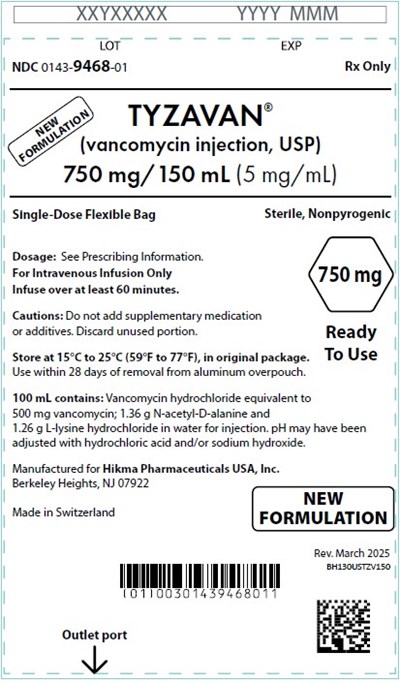
NDC 0143-9468-01
Rx Only
TYZAVAN
(vancomycin injection, USP)
750 mg/150 mL (5 mg/mL)
Single-Dose Flexible Bag
Sterile, Nonpyrogenic
NEW FORMULATION
Ready To Use
Dosage: See Prescribing Information.
For Intravenous Infusion Only
Infuse over at least 60 minutes.
750 mg
Cautions:
Do not add supplementary medication
or additives. Discard unused portion.
Store at 15°C to 25°C (59°F to 77°F), in original package.
Use within 28 days of removal from aluminum overpouch.
100 mL contains: Vancomycin hydrochloride equivalent
to 500 mg vancomycin; 1.36 g N-acetyl-D-alanine and
1.26 g L-lysine hydrochloride in water for injection.
pH may have been adjusted with hydrochloric acid
and/or sodium hydroxide.
Manufactured for Hikma Pharmaceuticals USA, Inc.
Berkeley Heights, NJ 07922
Made in Switzerland
Rev. March 2025
Hikma
0130USTZV150
Rx Only
Sterile
NDC 0143-9468-06
Contains six (6) single-dose
Flexible Bags of NDC 0143-9468-01
Ready
To Use
TYZAVAN
(vancomycin injection, USP)
750 mg/150 mL (5 mg/mL)
For Intravenous Infusion Only
Store at 15°F to 25°C (59°F to 77°F), in original package.
Discard unused portion.
750
mg
NEW FORMULATION
Rx Only
Sterile
NDC 0143-9468-12
Contains twelve (12) single-dose
Flexible Bags of NDC 0143-9468-01
Ready
To Use
TYZAVAN
(vancomycin injection, USP)
750 mg/150 mL (5 mg/mL)
For Intravenous Infusion Only
Store at 15°F to 25°C (59°F to 77°F), in original package.
Discard unused portion.
750
mg
NEW FORMULATION
Principal Display Panel - 1G/200Ml
NDC 0143-9472-01
LOT
EXP
Rx Only
NEW
FORMULATION
TYZAVAN
(vancomycin injection, USP)
1 g/200 mL (5 mg/mL)
Single-Dose Flexible Bag
Sterile, Nonpyrogenic
Dosage: See Prescribing Information.
For Intravenous Infusion Only
Infuse over at least 60 minutes.
Cautions: Do not add supplementary medication or
additives. Discard unused portion.
Store at 15°C to 25°C (59°F to 77°F), in original package.
Use within 28 days of removal from aluminum overpouch.
Each 100 mL contains: Vancomycin hydrochloride equivalent
to 500 mg vancomycin; 1.36 g N-acetyl-D-alanine and
1.26 g L-lysine hydrochloride in water for injection.
pH may have been adjusted with hydrochloric acid
and/or sodium hydroxide.
Manufactured for Hikma Pharmaceuticals USA, Inc.
Berkeley Heights, NJ 07922
1 g
Ready
To Use
NEW
FORMULATION
Made in Switzerland
BH130USTZV200
Rev. March 2025
Outlet port
NDC 0143-9472-01
Rx Only
TYZAVAN
(vancomycin injection, USP)
1 g/200 mL (5 mg/mL)
Single-Dose Flexible Bag
Sterile, Nonpyrogenic
NEW FORMULATION
Ready To Use
Dosage: See Prescribing Information.
For Intravenous Infusion Only
Infuse over at least 60 minutes.
1 g
Cautions:
Do not add supplementary medication
or additives. Discard unused portion.
Store at 15°C to 25°C (59°F to 77°F), in original package.
Use within 28 days of removal from aluminum overpouch.
Each 100 mL contains: Vancomycin hydrochloride equivalent
to 500 mg vancomycin; 1.36 g N-acetyl-D-alanine and
1.26 g L-lysine hydrochloride in water for injection.
pH may have been adjusted with hydrochloric acid
and/or sodium hydroxide.
Manufactured for Hikma Pharmaceuticals USA, Inc.
Berkeley Heights, NJ 07922
Made in Switzerland
Rev. March 2025
Hikma
O130USTZV200
Rx Only
Sterile
NDC 0143-9472-06
Contains six (6) single-dose
Flexible Bags of NDC 0143-9472-01
Ready
To Use
TYZAVAN
(vancomycin injection, USP)
1 g/200 mL (5 mg/mL)
For Intravenous Infusion Only
Store at 15°F to 25°C (59°F to 77°F), in original package.
Discard unused portion.
1 g
NEW FORMULATION
Rx Only
Sterile
NDC 0143-9472-12
Contains twelve (12) single-dose
Flexible Bags of NDC 0143-9472-01
Ready
To Use
TYZAVAN
(vancomycin injection, USP)
1 g/200 mL (5 mg/mL)
For Intravenous Infusion Only
Store at 15°F to 25°C (59°F to 77°F), in original package.
Discard unused portion.
1 g
NEW FORMULATION
Principal Display Panel - 1.25G/250Ml
NDC 0143-9466-01
LOT
EXP
Rx Only
NEW
FORMULATION
TYZAVAN
(vancomycin injection, USP)
1.25 g/250 mL (5 mg/mL)
Single-Dose Flexible Bag
Sterile, Nonpyrogenic
Dosage: See Prescribing Information.
For Intravenous Infusion Only
Infuse over at least 60 minutes.
Cautions: Do not add supplementary medication or
additives. Discard unused portion.
Store at 15°C to 25°C (59°F to 77°F), in original package.
Use within 28 days of removal from aluminum overpouch.
Each 100 mL contains: Vancomycin hydrochloride equivalent
to 500 mg vancomycin; 1.36 g N-acetyl-D-alanine and
1.26 g L-lysine hydrochloride in water for injection.
pH may have been adjusted with hydrochloric acid
and/or sodium hydroxide.
Manufactured for Hikma Pharmaceuticals USA, Inc.
Berkeley Heights, NJ 07922
1.25 g
Ready
To Use
NEW
FORMULATION
Made in Switzerland
BH130USTZV250
Rev. March 2025
Outlet port
NDC 0143-9466-01
Rx Only
TYZAVAN
(vancomycin injection, USP)
1.25 g/250 mL (5 mg/mL)
Single-Dose Flexible Bag
Sterile, Nonpyrogenic
NEW FORMULATION
Ready To Use
Dosage: See Prescribing Information.
For Intravenous Infusion Only
Infuse over at least 60 minutes.
1.25 g
Cautions:
Do not add supplementary medication
or additives. Discard unused portion.
Store at 15°C to 25°C (59°F to 77°F), in original package.
Use within 28 days of removal from aluminum overpouch.
Each 100 mL contains: Vancomycin hydrochloride equivalent
to 500 mg vancomycin; 1.36 g N-acetyl-D-alanine and
1.26 g L-lysine hydrochloride in water for injection.
pH may have been adjusted with hydrochloric acid
and/or sodium hydroxide.
Manufactured for Hikma Pharmaceuticals USA, Inc.
Berkeley Heights, NJ 07922
Made in Switzerland
Rev. March 2025
Hikma
0130USTZV250
Rx Only
Sterile
NDC 0143-9466-06
Contains six (6) single-dose
Flexible Bags of NDC 0143-9466-01
Ready
To Use
TYZAVAN
(vancomycin injection, USP)
1.25 g/250 mL (5 mg/mL)
For Intravenous Infusion Only
Store at 15°F to 25°C (59°F to 77°F), in original package.
Discard unused portion.
1.25 g
NEW FORMULATION
Principal Display Panel - 1.5G/300Ml
NDC 0143-9469-01
LOT
EXP
Rx Only
NEW
FORMULATION
TYZAVAN
(vancomycin injection, USP)
1.5 g/300 mL (5 mg/mL)
Single-Dose Flexible Bag
Sterile, Nonpyrogenic
Dosage: See Prescribing Information.
For Intravenous Infusion Only
Infuse over at least 60 minutes.
Cautions: Do not add supplementary medication or
additives. Discard unused portion.
Store at 15°C to 25°C (59°F to 77°F), in original package.
Use within 28 days of removal from aluminum overpouch.
Each 100 mL contains: Vancomycin hydrochloride equivalent
to 500 mg vancomycin; 1.36 g N-acetyl-D-alanine and
1.26 g L-lysine hydrochloride in water for injection.
pH may have been adjusted with hydrochloric acid
and/or sodium hydroxide.
Manufactured for Hikma Pharmaceuticals USA, Inc.
Berkeley Heights, NJ 07922
1.5 g
Ready
To Use
NEW
FORMULATION
Made in Switzerland
BH130USTZV300
Rev. March 2025
Outlet port
NDC 0143-9469-01
Rx Only
TYZAVAN
(vancomycin injection, USP)
1.5 g/300 mL (5 mg/mL)
Single-Dose Flexible Bag
Sterile, Nonpyrogenic
NEW FORMULATION
Ready To Use
Dosage: See Prescribing Information.
For Intravenous Infusion Only
Infuse over at least 60 minutes.
1.5 g
Cautions:
Do not add supplementary medication
or additives. Discard unused portion.
Store at 15°C to 25°C (59°F to 77°F), in original package.
Use within 28 days of removal from aluminum overpouch.
Each 100 mL contains: Vancomycin hydrochloride equivalent
to 500 mg vancomycin; 1.36 g N-acetyl-D-alanine and
1.26 g L-lysine hydrochloride in water for injection.
pH may have been adjusted with hydrochloric acid
and/or sodium hydroxide.
Manufactured for Hikma Pharmaceuticals USA, Inc.
Berkeley Heights, NJ 07922
Made in Switzerland
Rev. March 2025
Hikma
0130USTZV300
Rx Only
Sterile
NDC 0143-9469-06
Contains six (6) single-dose
Flexible Bags of NDC 0143-9469-01
Ready
To Use
TYZAVAN
(vancomycin injection, USP)
1.5 g/300 mL (5 mg/mL)
For Intravenous Infusion Only
Store at 15°F to 25°C (59°F to 77°F), in original package.
Discard unused portion.
1.5 g
NEW FORMULATION
Principal Display Panel - 1.75G/350Ml
NDC 0143-9467-01
LOT
EXP
Rx Only
NEW
FORMULATION
TYZAVAN
(vancomycin injection, USP)
1.75 g/350 mL (5 mg/mL)
Single-Dose Flexible Bag
Sterile, Nonpyrogenic
Dosage: See Prescribing Information.
For Intravenous Infusion Only
Infuse over at least 60 minutes.
Cautions: Do not add supplementary medication or
additives. Discard unused portion.
Store at 15°C to 25°C (59°F to 77°F), in original package.
Use within 28 days of removal from aluminum overpouch.
Each 100 mL contains: Vancomycin hydrochloride equivalent
to 500 mg vancomycin; 1.36 g N-acetyl-D-alanine and
1.26 g L-lysine hydrochloride in water for injection.
pH may have been adjusted with hydrochloric acid
and/or sodium hydroxide.
Manufactured for Hikma Pharmaceuticals USA, Inc.
Berkeley Heights, NJ 07922
1.75 g
Ready
To Use
NEW
FORMULATION
Made in Switzerland
BH130USTZV350
Rev. March 2025
Outlet port
NDC 0143-9467-01
Rx Only
TYZAVAN
(vancomycin injection, USP)
1.75 g/350 mL (5 mg/mL)
Single-Dose Flexible Bag
Sterile, Nonpyrogenic
NEW FORMULATION
Ready To Use
Dosage: See Prescribing Information.
For Intravenous Infusion Only
Infuse over at least 60 minutes.
1.75 g
Cautions:
Do not add supplementary medication
or additives. Discard unused portion.
Store at 15°C to 25°C (59°F to 77°F), in original package.
Use within 28 days of removal from aluminum overpouch.
Each 100 mL contains: Vancomycin hydrochloride equivalent
to 500 mg vancomycin; 1.36 g N-acetyl-D-alanine and
1.26 g L-lysine hydrochloride in water for injection.
pH may have been adjusted with hydrochloric acid
and/or sodium hydroxide.
Manufactured for Hikma Pharmaceuticals USA, Inc.
Berkeley Heights, NJ 07922
Made in Switzerland
Rev. March 2025
Hikma
0130USTZV350
Rx Only
Sterile
NDC 0143-9467-06
Contains six (6) single-dose
Flexible Bags of NDC 0143-9467-01
Ready
To Use
TYZAVAN
(vancomycin injection, USP)
1.75 g/350 mL (5 mg/mL)
For Intravenous Infusion Only
Store at 15°F to 25°C (59°F to 77°F), in original package.
Discard unused portion.
1.75 g
NEW FORMULATION
Principal Display Panel - 2 G/400Ml
NDC 0143-9470-01
LOT
EXP
Rx Only
NEW
FORMULATION
TYZAVAN
(vancomycin injection, USP)
2 g/400 mL (5 mg/mL)
Single-Dose Flexible Bag
Sterile, Nonpyrogenic
Dosage: See Prescribing Information.
For Intravenous Infusion Only
Infuse over at least 60 minutes.
Cautions: Do not add supplementary medication or
additives. Discard unused portion.
Store at 15°C to 25°C (59°F to 77°F), in original package.
Use within 28 days of removal from aluminum overpouch.
Each 100 mL contains: Vancomycin hydrochloride equivalent
to 500 mg vancomycin; 1.36 g N-acetyl-D-alanine and
1.26 g L-lysine hydrochloride in water for injection.
pH may have been adjusted with hydrochloric acid
and/or sodium hydroxide.
Manufactured for Hikma Pharmaceuticals USA, Inc.
Berkeley Heights, NJ 07922
2 g
Ready
To Use
NEW
FORMULATION
Made in Switzerland
BH130USTZV400
Rev. March 2025
Outlet port
NDC 0143-9470-01
Rx Only
TYZAVAN
(vancomycin injection, USP)
2 g/400 mL (5 mg/mL)
Single-Dose Flexible Bag
Sterile, Nonpyrogenic
NEW FORMULATION
Ready To Use
Dosage: See Prescribing Information.
For Intravenous Infusion Only
Infuse over at least 60 minutes.
2 g
Cautions:
Do not add supplementary medication
or additives. Discard unused portion.
Store at 15°C to 25°C (59°F to 77°F), in original package.
Use within 28 days of removal from aluminum overpouch.
Each 100 mL contains: Vancomycin hydrochloride equivalent
to 500 mg vancomycin; 1.36 g N-acetyl-D-alanine and
1.26 g L-lysine hydrochloride in water for injection.
pH may have been adjusted with hydrochloric acid
and/or sodium hydroxide.
Manufactured for Hikma Pharmaceuticals USA, Inc.
Berkeley Heights, NJ 07922
Made in Switzerland
Rev. March 2025
Hikma
0130USTZV400
Rx Only
Sterile
NDC 0143-9470-06
Contains six (6) single-dose
Flexible Bags of NDC 0143-9470-01
Ready
To Use
TYZAVAN
(vancomycin injection, USP)
2 g/400 mL (5 mg/mL)
For Intravenous Infusion Only
Store at 15°F to 25°C (59°F to 77°F), in original package.
Discard unused portion.
2 g
NEW FORMULATION
* Please review the disclaimer below.