Cefotetan for Injection, USP is indicated for the therapeutic treatment of the following infections when caused by susceptible strains of the designated organisms:
Urinary Tract Infections caused by E. coli, Klebsiella spp (including K. pneumoniae), Proteus mirabilis and Proteus spp (which may include the organisms now called Proteus vulgaris, Providencia rettgeri, and Morganella morganii).
Lower Respiratory Tract Infections caused by Streptococcus pneumoniae, Staphylococcus aureus (penicillinase- and nonpenicillinase-producing strains), Haemophilus influenzae (including ampicillin-resistant strains), Klebsiella species (including K. pneumoniae), E. coli, Proteus mirabilis, and Serratia marcescens.*
Skin and Skin Structure Infections due to Staphylococcus aureus (penicillinase- and nonpenicillinase-producing strains), Staphylococcus epidermidis, Streptococcus pyogenes, Streptococcus species (excluding enterococci), Escherichia coli, Klebsiella pneumoniae, Peptococcus niger*, Peptostreptococcus species.
Gynecologic Infections caused by Staphylococcus aureus (including penicillinase- and nonpenicillinase-producing strains), Staphylococcus epidermidis, Streptococcus species (excluding enterococci), Streptococcus agalactiae, E. coli, Proteus mirabilis, Neisseria gonorrhoeae, Bacteroides species (excluding B. distasonis, B. ovatus, B. thetaiotaomicron), Fusobacterium species*, and gram-positive anaerobic cocci (including Peptococcus niger and Peptostreptococcus species).
Cefotetan, like other cephalosporins, has no activity against Chlamydia trachomatis. Therefore, when cephalosporins are used in the treatment of pelvic inflammatory disease, and C. trachomatis is one of the suspected pathogens, appropriate antichlamydial coverage should be added.
Intra-abdominal lnfections caused by E. coli, Klebsiella species (including K. pneumoniae), Streptococcus species (excluding enterococci), Bacteroides species (excluding B. distasonis, B. ovatus, B. thetaiotaomicron) and Clostridium species*.
Bone and Joint Infections caused by Staphylococcus aureus*.
* Efficacy for this organism in this organ system was studied in fewer than ten infections.
Specimens for bacteriological examination should be obtained in order to isolate and identify causative organisms and to determine their susceptibilities to cefotetan. Therapy may be instituted before results of susceptibility studies are known; however, once these results become available, the antibiotic treatment should be adjusted accordingly.
In cases of confirmed or suspected gram-positive or gram-negative sepsis or in patients with other serious infections in which the causative organism has not been identified, it is possible to use cefotetan concomitantly with an aminoglycoside. Cefotetan combinations with aminoglycosides have been shown to be synergistic in vitro against many Enterobacteriaceae and also some other gram-negative bacteria. The dosage recommended in the labeling of both antibiotics may be given and depends on the severity of the infection and the patient's condition.
NOTE: Increases in serum creatinine have occurred when cefotetan was given alone. If cefotetan and an aminoglycoside are used concomitantly, renal function should be carefully monitored, because nephrotoxicity may be potentiated.
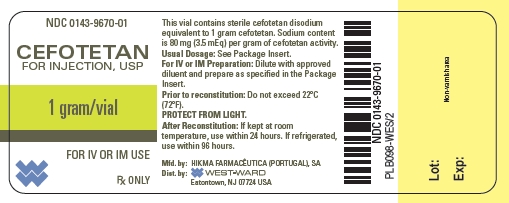
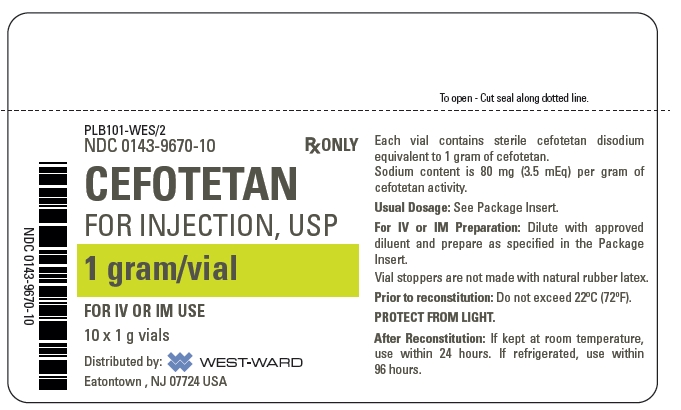
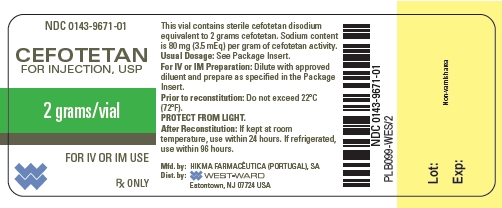
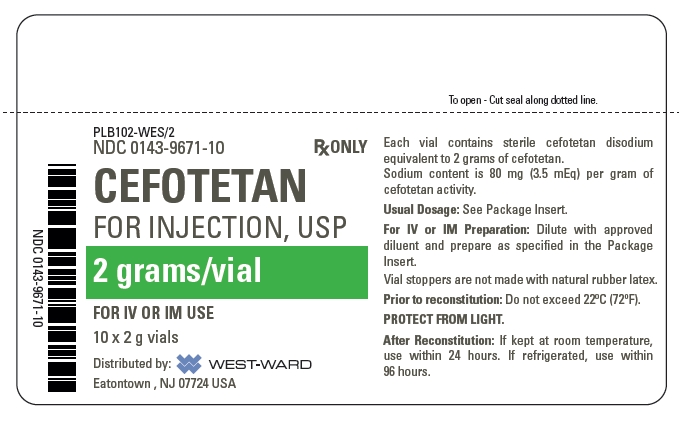
The usual adult dosage is 1 or 2 grams of Cefotetan for Injection administered intravenously or intramuscularly. Proper dosage and route of administration should be determined by the condition of the patient, severity of the infection, and susceptibility of the causative organism.
General Guidelines for Dosage of Cefotetan for Injection |
Type of Infection | Daily Dose | Frequency and Route |
Urinary Tract | 1 to 4 grams | 500 mg every 12 hours IV or IM
1 or 2 g every 24 hours IV or IM
1 or 2 g every 12 hours IV or IM |
Skin & Skin Structure
Mild - Moderatea
Severe |
2 grams
4 grams
|
2 g every 24 hours IV
1 g every 12 hours IV or IM
2 g every 12 hours IV
|
Other Sites | 2 to 4 grams | 1 or 2 g every 12 hours IV or IM |
Severe | 4 grams | 2 g every 12 hours IV |
Life-Threatening | 6 gramsb | 3 g every 12 hours IV |
aKlebsiella pneumoniae skin and skin structure infections should be treated with 1 or2 grams every 12 hours IV or IM. |
b Maximum daily dosage should not exceed 6 grams. |
If Chlamydia trachomatis is a suspected pathogen in gynecologic infections, appropriate antichlamydial coverage should be added, since cefotetan has no activity against this organism.