Because clinical trials are conducted under widely varying conditions, adverse reaction rates observed in the clinical trials of a drug cannot be directly compared with rates in the clinical trials of another drug and may not reflect the rates observed in practice.
In a pooled safety population of patients (n = 1,314) with advanced ovarian, fallopian tube, or primary peritoneal cancer treated with ZEJULA monotherapy including PRIMA (n = 484), NOVA (n = 367), and another clinical trial (n = 463), the most common adverse reactions >10% were nausea (65%), thrombocytopenia (60%), anemia (56%), fatigue (55%), constipation (39%), musculoskeletal pain (36%), abdominal pain (35%), vomiting (33%), neutropenia (31%), decreased appetite (24%), leukopenia (24%), insomnia (23%), headache (23%), dyspnea (22%), rash (21%), diarrhea (18%), hypertension (17%), cough (16%), dizziness (14%), acute kidney injury (13%), urinary tract infection (12%), and hypomagnesemia (11%).
First-Line Maintenance Treatment of Advanced Ovarian Cancer
The safety of ZEJULA for the treatment of patients with advanced ovarian cancer following first-line treatment with platinum-based chemotherapy was studied in the PRIMA trial, a placebo-controlled, double-blind study in which 728 patients received niraparib or placebo. Among patients who received ZEJULA, the median duration of treatment was 11.1 months (range: 0.03 to 29 months).
All Patients Receiving ZEJULA in PRIMA: Serious adverse reactions occurred in 32% of patients receiving ZEJULA. Serious adverse reactions in >2% of patients were thrombocytopenia (16%), anemia (6%), and small intestinal obstruction (2.9%). Fatal adverse reactions occurred in 0.4% of patients, including intestinal perforation and pleural effusion (1 patient each). MDS/AML occurred in 1.2% of patients receiving ZEJULA.
Permanent discontinuation due to adverse reactions occurred in 12% of patients who received ZEJULA. Adverse reactions resulting in permanent discontinuation in >1% of patients who received ZEJULA included thrombocytopenia (3.7%), anemia (1.9%), and nausea and neutropenia (1.2% each).
Adverse reactions led to dose reduction or interruption in 80% of patients, most frequently from thrombocytopenia (56%), anemia (33%), and neutropenia (20%).
Table 4 and Table 5 summarize the common adverse reactions and abnormal laboratory findings, respectively, observed in all patients treated with ZEJULA in the PRIMA study.
Table 4. Adverse Reactions Reported in ≥10% of All Patients Receiving ZEJULA in PRIMAa| AST/ALT = Aspartate transaminase/alanine aminotransferase. |
| a All adverse reactions in the table consist of grouped preferred terms except for nausea, vomiting, decreased appetite, headache, and insomnia, which are single preferred terms. |
| b Common Terminology Criteria for Adverse Events version 4.02. |
| c Includes neutropenia, neutropenic infection, neutropenic sepsis, and febrile neutropenia. |
| d Includes leukopenia, lymphocyte count decreased, lymphopenia, and white blood cell count decreased. |
| e Includes blood creatinine increased, blood urea increased, acute kidney injury, renal failure, and blood creatine increased. |
Adverse Reaction | Grades 1-4b | Grades 3-4b |
ZEJULA (n = 484) % | Placebo (n = 244) % | ZEJULA (n = 484) % | Placebo (n = 244) % |
Blood and lymphatic system disorders | | | | |
Thrombocytopenia | 66 | 5 | 39 | 0.4 |
Anemia | 64 | 18 | 31 | 2 |
Neutropeniac | 42 | 8 | 21 | 1 |
Leukopeniad | 28 | 9 | 5 | 0.4 |
Gastrointestinal disorders | | | | |
Nausea | 57 | 28 | 1 | 1 |
Constipation | 40 | 20 | 1 | 0.4 |
Vomiting | 22 | 12 | 1 | 1 |
General disorders and administration site conditions | | | | |
Fatigue | 51 | 41 | 3 | 1 |
Musculoskeletal and connective tissue disorders | | | | |
Musculoskeletal pain | 39 | 38 | 1 | 0 |
Nervous system disorders | | | | |
Headache | 26 | 15 | 0.4 | 0 |
Dizziness | 19 | 13 | 0 | 0.4 |
Psychiatric disorders | | | | |
Insomnia | 25 | 15 | 1 | 0.4 |
Respiratory, thoracic, and mediastinal disorders | | | | |
Dyspnea | 22 | 13 | 0.4 | 1 |
Cough | 18 | 15 | 0 | 0.4 |
Metabolism and nutrition disorders | | | | |
Decreased appetite | 19 | 8 | 1 | 0 |
Vascular disorders | | | | |
Hypertension | 18 | 7 | 6 | 1 |
Investigations | | | | |
AST/ALT elevation | 14 | 7 | 3 | 0.8 |
Renal and urinary disorders | | | | |
Acute kidney injurye | 12 | 5 | 0.2 | 0 |
Table 5. Abnormal Laboratory Findings in ≥25% of All Patients Receiving ZEJULA in PRIMAAbnormal Laboratory Finding | Grades 1-4 | Grades 3-4 |
ZEJULA (n = 484) % | Placebo (n = 244) % | ZEJULA (n = 484) % | Placebo (n = 244) % |
Decreased hemoglobin | 87 | 66 | 29 | 1 |
Decreased platelets | 74 | 13 | 37 | 0 |
Decreased leukocytes | 71 | 36 | 9 | 0 |
Increased glucose | 66 | 57 | 3 | 3 |
Decreased neutrophils | 66 | 25 | 23 | 1 |
Decreased lymphocytes | 51 | 29 | 7 | 3 |
Increased alkaline phosphatase | 46 | 21 | 1 | 0 |
Increased creatinine | 40 | 23 | 0 | 0 |
Decreased magnesium | 36 | 34 | 1 | 0 |
Increased aspartate aminotransferase | 35 | 17 | 1 | 0.4 |
Increased alanine aminotransferase | 29 | 17 | 2 | 1 |
Patients Receiving ZEJULA with Dose Based on Baseline Weight or Platelet Count in PRIMA: Among patients who received ZEJULA with the dose based on weight and platelet count, the median duration of treatment was 11 months (range: 1 day to 16 months).
Serious adverse reactions occurred in 27% of patients receiving ZEJULA. Serious adverse reactions in >2% of patients were anemia (8%), and thrombocytopenia (7%). No fatal adverse reactions occurred.
Permanent discontinuation due to adverse reactions occurred in 14% of patients who received ZEJULA. Adverse reactions resulting in permanent discontinuation in >2% of patients who received ZEJULA included thrombocytopenia and anemia (3% each) and nausea (2.4%).
Adverse reactions led to dose reduction or interruption in 72% of patients, most frequently from thrombocytopenia (40%), anemia (23%), and neutropenia (15%).
Table 6 and Table 7 summarize adverse reactions and abnormal laboratory findings in the group of patients who received ZEJULA.
Table 6. Adverse Reactions Reported in ≥10% of Patients Receiving ZEJULA Based on Baseline Weight or Platelet Count in PRIMAa| a All adverse reactions in the table consist of grouped preferred terms except for nausea, vomiting, decreased appetite, headache, and insomnia, which are single preferred terms. |
| b Common Terminology Criteria for Adverse Events version 4.02. |
| c Includes neutropenia, neutropenic infection, neutropenic sepsis, and febrile neutropenia. |
| d Includes leukopenia, lymphocyte count decreased, lymphopenia, and white blood cell count decreased. |
| e Includes blood creatinine increased, blood urea increased, acute kidney injury, renal failure, and blood creatine increased. |
Adverse Reaction | Grades 1-4b | Grades 3-4b |
ZEJULA (n = 169) % | Placebo (n = 86) % | ZEJULA (n = 169) % | Placebo (n = 86) % |
Blood and lymphatic system disorders | | | | |
Thrombocytopenia | 54 | 5 | 21 | 1 |
Anemia | 50 | 28 | 23 | 1 |
Neutropeniac | 36 | 8 | 15 | 1 |
Leukopeniad | 28 | 11 | 5 | 0 |
Gastrointestinal disorders | | | | |
Nausea | 53 | 21 | 1 | 0 |
Constipation | 31 | 15 | 1 | 1 |
Vomiting | 17 | 9 | 0 | 1 |
General disorders and administration site conditions | | | | |
Fatigue | 48 | 36 | 3 | 0 |
Nervous system disorders | | | | |
Headache | 22 | 17 | 1 | 0 |
Dizziness | 14 | 13 | 0 | 0 |
Psychiatric disorders | | | | |
Insomnia | 21 | 14 | 0 | 0 |
Metabolism and nutrition disorders | | | | |
Decreased appetite | 19 | 5 | 1 | 0 |
Respiratory, thoracic, and mediastinal disorders | | | | |
Dyspnea | 18 | 10 | 0 | 1 |
Vascular disorders | | | | |
Hypertension | 17 | 9 | 5 | 2 |
Renal and urinary disorders | | | | |
Acute kidney injurye | 12 | 5 | 1 | 0 |
Table 7. Abnormal Laboratory Findings in ≥25% of All Patients Receiving ZEJULA Based on Baseline Weight or Platelet Count in PRIMAAbnormal Laboratory Finding | Grades 1-4 | Grades 3-4 |
ZEJULA (n = 169) % | Placebo (n = 86) % | ZEJULA (n = 169) % | Placebo (n = 86) % |
Decreased hemoglobin | 81 | 70 | 21 | 0 |
Decreased leukocytes | 70 | 36 | 6 | 0 |
Decreased platelets | 63 | 15 | 18 | 0 |
Increased glucose | 63 | 56 | 2 | 1 |
Decreased neutrophils | 60 | 27 | 15 | 0 |
Decreased lymphocytes | 52 | 30 | 5 | 4 |
Decreased magnesium | 44 | 30 | 0 | 0 |
Increased alkaline phosphatase | 43 | 17 | 1 | 0 |
Increased creatinine | 41 | 22 | 0 | 0 |
Increased aspartate aminotransferase | 31 | 19 | 1 | 0 |
Increased alanine aminotransferase | 28 | 15 | 2 | 2 |
Maintenance Treatment of Recurrent Germline BRCA-mutated Ovarian Cancer
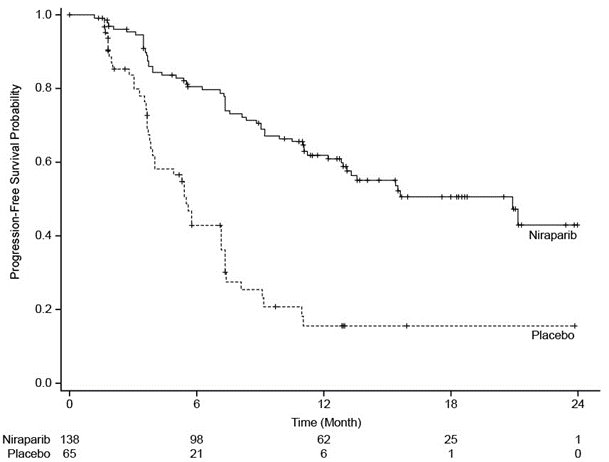
The safety of monotherapy with ZEJULA 300 mg once daily has been studied in 136 patients with platinum-sensitive recurrent gBRCAmut ovarian, fallopian tube, and primary peritoneal cancer in the NOVA trial. The percentages of patients who experienced adverse reactions in NOVA that led to dose reduction and dose interruption were 79% and 68%, respectively, most frequently from thrombocytopenia (41% and 35%, respectively) and anemia (23% and 20%, respectively). The permanent discontinuation rate due to adverse reactions in NOVA was 13%. The median exposure to ZEJULA in these patients was 367 days.
Table 8 and Table 9 summarize the common adverse reactions and abnormal laboratory findings, respectively, observed in patients treated with ZEJULA in the gBRCAmut cohort in NOVA.
Table 8. Adverse Reactions Reported in ≥10% of Patients Receiving ZEJULA in NOVA gBRCAmut Cohort| a Common Terminology Criteria for Adverse Events version 4.02. |
| b Includes platelet count decreased. |
| c Includes hemoglobin decreased. |
| d Includes neutrophil count decreased. |
| e Includes asthenia, malaise, lethargy. |
Adverse Reaction | Grades 1-4a | Grades 3-4a |
ZEJULA (n = 136) % | Placebo (n = 65) % | ZEJULA (n = 136) % | Placebo (n = 65) % |
Gastrointestinal disorders | | | | |
Nausea | 77 | 34 | 5 | 3 |
Vomiting | 40 | 15 | 4 | 0 |
Constipation | 38 | 18 | 0.7 | 2 |
Dyspepsia | 17 | 12 | 0 | 0 |
Dry mouth | 13 | 3 | 0.7 | 0 |
Blood and lymphatic system disorders | | | | |
Thrombocytopeniab | 71 | 5 | 38 | 2 |
Anemiac | 52 | 8 | 33 | 0 |
Neutropeniad | 31 | 9 | 21 | 3 |
General disorders and administration site conditions | | | | |
Fatiguee | 61 | 35 | 8 | 2 |
Nervous system disorders | | | | |
Headache | 35 | 8 | 0.7 | 0 |
Dizziness | 18 | 9 | 0 | 0 |
Dysgeusia | 13 | 2 | 0 | 0 |
Metabolism and nutrition disorders | | | | |
Decreased appetite | 22 | 14 | 0 | 0 |
Vascular disorders | | | | |
Hypertension | 21 | 8 | 8 | 5 |
Psychiatric disorders | | | | |
Insomnia | 18 | 6 | 0.7 | 0 |
Anxiety | 10 | 11 | 0.7 | 0 |
Respiratory, thoracic, and mediastinal disorders | | | | |
Dyspnea | 17 | 5 | 2 | 0 |
Cough | 16 | 2 | 0 | 0 |
Nasopharyngitis | 13 | 5 | 0 | 0 |
Musculoskeletal and connective tissue disorders | | | | |
Back pain | 16 | 11 | 0.7 | 0 |
Infections and infestations | | | | |
Urinary tract infection | 11 | 9 | 0 | 2 |
Skin and subcutaneous tissue disorders | | | | |
Rash | 10 | 2 | 0 | 0 |
The following adverse reactions have been identified in ≥1 to <10% of the 136 patients receiving ZEJULA in the gBRCAmut cohort of the NOVA trial and not included in the table: palpitations (9%), mucositis/stomatitis (9%), MDS/AML (7%), tachycardia (7%), and bronchitis (4%).
Table 9. Abnormal Laboratory Findings in ≥25% of Patients Receiving ZEJULA in NOVA gBRCAmut CohortAbnormal Laboratory Finding | Grades 1-4 | Grades 3-4 |
ZEJULA (n = 136) % | Placebo (n = 65) % | ZEJULA (n = 136) % | Placebo (n = 65) % |
Decrease in hemoglobin | 85 | 62 | 32 | 0 |
Decrease in platelet count | 81 | 25 | 38 | 2 |
Decrease in white blood cell count | 71 | 37 | 9 | 2 |
Decrease in absolute neutrophil count | 56 | 34 | 23 | 3 |
Increase in aspartate aminotransferase | 35 | 25 | 0.7 | 0 |
Increase in alanine aminotransferase | 25 | 15 | 0.7 | 2 |