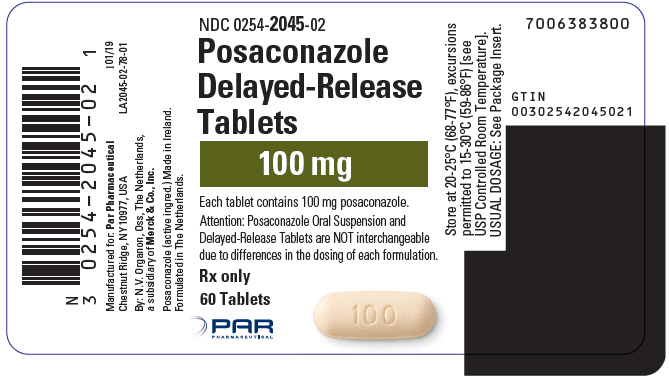
The safety of posaconazole delayed-release tablets has been assessed in 230 patients in clinical trials. Patients were enrolled in a non-comparative pharmacokinetic and safety trial of posaconazole delayed-release tablets when given as antifungal prophylaxis (Delayed-Release Tablet Study 1). Patients were immunocompromised with underlying conditions including hematological malignancy, neutropenia post-chemotherapy, GVHD, and post HSCT. This patient population was 62% male, had a mean age of 51 years (range 19-78 years, 17% of patients were ≥65 years of age), and were 93% white and 16% Hispanic. Posaconazole therapy was given for a median duration of 28 days. Twenty patients received 200 mg daily dose and 210 patients received 300 mg daily dose (following twice daily dosing on Day 1 in each cohort). Table 2 presents treatment-emergent adverse reactions observed in patients treated with 300 mg daily dose at an incidence of ≥10% in posaconazole delayed-release tablet study.
The most frequently reported adverse reactions (>25%) with posaconazole delayed-release tablets 300 mg once daily were diarrhea, pyrexia, and nausea.
The most common adverse reaction leading to discontinuation of posaconazole delayed-release tablets 300 mg once daily was nausea (2%).
The safety of posaconazole oral suspension has been assessed in 1844 patients. This includes 605 patients in the active-controlled prophylaxis studies, 557 patients in the active-controlled OPC studies, 239 patients in refractory OPC studies, and 443 patients from other indications. This represents a heterogeneous population, including immunocompromised patients, e.g., patients with hematological malignancy, neutropenia post-chemotherapy, GVHD post HSCT, and HIV infection, as well as non-neutropenic patients. This patient population was 71% male, had a mean age of 42 years (range 8-84 years, 6% of patients were ≥65 years of age and 1% was <18 years of age), and were 64% white, 16% Hispanic, and 36% non-white (including 14% black). Posaconazole therapy was given to 171 patients for ≥6 months, with 58 patients receiving posaconazole therapy for ≥12 months. Table 3 presents treatment-emergent adverse reactions observed at an incidence of >10% in posaconazole prophylaxis studies. Table 4 presents treatment-emergent adverse reactions observed at an incidence of at least 10% in the OPC/rOPC studies.
The most frequently reported adverse reactions (>30%) in the prophylaxis clinical trials were fever, diarrhea, and nausea.
The most common adverse reactions leading to discontinuation of posaconazole in the prophylaxis studies were associated with GI disorders, specifically, nausea (2%), vomiting (2%), and hepatic enzymes increased (2%).
An additional 239 HIV-infected patients with refractory OPC received posaconazole oral suspension in 2 non-comparative trials for refractory OPC (rOPC). Of these subjects, 149 received the 800-mg/day dose and the remainder received the less than or equal to 400-mg QD dose.
In the OPC/rOPC studies, the most common adverse reactions were fever, diarrhea, nausea, headache, vomiting, and coughing.
The most common adverse reactions that led to treatment discontinuation of posaconazole in the Controlled OPC Pool included respiratory impairment (1%) and pneumonia (1%). In the refractory OPC pool, the most common adverse reactions that led to treatment discontinuation of posaconazole were AIDS (7%) and respiratory impairment (3%).
Adverse reactions were reported more frequently in the pool of patients with refractory OPC. Among these highly immunocompromised patients with advanced HIV disease, serious adverse reactions (SARs) were reported in 55% (132/239). The most commonly reported SARs were fever (13%) and neutropenia (10%).
- Blood and lymphatic system disorders: hemolytic uremic syndrome, thrombotic thrombocytopenic purpura, neutropenia aggravated
- Endocrine disorders: adrenal insufficiency
- Nervous system disorders: paresthesia
- Immune system disorders: allergic reaction [see Contraindications (4.1)]
- Cardiac disorders: torsades de pointes [see Warnings and Precautions (5.2)]
- Vascular disorders: pulmonary embolism
- Gastrointestinal disorders: pancreatitis
- Liver and Biliary System Disorders: bilirubinemia, hepatic enzymes increased, hepatic function abnormal, hepatitis, hepatomegaly, jaundice, AST Increased, ALT Increased
- Metabolic and Nutritional Disorders: hypokalemia
- Platelet, Bleeding, and Clotting Disorders: thrombocytopenia
- Renal & Urinary System Disorders: renal failure acute
Clinical Laboratory Values: In healthy volunteers and patients, elevation of liver function test values did not appear to be associated with higher plasma concentrations of posaconazole.
For the prophylaxis studies, the number of patients with changes in liver function tests from Common Toxicity Criteria (CTC) Grade 0, 1, or 2 at baseline to Grade 3 or 4 during the study is presented in Table 5.
Table 5: Posaconazole Oral Suspension Study 1 and Study 2. Changes in Liver Function Test Results from CTC Grade 0, 1, or 2 at Baseline to Grade 3 or 4| Number (%) of Patients with Change Change from Grade 0 to 2 at baseline to Grade 3 or 4 during the study. These data are presented in the form X/Y, where X represents the number of patients who met the criterion as indicated, and Y represents the number of patients who had a baseline observation and at least one post-baseline observation. |
|---|
| CTC = Common Toxicity Criteria; AST= Aspartate Aminotransferase; ALT= Alanine Aminotransferase. |
| Oral Suspension Study 1 |
| Laboratory Parameter | Posaconazole
n=301 | Fluconazole
n=299 |
| AST | 11/266 (4) | 13/266 (5) |
| ALT | 47/271 (17) | 39/272 (14) |
| Bilirubin | 24/271 (9) | 20/275 (7) |
| Alkaline Phosphatase | 9/271 (3) | 8/271 (3) |
| Oral Suspension Study 2 |
| Laboratory Parameter | Posaconazole
(n=304) | Fluconazole/Itraconazole
(n=298) |
| AST | 9/286 (3) | 5/280 (2) |
| ALT | 18/289 (6) | 13/284 (5) |
| Bilirubin | 20/290 (7) | 25/285 (9) |
| Alkaline Phosphatase | 4/281 (1) | 1/276 (<1) |
The number of patients treated for OPC with clinically significant liver function test (LFT) abnormalities at any time during the studies is provided in Table 6 (LFT abnormalities were present in some of these patients prior to initiation of the study drug).
Table 6: Posaconazole Oral Suspension Studies: Clinically Significant Laboratory Test Abnormalities without Regard to Baseline Value| Laboratory Test | Controlled | Refractory |
|---|
| Posaconazole | Fluconazole | Posaconazole |
|---|
| n=557(%) | n=262(%) | n=239(%) |
|---|
| ALT= Alanine Aminotransferase; AST= Aspartate Aminotransferase. |
| ALT > 3.0 × ULN | 16/537 (3) | 13/254 (5) | 25/226 (11) |
| AST > 3.0 × ULN | 33/537 (6) | 26/254 (10) | 39/223 (17) |
| Total Bilirubin > 1.5 × ULN | 15/536 (3) | 5/254 (2) | 9/197 (5) |
| Alkaline Phosphatase > 3.0 × ULN | 17/535 (3) | 15/253 (6) | 24/190 (13) |
Sirolimus: Concomitant administration of posaconazole with sirolimus increases the sirolimus blood concentrations by approximately 9-fold and can result in sirolimus toxicity. Therefore, posaconazole is contraindicated with sirolimus [see Contraindications (4.2) and Clinical Pharmacology (12.3)].
Tacrolimus: Posaconazole has been shown to significantly increase the Cmax and AUC of tacrolimus. At initiation of posaconazole treatment, reduce the tacrolimus dose to approximately one-third of the original dose. Frequent monitoring of tacrolimus whole blood trough concentrations should be performed during and at discontinuation of posaconazole treatment and the tacrolimus dose adjusted accordingly [see Warnings and Precautions (5.1) and Clinical Pharmacology (12.3)].
Cyclosporine: Posaconazole has been shown to increase cyclosporine whole blood concentrations in heart transplant patients upon initiation of posaconazole treatment. It is recommended to reduce cyclosporine dose to approximately three-fourths of the original dose upon initiation of posaconazole treatment. Frequent monitoring of cyclosporine whole blood trough concentrations should be performed during and at discontinuation of posaconazole treatment and the cyclosporine dose adjusted accordingly [see Warnings and Precautions (5.1) and Clinical Pharmacology (12.3)].
Efavirenz: Efavirenz induces UDP-glucuronidase and significantly decreases posaconazole plasma concentrations [see Clinical Pharmacology (12.3)]. It is recommended to avoid concomitant use of efavirenz with posaconazole unless the benefit outweighs the risks.
Ritonavir and Atazanavir: Ritonavir and atazanavir are metabolized by CYP3A4 and posaconazole increases plasma concentrations of these drugs [see Clinical Pharmacology (12.3)]. Frequent monitoring of adverse effects and toxicity of ritonavir and atazanavir should be performed during coadministration with posaconazole.
Fosamprenavir: Combining fosamprenavir with posaconazole may lead to decreased posaconazole plasma concentrations. If concomitant administration is required, close monitoring for breakthrough fungal infections is recommended [see Clinical Pharmacology (12.3)].
Posaconazole Delayed-Release Tablet:
No clinically relevant effects on the pharmacokinetics of posaconazole were observed when posaconazole delayed-release tablets are concomitantly used with antacids, H2-receptor antagonists and proton pump inhibitors [see Clinical Pharmacology (12.3)]. No dosage adjustment of posaconazole delayed-release tablets is required when posaconazole delayed-release tablets are concomitantly used with antacids, H2-receptor antagonists and proton pump inhibitors.
Posaconazole Delayed-Release Tablet:
Concomitant administration of metoclopramide with posaconazole delayed-release tablets did not affect the pharmacokinetics of posaconazole [see Clinical Pharmacology (12.3)]. No dosage adjustment of posaconazole delayed-release tablets is required when given concomitantly with metoclopramide.
Risk Summary
Based on findings from animal data, posaconazole may cause fetal harm when administered to pregnant women. Available data for use of posaconazole in pregnant women are insufficient to establish a drug-associated risk of major birth defects, miscarriage, or adverse maternal or fetal outcomes. In animal reproduction studies, skeletal malformations (cranial malformations and missing ribs) and maternal toxicity (reduced food consumption and reduced body weight gain) were observed when posaconazole was dosed orally to pregnant rats during organogenesis at doses ≥1.4 times the 400 mg twice daily oral suspension regimen based on steady-state plasma concentrations of posaconazole in healthy volunteers. In pregnant rabbits dosed orally during organogenesis, increased resorptions, reduced litter size, and reduced body weight gain of females were seen at doses 5 times the exposure achieved with the 400 mg twice daily oral suspension regimen. Doses of ≥ 3 times the clinical exposure caused an increase in resorptions in these rabbits (see Data). Based on animal data, advise pregnant women of the potential risk to a fetus.
The estimated background risk of major birth defects and miscarriage for the indicated population is unknown. All pregnancies have a background risk of birth defect, loss, or other adverse outcomes. In the U.S. general population, the estimated background risk of major birth defects and miscarriage in clinically recognized pregnancies is 2 to 4% and 15 to 20%, respectively.
Data
Animal Data
Posaconazole resulted in maternal toxicity (reduced food consumption and reduced body weight gain) and skeletal malformations (cranial malformations and missing ribs) when given orally to pregnant rats during organogenesis (Gestational Days 6 through 15) at doses ≥27 mg/kg (≥1.4 times the 400 mg twice daily oral suspension regimen based on steady-state plasma concentrations of drug in healthy volunteers). The no-effect dose for malformations and maternal toxicity in rats was 9 mg/kg, which is 0.7 times the exposure achieved with the 400 mg twice daily oral suspension regimen. No malformations were seen in rabbits dosed during organogenesis (Gestational Days 7 through 19) at doses up to 80 mg/kg (5 times the exposure achieved with the 400 mg twice daily oral suspension regimen). In the rabbit, the no-effect dose was 20 mg/kg, while high doses of 40 mg/kg and 80 mg/kg (3 or 5 times the clinical exposure) caused an increase in resorptions. In rabbits dosed at 80 mg/kg, a reduction in body weight gain of females and a reduction in litter size were seen.
Risk Summary
There are no data on the presence of posaconazole in human milk, the effects on the breastfed infant, or the effects on milk production. Posaconazole is excreted in the milk of lactating rats. When a drug is present in animal milk, it is likely that the drug will be present in human milk. The developmental and health benefits of breastfeeding should be considered along with the mother's clinical need for posaconazole and any potential adverse effects on the breastfed child from posaconazole or from the underlying maternal condition.
Exposure Response Relationship: In clinical studies of neutropenic patients who were receiving cytotoxic chemotherapy for acute myelogenous leukemia (AML) or myelodysplastic syndromes (MDS) or hematopoietic stem cell transplant (HSCT) recipients with Graft versus Host Disease (GVHD), a wide range of plasma exposures to posaconazole was noted following administration of posaconazole oral suspension. A pharmacokinetic-pharmacodynamic analysis of patient data revealed an apparent association between average posaconazole concentrations (Cavg) and prophylactic efficacy (Table 7). A lower Cavg may be associated with an increased risk of treatment failure, defined as treatment discontinuation, use of empiric systemic antifungal therapy (SAF), or occurrence of breakthrough invasive fungal infections.
Table 7: Posaconazole Oral Suspension Exposure Analysis (Cavg) in Prophylaxis Trials | Prophylaxis in AML/MDS Neutropenic patients who were receiving cytotoxic chemotherapy for AML or MDS | Prophylaxis in GVHD HSCT recipients with GVHD |
|---|
| Cavg Range (ng/mL) | Treatment Failure Defined as treatment discontinuation, use of empiric systemic antifungal therapy (SAF), or occurrence of breakthrough invasive fungal infections (%) | Cavg Range (ng/mL) | Treatment Failure (%) |
|---|
| Cavg = the average posaconazole concentration when measured at steady state |
| Quartile 1 | 90-322 | 54.7 | 22-557 | 44.4 |
| Quartile 2 | 322-490 | 37.0 | 557-915 | 20.6 |
| Quartile 3 | 490-734 | 46.8 | 915-1563 | 17.5 |
| Quartile 4 | 734-2200 | 27.8 | 1563-3650 | 17.5 |
General Pharmacokinetic Characteristics
Posaconazole Delayed-Release Tablets
Posaconazole delayed-release tablets exhibit dose proportional pharmacokinetics after single and multiple dosing up to 300 mg. The mean pharmacokinetic parameters of posaconazole at steady state following administration of posaconazole delayed-release tablets 300 mg twice daily (BID) on Day 1, then 300 mg once daily (QD) thereafter in healthy volunteers and in neutropenic patients who are receiving cytotoxic chemotherapy for AML or MDS or HSCT recipients with GVHD are shown in Table 8.
Table 8: Arithmetic Mean (%CV) of Steady State PK Parameters in Healthy Volunteers and Patients Following Administration of Posaconazole Delayed-Release Tablets (300 mg)300 mg BID on Day 1, then 300 mg QD thereafter
| N | AUC0-24 hr
(ng∙hr/mL) | Cav Cav = time-averaged concentrations (i.e., AUC0-24 hr/24hr)
(ng/mL) | Cmax
(ng/mL) | Cmin
(ng/mL) | Tmax Median (minimum-maximum)
(hr) | t1/2
(hr) | CL/F
(L/hr) |
|---|
| CV = coefficient of variation expressed as a percentage (%CV); AUC0-T = Area under the plasma concentration-time curve from time zero to 24 hr; Cmax = maximum observed concentration; Cmin = minimum observed plasma concentration; Tmax = time of maximum observed concentration; t½ = terminal phase half-life; CL /F = Apparent total body clearance |
| Healthy Volunteers | 12 | 51618
(25) | 2151
(25) | 2764
(21) | 1785
(29) | 4
(3-6) | 31
(40) | 7.5
(26) |
| Patients | 50 | 37900
(42) | 1580
(42) | 2090
(38) | 1310
(50) | 4 (1.3-8.3) | - | 9.39
(45) |
Posaconazole Oral Suspension
Dose-proportional increases in plasma exposure (AUC) to posaconazole oral suspension were observed following single oral doses from 50 mg to 800 mg and following multiple-dose administration from 50 mg BID to 400 mg BID in healthy volunteers. No further increases in exposure were observed when the dose of the oral suspension increased from 400 mg BID to 600 mg BID in febrile neutropenic patients or those with refractory invasive fungal infections.
The mean (%CV) [min-max] posaconazole oral suspension average steady-state plasma concentrations (Cavg) and steady-state pharmacokinetic parameters in patients following administration of 200 mg TID and 400 mg BID of the oral suspension are provided in Table 9.
Table 9: The Mean (%CV) [min-max] Posaconazole Steady-State Pharmacokinetic Parameters in Patients Following Oral Administration of Posaconazole Oral Suspension 200 mg TID and 400 mg BID| Dose Oral suspension administration | Cavg (ng/mL) | AUC AUC (0-24 hr) for 200 mg TID and AUC (0-12 hr) for 400 mg BID (ng∙hr/mL) | CL/F (L/hr) | V/F (L) | t½ (hr) |
|---|
| Cavg = the average posaconazole concentration when measured at steady state |
| 200 mg TID HSCT recipients with GVHD (n=252) | 1103 (67)
[21.5-3650] | ND Not done | ND | ND | ND |
| 200 mg TID Neutropenic patients who were receiving cytotoxic chemotherapy for acute myelogenous leukemia or myelodysplastic syndromes (n=215) | 583 (65)
[89.7-2200] | 15,900 (62)
[4100-56,100] | 51.2 (54)
[10.7-146] | 2425 (39)
[828-5702] | 37.2 (39)
[19.1-148] |
| 400 mg BID Febrile neutropenic patients or patients with refractory invasive fungal infections, Cavg n=24
The variability in average plasma posaconazole concentrations in patients was relatively higher than that in healthy subjects. (n=23) | 723 (86)
[6.70-2256] | 9093 (80)
[1564-26,794] | 76.1 (78)
[14.9-256] | 3088 (84)
[407-13,140] | 31.7 (42)
[12.4-67.3] |
Absorption:
Posaconazole Delayed-Release Tablets
When given orally in healthy volunteers, posaconazole delayed-release tablets are absorbed with a median Tmax of 4 to 5 hours. Steady-state plasma concentrations are attained by Day 6 at the 300 mg dose (QD after BID loading dose at Day 1). The absolute bioavailability of the oral delayed-release tablet is approximately 54% under fasted conditions. The Cmax and AUC of posaconazole following administration of posaconazole delayed-release tablets is increased 16% and 51%, respectively, when given with a high fat meal compared to a fasted state (see Table 10). In order to enhance the oral absorption of posaconazole and optimize plasma concentrations, posaconazole delayed-release tablets should be administered with food.
Table 10: Statistical Comparison of Plasma Pharmacokinetics of Posaconazole Following Single Oral Dose Administration of 300 mg Posaconazole Delayed-Release Tablet to Healthy Subjects under Fasting and Fed Conditions | Fasting Conditions | Fed Conditions
(High Fat Meal)48.5 g fat | Fed/Fasting |
|---|
| Pharmacokinetic Parameter | N | Mean (%CV) | N | Mean (%CV) | GMR (90% CI) |
|---|
| GMR=Geometric least-squares mean ratio; CI=Confidence interval |
| Cmax (ng/mL) | 14 | 935 (34) | 16 | 1060 (25) | 1.16 (0.96, 1.41) |
| AUC0-72hr (hr∙ng/mL) | 14 | 26200 (28) | 16 | 38400 (18) | 1.51 (1.33, 1.72) |
| Tmax Median (Min, Max) reported for Tmax (hr) | 14 | 5.00
(3.00, 8.00) | 16 | 6.00
(5.00, 24.00) | N/A |
Concomitant administration of posaconazole delayed-release tablets with drugs affecting gastric pH or gastric motility did not demonstrate any significant effects on posaconazole pharmacokinetic exposure (see Table 11).
Table 11: The Effect of Concomitant Medications that Affect the Gastric pH and Gastric Motility on the Pharmacokinetics of Posaconazole Delayed-Release Tablets in Healthy Volunteers| Coadministered Drug | Administration Arms | Change in Cmax
(ratio estimateRatio Estimate is the ratio of coadministered drug plus posaconazole to posaconazole alone for Cmax or AUC0-last. ; 90% CI of the ratio estimate) | Change in AUC0-last
(ratio estimate; 90% CI of the ratio estimate) |
|---|
| Mylanta® Ultimate strength liquid (Increase in gastric pH) | 25.4 meq/5 mL, 20 mL | ↑6%
(1.06; 0.90 -1.26)↑ | ↑4%
(1.04; 0.90 -1.20) |
| Ranitidine (Zantac®) (Alteration in gastric pH) | 150 mg (morning dose of 150 mg Ranitidine BID) | ↑4%
(1.04; 0.88 -1.23)↑ | ↓3%
(0.97; 0.84 -1.12) |
| Esomeprazole (Nexium®) (Increase in gastric pH) | 40 mg (QAM 5 days, day -4 to 1) | ↑2%
(1.02; 0.88-1.17)↑ | ↑5%
(1.05; 0.89 -1.24) |
| Metoclopramide (Reglan®) (Increase in gastric motility) | 15 mg four times daily during 2 days (Day -1 and 1) | ↓14%
(0.86, 0.73,1.02) | ↓7%
(0.93, 0.803,1.07) |
Posaconazole Oral Suspension
Posaconazole oral suspension is absorbed with a median Tmax of ~3 to 5 hours. Steady-state plasma concentrations are attained at 7 to 10 days following multiple-dose administration.
Following single-dose administration of 200 mg, the mean AUC and Cmax of posaconazole are approximately 3-times higher when the oral suspension is administered with a nonfat meal and approximately 4-times higher when administered with a high-fat meal (~50 gm fat) relative to the fasted state. Following single-dose administration of posaconazole oral suspension 400 mg, the mean AUC and Cmax of posaconazole are approximately 3-times higher when administered with a liquid nutritional supplement (14 gm fat) relative to the fasted state (see Table 12). In addition, the effects of varying gastric administration conditions on the Cmax and AUC of posaconazole oral suspension in healthy volunteers have been investigated and are shown in Table 13.
In order to assure attainment of adequate plasma concentrations, it is recommended to administer posaconazole oral suspension during or immediately following a full meal. In patients who cannot eat a full meal, posaconazole oral suspension should be taken with a liquid nutritional supplement or an acidic carbonated beverage (e.g., ginger ale).
Table 12: The Mean (%CV) [min-max] Posaconazole Pharmacokinetic Parameters Following Single-Dose Oral Suspension Administration of 200 mg and 400 mg Under Fed and Fasted Conditions| Dose (mg) | Cmax
(ng/mL) | Tmax Median [min-max].
(hr) | AUC (I)
(ng∙hr/mL) | CL/F
(L/hr) | t½
(hr) |
|---|
200 mg fasted
(n=20)n=15 for AUC (I), CL/F, and t ½ | 132 (50)
[45-267] | 3.50
[1.5-36The subject with Tmax of 36 hrs had relatively constant plasma levels over 36 hrs (1.7 ng/mL difference between 4 hrs and 36 hrs). ] | 4179 (31)
[2705-7269] | 51 (25)
[28-74] | 23.5 (25)
[15.3-33.7] |
200 mg nonfat
(n=20) | 378 (43)
[131-834] | 4 [3-5] | 10,753 (35)
[4579-17,092] | 21 (39)
[12-44] | 22.2 (18)
[17.4-28.7] |
200 mg high fat
(54 gm fat)
(n=20) | 512 (34)
[241-1016] | 5 [4-5] | 15,059 (26)
[10,341-24,476] | 14 (24)
[8.2-19] | 23.0 (19)
[17.2-33.4] |
400 mg fasted
(n=23)n=10 for AUC (I), CL/F, and t ½ | 121 (75)
[27-366] | 4 [2-12] | 5258 (48)
[2834-9567] | 91 (40)
[42-141] | 27.3 (26)
[16.8-38.9] |
400 mg with liquid nutritional supplement
(14 gm fat)
(n=23) | 355 (43)
[145-720] | 5 [4-8] | 11,295 (40)
[3865-20,592] | 43 (56)
[19-103] | 26.0 (19)
[18.2-35.0] |
Table 13: The Effect of Varying Gastric Administration Conditions on the Cmax and AUC of Posaconazole Oral Suspension in Healthy VolunteersIn 5 subjects, the Cmax and AUC decreased substantially (range: -27% to -53% and -33% to -51%, respectively) when posaconazole was administered via an NG tube compared to when posaconazole was administered orally. It is recommended to closely monitor patients for breakthrough fungal infections when posaconazole is administered via an NG tube because a lower plasma exposure may be associated with an increased risk of treatment failure.
| Study Description | Administration Arms | Change in Cmax
(ratio estimateRatio Estimate is the ratio of coadministered drug plus posaconazole to coadministered drug alone for Cmax or AUC. ; 90% CI of the ratio estimate) | Change in AUC
(ratio estimate; 90% CI of the ratio estimate) |
|---|
| 400-mg single dose with a high-fat meal relative to fasted state (n=12) | 5 minutes before high-fat meal | ↑96%
(1.96; 1.48-2.59) | ↑111%
(2.11; 1.60-2.78) |
| During high-fat meal | ↑339%
(4.39; 3.32-5.80) | ↑382%
(4.82; 3.66-6.35) |
| 20 minutes after high-fat meal | ↑333%
(4.33; 3.28-5.73) | ↑387%
(4.87; 3.70-6.42) |
| 400 mg BID and 200 mg QID for 7 days in fasted state and with liquid nutritional supplement (BOOST®) (n=12) | 400 mg BID with BOOST | ↑65%
(1.65; 1.29-2.11) | ↑66%
(1.66; 1.30-2.13) |
| 200 mg QID with BOOST | No Effect | No Effect |
| Divided daily dose from 400 mg BID to 200 mg QID for 7 days regardless of fasted conditions or with BOOST (n=12) | Fasted state | ↑136%
(2.36; 1.84-3.02) | ↑161%
(2.61; 2.04-3.35) |
| With BOOST | ↑137%
(2.37; 1.86-3.04) | ↑157%
(2.57; 2.00-3.30) |
| 400-mg single dose with carbonated acidic beverage (ginger ale) and/or proton pump inhibitor (esomeprazole) (n=12) | Ginger ale | ↑92%
(1.92; 1.51-2.44) | ↑70%
(1.70; 1.43-2.03) |
| Esomeprazole | ↓32%
(0.68; 0.53-0.86) | ↓30%
(0.70; 0.59-0.83) |
| 400-mg single dose with a prokinetic agent (metoclopramide 10 mg TID for 2 days) + BOOST or an antikinetic agent (loperamide 4-mg single dose) + BOOST (n=12) | With metoclopramide + BOOST | ↓21%
(0.79; 0.72-0.87) | ↓19%
(0.81; 0.72-0.91) |
| With loperamide + BOOST | ↓3%
(0.97; 0.88-1.07) | ↑11%
(1.11; 0.99-1.25) |
| 400-mg single dose either orally with BOOST or via an NG tube with BOOST (n=16) | Via NG tube NG = nasogastric | ↓19%
(0.81; 0.71-0.91) | ↓23%
(0.77; 0.69-0.86) |
Concomitant administration of posaconazole oral suspension with drugs affecting gastric pH or gastric motility results in lower posaconazole exposure. (See Table 14.)
Table 14: The Effect of Concomitant Medications that Affect the Gastric pH and Gastric Motility on the Pharmacokinetics of Posaconazole Oral Suspension in Healthy Volunteers | Coadministered Drug (Postulated Mechanism of Interaction) | Coadministered Drug Dose/Schedule | Posaconazole Dose/Schedule | Effect on Bioavailability of Posaconazole |
|---|
Change in Mean Cmax
(ratio estimateRatio Estimate is the ratio of coadministered drug plus posaconazole to coadministered drug alone for Cmax or AUC. ; 90% CI of the ratio estimate) | Change in Mean AUC
(ratio estimate; 90% CI of the ratio estimate) |
|---|
Cimetidine
(Alteration of gastric pH) | 400 mg BID × 10 days | 200 mg (tablets) QD × 10 days The tablet refers to a non-commercial tablet formulation without polymer. | ↓ 39%
(0.61; 0.53-0.70) | ↓ 39%
(0.61; 0.54-0.69) |
| Esomeprazole (Increase in gastric pH) The drug interactions associated with the oral suspension are also relevant for the delayed-release tablet with the exception of Esomeprazole and Metoclopramide. | 40 mg QAM × 3 days | 400 mg (oral suspension) single dose | ↓ 46%
(0.54; 0.43-0.69) | ↓ 32%
(0.68; 0.57-0.81) |
| Metoclopramide (Increase in gastric motility) | 10 mg TID × 2 days | 400 mg (oral suspension) single dose | ↓ 21%
(0.79; 0.72-0.87) | ↓ 19%
(0.81; 0.72-0.91) |
Distribution:
Posaconazole is highly bound to human plasma proteins (>98%), predominantly to albumin.
Metabolism:
Posaconazole primarily circulates as the parent compound in plasma. Of the circulating metabolites, the majority are glucuronide conjugates formed via UDP glucuronidation (phase 2 enzymes). Posaconazole does not have any major circulating oxidative (CYP450 mediated) metabolites. The excreted metabolites in urine and feces account for ~17% of the administered radiolabeled dose.
Posaconazole is primarily metabolized via UDP glucuronidation (phase 2 enzymes) and is a substrate for p-glycoprotein (P-gp) efflux. Therefore, inhibitors or inducers of these clearance pathways may affect posaconazole plasma concentrations. A summary of drugs studied clinically with the oral suspension or an early tablet formulation, which affect posaconazole concentrations, is provided in Table 15.
Table 15: Summary of the Effect of Coadministered Drugs on Posaconazole in Healthy Volunteers| Coadministered Drug (Postulated Mechanism of Interaction) | Coadministered Drug Dose/Schedule | Posaconazole Dose/Schedule | Effect on Bioavailability of Posaconazole |
|---|
Change in Mean Cmax
(ratio estimateRatio Estimate is the ratio of coadministered drug plus posaconazole to posaconazole alone for Cmax or AUC. ; 90% CI of the ratio estimate) | Change in Mean AUC
(ratio estimate; 90% CI of the ratio estimate) |
|---|
Efavirenz
(UDP-G Induction) | 400 mg QD × 10 and 20 days | 400 mg (oral suspension) BID × 10 and 20 days | ↓45%
(0.55; 0.47-0.66) | ↓ 50%
(0.50; 0.43-0.60) |
| Fosamprenavir (unknown mechanism) | 700 mg BID × 10 days | 200 mg QD on the 1st day, 200 mg BID on the 2nd day, then 400 mg BID × 8 Days | ↓21%
0.79 (0.71-0.89) | ↓23%
0.77 (0.68-0.87) |
Rifabutin
(UDP-G Induction) | 300 mg QD × 17 days | 200 mg (tablets) QD × 10 days The tablet refers to a non-commercial tablet formulation without polymer. | ↓ 43%
(0.57; 0.43-0.75) | ↓ 49%
(0.51; 0.37-0.71) |
Phenytoin
(UDP-G Induction) | 200 mg QD × 10 days | 200 mg (tablets) QD × 10 days | ↓ 41%
(0.59; 0.44-0.79) | ↓ 50%
(0.50; 0.36-0.71) |
In vitro studies with human hepatic microsomes and clinical studies indicate that posaconazole is an inhibitor primarily of CYP3A4. A clinical study in healthy volunteers also indicates that posaconazole is a strong CYP3A4 inhibitor as evidenced by a >5-fold increase in midazolam AUC. Therefore, plasma concentrations of drugs predominantly metabolized by CYP3A4 may be increased by posaconazole. A summary of the drugs studied clinically, for which plasma concentrations were affected by posaconazole, is provided in Table 16 [see Contraindications (4) and Drug Interactions (7.1) including recommendations].
Table 16: Summary of the Effect of Posaconazole on Coadministered Drugs in Healthy Volunteers and Patients| Coadministered Drug (Postulated Mechanism of Interaction is Inhibition of CYP3A4 by posaconazole) | Coadministered Drug Dose/Schedule | Posaconazole Dose/Schedule | Effect on Bioavailability of Coadministered Drugs |
|---|
Change in Mean Cmax
(ratio estimateRatio Estimate is the ratio of coadministered drug plus posaconazole to coadministered drug alone for Cmax or AUC. ; 90% CI of the ratio estimate) | Change in Mean AUC
(ratio estimate; 90% CI of the ratio estimate) |
|---|
| Sirolimus | 2-mg single oral dose | 400 mg (oral suspension) BID × 16 days | ↑ 572%
(6.72; 5.62-8.03) | ↑ 788%
(8.88; 7.26-10.9) |
| Cyclosporine | Stable maintenance dose in heart transplant recipients | 200 mg (tablets) QD × 10 days The tablet refers to a non-commercial tablet formulation without polymer. | ↑ cyclosporine whole blood trough concentrations
Cyclosporine dose reductions of up to 29% were required |
| Tacrolimus | 0.05-mg/kg single oral dose | 400 mg (oral suspension) BID × 7 days | ↑ 121%
(2.21; 2.01-2.42) | ↑ 358%
(4.58; 4.03-5.19) |
| Simvastatin | 40-mg single oral dose | 100 mg (oral suspension) QD × 13 days | Simvastatin
↑ 841%
(9.41, 7.13-12.44)
Simvastatin Acid
↑ 817%
(9.17, 7.36-11.43) | Simvastatin
↑ 931%
(10.31, 8.40-12.67)
Simvastatin Acid
↑634%
(7.34, 5.82-9.25) |
| | 200 mg (oral suspension) QD × 13 days | Simvastatin
↑ 1041%
(11.41, 7.99-16.29)
Simvastatin Acid
↑851%
(9.51, 8.15-11.10) | Simvastatin
↑ 960%
(10.60, 8.63-13.02)
Simvastatin Acid
↑748%
(8.48, 7.04-10.23) |
| Midazolam | 0.4-mg single intravenous dose The mean terminal half-life of midazolam was increased from 3 hours to 7 to 11 hours during coadministration with posaconazole. | 200 mg (oral suspension) BID × 7 days | ↑ 30%
(1.3; 1.13-1.48) | ↑ 362%
(4.62; 4.02-5.3) |
| 0.4-mg single intravenous dose | 400 mg (oral suspension) BID × 7 days | ↑62%
(1.62; 1.41-1.86) | ↑524%
(6.24; 5.43-7.16) |
| 2-mg single oral dose | 200 mg (oral suspension) QD × 7 days | ↑ 169%
(2.69; 2.46-2.93) | ↑ 470%
(5.70; 4.82-6.74) |
| 2-mg single oral dose | 400 mg (oral suspension) BID × 7 days | ↑ 138%
(2.38; 2.13-2.66) | ↑ 397%
(4.97; 4.46-5.54) |
| Rifabutin | 300 mg QD × 17 days | 200 mg (tablets) QD × 10 days | ↑ 31%
(1.31; 1.10-1.57) | ↑ 72%
(1.72;1.51-1.95) |
| Phenytoin | 200 mg QD PO × 10 days | 200 mg (tablets) QD × 10 days | ↑ 16%
(1.16; 0.85-1.57) | ↑ 16%
(1.16; 0.84-1.59) |
| Ritonavir | 100 mg QD × 14 days | 400 mg (oral suspension) BID × 7 days | ↑ 49%
(1.49; 1.04-2.15) | ↑ 80%
(1.8;1.39-2.31) |
| Atazanavir | 300 mg QD × 14 days | 400 mg (oral suspension) BID × 7 days | ↑ 155%
(2.55; 1.89-3.45) | ↑ 268%
(3.68; 2.89-4.70) |
| Atazanavir/ ritonavir boosted regimen | 300 mg/100 mg QD × 14 days | 400 mg (oral suspension) BID × 7 days | ↑ 53%
(1.53; 1.13-2.07) | ↑ 146%
(2.46; 1.93-3.13) |
Additional clinical studies demonstrated that no clinically significant effects on zidovudine, lamivudine, indinavir, or caffeine were observed when administered with posaconazole 200 mg QD; therefore, no dose adjustments are required for these coadministered drugs when coadministered with posaconazole 200 mg QD.
Excretion:
Following administration of posaconazole oral suspension, posaconazole is predominantly eliminated in the feces (71% of the radiolabeled dose up to 120 hours) with the major component eliminated as parent drug (66% of the radiolabeled dose). Renal clearance is a minor elimination pathway, with 13% of the radiolabeled dose excreted in urine up to 120 hours (<0.2% of the radiolabeled dose is parent drug).
Posaconazole delayed-release tablet is eliminated with a mean half-life (t½) ranging between 26 to 31 hours.
Posaconazole oral suspension is eliminated with a mean half-life (t½) of 35 hours (range: 20-66 hours).
Mechanism of Action:
Posaconazole blocks the synthesis of ergosterol, a key component of the fungal cell membrane, through the inhibition of cytochrome P-450 dependent enzyme lanosterol 14α-demethylase responsible for the conversion of lanosterol to ergosterol in the fungal cell membrane. This results in an accumulation of methylated sterol precursors and a depletion of ergosterol within the cell membrane thus weakening the structure and function of the fungal cell membrane. This may be responsible for the antifungal activity of posaconazole.
Resistance:
Clinical isolates of Candida albicans and Candida glabrata with decreased susceptibility to posaconazole were observed in oral swish samples taken during prophylaxis with posaconazole and fluconazole, suggesting a potential for development of resistance. These isolates also showed reduced susceptibility to other azoles, suggesting cross-resistance between azoles. The clinical significance of this finding is not known.
Antimicrobial Activity:
Posaconazole has been shown to be active against most isolates of the following microorganisms, both in vitro and in clinical infections [see Indications and Usage (1)].
Microorganisms:
Aspergillus spp. and Candida spp.
Susceptibility Testing:
For specific information regarding susceptibility test interpretive criteria and associated test methods and quality control standards recognized by FDA for this drug, please see: https://www.fda.gov/STIC.
Posaconazole Delayed-Release Tablets
Advise patients to take posaconazole delayed-release tablets with food.
Advise patients that posaconazole delayed-release tablets must be swallowed whole and not divided, crushed, or chewed.
Instruct patients that if they miss a dose, they should take it as soon as they remember. If they do not remember until it is within 12 hours of the next dose, they should be instructed to skip the missed dose and go back to the regular schedule. Patients should not double their next dose or take more than the prescribed dose.
Manufactured for: Par Pharmaceutical, Chestnut Ridge, NY 10977, USA
Delayed-Release Tablets: Manuf. by: N. V. Organon, Kloosterstraat 6, 5349 AB Oss, Netherlands
The trademarks referenced herein are owned by their respective companies.
uspi-gmk5592-t-1905r000
OS2045-01-78-01