Upper Limb Spasticity and Cervical Dystonia
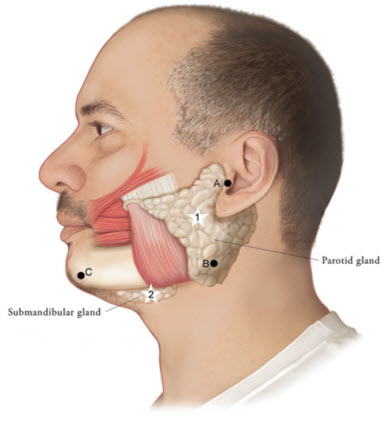
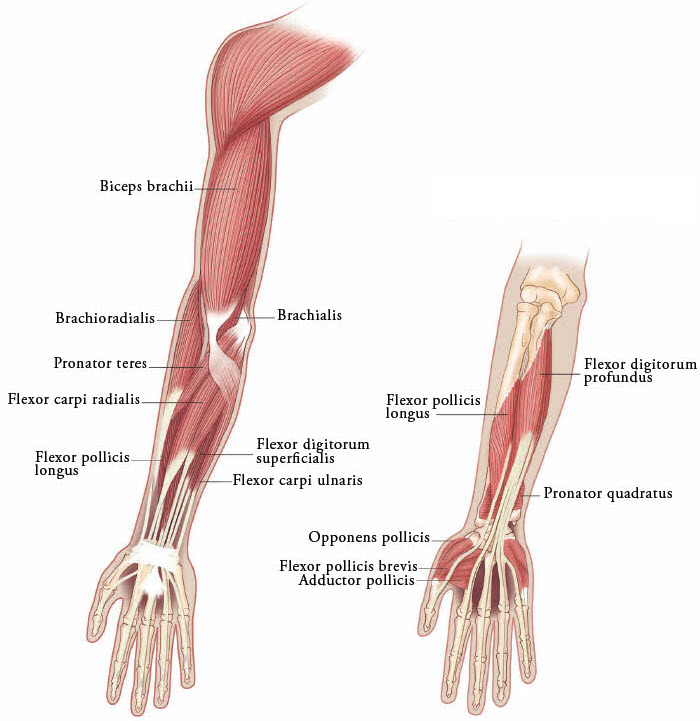
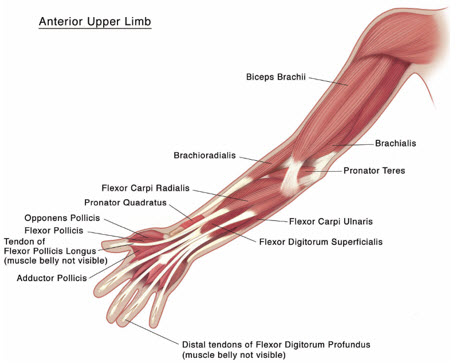
A suitable sterile needle (e.g., 26-gauge (0.45 mm diameter), 37 mm length for superficial muscles; or 22-gauge (0.70 mm diameter), 75 mm length for injections into deeper muscles) should be used in the administration in the treatment of upper limb spasticity and cervical dystonia.
Localization of the involved muscles with electromyographic guidance or nerve stimulation techniques may be useful.
Blepharospasm
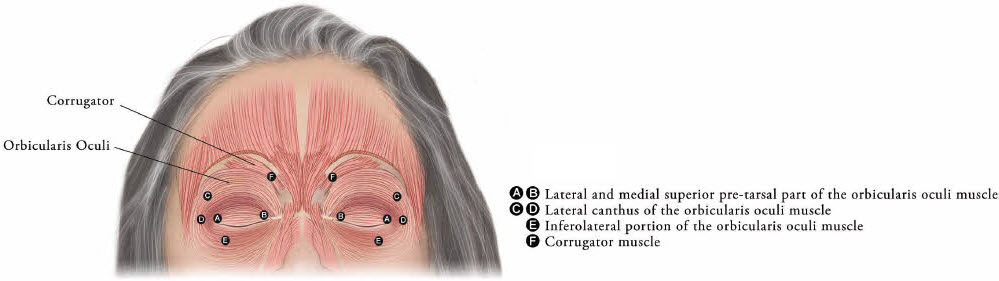
A suitable sterile needle (e.g., 30-gauge (0.40 mm diameter), 12.5 mm length should be used in the administration in the treatment of blepharospasm.
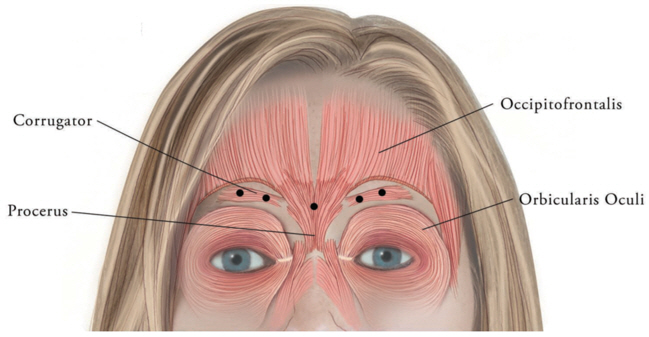
Glabellar Lines
A suitable sterile needle 30-33 gauge (0.3-0.2 mm diameter), 13 mm length should be used in the administration in the treatment of glabellar lines.
Upper Limb Spasticity
Table 3 lists the most common (≥2%) adverse reactions following injection of XEOMIN in two placebo-controlled, Phase 3 studies in patients with upper limb spasticity. Study 1 and Study 2 were both double-blind, placebo-controlled studies, with an open-label extension [see Clinical Studies (14.1)]. In the controlled portion of these studies, 283 patients received ≥120 Units to 400 Units, of which 217 patients received at least 400 units of XEOMIN, and 182 patients received placebo. XEOMIN-treated patients were 20-79 years old (mean 56 years), and were predominantly male (58%) and white (84%).
Table 3: Most Common Adverse Reactions (≥2%) and Greater for XEOMIN than Placebo: Double-Blind Phase of Placebo-Controlled Upper Limb Spasticity Study 1 and Study 2| Adverse Reaction | XEOMIN 400 Units
(N = 217)
(%) | Placebo
(N = 182)
(%) |
|---|
| Seizure | 3 | 0 |
| Nasopharyngitis | 2 | 0 |
| Dry mouth | 2 | 1 |
| Upper respiratory tract infection | 2 | 1 |
Cervical Dystonia
The data described below reflect exposure to a single intramuscular dose of XEOMIN in a placebo-controlled, Phase 3 trial in patients with cervical dystonia [see Clinical Studies (14.2)]. In this study, 159 patients received XEOMIN (78 were randomized to receive a total dose of 120 Units, and 81 were randomized to receive a total dose of 240 Units). XEOMIN-treated patients were 18 to 79 years old (mean 53 years), and were predominantly female (66%) and Caucasian (91%). At study baseline, approximately 25% had mild, 50% had moderate, and 25% had severe cervical dystonia. Approximately 61% of XEOMIN-treated patients had previously received another botulinum toxin type A product. Common adverse events (≥5% in any XEOMIN treatment group) observed in patients who received XEOMIN (120 Units or 240 Units) included dysphagia, neck pain, muscle weakness, injection site pain, and musculoskeletal pain.
Table 4: Most Common Adverse Reactions (≥5%) and Greater than Placebo: Double-Blind Phase of Cervical Dystonia Clinical Trial
| Adverse Reaction | XEOMIN 120 Units
(N=77)
% | XEOMIN 240 Units
(N=82)
% | Placebo
(N=74)
% |
|---|
| Any Adverse Reactions | 57 | 55 | 42 |
| Musculoskeletal and connective tissue disorders | 23 | 32 | 11 |
| Neck pain | 7 | 15 | 4 |
| Muscular weakness | 7 | 11 | 1 |
| Musculoskeletal pain | 7 | 4 | 1 |
| Gastrointestinal disorders | 18 | 24 | 4 |
| Dysphagia | 13 | 18 | 3 |
| Nervous system disorders | 16 | 17 | 7 |
| General disorders and administration site conditions | 16 | 11 | 11 |
| Injection site pain | 9 | 4 | 7 |
| Infections and infestations | 14 | 13 | 11 |
| Respiratory, thoracic and mediastinal disorders | 13 | 10 | 3 |
Blepharospasm
In the placebo-controlled Phase 3 trial in patients with blepharospasm previously treated with onabotulinumtoxinA (Botox) [see Clinical Studies (14.3)], 74 patients received XEOMIN at a mean dose of approximately 33 Units per eye (minimum 10 Units, maximum 50 Units). XEOMIN-treated patients were 22 to 79 years of age (mean 62 years), predominantly female (65%), Caucasian (79%), and had a mean time since diagnosis of approximately 5 years.
The adverse events occurring in ≥5% of XEOMIN-treated patients and greater than placebo in the Phase 3 study were eyelid ptosis, dry eye, dry mouth, diarrhea, headache, visual impairment, dyspnea, nasopharyngitis, and respiratory tract infection. No serious adverse events occurred in patients who received XEOMIN; one placebo-treated patient experienced a serious adverse event (dyspnea).
Table 5: Most Common Adverse Reactions (≥5%) and Greater than Placebo: Double-Blind Phase of Blepharospasm Clinical Trial| Adverse Reaction | XEOMIN
(N=74)
% | Placebo
(N=34)
% |
|---|
| Subjects with Adverse Reactions | 70 | 62 |
| Eye disorders | 38 | 21 |
| Eyelid ptosis | 19 | 9 |
| Dry eye | 16 | 12 |
| Visual impairment including vision blurred | 12 | 6 |
| Gastrointestinal disorders | 30 | 15 |
| Dry mouth | 16 | 3 |
| Diarrhoea | 8 | - |
| Infections and infestations | 20 | 15 |
| Nasopharyngitis | 5 | 3 |
| Respiratory tract infection | 5 | 3 |
| Nervous system disorders | 14 | 9 |
| Headache | 7 | 3 |
| General disorders and administration site conditions | 11 | 9 |
| Respiratory, thoracic and mediastinal disorders | 11 | 3 |
| Dyspnoea | 5 | 3 |
Glabellar Lines
In three placebo-controlled trials in 803 subjects with glabellar lines, 535 subjects received a single dose of 20 Units XEOMIN and 268 subjects received placebo. XEOMIN treated subjects were 24 to 74 years old, and were predominantly female (88%). The most frequent adverse reactions in XEOMIN treated subjects were: headache 29 (5.4%), facial paresis 4 (0.7%), injection site hematoma 3 (0.6%) and eyelid edema 2 (0.4%). Four serious adverse events occurred in two placebo-treated subjects. Six XEOMIN treated subjects experienced six serious adverse events. All serious adverse events were assessed as unrelated to study drug.
The adverse reactions below reflect exposure to XEOMIN with glabellar lines in placebo-controlled studies. Adverse reactions are adverse events in which there is some basis to believe there is a causal relationship between the drug and the occurrence of the adverse event.
Because clinical trials are conducted under widely varying conditions, adverse reaction rates observed in the clinical trials of a drug cannot be directly compared to rates in the clinical trials of another drug and may not reflect the rates observed in practice.
Table 6: Adverse Reactions in Placebo-Controlled Glabellar Lines Trials| Adverse reactions | XEOMIN
(N=535) (%) | Placebo
(N=268) (%) |
|---|
| Nervous system disorders | 33 (6.1) | 6 (2.2) |
| Headache1 | 29 (5.4) | 6 (2.2) |
| Facial paresis (brow ptosis) | 4 (0.7) | 0 |
| General disorders and administration site conditions | 5 (0.9) | 2 (0.7) |
| Injection site hematoma | 3 (0.6) | 0 |
| Injection site pain | 1 (0.2) | 0 |
| Facial pain | 1 (0.2) | 0 |
| Injection site swelling | 0 | 1 (0.4) |
| Sensation of pressure | 0 | 1 (0.4) |
| Eye disorders | 5 (0.9) | 0 |
| Eyelid edema | 2 (0.4) | 0 |
| Blepharospasm | 1 (0.2) | 0 |
| Eye disorder | 1(0.2) | 0 |
| Eyelid ptosis | 1(0.2) | 0 |
In open label, multiple dose trials, adverse reactions were reported for 105 of the 800 subjects (13.1%). Headache was the most common adverse reaction, reported for 57 subjects (7.1%), followed by injection site hematoma in 8 subjects (1.0%). Adverse reactions reported in less than 1% of subjects were: facial paresis (brow ptosis), muscle disorder (elevation of eyebrow), injection site pain, and eyelid edema.
Upper Limb Spasticity
Of the total number of 283 patients treated with XEOMIN in placebo controlled studies in upper limb spasticity, 70 patients were 65 years of age and over, and 7 patients were 75 years of age and over. No overall differences in safety or effectiveness were observed between older and younger patients. Other clinical studies have not identified differences in responses between older and younger patients, but increased sensitivity in older patients cannot be ruled out.
Cervical Dystonia
In the Phase 3 study in cervical dystonia [see Clinical Studies (14.2)], 29 patients were older than 65 years of age, including 19 patients who received XEOMIN and 10 patients who received placebo. Of these, ten (53%) XEOMIN-treated patients and four (40%) placebo-treated patients experienced an adverse event. For patients over 65 years of age treated with XEOMIN, the most common adverse events were dysphagia (4 patients, 21%) and asthenia (2 patients, 11%). One XEOMIN-treated patient (5%) experienced severe dizziness.
Blepharospasm
In the Phase 3 study in blepharospasm [see Clinical Studies (14.3)], 41 patients were older than 65 years of age, including 29 of 75 patients (39%) who received XEOMIN and 12 of 34 patients (35%) who received placebo. Of these patients, 22 of 29 (76%) XEOMIN-treated patients, compared with 7 of 12 (58%) placebo-treated patients, experienced an adverse event. One XEOMIN-treated patient experienced severe dysphagia.
Glabellar Lines
There are limited clinical data with XEOMIN in subjects over 65 years of age and over in clinical studies with glabellar lines. Of the total number of subjects in the placebo-controlled clinical studies GL1 and GL2, 21 (4%) subjects were 65 and over. Efficacy was observed in 20% (3/15) of XEOMIN subjects 65 years and over. For the entire safety database of geriatric subjects, there was no increase in the incidence of adverse events related to treatment with XEOMIN.
Carcinogenesis
Studies to evaluate the carcinogenic potential of XEOMIN have not been conducted.
Mutagenesis
Genotoxicity studies have not been conducted for XEOMIN.
Impairment of Fertility
In a fertility and early embryonic development study in rabbits, males and females were dosed with XEOMIN (1.25 Units/kg, 2.5 Units/kg, or 3.5 Units/kg) intramuscularly every two weeks for 5 and 3 doses, respectively, beginning 2 weeks prior to mating. No effects on mating or fertility were observed. The highest dose tested is approximately twice the maximum recommended human dose for cervical dystonia (120 Units) on a body weight basis.
Upper Limb Spasticity and Cervical Dystonia
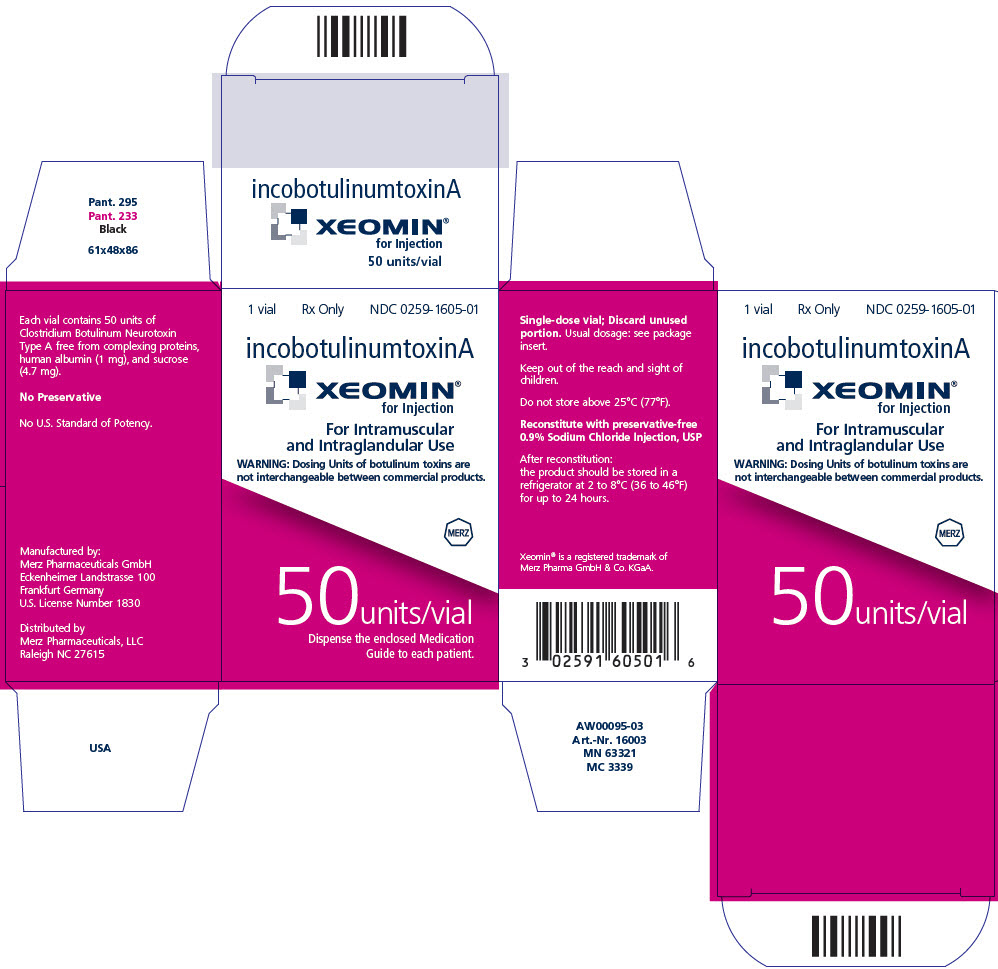
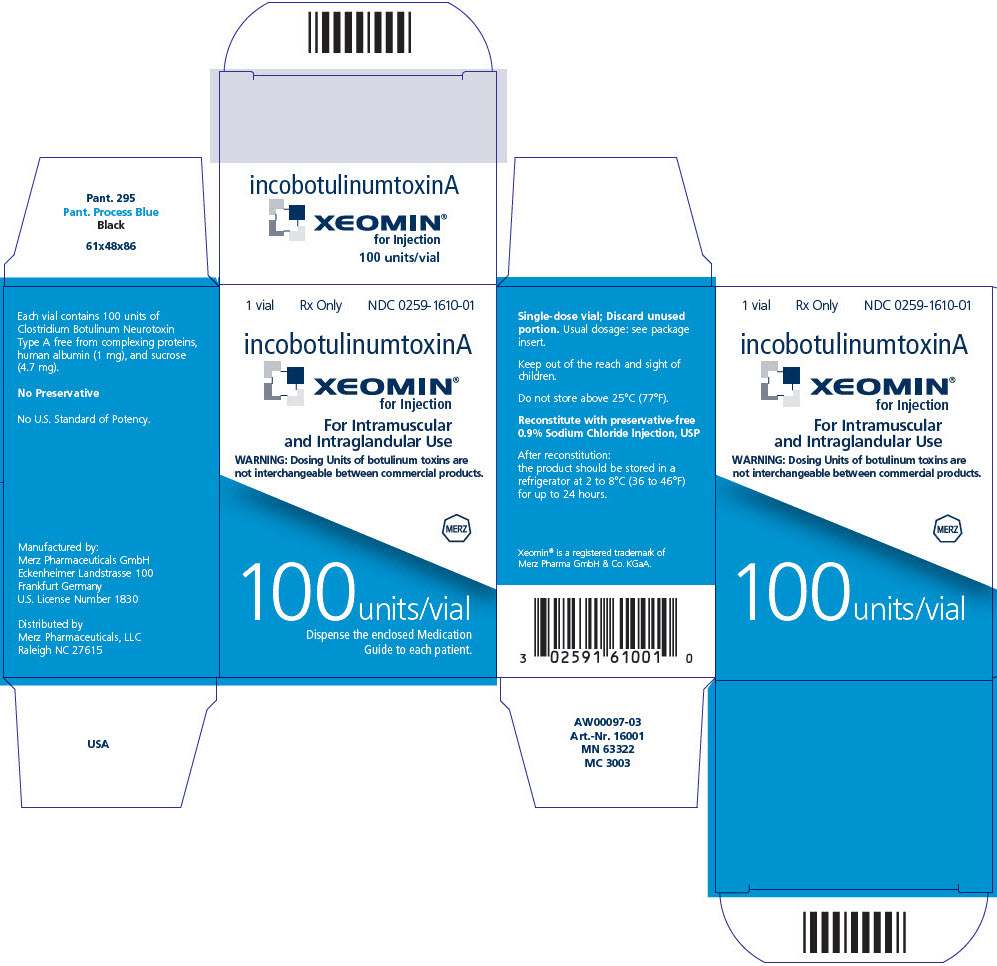
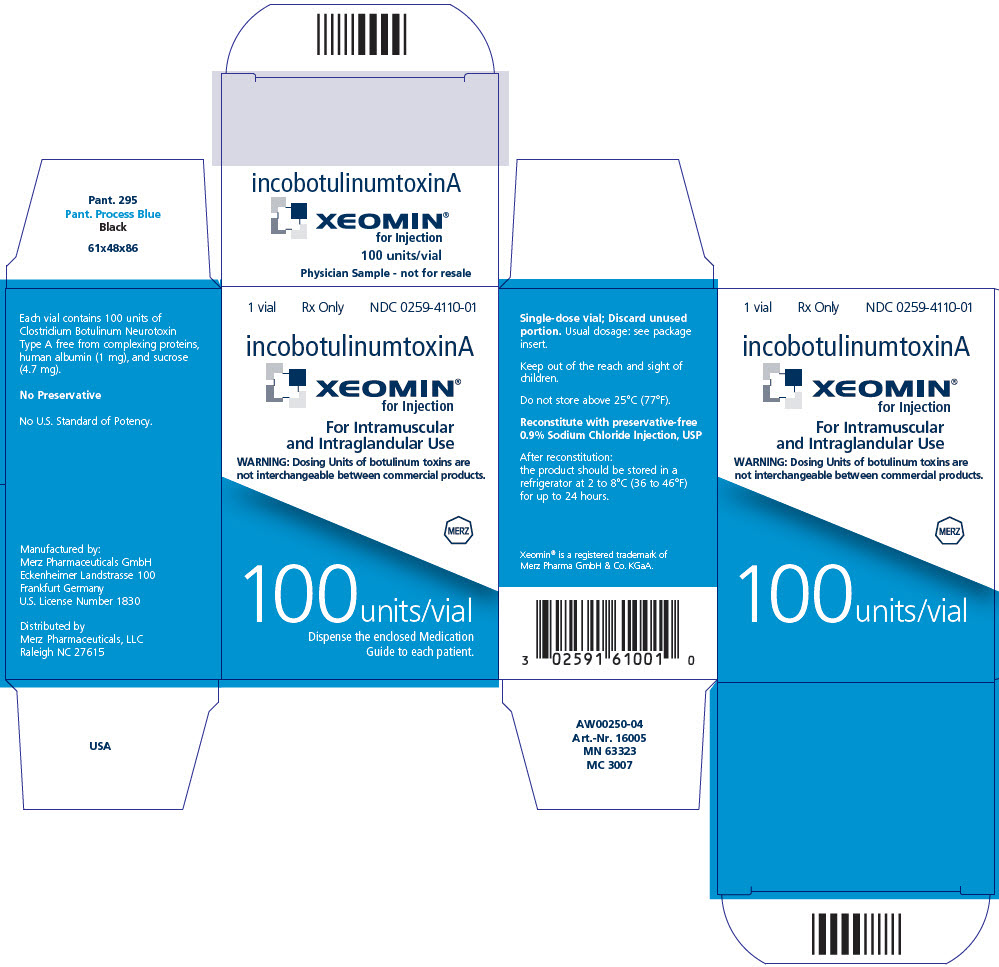
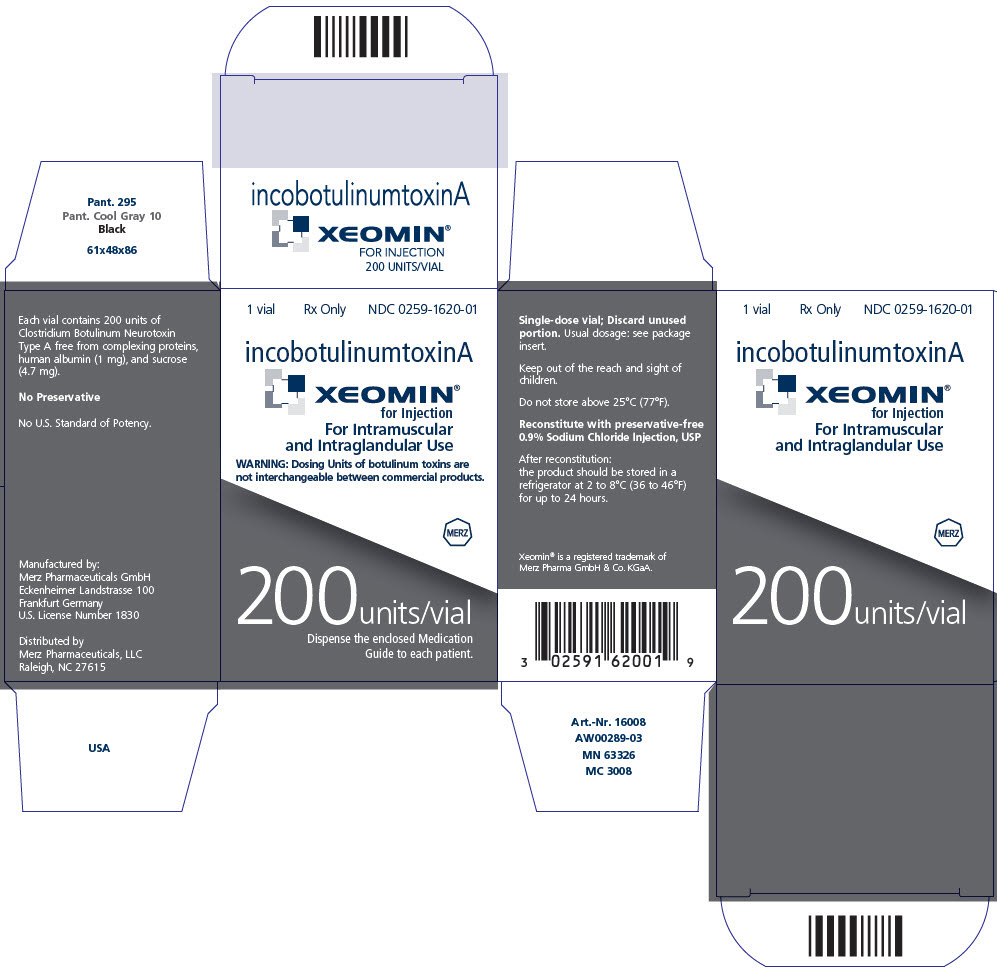
| Package | XEOMIN 50 Units | XEOMIN 100 Units | XEOMIN 200 Units |
| single vial pack | NDC 0259-1605-01 | NDC 0259-1610-01 | NDC 0259-1620-01 |
Blepharospasm
| Package | XEOMIN 50 Units | XEOMIN 100 Units | |
| single vial pack | NDC 0259-1605-01 | NDC 0259-1610-01 | |
Glabellar Lines
| Package | XEOMIN 50 Units | XEOMIN 100 Units | |
| single vial pack | NDC 46783-161-01 | NDC 46783-160-01 | |
Manufactured by:
Merz Pharmaceuticals GmbH
Eckenheimer Landstrasse 100
Frankfurt Germany
U.S. License Number 1830
Distributed by:
Merz Pharmaceuticals, LLC
6501 Six Forks Road
Raleigh, NC 27615
and
Merz North America, Inc.
4133 Courtney Street, Suite 10
Franksville, WI 53126
© 2015 Merz Pharmaceuticals, LLC
XEOMIN® is a registered trademark of Merz Pharma GmbH & Co KGaA
Patent pending.
Botox® is a registered trademark of Allergan, Inc.