Parenteral drug products should be inspected visually for particulate matter and discoloration prior to administration whenever solution and container permit.
When diluting bulk extracts, use of Sterile Diluent for Allergenic Extracts or Sterile Diluent for Allergenic Extracts Normal Saline with HSA are recommended. Dilutions should be made with sterile disposable syringes using aseptic technique. Commonly 10 fold dilutions are used to achieve a desired concentration for intradermal testing or initiation and continuation of immunotherapy. For example transferring 0.5 mL of a 10,000 BAU/mL extract into 4.5 mL of diluent will yield 5 mL of extract at 1,000 BAU/mL. Prepare as many additional serial dilutions as necessary to reach the appropriate concentration.
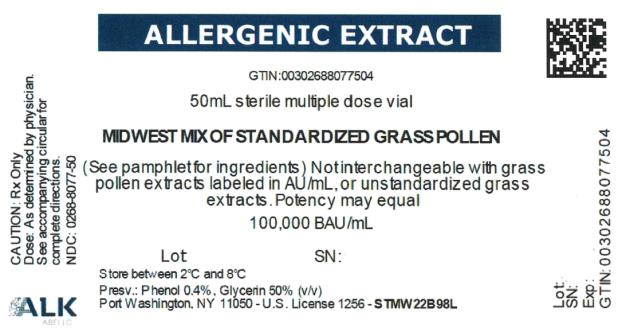
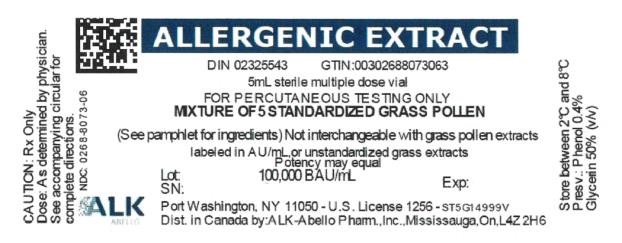
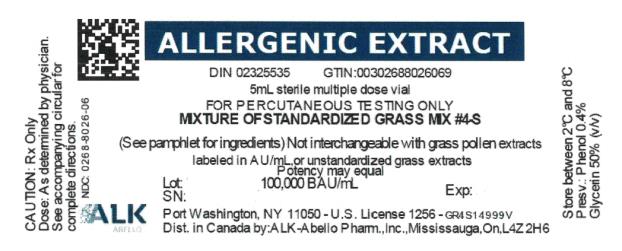
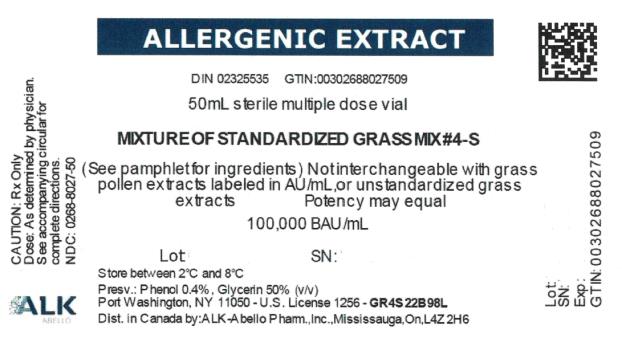
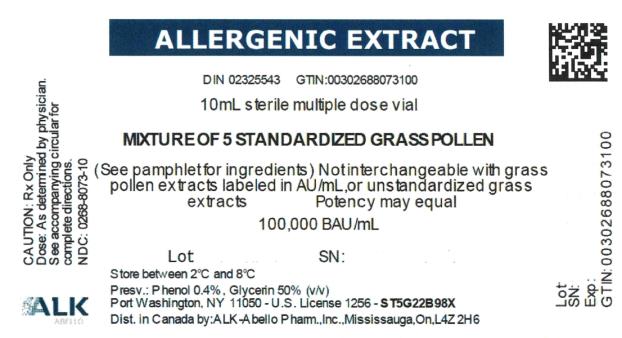
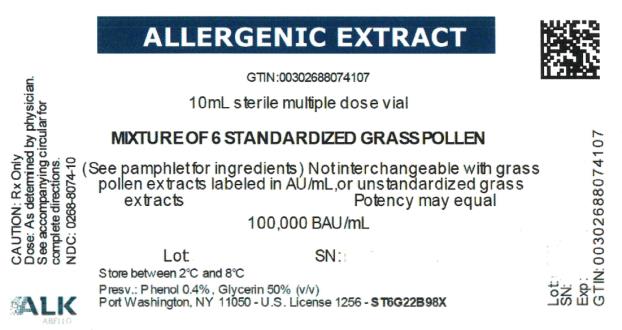
Stock mixtures of grass pollen extracts are compounded from individual grass pollen extracts. The total potency per milliliter (mL) of these mixtures is described on the container label, where space permits. The contribution each individual component is expressed in the supplemental labeling accompanying the vial.
Diagnosis - In diagnosing the sensitive individual, the symptom history must be associated with exposure to the allergen. Skin testing is used in conjunction with a definitive history for diagnosing individual sensitivities.
An excellent method of recording results is to cover the skin reaction with transparent tape, outline the erythema first then the wheal with an indelible pen, then remove the tape and transfer it to the patient's permanent record. For preferred results, it is recommended that the actual measurement of the extent of both responses be recorded. This can be accomplished by measuring the longest erythema diameter, then selecting the mid-point of that line and measuring at a 90o angle to that line to determine the orthogonal diameter. The sum of these two measurements is the sum of erythema (ΣE); the sum of wheal diameters is determined in a similar manner.
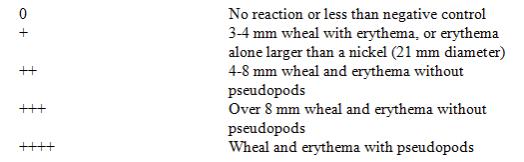
Patient's response is graded on the basis of the size of erythema and/or wheal.
Percutaneous (prick/scratch/puncture) test:
Prick, scratch, or puncture skin tests should be performed initially using a glycerinated extract at 10,000 BAU/mL.
What follows are general guidelines for percutaneous testing14. Different devices and/or techniques influence the size of the reaction, therefore it is important to refer to the device manufacturer's or distributor's instructions when grading reactions. As a negative control the diluent should be tested and included in the interpretation in the skin test reactions. Use of a positive control such as histamine base at 1 mg/mL should be used to assess skin test reactivity.

What Follows Are General Guidelines For Percutaneous Testing14. Different Devices And/or Techniques Influence The Size Of The Reaction, Therefore It Is Impor¬tant To Refer To The Device Manufacturer's Or Distributor's Instructions When Grading Reac¬tions. As A Negative Control The Diluent Should Be Tested And Included In The Interpretation In The Skin Test Reactions. Use Of A Positive Control Such As Histamine Base At 1 mg/ml Should Be Used To Assess Skin Test Reactivity. (Standardized Grass Mixtures 02)
Intradermal test:
Intradermal testing should start with a dilute solution, usually in the range of 0.1 BAU/mL or less.
Glycerinated extracts diluted for intradermal testing may be diluted at least 25-fold to less than 2% glycerin (by volume) as glycerin above this level can cause false positive intradermal skin tests. Use a negative control skin test with glycerin content equal to the glycerin content of the allergen dose used for intradermal testing. Use of a positive control such as histamine base at 0.1 mg/mL or 0.01 mg/mL should be used to test reactivity.
On the forearm or upper outer aspect of the arm, using a 26 - 27 gauge, short bevel needle, inject intradermally 0.05 mL of the intradermal test solution. Skin whealing responses should be observed 10 - 20 minutes after administering the test.
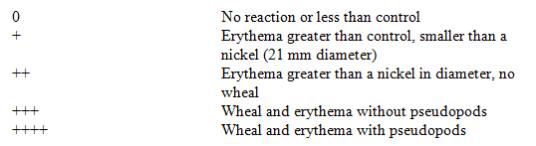
A negative skin test is one where the sum of erythema was 0 or equal to the sum of the wheal. As a negative control, the diluent should be tested and included in the interpretation of the skin reactions. What follows are general guidelines intradermal testing 14.

A Negative Skin Test Is One Where The Sum Of Erythema Was 0 Or Equal To The Sum Of The Wheal. As A Negative Control, The Diluent Should Be Tested And Included In The Interpretation Of The Skin Reactions. What Follows Are General Guidelines Intradermal Testing 14. (Standardized Grass Mixtures 03)
Immunotherapy - Starting dose for immunotherapy is related directly to a patient's sensitivity as determined by carefully executed skin testing. Degree of sensitivity can be established by determination of D50 (the intradermal dose, base three, that produces a ΣE = 50 mm).1
A general rule is to begin at 1/10 of the dose that produces sum of erythema of 50 mm (approximately a 2+ positive skin test reaction). For example, if a patient exhibits a 2+ intradermal reaction to 1 BAU/mL, the first dose should be no higher than 0.05 mL of 0.1 BAU/mL. Dosage may be increased by 0.05 mL each time until 0.5 mL is reached, at which time the next 10-fold more concentrated dilution can be used, beginning with 0.05 mL, if no untoward reaction is observed.
If a tolerated dose of allergenic extract has been established, the initial dose from the new extract should be reduced to 25% of the previously well tolerated dose (see also Precautions).
Interval between doses in the early stages of immunotherapy is no more than once to twice a week, and may gradually be increased to once every two weeks. Generally, maintenance injections may be given as infrequently as once every two weeks to once a month.
Injections are given subcutaneously preferably in the arm. It is advantageous to give injections in alternate arms and routinely in the same area. In some patients, a local tolerance to the allergen may develop thus preventing a possible severe local reaction.
After inserting the needle, but before injecting the dose, pull plunger of the syringe slightly. If blood returns in the syringe, discard the syringe and contents and repeat injection at another site.
Bulk concentrated extracts must be diluted for initial therapy and intradermal skin testing. For recommended diluent, refer to DOSAGE AND ADMINISTRATION section.
Use standard aseptic precautions when making dilutions. The first dose of the new extract should be reduced at least 75% of the amount of the dosage from the previous extract.
Stability studies indicate that undiluted products will retain its potency under recommended storage conditions. Stability studies for undiluted forms of this product are not complete. It is recommended that minimal amounts of the concentrate be diluted so that the diluted product is used up within a relatively short period of time; i.e., preferably not more than four weeks.