Diagnostic procedures
which involve the use of radiopaque contrast agents should be carried
out under the direction of personnel with the prerequisite training
and with a thorough knowledge of the particular procedure to be performed.
Appropriate facilities should be available for coping with any complication
of administration, as well as for treatment of reaction to the contrast
medium (see ADVERSE REACTIONS, and PRECAUTIONS, Information for the Patient).
Rectal administration
of undiluted Gastrografin (Diatrizoate Meglumine and Diatrizoate Sodium
Solution) in any patient, particularly with large doses and/or in
those with overdistention, has been reported to be associated with
mucosal irritation.
Cases of hyperthyroidism
have been reported with the use of oral contrast media. Some of these
patients reportedly had multinodular goiters which may have been responsible
for the increased hormone synthesis in response to excess iodine.
Administration of an intravascular iodinated radiopaque diagnostic
agent to a hyperthyroid patient precipitated thyroid storm; a similar
situation could follow administration of oral preparations of iodides.
Therefore, caution should be exercised when administering enteral
gastrointestinal radiopaque agents to hyperthyroid and euthyroid goiterous
patients.
Consideration should
be given to the potential for precipitation of water-soluble contrast
agents under conditions that may promote hyperacidity (i.e., fasting,
emotional upset, or stress). Harmful effects directly attributable
to precipitate formation have not been reported. However, the possibility
of interpreting the precipitate radiologically as an anatomical abnormality
(i.e., ulceration of the stomach or small intestine) or injury, should
be kept in mind.
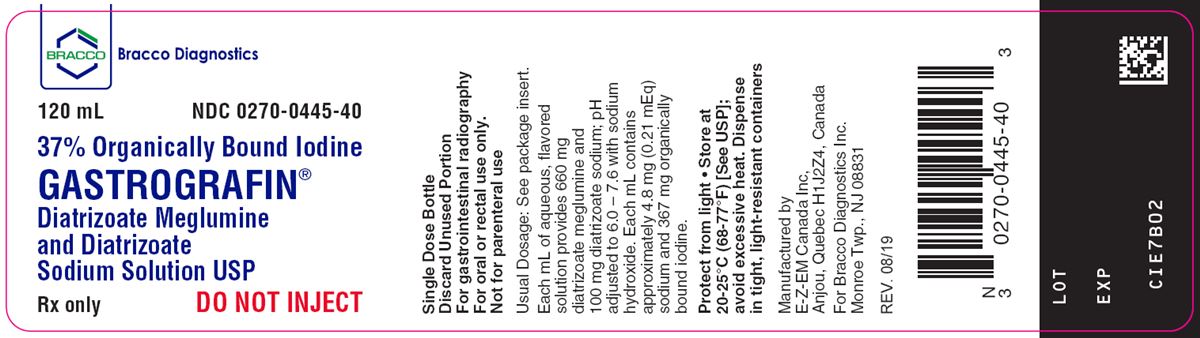
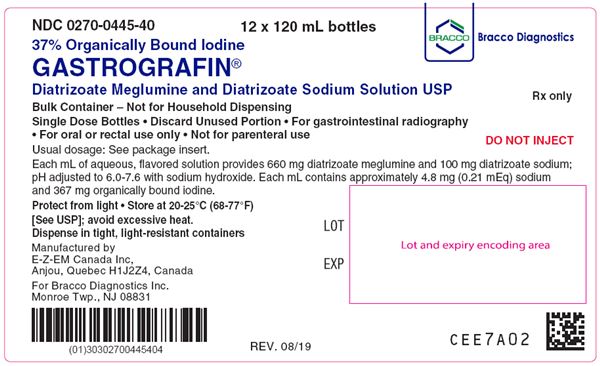
This medium is not to be used for
the preparation of solutions for parenteral administration. Oral or
rectal administration only. Discard any unused portion after procedure.
The routine preparatory measures
employed for barium studies are also appropriate for this agent.
For pediatric and severely cachectic patients
the maintenance of an intravenous fluid line may be advisable.