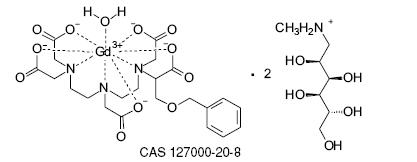
Because clinical
trials are conducted under widely varying conditions, adverse reaction
rates observed in the clinical trials of a drug cannot be directly
compared to rates in the clinical trials of another drug and may not
reflect the rates observed in practice.
Adults
In all clinical trials with MultiHance, a total of 4967
adult subjects (137 healthy volunteers and 4830 patients) received
MultiHance at doses ranging from 0.005 to 0.4 mmol/kg. There were
2838 (57%) men and 2129 (43%) women with a mean age of 56.5 years
(range 18 to 93 years). A total of 4403 (89%) subjects were Caucasian,
134 (3%) Black, 275 (6%) Asian, 40 (1%) Hispanic, 70 (1%) in other
racial groups, and for 45 (1%) subjects, race was not reported.
The most commonly reported adverse reactions
in adult subjects who received MultiHance were nausea (1.3%) and headache
(1.2%). Most adverse reactions were mild to moderate in intensity.
One subject experienced a serious anaphylactoid reaction with laryngeal
spasm and dyspnea [see Warnings and Precautions (5.2)]. Serious adverse reactions
consisting of convulsions, pulmonary edema, acute necrotizing pancreatitis,
and anaphylactoid reactions were reported in 0.1% of subjects in clinical
trials.
Adverse reactions that
occurred in at least 0.5% of 4967 adult subjects who received MultiHance
are listed below (Table 2), in decreasing order of occurrence within
each system.
TABLE 2: ADVERSE REACTIONS REPORTED IN ≥ 0.5% OF ADULT SUBJECTS
WHO RECEIVED MULTIHANCE IN CLINICAL TRIALS| Number of subjects
dosed | 4967 |
| Number of subjects
with any adverse reaction | 517 (10.4%) |
| Gastrointestinal Disorders | |
| Nausea | 67 (1.3%) |
| General Disorders and
Administration Site Disorders | |
| Feeling Hot | 49 (1.0%) |
| Injection Site Reaction | 58 (1.2%) |
| Nervous System Disorders | |
| Headache | 60 (1.2%) |
| Dysgeusia | 33 (0.7%) |
| Paresthesia | 24 (0.5%) |
| Dizziness | 24 (0.5%) |
The following adverse reactions occurred
in less than 0.5% of the 4967 adult subjects who received MultiHance.
Serious adverse reactions described above are not repeated below.
Blood and Lymphatic System Disorders: Basophilia;
Cardiac Disorders: Atrioventricular block first degree;
Eye Disorders: Eye pruritus, eye swelling, ocular
hyperemia, visual disturbance;
Gastrointestinal
Disorders: Abdominal pain or discomfort diarrhea,
dry mouth, lip swelling, paraesthesia oral, tongue edema, vomiting;
General Disorders and Administration Site Conditions: Chest pain or discomfort, chills, malaise;
Immune System Disorders: Hypersensitivity;
Investigations: Nonspecific changes
in laboratory tests (including hematology, blood chemistry, liver
enzymes and urinalysis), blood pressure and electrocardiogram parameters
(including PR, QRS and QT intervals and ST-T segment changes).
Musculoskeletal and Connective Tissue Disorders: Myalgia;
Nervous System Disorders: Parosmia, tremor;
Respiratory,
Thoracic and Mediastinal Disorders: Dyspnea, laryngospasm,
nasal congestion, sneezing, wheezing;
Skin
and Subcutaneous Tissue Disorders: Hyperhidrosis,
pruritus, rash, swelling face, urticaria.
Pediatric Patients
In clinical trials of MultiHance in MRI of the CNS, 307 pediatric
subjects received MultiHance at a dose of 0.1 mmol/kg. A total of
160 (52%) subjects were male and the overall mean age was 6.0 years
(range, 2 days to 17 years). A total of 211 (69%) subjects were Caucasian,
24 (8%) Black, 15 (5%) Asian, 39 (13%), Hispanic, 2 (<1%) in other
racial groups, and for 16 (5%), race was not reported.
Adverse reactions were reported
for 14 (4.6%) of the subjects. The frequency and the nature of the
adverse reactions were similar to those seen in the adult patients.
The most commonly reported adverse reactions were vomiting (1.0%),
pyrexia (0.7%), and hyperhidrosis (0.7%). No subject died during study
participation.