Phillips Stool Softener Capsule, Liquid Filled
Product Images NDC 0280-1012

View Photos of Packaging, Regulatory Labels, and Product Appearance

Product Visual Gallery

This gallery contains 1 technical images submitted to the FDA as part of the official labeling for Phillips Stool Softener (NDC 0280-1012). Unlike standard consumer photos, these assets often include clinical data figures, molecular chemical structures, and official manufacturer packaging layouts.

As provided by Bayer Healthcare Llc., these visuals offer a comprehensive scientific overview of the product's physical and chemical identity, aiding pharmacists and researchers in product verification and study.

Product Images & Figures Index

FDA Label Image

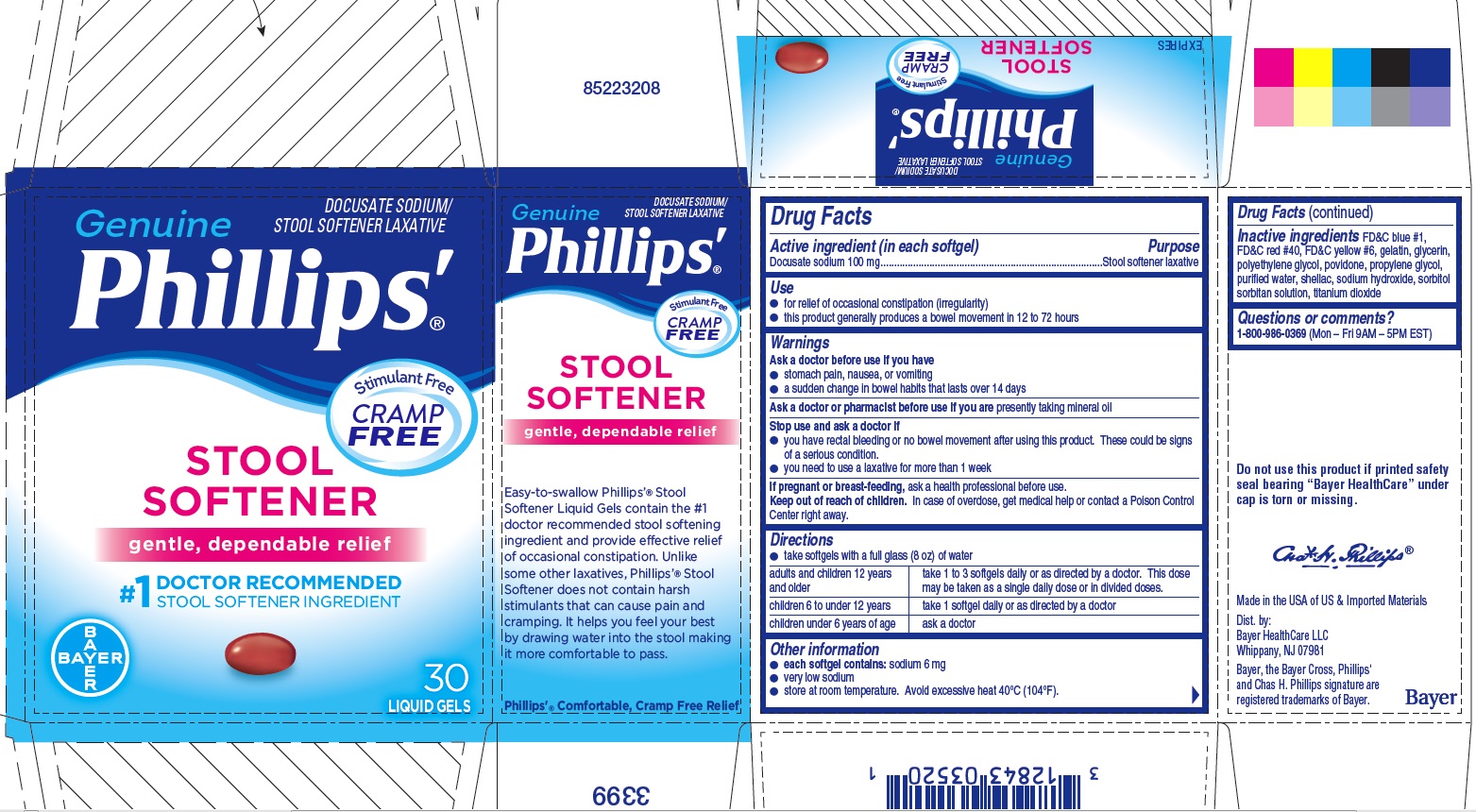
30ct (30ct Pdp)

30ct (30ct Pdp)
Phillips Stool Softener is a doctor-recommended laxative that is gentle on the stomach and does not contain harsh stimulants. The soft gels contain the #1 doctor-recommended stool softening ingredient, which draws water into the stool, making it more comfortable to pass. It provides dependable relief of occasional constipation and produces a bowel movement within 12 to 72 hours. The dose recommended for adults is 1 to 3 soft gels per day or as directed by a doctor. For children aged 6 to 12, it is 1 soft gel per day, and for those under 6, consult a doctor. The active ingredient in each soft gel is Docusate Sodium 100mg. It is advisable to consult a doctor or pharmacist before using the product, especially if you have stomach pain, nausea, or vomiting, or experience a sudden change in bowel movements that lasts over 14 days. Similarly, it is best to discontinue use and speak to a doctor if you have rectal bleeding or no bowel movement after using the product. It is not advisable to use the product if printed safety cap is missing or broken.*

* About these descriptions: Image descriptions on this page are generated by automated AI analysis of the product label images from the manufacturer's FDA label submission (SPL). They are provided for reference only and may contain errors or omissions. Always rely on the printed label itself and the official FDA labeling, and consult a pharmacist or healthcare professional with any questions about this product.