Description
Lidocaine Hydrochloride and 5% Dextrose Injection, USP is a sterile, nonpyrogenic solution prepared from lidocaine hydrochloride and dextrose in water for injection. It contains no antimicrobial agents. Lidocaine hydrochloride is designated chemically as 2-(Diethylamino) - 2', 6' - acetoxylidide monohydrochloride. The solution serves as a cardiac antiarrhythmic agent intended for intravenous use. Composition, osmolarity, pH and caloric content are shown in Table 1. The pH is adjusted with sodium hydroxide.
Composition | Normal physiologic osmolarity range is approximately 280 to 310 mOsmol/L. Administration of substantially hypertonic solutions (≥ 600 mOsmol/L) may cause vein damage. Osmolarity (mOsmol/L)(calc) | pH | Caloric Content | ||
**Lidocaine Hydrochloride, USP (mg/mL) | ***Dextrose Hydrous, USP (g/L) | ||||
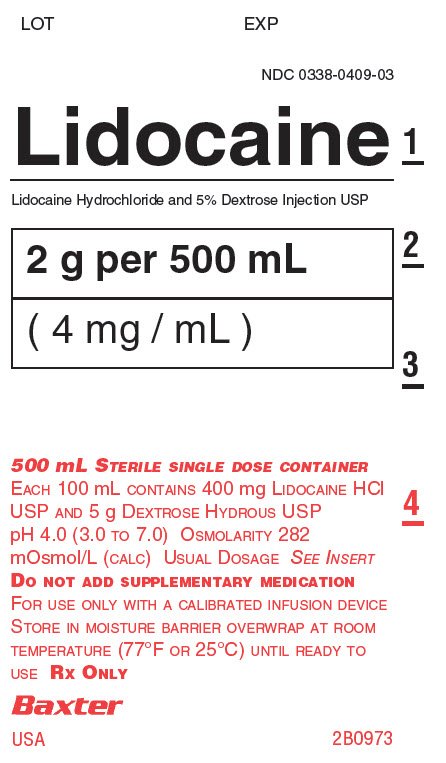
0.4% Lidocaine Hydrochloride and 5% Dextrose Injection, USP | 4 | 50 | 282 | 4.0 | 170 |
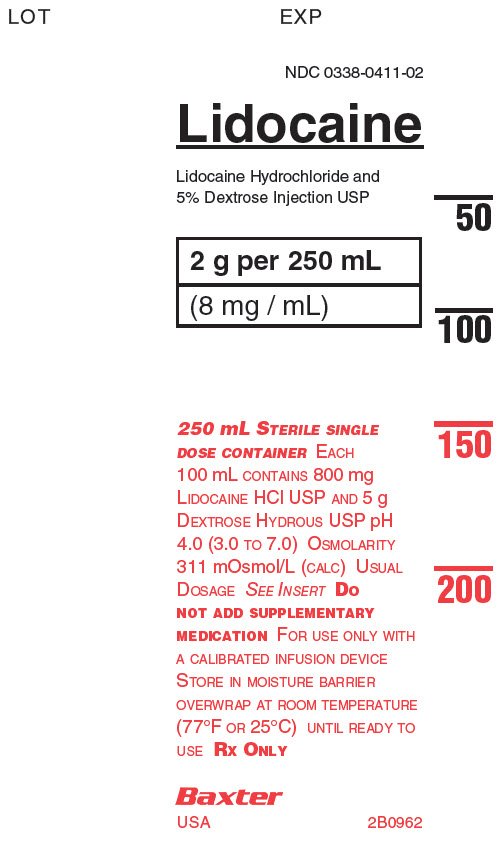
0.8% Lidocaine Hydrochloride and 5% Dextrose Injection, USP | 8 | 50 | 311 | 4.0 | 170 |
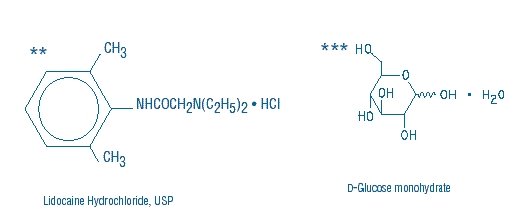
Lidocaine Hydrochloride, Usp And D-glucose Monohydrate Structural Formula Images (Image 01)
This VIAFLEX Plus plastic container is fabricated from a specially formulated polyvinyl chloride (PL 146 Plastic). VIAFLEX Plus on the container indicates the presence of a drug additive in a drug vehicle. The VIAFLEX Plus plastic container system utilizes the same container as the VIAFLEX plastic container system. The amount of water that can permeate from inside the container into the overwrap is insufficient to affect the solution significantly. Solutions in contact with the plastic container can leach out certain of its chemical components in very small amounts within the expiration period, e.g., di-2-ethylhexyl phthalate (DEHP), up to 5 parts per million. However, the safety of the plastic has been confirmed in tests in animals according to USP biological standards for plastic containers as well as by tissue culture toxicity studies.