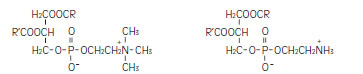
Because of the potential for life threatening events, caution should be taken to ensure that precipitates have not formed in any parenteral nutrition mixture.
Perform all manipulations in a suitable work area, such as a laminar flow hood.
Failure to follow the Mixing Guidelines and Limitations below, including recommended storage temperature, storage time, order of mixing, etc., may result in an unstable admixture.
Intralipid® 20% (A 20% I.V. Fat Emulsion) may be mixed with Amino Acid and Dextrose Injections where compatibility have been demonstrated. Additives known to be incompatible should not be used. Please consult with pharmacist. If, in the informed judgment of the physician, it is deemed advisable to introduce additives, use aseptic technique. Mix thoroughly when additives have been introduced. Do not store solutions containing additives (e.g., Vitamins and Minerals).
When being mixed the following proper mixing sequence must be followed to minimize pH related problems by ensuring that typically acidic Dextrose Injections are not mixed with lipid emulsions alone:
1. Transfer Dextrose Injection to the TPN (Total Parenteral Nutrition) Admixture Container
2. Transfer Amino Acid Injection
3. Transfer Intralipid® 20%
Note: Amino Acid Injection, Dextrose Injection and Intralipid® 20% may be simultaneously transferred to the admixture container using an automatic mixer. Admixing should be accompanied by gentle agitation to avoid localized concentration effects.
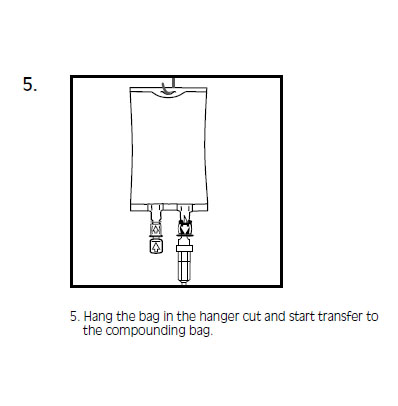
Additives must not be added directly to Intralipid® 20% (A 20% I.V. Fat Emulsion) Pharmacy Bulk Package and in no case should Intralipid® 20% be added to the TPN container first. Bags should be shaken gently after each addition to minimize localized concentration.
If the admixture is not used immediately, the in-use storage time and conditions prior to use are the responsibility of the user and should normally not be longer than 24 hours at 2-8°C.
After removal from storage at 2-8°C, the admixture should be infused within 24 hours.
It is essential that the admixture be prepared using strict aseptic techniques as this nutrient mixture is a good growth medium for microorganisms.
Supplemental electrolytes, trace metals or multivitamins may be required in accordance with the prescription of the attending physician.
The prime destabilizers of emulsions are excessive acidity (low pH) and inappropriate electrolyte content. Careful consideration should be given to addition of divalent cations (Ca++ and Mg++) which have been shown to cause emulsion instability. Amino acid solutions exert a buffering effect protecting the emulsion. The admixture should be inspected carefully for “breaking or oiling out” of the emulsion. “Breaking or oiling out” is described as the separation of the emulsion and can be visibly identified by a yellowish streaking or the accumulation of yellowish droplets in the admixed emulsion. The admixture should also be examined for particulates. The admixture must be discarded if any of the above is observed.