Doxorubicin Hydrochloride, Liposomal Injection, Suspension, Liposomal
Product Images NDC 0338-9581

View Photos of Packaging, Regulatory Labels, and Product Appearance

Product Visual Gallery

This gallery contains 10 technical images submitted to the FDA as part of the official labeling for Doxorubicin Hydrochloride, Liposomal (NDC 0338-9581). Unlike standard consumer photos, these assets often include clinical data figures, molecular chemical structures, and official manufacturer packaging layouts.

As provided by Baxter Healthcare Corporation, these visuals offer a comprehensive scientific overview of the product's physical and chemical identity, aiding pharmacists and researchers in product verification and study.

FDA Label Image

10ml-carton-label (10ml Carton Label)
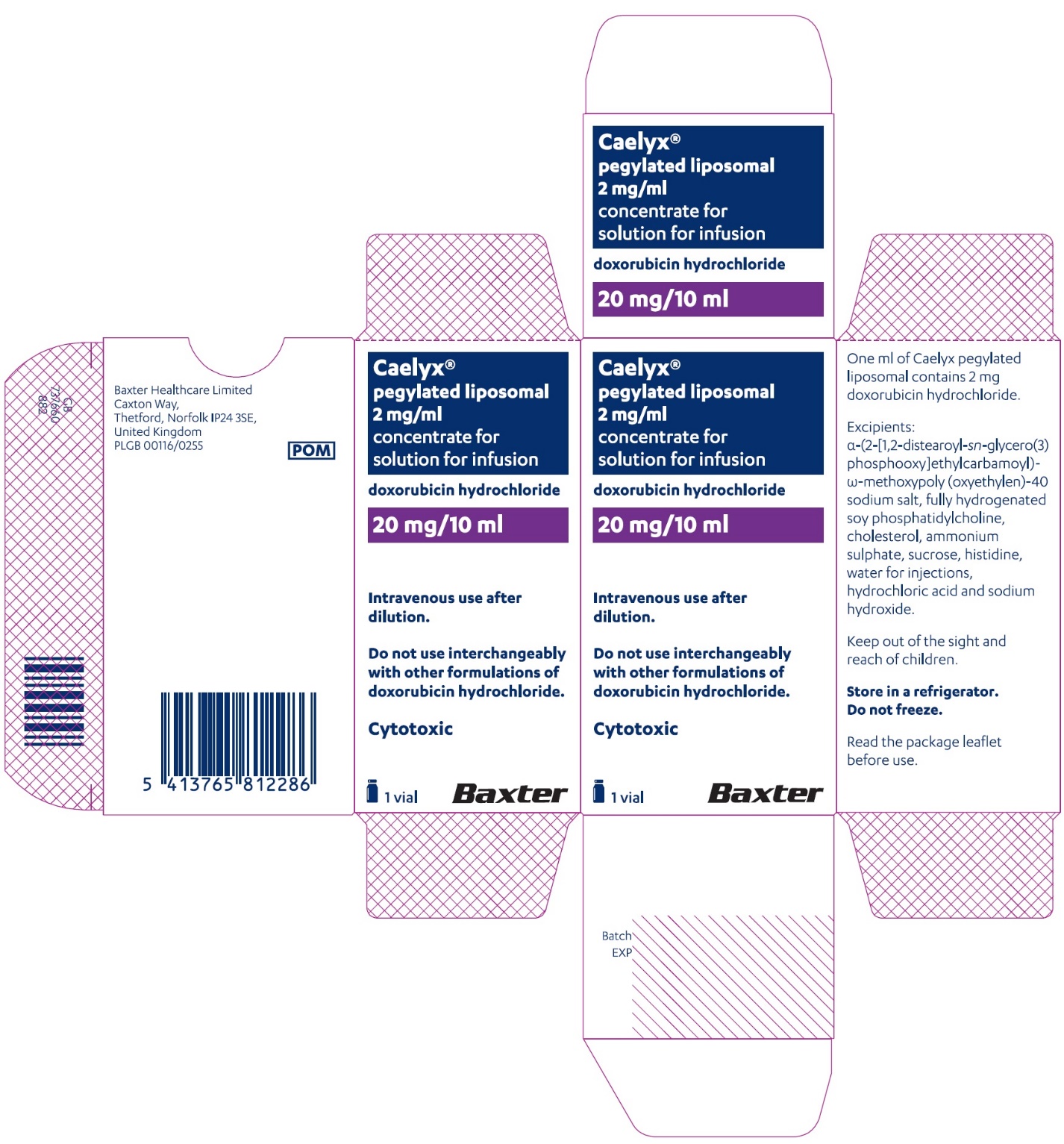
10ml-carton-label (10ml Carton Label)
Packaging label for Caelyx (doxorubicin hydrochloride) pegylated liposomal injection, suspension, liposomal, 2 mg/mL strength. The label shows 20 mg/10 mL concentrate for solution for infusion, with instructions for intravenous use after dilution. The labeler is Baxter Healthcare Corporation, and the package contains 1 vial.*
FDA Label Image

10ml-container-label (10ml Container Label)

10ml-container-label (10ml Container Label)
Label for Caelyx pegylated liposomal doxorubicin hydrochloride sterile concentrate injection, 2 mg/mL. The vial contains 20 mg in 10 mL. The label indicates intravenous use after dilution and includes batch and expiry information areas. The product is by Baxter Healthcare Corporation.*
FDA Label Image

Dhcp-page-01-of-08 (Page 01 Of 08)

Dhcp-page-01-of-08 (Page 01 Of 08)
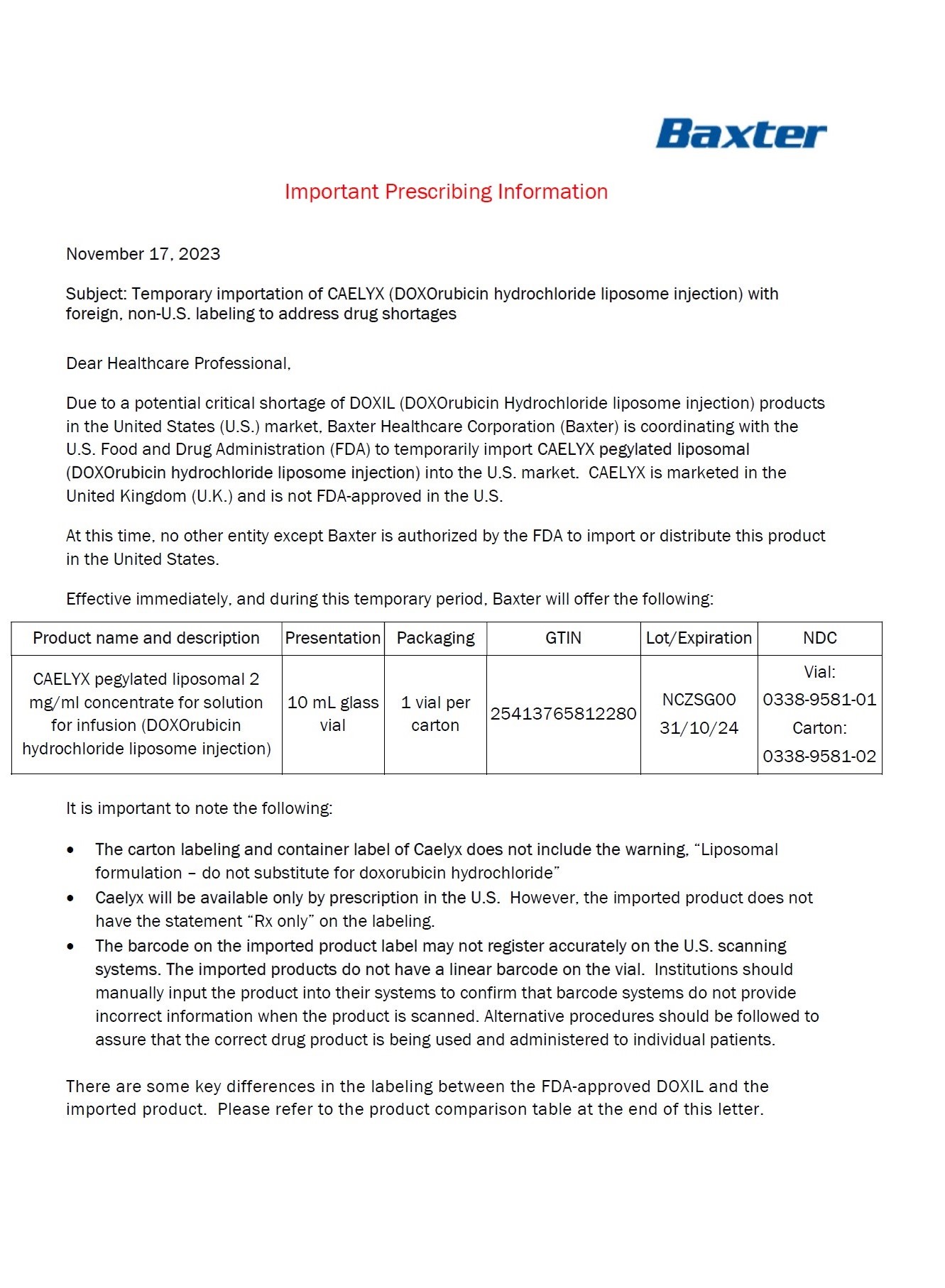
A prescribing information letter from Baxter Healthcare Corporation dated November 17, 2023, addressing the temporary importation of CAELYX (doxorubicin hydrochloride liposome injection) with foreign non-U.S. labeling to manage U.S. drug shortages. It includes a table listing CAELYX pegylated liposomal 2 mg/mL concentrate for solution for infusion, presented in a 10 mL glass vial with packaging of one vial per carton, along with corresponding GTIN, lot/expiration, and NDC codes. The letter notes labeling differences and barcode considerations for the imported product.*
FDA Label Image

Dhcp-page-02-of-08 (Page 02 Of 08)

Dhcp-page-02-of-08 (Page 02 Of 08)
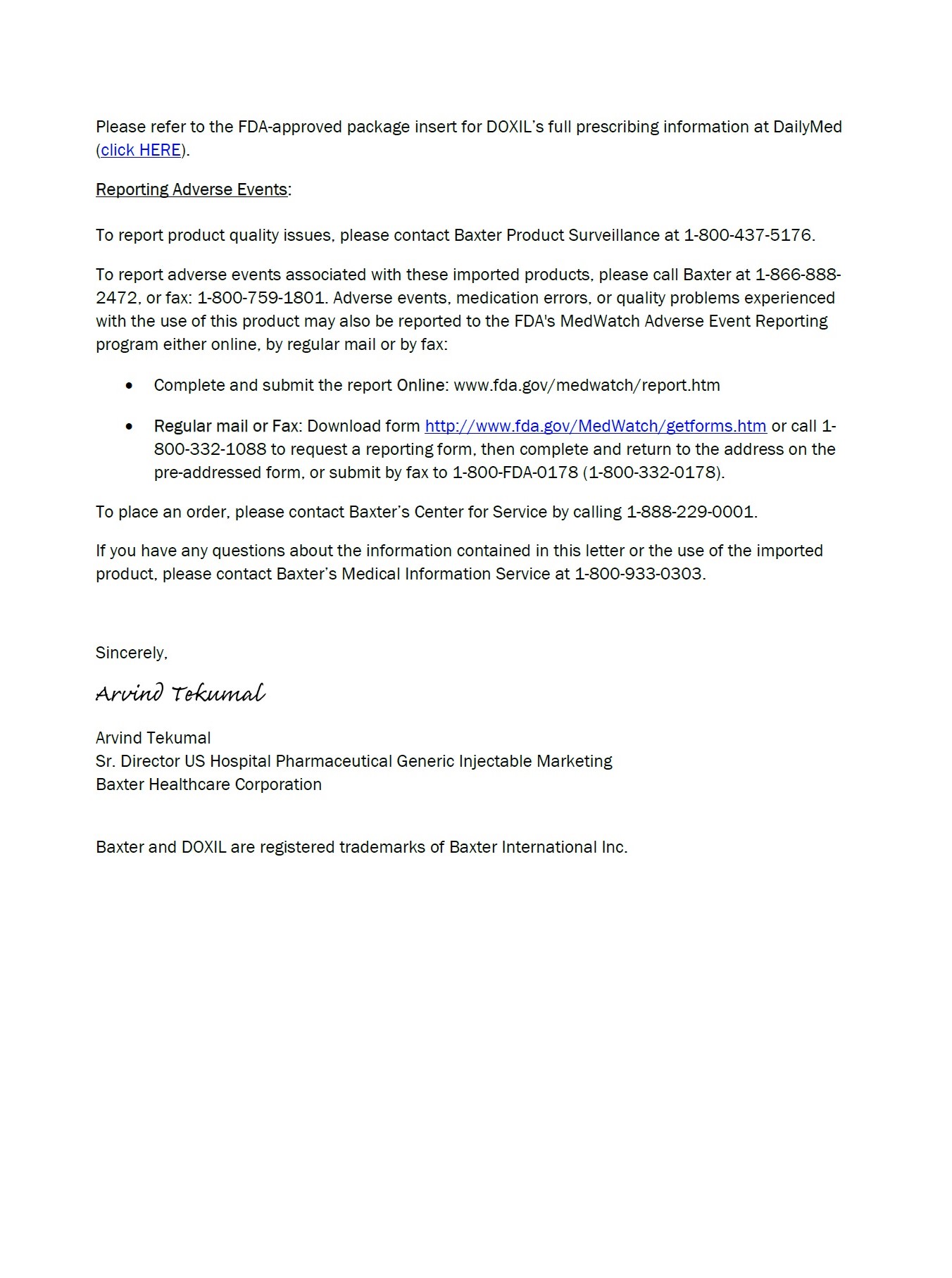
Text panel providing contact information for reporting adverse events and product quality issues related to doxorubicin hydrochloride, liposomal (DOXIL). It includes phone numbers for Baxter Product Surveillance and FDA MedWatch, a link to MedWatch online reporting, instructions for obtaining a reporting form, and contact information for placing orders or medical inquiries at Baxter Healthcare Corporation.*
FDA Label Image

Dhcp-page-03-of-08 (Page 03 Of 08)

Dhcp-page-03-of-08 (Page 03 Of 08)
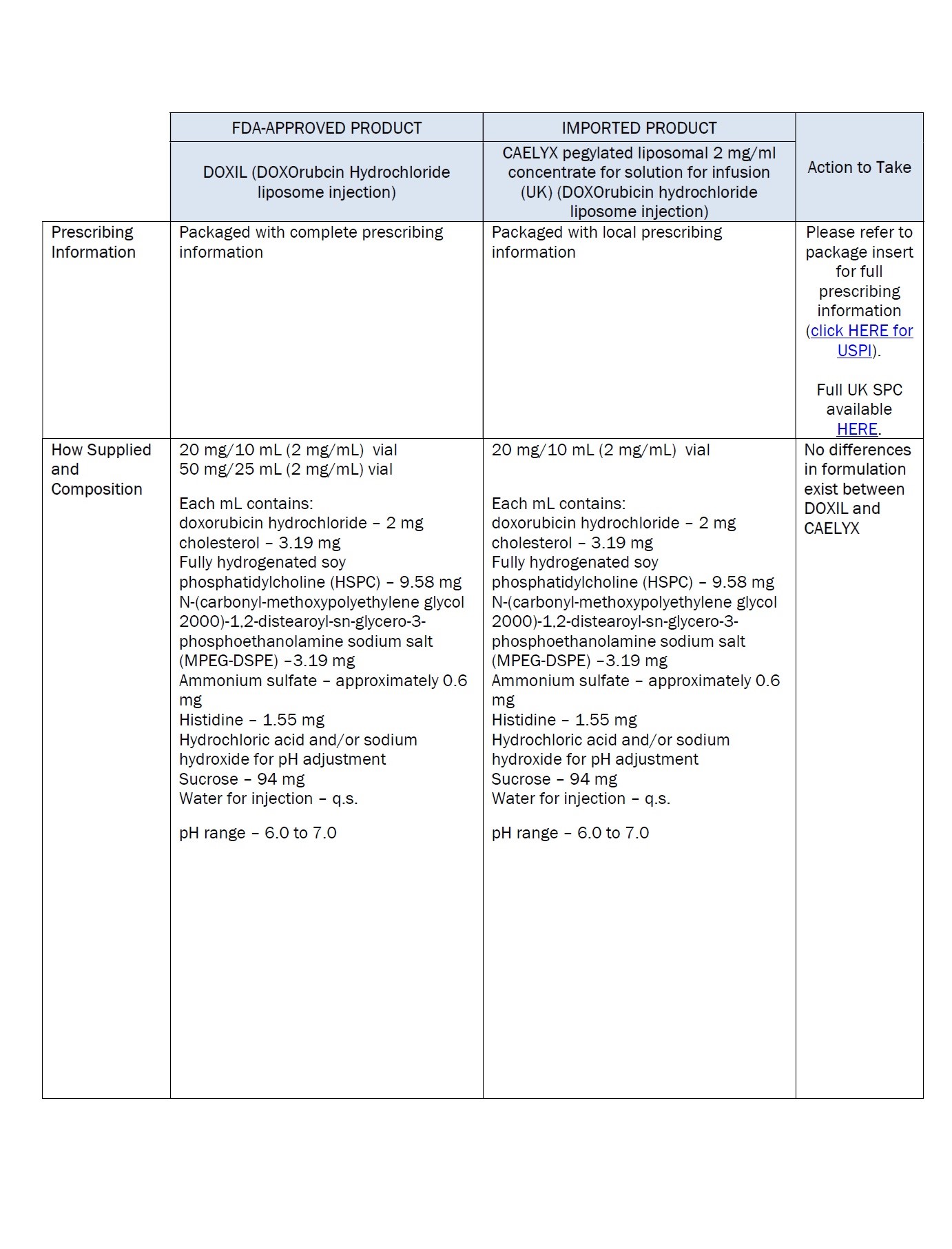
A comparison table displaying prescribing information and composition for two doxorubicin hydrochloride liposomal products: the FDA-approved DOXIL and the imported CAELYX. Both formulations contain doxorubicin hydrochloride 2 mg/mL in liposomal injection form supplied as 20 mg/10 mL vials. Ingredients and pH range (6.0 to 7.0) are listed, showing identical composition including cholesterol, soy phosphatidylcholine, MPEG-DSPE, ammonium sulfate, histidine, hydrochloric acid or sodium hydroxide, sucrose, and water for injection.*
FDA Label Image

Dhcp-page-04-of-08 (Page 04 Of 08)

Dhcp-page-04-of-08 (Page 04 Of 08)
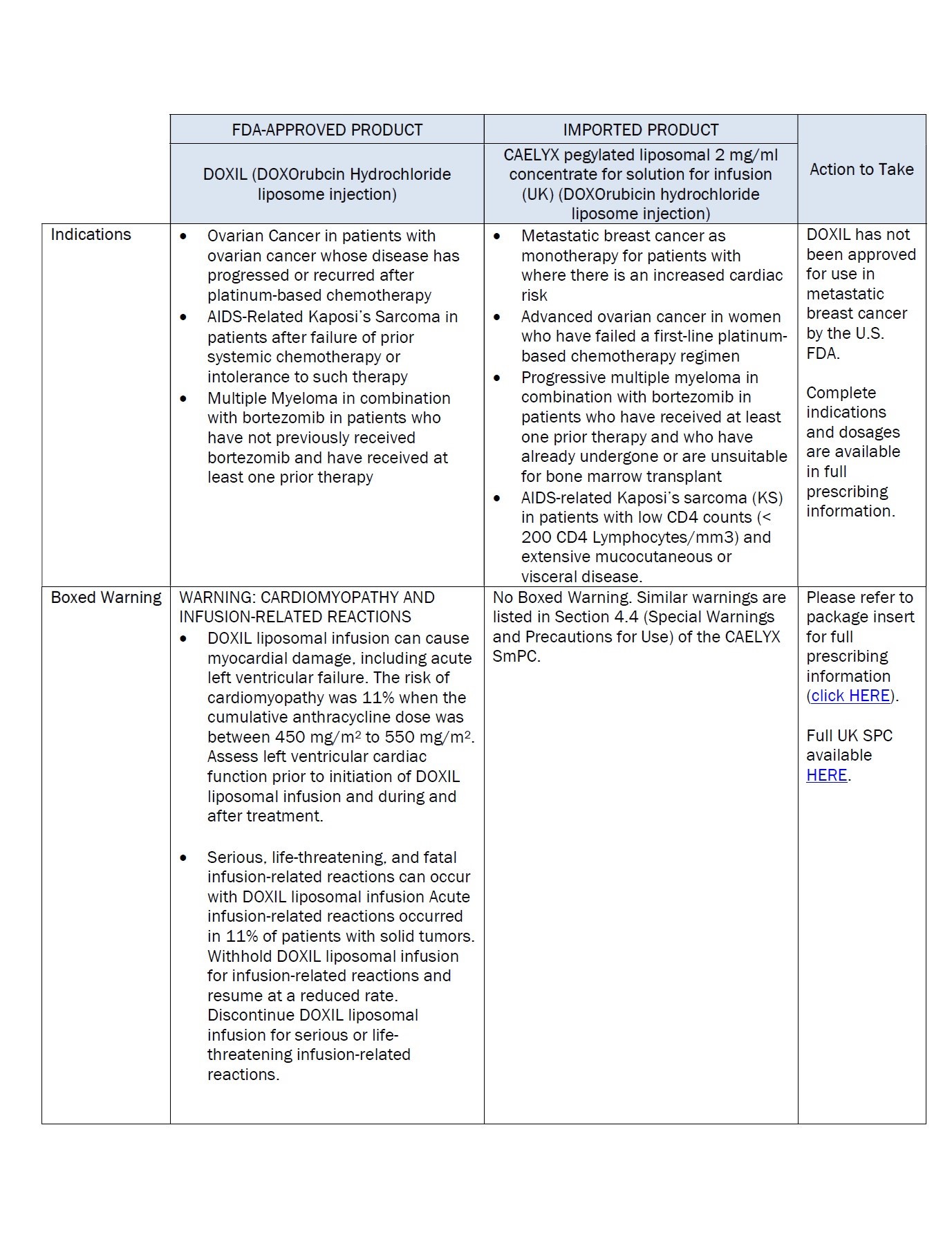
A table comparing FDA-approved DOXIL (doxorubicin hydrochloride liposome injection) and the imported CAELYX pegylated liposomal 2 mg/mL concentrate for infusion (UK). It lists indications, boxed warnings, and actions to take, highlighting differences in approved uses, warnings such as cardiomyopathy risk, and where to find full prescribing information.*
FDA Label Image

Dhcp-page-05-of-08 (Page 05 Of 08)

Dhcp-page-05-of-08 (Page 05 Of 08)
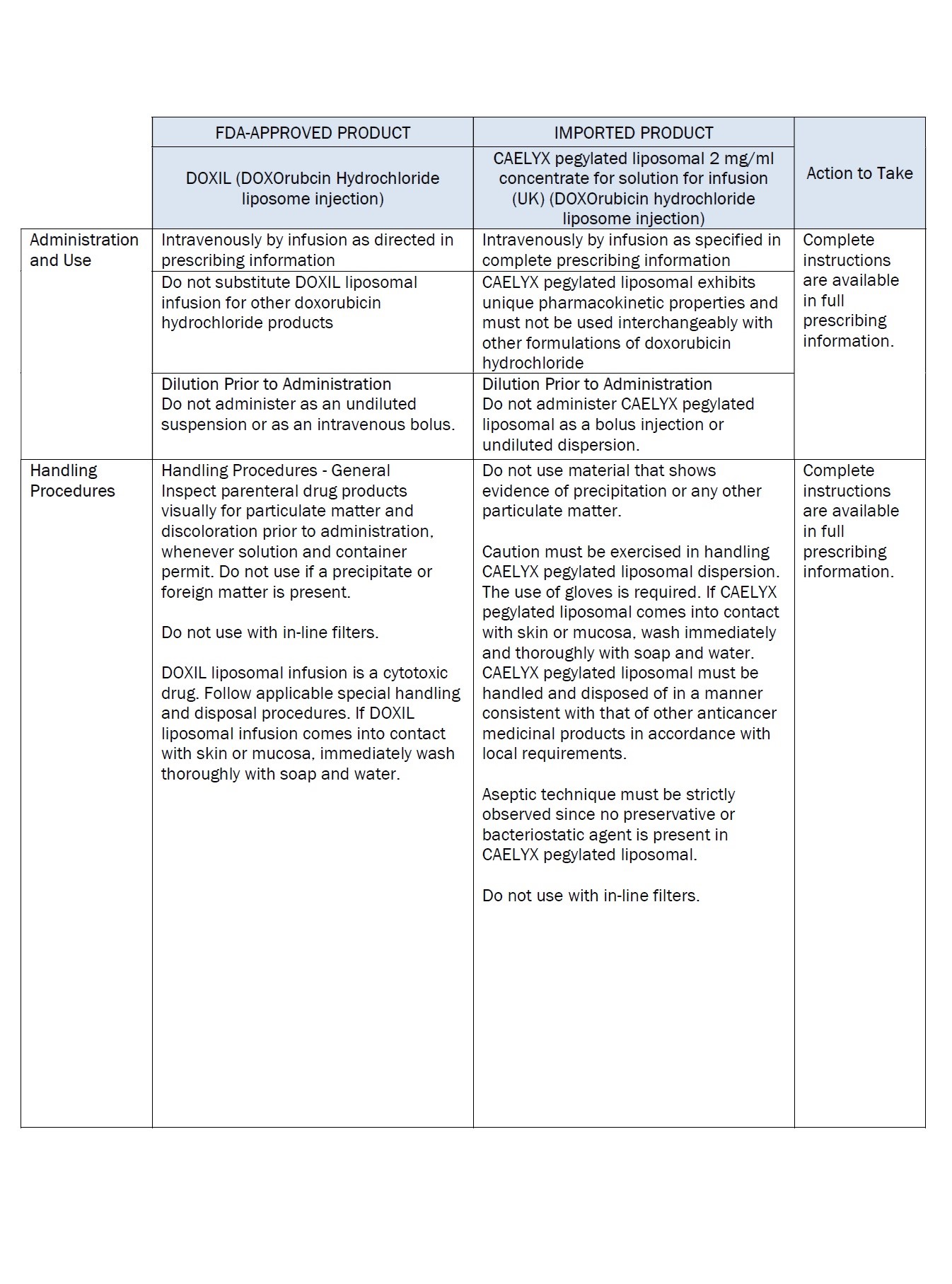
A data table comparing administration, usage, and handling procedures of two liposomal doxorubicin hydrochloride products: DOXIL (FDA-approved) and CAELYX (imported). It includes instructions on intravenous infusion, dilution prior to administration, and handling precautions such as inspection for particulate matter, use of gloves, and disposal. The table also notes that complete instructions are available in full prescribing information.*
FDA Label Image

Dhcp-page-06-of-08 (Page 06 Of 08)

Dhcp-page-06-of-08 (Page 06 Of 08)
A data table comparing compatibility, stability, and storage conditions between the FDA-approved product DOXIL (doxorubicin hydrochloride liposome injection) and the imported product CAELYX pegylated liposomal 2 mg/mL concentrate for infusion. It outlines dilution instructions, refrigeration requirements (2°C to 8°C), and cautions against freezing. The table notes that complete instructions are available in full prescribing information.*
FDA Label Image

Dhcp-page-07-of-08 (Page 07 Of 08)

Dhcp-page-07-of-08 (Page 07 Of 08)
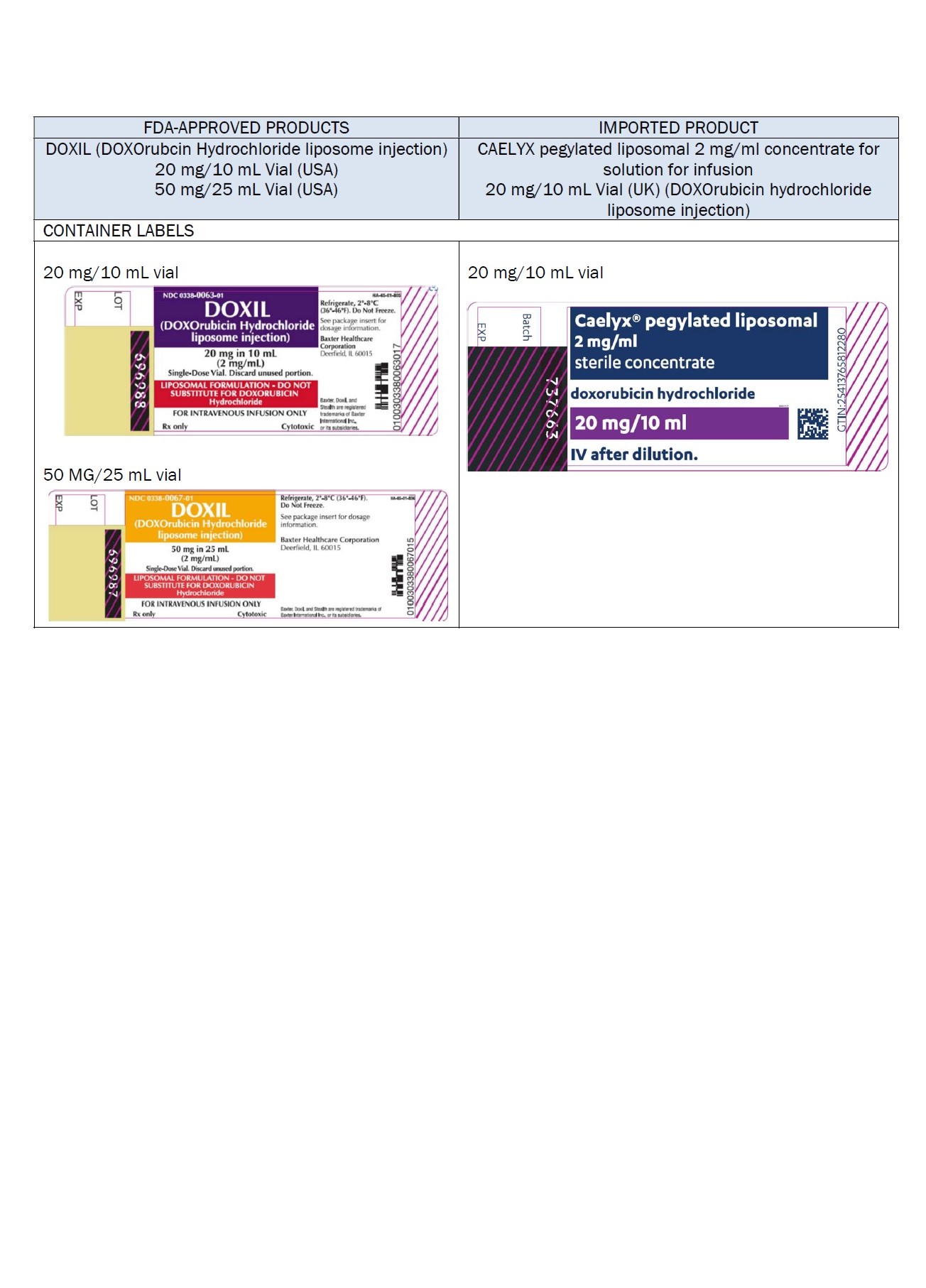
This image shows container labels for doxorubicin hydrochloride liposomal injection products. The FDA-approved DOXIL brand includes a purple label for the 20 mg/10 mL vial and an orange label for the 50 mg/25 mL vial, both by Baxter Healthcare Corporation. The imported CAELYX label for a 20 mg/10 mL vial shows a dark blue and white design, denoting a pegylated liposomal doxorubicin hydrochloride sterile concentrate for IV infusion after dilution.*
FDA Label Image

Dhcp-page-08-of-08 (Page 08 Of 08)

Dhcp-page-08-of-08 (Page 08 Of 08)
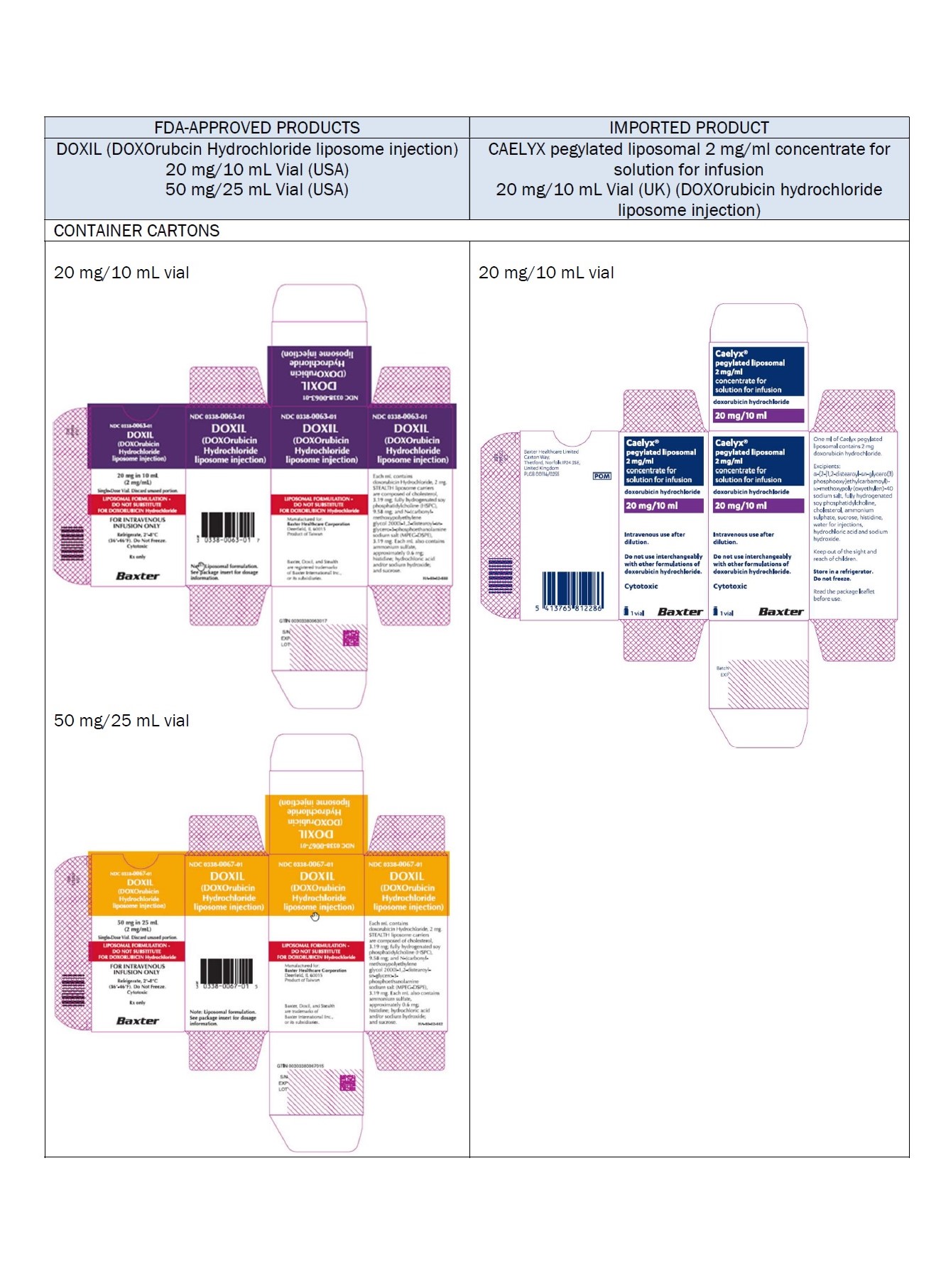
Packaging label image displaying cartons for doxorubicin hydrochloride liposomal injection under two brand names: DOXIL and Caelyx. The DOXIL cartons feature strengths of 20 mg/10 mL and 50 mg/25 mL vials with color themes in purple and orange respectively, labeled by Baxter. The Caelyx carton shows a 20 mg/10 mL vial for the UK market, described as a pegylated liposomal concentrate for infusion, also labeled by Baxter Healthcare Limited.*

* About these descriptions: Image descriptions on this page are generated by automated AI analysis of the product label images from the manufacturer's FDA label submission (SPL). They are provided for reference only and may contain errors or omissions. Always rely on the printed label itself and the official FDA labeling, and consult a pharmacist or healthcare professional with any questions about this product.