Walgreens Sunburn Relief Spray
Product Images NDC 0363-0978

View Photos of Packaging, Regulatory Labels, and Product Appearance

Product Visual Gallery

This gallery contains 2 technical images submitted to the FDA as part of the official labeling for Walgreens Sunburn Relief (NDC 0363-0978). Unlike standard consumer photos, these assets often include clinical data figures, molecular chemical structures, and official manufacturer packaging layouts.

As provided by Walgreen Company, these visuals offer a comprehensive scientific overview of the product's physical and chemical identity, aiding pharmacists and researchers in product verification and study.

FDA Label Image

W00074a (W00074a)

W00074a (W00074a)
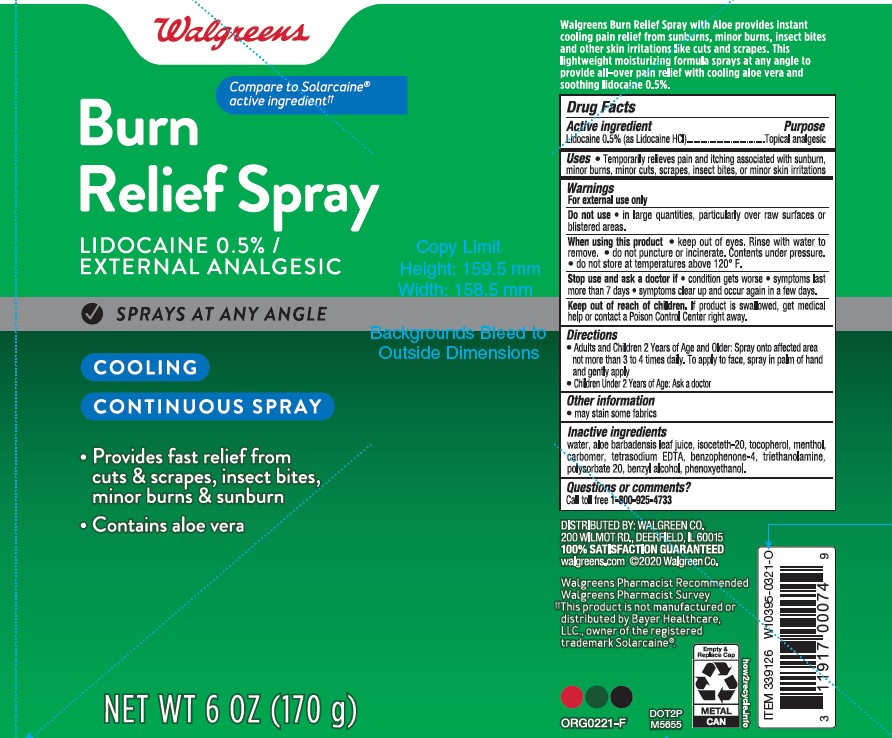
Walgreens Burn Relief Spray is a lightweight moisturizing formula that provides instant cooling pain relief from sunburns, insect bites, minor burns, and other skin irritations such as cuts and scrapes. It contains Lidocaine 0.5% and Aloe Vera, which give an all-over pain relief while also soothing the skin. It comes in a spray bottle that quickly sprays at any angle, making it convenient to use. The product can only be used for external purposes, and it is advised not to use it on damaged or wounded skin. The inactive ingredients of the spray include water, stearyl alcohol, C12-C15 alkyl benzoate, tocopherol, and others. It is not manufactured or distributed by Beyer Healthcare, the owner of the registered trademark Solarcaine®.*
FDA Label Image

W04276a (W04276a)

W04276a (W04276a)
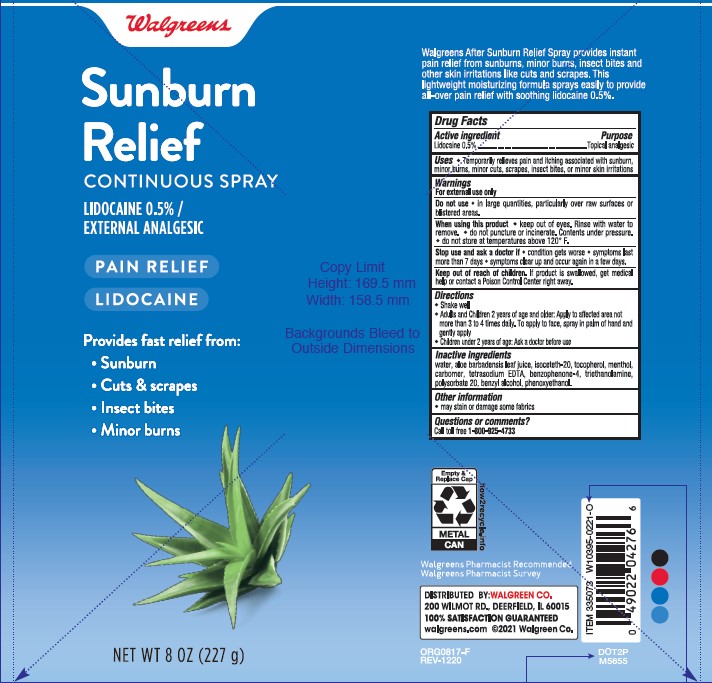
Walgreens After Sunburn Relief Spray with Lidocaine 0.5% is formulated to provide fast relief from sunburn, minor burns, cuts, scrapes, insect bites, and other skin irritations. This lightweight moisturizing formula sprays easily to provide a soothing effect with lidocaine 0.8%. This product is equipped with continuous spray and is suitable for external use only. For more information or comments, please contact the manufacturer. Drug facts and active ingredients are also included in the product.*

* These product label images have been analyzed using experimental machine learning. Please verify findings with the primary label text.